
Smartwings Overview & Company Profile
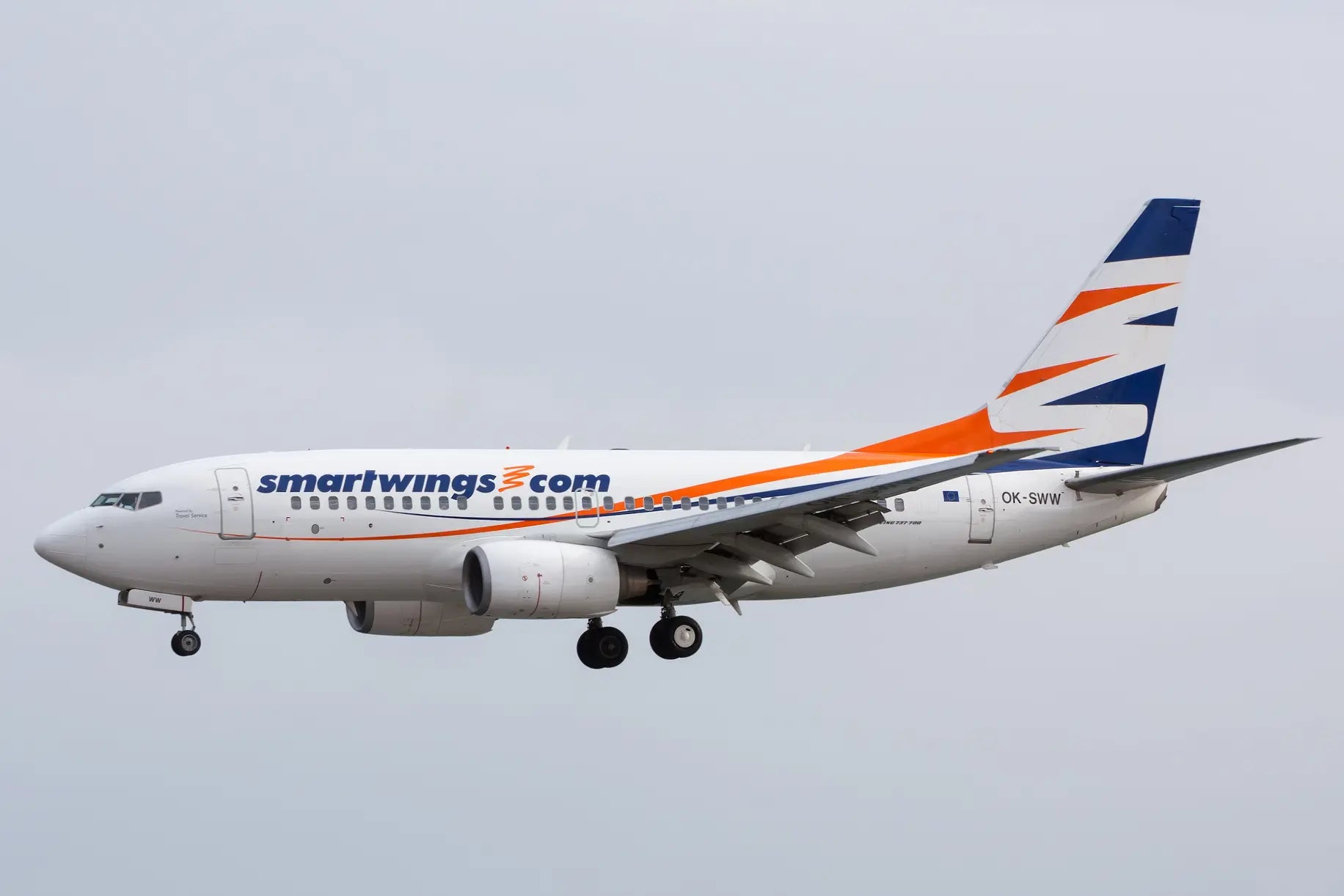
Smartwings is the largest airline in the Czech Republic, operating a mixed business model of charter, scheduled, and ACMI (wet-lease) services from its headquarters at Vaclav Havel Airport Prague. Founded in 1997 under the name Travel Service, the airline initially focused on charter flights for Czech tour operators before expanding into scheduled services and international wet-lease operations. Today, Smartwings serves over 80 destinations across more than 20 countries, positioning itself as Central Europe's leading leisure carrier.
The airline operates from multiple bases across the region, including the Czech Republic, Slovakia, Poland, Hungary, France, and the Canary Islands. Smartwings absorbed the operations of Czech Airlines (CSA) in October 2024, integrating the historic flag carrier's routes and aircraft into the Smartwings group. The combined operation employs approximately 2,438 staff. In December 2025, Turkish low-cost carrier Pegasus Airlines announced an agreement to acquire both Smartwings and Czech Airlines for approximately 154 million euros, subject to regulatory approval. This acquisition is expected to reshape the airline's future strategic direction throughout 2026 and beyond.
Smartwings generated approximately one billion euros in revenue in 2024, according to press reports around the Pegasus acquisition announcement. The airline does not belong to any global airline alliance. Its ACMI wet-lease division operates aircraft on behalf of third-party airlines across Europe, Africa, and Asia, providing significant operational diversity but also creating unique roster challenges for pilots (covered in detail in the Roster section below).
Fleet Composition & Type Ratings
Smartwings operates an all-narrowbody fleet of approximately 42 commercial aircraft, dominated by the Boeing 737 family. The fleet composition reflects the airline's focus on short-to-medium-haul European routes and high-density leisure configurations. Following the Czech Airlines integration in late 2024, the fleet also includes a small number of Airbus types. There are currently no aircraft on order, and the fleet renewal strategy remains uncertain pending the completion of the Pegasus Airlines acquisition.
| Aircraft Type | Role | In Service | Configuration / Notes |
|---|---|---|---|
| Boeing 737-800 | Narrowbody | 21 | 189 pax (high-density). Fleet workhorse for charter and scheduled ops. |
| Boeing 737 MAX 8 | Narrowbody | 13 | 150 or 189 pax (two configs). Newest type. Smartwings was first European carrier to resume MAX operations (Feb 2021). |
| Boeing 737-900ER | Narrowbody | 2 | 212 pax. Highest capacity variant, deployed on peak-demand routes. |
| Airbus A320-200 | Narrowbody | 2 | 180 pax. Operated for Czech Airlines branded services. |
| Airbus A220-300 | Narrowbody | 4 | 149 pax. Inherited from Czech Airlines. Most fuel-efficient type in fleet. |
| Cessna Citation Sovereign / Sovereign+ | Business Jet | 5 | 9 pax. Charter-only operation, separate from commercial flying. |
Fleet data as of November 2025 per Wikipedia and Planespotters. Numbers may vary slightly due to seasonal lease-in/lease-out activity.
The Boeing 737-800 remains the backbone of operations, providing fleet commonality benefits across crew scheduling, spare parts, and maintenance. The 737 MAX 8 aircraft, delivered after the global grounding was lifted, offer improved fuel efficiency (approximately 14% lower fuel burn versus the 737-800) and are typically assigned to the airline's busiest scheduled routes. All Boeing 737 variants share a common type rating, allowing crew interchangeability across the -800, -900ER, and MAX 8, a significant operational advantage that reduces training costs and maximizes roster flexibility.
The Airbus types (A320-200 and A220-300) were absorbed following the Czech Airlines integration and operate primarily on former CSA routes. The A220-300, manufactured by Airbus following the acquisition of Bombardier's CSeries programme, is one of the most fuel-efficient narrowbody aircraft in commercial service. Pilots assigned to the Airbus fleet hold a separate type rating from those on the Boeing side.
Smartwings recruits pilots for both Boeing 737 and Airbus A320/A220 fleets. The Boeing 737 is the most common entry type for new pilots, given the fleet's size. Non-type-rated first officers are offered type rating training as part of their contract, though the financial terms vary: some contracts require pilots to cover type rating costs, while others are funded by the airline depending on operational demand. Fleet transition between Boeing and Airbus types is possible but depends on operational needs and available positions rather than a formal seniority-based bidding system.
Pilot Salary & Compensation Breakdown
Smartwings pilot compensation is structured around hourly flight pay combined with monthly base guarantees. The pay system has been a persistent source of dissatisfaction, with multiple pilot reviews on industry forums describing it as among the lowest in Europe. Understanding the compensation structure requires careful attention to the self-employed contractor model under which many Smartwings pilots operate, as this significantly affects the real take-home pay and benefits landscape.
Compensation data below is based on publicly available contract terms published for Boeing 737 Captain positions commencing January 2025, supplemented by pilot review data and industry salary surveys. First Officer figures are less precisely documented in public sources and should be treated as estimates.
Captain (Boeing 737) Pay Structure
| Component | Amount | Notes |
|---|---|---|
| Ground School Pay | €5,000/month | During initial training and OCC (Operator Conversion Course). |
| Monthly Base (40 hrs min) | €6,800/month | Guaranteed minimum based on 40 tariff hours flown. |
| Overtime Rate (above 40 hrs) | €180/hour | Applied to each hour flown above the 40-hour monthly minimum. |
| Stay & Travel Allowance | €500/month | Summer European bases (June to September). |
| Standby Day Pay | €163/day | Per standby day when on reserve duty. |
| Short-Notice Flight Duty | €170/flight | Additional duty accepted with less than 48 hours notice. |
| Day Off Work (full day) | €260/day | Compensation for working on a scheduled day off. |
Based on these contract terms, a Captain flying an average of 85 block hours per month could expect approximately €15,400 per month (before taxes), comprising the €6,800 base, plus 45 overtime hours at €180/hour (€8,100), plus the €500 travel allowance. Annualized, this projects to roughly €185,000 gross, though actual earnings depend heavily on consistent flying hours, which fluctuate with seasonal demand and roster patterns.
First Officer (Estimated)
| Experience Level | Estimated Annual Gross | Notes |
|---|---|---|
| Entry-Level F/O (Year 1-2) | €40,000 - €55,000 | Based on pilot review data. Varies by contract type and hours flown. |
| Experienced F/O (Year 3+) | €55,000 - €70,000 | Higher hourly rates and more consistent flying. |
First Officer figures are estimates based on pilot reviews and industry comparison data. Smartwings does not publicly disclose detailed F/O pay scales.
A critical factor affecting real compensation is the self-employed contractor status under which many Smartwings pilots are hired, particularly on the Boeing 737 fleet. This means pilots are responsible for their own social security payments, income tax (calculated at their place of domicile), health insurance, and pension contributions. All contract amounts are quoted exclusive of VAT. There is no employer-sponsored pension, no paid holiday accrual beyond the scheduled days off, and no employer social security contributions. When comparing Smartwings salaries to carriers offering full employment contracts (such as Ryanair or Wizz Air), pilots must factor in these additional costs, which can reduce effective take-home pay by 15-25% depending on jurisdiction. Always verify current contract terms directly with Smartwings before making career decisions.
Roster Pattern & Quality of Life
Smartwings operates a 20 days on / 10 days off roster pattern, with the airline guaranteeing ten consecutive days off per month. This structure is designed to maximize crew availability during the 20-day operational block while providing a consolidated rest period. Operations follow European Union Aviation Safety Agency (EASA) Flight Time Limitation (FTL) rules, with maximum flight duty periods typically capped at 10 hours 30 minutes.
However, the practical implementation of this roster has become the single most criticized aspect of working at Smartwings. Pilot reviews consistently describe the roster as "unstable," with frequent last-minute changes and minimal advance notice. The Smart Unity pilot union has formally documented that management regularly pressures pilots to accept shift changes with less than 48 hours notice, and that during winter periods, rosters are frequently filled with consecutive standby days at the last possible moment.
📅 Sample Month: Boeing 737 Captain (Summer, European Base)
The ACMI (wet-lease) operations introduce additional complexity. During winter months (October through May), crews may be deployed to third-party airlines in locations such as India, Cameroon, or the Canary Islands for extended periods of 20-30 days. While accommodation is provided by the airline during these deployments, the extended time away from home and the unpredictable nature of ACMI assignments create significant quality-of-life challenges. Multiple pilot reviews describe these deployments as physically and emotionally demanding, with limited leisure options at some bases.
Night flying is another major factor. Pilot reviews specifically highlight a "huge amount of night flights" with flight duty periods of up to 10 hours 30 minutes between midnight and noon. While these schedules comply with EASA FTL regulations, the concentration of night operations generates significant fatigue concerns that pilots feel management does not adequately address.
The Smart Unity union's June 2025 strike readiness declaration, supported by 90.4% of 228 surveyed pilots, specifically cited roster instability as a primary grievance. Union documentation states that "it is quite common for Smartwings pilots to accept changes in planned shifts of less than 48 hours during the month and to be available on the phone at all times." Pilots with families or those prioritizing predictable schedules should weigh this factor carefully. By comparison, Ryanair publishes rosters four weeks in advance and operates a 5-on/4-off pattern with no planned night shifts.
Benefits, Travel Perks & Insurance
The benefits package at Smartwings is significantly thinner than what pilots at most European carriers can expect. This is primarily a consequence of the self-employed contractor status under which many pilots are hired, which shifts responsibility for health insurance, pension, and social protections from the airline to the individual pilot. The benefits described below are based on publicly available contract terms for Boeing 737 positions.
The absence of employer-provided health insurance, pension contributions, paid annual leave, and loss-of-license insurance represents a substantial gap compared to carriers offering full employment contracts. At airlines like Ryanair or Wizz Air, pilots on direct contracts receive employer pension contributions, paid annual leave (typically 20-30 days), and access to group insurance schemes. Smartwings' contractor model means pilots must budget for these costs independently, which can amount to several thousand euros annually. Pilots considering Smartwings should calculate the total cost of self-provision before comparing headline salary figures to other carriers.
Career Progression & Seniority
Career progression at Smartwings offers a distinctive trade-off: while the airline is one of the fastest pathways to a Captain's seat in European aviation, the long-term career development opportunities beyond the command rank are limited. This dynamic makes Smartwings function primarily as a "stepping stone" employer, where pilots build hours and gain command experience before moving to carriers with better compensation and career depth.
Upgrade Timeline
Capable First Officers at Smartwings can realistically expect to upgrade to Captain within 2 to 3 years, a timeline dramatically faster than the 5-15 years typical at most European carriers. This rapid promotion is driven by high pilot turnover: according to union data from the June 2025 strike readiness declaration, approximately 60% of all Boeing 737 First Officers have been with the airline for less than three years. The continuous cycle of first officers gaining command experience and then departing creates persistent vacancies at the Captain level.
Direct Entry Captain
Smartwings actively recruits direct entry Captains for experienced pilots who meet the minimum requirements of 3,500 total flight hours, with preferably 1,000 hours as pilot-in-command on the relevant aircraft type. Direct entry Captains undergo a streamlined training pipeline consisting of ground school, operator conversion course, simulator check, and line training before entering regular operations. This pathway appeals to military-transition pilots, turboprop Captains, and experienced First Officers from other carriers seeking a command position.
| Career Milestone | Typical Timeline | Notes |
|---|---|---|
| Join as Non-Type-Rated F/O | Day 1 | Type rating training provided (terms vary by contract). |
| Type-Rated F/O (line flying) | 2-4 months | After ground school, sim checks, and line training. |
| Upgrade to Captain | 2-3 years | Subject to experience requirements and assessment pass. |
| Direct Entry Captain | Immediate | Requires 3,500+ hrs total, preferably 1,000 PIC on type. |
| Fleet Transition (B737 to A320/A220) | Variable | Based on operational need, not formal seniority bidding. |
| Training Captain / TRE / TRI | Limited availability | Few positions available; not a standard progression path. |
Smartwings' rapid upgrade timeline is its most compelling career advantage. For low-hour pilots seeking a fast path to command, or experienced First Officers looking to gain Captain experience that will open doors at larger carriers, the airline serves this purpose effectively. However, career progression beyond Captain is limited: there are few Training Captain, TRE (Type Rating Examiner), or management positions available, and the contractor employment model provides no long-term career security. The majority of pilots who upgrade to Captain at Smartwings go on to apply at airlines with better compensation and stability within 2-5 years of their upgrade. This pattern is well-understood within the industry and is not necessarily negative: many successful airline captains at major European carriers began their command careers at Smartwings or similar operators.
Recruitment Process & Requirements
Smartwings recruits pilots through a multi-stage selection process for both the Boeing 737 and Airbus A320/A220 fleets. The airline accepts both type-rated and non-type-rated applicants, with specific requirements varying by position. Recruitment is handled directly through the Smartwings careers portal as well as through third-party recruitment partners such as GOOSE Recruitment and Brookfield Aviation.
Minimum Requirements
Selection Stages
Application & Document Screening
Submit CV, license copies, medical certificate, and flight hour documentation via the Smartwings careers page or recruitment partner. Initial screening confirms eligibility, license validity, and experience thresholds.
Online Assessment
Remote-administered tests including psychological profiling, cognitive ability assessment, personality inventory, and CRM (Crew Resource Management) competency evaluation. Conducted in English.
Online Interview
Video interview in English covering motivation, aviation background, communication skills, and cultural fit. This stage filters candidates before the more resource-intensive on-site assessment.
On-Site Assessment (Prague)
Full-day assessment at Smartwings headquarters including comprehensive psychological testing, simulator assessment (for Captain candidates), technical knowledge examination, English language proficiency verification, and behavioral interview. The simulator check evaluates basic maneuvers, systems knowledge, and CRM under realistic scenarios.
Contract Offer & Training
Successful candidates receive a contract offer specifying base assignment, fleet allocation, and compensation terms. Captains proceed to ground school (compensated at €5,000/month) followed by OCC and line training. Non-type-rated First Officers undergo full type rating training before entering line operations.
Smartwings recruits on a rolling basis throughout the year, with peak hiring typically occurring before the summer season (March through May) to prepare for increased charter demand. The airline operates bases in six countries (Czech Republic, Slovakia, Poland, Hungary, France, and the Canary Islands), so be prepared to discuss base flexibility during the interview. Czech language proficiency is not required, but awareness of Central European aviation culture and willingness to operate from non-Western-European bases will strengthen an application. The non-type-rated F/O positions on the Boeing 737 require a minimum of 70 hours PIC plus an advanced UPRT certificate and MCC, per EASA FCL regulations.
How Smartwings Compares: Airline Radar Chart
How does Smartwings stack up against two direct competitors in the European low-cost and leisure carrier segment: Wizz Air and Ryanair? Below is a comparative analysis across five key metrics. Scores are editorial estimates based on publicly available salary data, pilot reviews, union publications, and industry benchmarks.
Key Takeaways from the Comparison
Smartwings trails both competitors on nearly every metric. The radar chart visually illustrates the gap: Smartwings' polygon is visibly smaller than both Wizz Air and Ryanair across all five dimensions. This reflects the airline's position at the lower end of European pilot compensation and working conditions.
Salary: Ryanair Captains earn approximately €168,000 annually, comparable to Smartwings' projected Captain earnings. However, Ryanair First Officers earn up to €72,000 per year, substantially exceeding Smartwings' estimated €40,000-55,000 for entry-level F/Os. Wizz Air Captains earn €90,000-€108,000 and F/Os up to €60,000, both above Smartwings' F/O range. Crucially, both competitors offer full employment contracts with employer social contributions, while Smartwings' contractor model shifts these costs to pilots.
Work-Life Balance: Ryanair operates a 5-on/4-off pattern with no planned night shifts and four-week advance roster publication. Wizz Air offers competitive schedules with guaranteed minimum hours and advance planning. Smartwings' 20-on/10-off pattern with frequent sub-48-hour changes and heavy night flying places it clearly behind both competitors.
Job Security: Ryanair and Wizz Air offer permanent or long-term contracts with statutory protections. Smartwings' two-year renewable contractor contracts offer minimal employment security, with no holiday accrual, no employer pension contributions, and no loss-of-license coverage. The pending Pegasus acquisition adds further uncertainty.
Scores are editorial estimates based on publicly available salary data, contract terms, pilot reviews (PilotsGlobal, Glassdoor), union publications (Smart Unity), recruitment advertisements, and industry salary surveys (UnitedSky, SimpleFlying). They represent a general assessment for a pilot evaluating career options in the European LCC sector. Individual experiences will vary based on seniority, contract terms, and base assignment. Scores for all airlines will be updated as conditions evolve.
Union & Industrial Relations
Union representation at Smartwings is a relatively recent development, emerging following the Czech Airlines integration in late 2024. The labor relations landscape has been marked by escalating tensions throughout 2025, culminating in a formal strike readiness declaration that exposed deep-rooted pilot dissatisfaction with management practices.
Union Structure
Recent Industrial Disputes
The 90.4% strike readiness vote represents an extraordinarily high level of workforce dissatisfaction, significantly above the typical threshold for industrial action in European aviation. For prospective pilots, this signals systemic issues with working conditions rather than isolated complaints. The pending Pegasus acquisition could either improve conditions (through integration with a larger, more structured operator) or create further disruption during the transition period. Pilots joining Smartwings should maintain realistic expectations about roster stability and management responsiveness, and should factor the ongoing labor tensions into their career planning.
Verdict: Who Is Smartwings For?
🎯 Our Take
Smartwings occupies a very specific niche in the European pilot career landscape. It is not a destination employer: the compensation is among the lowest in Europe, the roster is unpredictable, the benefits package is minimal, and the contractor employment model offers little long-term security. The 90.4% strike readiness vote in June 2025 confirms that the vast majority of current pilots find working conditions unsatisfactory.
Where Smartwings does deliver genuine value is as a career accelerator. The 2-3 year upgrade to Captain is among the fastest in European aviation. The diverse operational environment (charter, scheduled, ACMI across multiple countries) builds experience that translates well to larger carriers. For low-hour pilots struggling to find a first airline job, or experienced First Officers who want command time to unlock opportunities at better-paying airlines, Smartwings serves this purpose effectively.
The pending Pegasus Airlines acquisition adds a wildcard. If Pegasus brings improved compensation structures, professional employment contracts, and operational standards to the Smartwings operation, the airline could become significantly more attractive. Until that transition is complete, however, pilots should approach Smartwings with eyes open: use it to build hours and command experience, plan an exit timeline, and do not expect the working conditions to match those at Ryanair, Wizz Air, or any Western European carrier.
1 How fast can I upgrade to Captain at Smartwings?
Typical upgrade timeline is 2 to 3 years from joining as a First Officer, subject to meeting minimum experience requirements and passing the command assessment. This is among the fastest upgrade paths in European aviation, driven by high pilot turnover and continuous demand for Captains. Approximately 60% of Boeing 737 First Officers leave the airline within three years, creating regular command vacancies.
2 Does Smartwings pay for the type rating?
It depends on the specific contract and operational demand. Some non-type-rated First Officer positions include airline-funded type rating training, while others may require the pilot to contribute to or fully cover the cost. Captain positions typically include funded ground school and OCC training (compensated at €5,000/month during training). Always clarify type rating financial terms before signing a contract.
3 Are Smartwings pilots employees or contractors?
Many Smartwings pilots, particularly on the Boeing 737 fleet, are hired as self-employed contractors on two-year renewable contracts. This means they are responsible for their own income tax, social security contributions, health insurance, and pension planning. All stated compensation amounts are exclusive of VAT. Some positions, particularly those inherited from Czech Airlines, may offer direct employment contracts under Czech labor law. Clarify the employment status during the application process.
4 What bases are available for Smartwings pilots?
Smartwings operates from bases in Prague (PRG), Brno (BRQ), Bratislava (BTS), Budapest (BUD), Katowice (KTW), Warsaw (WAW), and the Canary Islands. During winter months, ACMI operations may station pilots at international locations including India and Cameroon. Base assignment is determined by operational need rather than pilot preference, and flexibility is expected during the interview process.
5 Can non-EU citizens apply to Smartwings?
Smartwings requires applicants to hold the right to live and work in the European Union. This effectively limits recruitment to EU/EEA nationals or third-country nationals holding valid EU residence and work permits. There is no visa sponsorship programme for non-EU citizens.
6 What will the Pegasus Airlines acquisition mean for Smartwings pilots?
The December 2025 acquisition announcement by Pegasus Airlines (valued at approximately €154 million) is subject to regulatory approval and is expected to be completed during 2026. The impact on pilot contracts, compensation structures, and working conditions remains uncertain. Pegasus has stated its intention to maintain the Smartwings brand while leveraging shared infrastructure. Pilots currently employed or considering joining should monitor developments closely, as the acquisition could either improve conditions through integration with a larger, more structured operator, or create additional disruption during the transition period.
7 How does Smartwings pay compare to Ryanair and Wizz Air?
Smartwings Captain pay (projected at approximately €185,000 annually at 85 hours/month) is broadly comparable to Ryanair Captain earnings (~€168,000). However, Smartwings First Officer pay (estimated €40,000-€55,000) falls significantly below both Ryanair (~€72,000) and Wizz Air (~€60,000). Critically, the comparison is complicated by Smartwings' contractor status: pilots bear their own social security, tax, health insurance, and pension costs, which reduces effective take-home pay by an estimated 15-25% compared to full-employment positions at competitors.
8 Is Smartwings safe to fly for?
Smartwings operates under full EASA regulatory oversight and Czech Civil Aviation Authority supervision. The airline maintains standard European safety certifications. However, pilot reviews have raised concerns about fatigue management practices (particularly related to heavy night flying schedules) and roster stability. The Smart Unity union has also raised concerns about communication transparency regarding operations to certain high-risk destinations. These are working condition issues rather than airworthiness concerns, but they are factors pilots should evaluate when considering the airline.
Official Links & Resources
Before applying or making any career decisions, always verify information directly with official sources. These are the key websites and organisations relevant to Smartwings pilot careers:
Bookmark the Smart Unity press releases page (smart-unity.cz/en) for the most current information on pilot working conditions, ongoing negotiations, and the impact of the Pegasus acquisition on employment terms. Pilot reviews on PilotsGlobal provide candid first-hand accounts that complement official information. For regulatory questions about Czech pilot licensing and medical certification, the CAA CZ website is the authoritative source.