

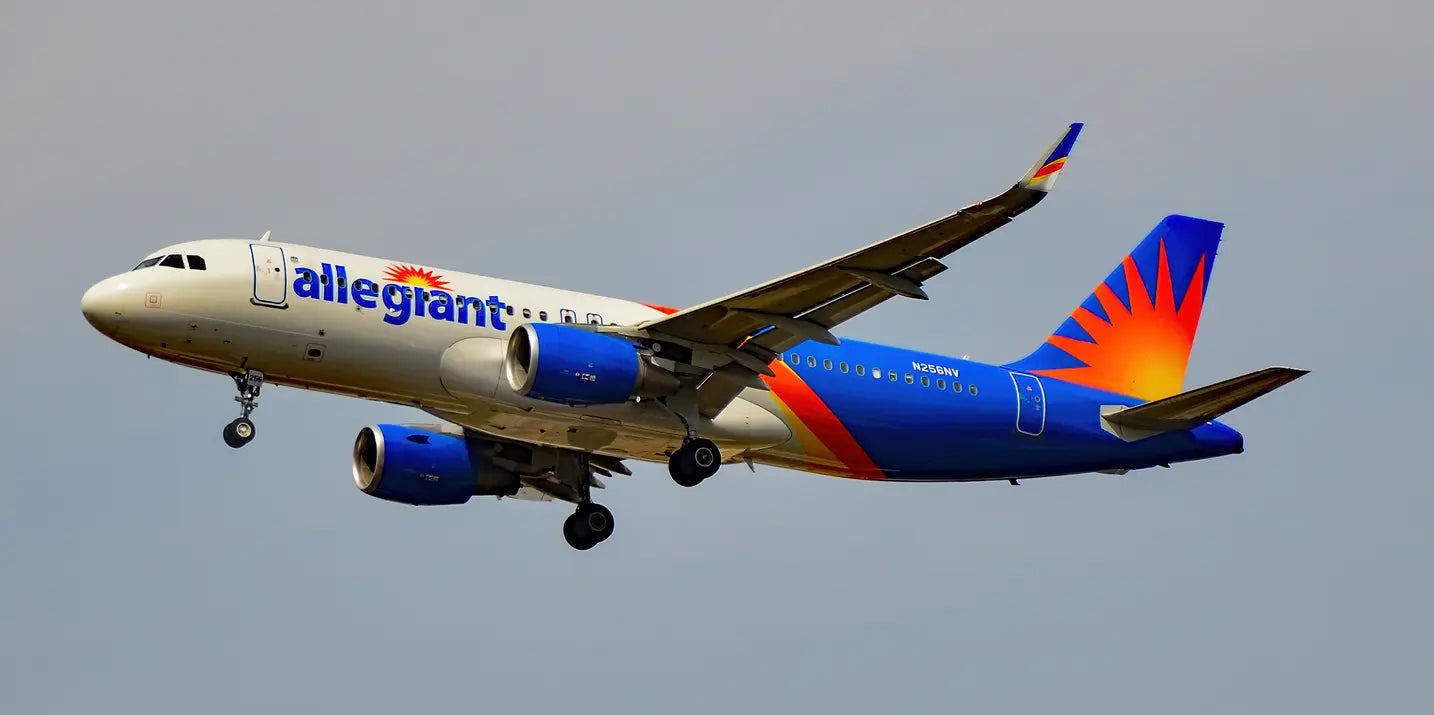
Allegiant Air Overview & Company Profile
Allegiant Air is a US ultra-low-cost carrier (ULCC) founded in 1997 and headquartered in Las Vegas, Nevada. It is the airline subsidiary of the publicly traded Allegiant Travel Company (NASDAQ: ALGT), which reported total airline-only operating revenue of roughly $2.5 billion for both full-year 2024 and full-year 2025. Unlike legacy network carriers, Allegiant does not chase business travelers or operate a hub-and-spoke connecting bank. Instead it runs a point-to-point leisure network, linking residents of small and mid-size US cities directly to warm-weather vacation destinations such as Las Vegas, Orlando, Tampa, Phoenix, and the Florida and California coasts.
This business model shapes everything about the pilot job. Because most routes are flown only a few days per week and are timed for leisure travelers (early-morning departures, evening returns), the vast majority of trips are same-day round trips. That produces the airline's signature recruiting pitch: pilots can largely "sleep in their own bed at night." As of the company's most recent annual disclosures, Allegiant employed approximately 1,375 pilots operating a fleet of around 124 aircraft to roughly 125 destinations across more than 110 US cities, with about 500 daily flights at peak season. The airline is an independent carrier with no global alliance and no codeshare network, which is unusual among carriers of its size but consistent with its cost-focused, niche-market strategy. Financial details are published on the company's investor relations site.
For an aspiring or experienced pilot, the central trade-off at Allegiant is clear from the outset. The airline offers an unusually strong quality-of-life proposition and one of the fastest upgrades to Captain in the US industry, but its published pay rates sit well below other ultra-low-cost carriers, and its pilots have been working under an amendable contract while negotiations drag on. The sections below break down each of these factors using the airline's own disclosures, the published collective bargaining scale, and comparable industry data.
Fleet Composition & Type Ratings
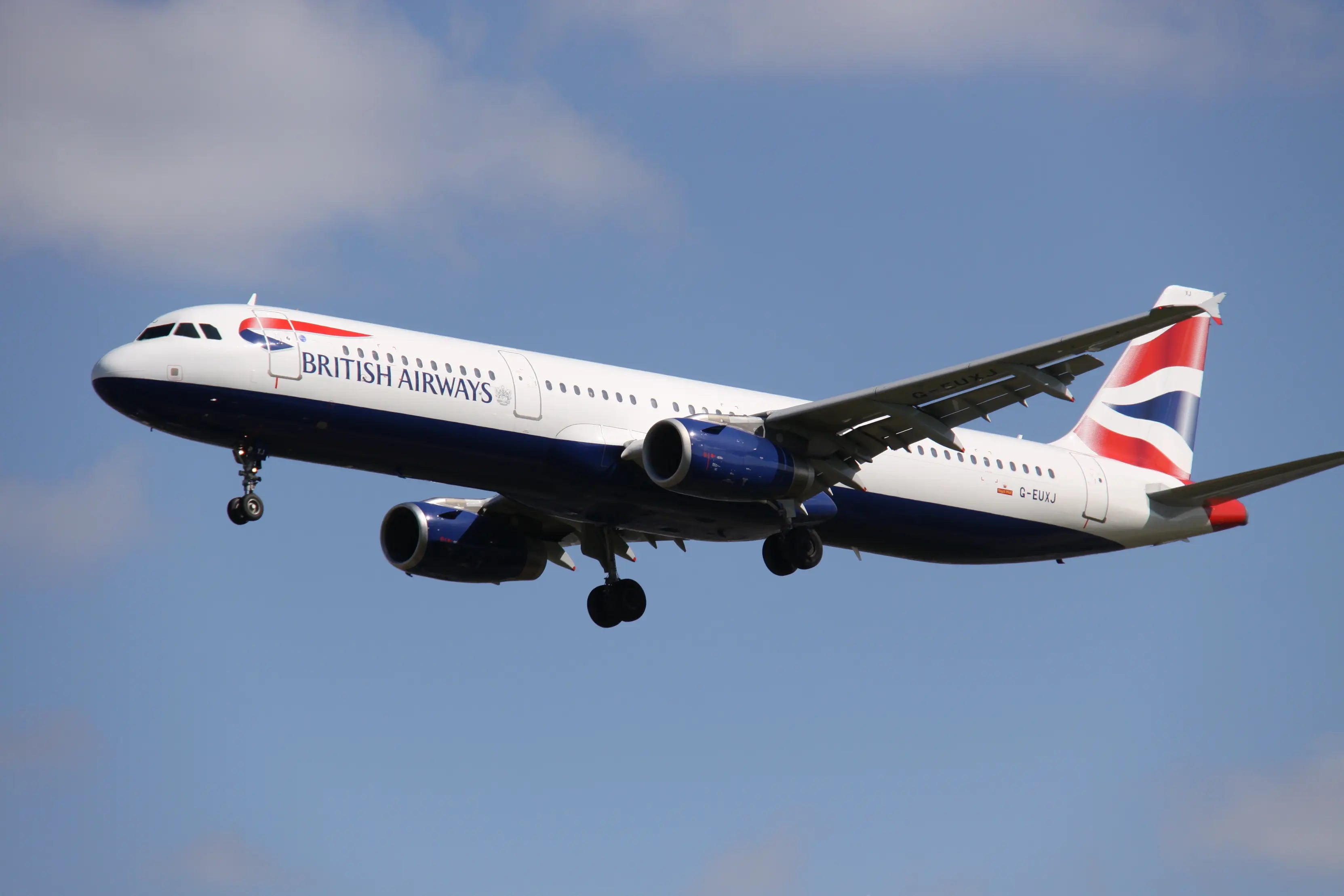
For most of its modern history Allegiant has been an all-Airbus narrowbody operator, having retired its older McDonnell Douglas MD-80s and its Boeing 757-200s by 2017 in favor of more fuel-efficient, lower-cost A319 and A320 aircraft. That single-fleet simplicity kept training, maintenance, and spares costs low, which is central to the ULCC playbook. The picture is now changing: in January 2022 Allegiant placed a firm order for 50 Boeing 737 MAX aircraft (with options for more), marking the first time in years it would operate a mixed fleet and a major strategic shift toward newer metal.
According to fleet trackers such as Planespotters.net, the in-service fleet currently comprises roughly 34 Airbus A319-100s, 78 Airbus A320-200s, and 12 Boeing 737 MAX 8-200s, with an average fleet age of about 13 to 14 years. The Airbus fleet is largely sourced second-hand and runs older than many competitors, which is a deliberate cost choice, while the incoming 737 MAX brings roughly 15% better fuel efficiency and a modern flight deck. Allegiant's MAX frames are the high-density 737-8-200 variant, the same sub-type flown by Ryanair.
| Aircraft Type | Role | In Service | Notes |
|---|---|---|---|
| Airbus A319-100 | Narrowbody | ~34 | 156 seats. Oldest core type, gradually thinning as MAX arrives. |
| Airbus A320-200 | Narrowbody | ~78 | 177–186 seats. The backbone of the network. |
| Boeing 737 MAX 8-200 | Narrowbody | ~12 | 190 seats. 50 on firm order; deliveries running through the late 2020s. |
| McDonnell Douglas MD-80 | Retired | 0 | Phased out in the 2010s. |
| Boeing 757-200 | Retired | 0 | Withdrawn by 2017. |
Fleet data as of 2026. Counts are approximate and shift continuously with second-hand Airbus retirements and ongoing 737 MAX deliveries.
Allegiant funds the type rating for pilots it hires; new First Officers do not pay for their own rating. New hires are assigned to either the Airbus A320 family (one common type rating covers the A319 and A320) or the Boeing 737, based on company need rather than pilot preference. The initial 737 bases were Orlando Sanford (SFB), St. Pete-Clearwater (PIE), and Punta Gorda (PGD). Because the airline now runs two manufacturers, fleet and base assignment for new classes is driven by where the aircraft are based, so a candidate's domicile choice and aircraft type are linked.
Pilot Salary & Compensation Breakdown
Allegiant pilot pay is set by the collective bargaining agreement (CBA) between the airline and the International Brotherhood of Teamsters. The current published hourly scale, as listed on AirlinePilotCentral, runs from $57 per hour for a first-year First Officer to $230 per hour for a top-of-scale Captain. This scale is the source of the most important caveat in this entire guide: it dates from the 2016 contract, which became amendable (open to renegotiation) in July 2021. The union has stated that Allegiant pilots currently earn roughly 40% less than the industry standard, and a retention bonus program (covered below and in the Union section) is the mechanism bridging that gap until a new deal is signed.
First Officer (F/O) Pay Scale
| Year of Service | Hourly Rate | Annual Gross (est.) |
|---|---|---|
| Year 1 (entry) | $57 / hr | ~$50,000 – $58,000 |
| Year 2 | $102 / hr | ~$104,000 |
| Year 5 | $122 / hr | ~$124,000 |
| Year 8 | $138 / hr | ~$141,000 |
| Year 12 (top F/O) | $154 / hr | ~$157,000 |
Annual figures are estimates based on roughly 85 credit hours per month and exclude profit sharing and the retention bonus. Note the steep jump from Year 1 to Year 2: the first-year rate is the weakest single number in Allegiant's package.
Captain (CA) Pay Scale
| Year of Service | Hourly Rate | Annual Gross (est.) |
|---|---|---|
| Year 1 (new Captain) | $163 / hr | ~$166,000 |
| Year 3 | $176 / hr | ~$180,000 |
| Year 5 | $191 / hr | ~$195,000 |
| Year 8 | $209 / hr | ~$213,000 |
| Year 12 (top Captain) | $230 / hr | ~$235,000 |
Estimates at ~85 credit hours per month. Because Allegiant upgrades to Captain quickly (see Section 6), a pilot can reach these Captain rates far sooner than at most carriers, which partly offsets the low First Officer scale.
Beyond base hourly pay, the published work rules add several premiums that materially change real earnings. The monthly minimum guarantee is 70 hours for line holders and 72 hours for reserves. A 2:1 duty rig credits one hour of pay for every two hours of duty, all hours flown above 81 in a month are paid at 130%, voluntary pickups (VFN) pay 200%, deadhead pays 50% of the hourly rate, and per diem is $2.00 per hour of time away from base. Open-time flying is paid on top of the guarantee. Lines are capped at 95 hours unless the pilot waives the cap.
The single most important pay detail at Allegiant is the retention bonus. Because the contract has been open since 2021, the company began accruing a retention bonus (from 2023) that banks the difference between current pay and the proposed new rates: a 35% increase for all pilots except first-year First Officers, and an 82.1% increase for first-year First Officers (which would lift the $57/hr entry rate to roughly $105/hr). The company has disclosed an accrued pilot-retention-bonus liability of approximately $256 million as of the first quarter of 2026, payable subject to ratification of a new agreement. In short, the published $57/hr is real today, but the airline has effectively committed to far higher numbers once a deal is signed. Always verify the latest figures with the union and the ratified CBA before making decisions.
Roster Pattern & Quality of Life
Quality of life is where Allegiant genuinely stands out, and it is the main reason many pilots accept the below-market pay. The point-to-point leisure model produces predominantly same-day round trips, so overnight layovers away from home are the exception rather than the rule. Under the current contract, line holders receive a minimum of 12 days off per month (reducible to 11 for up to three bid periods a year) and reserves likewise receive a minimum of 12 (reducible to 10), while senior line holders can build schedules with up to roughly 20 days off. If a delay pushes a pilot past 02:00 on a scheduled day off, the contract awards an extra day off.
📅 Illustrative Month — Narrowbody First Officer (typical base)
The flying day itself follows one of a few shift patterns: early-morning shows around 05:00–06:00 that get the crew home by mid-morning, midday shifts that finish around dinnertime, and later shifts that return between roughly 22:00 and 23:00. A typical duty is a single out-and-back of about five to six hours of block time. Seniority drives which base, which shift, and how many days off a pilot actually holds, but even relatively junior Allegiant pilots tend to enjoy more predictable home time than peers at regional carriers who fly multi-day trips with hotel overnights.
Reserve at Allegiant comes in two flavors: short call, which requires about two hours' notice, and long call, which requires roughly fourteen hours' notice. Critically, Allegiant does not use airport-standby reserve, so reserve pilots wait at home rather than sitting at the terminal. Reserves carry a slightly higher monthly guarantee (72 hours). The downside is that reserve can absorb a large share of operations, especially at larger Florida bases, so junior pilots and pilots at high-demand domiciles should expect meaningful time on reserve before they hold a stable line. Schedule predictability is still generally better than at hub-and-spoke carriers because point-to-point flying suffers fewer cascading delays.
Benefits, Travel Perks & Retirement
Allegiant's benefits package is a genuine bright spot, and in some areas it punches above the airline's pay scale. The standout is the retirement plan: a 401(k) match of 200% on the first 5% a pilot contributes, which means a pilot deferring 5% of pay receives an effective 10% company contribution. That is among the more generous match structures in the ULCC segment. Pilots also participate in company profit sharing, which has historically run around 10% of salary in strong years, though the exact figure varies with annual financial performance and is not a fixed guarantee.
The travel benefit is real but narrower than at a legacy carrier. Allegiant pilots and eligible family members can fly standby on Allegiant's own network, but because the airline belongs to no alliance and maintains few interline agreements, the global non-rev reach that pilots enjoy at SkyTeam, Star Alliance, or oneworld carriers simply does not exist here. For a pilot whose priority is commuting flexibility and worldwide leisure travel, that is a meaningful limitation. For a pilot whose priority is being home with family most nights, it matters far less.
The 401(k) match and profit sharing look excellent on paper, and they are. The honest caveat is that both are percentages of a base pay scale that the union itself calls roughly 40% below market. A generous match on a low salary still produces a smaller absolute retirement contribution than a standard match on a high salary. The retention bonus is designed to close that gap retroactively, but until a new CBA is ratified, a candidate should model their offer on the published scale plus the match, and treat the bonus as upside that is committed but not yet paid.
Career Progression & Seniority
If quality of life is Allegiant's headline perk, upgrade speed is a close second. Career progression is strictly seniority-based, as at every US Part 121 carrier, but Allegiant's rapid growth and high attrition (pilots leaving for higher-paying majors) have driven upgrade times far below the industry norm. Pilot reports and forum data indicate that recent new hires have upgraded to Captain in under a year in some cases, with some classes seeing left-seat upgrades around the ten-month mark. That is dramatically faster than the typical three-to-five-year wait at Spirit or two-to-four years at Frontier.
Seniority governs not just upgrade but base, aircraft, schedule, and days off. Within a hire class, seniority is set by date of hire and then a tiebreaker (historically the last four digits of the Social Security number, lower number senior). Allegiant does not run a direct-entry Captain program; all Captains come up through the First Officer ranks. The introduction of the 737 MAX alongside the Airbus fleet is creating parallel tracks and additional Captain vacancies, which should continue to support quick upgrades as deliveries arrive through the late 2020s.
| Career Milestone | Typical Timeline | Notes |
|---|---|---|
| Join as First Officer | Day 1 post-training | Assigned to A320 family or Boeing 737 by company need. |
| Hold a line (off reserve) | Varies by base | Faster at smaller bases; slower at large Florida domiciles. |
| Upgrade to Captain | Often under ~1–2 years | Among the fastest in the US. Seniority + command check required. Not guaranteed. |
| Senior Captain (top of scale) | ~12 years | Reaches the $230/hr top rate. |
| Check Airman / Instructor | Variable | Separate selection and instructor qualification. |
Fast upgrade is a genuine financial lever: reaching the left seat in roughly a year means a pilot jumps onto the Captain scale (starting near $163/hr) far sooner than peers stuck as First Officers elsewhere. For some pilots Allegiant works as a "command builder", where they bank Captain time quickly and then move to a major carrier. For others, the home-every-night lifestyle makes it a long-term destination. The risk to weigh is the opposite of most airlines: the entry pay is low and the contract is unresolved, so the value of the fast upgrade depends heavily on how the next CBA lands.
Recruitment & Pilot Pathways
Allegiant hires First Officers directly and also feeds its own pipeline through two cadet-style pathways. Direct First Officer requirements track FAA regulation: candidates need an ATP certificate (or to meet all ATP eligibility, including the Restricted ATP routes under 14 CFR 61.160), a current FAA First Class Medical, an FCC Radiotelephone Operator's permit, a valid passport, and US work authorization. The minimum total time depends on the ATP track (1,500 hours standard, down to 750 hours for the military R-ATP), and the airline's posting specifies a detailed breakdown including 250 hours PIC and 25 hours of multi-engine airplane time. Minimum age is 21. Full, current requirements are published on the Allegiant pilot careers page, and the regulatory framework sits with the FAA.
Direct First Officer — Core Requirements
Selection Stages
Application & PRD Review
Apply through the Allegiant careers portal. The airline reviews your records via the FAA Pilot Records Database (PRD) alongside your logbook and certificates.
Recorded Video Interview
An asynchronous video interview with pre-recorded behavioral questions, often with limited prep time and a single attempt per question. Expect "tell me about a time" prompts and questions on why Allegiant.
Behavioral Assessment
A personality and behavioral inventory used to assess fit with the operation and crew environment.
Virtual Interview with Chief Pilots
A live interview with regional chief pilots covering background, professionalism, and understanding of Allegiant's bases and non-commutable culture. Some candidates also report an ATP-level technical/written element and an instrument-focused simulator evaluation.
Offer, Background & Training
Conditional offer, background check and drug screen, then training in Las Vegas: roughly 10–12 weeks total (about 6 weeks ground school, 2 weeks systems integration, and 2–3 weeks full-flight simulator), with single-occupancy hotel provided.
For lower-time aspirants, Allegiant runs two pipelines. The Altitude Pilot Pathway is an ab-initio cadet program with McAir Aviation (Broomfield, Colorado), taking students from zero hours through their certificates and ratings, leadership training, and a jet-transition course, with a conditional First Officer offer and up to $50,000 of training-loan forgiveness after three years flying for the airline. The separate Accelerate Pilot Pathway partners with Part 141 universities (Purdue, Kent State, UND, Liberty, and others), offering mentorship and a conditional offer for senior-year students, plus company-sponsored ATP-CTP. Neither program guarantees employment, and participants are not eligible to fly the line until they reach 1,500 hours and meet all company requirements.
Crew Bases & the Home-Every-Night Model
Because Allegiant flies a point-to-point leisure network with almost no overnights, layover destinations are not a meaningful part of this job, so this guide replaces the usual layover section with what actually matters at a ULCC like Allegiant: the base map. Allegiant operates an unusually large number of crew domiciles for its size, roughly 22 pilot bases, many of them in smaller cities rather than major metros. This is a direct consequence of the business model: the airline puts crews where its leisure traffic originates, which means a pilot can often live and be based in a mid-size hometown rather than relocating to a coastal hub.
| Region | Representative Pilot Bases | Notes |
|---|---|---|
| West / Southwest | Las Vegas (LAS), Phoenix-Mesa (AZA), Los Angeles (LAX), Provo (PVU) | LAS is HQ and a major leisure destination. |
| Florida | Orlando Sanford (SFB), St. Pete-Clearwater (PIE), Punta Gorda (PGD), Fort Lauderdale (FLL), Destin-Fort Walton (VPS) | SFB is the largest base; SFB, PIE, PGD were the first 737 bases. |
| Midwest | Cincinnati (CVG), Indianapolis (IND), Grand Rapids (GRR), Flint (FNT), Des Moines (DSM), Appleton (ATW) | Classic small-city origin markets. |
| East / Southeast | Nashville (BNA), Knoxville (TYS), Pittsburgh (PIT), Allentown (ABE), Asheville (AVL), Savannah (SAV) | Mix of mid-size leisure feeders. |
| Pacific Northwest | Bellingham (BLI) | Announced for closure in November 2026. |
Base list is approximate and changes with each system bid and with aircraft deliveries. Allegiant also offers a Virtual Base Domicile (VBD) allowing month-to-month temporary basing. Verify the current list with recruiting before making commuting decisions.
At a legacy carrier the lifestyle question is "which exotic layovers will I get?" At Allegiant it is "can I be based near where I already live, and still sleep at home most nights?" For a large share of pilots the answer is yes, which is the core of Allegiant's recruiting message. The flip side: Allegiant generally expects pilots to live in base (it permits commuting only for a limited window after training and otherwise discourages long-term commuting), bases can open and close with the network (as the Bellingham closure shows), and junior pilots have less control over which domicile they hold. Treat base stability as a real factor, not a guarantee.
How Allegiant Compares: Airline Radar Chart
The fairest comparison for Allegiant is against the other US ultra-low-cost carriers, so the radar below places it next to Frontier Airlines and Spirit Airlines across the same metrics used in the scorecard. Scores are editorial estimates based on published pay scales, contract data, fleet information, and industry benchmarks. They reflect a general assessment for a pilot weighing a multi-year career, and individual experience will vary.
Key Takeaways from the Comparison
Allegiant trails on published pay. Its first-year First Officer rate of about $57/hr is far below Frontier (around $100/hr) and Spirit (around $97–$99/hr), and even its top Captain rate of $230/hr sits under Frontier's roughly $270/hr and Spirit's roughly $318/hr top-Captain figures. For context, the US Bureau of Labor Statistics put the 2025 median airline pilot wage around $239,200, above Allegiant's top Captain. The proposed retention-bonus rates would close much of this gap, but they are not yet a ratified scale.
Allegiant wins decisively on work-life balance. The home-every-night model is something neither Frontier nor Spirit can match, since both run more conventional networks with multi-day trips and hotel overnights. For a pilot with a family and a fixed hometown, this is often the deciding factor.
Upgrade speed favors Allegiant. Captain upgrades under roughly a year beat Spirit's typical three-to-five years and Frontier's two-to-four. A pilot focused on building command time fast has a strong case for Allegiant despite the pay.
Fleet age favors the competitors. Frontier and Spirit fly young, fuel-efficient A320neo-family fleets, while Allegiant's average age sits around 13–14 years on a largely second-hand Airbus fleet. The incoming 737 MAX narrows this gap but does not yet close it. On job security, Spirit's recent Chapter 11 restructuring is a real cautionary note, while Allegiant has stayed consistently profitable, which is reflected in the chart.
Radar scores are editorial estimates derived from publicly available pay scales (AirlinePilotCentral), company financial filings, fleet trackers, union communications, and general industry benchmarks. They are a directional comparison for an experienced pilot, not a precise index. Pay figures for Frontier and Spirit move with their own contracts, and Allegiant's will change materially once a successor CBA is ratified. Verify current numbers before making a career decision.
Union & Industrial Relations
Allegiant pilots are represented by the International Brotherhood of Teamsters (IBT), currently through Teamsters Local 2118, part of the union's Airline Division and the Airline Professionals Association (APA) structure (historically Local 1224). Pilots voted in union representation in 2016, ratifying their first collective bargaining agreement on July 28, 2016, with more than 86% in favor and roughly 95% of the group participating. That first contract delivered immediate raises (up to 31% for some pilots), better health insurance, paid vacation, and a large increase in the 401(k) match. Union materials and updates are posted by the Airline Professionals Association / Teamsters Local 1224 and the broader Teamsters Airline Division.
How Bargaining Works Here
US airline labor falls under the Railway Labor Act (RLA), not ordinary labor law, and this is essential to understanding Allegiant's situation. Under the RLA, contracts do not expire; they become "amendable," and the old terms stay in force until a new deal is reached. Pilots cannot legally strike unless the National Mediation Board (NMB) formally releases both parties from mediation into a 30-day cooling-off period. That is why a long-stalled negotiation can persist for years without any work stoppage.
Recent Timeline & Key Disputes
The good news is that no strike has occurred and Allegiant has kept flying and growing throughout. The cautionary news is that the pilot group has spent years without a market-rate contract, and the value of an Allegiant offer hinges substantially on how the next deal resolves. A prospective pilot should follow Local 2118 communications closely, understand exactly how the retention bonus would apply to their seniority, and treat the published scale (not the proposed rates) as the floor they are actually agreeing to on day one. Union membership and engagement are the norm in this group.
Verdict: Who Is Allegiant For?
🎯 Our Take
Allegiant Air is a genuinely distinctive employer, and whether it is right for you depends almost entirely on what you value. The lifestyle is the draw: a point-to-point leisure network that gets pilots home most nights, 12-plus days off a month, no airport reserve, and around 22 bases (many in smaller cities) that let a lot of pilots live where they already are. Layer on one of the fastest Captain upgrades in the country, a strong 401(k) match, and profit sharing, and you have a quality-of-life package few US airlines can match.
The trade-offs are equally real and should not be minimized. The published pay scale, especially the $57/hr first-year First Officer rate, sits well below Frontier and Spirit, and the pilot group has worked under an amendable contract since 2021 with negotiations still in federal mediation. A retention bonus is bridging the gap and the company has committed to large proposed increases, but until a successor CBA is ratified, the low scale is what a new hire is signing up for today. The Airbus fleet is older and second-hand, though the incoming 737 MAX is modernizing it.
For a pilot who prioritizes being home, wants to upgrade to Captain fast, and is comfortable betting on the next contract landing well, Allegiant is a compelling and unusual option. For a pilot whose top priority is maximizing near-term earnings or flying the newest widebodies to far-flung layovers, it is not the right fit.
1 How much do Allegiant pilots actually make?
Under the current published scale, First Officers start near $57 per hour in year one and rise to about $154 per hour by year 12, while Captains run from roughly $163 per hour to a top rate of $230 per hour. On about 85 credit hours a month that puts a new Captain near $166,000 and a senior Captain near $235,000 in gross pay, before profit sharing. The crucial caveat: the contract has been open since 2021, and a retention bonus is accruing that reflects proposed increases of 35% for most pilots and 82.1% for first-year First Officers (lifting that $57 figure toward roughly $105). Verify the latest numbers with the union before deciding.
2 Is it true you sleep at home most nights?
Largely, yes. Allegiant's point-to-point leisure model means the overwhelming majority of flying is same-day round trips, so overnight layovers are rare. This "sleep in your own bed" lifestyle is the airline's signature selling point. It is not absolute, occasional overnights do happen, and reserve pilots can be called out, but compared with regional or hub-and-spoke carriers that fly multi-day trips, home time at Allegiant is exceptional.
3 How fast is the upgrade to Captain?
Very fast by US standards. Rapid growth and attrition have produced Captain upgrades in under a year for some recent classes, with reports of left-seat upgrades around the ten-month mark. That compares with roughly three to five years at Spirit and two to four at Frontier. Upgrade is seniority-based and requires a command check, so it is not guaranteed and timing fluctuates, but Allegiant is widely regarded as one of the quickest paths to Captain.
4 What are the minimum flight-hour requirements?
You need an ATP certificate or full ATP/R-ATP eligibility. Standard total time is 1,500 hours, dropping to 1,250 or 1,000 hours for qualifying collegiate programs and 750 hours for the military R-ATP route. Allegiant's posting also specifies a detailed breakdown including 250 hours PIC in airplanes and at least 25 hours of multi-engine airplane time. You must hold a current FAA First Class Medical and be at least 21. Always check the live requirements on the Allegiant careers page, as they evolve.
5 Does Allegiant fly Airbus or Boeing?
Both, for the first time in years. The fleet is predominantly Airbus A319 and A320 (around 112 aircraft), but Allegiant is taking delivery of Boeing 737 MAX 8-200s against a firm order for 50, with the first MAX bases at Orlando Sanford, St. Pete-Clearwater, and Punta Gorda. New hires are assigned to either type by company need rather than choice, so your domicile and your aircraft are linked. Allegiant pays for the type rating.
6 Can I commute to an Allegiant base?
Allegiant strongly prefers pilots to live in base. It typically allows commuting only for a limited window after training and otherwise discourages long-term commuting, which is a notable cultural difference from many carriers. The upside is the large number of bases, around 22, many in smaller cities, which means a high proportion of pilots can be based near home in the first place. There is also a Virtual Base Domicile option for month-to-month temporary basing. Bases can open or close (Bellingham is slated to close in late 2026), so confirm current domiciles before relocating.
7 Why has the pilot contract taken so long?
US airline labor runs under the Railway Labor Act, where contracts become "amendable" rather than expiring, and the old terms continue until a new deal is signed. Allegiant's 2016 contract became amendable in July 2021, and negotiations have remained in National Mediation Board mediation since. Pilots cannot legally strike unless the NMB releases both sides into a cooling-off period, which has not happened. The retention bonus, roughly $256 million accrued company-wide by early 2026, is the company's bridge while talks continue.
8 Is Allegiant a good first airline, or a stepping stone?
It can be either. Some pilots use Allegiant as a fast "command builder," banking Captain time in roughly a year and then moving to a higher-paying major. Others stay long term because the home-every-night lifestyle and base flexibility suit their family situation better than a legacy schedule ever could. The right framing depends on your priorities: if near-term earnings dominate, the low entry scale is a real drawback; if lifestyle and quick upgrade dominate, Allegiant is hard to beat in the ULCC space.
Official Links & Resources
Before applying or making a career decision, verify everything directly with primary sources. Pay scales, base lists, and contract status all change, and the items below are the authoritative places to check Allegiant pilot information:
Before any interview, build your own one-page sheet: the current published pay scale, exactly how the retention bonus applies to first-year First Officers versus everyone else, the live base list, and the latest contract status from Local 1224/2118. Allegiant interviewers value candidates who understand the operation, the non-commutable culture, and the realities of the labor situation, so doing this homework signals seriousness and protects you from basing a decision on outdated numbers.