

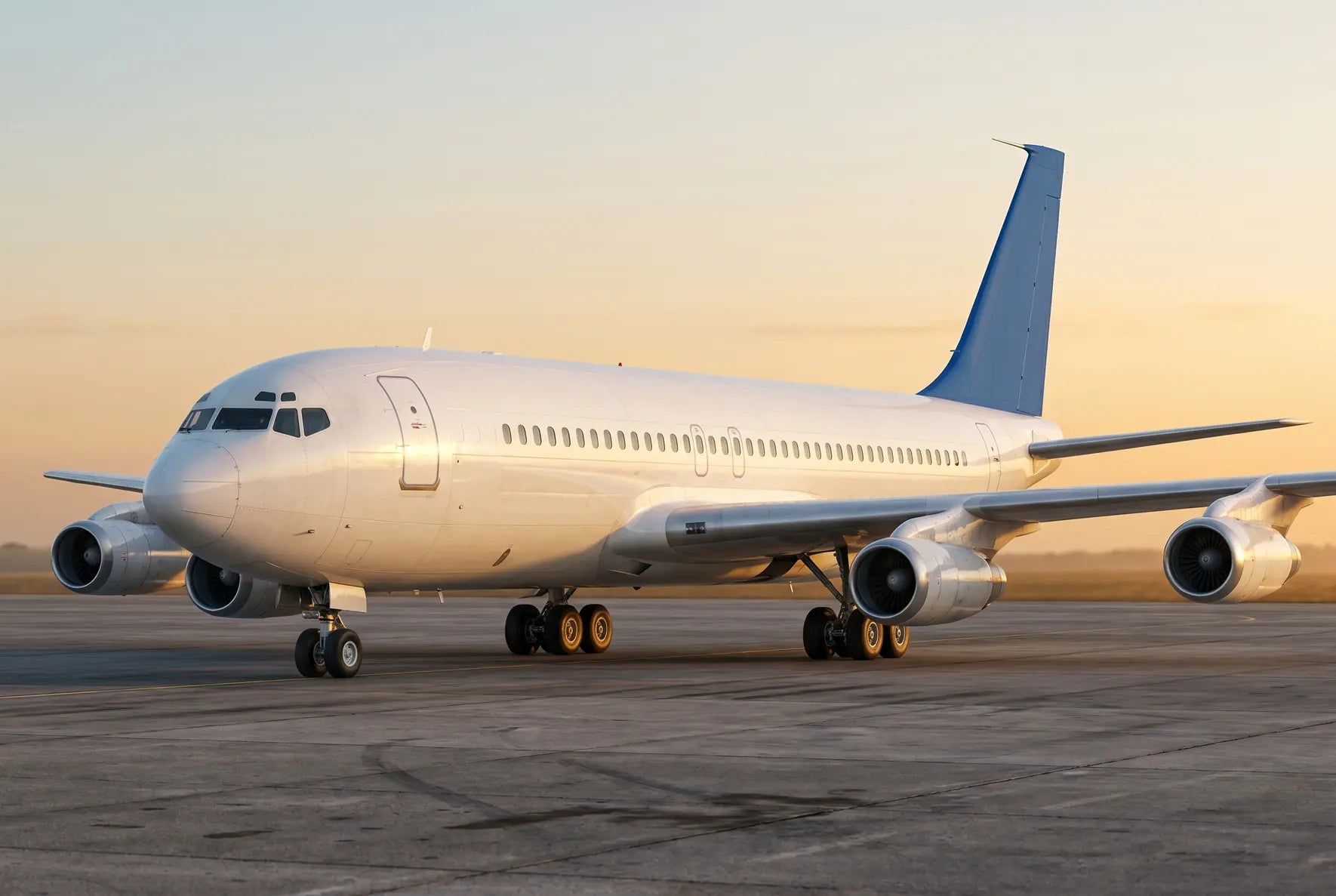
Shanghai Y-10: History, Development, and Legacy of China's First Jetliner
The Shanghai Y-10 (also known as the Yun-10) holds a unique place in aviation history as the first large jet airliner designed and built in the People's Republic of China. Conceived during the politically charged era of the early 1970s, the aircraft was intended to demonstrate that China could independently develop a modern trunk-route transport, reducing reliance on foreign-made airliners. Although the program never reached serial production, the Y-10 laid important groundwork for China's later ambitions in commercial aviation, including the organizations that eventually became COMAC.
The program originated under "Project 708", a large-transport aircraft initiative. On 21 August 1970, the National Planning Commission and the Military Commission of the Central Committee approved a report proposing a domestically built jetliner. Full-scale development was formally authorized on 27 June 1973, when the State Council and Military Commission approved the proposition to develop a four-engined jet airliner. Design responsibility was assigned to the Shanghai Aircraft Research Institute, while manufacturing fell to the Shanghai Aircraft Manufacturing Factory, a predecessor of today's COMAC Shanghai facility.
The Y-10 used the Boeing 707-320C as a design reference, and the resulting aircraft shared its four-engine, low-wing, narrow-body configuration. However, the internal structure was notably different. Chinese engineers, lacking full access to Boeing proprietary data, had to re-derive structural solutions using domestic aluminium alloys and manufacturing techniques. These alloys required thicker sections to achieve equivalent strength, resulting in a heavier airframe. The original plan called for domestically developed WS-8 turbojet engines, but persistent delays with that powerplant forced the prototypes to use imported Pratt & Whitney JT3D turbofan engines, sourced from CAAC's Boeing 707 spares inventory.
Three Y-10 airframes were constructed: one for static ground testing, one as a flight-test prototype (registered B-0002), and one for fatigue testing. On 26 September 1980, prototype B-0002 completed its maiden flight from Shanghai. Between 1980 and 1984, the aircraft performed approximately 130 test flights totalling around 170 flight hours. During its demonstration campaign, the Y-10 visited major Chinese cities including Beijing, Harbin, Urumqi, Guangzhou, Kunming, and Chengdu, and reportedly flew over the Himalayas to Lhasa.
Despite these achievements, the program encountered mounting obstacles. In 1981, the Civil Aviation Administration of China (CAAC) formally declared it had no intention of ordering the Y-10, citing concerns about safety, insufficient testing, and outdated design. By that time, China's post-Mao reform policies under Deng Xiaoping strongly favoured modernization through foreign technology imports. CAAC began purchasing Western-built aircraft, including Boeing 737s from December 1982 onward. The Y-10's four-engine, five-crew-member cockpit layout (pilot, co-pilot, flight engineer, navigator, and radio operator) was already a generation behind new twin-engine, two-crew designs entering Western fleets. The program was officially cancelled in 1985, and the Shanghai Aircraft Manufacturing Factory pivoted to licensed production of the McDonnell Douglas MD-80. Aviation enthusiasts interested in how different airline operations evolved during this era of rapid fleet modernization can explore how carriers like SunExpress adapted their operations to newer aircraft types.
What Distinguished the Shanghai Y-10 from the Boeing 707 and Later Chinese Projects
While the Shanghai Y-10 externally resembled the Boeing 707, its dimensions were closer to the shorter-range Boeing 720. The internal airframe structure, systems architecture, and manufacturing processes all differed substantially from Boeing's approach. The aircraft's empty weight of approximately 58,000 kg was higher than a comparable 707-120, largely due to the thicker domestic alloy sections, which also reduced fuel efficiency. In terms of avionics and cockpit systems, the Y-10 used simpler, less advanced equipment reflecting the capabilities of China's electronics industry at the time. Unlike the 707, the Y-10 never received civil airworthiness certification from any authority, and its total test program of 170 flight hours was far below the thousands of hours typically required by agencies such as the FAA or EASA for type certification.
The Y-10 did not directly evolve into any successor variant. However, the institutional knowledge, engineering workforce, and manufacturing infrastructure built during the program fed into later ventures, including COMAC's ARJ21 regional jet and the C919 single-aisle airliner. The surviving Y-10 prototype is now preserved as a public exhibit in Pudong, Shanghai, where it is recognized as a milestone in China's aerospace history.
Key variant identifiers for the Shanghai Y-10:
- Powerplant (as flown): 4 x Pratt & Whitney JT3D turbofan engines (approximately 84.7 kN / 19,000 lbf thrust each)
- Planned domestic engine: WS-8 turbojet (never fitted to a flying prototype)
- Wingspan: 42.2 m (138 ft 7 in)
- Length: 42.9 m (140 ft 10 in)
- Maximum take-off weight: approximately 102,000 kg (224,872 lb)
- Typical seating: approximately 150 to 178 passengers depending on configuration
- Design range: up to 8,000 km (4,300 nm) with maximum fuel
- Crew: 5 (pilot, co-pilot, flight engineer, navigator, radio operator)
- Total prototypes built: 3 (1 static test, 1 flight test, 1 fatigue test)

The image shows a vintage commercial airliner displayed outdoors on a grassy area. A staircase is leading to the plane's entrance, and another aircraft is visible in the background.
Shanghai Y-10 Technical Specifications, Systems, and Engine Details
The Shanghai Y-10 (Yun-10) was China's first indigenous large jet airliner, developed by the Shanghai Aircraft Research Institute and manufactured by the Shanghai Aircraft Manufacturing Factory during the 1970s. Designed using the Boeing 707-320C as a reference and engineered to U.S. FAR Part 25 (1970 edition) standards, the Y-10 was a four-engine, low-wing, swept-wing, narrow-body transport intended for medium- to long-range domestic operations. Although externally reminiscent of the 707, its overall dimensions were closer to those of the smaller Boeing 720, and Chinese designers maintained that the internal structure was independently engineered.
The Y-10's primary mission was to demonstrate that the Chinese aerospace industry could design and certify a transport-category jet comparable to Western airliners of the era. Design trade-offs reflected the technology available at the time: conventional hydraulically boosted mechanical flight controls, analog instrumentation, and dependence on imported Pratt & Whitney engines due to the unavailability of the planned domestic powerplant. Three airframes were built: one for static testing, one for flight testing (prototype 02, registration B-0002), and one for fatigue testing. The flight-test prototype first flew on 26 September 1980 and went on to complete approximately 130 test flights totalling around 170 flight hours before the programme was cancelled in the mid-1980s.
- Length: 42.93 m (140 ft 10 in)
- Wingspan: 42.24 m (138 ft 7 in)
- Height: 13.42 m (44 ft 0 in)
- Wing area: 244.5 m² (2,632 sq ft)
- Crew: 5 (pilot, co-pilot, flight engineer, navigator, radio operator)
- Passenger capacity: 124 (mixed class), 149 (all economy), or up to 178 (high density)
- Operating empty weight (OEW): 58,120 kg (128,133 lb)
- Maximum takeoff weight (MTOW): 102,000 kg (224,872 lb); some sources cite up to 110,227 kg
- Maximum payload: 16,700 kg (36,817 lb)
- Fuel capacity: 51,000 kg (112,436 lb)
- Maximum speed: 974 km/h (526 kn / 605 mph)
- Maximum cruise speed: 917 km/h (495 kn)
- Economical cruise speed: 830-850 km/h (450-460 kn)
- Range with maximum payload: 5,560 km (3,000 nmi)
- Range with maximum fuel: 8,000 km (4,300 nmi)
- Service ceiling: 12,330 m (40,450 ft)
- Engines: 4 x Pratt & Whitney JT3D turbofans, approximately 75.6-84.7 kN (17,000-19,000 lbf) each depending on subvariant
Flight Controls, Avionics, and Systems Architecture
As a product of 1970s design philosophy built to FAR Part 25, the Y-10 employed conventional hydraulically boosted mechanical flight controls for its primary surfaces (ailerons, elevators, and rudder), consistent with the Boeing 707/720 generation. The control layout featured a conventional single-rudder and slab tailplane arrangement, Fowler-type trailing-edge flaps, and full-span leading-edge devices. Multiple independent hydraulic systems provided the redundancy required by FAR 25, although the exact number of hydraulic circuits has not been publicly documented in open-source literature.
The flight deck followed the analog electromechanical instrument standard of its era, with conventional steam-gauge flight instruments (attitude, airspeed, altitude, vertical speed, and horizontal situation indicators). Navigation equipment included VOR/ILS and ADF receivers for IFR en-route and terminal procedures, along with VHF communication radios. A conventional analog autopilot with heading hold, altitude hold, and ILS coupling was part of the baseline avionics fit. This instrumentation level was functionally comparable to that of contemporary early narrow-body jets, though it predated the introduction of electronic flight instrument systems (EFIS) and flight management systems (FMS) that appeared on later Western types.
Published performance figures for the Y-10 should be interpreted with caution. Because only one prototype ever flew and the aircraft never entered serial production or airline service, the available numbers represent manufacturer design specifications and flight-test measurements rather than certified, operator-validated data. Variations between sources (for example, the MTOW figures of 102,000 kg versus 110,227 kg) may reflect different design load cases, planned growth variants, or differences in how Chinese and Western reporting translated original documentation. Atmospheric assumptions, runway conditions, and exact engine subvariant also affect any quoted field-performance or range values.
Engines: The Pratt & Whitney JT3D and the Unfinished WS-8
The Y-10 was originally intended to fly with the WS-8, a domestically developed Chinese turbofan engine. However, the WS-8 programme never reached a flight-ready state, and all Y-10 prototypes were instead powered by four Pratt & Whitney JT3D turbofan engines sourced as spare parts for CAAC's existing Boeing 707 fleet. Sources variously identify the subvariant as JT3D-3B or JT3D-7, with thrust ratings of approximately 84.7 kN (19,000 lbf) or 75.6 kN (17,000 lbf) per engine respectively.
The JT3D holds a significant place in aviation history as Pratt & Whitney's first commercial production turbofan engine. Developed in the late 1950s by adapting the proven J57/JT3C turbojet gas generator and adding a two-stage front fan, the JT3D delivered approximately 35% more thrust while reducing fuel consumption by 15-22% and cutting takeoff noise by about 10 dB compared to its turbojet predecessor. The engine first flew on a Boeing 707-120 in June 1960 and went on to power the Boeing 707-120B, Boeing 720B, and Douglas DC-8-50/61/62/63 series, becoming one of the most widely used first-generation turbofan engines in commercial aviation.
For the Y-10, the reliance on imported JT3D engines proved to be a critical vulnerability. With the WS-8 programme unable to deliver a viable alternative and no domestic production capability for the JT3D, the aircraft remained entirely dependent on foreign engine supplies. A contemporary CIA intelligence assessment confirmed that the Y-10 used the same JT3D family as China's 707s and that the engines had been originally purchased as spares for the civil airline fleet. This engine-supply constraint, combined with funding shortages and a strategic pivot toward licensed McDonnell Douglas MD-80 assembly at Shanghai, ultimately contributed to the Y-10 programme's cancellation around 1985.
Shanghai Y-10 vs Boeing 707-320B, Airbus A300B2 and McDonnell Douglas DC-8-63: Specifications Comparison
Scroll horizontally to see more →
| Parameter | Shanghai Y-10 | Boeing 707-320B | Airbus A300B2 | McDonnell Douglas DC-8-63 |
|---|---|---|---|---|
| Entry into service | N/A | 1962 | 1974 | 1968 |
| Engines | 4 × Pratt & Whitney JT3D turbofan | 4 × Pratt & Whitney JT3D turbofan | 2 × General Electric CF6-50C turbofan | 4 × Pratt & Whitney JT3D turbofan |
| Length | 42.93 m | 46.61 m | 50.97 m | 57.12 m |
| Wingspan | 42.24 m | 44.42 m | 44.84 m | 45.16 m |
| Height | 13.42 m | 12.93 m | 16.48 m | 13.34 m |
| Typical seating and layout (short description + approximate passengers) | mixed-class/high-density: 124–178 passengers | 2-class/3-class: 141–189 passengers | 2-class: 266–300 passengers | 2-class/3-class: 177–259 passengers |
| MTOW | 110 t | 148 t | 142 t | 147 t |
| Range | 4,300 nm | 5,750 nm | 3,250 nm | 4,750 nm |
| Cruise speed | 0.80 Mach | 0.82 Mach | 0.82 Mach | 0.82 Mach |
| Service ceiling | 40,450 ft | 42,000 ft | 37,500 ft | 42,000 ft |
| Program note | China’s first indigenous large jet airliner; a 707-inspired prototype and technology demonstrator that never entered airline service. | Baseline long-range four-engine jet of the 707 family; a direct technological reference point for the Y-10’s layout and systems. | Early wide-body twin intended for high-capacity medium- to long-haul service; a larger, more efficient generation than the Y-10. | Stretched four-engine long-range variant of the DC-8 family; a contemporary high-capacity competitor in the same era. |
Scroll horizontally to see more →
The table compares the prototype Shanghai Y-10 with three contemporary jetliners across dimensions, capacity and performance. The Y-10 closely matches the 707 in engine type, speed and wingspan but is shorter and far lighter in MTOW, with less range. The A300 stands out as a larger twin with much higher seating but lower ceiling and shorter range.
Shanghai Y-10 Operations, Test Missions and Intended Airline Service
The Shanghai Y-10 never entered commercial airline service. Developed during the 1970s by the Shanghai Aircraft Research Institute, this four-engine narrow-body jet remained a prototype and technology demonstrator throughout its brief operational life. Only three airframes were built: one for static testing, one for fatigue testing, and a single flying prototype registered as B-0002. Understanding the Y-10's test missions, intended operational profile and the reasons it never reached airline fleets provides valuable context for appreciating China's long road toward indigenous civil aviation.
The sole flying prototype completed its maiden flight on 26 September 1980 and went on to accumulate approximately 130 test flights and around 170 flight hours before being retired in 1983-1984. Test missions included basic airworthiness evaluations such as takeoff and landing performance, climb profiles, cruise handling qualities, stall margins and systems checks for the four Pratt & Whitney JT3D turbofan engines. Notable sorties included an endurance flight of 4 hours 49 minutes, a distance test covering approximately 2,236 miles and a high-altitude flight over the Himalayas. With a designed range of approximately 8,000 km (4,300 nautical miles) and a maximum cruise speed of around 917 km/h, the Y-10 sat in the same performance envelope as late-model Boeing 707-320C variants.
During its demonstration campaign, B-0002 visited several major Chinese cities including Beijing, Harbin, Urumqi, Zhengzhou, Hefei, Guangzhou, Kunming, Chengdu and Lhasa. These were non-scheduled flights designed to showcase the aircraft to officials and evaluate performance across varied geographical and climatic conditions, from the high-altitude airports of the Tibetan Plateau to the tropical climate of southern China. None of these flights carried fare-paying passengers or operated within a scheduled network.
Why the Shanghai Y-10 Never Reached Airline Fleets
The Shanghai Y-10 was originally intended for the Civil Aviation Administration of China (CAAC), which at the time functioned both as regulator and national airline operator. However, by the time the prototype flew in 1980, CAAC had already acquired imported Boeing 707s and Ilyushin Il-62 aircraft and publicly stated in 1981 that it had no intention to purchase the Y-10. Several factors sealed the programme's fate. The five-person flight crew and four-engine configuration were already considered obsolescent, as Western manufacturers were moving toward two-crew cockpits and efficient twin-engine designs. The planned domestic WS-8 engine was never ready for installation, leaving the prototypes dependent on second-hand Western powerplants. Under Deng Xiaoping's economic reforms, China prioritised acquiring proven foreign designs, and the Shanghai factory pivoted to licensed production of the McDonnell Douglas MD-80. The Y-10 programme was officially cancelled around 1985.
No airline in Europe, North & South America, Asia or Africa ever operated or ordered the Shanghai Y-10. Unlike contemporaries such as the Boeing 707 or Douglas DC-8, the Y-10 never progressed beyond the prototype stage, and no export or leasing arrangements were pursued. In the broader context of sustainability challenges facing modern aviation, the Y-10's four-engine, high-fuel-consumption architecture would have been commercially unviable even had it entered service.
Where the Shanghai Y-10 Fits in Regional Aviation History
Because the Shanghai Y-10 was exclusively a Chinese government-backed prototype programme, its operational footprint was confined entirely to Asia, specifically mainland China. No carriers in Europe, North & South America or Africa were ever involved. The aircraft's significance today lies primarily in its role as a precursor to modern Chinese commercial aviation efforts, most notably the COMAC C919.
- Asia: The only region where the Shanghai Y-10 operated. CAAC was the sole intended customer but never accepted the type. Test flights were conducted exclusively within Chinese airspace, visiting cities across the country from Harbin in the northeast to Kunming in the southwest. The institutional knowledge gained during the Y-10 programme fed into the organisations that later formed COMAC, which today produces the ARJ21 regional jet and the C919 narrow-body.
- Europe: No European airline or operator was involved with the Shanghai Y-10 at any stage. The programme had no export component, and the aircraft was never evaluated or demonstrated outside China.
- North & South America: No connection to airlines or operators in the Americas. The Pratt & Whitney JT3D engines fitted to the prototypes were sourced from existing CAAC Boeing 707 spares, representing the only American industrial link to the programme.
- Africa: No African airline or government expressed interest in the Y-10, and the aircraft was never marketed for export to any African nation.
Intended Cabin Layout and Seating Configuration
Detailed seat maps for the Shanghai Y-10 were never published, as the aircraft did not reach the airline configuration stage. However, available technical sources provide a general picture. The Y-10 was designed as a single-aisle narrow-body with a fuselage cross-section closely modelled on the Boeing 707-320C. Published capacity figures range from 124 to 178 passengers. The lower figure likely corresponds to a two-class arrangement with a forward premium cabin, while the higher figure reflects a high-density, single-class domestic layout. Based on the 707-comparable cabin width, economy seating would have been arranged in a 3-3 abreast configuration, consistent with standard practice for narrow-body jets of that era. No information is available regarding seat pitch, galley placement, lavatory count or overhead bin dimensions, as these details were never finalised for a production aircraft. The flight deck accommodated a five-person crew, including captain, first officer, flight engineer, navigator and radio operator, a configuration already outdated by early 1980s standards when two-crew cockpits were becoming the norm.
The surviving flying prototype, B-0002, was stored for decades at Shanghai Dachang Airbase before being relocated in late 2017 to the COMAC manufacturing complex in Shanghai Pudong, where it is now preserved as a public exhibit. While the Shanghai Y-10 never achieved its goal of serving Chinese airlines, its legacy endures as the foundation upon which China's modern commercial aerospace ambitions were built.
In this video, discover the Shanghai Y-10, China’s first attempt at building a passenger airliner, and learn why the ambitious project mattered, how it was developed, and what ultimately limited its path to success.
Shanghai Y-10 Safety Record: How Safe Was China's First Jetliner?
The Shanghai Y-10 occupies a unique position in aviation safety discussions because it never entered commercial service. Only three airframes were built, all prototypes: one for static structural testing, one for fatigue testing, and one flying example registered as B-0002. The sole flight-capable Y-10 completed approximately 130 test flights totalling around 170 flight hours between its maiden flight on 26 September 1980 and its retirement in 1984. Because the aircraft operated exclusively within a controlled, state-managed test programme rather than scheduled airline operations, applying conventional fleet-safety metrics such as hull-loss rates per million departures is not meaningful. What can be stated with confidence, based on publicly available records from databases such as the Aviation Safety Network, is that no accident, hull loss or fatal incident involving the Y-10 has ever been documented.
Notable Incidents and Programme Challenges
No crash, structural failure in flight or serious airborne emergency involving the Shanghai Y-10 appears in any authoritative aviation safety database or in the extensive retrospective literature about the programme. The flight-test campaign included demanding sorties such as long-range flights from Shanghai to Beijing, Harbin, Urumqi and other cities, as well as high-altitude operations. All were completed without a reported major safety event.
That said, the programme did encounter significant technical difficulties on the ground. The indigenously developed WS-8 turbofan engines, reverse-engineered from the Pratt & Whitney JT3D, suffered persistent oil-leak problems that engineers were unable to resolve satisfactorily. As a result, the flying prototype was fitted with imported JT3D-3B engines sourced from a damaged Pakistan International Airlines Boeing 707, which provided proven Western-standard powerplant reliability for the test flights.
The broader context is also important. Senior officials within the Civil Aviation Administration of China (CAAC) reportedly expressed reservations about the Y-10's airworthiness, citing insufficient depth of testing rather than any specific in-flight failure. According to programme retrospectives, CAAC ultimately declined to place orders for the aircraft, contributing to the project's cancellation around 1985. The decision to end the programme was driven by a combination of political, economic and strategic factors, not by a catastrophic safety event. China subsequently shifted its large-aircraft strategy toward licensed production of the McDonnell Douglas MD-82 at the same Shanghai factory.
How Safe Was the Shanghai Y-10?
Assessing the overall safety of the Yun-10 requires an understanding of its design philosophy, testing regime and regulatory environment. The aircraft was formally designed to U.S. Federal Aviation Regulation Part 25 (1970 edition) transport-category standards, using the Boeing 707-320C as a primary reference. Structural ground testing included static load tests on a dedicated airframe and a wing ultimate-load test that reached 100.02% of the then-applicable FAA standard before structural failure, indicating the design met its nominal strength targets. A third airframe was allocated to fatigue testing, though the full extent and results of that programme remain limited in publicly accessible documentation.
However, the Y-10's safety assurance fell well short of what contemporary Western airliners achieved. The flight-test programme of 170 hours was a fraction of the thousands of hours typically accumulated before a Western type certificate is granted. China did not possess an independent certification authority comparable to the FAA or the precursor to EASA at the time, and the Y-10 was never submitted for international certification. Key areas such as damage tolerance, in-service fatigue crack propagation, full-scale evacuation demonstrations and comprehensive icing trials are not documented in the open literature. The aircraft's heavier-than-necessary structure, caused by Chinese industry's inability to produce the large aluminium-alloy sheets used in Western manufacturing, offered generous static-strength margins but also pointed to immature production capabilities.
When placed alongside the broader history of global aviation safety, the Y-10 programme is best understood as a technology demonstrator rather than a production airliner. It proved that Chinese engineers could design and fly a large four-engine jet transport, but it did not reach the level of certification, testing depth or operational validation required for safe, routine passenger service. The lessons learned from the Y-10 influenced later Chinese aerospace ambitions, ultimately contributing to programmes such as the COMAC ARJ21 and C919, which pursued full international-standard certification from the outset. Aviation remains among the safest forms of transport worldwide, and the rigorous certification frameworks that the Y-10 programme highlighted as essential continue to underpin that record today.
01 Was the Shanghai Y-10 ever used on regular airline routes?
The Shanghai Y-10 never entered regular commercial airline service. Only a few prototypes were built, and these were used mainly for test flights and demonstration missions within China rather than scheduled passenger routes. Its development was eventually cancelled before any airline could operate it in routine service.
02 What was the intended role and range of the Shanghai Y-10?
The Shanghai Y-10 was designed as a long-range, widebody airliner broadly comparable to early Boeing 707 and 720 models. Its planned mission profile focused on trunk domestic routes and potential international services, with an intended range in the order of several thousand kilometres suitable for medium to long-haul flights. In practice, test flying remained limited and it never fulfilled this operational role.
03 How many passengers was the Shanghai Y-10 designed to carry and what was the cabin like?
The Shanghai Y-10 was planned with a typical two-class layout of roughly 150–180 passengers, similar to contemporary narrow-body and early jetliners. The cabin concept featured a single-aisle configuration with standard economy and a smaller forward premium section, using seating and finishes typical of late-1970s designs. Because the aircraft did not reach commercial service, there is little documented information on cabin noise levels or in-service comfort from passengers.
04 Why did the Shanghai Y-10 project end and how did it compare to foreign aircraft?
The Shanghai Y-10 program ended mainly due to high development costs, limited industrial capability at the time, and the rapid availability of imported Western airliners that were more efficient and proven. Technically, the Y-10 drew heavily on the layout and performance envelope of the Boeing 707 era rather than matching newer designs like the Boeing 737 Classic or Airbus A310. As global standards moved toward more fuel-efficient and advanced avionics, the Y-10’s older concept made it less competitive for long-term airline operations.
05 What engines powered the Shanghai Y-10 and how did that affect performance and fuel efficiency?
The Shanghai Y-10 prototypes used four Pratt & Whitney JT3D turbofan engines, the same family used on many early Boeing 707s. These low-bypass engines were reliable for their time but considerably noisier and less fuel-efficient than later high-bypass turbofans. As a result, the Y-10’s projected operating economics would likely have been less attractive than newer twin-engine designs emerging in the 1980s.
06 Is the Shanghai Y-10 considered safe and is any example preserved today?
There is no record of major accidents involving the Shanghai Y-10, largely because the type never went into commercial service and only a limited number of test flights were conducted under controlled conditions. Safety evaluations remained internal to the development program rather than being proven in airline operations. At least one Y-10 prototype has been preserved and is displayed in China as a museum piece, illustrating an important step in the country’s early large-aircraft development history.