

Polar Air Cargo Overview & Company Profile
Polar Air Cargo was an American all-cargo airline founded in 1993 and headquartered in Purchase, New York. For over three decades, the airline was a major force in international air freight, operating scheduled and charter cargo services across North America, Asia, Europe, and the Middle East. As a joint venture between Atlas Air Worldwide Holdings (51% stake) and DHL Express (49% stake), Polar served as a critical bridge between DHL's global express network and Atlas Air's heavy freighter capabilities.
In February 2025, Atlas Air and DHL Express announced the dissolution of the Polar Air Cargo joint venture, ending 18 years of partnership. The decision was mutual: Atlas Air pursued its "One Atlas Strategy" of diversifying customer relationships beyond a single anchor partner, while DHL shifted toward more fuel-efficient Boeing 777 freighters and away from the higher operating costs of the 747 platform. Polar Air Cargo ceased independent operations by early 2025, with its assets, staff, and air operating certificate absorbed into the broader Atlas Air structure. Pilots who had been flying under the Polar banner transitioned to Atlas Air operations, as both groups had already shared a joint collective bargaining agreement and integrated seniority list.
Before its dissolution, Polar was known for its transpacific expertise, operating some of the busiest cargo routes between the United States and Asia. The airline held CEIV Pharma certification for pharmaceutical logistics and specialized in high-value goods, e-commerce shipments, and perishable cargo. Its history included operating flights for the U.S. Air Force's Air Mobility Command, further cementing its role in the strategic airlift landscape.
As of early 2025, Polar Air Cargo no longer operates as an independent airline. Its joint venture was dissolved and operations absorbed into Atlas Air. Pilots formerly flying under the Polar banner now operate under Atlas Air's structure and air operating certificate. This article covers Polar Air Cargo's historical pilot conditions and the current reality for former Polar pilots within the Atlas Air system. All salary, roster, and benefits information reflects the joint Atlas Air/Polar collective bargaining agreement (JCBA) administered by Teamsters Local 2750.
Fleet Composition & Aircraft Types
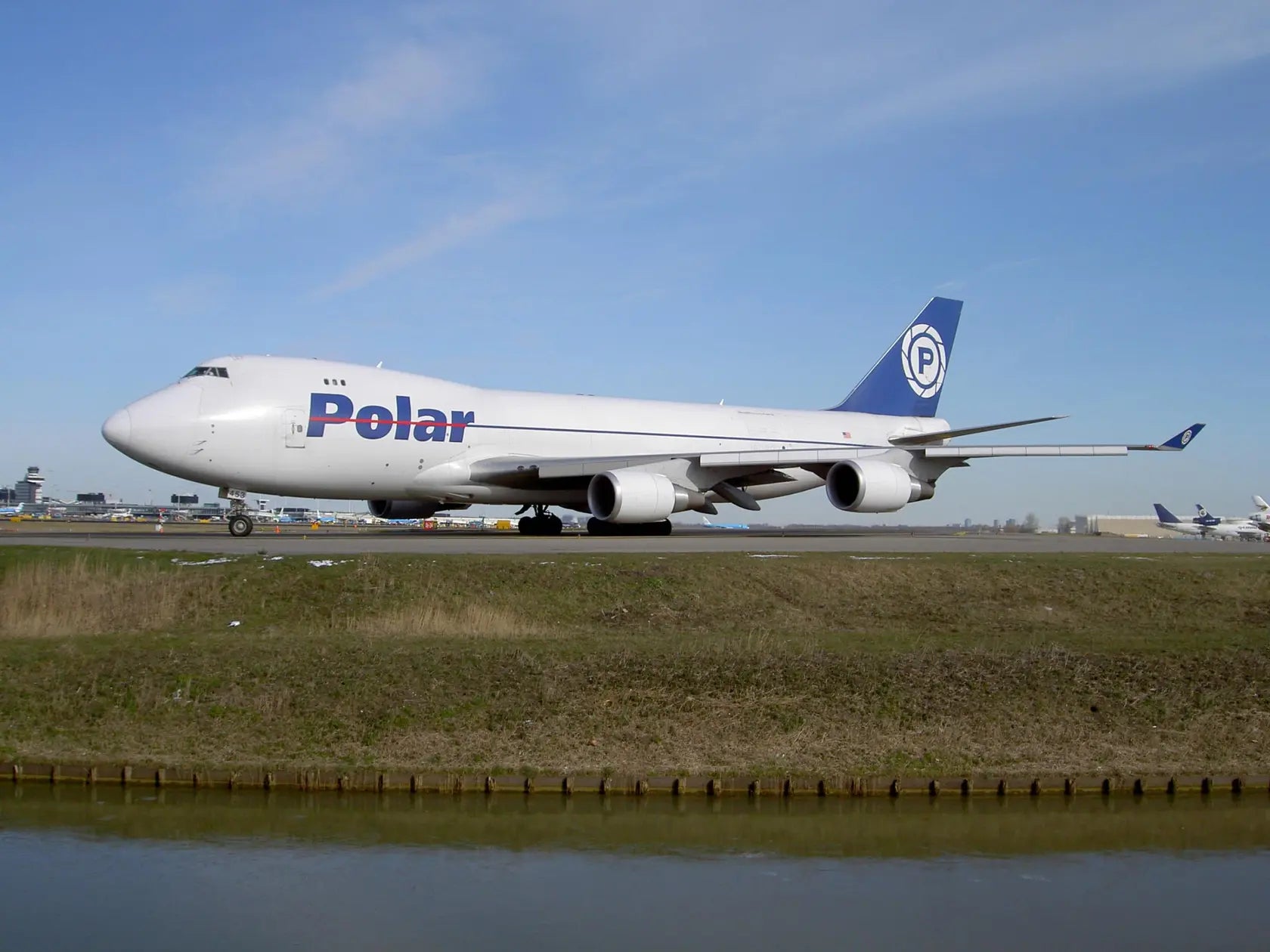
Polar Air Cargo operated an all-Boeing freighter fleet throughout its history. By the time of its dissolution in early 2025, the airline's fleet had been streamlined to just six aircraft: four Boeing 747-8 Freighters and two Boeing 777-200 Freighters. Earlier in its history, Polar flew the Boeing 747-400F and the Boeing 767-300ER Freighter, both of which were phased out between 2022 and 2024 as the airline consolidated around its most capable widebody platforms.
The 747-8F was the workhorse of Polar's operation, offering a maximum payload of approximately 137 tonnes and a range exceeding 8,100 km. These aircraft were particularly suited to the airline's core transpacific routes, connecting U.S. hubs to major Asian freight gateways. The 777F, meanwhile, brought greater fuel efficiency and was increasingly favored by DHL for its lower per-tonne operating costs on high-density routes.
| Aircraft Type | Role | In Service (at closure) | Post-Dissolution Status |
|---|---|---|---|
| Boeing 747-8F | Long-haul heavy freighter | 4 | Retained by Atlas Air, redeployed to other customers under long-term contracts. |
| Boeing 777-200F | Long-haul freighter | 2 | Reclaimed by DHL Express. Atlas Air provides CMI (crew, maintenance, insurance) services. |
| Boeing 747-400F | Long-haul freighter | 0 (retired) | Phased out 2022-2023. Replaced by 747-8F operations. |
| Boeing 767-300ERF | Medium-haul freighter | 0 (retired) | Phased out by 2024. Operations consolidated onto 747/777 platforms. |
Fleet data as of early 2025, at the time of joint venture dissolution. Average fleet age was approximately 12.5 years.
For pilots, the fleet composition meant that Polar was exclusively a widebody cargo operation in its final years. All crew members held type ratings on either the 747 or 777 platform, both of which are among the most prestigious and highest-paying aircraft types in the cargo world. Following the dissolution, these aircraft and their crews were absorbed into Atlas Air's broader fleet, which includes over 100 aircraft across the 747-400F, 747-8F, 777-200F, 777-200LRF, and 767-300ERF platforms.
The Boeing 747-8F remains the largest commercial freighter in active production (as of 2025), with a nose-loading capability that sets it apart from the 777F. Polar's four 747-8F aircraft were among the most modern examples in service. However, rising fuel costs and the 777F's superior economics have shifted industry preference toward the twin-engine platform. Boeing delivered its final 747 in January 2023, marking the end of the iconic jumbo jet production line. For cargo pilots, flying the 747 remains a unique career highlight that is becoming increasingly rare.
Pilot Salary & Compensation Breakdown
Polar Air Cargo pilots were compensated under the same joint collective bargaining agreement (JCBA) as Atlas Air pilots, negotiated by Teamsters Local 2750. The current JCBA was imposed through binding arbitration in 2024, following a protracted six-year negotiation process. Under this agreement, Captain pay was increased by approximately 32.5% from prior levels, bringing hourly rates closer to, but still below, the compensation offered by the major integrated cargo carriers like FedEx Express and UPS.
Pay at Atlas Air and Polar Air Cargo varies significantly by aircraft type and seniority year. The 747 and 777 platforms command the highest hourly rates, while the 767 and 737 (Atlas Air fleet only) sit lower on the pay scale. All pilots receive a monthly minimum guarantee (MMG) of 64 flight hours, ensuring baseline compensation even during light scheduling months. Reserve pilots typically credit 76 to 78 hours per month, while out-base assignments guarantee up to 130 hours.
First Officer (F/O) Pay Scale
| Seniority | B747 Hourly | B777 Hourly | B767 Hourly | Est. Annual (747) |
|---|---|---|---|---|
| Year 1 | $92.00 – $97.60 | $92.00 – $97.60 | $92.00 – $97.60 | ~$70,000 – $75,000 |
| Year 2 | $137.10 | $137.11 | $130.42 | ~$105,000 – $130,000 |
| Year 3 | $170.74 | $166.41 | $162.07 | ~$130,000 – $165,000 |
| Year 5+ | $180 – $195 | $175 – $190 | $170 – $180 | ~$140,000 – $185,000 |
First Officer hourly rates based on the 2024 JCBA. Annual estimates assume 64-80 credit hours per month and exclude per diem, overtime, and bonuses. Year 1 rates are flat across all fleet types.
Captain Pay Scale
| Seniority | B747 Hourly | B777 Hourly | Est. Annual (747) |
|---|---|---|---|
| Entry Captain | $253.00 | $250.00 | ~$195,000 – $240,000 |
| Mid-Career (5-8 yrs) | $290.00 – $310.00 | $285.00 – $305.00 | ~$225,000 – $295,000 |
| Top Rate (12+ yrs) | $332.68 | $324.00 | ~$255,000 – $320,000 |
Captain hourly rates under the 2024 JCBA. Top rate of $332.68/hour represents the maximum for the 747 fleet. Annual estimates depend on actual credit hours flown and do not include per diem or premium pay.
Additional Compensation
Salary figures are compiled from the 2024 JCBA arbitration award, AirlinePilotCentral.com data, pilot forum reports, and industry comparisons. Actual compensation depends on monthly credit hours, per diem accumulation, premium pay, and individual seniority position. The 2024 JCBA included a 32.5% pay increase for Captains from pre-arbitration levels. The contract is amendable in September 2026, with early negotiations potentially beginning in January 2026. Always verify with the latest Teamsters Local 2750 publications for current figures.
Roster Pattern & Quality of Life
Quality of life at Polar Air Cargo (and the broader Atlas Air system) is one of the most debated topics among U.S. cargo pilots. The ACMI business model creates a fundamentally different lifestyle compared to integrated carriers like FedEx or UPS. Schedules are less predictable, trips can span multiple days across international time zones, and the distinction between "home" and "work" can blur significantly for junior pilots. Under the JCBA, pilots are guaranteed a minimum of 14 days off in a 31-day month (13 in a 30-day month), with no more than 17 consecutive duty days without at least 4 consecutive days off.
The scheduling system is built around six distinct line types, awarded by seniority. Senior pilots holding primary lines enjoy the most predictable schedules with pre-assigned trip pairings and no reserve obligation. Junior pilots, by contrast, often find themselves on secondary or reserve lines, where schedules can change with as little as 48 hours' notice (secondary) or require a check-in window 16 hours before potential duty (reserve). The variability of ACMI operations means that trip pairings can change based on customer demand, adding another layer of unpredictability.
Line Types Explained
| Line Type | Description | Monthly Guarantee | Best For |
|---|---|---|---|
| Primary Line | Pre-assigned trip pairings + fixed days off. No reserve. Pay-protected to guarantee or actual (whichever higher). | 64 hours | Senior pilots seeking schedule control |
| Secondary Line | Blocks of days on/off, filled as needed with 48-hour notice. Daily schedule check required (1700-1800Z). | 64 hours | Pilots accepting flexibility for potential extra time off |
| Fixed Pattern Line | Consistent year-round: 13 consecutive days off mid-month + 17 days on. Bid annually by July 1. Capped at 10% of base staffing. | 64 hours | Pilots wanting predictability without monthly bidding |
| Reserve Line | Blocks of reserve + days off. Hotel standby at base. 12-hour duty / 12-hour rest cycles. 90-minute report time. | 76-78 hours | Junior pilots; higher pay guarantee than line |
| VTO Line | Voluntary time off. Converts to primary/secondary/reserve after first round. Junior pilots bid blind. | 64 hours | Pilots wanting maximum time off (lower pay) |
| Out-Base Assignment | Overseas basing for up to full month. Up to 30 duty days minus FAA rest. Capped at 7% per fleet. | 130 hours | Pilots seeking maximum earnings |
📅 Sample Month: Secondary Line, 747 First Officer (ANC Base)
Atlas Air (and formerly Polar) pilots can bid for bases by seniority. Primary bases include ANC (Anchorage, often the most junior 747 base), CVG (Cincinnati), JFK (New York), LAX (Los Angeles), MIA (Miami), ORD (Chicago), IAH (Houston), and others including ONT, PDX, TPA, PAE, HSV, and international bases like HKG (Hong Kong). The company provides deadhead transportation, hotel accommodation, and ground transport for pilots reporting to their base for duty. Living in-base is strongly recommended for optimal quality of life, though many pilots commute. New hires should expect to be assigned to junior bases, with ANC being the most common starting point for 747 crews.
Benefits, Retirement & Travel Perks
Benefits for Polar Air Cargo pilots were administered through the Atlas Air system and governed by the JCBA with Teamsters Local 2750. The package includes health insurance, retirement contributions, travel privileges, and standard industry protections. While the benefits are competitive for an ACMI cargo carrier, they fall short of the premium packages offered by the major integrated carriers (FedEx, UPS) that include defined benefit pensions and more generous profit-sharing arrangements.
The 401(k) structure improved significantly under the 2024 arbitration award. The company's direct contribution of 14% (rising to 16% in 2026), combined with the 100% match on up to 10% of employee contributions, means pilots can accumulate up to 26% of pay in retirement savings annually. For a senior Captain earning $300,000+, this translates to roughly $78,000 per year flowing into retirement accounts. While this does not match FedEx's legacy pension plan (which can pay up to $169,000 annually in retirement), it is among the stronger defined-contribution packages in the ACMI cargo sector.
Career Progression & Seniority
Career progression at Polar Air Cargo (and now Atlas Air) is driven by seniority. Your seniority number determines your base assignment, line type, fleet preference, and eligibility for upgrade to Captain. The integrated seniority list, mandated by federal courts in 2020 as part of the "One Atlas" merger with Southern Air, means that all Atlas Air, Polar Air Cargo, and former Southern Air pilots compete on a single list for all positions and preferences.
Upgrade timelines from First Officer to Captain vary significantly by fleet and base. Based on late 2023 seniority data (the most recent publicly available), upgrade to Captain on the 747 at the most junior base (ANC) required a seniority date of approximately February 2018 or earlier. At more senior bases like ORD or CVG on the 747, upgrade required dates closer to mid-2017. These timelines translate to roughly 5 to 8 years from date of hire to Captain upgrade, depending on fleet, base, hiring waves, and attrition rates.
| Career Milestone | Typical Timeline | Notes |
|---|---|---|
| Hire as First Officer | Day 1 | All new hires enter as F/O. No direct-entry Captain positions publicly advertised. |
| Initial Operating Experience (IOE) | 2-4 months | Type rating + line training on assigned aircraft (747, 777, or 767). |
| Competitive base assignment | ~3-6 months (junior base) | ANC (Anchorage) is the most common entry base for 747 F/Os. Good lines possible within 3 months post-IOE. |
| Fleet transition (e.g., 767 to 747) | Seniority-dependent | Bid by seniority. 747 and 777 command highest pay. |
| Captain upgrade | ~5-8 years | Varies by base/fleet. ANC 747 approximately 6-7 years. CVG/JFK 747 approximately 7-8 years. |
| Senior Captain (top rate) | 12+ years | Top hourly rate of $332.68/hr on the 747. |
Atlas Air has experienced significant pilot attrition in recent years. According to Teamsters Local 2750 reports, approximately 310 departures plus 28 retirements occurred in a single year, with projections of 450 to 500 total losses outpacing 250 new hires. This attrition, driven partly by dissatisfaction with the imposed JCBA, has led to flight cancellations and operational disruptions. For prospective pilots, this creates a double-edged dynamic: faster upgrade times and more base options, but also a potential indicator of deeper quality-of-life concerns that should be carefully evaluated.
Following Atlas Air's 2016 acquisition of Southern Air, federal courts ordered an integrated seniority list and joint bargaining by 2020. This merged all Atlas, Polar, and Southern pilots onto a single list. For former Polar pilots, this meant competing with a much larger pilot group for base and fleet preferences. The integration was contentious, with the union resisting pre-ratification merged lists citing leverage concerns. Today, the integrated list is the sole determinant of career progression across all Atlas Air operations, regardless of whether a pilot was originally hired under the Polar, Atlas, or Southern banner.
Recruitment Process & Requirements
Pilot recruitment for Polar Air Cargo was handled through the Atlas Air Worldwide careers portal, reflecting the shared operational structure. Since Polar's dissolution, all new pilot hiring flows directly through Atlas Air. The airline recruits First Officers with a strong preference for military and experienced civilian pilots, though minimum qualifications are accessible to any FAA ATP holder meeting the hour requirements.
Minimum Requirements
Preferred Qualifications
While the minimums above are technically sufficient, competitive candidates typically bring 2,500+ total hours in Part 121/135/91/military operations, 500+ turbine hours, 200+ hours in the last 12 months, and previous widebody, international, or military transport experience. Historically, the civilian-military hiring mix has targeted approximately 60/40, with civilian pilots needing around 5,000+ total hours to be truly competitive against military applicants.
Selection Stages
Online Application & Screening
Submit application through the Atlas Air Worldwide careers portal. Initial screening includes a phone interview or personality assessment to confirm qualifications, flight hours, and basic fit.
Online Technical Exam
A 50-question exam covering ATP-level knowledge, weather, FAR Part 121 regulations, and general aviation operations. Time limit of 60 minutes. This is a screening tool to assess baseline technical competency.
In-Person Technical Interview
Conducted on the same day as the HR interview. Includes detailed logbook review, questions on IFR procedures, SIDs/STARs, ETOPS operations, taxiway restrictions, and aircraft systems. A 20 to 30 minute technical panel discussion may also be included. Expect scenario-based questions testing decision-making under pressure.
HR Interview
Behavioral and situational questions focusing on CRM, TEM (Threat and Error Management), motivation for joining Atlas Air, aircraft preference (747/777/767), and cultural fit. Candidates may be asked to complete a written essay component.
Background Check, Drug Test & Medical
10-year background check, PRIA (Pilot Records Improvement Act) review, PRD (Pilot Records Database) check, DOT drug test, and Part 120.107(5) testing. Current FAA Class 1 Medical must be valid before commencing training.
Atlas Air partners with Ameriflight through a formal pathway program. Pilots who complete 36 months of experience at Ameriflight gain a preferred hiring pathway to Atlas Air. This program provides a structured route from regional cargo operations to widebody international flying, and is particularly attractive for pilots building turbine PIC time. However, direct applications from outside the pathway program are also accepted and competitive.
How Polar Air Cargo Compares: Airline Radar Chart
How did Polar Air Cargo (now Atlas Air) stack up against the two dominant U.S. cargo carriers, FedEx Express and UPS Airlines? Below is a comparative analysis across five key dimensions. Scores are editorial estimates based on publicly available data, pilot forum feedback, union publications, and industry benchmarks.
Key Takeaways from the Comparison
FedEx and UPS dominate in compensation. FedEx widebody Captains earn $277 to $326/hour, while UPS veteran Captains take home approximately $393,000 annually. Atlas Air's top Captain rate of $332.68/hour on the 747 is competitive at the very top of the scale, but the path to that rate is longer, and the overall pay structure (including year-one F/O rates as low as $92/hour) falls well behind both FedEx and UPS entry rates.
Quality of life favors the integrators. FedEx and UPS offer more predictable scheduling, established base systems with domestic hub-and-spoke patterns, and generally shorter trips. Atlas Air's ACMI model means international rotations that can span multiple days, unpredictable scheduling for junior pilots, and the potential for 17 consecutive duty days. FedEx pilots benefit from a 74-hour monthly minimum and more stable trip pairings.
Benefits tell a clear story. FedEx offers both a legacy pension (up to $169,000/year) and a Market-Based Cash Balance Plan with annual contributions up to $36,300. UPS provides a comparable package. Atlas Air's improved 401(k) (14-16% company contribution) is respectable but lacks the pension component that makes FedEx and UPS the gold standard for cargo pilot retirement.
Atlas Air wins on fleet variety and international flying. For pilots seeking 747 time, worldwide routes, and diverse international operations, Atlas/Polar offered something neither FedEx nor UPS could match. Flying the Queen of the Skies into airports across Asia, Europe, the Middle East, and beyond is a unique career experience that many cargo pilots specifically seek out.
Scores are editorial estimates based on publicly available salary data, JCBA documents, pilot forum reports, union publications, and industry benchmarks. They represent a general assessment for an experienced pilot evaluating long-term career options. Individual experiences vary based on seniority, fleet assignment, base location, and personal priorities. Scores will be updated as new contract negotiations conclude.
Union & Industrial Relations
Polar Air Cargo pilots were represented by the International Brotherhood of Teamsters (IBT), Local 2750, which represents over 2,500 pilots across the Atlas Air system. Unlike many major U.S. airlines where pilots are represented by the Air Line Pilots Association (ALPA), Atlas/Polar pilots have been organized under the Teamsters, which also represents pilots at several other cargo and ACMI operators.
The relationship between Atlas Air management and Teamsters Local 2750 has been notably contentious. The most significant recent dispute centered on the joint collective bargaining agreement (JCBA) negotiation that began around 2018 and dragged on for approximately six years before being resolved through binding arbitration in 2024.
The Six-Year Contract Battle (2018-2024)
Following Atlas Air's acquisition of Southern Air in 2016, federal courts ordered the two pilot groups to be merged onto a single seniority list and to negotiate a joint contract. The union resisted pre-ratification merged lists, arguing it would weaken bargaining leverage. In 2019, federal courts ruled that alleged pilot work slowdowns were unlawful, and subsequent rulings in 2020 mandated an integrated seniority list and joint bargaining. Final proposals were exchanged in February 2021, with arbitration hearings conducted in March 2021 before National Mediation Board arbitrator Dana Eischen.
The arbitration award, issued in 2024, imposed a five-year JCBA that included a 32.5% pay increase for Captains. However, the decision was met with widespread pilot dissatisfaction. Union leaders described the outcome as lopsided in favor of management, particularly regarding retirement benefits (which were increased by only 0.5% above the company's final offer) and job protections. Teamsters trustee Robert Kirchner compared the situation to historical labor disputes, predicting that pilots would effectively be locked into unfavorable terms for up to a decade given the time required for subsequent negotiations.
The imposed JCBA is amendable in September 2026, with early negotiations potentially starting as soon as January 2026. Given the current attrition crisis (projected 450 to 500 pilot losses against 250 hires), management may face significant pressure to improve terms at the next negotiation cycle. For pilots joining Atlas Air today, the current contract represents the floor, not the ceiling. However, the history of prolonged negotiations (six years for the current agreement) suggests that meaningful improvements may take years to materialize. Pilots evaluating Atlas Air should weigh the current terms against the possibility of future improvements and compare carefully with offers from other carriers.
Verdict: Who Was Polar Air Cargo For?
🎯 Our Take
Polar Air Cargo represented a unique niche in U.S. commercial aviation: the opportunity to fly the world's largest freighters on international routes spanning the Pacific, Atlantic, and beyond, all while building widebody PIC time that is highly valued across the industry. The airline offered an entry point into heavy cargo flying that was more accessible than FedEx or UPS, with minimum qualifications that many former military and regional airline pilots could meet.
The trade-offs were substantial. Compensation, while improved under the 2024 JCBA, still lagged behind the major integrators by a significant margin. Quality of life for junior pilots was challenging, with unpredictable scheduling, long international rotations, and the potential for 17 consecutive duty days. The absence of profit sharing and a defined benefit pension further widened the gap with FedEx and UPS. The six-year contract dispute and subsequent imposed arbitration left a legacy of mistrust between pilots and management that continues to fuel attrition.
With Polar Air Cargo now dissolved and its operations absorbed into Atlas Air, the question for pilots is whether Atlas Air's broader platform, with its 100+ aircraft fleet and diversified customer base, can deliver the improvements that Polar's small but dedicated pilot group fought for. The JCBA amendment date of September 2026 will be the next critical milestone.
1 Is Polar Air Cargo still hiring pilots?
No. Polar Air Cargo ceased independent operations in early 2025 following the dissolution of its joint venture between Atlas Air and DHL Express. All pilot recruitment is now handled through Atlas Air Worldwide. Former Polar pilots have been integrated into the Atlas Air pilot group under a shared seniority list and JCBA. Prospective pilots should apply through the Atlas Air careers portal.
2 What happened to Polar Air Cargo pilots after the dissolution?
Polar Air Cargo pilots were already on a shared seniority list with Atlas Air pilots under the joint CBA negotiated by Teamsters Local 2750. Following the dissolution, pilots transitioned to Atlas Air operations. Atlas retained Polar's air operating certificate and continues to operate four 747-8F aircraft for other customers, while also providing crew, maintenance, and insurance services on two 777F aircraft for DHL. Pilots' seniority, pay, and benefits continued under the same JCBA terms.
3 How does Atlas Air pilot pay compare to FedEx and UPS?
Atlas Air pilot pay falls below both FedEx and UPS across most seniority levels. First-year Atlas F/Os earn approximately $92 to $97/hour (flat across all fleets), while FedEx and UPS entry rates are higher. At the top of the Captain scale, Atlas reaches $332.68/hour on the 747, which is competitive with FedEx widebody Captains ($326.50/hour at 12 years) but below UPS veteran Captain compensation ($393,000+ annually). The absence of profit sharing and a defined benefit pension at Atlas further widens the total compensation gap.
4 What is the upgrade time from F/O to Captain at Atlas Air?
Captain upgrade timelines vary by fleet and base. Based on late 2023 seniority data, upgrade to 747 Captain at Anchorage (the most junior base) required a seniority date of approximately February 2018, translating to roughly 6 to 7 years from hire. At more senior bases like CVG, JFK, or ORD, the requirement was closer to mid-2017 (7 to 8 years). Current attrition rates may be accelerating these timelines. Always verify with current seniority lists.
5 Do I need a type rating before applying to Atlas Air?
No. Atlas Air does not require a specific type rating for new-hire First Officers. The airline provides type rating training on your assigned aircraft (747, 777, or 767) as part of the initial training program. However, preferred qualifications include 2,500+ total hours, 500+ turbine hours, and recent flying (200+ hours in the last 12 months). Widebody, PIC, military transport, and international experience are all strong differentiators.
6 Can non-U.S. citizens apply to fly for Atlas Air?
Atlas Air requires U.S. work authorization but does not explicitly restrict hiring to U.S. citizens. You must have a valid passport with at least 24 months remaining, an unrestricted FAA ATP certificate, and legal eligibility to work in the United States. The airline operates internationally and requires pilots to clear customs and immigration at multiple points, so valid travel documents are essential.
7 What is the Atlas Air 401(k) match?
Under the 2024 JCBA, Atlas Air makes a direct company contribution of 14% of pay (effective January 2025), rising to 16% (effective January 2026), with no employee investment required. In addition, the company provides a 100% match on employee voluntary contributions up to 10% of earnings. This means pilots can accumulate up to 26% of pay in retirement savings annually. The plan is administered through Fidelity and pilots are eligible starting the first of the month after hire.
8 When is the next Atlas Air pilot contract negotiation?
The current JCBA is amendable in September 2026. Early negotiations could begin as soon as January 2026. Given the significant pilot attrition and widespread dissatisfaction with the imposed 2024 arbitration award, the next negotiation cycle is expected to be a pivotal moment for Atlas Air pilots. Teamsters Local 2750 will represent the pilot group in these discussions.
Official Links & Resources
Before making any career decisions, always verify information directly with official sources. Below are the key websites and organizations relevant to Polar Air Cargo and Atlas Air pilot careers:
Bookmark the Teamsters Local 2750 website (wp.iap2750.org) for the latest on contract negotiations, seniority updates, and pilot advisories. The Atlas-Polar section on Airline Pilot Forums is also an active community where current and prospective pilots discuss scheduling, base life, upgrade timelines, and quality-of-life topics. For interview preparation, check Aviation Interviews for recent candidate reports.