KlasJet Overview & Company Profile
KlasJet (IATA: KJ, ICAO: KLJ, callsign "Class Line") is a Lithuanian VIP and corporate charter airline founded in 2013 and headquartered in Vilnius. It is not a scheduled carrier: KlasJet flies bespoke charter and ACMI (Aircraft, Crew, Maintenance and Insurance) missions for corporate groups, government and institutional delegations, private clients, and, above all, professional sports teams. The company has stated that close to half of its business comes from sporting clubs, a niche that shapes almost everything about how its pilots actually work.
KlasJet is a subsidiary of Avia Solutions Group, which describes itself as the world's largest ACMI provider and owns a broad portfolio of airlines, maintenance, training and leasing businesses. Being part of a large, capital-backed aviation group is one of the most important facts for a pilot evaluating KlasJet: it provides a degree of financial stability and potential internal mobility that a standalone boutique operator of this size rarely offers. The airline secured its Lithuanian Air Operator Certificate in 2014 and operates under European Union and EASA rules, which means its flight time limitations, licensing and training frameworks are the same standardized EASA regime used across the EU.
As of 2026, KlasJet operates a fleet of 13 Boeing 737 aircraft configured in low-density VIP layouts, flying across Europe, the Middle East, Africa and Asia. The airline is in an active growth phase, having placed aircraft in Dubai, secured operating approval in Saudi Arabia, and announced expansion into Asia with a Singapore base. Company leadership has publicly stated an ambition to grow the fleet toward 40 to 45 aircraft, so the operator a pilot joins today may look considerably larger within a few years.
One caveat runs through this entire guide: KlasJet is a privately held charter operator and does not publish detailed headcount, financial results, pay scales, or benefit structures. Business-intelligence databases estimate total staff at roughly 200 to 240 people, but the airline does not disclose how many of those are pilots. Where hard numbers are unavailable, this article says so plainly rather than guessing, and flags the points a candidate should confirm directly with the company.
KlasJet is closer to corporate and business aviation than to a scheduled airline. Instead of a fixed timetable, pilots fly missions built around a client's needs, often a football or basketball club moving between fixtures, a corporate roadshow, or a private group. That translates into small-crew operations, close coordination with cabin crew and ground handlers, short-notice schedule changes, and a strong emphasis on discretion and service. Technically the flying is standard Boeing 737 narrowbody work; culturally and logistically, it is a different world from mass-market airline flying.
Fleet Composition & Type Ratings
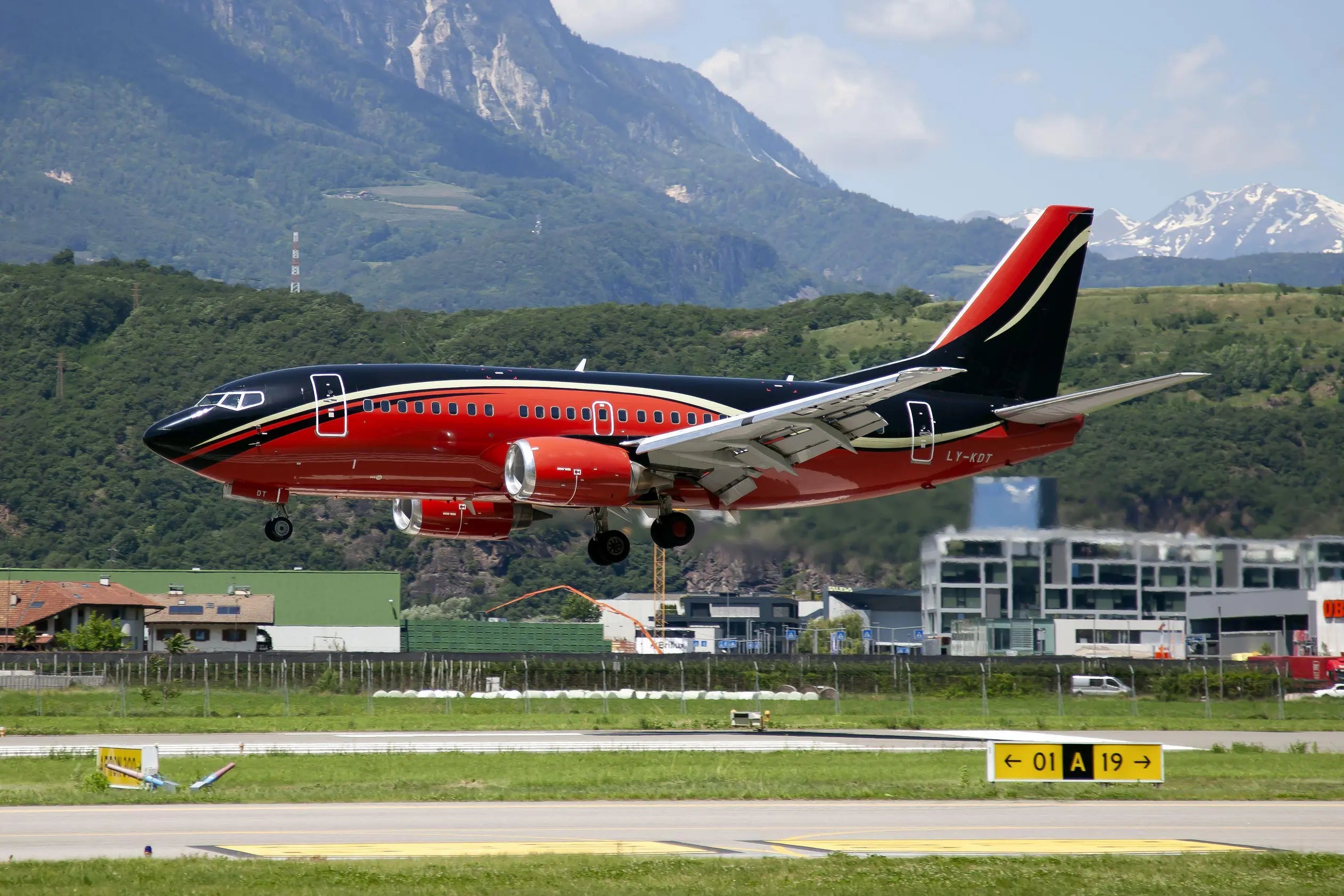
KlasJet operates a single-family fleet built entirely around the Boeing 737. As of 2026, independent fleet trackers and the company's own materials show 13 aircraft: eight Boeing 737-800s from the Next Generation series and five 737 Classics (three 737-500s and two 737-300s). All are configured in low-density VIP and business-class style cabins rather than the high-density economy layouts these airframes originally carried in scheduled service. KlasJet markets these interiors heavily, giving individual aircraft bespoke design themes, such as the 737-500 LY-FLT branded "Wind."
The single-family approach is a genuine advantage for a working pilot: one Boeing 737 type rating covers the Classic (300/500) and NG (800) variants, with differences training between generations, so line pilots can be deployed across the fleet without separate ratings. The trade-off is age. The fleet averages roughly 24.8 years, which is typical for converted VIP 737s that began life with other airlines and were later refurbished. Pilots should expect to operate older Classic cockpits alongside the NG, with the procedural and performance nuances that come with mixed-generation flying.
| Aircraft Type | Role | In Service | Notes |
|---|---|---|---|
| Boeing 737-800 (NG) | VIP / group charter | 8 | Backbone of the fleet. Low-density VIP cabins for larger sports and corporate groups on intra-European and longer missions. |
| Boeing 737-500 (Classic) | VIP charter | 3 | Includes LY-FLT "Wind" bespoke interior. Convertible layouts reported between roughly 56 and 104 seats. |
| Boeing 737-300 (Classic) | VIP charter | 2 | Reconfigured low-density cabins (approx. 64 to 68 seats). Medium-range group and corporate charters. |
Fleet data as of 2026, compiled from KlasJet's fleet pages, Wikipedia and Planespotters. Numbers change with ongoing ACMI placements and VIP conversions.
The fleet has evolved over time. In its earlier years KlasJet operated a Bombardier CRJ200 regional jet, and around 2022 to 2023 the fleet also included a Bombardier Challenger 850 and a Boeing 737 BBJ2, neither of which appears in the current headline fleet list. More recently the direction has been clear: consolidate on VIP-configured 737s and grow through additional NG airframes. In May 2024, for example, AviaAM Leasing delivered a 737-800 that entered service the same month, and KlasJet has publicly linked further additions to its expansion in the Middle East and Asia. Reporting around the airline's growth has referenced plans to add further 737NGs and dedicated VIP aircraft as it works toward its stated 40 to 45 aircraft ambition.
Unlike a legacy carrier with a cadet pipeline, KlasJet recruits already type-rated Boeing 737 pilots. Job advertisements consistently ask for a current B737 type rating (300 to 900 series) and around 500 hours on type, and the publicly visible ads do not indicate that KlasJet funds the type rating. In other words, the cost and provision of the 737 rating typically sits with the candidate, not the airline. A pilot joining with an existing rating should expect differences training between Classic and NG variants plus company Standard Operating Procedures and VIP-specific protocols, rather than a full ab-initio type course. Confirm any type rating, bonding or training-cost arrangements in writing before signing.
Pilot Salary & Compensation
KlasJet does not publish official pilot pay scales, and this is the single weakest area of public data. What can be stated honestly is that its compensation follows the pattern common to charter and ACMI operators: a fixed monthly base combined with variable pay linked to block hours, with a pronounced seasonal element because charter demand peaks in the summer and the sports calendar, and softens in winter. Pilots accustomed to a flat legacy-airline salary should understand that at KlasJet monthly income will move with the flying.
Reported KlasJet Boeing 737 Pay Components
The most specific figures that have appeared publicly come from pilot pay databases such as PilotJobsNetwork. These indicated a seasonal base salary and a block-hour flight-pay component for experienced 737 crew (above 1,500 hours on type). They are reproduced below strictly as reported, unofficial indicators. Note that the underlying listing has at times shown "no detailed payscale available," and the figures were not clearly attributed to Captain or First Officer, so treat them as a rough anchor for discussion, not a confirmed contract.
| Component | Reported Figure | Notes |
|---|---|---|
| Base salary (summer / peak) | ~€4,500 / month | Higher-demand season (sports calendar, corporate and leisure peaks). |
| Base salary (winter / low) | ~€2,800 / month | Quieter charter period; illustrates the seasonal swing. |
| Flight pay | ~€35 / block hour | Variable, productivity-linked. Total depends heavily on hours flown. |
| Experience threshold for above | 1,500+ hrs on B737 | Figures relate to experienced crew; role (CPT/FO) not officially confirmed. |
Reported, unofficial figures from third-party pilot pay databases. KlasJet does not publish official scales. Gross, before Lithuanian tax and social contributions.
Putting it in context
Combining a seasonal base of roughly €2,800 to €4,500 per month with block-hour flight pay, an experienced First Officer's annual gross realistically lands in a broad range that depends almost entirely on utilization; a pilot flying more block hours in a busy season earns materially more than the same pilot in a quiet winter. Because KlasJet does not disclose average annual block hours, any single annual number would be speculation, so it is deliberately not stated here. Captains earn more than First Officers, but no KlasJet-specific Captain scale is public. For orientation only, and not as KlasJet figures, European narrowbody ACMI and charter Captains commonly sit somewhere around €80,000 to €120,000, while the wider global VIP and business-jet 737 market runs higher again in gross terms. Lithuanian income tax and social charges, and where a pilot is actually tax-resident, will significantly affect take-home pay.
The figures above are the best publicly available indicators, drawn from third-party pilot databases and job advertisements, not from KlasJet directly. The airline publishes no official pay scale, the reported base and block-hour numbers are not confirmed by rank, and per diem rates are not disclosed publicly. A candidate should treat compensation as a due-diligence item: ask KlasJet in writing for the rank-specific base, the block-hour rate, minimum guaranteed hours, per diem, overtime rules, contract type (Lithuanian local versus other EU arrangement) and how seasonal variation is handled. Do not assume this niche matches legacy or Gulf-carrier gross pay.
Roster Pattern & Quality of Life
Quality of life at KlasJet is defined by the rotation roster typical of European private and VIP aviation. KlasJet recruitment material for Boeing 737 Captains advertises a 15/15 pattern: fifteen days on duty followed by fifteen days off. This is the headline lifestyle proposition and the thing most likely to attract or deter a candidate. If you value long, uninterrupted blocks at home (effectively around half the year off), a rotation roster is very appealing. If you want to sleep in your own bed most nights, it is not the job for you.
During a duty block, pilots are positioned to wherever the aircraft and mission are, then remain with the aircraft on a mix of flying days and standby days, staying in company-arranged hotels between assignments. Some days involve multiple sectors; others involve no flying at all, just standby on call near the jet. At the end of the rotation the company positions the crew back toward base. This structure can feel less fatiguing than an airline roster of frequent short duties, because rest is grouped, but it demands tolerance for extended time away from home and for hotel living.
📅 Sample Rotation — Boeing 737 First Officer (15/15 Pattern)
The grid above is illustrative of the advertised 15/15 rotation, not a published KlasJet line. In practice, the mix of flying and standby within a duty block varies with charter bookings and the sports season, and positioning travel at the start and end of the rotation is arranged by the company. Because charter demand is uneven, a duty block can be intense on some days and quiet on others, which is exactly why flight pay is tied to block hours.
As a Lithuanian AOC holder, KlasJet operates under EASA Flight Time Limitations, which cap flight and duty time, mandate minimum rest, and manage cumulative fatigue regardless of how variable the charter schedule is. KlasJet's headquarters and main base are in Vilnius, but its aircraft are deployed across Europe, the Middle East and beyond, and job postings have referenced hiring pilots based "anywhere in the EU." That suggests a degree of basing flexibility with company-arranged positioning, rather than a requirement to relocate to Lithuania. The exact terms, whether you sign a Vilnius-based contract while living elsewhere, and who covers positioning delays, are points to confirm directly.
Benefits & Employment Conditions
KlasJet does not publish a detailed benefits package, so this section separates what can reasonably be established from what a candidate must verify. As an EU employer under Lithuanian labour law, KlasJet is bound by statutory minimums for social security, paid leave and working-time protections, and the rotation model means the operational logistics of the job, positioning flights and hotel accommodation during duty blocks, are typically handled and paid for by the company, as is standard across the sector. Beyond that baseline, the specifics are simply not documented publicly.
Two points deserve emphasis. First, because KlasJet is a charter operator rather than a scheduled airline, the classic legacy-carrier perk of heavily discounted staff travel across a global alliance does not apply in the same way. The compensating upside is professional: exposure to VIP and elite-sports charter, varied international destinations, and small-crew operations that many pilots find more engaging than repetitive scheduled shuttles. Second, being embedded in Avia Solutions Group can mean access to group-level training and safety infrastructure and, potentially, movement between sister companies over a career, though the group does not publish formal pathways for this.
Because KlasJet's benefits are not transparent publicly, do not assume they mirror a large scheduled airline. Before accepting an offer, get written clarity on: private health insurance, loss-of-licence cover, any pension contribution above the statutory Sodra system, per diem rates and how they are paid, hotel and travel standards during rotations, sick-pay and maternity or paternity provisions, and whether any type rating or training cost carries a bond. Speaking to current or former KlasJet pilots is the most reliable way to fill these gaps.
Career Progression & Seniority
Career progression at KlasJet looks nothing like the rigid, seniority-list model of a legacy flag carrier, and candidates should calibrate expectations accordingly. KlasJet openly recruits Direct Entry Captains, with advertisements specifying around 3,500 hours total time and 500 hours pilot-in-command on jets. This means command seats are filled both by external hires and, presumably, by internal upgrades, so a First Officer's path to the left seat is not governed by a transparent, published seniority list, and can be influenced by external recruitment and the company's needs.
The flip side of that discretion is opportunity. KlasJet is small and growing quickly, with stated ambitions to expand toward 40 to 45 aircraft and new bases opening in the Middle East and Asia. Rapid fleet growth in a charter operator generally creates command opportunities faster than a slow-growth, seniority-locked airline would, particularly for high-performing First Officers who already hold a 737 rating and command-relevant experience. There is, however, no publicly documented upgrade timeline, so any specific "years to command" figure would be invented rather than researched, and is deliberately not stated here.
| Career Stage | Typical Requirement / Status | Notes |
|---|---|---|
| Join as First Officer (B737) | Type-rated, ~500 hrs on type | Alternatively, job ads cite ~2,000 hrs airline flying under EASA OPS. Type rating generally not funded. |
| Line experience & VIP operations | Variable | Build hours on Classic and NG variants; develop charter and VIP service competencies. |
| Upgrade to Captain (internal) | Not publicly disclosed | Command assessment (interview + simulator check, sector-standard). Timeline not published. |
| Direct Entry Captain (external) | ~3,500 hrs TT, 500 hrs PIC on jets | KlasJet actively recruits DECs, so command seats are not filled by seniority alone. |
| Trainer / examiner roles (TRI/TRE) | Variable | Requires separate selection and instructor qualification. Not documented publicly at KlasJet. |
Progression stages compiled from KlasJet job advertisements and standard EASA charter practice. Internal upgrade timelines are not published by the airline.
KlasJet has been in visible expansion: a 737-800 delivered and put into service in May 2024, an enlarged ACMI leasing partnership with Sun d'Or by EL AL over the 2024 to 2025 winter, operating approval obtained in Saudi Arabia, an aircraft reallocated to Milan Malpensa for sports-team demand, and a planned Singapore base. For a career planner, growth of this kind is generally positive for command and out-base opportunities, but it also means the operation is dynamic: bases, contracts and deployment regions can change. Progression here rewards flexibility and mobility more than patient accrual of seniority.
Recruitment Process & Requirements
KlasJet recruits experienced, EASA-licensed pilots directly, and it does not run an ab-initio cadet programme. There is no self-sponsored-to-airline pipeline here: the airline hires pilots who already hold a Boeing 737 type rating and relevant experience, whether as type-rated First Officers or as Direct Entry Captains. Vacancies are advertised on KlasJet's own careers page and through industry recruitment channels such as AviationCV, and applications are handled directly by the company.
First Officer — Requirements
Direct Entry Captain — Requirements
Typical Selection Stages
KlasJet does not publish a formal, staged selection process the way a legacy carrier does. The sequence below is representative of how an experienced-hire charter operator of this type recruits, and is offered as a general guide rather than a documented KlasJet procedure. Confirm the exact steps with the company when you apply.
Application & document screening
Apply via the KlasJet careers page or an approved recruitment partner. Expect to submit your CV, EASA licence and ratings, logbook summary, Class 1 medical and English proficiency evidence. Screening confirms you meet the hours and type-rating thresholds.
Interview
A competency and HR interview focused on technical knowledge, CRM, and the softer skills that matter in VIP operations: discretion, composure with high-profile passengers, flexibility with short-notice schedule changes, and cultural fit within a small crew.
Simulator assessment
A Boeing 737 simulator check is standard for experienced-hire operators, assessing handling, procedures and multi-crew coordination. For Direct Entry Captains this doubles as a command evaluation.
Offer, differences training & line training
Successful candidates receive an offer and, on joining, complete company Standard Operating Procedures, differences training between Classic and NG where relevant, VIP-specific protocols, and supervised line flying before release to the line.
Because KlasJet hires already-rated pilots, the strongest candidates arrive with current 737 recency and can demonstrate they will thrive in a service-led, small-crew environment. Emphasise any prior charter, ACMI or VIP experience, adaptability to rotation rosters and out-basing, and clean documentation. Since type ratings are generally not funded, clarify early whether you need to arrive rated or whether any conversion or differences training is provided. And because the airline is expanding internationally, willingness to be deployed to bases such as Dubai, Saudi Arabia or Singapore can be a genuine advantage.
Operating Network, Bases & the Sports-Charter Niche
Because KlasJet flies bespoke charter rather than a fixed schedule, it has no traditional "layover network" of set destinations with permanent crew hotels. What it has instead is a set of operating bases and deployment regions, and a distinctive client base, that together tell a pilot far more about the day-to-day job than a list of tourist cities would. This is why this guide replaces the usual layover section with a look at where KlasJet actually operates and who it flies.
| Location / Region | Role | Status | Notes |
|---|---|---|---|
| Vilnius (VNO), Lithuania | Headquarters & main base | Established | Corporate HQ, AOC and primary operational base. |
| Dubai, UAE | Middle East base | Established | Boeing 737 based to serve Gulf VIP, corporate and sports demand. |
| Saudi Arabia | Regional operations | Approved / growing | GACA operating approval for domestic and international flights; further aircraft planned. |
| Milan Malpensa (MXP), Italy | Sports-charter deployment | Active | Aircraft reallocated to serve sports teams and their travelling fans. |
| Singapore | Asia base (planned) | Announced (late 2025) | New office and based aircraft targeting pro sports teams and corporate shuttles. |
Bases and deployment regions compiled from KlasJet and Avia Solutions Group announcements, 2024–2025. Charter deployments shift with contracts and season.
The client mix is the defining feature. KlasJet has said that close to half of its business comes from sporting clubs, and it operates across Europe, the Middle East, Africa and Asia. Publicly referenced clients and partnerships include Lithuanian basketball with Žalgiris Kaunas and BC Wolves (for EuroCup travel), football movements such as Royal Antwerp FC and a reported charter for Belgium's national team during a European championship, and broader partnerships spanning French and Spanish football clubs, basketball, ice hockey and even a cycling team with its supporters. On the ACMI side, KlasJet has flown for partners such as Sun d'Or by EL AL under wet-lease arrangements.
Flying elite sports teams is operationally distinctive. Schedules are driven by fixtures and results, which can move at short notice (a cup run extends the season; a result changes the return time). Turnarounds happen at a wide variety of airports, often with heightened security, media attention and privacy requirements. The passengers are demanding but the crews are small and the missions are varied, which many pilots find far more engaging than repetitive point-to-point flying. It also means peak workload clusters around the sporting and corporate calendar, reinforcing the seasonal nature of both the roster and the pay.
How KlasJet Compares: Airline Radar Chart
How does KlasJet stack up against the operators a Boeing 737 charter pilot would realistically weigh alongside it? The two most relevant comparators are GetJet Airlines, another Lithuanian ACMI and charter specialist flying A320 and 737NG aircraft, and Titan Airways, a UK VIP and ACMI charter operator with a mixed fleet. The radar below compares all three across the same six-metric framework used in the scorecard (five axes shown). Scores are editorial estimates based on publicly available data, job advertisements and industry benchmarks, not precise measurements.
Key Takeaways from the Comparison
KlasJet's edge is predictable time off. Its advertised 15/15 rotation delivers large, uninterrupted blocks at home (around half the year), which is the most predictable lifestyle of the three. GetJet and Titan, as busy ACMI and charter operators, tend toward more variable rosters with roughly 9 to 13 days off per month, meaning more frequent but shorter breaks. Which is better depends entirely on whether you prefer long blocks away then long blocks home, or a steadier week-to-week rhythm.
On pay, geography matters more than the badge. Titan, operating in the UK, is likely to post the highest gross Captain figures of the three, while KlasJet and GetJet sit at Baltic and European charter levels. Lithuanian tax and cost of living are lower than the UK, so net differences narrow. KlasJet's block-hour, seasonal model also means earnings swing with utilization more than a flat-salary operator would.
Fleet favours GetJet on modernity, KlasJet on continuity. GetJet flies a younger mixed A320 and 737NG fleet, with the flexibility (and complexity) of two families. KlasJet's all-737 fleet is homogeneous, which is excellent for type continuity and simple rostering, but it is old on average (roughly 24.8 years) and leans on Classic variants. Titan's fleet is diverse but includes some ageing types. A pilot who wants to stay purely on the 737 and avoid re-rating will find KlasJet the cleanest fit.
Job security leans on backing and demand. All three are exposed to cyclical charter and ACMI demand. GetJet is described in industry commentary as a profitable ACMI specialist; KlasJet's security rests largely on the scale and backing of Avia Solutions Group and its stated growth plans; Titan is an established UK operator. None offers the fortress-like seniority protection of a unionised legacy carrier, so "security" here means the health of the parent and the charter market, not a job-for-life contract.
Scores are editorial estimates based on research into publicly available data, job advertisements, pilot databases and industry benchmarks. GetJet and Titan figures are themselves partly approximated because neither publishes full pay or roster tables. These scores represent a general assessment for an experienced 737 pilot and will vary with individual seniority, base, contract and personal priorities. They are a decision aid, not a substitute for talking to current pilots at each operator.
Union, Regulation & Industrial Relations
Industrial relations are one of the least transparent aspects of KlasJet, and honesty requires stating that up front. There is no publicly documented collective bargaining agreement covering KlasJet pilots, no evidence of a recognised in-house pilot union, and no reported history of pilot strikes at the airline. This is common for small VIP and charter operators, where terms are typically set through individual contracts and company policy rather than negotiated collectively. It also means a candidate's protection rests primarily on their individual contract, Lithuanian labour law and EASA safety regulation, rather than on collective muscle.
The bodies that shape KlasJet pilots' conditions
For collective representation, Lithuania does have pilot-community structures, and EU-based pilots are represented at European level by the European Cockpit Association. However, none of the available sources establish a formal relationship between any pilot union and KlasJet, or confirm that KlasJet pilots are unionised. On the regulatory side, Lithuania's civil aviation licensing and certification functions are handled through the Transport Competence Agency, with the LTSA as the national transport safety authority, and everything ultimately sits under the EASA framework shared across the EU.
The absence of collective bargaining cuts both ways. On one hand, there is no union backstop on pay scales, roster protections or dispute resolution, so your leverage is largely individual and your contract terms matter enormously. On the other hand, KlasJet has no history of disruptive labour conflict, and its parent group provides a level of stability many small charter operators lack. The practical takeaway is to negotiate your individual contract carefully, understand your rights under Lithuanian and EU labour law, and consider independent legal review of the contract before signing, since you will not have a collective agreement to fall back on.
Verdict: Who Is KlasJet For?
🎯 Our Take
KlasJet is a specialist, not a legacy career airline, and it should be evaluated on those terms. Its strongest cards are lifestyle and variety: an advertised 15/15 rotation that hands back roughly half the year, genuinely interesting VIP and elite-sports charter flying, a clean single-family Boeing 737 operation that keeps you on one type, and the financial backing of Avia Solutions Group during an active growth phase across the Middle East and Asia.
The trade-offs are equally real. Pay is seasonal and block-hour driven rather than a flat legacy salary, and the airline publishes no official scale, so compensation is a negotiation, not a known quantity. Benefits, pension and loss-of-licence provisions are not transparent publicly. The fleet, while consistent, is old on average and leans on 737 Classics. Career progression is discretionary rather than seniority-protected, there is no cadet route and type ratings are generally not funded, and there is no collective agreement to underwrite your terms. This is a job for an already-qualified professional who is comfortable doing their own due diligence.
For the right pilot, though, KlasJet offers something a scheduled airline cannot: a small-crew, high-touch, internationally mobile flying life with long blocks of time off, built around some of the most recognisable teams and clients in world sport.
1 Do I need a Boeing 737 type rating to join KlasJet?
In practice, yes. KlasJet's job advertisements consistently ask for a current Boeing 737 type rating (300 to 900 series) and around 500 hours on type, and the publicly visible ads do not indicate that the airline funds the rating. Some postings offer an alternative route for pilots with substantial airline experience (around 2,000 hours under EASA OPS), but a 737 rating and recency are the clear preference. There is no ab-initio cadet programme. Confirm current requirements and any training-cost arrangements directly with the company.
2 What roster does KlasJet use?
KlasJet recruitment material for Boeing 737 Captains advertises a 15/15 rotation: 15 days on duty followed by 15 days off. During the duty block, pilots are positioned to the aircraft and work a mix of flying and standby days, staying in company-arranged hotels between assignments, before being repositioned home for the off block. This is the norm for European VIP and private aviation and delivers roughly 180 days off per year, though the exact pattern can vary by contract.
3 How much do KlasJet pilots earn?
KlasJet does not publish official pay scales. Third-party pilot databases have reported a seasonal base salary for experienced 737 crew of roughly €4,500 per month in summer and €2,800 in winter, plus around €35 per block hour of flight pay. These figures are unofficial, were not clearly attributed to Captain or First Officer, and vary with hours flown, so treat them only as a rough anchor. Because the airline discloses no average block hours, a firm annual figure cannot be stated responsibly. Ask KlasJet for rank-specific base pay, block-hour rate, per diem and minimum guaranteed hours in writing.
4 Does KlasJet hire Direct Entry Captains?
Yes. KlasJet actively advertises for Direct Entry Captains, typically requiring around 3,500 hours total time and 500 hours pilot-in-command on jets, with a Boeing 737 rating strongly preferred. Because command seats are filled both externally and internally, a First Officer's upgrade path is not governed by a transparent seniority list, and internal upgrade timelines are not published.
5 Do I have to live in Vilnius?
Not necessarily. KlasJet is headquartered and based in Vilnius, but its aircraft are deployed internationally, and job postings have referenced hiring pilots based anywhere in the EU, with company-arranged positioning at the start and end of rotations. The rotation model is designed around this: you travel to the aircraft, not to a fixed daily base. The precise contractual basing terms, and who bears the cost of positioning disruptions, should be confirmed directly.
6 Can non-EU pilots apply?
KlasJet is an EU operator under Lithuanian jurisdiction, and its recruitment centres on pilots who can legally work in the EU, whether as EU/EEA nationals or holders of appropriate work authorisation. Public sources do not document a visa-sponsorship pathway for non-EU citizens. If you are outside the EU, you should clarify nationality and work-permit policy with the company before investing time in an application.
7 Is KlasJet a stable employer?
KlasJet is a small operator, but it is owned by Avia Solutions Group, one of the world's largest aviation services groups, which provides capital backing and operational infrastructure that a standalone charter airline of this size would not have. The airline has been expanding, adding aircraft, opening operations in the Middle East and planning an Asian base, with a stated ambition to grow toward 40 to 45 aircraft. As with any charter and ACMI business, demand is cyclical, and there is no union or collective agreement, so stability rests on the parent group and the charter market rather than on a job-for-life structure.
8 What is it like flying VIP and sports charter compared with a scheduled airline?
It is more varied and more service-oriented. You fly bespoke missions, frequently for professional sports teams (close to half of KlasJet's business), which means schedules driven by fixtures and results, short-notice changes, a wide variety of airports, heightened security and privacy demands, and close teamwork within a small crew. The technical flying is standard 737 work, but the culture prizes discretion, flexibility and polish. Many pilots find it far more engaging than repetitive scheduled shuttles; others miss the predictability of a fixed timetable.
Official Links & Resources
Because so much of KlasJet's pilot-facing detail is not published, verifying information directly with official sources matters more here than at a transparent legacy carrier. These are the key websites and organisations relevant to a KlasJet pilot career:
For a niche VIP operator like KlasJet, the single most valuable source is a current or former line pilot. Because pay, benefits and progression are not published, use the official careers page to apply, but use pilot networks, forums and recruitment partners such as AviationCV to pressure-test the reported figures in this guide. Confirm the roster, rank-specific pay, per diems, type-rating and bonding terms, and contract type in writing before you commit.