

BA Euroflyer Overview & Company Profile
BA Euroflyer Limited is the London Gatwick short-haul subsidiary of British Airways. It is one of the youngest airlines in the British Airways group, incorporated at Companies House on 10 November 2021 (company number 13734241) and operating its first services on 29 March 2022. That opening day saw the 06:25 Gatwick to Larnaca departure lead a schedule that also included Amsterdam, Paphos and Tenerife. For the first eight months those flights were operated under British Airways Plc's own Air Operator Certificate; BA Euroflyer received its own UK CAA AOC and operating licence on 6 December 2022, after which aircraft and crews were progressively transferred across to the new operator.
The airline exists because of a specific commercial problem. British Airways had suspended its Gatwick short-haul programme during the pandemic and concluded that the operation could not be restored profitably on mainline Heathrow cost structures, competing against easyJet, Wizz Air and Ryanair on leisure routes. Rather than abandon the Gatwick slots, BA created a separate employing company with its own pay scales and productivity assumptions. Understanding that origin matters for any pilot evaluating the airline, because it explains almost everything about the terms on offer: BA Euroflyer is a British Airways brand product delivered on a deliberately lower-cost employment platform.
Operationally the airline is a pure point-to-point, out-and-back short-haul carrier. According to the official BA Euroflyer careers page, the network covers "over 40 destinations across Europe" and the flying is built around two-sector duties that return crew to Gatwick the same evening. Route-tracking data for Q3 2026 recorded 39 scheduled routes, the difference from the marketing figure being explained by seasonal variation between the summer and winter timetables.
Scale is modest by BA group standards but meaningful in the UK market. The most recent separately identifiable statutory-accounts figure is 661 employees for FY2024. Neither British Airways nor IAG discloses a standalone BA Euroflyer pilot headcount, and pilots should be cautious about figures circulating online: IAG reported 9,107 pilots across the entire group at 31 December 2025, a number that covers British Airways, Iberia, Vueling, Aer Lingus and Level as well as Euroflyer, and which should never be quoted as a Euroflyer figure.
Financially the operation has worked. FlightGlobal reported that BA Euroflyer's first full year produced revenue of approximately £429 million on roughly 3.55 million passengers, with an operating profit near £27.5 million and a pre-tax profit of nearly £41 million. No standalone FY2025 revenue or profit figure has been separately disclosed in the British Airways or IAG accounts, so profitability beyond FY2024 cannot be independently confirmed from public filings. Group-level British Airways results (£14.679 billion revenue and £2.230 billion operating profit for 2025) cover the whole airline and are not a proxy for the Gatwick subsidiary.
It is worth being precise about how BA Euroflyer sits alongside its sister companies. BA mainline continues to operate the Gatwick long-haul and domestic programme from the same airport, so a Euroflyer pilot shares a terminal with mainline colleagues on different contracts. BA CityFlyer is the third BA-branded subsidiary, running Embraer E190s principally from London City. All three are separate employers with separate AOCs and separate pilot agreements, all selling under the British Airways brand.
Joining BA Euroflyer means being employed by BA Euroflyer Limited, not British Airways Plc. Your salary, roster rules and contract come from the Euroflyer agreement. What you do share with mainline colleagues is the British Airways master seniority list, which BA confirms Euroflyer pilots automatically join. That combination (separate employment terms, shared seniority) is the single most important structural fact about this airline, and it is examined in detail in the career progression section below.
Fleet Composition & Type Rating
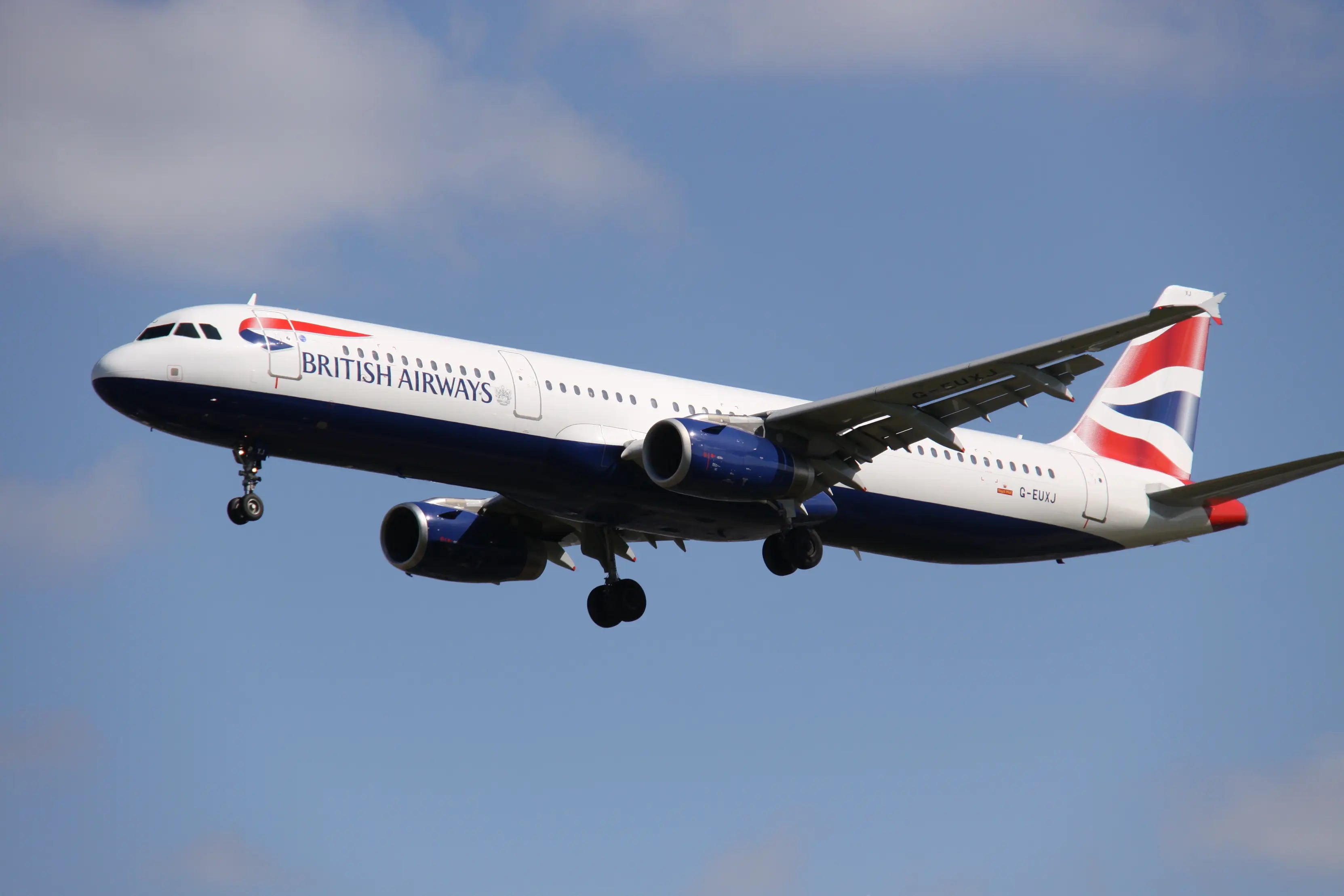
BA Euroflyer operates a single-family, single-generation fleet. Current fleet tracking records 25 aircraft: 14 Airbus A320-200s and 11 Airbus A321-200s, all of them current-generation "ceo" airframes. There is no A320neo or A321neo on the Euroflyer certificate. British Airways does operate neo variants, but those sit on the mainline BAW fleet and are concentrated at Heathrow.
The fleet grew from 23 aircraft in January 2025 (12 A320s and 11 A321s) to 25 by the summer, after three further A320ceos were transferred in. British Airways had originally discussed growing the operation to around 26 aircraft; the approved and delivered increase settled at 25 for summer 2025 and the fleet has remained at that level since. Two Titan Airways narrowbodies were wet-leased for parts of summer 2025 to cover capacity, but these were supplier-operated aircraft and should not be counted as Euroflyer metal.
| Aircraft Type | In Service | Seats | Notes for Pilots |
|---|---|---|---|
| Airbus A320-200 (ceo) | 14 | 180 (3-3) | Backbone of the operation. Transferred from BA mainline. Registrations include the G-GAT series and legacy G-EUU / G-MID airframes. |
| Airbus A321-200 (ceo) | 11 | 218 (3-3) | Used on higher-density leisure sectors. Predominantly mid-2000s G-EUX series airframes. |
| Airbus A320neo | 0 | n/a | None allocated to Euroflyer. BA neos remain on the mainline fleet. |
| Airbus A321neo | 0 | n/a | None allocated to Euroflyer. |
Fleet data compiled from Planespotters, Plane Finder and ch-aviation reporting current to 2026. Individual aircraft move between BA group operators, so exact counts fluctuate.
The cabin is a flexible Club Europe / Euro Traveller arrangement with a movable divider. In Club Europe the middle seat is blocked rather than physically removed, so advertised business-class seat counts vary by flight; on the A321 the Club section can extend to roughly 14 rows in peak configurations. For flight crew this has no operational consequence beyond loadsheet variability, but it is a reminder that Euroflyer is positioned as a full-service short-haul product rather than a pure low-cost operation, despite the low-cost employment structure behind it.
This is the least attractive part of the BA Euroflyer package and pilots should go in with clear eyes. Average fleet age was recorded at 21.0 years in April 2025 across the then 23-aircraft fleet, and remains around 20 to 21 years in 2026. The A320s are broadly late-1990s to late-2000s airframes and most A321s date from the mid-2000s. Registration dates shown in some databases (2023 and 2024 for several G-EUX aircraft) reflect transfer into the Euroflyer certificate, not build dates. Practically this means classic cockpits, older cabin hardware, higher fuel burn and a greater technical-delay exposure than a neo operator. No public British Airways announcement allocates specific neo aircraft to the Gatwick Euroflyer operation. Any renewal would form part of BA's wider narrowbody programme, and no Gatwick-specific timetable has been published. Treat online claims of an imminent Euroflyer neo transition as speculation until BA confirms it.
British Airways funds the A320-family type rating for BA Euroflyer direct-entry pilots, and the vacancy states explicitly that the courses are fully funded with no bond attached. This is a genuinely significant benefit in the current UK market and is one of the strongest single arguments for the airline. It also explains why the published minimum experience requirement permits qualifying non-A320 multi-pilot experience: BA is prepared to convert you rather than insist on a current A320 rating. Because Euroflyer flies only one aircraft family from one base, there is no internal fleet-bidding dynamic here. Your fleet is the A320 family, and any change of type comes from moving elsewhere in the BA group.
Pilot Salary & Compensation Breakdown
BA Euroflyer publishes an unusually transparent pay structure by European standards. Pay is built from a basic salary on an incremental scale, plus allowances that British Airways models at 800 flying hours per year. The scale set out below took effect on 1 May 2025 and the current direct-entry vacancy describes the starting salary as "subject to pay review 2026". First Officers sit on a seven-point scale; Captains sit on a fifteen-point scale.
First Officer (A320 Family) Basic Pay Scale
| Pay Point | Annual Basic | Plus Allowances (approx.) | Indicative Total |
|---|---|---|---|
| Point 1 (entry) | £65,420 | ~£14,500 | ~£79,920 |
| Point 2 | £66,460 | ~£14,500 | ~£80,960 |
| Point 3 | £67,500 | ~£14,500 | ~£82,000 |
| Point 4 | £68,540 | ~£14,500 | ~£83,040 |
| Point 5 | £69,580 | ~£14,500 | ~£84,080 |
| Point 6 | £70,620 | ~£14,500 | ~£85,120 |
| Point 7 (top) | £71,660 | ~£14,500 | ~£86,160 |
Basic pay scale effective 1 May 2025. Allowance figure of circa £14,500 is British Airways' own published modelling at 800 flying hours per year and is not a guaranteed sum.
Captain (A320 Family) Basic Pay Scale
| Pay Point | Annual Basic | Pay Point | Annual Basic |
|---|---|---|---|
| Point 1 (entry) | £114,000 | Point 9 | £125,680 |
| Point 2 | £115,460 | Point 10 | £127,140 |
| Point 3 | £116,920 | Point 11 | £128,600 |
| Point 4 | £118,380 | Point 12 | £130,060 |
| Point 5 | £119,840 | Point 13 | £131,520 |
| Point 6 | £121,300 | Point 14 | £132,980 |
| Point 7 | £122,760 | Point 15 (top) | £134,440 |
| Point 8 | £124,220 | Plus allowances | ~£25,150 |
A direct-entry Captain therefore starts at approximately £139,150 in indicative first-year cash compensation (£114,000 basic plus circa £25,150 allowances at 800 hours), rising to roughly £159,590 at the top of the scale on the same allowance assumption.
The Command Fast-Track Pay Step
BA Euroflyer's "Aspiration for Command" pathway carries its own pay treatment, and it is materially better than the standard First Officer scale. Reporting on the vacancy indicates that pilots accepted onto the pathway earn £78,000 basic plus allowances of approximately £14,332 while flying as a First Officer, then move to £115,460 basic plus approximately £25,148 in allowances on successful completion of the command course, entering the fifteen-point Captain scale at point 2. For a pilot with the required hours, this is the single most financially attractive route into the airline.
| Entry Route | Basic | Allowances (approx.) | Indicative Total |
|---|---|---|---|
| Direct Entry First Officer | £65,420 | £14,500 | ~£79,920 |
| Aspiration for Command F/O | £78,000 | £14,332 | ~£92,332 |
| Post-command (fast-track) | £115,460 | £25,148 | ~£140,608 |
| Direct Entry Captain | £114,000 | £25,150 | ~£139,150 |
Comparison of the four published entry routes into BA Euroflyer. All allowance figures are British Airways' own modelling at 800 flying hours per year.
The basic pay scales above are drawn from the published BA Euroflyer pay tables and the current British Airways pilot careers vacancy material. Two important cautions apply. First, British Airways does not publish a current contractual breakdown of how the allowance envelope splits between flight pay, sector pay and subsistence. Dividing the advertised totals by 800 hours produces roughly £18.13 per flying hour for a First Officer and £31.44 for a Captain, but these are arithmetic planning ratios, not contractual hourly rates, and should not be presented as such. An older 2023 industry return listed £11.44 per block hour for First Officers, £20.80 for Captains and a £2.60 per diem, but that predates the May 2025 scale and should be treated as historical. Second, BA Euroflyer pay does not match British Airways mainline pay. Euroflyer pilots are employed on a separate agreement and pay scale designed for the Gatwick subsidiary. Joining the BA master seniority list does not make your salary, roster or contract identical to mainline. Always verify the figures in your written offer, which is the only controlling document.
Set against the wider UK market, the Euroflyer package is competitive but not market-leading at First Officer level. Published easyJet figures put a First Officer at around £67,628 basic and a Senior First Officer as high as £83,020 before sector allowances, which is ahead of the Euroflyer seven-point scale. Where Euroflyer pulls clearly ahead is at the other end of a UK short-haul career: a £114,000 entry-point Captain scale rising to £134,440, reached potentially inside a couple of years via the command pathway, is a strong proposition that few UK operators can match on that timescale. The airline is therefore priced for pilots who intend to command, not for pilots who intend to sit in the right seat indefinitely.
Roster Pattern & Quality of Life
The defining quality-of-life feature of BA Euroflyer is stated plainly in the airline's own recruitment material: the flying programme returns pilots to Gatwick every evening. There are no planned nightstops and no scheduled overnight layovers. Pilot reports describe approximately 95% of duties as two-sector out-and-back days, with an unplanned overnight only arising from operational disruption such as a technical problem or a late-running slot. For a pilot with a family, a mortgage in the South East and no appetite for hotel life, this is the airline's central selling point.
British Airways advertises a fixed-pattern roster with the ability to express flight preferences and to swap duties with colleagues, but it does not publish the precise work-and-off cycle in the vacancy. Pilot-reported information describes a flexible roster broadly built around a six-on, two-off rhythm, sometimes five-on, two-off, rather than a permanently locked cycle. The most consistently reported entitlement is a scheduling-agreement minimum of around 10 days off per month, with approximately six reserve days per month, varying with season and operational demand. Reported standby durations are roughly 11 hours for home standby and six hours for airport standby.
📅 Illustrative Month: A320 First Officer (London Gatwick)
This grid is an illustration constructed from pilot-reported patterns (roughly 6/2 flexible rostering, a minimum of about 10 days off and around six reserve days per month). It shows 13 flying days, 4 standby days, 10 days off and 1 training day. British Airways does not publish an official Euroflyer roster template, so treat this as a shape rather than a guarantee, and check the scheduling agreement referenced in your offer.
Annual leave is 30 days per year, including single-use leave days, per the current vacancy. That is a solid UK short-haul figure and better than the 25 to 28 days commonly reported at easyJet, though it is well short of continental legacy carriers where 40-plus days is normal. Combined with roughly 10 rostered days off per month, a Euroflyer pilot is looking at somewhere in the region of 150 non-working days a year before accounting for training and standby that does not get used.
The productivity assumption is the counterweight to all of this. British Airways models allowances on 800 flying hours per year. This is a remuneration assumption rather than a guaranteed minimum or a legal maximum, but it signals the intended utilisation clearly: 800 hours is a hard-working short-haul year, close to the top of what UK operators plan for, and reflects the productivity commitments that made the Gatwick subsidiary viable in the first place. Summer is genuinely demanding, with early starts, long Canary Islands sectors and high delay exposure at one of Europe's most slot-constrained single-runway airports.
Flight Time Limitations
BA Euroflyer operates under UK-retained Part-ORO Subpart FTL, still commonly referred to as EASA FTL. The headline limits published by the UK Civil Aviation Authority are 60 duty hours in any 7 consecutive days, 110 in 14 days and 190 in 28 days; and 100 flight hours in 28 days, 900 in a calendar year and 1,000 in any 12 consecutive months. The 800-hour planning figure therefore sits comfortably inside the regulatory ceiling but leaves relatively little headroom for a heavy summer plus overtime.
There is one base and it is London Gatwick. There is no base bidding, no satellite base and no realistic prospect of a different base without leaving the company. This is the practical constraint that most often decides whether Euroflyer works for a given pilot. Gatwick is well served by rail from London Victoria, Brighton and the Thameslink corridor, and the surrounding Sussex and Surrey towns (Horley, Crawley, Haywards Heath, Redhill) offer materially cheaper housing than the Heathrow catchment. Because there are no nightstops, commuting from further afield is harder than at an airline with multi-day trips: you need to be at Gatwick for an early report and back the same night, repeatedly, which makes a long commute punishing over a six-day block. Note also that British Airways lists BA Euroflyer's registered office at Waterside in Harmondsworth near Heathrow, but the flying base and day-to-day operational centre are at Gatwick.
Benefits, Staff Travel & Pension
Benefits are where BA Euroflyer looks most like a legacy carrier and least like the low-cost platform its pay structure implies. Because it sits inside the British Airways group, Euroflyer pilots access the BA benefits infrastructure: the staff travel network, BA Health Services, the group insurance schemes and the salary-sacrifice programmes. For a pilot comparing an offer against an independent UK low-cost carrier, this is a meaningful part of the total value and is frequently underweighted.
Staff Travel: The Underrated Benefit
British Airways staff travel is among the more valuable perks in European aviation because of the network it reaches. Discounted Hotline tickets are available from day one, and standby and premium-standby fares extend to the employee and nominated travellers. The reach across the British Airways network and the wider oneworld ecosystem is disproportionate to what a 25-aircraft Gatwick operator could ever offer on its own, and it is a genuine reason why some pilots accept the Euroflyer contract over a nominally higher-paying independent short-haul job. Note the documentation discrepancy on Annual Bookable Concessions: the Euroflyer vacancy states 12 months, while BA's general benefits page states six. Ask for this in writing.
This is a persistent source of confusion among candidates and it needs stating plainly. New BA Euroflyer recruits do not enter the New Airways Pension Scheme (NAPS) or the British Airways Retirement Plan (BARP). Both were closed to future accrual and future contributions respectively on 31 March 2018, several years before BA Euroflyer existed, and were replaced by a defined-contribution arrangement. Any deferred benefits an individual already holds remain with their original scheme, but no new joiner accrues in them. What is on offer is a defined-contribution pension with an employer contribution stated as up to 15% in the pilot offer, which is a strong DC figure by UK standards but is a fundamentally different proposition from the legacy defined-benefit schemes some older comparison articles still reference.
Access to BA Health Services is a practical advantage that pilots tend to appreciate only once they need it. The company operates its own occupational health function with aviation-specific expertise, and subsidises external Aeromedical Examiner Class 1 renewals for pilots who use an outside AME. The company Loss of Licence scheme covers the pilot and family in the event of ill health, and AXA PPP private medical insurance is provided with the option to extend cover to family members. Combined with life assurance at up to five times salary, the protection package is comprehensive and comparable with mainline British Airways rather than with a low-cost operator.
Career Progression & the Command Fast-Track
Career progression is the strongest argument for BA Euroflyer and the reason a pilot might rationally accept a subsidiary contract over a better-paid job elsewhere. Two mechanisms drive it: the British Airways master seniority list, and the Aspiration for Command pathway.
The British Airways Master Seniority List
British Airways states on its official Euroflyer careers page that BA Euroflyer pilots automatically join the British Airways master seniority list and receive a personal BA seniority number. This is the structural feature that separates Euroflyer from an ordinary low-cost employer: your date of joining starts accruing seniority within the wider British Airways pilot community rather than only within a 25-aircraft subsidiary.
What that seniority number buys is access to an annual bid, in which pilots can express preferences for fleet and base opportunities, Heathrow long-haul, training roles and part-time working. It is important to be precise about the limits here. An award through the bid remains vacancy-dependent, qualification-dependent and seniority-dependent. Holding a seniority number does not create an automatic or time-guaranteed transfer to Heathrow, and no public British Airways or BALPA document sets out a contractual flow-through with a fixed timescale. Pilots should therefore treat mainline movement as a realistic long-term possibility supported by an official mechanism, not as a promise, and should be sceptical of forum claims that quote specific transfer waiting times.
Aspiration for Command: The 12-Month Pathway
The Aspiration for Command scheme is the airline's headline career product. It is aimed at experienced First Officers holding a minimum of 2,500 total flying hours, and is designed to deliver a command in approximately 12 months, subject to standards, vacancies and successful completion of command training. As set out in the salary section, pilots on the pathway are paid £78,000 basic plus approximately £14,332 in allowances while flying as a First Officer, moving to £115,460 plus approximately £25,148 after the command course.
In the context of the European market this is unusual. A pilot with 2,500 hours would typically face several more years in the right-hand seat at most legacy carriers, and command timelines at UK low-cost operators, historically quoted around five years at easyJet, have become less predictable as fleet growth has slowed. A structured, published, roughly 12-month route to an A320 command on a £114,000-plus scale is a genuinely differentiated offer, and it is why the airline scores highly on career progression despite its subsidiary status and ageing fleet.
| Career Stage | Entry Requirement | Typical Timeline | Notes |
|---|---|---|---|
| Speedbird Pilot Academy cadet | No flying experience | 18–24 months training | Fully funded. Graduates join as A320 First Officers at Gatwick or Heathrow. |
| Direct Entry First Officer | 500 hrs or 100 sectors | Day 1 post type rating | Seven-point scale. Type rating funded, no bond. |
| Senior First Officer | Internal progression | Seniority-dependent | Intermediate rank within the BA structure. |
| Aspiration for Command | 2,500 total hours | ~12 months to command | Paid £78,000 while on the pathway. Not guaranteed; subject to standards and vacancies. |
| Direct Entry Captain | 3,000+ hrs, recent PIC | Immediate on completion | Rated and non-rated vacancies advertised. Fifteen-point scale from £114,000. |
| Training Co-pilot / Training Captain | Selection required | Variable | Progressing to Training Standards Captain. Separate selection. |
| Bid to BA mainline (Heathrow) | Seniority + vacancy | Not publicly specified | Via the annual seniority bid. No published guaranteed timescale. |
Progression routes compiled from British Airways careers material and contemporaneous vacancy reporting. Hour requirements are published minimums, not competitive benchmarks.
There is a real tension between two goals and you cannot fully optimise for both. If your priority is early command, BA Euroflyer is one of the better options in the UK: a published pathway, a defined pay step, and command potentially inside 12 months for a 2,500-hour First Officer. If your priority is Heathrow long-haul, taking a command at Gatwick may mean spending longer as a First Officer later, because rank in a new fleet is vacancy- and seniority-dependent, and a mainline move does not carry your Euroflyer command across automatically. Beyond that trade-off, note the non-training roles British Airways advertises to its pilot community: recruitment, safety, sustainability, management and operational projects. For pilots interested in a career beyond the flight deck, group membership is a real advantage over a standalone operator.
Recruitment Process & Requirements
BA Euroflyer recruits through three routes: Direct Entry First Officer, Direct Entry Captain (advertised for both rated and non-rated candidates), and the Aspiration for Command pathway for experienced First Officers. Separately, the British Airways Speedbird Pilot Academy feeds low-hour cadets into A320 First Officer positions at either Gatwick or Heathrow. The 2026 direct-entry campaign was a permanent Gatwick vacancy with a closing date reported at the end of June 2026, and Euroflyer has recruited on a broadly rolling basis since the operation launched.
Direct Entry First Officer: Published Minimum Requirements
Direct Entry Captain & Command Pathway
One caution on the Direct Entry Captain requirements: British Airways does not publish a separate minimum command-hours figure in the indexed vacancy text, and does not publish differing thresholds for rated versus non-rated applicants. The 3,000-hour figure comes from BA's general Direct Entry Captain description. Treat any more specific number you see quoted online as unverified unless it appears in the live vacancy.
Selection Stages
Application & Initial Screening
Online application including questions on motivation for joining British Airways and BA Euroflyer, followed by eligibility screening against the published licence, hours, recency and right-to-work criteria. British Airways runs assessment days every month and loads further slots as availability permits.
Recorded Video Interview
Shortlisted candidates record answers to a set of interview questions. British Airways does not publish the number of questions, preparation and answer times, or the scoring model. Expect themes around motivation, teamwork, customer service, decision-making under pressure and safety culture, supported by concrete examples from your operational flying.
Capacity & Technical Testing
A computer-based assessment that British Airways describes as examining how candidates work under pressure and respond to increasing workload. This is a capacity and cognitive-performance battery rather than a conventional technical knowledge exam. British Airways does not name the test provider publicly, so claims that a specific commercial platform is used should be treated as candidate-reported rather than official. Prepare for multi-stream monitoring, mental arithmetic, spatial orientation, memory, prioritisation and maintaining accuracy as workload rises.
Assessment Centre: Group Exercise & Interview
Held at British Airways' Waterside facility. Includes a group exercise built around a scenario pilots might encounter in day-to-day work, allowing assessors to observe teamwork and crew resource management behaviours, plus an interview. The exercise does not reward whoever speaks most; assessors look for structured participation, active listening, appropriate challenge, safety-focused judgement and support for a decision once the group reaches one.
Simulator Assessment
British Airways states that its pilot simulator assessment is currently conducted in an A380 simulator. This is a generic handling and workload assessment rather than a type-specific check ride, and British Airways does not publish the sector profile, duration, PF/PM allocation, automation policy, failures or tolerances. Prepare for basic instrument flying, attitude and speed control, configuration management, appropriate automation use, monitoring and cross-checking, and clear communication.
Hold Pool, Pre-Employment & Medical
Successful candidates may be placed in a hold pool pending a conditional offer, then progress through medical, referencing and security checks before a course date. British Airways does not publish a typical hold-pool waiting period; it depends on training capacity, fleet requirements and available positions.
British Airways applies strict cooling-off periods and candidates routinely damage their prospects by applying before they are competitive. Failure at initial screening, video interview, capacity testing or the assessment centre normally carries a six-month wait before reapplying. Failure at the simulator stage normally carries a 12-month wait; British Airways' FAQ expresses this as 12 months from the testing date or six months from other stages, whichever is longer. Critically, you may hold only one live application across British Airways mainline, BA Euroflyer and BA CityFlyer. British Airways advises that if you want to be considered for both mainline and Euroflyer you should apply to the British Airways vacancy and tick the box requesting Euroflyer consideration, rather than submitting two applications.
The Speedbird Pilot Academy Route
For candidates without commercial flying experience, the Speedbird Pilot Academy is British Airways' fully funded cadet programme and one of the few genuinely free routes to an airline flight deck in Europe. British Airways announced a £21 million fund to put up to 200 aspiring pilots through training, having drawn more than 20,000 applications for the first 100 places. Training is delivered through FTEJerez and Skyborne, runs approximately 18 to 24 months, and leads to a frozen ATPL. The published course structure is six to eight months of ground school, around six months of basic flight training, four to six months of advanced training, upset prevention and recovery training, and a three to four week APS MCC. British Airways funds the training and provides accommodation, food or a food allowance, a subsistence allowance and support toward the Class 1 medical.
Entry requirements are age 17 to 58 at application (and at least 18 by 1 January 2027 for the most recent cycle), six GCSEs at grades 4 to 9 or A to C including Maths, English Language and a Science, fluency in English, an unrestricted passport, the right to live and work in the UK without sponsorship, and the ability to obtain and retain an unrestricted UK CAA Class 1 medical. Selection runs across three stages: online assessments and a verbal activity; deeper psychometrics plus a half-day group exercise and multitasking assessment at Waterside with a flight-school online interview; and a full final assessment day at Waterside. Applications for the 2026 cycle closed on 23 April 2026, and British Airways states that graduates join as First Officers on the A320 short-haul fleet at Gatwick or Heathrow. Placement at Euroflyer specifically is subject to business need and is not guaranteed to any individual cadet.
Three points make a measurable difference. First, sort your licence before you apply. British Airways is explicit that a UK Part-FCL licence is required and that an EASA licence alone is insufficient; if you hold an EASA or third-country licence, confirm which UK CAA conversion route applies to you before submitting. Second, check the ZFTT eligibility of your current type carefully. The 500 hours or 100 sectors requirement is not simply about totals; the aircraft must qualify under the published CS-25 or heavy-turboprop definition, and your recency must still be valid when the conversion course starts, not merely when you apply. Third, do not over-prepare for the wrong things. Because British Airways publishes neither the aptitude test provider nor the simulator profile, third-party preparation packages promising the exact battery or manoeuvre list are selling historical or candidate-reported intelligence. Your invitation and briefing pack from British Airways take precedence over anything sold online.
Route Network & Flying Profile
Because BA Euroflyer operates no scheduled nightstops, there is no layover programme to evaluate. What replaces it, and what actually determines the texture of the job, is the route network. This is a leisure-weighted, strongly seasonal operation from a single-runway airport, and the flying is genuinely varied within a short-haul envelope: from a 50-minute Jersey hop to a four-and-a-half hour Canary Islands sector at the edge of narrowbody range.
| Region | Representative Destinations | Character |
|---|---|---|
| Canary Islands | Tenerife, Gran Canaria, Lanzarote | Longest sectors in the network. Year-round with a strong winter peak. |
| Mainland & Balearic Spain | Alicante, Barcelona, Málaga, Seville, Valencia, Palma, Ibiza, Menorca | High-frequency summer core. Congested airports, tight turnarounds. |
| Greece | Athens, Corfu, Heraklion, Kalamata, Kefalonia, Kos, Mykonos, Preveza, Rhodes, Santorini, Thessaloniki, Zakynthos | Heavily seasonal. Island airfields with limited infrastructure and challenging summer weather. |
| Italy | Bari, Catania, Milan, Naples, Olbia, Palermo, Pisa, Turin, Venice, Verona | Mixed city-break and leisure. Year-round on the northern city routes. |
| Portugal & Madeira | Faro, Funchal, Lisbon, Porto | Funchal is among the more operationally demanding destinations in the network. |
| North Africa | Agadir, Marrakech | Long sectors with winter-sun demand. |
| Turkey & Cyprus | Antalya, Bodrum, Dalaman, Izmir, Larnaca, Paphos | Longer eastern Mediterranean sectors, strongly summer-weighted. |
| France & Switzerland | Bergerac, Chambéry, Nice, Geneva | Chambéry is the principal winter ski route from Gatwick. |
| Nordic & Others | Ivalo, Rovaniemi, Split, Jersey | Lapland winter operations. Rovaniemi added twice-weekly from 4 December 2026. |
Network snapshot compiled from British Airways route information and route-tracking data for the 2025 to 2026 timetables. Seasonal routes vary between summer and winter schedules, so any list is a timetable snapshot rather than a permanent network.
Three consequences follow from this route map. Seasonality is severe. A leisure-weighted network means an intense summer and a Canaries-plus-ski winter, so annual leave in July and August is competitive and disruption exposure peaks exactly when you most want stability. Sector length drives duty length. A two-sector day to Palma is very different from a two-sector day to Tenerife; the same "two-sector out-and-back" description covers duties ranging from roughly five hours to close to twelve. Gatwick is a constraint in itself. Single-runway operations at one of the busiest airports in Europe mean slot delays, knock-on effects and a meaningful chance of a duty extending well beyond plan on a summer evening. Aerodrome categorisation for destinations such as Madeira and Chambéry is set in British Airways' own operations manual and is not published, so the exact briefing or simulator requirements for commanders are a matter for the company rather than something you can confirm in advance.
How BA Euroflyer Compares: Airline Radar Chart
The two most useful comparators for a pilot weighing a BA Euroflyer offer are easyJet, which is Gatwick's largest short-haul operator and the direct competitor Euroflyer was created to fight, and BA CityFlyer, the sister British Airways subsidiary at London City. Both represent realistic alternative offers for the same candidate pool. Scores below are editorial estimates across the same metrics used in the scorecard.
Key Takeaways from the Comparison
easyJet pays more in the right-hand seat, BA Euroflyer pays more in the left. Published easyJet UK figures put a First Officer at approximately £67,628 basic and a Senior First Officer as high as £83,020 before sector allowances, against a Euroflyer First Officer scale running £65,420 to £71,660. On Captain pay the picture is more mixed: easyJet captain basics are reported in the £136,890 to £157,424 range, ahead of Euroflyer's £114,000 to £134,440, but the Euroflyer command can arrive much sooner via the 12-month pathway. The relevant question is not which airline pays more today, but how many years you expect to spend at each rank.
BA CityFlyer is materially behind on early-career pay. Reported CityFlyer First Officer figures of roughly £36,000 to £42,000 at entry sit far below both Euroflyer and easyJet, with a Captain scale reported around £100,620 rising to approximately £121,311. CityFlyer offers a London City base, BA group benefits and an Aspiration to Command structure of its own, but on cash terms a Euroflyer offer is clearly stronger at First Officer level. CityFlyer's roster, days off and leave entitlements are not consistently disclosed publicly, which is itself a reason to ask direct questions before comparing offers.
Work-life balance is Euroflyer's structural advantage. Home every night with roughly 10 days off a month and 30 days leave compares favourably against easyJet's reported 25 to 28 days leave, even though easyJet's established 5 late / 4 off / 5 early / 3 off pattern (roughly 144 rostered days off per year) is more predictable than Euroflyer's flexible arrangement. If predictability matters more to you than volume of days off, easyJet's fixed cycle may suit better; if being home for dinner matters most, Euroflyer wins outright.
Fleet is where Euroflyer loses badly. An all-ceo fleet averaging around 21 years, with no announced neo allocation, compares poorly against easyJet's large and progressively renewed A320neo and A321neo operation. CityFlyer's E190s are also mature but represent a different flying proposition entirely. Pilots who care about modern flight decks and low-noise, low-burn aircraft should weight this heavily.
Base flexibility favours easyJet decisively. easyJet's UK bases include Gatwick, Luton, Bristol, Birmingham, Manchester, Liverpool, Newcastle, Edinburgh, Glasgow and Belfast, subject to vacancies. BA Euroflyer has exactly one base and no prospect of another. For a pilot who is geographically flexible this is neutral; for a pilot with roots outside the South East it can be decisive.
Radar scores are editorial estimates based on published pay scales, official careers material, union publications, company filings and industry benchmarking. They describe a general assessment for an experienced pilot considering a multi-year career, and individual experience will vary with seniority, rank and personal priorities. Two specific data limitations should be understood. The easyJet and BA CityFlyer salary figures cited here come from industry and pilot-conditions databases rather than published collective agreements, so they are indicative rather than contractual. BA CityFlyer roster, days off and annual leave data are not reliably public at all, and the scores on those axes carry correspondingly more uncertainty. Where a number matters to your decision, request it in writing from the airline.
Union & Industrial Relations
The union position at BA Euroflyer is more ambiguous than at most established UK airlines, and candidates deserve a straight account of what is and is not documented. BALPA, the British Airline Pilots' Association, is the dominant union for UK airline pilots, reporting more than 10,000 members across 20 recognised companies. It negotiated the agreement that made BA Euroflyer possible. What is not publicly established is whether BALPA holds a formal recognition agreement with BA Euroflyer Limited as a distinct employer, or whether Euroflyer has its own published company council.
The 2021 Agreement That Created the Airline
The founding moment was October 2021, when BALPA members voted to approve revised pay and working hours for a proposed Gatwick short-haul subsidiary. British Airways had made clear it would not restore Gatwick short-haul on mainline terms, and the ballot effectively decided whether the operation, and the jobs attached to it, would exist at all. Reporting at the time described the arrangement as involving a pay reduction of around 20% against mainline short-haul terms, substantially higher productivity, and annual flying commitments of up to around 800 hours. The precise contractual wording is not public, so those widely quoted figures should be treated as contemporaneous reporting rather than a complete legal summary of the agreement.
Recent Industrial Relations Context
Two gaps in the public record are directly relevant to a candidate. First, no BALPA announcement, recognition agreement or company council specific to BA Euroflyer Limited could be identified in public sources. Euroflyer pilots may well hold individual BALPA membership, and BALPA plainly engages on issues affecting them through the wider British Airways group, but the evidence does not demonstrate formal recognition at Euroflyer as a distinct employer. Second, no publicly confirmed outcome of the 2026 Euroflyer pay review has been published: no percentage, no revised scale, no signed settlement. The strongest public indication remains the recruitment wording that the £65,420 starting salary is "subject to pay review 2026". If collective representation matters to you, ask BALPA directly what its status is at BA Euroflyer, and ask the airline which agreement governs your terms. Do not assume that a British Airways mainline settlement reported in the press applies to a Euroflyer contract.
On the evidence available, BA Euroflyer has been an industrially quiet airline. No separate Euroflyer pilot strike or live industrial dispute has been identified since the operation launched in 2022, and the company has been continuously recruiting and profitable in its first full year. The genuine tension in the BA group sits at mainline level, where the April 2026 rejection of the Pilot Career Structure proposal signalled that pilots are unwilling to trade pension contributions and flying pay for a headline percentage. For a Euroflyer candidate the practical implication is one of insulation rather than exposure: you are largely outside the mainline dispute, but you are also outside the mainline settlement.
Verdict: Who Is BA Euroflyer For?
🎯 Our Take
BA Euroflyer is a well-constructed proposition for a specific pilot, and a mediocre one for everybody else. Its strengths are concentrated and genuine: home at Gatwick every night with no scheduled nightstops, a fully funded A320-family type rating with no bond, 30 days leave, a defined-contribution pension with an employer contribution stated at up to 15%, British Airways staff travel, automatic entry to the British Airways master seniority list, and a published Aspiration for Command pathway that targets an A320 command in roughly 12 months for a First Officer with 2,500 hours. That last item is the airline's real differentiator. A £114,000 to £134,440 Captain scale reachable on that timescale is not something most European carriers can offer.
The weaknesses are equally concentrated. The fleet is 25 all-ceo A320s and A321s averaging around 21 years old, with no announced neo allocation for Gatwick. First Officer pay of £65,420 to £71,660 basic sits behind easyJet's published scale. There is exactly one base, and no realistic prospect of another. Productivity is modelled at 800 flying hours a year against a leisure-weighted, severely seasonal network from a slot-constrained single-runway airport. And the union position is genuinely unclear: no BALPA recognition agreement specific to BA Euroflyer Limited is publicly documented, and the 2026 pay review has no published outcome.
The honest summary is that BA Euroflyer trades money and modern equipment for lifestyle and command speed, inside a British Airways group structure that gives it more long-term optionality than any independent operator on the same terms could. Whether that trade is good depends almost entirely on whether you intend to command, and whether you can live near Gatwick.
1 Do BA Euroflyer pilots get paid the same as British Airways mainline pilots?
No. BA Euroflyer pilots are employed by BA Euroflyer Limited on a separate collective agreement and a separate pay scale designed for the Gatwick subsidiary. The Euroflyer First Officer scale runs from £65,420 to £71,660 basic across seven points, and the Captain scale from £114,000 to £134,440 across fifteen points, both effective 1 May 2025 and subject to a 2026 pay review. Joining the British Airways master seniority list does not make your salary, roster or contract identical to mainline. When British Airways mainline pay settlements are reported in the press, they do not automatically extend to Euroflyer.
2 Does BA Euroflyer pay for the type rating, and is there a bond?
Yes to the first, no to the second. The BA Euroflyer direct-entry vacancy states that type rating courses are fully funded with no bond attached. This is why the published minimum experience requirement allows qualifying non-A320 multi-pilot experience: British Airways is prepared to convert experienced pilots from other types rather than requiring a current A320 rating. It is one of the strongest single elements of the package, particularly compared with operators that bond type ratings over several years.
3 How quickly can I get a command at BA Euroflyer?
Through the Aspiration for Command pathway, approximately 12 months, for First Officers with a minimum of 2,500 total flying hours. Pilots on the pathway are paid £78,000 basic plus around £14,332 in allowances while flying as a First Officer, then move to £115,460 plus approximately £25,148 on successful completion of the command course. Command is not guaranteed: it remains subject to meeting standards, command vacancies being available and passing command training. British Airways also advertises Direct Entry Captain vacancies for both rated and non-rated candidates, with a general benchmark of 3,000+ hours and recent Pilot in Command experience.
4 Can I transfer from BA Euroflyer to British Airways at Heathrow?
It is a genuine possibility through an official mechanism, but it is not automatic or time-guaranteed. British Airways confirms that Euroflyer pilots automatically join the British Airways master seniority list and receive a personal seniority number, which gives access to an annual bid where you can express preferences for fleet and base opportunities including Heathrow long-haul, training roles and part-time working. Any award remains vacancy-dependent, qualification-dependent and seniority-dependent. No public British Airways or BALPA document sets out a contractual flow-through with a fixed timescale, so treat online claims quoting specific transfer waiting times with caution. Note also the trade-off: moving to mainline may mean remaining a First Officer longer, because rank on a new fleet is itself vacancy- and seniority-dependent.
5 Are there any nightstops or layovers at BA Euroflyer?
No scheduled ones. The BA Euroflyer flying programme is built around two-sector out-and-back duties that return pilots to Gatwick every evening, and the airline's own recruitment material states this explicitly. Pilot reports describe roughly 95% of duties as two-sector days. An overnight away from base would normally arise only from operational disruption such as a technical problem or a severe delay. If you want layover flying, this is the wrong airline; if you want to be home every night, it is one of the best options in the UK.
6 Can non-UK citizens apply to BA Euroflyer?
Only if you already hold an unrestricted right to live and work in the UK. The vacancy requires this explicitly and British Airways does not offer visa sponsorship for these roles. You must also hold a UK Part-FCL licence; British Airways states that an EASA licence alone is insufficient. EASA licence holders can apply if they meet UK CAA third-country conversion routes 3, 4, 5 or 6, but the conversion is your responsibility. Foreign nationals additionally need to be able to obtain a USA visa. A passport with at least 12 months' validity permitting unrestricted travel is required.
7 Can I apply to British Airways mainline and BA Euroflyer at the same time?
Not as two separate applications. You may hold only one live application across British Airways mainline, BA Euroflyer and BA CityFlyer. British Airways' own guidance is that if you want to be considered for both British Airways and BA Euroflyer, you should apply to the British Airways vacancy and tick the box indicating you would also like to be considered for BA Euroflyer opportunities. Be aware of the reapplication rules too: failure at screening, video interview, capacity testing or the assessment centre normally means a six-month wait, while a simulator failure normally means 12 months.
8 Will BA Euroflyer get A320neo or A321neo aircraft?
There is no public British Airways announcement allocating specific neo aircraft to the Gatwick Euroflyer operation. The Euroflyer fleet is currently 25 all-ceo aircraft (14 A320-200s and 11 A321-200s) averaging around 21 years of age. British Airways does operate A320neo and A321neo aircraft, but those sit on the mainline fleet and are concentrated at Heathrow. Any future Euroflyer renewal would form part of British Airways' broader narrowbody programme, and no Gatwick-specific timetable has been published. Treat claims of an imminent Euroflyer neo transition as speculation until British Airways confirms it, and factor an ageing fleet into your decision as the position stands today.
9 Is BALPA recognised at BA Euroflyer?
This cannot be confirmed from public sources, and candidates should verify it directly. BALPA reports recognition at 20 companies but its public material does not identify BA Euroflyer specifically, and no BALPA recognition agreement, company council or published collective agreement specific to BA Euroflyer Limited could be found. BALPA negotiated the October 2021 agreement with British Airways that enabled the Gatwick subsidiary to be created, and Euroflyer pilots may hold individual BALPA membership, but that is not the same as formal recognition at Euroflyer as a distinct employer. If collective representation matters to your decision, contact BALPA directly and ask the airline which agreement governs your terms.
10 Do BA Euroflyer pilots join the NAPS pension scheme?
No. The New Airways Pension Scheme (NAPS) closed to future accrual and the British Airways Retirement Plan (BARP) closed to future contributions on 31 March 2018, several years before BA Euroflyer was incorporated. They were replaced by a defined-contribution arrangement. New Euroflyer recruits join a defined-contribution scheme, with the pilot offer stating an employer contribution of up to 15%; the general British Airways scheme defaults to 2% employee and 7% employer with options to increase. Existing deferred benefits stay with their original scheme, but no new joiner accrues in NAPS or BARP.
Official Links & Resources
Verify everything in this guide against primary sources before applying or accepting an offer. Pay scales, fleet numbers and vacancy requirements change, and the written offer from British Airways is the only document that governs your terms. These are the authoritative starting points:
Before you accept an offer, get four things in writing: the scheduling agreement that sets your minimum days off and standby rules (this is not published and pilot-reported figures of around 10 days off and six reserve days are not company guarantees); the outcome of the 2026 pay review, since the advertised £65,420 is expressly subject to it; the Annual Bookable Concessions qualifying period, because the Euroflyer vacancy says 12 months while the general British Airways benefits page says six; and the exact pension contribution structure, since "up to 15%" depends on your own contribution level. British Airways runs assessment days monthly and loads slots as availability permits, so there is usually time to get these answers before committing.