Electra Airways Overview & Company Profile
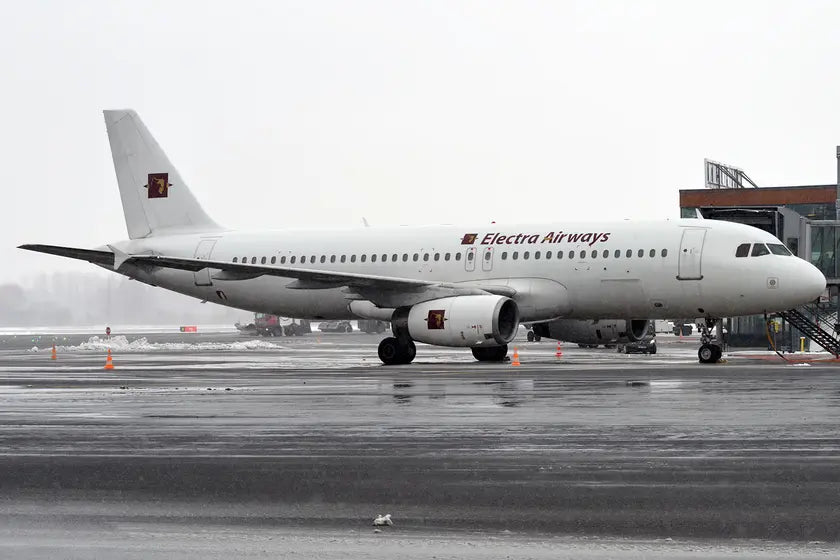
Electra Airways is a Bulgarian charter and ACMI operator headquartered in Sofia. It is not a scheduled network carrier and does not sell its own tickets in any meaningful volume. Instead, it supplies aircraft, crew, maintenance and insurance to other airlines and tour operators, which then control the schedule, the network and the commercial risk. For a pilot, that single structural fact shapes almost everything else in this guide: the base, the destinations, the seasonality of the work and, to a large degree, the stability of the contract are set by whoever is leasing the aircraft this season, not by Electra itself.
The company was founded in 2016, took delivery of its first Airbus A320 in 2017 and began commercial operations that same year. It flies under Bulgarian Air Operator Certificate BG-60, issued and overseen by the Directorate General Civil Aviation Administration, Bulgaria's civil aviation authority. The founder and chief executive is Stefan Trifonov, an aviation engineer whose earlier career included Balkan, Air Jamaica, Shannon Aerospace, Bulgarian Air Charter and Ararat International Airlines. Ownership was reported in May 2024 as a 50/50 split between Trifonov and the Irish lessor Maverick Horizon, on registered capital of BGN 1 million.
Since 2023 Electra has been part of Vector Group, an aviation holding with offices in Ireland, Israel, Malta and Bulgaria. The group is deliberately vertically integrated. Alongside the airline it contains ETG Maintenance, an EASA Part-145 organisation with a base maintenance operation in Varna and a component shop in Sofia; Maverick Horizon, the leasing arm; and Classic Air, a sales agent and broker. Vector Group deputy CEO Matvey Koloturskiy summarised the logic in an Aviation Week interview updated in November 2025: "all maintenance activities of Electra Airways must be performed in-house." For pilots, that integration matters because it explains how the airline can economically operate an older A320ceo fleet that most Western European operators would have retired.
Growth trajectory and financial picture
Electra's growth curve is steep. Company-reported revenue rose from BGN 4.6 million in 2021 to roughly BGN 70 million in 2022, and the CEO subsequently reported approximately EUR 70 million for 2023. The airline had returned around 70% of its fleet during the pandemic and kept a single aircraft flying; it was back to five aircraft by October 2022, nine during 2023, eleven by August 2025 and fifteen by June 2026. On 28 April 2026, Trifonov confirmed the target of 15 active aircraft had been reached through additions during the year.
No audited profit, EBITDA or debt figure for the airline is publicly available for 2024 to 2026, and commercial company databases quoting single-digit-million-dollar revenues conflict sharply with the management figures. Anyone doing serious financial due diligence before signing a contract should treat both sets of numbers with caution and ask the airline directly.
Electra Airways is frequently listed under the IATA designator 7E on job boards and aggregator sites. That is incorrect. IATA's own airline directory, Flightradar24 and AVCodes all assign Electra Airways the designator 3E, with ICAO code EAF and callsign ELECTRA. The code 7E belongs to Aeroline GmbH, trading as Sylt Air, a German operator with ICAO code AWU and callsign SYLT-AIR. If a recruiter or database is still using 7E for Electra, it is working from an outdated designator record. Use 3E / EAF when searching flight data, and confirm the operating entity by AOC number (BG-60) rather than by IATA code.
Who Electra actually flies for
Understanding the customer list is the fastest way to understand the job. In an ACMI arrangement the customer normally controls schedule, sales and revenue management and pays variable operating items such as fuel and airport charges, while Electra supplies the aircraft, the crew, the maintenance and the insurance. The client roster in 2025 and 2026 has included:
| Customer | Nature of the contract | Period |
|---|---|---|
| SunExpress | Commercial partnership signed 7 March 2024 for 2025 to 2027. Two aircraft operated 32 weekly flights from seven German airports to Varna and Burgas in summer 2025. | 2025 only |
| ITAKA / Air001 | Charter brand launched April 2025 with Polish tour operator ITAKA, flying under Electra's AOC. Four aircraft based at Katowice in 2025, reported to grow to six Airbus aircraft for 2026. | 2025 to 2026 |
| LOT Polish Airlines | ACMI lease of A320 LZ-EAH for Warsaw to Tel Aviv from late October 2025, with cooperation planned through summer 2026. | 2025 to 2026 |
| Nouvelair | Wet lease of one A320 from 1 April 2025, operating European services out of Djerba, Tunisia. | 2025 |
| Royal Air Maroc | Recurrent Moroccan ACMI customer. Reported operating points include Casablanca and Oujda. | Recurrent |
| Air Arabia Maroc | Named ACMI customer with Casablanca and Tangier deployments; additional capacity added in 2025. | Recurrent |
| Air Cairo | Two A320-200s wet-leased for a seasonal Egyptian contract in spring 2026. | 2026 |
| Heston Airlines | Short-term ACMI cooperation during summer 2025. | 2025 |
Additional disclosed clients include Avico Group, Cedok, BH Air and Arkia, with earlier engagements for Enter Air and AMC Aviation. Contract status changes frequently; verify current deployments at interview.
The SunExpress case is the most instructive for anyone assessing job security. The three-summer partnership was announced in March 2024 and carried more than 160,000 passengers between Germany and Bulgaria in the 2025 season, yet it was confirmed in late November 2025 that the Bulgaria programme would not continue into summer 2026, reportedly after economic evaluation and a strategy change. Electra replaced that capacity with international ACMI work in Egypt, Poland and Israel. The aircraft kept flying and the fleet kept growing, but the geography of the work moved several thousand kilometres. That is the ACMI cycle in a single example.
Fleet Composition & Type Ratings
Electra Airways is a single-family operator. Every aircraft is an Airbus A320ceo or A321ceo, which simplifies crew planning enormously and means there is no fleet-transfer decision to make and no widebody progression to wait for. It also means there is no A320neo, no Boeing equipment and no cross-crew qualification opportunity to another family. A pilot joining Electra is joining an A320ceo operation and should plan a career around that.
The fleet strategy is explicitly mid-life. CEO Stefan Trifonov has described the acquisition target as "middle-life aircraft, around 15 years old", followed by in-house heavy maintenance and life-extension work at ETG Maintenance in Varna. In practice the aircraft acquired have been older than that target: the documented fleet averages roughly 24 years of age, ranging from a 1992-build A320-231 to 2007-build airframes. Earlier Boeing 737 Classics (LZ-EBA, a 737-400, and LZ-EBB, a 737-300) were operated between 2019 and the early 2020s but have been disposed of as the airline standardised on the A320 family.
| Aircraft Type | Registration | Build Year | Seats | Entered Electra Service |
|---|---|---|---|---|
| Airbus A320-231 | LZ-EAB | 1992 | 180Y | April 2019 |
| Airbus A320-214 | LZ-EAE | 1999 | 180Y | December 2022 |
| Airbus A321-111 | LZ-EAG | 1999 | 219Y | March 2023 |
| Airbus A320-214 | LZ-EAK | 2000 | 180Y | November 2024 |
| Airbus A320-214 | LZ-EAL | 2001 | 180Y | August 2025 |
| Airbus A320-214 | LZ-EAF | 2001 | 180Y | March 2021 |
| Airbus A320-232 | LZ-EAI | 2002 | 180Y | July 2023 |
| Airbus A320-214 | LZ-EAJ | 2002 | 180Y | December 2024 |
| Airbus A321-231 | LZ-EAM | 2003 | 219Y | January 2026 |
| Airbus A320-232 | LZ-EAC | 2004 | 180Y | June 2022 |
| Airbus A320-214 | LZ-EAO | 2004 | 180Y | May 2026 |
| Airbus A320-232 | LZ-EAD | 2006 | 180Y | June 2022 |
| Airbus A320-214 | LZ-EAH | 2006 | 180Y | August 2023 |
| Airbus A320-214 | LZ-EAN | 2007 | 180Y | April 2026 |
| Airbus A320-232 | LZ-EAP | 2007 | 180Y | June 2026 |
Fleet as documented in mid-2026: 13 Airbus A320s and 2 Airbus A321s. Note that the airline's own fleet page was still displaying an 11-aircraft list at the time of writing, omitting LZ-EAM, LZ-EAN, LZ-EAO and LZ-EAP. Always cross-check registrations against a current fleet database before assuming a fleet size.
What an older A320ceo fleet means day to day
Three practical consequences follow from a fleet averaging around 24 years of age. First, the cockpits are mixed. The A320-214 and A320-232 differ in engine type (CFM56-5B versus IAE V2500), and while both are covered by the same A320 type rating, the performance figures, engine handling and abnormal procedures differ enough that operators typically require familiarisation. A 1992-build A320-231 will also have a different avionics standard from a 2007-build airframe, so expect variation in FMGS software, display fit and cabin systems across the line.
Second, technical dispatch reliability on older airframes tends to demand more from the crew. Deferred defects, MEL work and longer turnaround troubleshooting are simply more common than on a five-year-old aircraft, and ACMI flying often takes place away from the operator's main maintenance base. That is a genuine operational skill-builder for a pilot, but it is also a source of duty extensions.
Third, the retrofit programme is real and ongoing. Aviation Week reported in February 2024 that Electra would retrofit its entire eight-aircraft A320 fleet with new seats and refreshed cabins, work performed by ETG Maintenance at its Varna hangar, with the programme extended to subsequently acquired aircraft. A319 and A321 cabins have followed. In 2026 the CEO confirmed that the approximately 15-year-old aircraft would receive in-house maintenance and life-extension procedures. The airline is investing in the fleet it has rather than replacing it.
Electra's published pilot campaigns in 2025 and 2026 have consistently required a current and valid A320 type rating already in the licence, with recent flying on type. There is no public evidence of a generally employer-funded initial type rating, and no published cadet entry route into the flight deck as of August 2026, although the CEO stated in April 2026 that the company was developing its own cadet and internal training programmes in response to staffing shortages. Because the A320 and A321 sit on a common type rating, movement between the two subfleets is a differences matter rather than a new course, and there is no separate seniority bid to reach the A321. Ask specifically whether A321 differences training, base training and line training are bonded, and request the full repayment schedule in writing before signing anything.
Pilot Salary & Compensation Breakdown
This is the section where honesty matters most. Electra Airways does not publish pilot pay figures. Its recruitment advertising describes the structure of the package without stating a single number. A representative A320 Captain advertisement placed by First2 Resource and carried on AviationCV in September 2025 specified "basic monthly summer/winter fees" and a "daily fee when not flying", plus an indefinite contract, without quoting any amount in any currency. No pay scale, collective agreement or seniority-linked salary table for Electra pilots exists in the public domain.
What follows is therefore built in two layers. The first layer is what Electra has actually published about the structure of pay, which is verifiable. The second layer is a benchmark range drawn from comparable European ACMI operators that do publish figures. The benchmark is clearly labelled as an estimate and must not be treated as an Electra offer.
The published pay structure
Benchmark ranges: Captain
| Position / Market | Monthly gross or invoice | Approx. Bulgarian net | Basis |
|---|---|---|---|
| Electra A320 Captain (estimate) | EUR 7,000 to 10,000 | EUR 6,015 to 8,715 | Benchmarked, not published by Electra |
| Bulgarian charter / ACMI Captain generally | EUR 4,500 to 8,500 | EUR 3,765 to 7,365 | Third-party market estimates |
| SmartLynx A320 Captain, 3,000+ block hours | EUR 7,800 low season / EUR 9,455 May to Oct | Depends on jurisdiction | Published pay scale |
| Avion Express A320 Captain | EUR 117,000+ per year, approx. EUR 9,750/month averaged | Depends on jurisdiction | Published compensation overview |
| Freelance A320 Captain, European market | EUR 600 to 680 per duty day | Contractor's responsibility | 2025 campaign: EUR 9,520 for 14 days |
Benchmark ranges: First Officer
| Position / Market | Monthly gross or invoice | Approx. Bulgarian net | Basis |
|---|---|---|---|
| Electra A320 First Officer (estimate) | EUR 3,500 to 6,000 | EUR 2,865 to 5,115 | Benchmarked, not published by Electra |
| Bulgarian charter / ACMI F/O generally | EUR 2,500 to 5,500 | EUR 1,965 to 4,665 | Third-party market estimates |
| SmartLynx A320 F/O, 1,500+ hours | EUR 4,050 low season / EUR 5,185 May to Oct | Depends on jurisdiction | Published pay scale |
| SmartLynx A320 F/O, lower experience | EUR 3,300 low season / EUR 4,270 May to Oct | Depends on jurisdiction | Published pay scale |
| Avion Express A320 F/O | EUR 67,000+ per year, approx. EUR 5,583/month averaged | Depends on jurisdiction | Published compensation overview |
Comparator figures are taken from the operators' own published material, including the Avion Express pilot careers pages. Electra rows are market-derived estimates and carry no company endorsement.
Bulgarian tax and social security in 2026
Bulgaria adopted the euro on 1 January 2026 at the irrevocably fixed rate of 1 EUR = 1.95583 BGN, so contracts, payslips and social security thresholds are now denominated in euro. For a pilot employed on a Bulgarian contract, the deductions are unusually favourable by European standards:
- Personal income tax: a flat 10% on the tax base, under the Personal Income Taxes on Individuals Act.
- Employee social and health contributions: approximately 13.78% of insurable income, comprising pension, universal supplementary pension fund, sickness and maternity, unemployment and health insurance.
- Employer contributions: approximately 18.92% plus the occupational accident rate, which varies by economic activity.
- Maximum monthly insurable income: EUR 2,111.64 from 1 January 2026, converted from BGN 4,130. Contributions stop at that ceiling, which is why high Bulgarian salaries retain a large proportion of gross pay.
The practical effect for a well-paid pilot is roughly net = 0.90 × gross - EUR 285. A EUR 9,000 monthly gross therefore lands near EUR 7,815 net, before personal deductions. That is a materially better ratio than France, Germany or Scandinavia, and it is one of the genuine, quantifiable attractions of a Bulgarian employment contract. It is also why comparing a Bulgarian gross figure directly against a Western European gross figure understates the Bulgarian package.
Flight crew may fall under special first or second category labour classification for pension purposes, which can change the pension contribution treatment. Verify the payroll classification applied to your contract, because it affects both deductions and pension accrual.
Electra Airways publishes no pilot pay figures, no pay scale and no collective agreement. The Captain and First Officer ranges above are estimates benchmarked from comparable European ACMI operators that do publish pay, including SmartLynx and Avion Express, plus third-party estimates for the Bulgarian charter market. They are not quotations from Electra and should not be presented to a recruiter as such. Before accepting an interview, and certainly before paying for travel, obtain in writing: the exact summer fee, the exact winter fee, the daily non-flying fee and which day types qualify for it, whether any block-hour or sector payment exists, the per diem rate and currency, whether the figure quoted is employee gross or contractor invoice, and which country issues your A1 social security certificate. A headline number from a recruiter is not a contract.
Employee contract versus freelance invoice
A recurring trap in ACMI recruitment is comparing an employee gross salary against a freelance day rate as if they were equivalent. They are not. A European freelance A320 Captain campaign in 2025 offered EUR 680 per duty day, or EUR 9,520 for 14 days, which looks superior to almost any employed figure in this section. However, the contractor typically self-funds income tax, social insurance, accountancy, loss of licence protection, pension, sick pay and every gap between assignments. Electra has advertised an indefinite contract, but candidates should establish whether that means a genuine Bulgarian employment contract with the airline, or an indefinite service agreement with an agency or a third-country entity. The legal employer determines your social security country, your notice period, your sick pay and your access to a labour court.
Roster Patterns, FTL & Quality of Life
Electra Airways operates a rotational commuter roster, not a resident-base monthly bid line. The pattern published in its 2025 Captain campaign is 21 days on, 9 days off. A First Officer campaign advertised by First2 Resource has referenced 20 days on and 10 days off, and a Tel Aviv-specific Captain vacancy offered 28 days on and 10 days off. All three are consistent with a rotational model in which the pilot travels to a deployment location, works a block, and travels home.
There is no verified evidence of a fixed 15/15 pattern at Electra, despite that pattern being commonly requested by commuting pilots. Similarly, 5/2 and 6/3 patterns are typical of a resident base rather than Electra's published commuter blocks, and they should not be assumed. If a recruiter offers you a pattern that differs from the ones above, get it in the contract, because the pattern determines your actual quality of life far more than the monthly fee does.
📅 Illustrative 28 Days — A320 Captain on a Published 21/9 Rotation
This grid is an illustration constructed from Electra's published 21/9 pattern combined with mandatory EASA recovery rest. It is not a published Electra roster. Days 1 to 21 are the on-tour block: the "Off" days inside that block are recovery rest taken at the deployment location, not at home. Days 22 to 28, plus two further days rolling into the next block, are the nine days off at home.
The distinction drawn in that caption is the single most important roster point in this article. A 21/9 rotation does not mean 21 working days and 9 days at home in a calendar month. Within the 21-day block, EASA rules force non-duty days, but those are spent wherever the aircraft is deployed, which may be Katowice, Casablanca, Djerba, Hurghada or Tel Aviv. The 9 days off are the only genuinely free period, and whether positioning travel is taken from within them or outside them is a contractual detail worth thousands of euros of lifestyle value per year.
The regulatory floor
Electra operates under EASA Flight Time Limitations and Regulation (EU) 965/2012, supplemented by the EU aviation working time directive. These provide the hard floor beneath any contract:
Those limits are set at European level and are actively contested by pilot representative bodies. The European Cockpit Association has campaigned consistently on fatigue and FTL adequacy, and its published material is worth reading before you accept any high-utilisation summer rotation. In a peak ACMI summer, 80 to 90 block hours per month is entirely plausible, which puts a pilot within striking distance of the 100-hour rolling limit.
Bulgarian annual leave for flight crew
Pilots employed under Bulgarian labour rules benefit from a genuinely generous statutory leave entitlement that scales with annual flying. The Bulgarian Labour Code provides a minimum of 20 working days of basic paid annual leave, and Ordinance No. 22 of 1999 on the working time, rest and holidays of aviation personnel adds flight-hour-linked additional leave. The reported bands are:
| Annual flying hours | Paid annual leave entitlement |
|---|---|
| Up to 400 hours | 36 working days |
| 401 to 600 hours | 40 working days |
| 601 to 700 hours | 45 working days |
| Above 700 hours | 48 working days |
Entitlement applies to flight personnel on Bulgarian employment contracts. Contractors and rotational agency pilots may instead find leave deemed absorbed into off-rotation time, which is not the same thing. Confirm which applies to you.
This is a real advantage of a Bulgarian contract and one that many candidates overlook. A pilot flying 700-plus hours a year on a genuine Bulgarian employment contract is statutorily entitled to 48 working days of paid leave, which exceeds most Western European legacy carriers. The catch is the word "genuine": if the employing entity is an agency in another jurisdiction, or engaged as a service provider, your A1 certificate and therefore your social security country may not be Bulgaria at all. Establish this in writing. It determines where your pension accrues, which health system covers you, and whether you have any statutory sick pay whatsoever.
Electra provides accommodation while on duty plus ground transport between the accommodation and the operating airport, and advertises covered travel costs. That removes the largest recurring expense of a commuting job. What it does not remove is the instability of location. An ACMI pilot's operating base changes with the customer, the season and the aircraft assignment, and Sofia is the corporate and regulatory home base rather than where most line flying happens. Before signing, establish: the nominated airport for positioning, who pays travel to that nominated airport, the baggage allowance, whether tickets are confirmed or standby staff tickets, what happens on a missed connection, whether positioning consumes an off day, and what notice you receive of a base change. Also clarify the accommodation standard: single occupancy or shared, hotel or serviced apartment, and whether breakfast and laundry are included.
Benefits, Contract Structure & Protections
Electra's advertised benefits package is built around the operational needs of a rotational ACMI job rather than around long-term career benefits. Accommodation, transport and duty travel are covered because the model requires pilots to live away from home for three weeks at a time. What is largely absent from the public record is the long-horizon protection that a legacy carrier package would contain: there is no publicly documented loss of licence scheme, no supplementary pension arrangement beyond Bulgarian statutory social insurance, and no published staff travel entitlement.
The table below separates what is verifiably advertised from what is not confirmed. That distinction is deliberate. Treating an unconfirmed benefit as though it exists is the most common and most expensive mistake candidates make when moving into ACMI.
What Bulgarian social insurance actually gives you
A real Bulgarian employment contract is not a thin arrangement. It provides pension accrual, sickness and maternity cover, unemployment insurance and public health coverage, funded by the employee's approximately 13.78% contribution and the employer's approximately 18.92% plus occupational accident rate. Bulgaria is inside the EU social security coordination system, so periods insured in Bulgaria aggregate with periods insured elsewhere in the EU for pension purposes. For an EU-national pilot who has already worked in other member states, that continuity has genuine value.
The complication is jurisdiction. If you are employed by an agency in another country, or engaged as a service provider, your A1 certificate and therefore your social security country may not be Bulgaria at all. Establish this in writing. It determines where your pension accrues, which health system covers you, and whether you have any statutory sick pay whatsoever.
Because Electra publishes no collective agreement and no standard terms, the individual contract is the entire protection. Before signing, get written answers to all of the following: the legal employing entity and its country of incorporation; the governing law and dispute forum; the exact summer and winter monthly fee; the daily non-flying fee and the day types it covers; whether pay is employee gross or contractor invoice; the per diem rate; the A1 social security country; the probation period and both notice periods; sick pay entitlement and duration; the accommodation standard and single or shared occupancy; the treatment of positioning days; the minimum guaranteed days off; the base-change clause and notice period; loss of licence cover including insurer, benefit amount, waiting period and exclusions; the full training repayment schedule; and termination compensation. In an ACMI job, the contract is not paperwork. It is the product.
Career Progression & Command Upgrade
Electra Airways does not publish a seniority list, a bidding system, an upgrade timeline or a command policy. This is normal for a mid-sized ACMI operator and it cuts both ways. There is no queue to wait in, so a strong candidate is not blocked behind two hundred pilots with more service. Equally, there is no transparent, rule-bound path either, so progression depends on operational need, the training department's assessment and, realistically, on which contracts the airline wins.
The structural driver of opportunity here is fleet growth. Electra went from five aircraft in late 2022 to nine in 2023, eleven in 2025 and fifteen by June 2026. Vector Group deputy CEO Matvey Koloturskiy had described the target as growing "to 15 aircraft within the next two and a half years", and that target was met. Each additional A320 requires roughly eight to ten pilots to crew properly, so the four aircraft added between January and June 2026 alone represent a substantial number of new cockpit positions. Estimating from fleet size and normal ACMI crewing ratios, the airline plausibly employs somewhere around 120 to 150 pilots, though no official pilot headcount has ever been disclosed.
| Career Milestone | Documented Requirement or Estimate | Notes |
|---|---|---|
| Entry as First Officer | 2,000 TT, 1,000 A320, 150 hrs on type in past 12 months | Published campaign requirements. Type rating must already be valid. |
| Direct-entry Captain (2025 campaign) | 3,000 TT, 2,000 A320, 500 A320 PIC, 150 hrs in past 12 months | First2 Resource campaign, September 2025. The most restrictive published gate. |
| Direct-entry Captain (2026 campaign) | 3,000 TT, 500 hrs on A320, valid LPC, flight on type within 12 months | AeroProfessional S26 campaign, February 2026. Materially less restrictive. |
| Internal upgrade to Captain | Estimated 3,000 to 5,000 TT plus substantial A320 time | Planning assumption only. No Operations Manual threshold is public. |
| Unfrozen ATPL prerequisite | 1,500 hrs total, incl. 500 multi-pilot | EASA Part-FCL requirement, not an Electra rule. |
| Training Captain / TRI / TRE | Variable, by selection | No published pay scale or vacancy timeline. Ask whether qualifications are bonded. |
Direct-entry Captain requirements have varied significantly between campaigns. The 2026 requirement of 3,000 total hours with 500 on type is a substantially lower barrier than the 2025 requirement of 2,000 A320 hours including 500 PIC. Recency of the specific campaign matters more than any single published figure.
Reading the two Captain campaigns
The gap between the September 2025 and February 2026 Captain requirements is the most useful career signal in the public record. A 2,000-hour on-type requirement with 500 PIC excludes most First Officers entirely, whereas 3,000 total with 500 on type is achievable by an experienced pilot from a different narrowbody background who has recently converted. The relaxation coincided with the fleet reaching 15 aircraft and with the CEO publicly identifying staffing shortages as a constraint. Where crewing pressure is real, upgrade gates tend to move.
That does not mean an automatic command at the regulatory minimum. In the absence of a published policy, a realistic planning assumption for an internal upgrade is 3,000 to 5,000 total hours with substantial A320 time, an unfrozen ATPL, clean training records and a successful command assessment. What Electra offers that a large network carrier cannot is that this is a judgement call, not a queue position. A pilot who performs well and is available for the contracts the airline needs to crew may reach command considerably faster than at a legacy operator with a fifteen-year seniority wait.
In April 2026, CEO Stefan Trifonov publicly identified personnel shortages as a serious constraint on growth, noting that technical and engineering staff take longer to train than pilots. He confirmed that Electra was developing its own cadet programme and internal training system, including preparing candidates from immediately after secondary education, and that for pilots the company was working with candidates who had already begun basic training before receiving additional qualification and flight training. As of August 2026 no public ab-initio cadet entry route into the Electra flight deck had opened, and all published vacancies remained for already type-rated, experienced pilots. Aspiring pilots without an A320 rating should monitor the airline's channels rather than assume a cadet scheme is imminent.
What Electra is good for on a CV
Setting aside pay and lifestyle, the experience value of ACMI flying is high and often undervalued by pilots comparing it to a legacy carrier. In a single year an Electra pilot may operate under several different customers' procedures, into leisure airfields across Southern Europe, North Africa and the Middle East, on older aircraft with more technical variability, frequently away from company maintenance support. That builds decision-making, technical familiarity and adaptability faster than a fixed short-haul network. Pilots who later move to a scheduled operator generally find the transition straightforward in the other direction. The reverse is not always true.
Recruitment Process & Requirements
Electra recruits through two channels: direct application to the airline, and via specialist aviation recruitment agencies acting on its behalf. There is no formal, publicised annual campaign structure of the kind used by legacy carriers. Vacancies appear when a contract is won and capacity needs crewing, which means timing matters and monitoring is worthwhile. Recruitment activity concentrates ahead of the summer season, with campaigns for the following summer often opening in the preceding autumn and winter.
Captain requirements
First Officer requirements
No reliable open Electra vacancy accepting ab-initio or non-type-rated First Officers was located as of August 2026. Requirements vary between campaigns; always read the specific advertisement rather than relying on a general summary.
Selection Stages
Application and agency screening
Apply either directly to Electra by sending a CV and short motivation letter to the careers address published on the Electra Airways About Us page, or through the recruiting agency handling the campaign. The first filter is documentary: total hours, hours on type, PIC time, recency, licence and medical validity, and EU work rights. Campaigns state explicitly that only candidates shortlisted for the second round are contacted.
Client screening
The published process includes a distinct client screening step after the agency filter. This reflects the ACMI structure: where a pilot is destined for a specific customer contract, that customer may have its own crew acceptance criteria. Ask which contract you are being screened for and what happens to your position if that contract does not proceed.
Face-to-face interview
The advertised final published stage. Expect a combined technical and HR interview covering A320 systems and limitations, performance, EASA FTL knowledge, CRM and threat and error management, plus questions about your flexibility on rotation patterns, base changes and availability. Because ACMI operations place crews away from company support, decision-making scenarios and commercial pressure questions are common.
Simulator assessment, documents and background checks
Not always listed in the short advertisement, but a simulator assessment, full document verification, logbook and hour-breakdown review, LPC/OPC and training records, employer references and criminal record or background checks should all be expected. Prepare a complete, verifiable hours breakdown by aircraft type and capacity before you apply.
Contract, differences training and line training
Successful candidates proceed to contract signature, A321 differences where applicable, operator conversion and line training under supervision. Confirm before signing which training elements are bonded, at what value, and over what repayment period.
Recruitment agencies used
| Agency | Status | Website |
|---|---|---|
| First2 Resource | Confirmed Electra recruiter | first2resource.com |
| MHC Aviation | Confirmed, carried First2 Resource Electra listings | mhcaviation.com |
| AeroProfessional | Confirmed for the 2026 Captain campaign | aeroprofessional.com |
| AviationCV | Job board carrying Electra vacancies | aviationcv.com |
| Rishworth Aviation | Major ACMI recruiter, no Electra-specific campaign located | rishworthaviation.com |
| Brookfield Aviation | Established recruiter, no Electra-specific campaign located | brookfieldav.com |
Agency involvement varies by campaign. The AeroProfessional S26 Captain campaign in February 2026 is the most recent confirmed engagement. Always verify that an agency is genuinely mandated before sharing personal documents.
Three things distinguish a strong ACMI application from a weak one. First, recency documentation: campaigns require 150 hours on type in the preceding 12 months, so a clean, cross-referenced logbook summary matters more than a polished CV design. Second, demonstrated flexibility: state clearly which rotation patterns you accept and which deployment regions you are willing to work in, because the recruiter is matching you to a specific contract. Third, asking the right questions: a candidate who asks about the A1 social security country, the base-change clause and the training bond reads as an experienced professional, not as a difficult applicant. Electra does not publish a language requirement beyond ICAO Level 4 English, and there is no evidence Bulgarian is required, which distinguishes it from Bulgaria Air's 2026 A220 campaign where Bulgarian language was required.
Bases & ACMI Deployment Map
This section replaces the layover destination guide that would appear in an article about a long-haul network carrier. Electra operates narrowbody short and medium-haul sectors, so classic 24 to 48 hour city layovers are not the shape of the job. What matters instead is where you will be deployed for three weeks at a time, because that is where you sleep, eat and spend your rest days.
An ACMI pilot's operating base is a function of the customer contract, not of a bidding system. It can and does change between seasons, and sometimes within a season. The locations below are the ones documented in Electra's 2025 and 2026 operations. They should be read as a map of possibilities rather than as a menu you can choose from.
You do not bid for a deployment and you do not choose your customer. Assignment follows the airline's contractual obligations, and a base can change with the season, the customer or the aircraft. Accommodation is provided while on duty and ground transport between accommodation and airport is covered, which removes the largest cost of working away. What is not documented is the notice period for a base change, so ask for it in writing. Also ask what happens to your contract if the customer contract you were recruited for is cancelled, as happened to the SunExpress Bulgaria programme between the 2025 and 2026 seasons. For non-EU deployments in Morocco, Egypt, Tunisia and Israel, additionally confirm visa arrangements, medical cover abroad, tax residency implications and which country issues your A1 social security certificate.
How Electra Airways Compares: Airline Radar Chart
Electra is best judged against two reference points: its closest Bulgarian peer and the European ACMI benchmark. European Air Charter is a long-established Sofia-based Bulgarian charter and ACMI operator with an all-A320 fleet, in-house MRO and bases at Sofia, Varna and Burgas, making it the most directly comparable domestic employer. Avion Express, the Lithuanian and Maltese A320-family ACMI group, is the operator most European pilots use as the pay and roster yardstick because it publishes its terms openly. The chart below scores all three on the same six dimensions used in the scorecard, reduced to the five axes the radar format supports.
| Metric | Electra Airways | European Air Charter | Avion Express |
|---|---|---|---|
| Home country | Bulgaria (Sofia) | Bulgaria (Sofia) | Lithuania / Malta |
| Fleet, 2026 | 15 A320-family | 10 A320-200 | Approx. 20 to 25 after 2026 realignment |
| Fleet average age | Approx. 24 years | Older A320ceo fleet | Younger A320-family incl. neo |
| Captain pay | Not published; estimated EUR 7,000 to 10,000/month | Not published; estimated EUR 55,000 to 85,000/year, senior to EUR 100,000 | Published: EUR 117,000+ per year |
| F/O pay | Not published; estimated EUR 3,500 to 6,000/month | Not published; estimated EUR 28,000 to 55,000/year | Published: EUR 67,000+ per year |
| Published roster | 21/9 (Captain campaign) | Not published | Europe 20/8; also 20/13, 30/15, 33/13 |
| Bases | Sofia, Varna, Burgas, Katowice, plus deployments | Sofia, Varna, Burgas | European and non-European, contract-dependent |
| Type rating policy | A320 rating normally required | A320 rating normally required | A320 rating required for both seats |
| Pay transparency | Low | Low | High |
Bulgarian pay figures are third-party estimates because neither Bulgarian operator publishes a scale. Avion Express figures come from its own published compensation material. Comparing them directly overstates the gap, because Bulgarian net retention is higher and the Bulgarian aviation leave entitlement is more generous.
Key Takeaways from the Comparison
Avion Express wins decisively on transparency, and probably on gross pay. It publishes annual income figures, a full menu of roster options from 20/8 through 30/15, and clear entry criteria. A pilot who wants to know exactly what they are signing up for before applying will find that process far easier there. Electra and European Air Charter both require the candidate to extract every material term through negotiation, which favours experienced pilots who know what to ask and penalises those who do not.
Electra leads its Bulgarian peer on fleet scale and growth momentum. Fifteen aircraft against ten, with four added in the first half of 2026 alone, means more cockpit positions opening and a more plausible route to early command. European Air Charter is the more established operation with a longer track record and a more Bulgaria-centred base structure, which suits a pilot who wants to live in Bulgaria and fly from Bulgarian airports rather than deploy abroad for three weeks at a time.
Fleet is where all three sit behind a legacy carrier, and Electra sits behind Avion Express. An A320ceo fleet averaging around 24 years, with no neo variant and no CCQ pathway, is a limiting factor for a pilot thinking about the next employer. Avion Express operates a mix that includes newer equipment. Against that, Electra's in-house MRO integration through ETG Maintenance and its cabin retrofit programme give it a technical support structure that many similarly sized operators lack.
Work-life balance is the weakest axis for Electra. A 21/9 rotation with an unpredictable deployment location is harder on family life than Avion Express's European 20/8, and considerably harder than a resident base at a Bulgarian operator flying from Sofia. The compensating factors are real: accommodation, transport and travel are covered, Bulgarian statutory aviation leave scales up to 48 working days at high annual hours, and the flat 10% income tax with a EUR 2,111.64 monthly contribution ceiling preserves an unusually high proportion of gross pay.
Job security is contract-dependent at all three, and Electra's record is mixed. The airline has grown its fleet consistently and diversified across at least eight customers in two years, which spreads risk. It also lost a flagship three-year partnership after a single season. For a pilot, diversification is the more important signal: an operator with one customer is fragile, and Electra is not that.
Radar scores are editorial estimates, not measured values. They are derived from published recruitment advertisements, company fleet records, regulatory sources, third-party pay estimates and industry reporting available as of August 2026. Neither Electra Airways nor European Air Charter publishes a pilot pay scale, roster policy or benefits schedule, so their scores carry more uncertainty than Avion Express's, which does publish compensation and roster material. The scores represent a general assessment for an experienced, type-rated A320 pilot evaluating a multi-year commitment. Individual outcomes vary substantially by contract, deployment and season. Nothing here substitutes for the written terms of a specific offer.
Regulator, Unions & Industrial Relations
Electra's industrial relations picture is straightforward to describe and important to understand precisely because of what is absent from it. As of August 2026 there is no publicly documented collective bargaining agreement, no published pilot pay scale, no recognised union company section and no substantiated pilot strike at Electra Airways. Generic passenger-compensation websites that mention possible "Electra strikes" are marketing pages, not evidence that industrial action occurred.
This is not unusual for a Bulgarian ACMI operator, and it is not automatically a negative. It does mean that pilot terms appear to be individually or agency-negotiated rather than collectively set, which shifts the entire burden of protection onto the individual contract. A pilot coming from a strongly unionised legacy carrier should recalibrate expectations accordingly.
The institutional landscape
Pilots considering Electra should verify directly with BUL-ALPA whether it maintains any company section or membership presence at the airline, because no such arrangement is publicly documented. Individual membership of a national pilot association still provides value in an operator without collective representation: legal advice, licence protection guidance, fatigue reporting support and access to European-level advocacy on flight time limitations.
Contract Timeline: What Actually Drives Base and Roster Stability
In the absence of strikes or collective bargaining, the events that genuinely affect an Electra pilot's working life are commercial: contracts won, contracts lost, and aircraft delivered. The timeline below records the documented ones.
Read the timeline as a risk profile rather than a news summary. The positive signal is customer diversification: Electra ended 2026 with work spread across Polish, Israeli, Egyptian, Moroccan and Tunisian clients, so no single cancellation is existential. The negative signal is contract volatility: a three-summer flagship partnership lasted one season, and the capacity moved several thousand kilometres. In practical terms, an Electra pilot should assume the deployment location is a variable and negotiate accordingly, seeking a defined base-change notice period, clarity on what happens if the customer contract ends, and a written termination compensation provision. Because there is no collective agreement to fall back on, none of that is provided by default.
Verdict: Who Is Electra Airways For?
🎯 The Assessment
Electra Airways is a credible, fast-growing and highly contract-dependent ACMI employer. In under four years it went from a single pandemic-era aircraft to fifteen A320-family jets, built an integrated maintenance and leasing group around itself, and diversified across at least eight customers in Europe, North Africa and the Middle East. That growth is real and it generates cockpit positions faster than most established operators of comparable size.
The trade-offs are equally real. There is no published pay scale, no seniority list, no command upgrade policy, no documented loss of licence scheme and no collective agreement. The fleet averages around 24 years old with no neo variant. The published roster is 21 days on and 9 days off, with the operating base determined by whichever customer contract the airline is crewing. Anyone joining is trading transparency and stability for opportunity and experience.
Where Electra does score well is in the underlying Bulgarian employment framework, provided the contract is genuinely Bulgarian. A flat 10% income tax, a monthly social contribution ceiling of EUR 2,111.64, and statutory aviation leave scaling to 48 working days at high annual flying hours combine to produce a net position that compares better against Western European operators than a gross-to-gross comparison suggests. Accommodation, ground transport, duty travel and insurance being covered removes the main cost of a commuting job.
1 How much does an Electra Airways pilot earn?
Electra does not publish pilot pay. Its advertisements confirm the structure (a basic monthly summer fee, a separate winter fee, and a daily fee when not flying) but state no amounts in any currency. Benchmarked against comparable European ACMI operators that do publish figures, an A320 Captain would plausibly fall in the EUR 7,000 to 10,000 monthly gross range and a First Officer in the EUR 3,500 to 6,000 range in an active month. Those are estimates, not offers. On a Bulgarian contract with 10% flat income tax and social contributions capped at EUR 2,111.64 monthly insurable income, net retention is high: roughly net = 0.90 × gross - EUR 285. Always obtain the exact summer fee, winter fee and daily fee in writing before proceeding.
2 Does Electra Airways pay for the A320 type rating?
There is no public evidence of a generally employer-funded initial type rating. Every published Electra campaign in 2025 and 2026 required a valid and current A320 type rating already in the licence, plus recent flying on type. The CEO stated in April 2026 that the company was developing its own cadet and internal training programmes in response to staffing shortages, but as of August 2026 no ab-initio or non-type-rated entry route had opened publicly. If any training is offered, request the full bond value, duration and repayment schedule in writing before signing.
3 What is the roster pattern at Electra Airways?
The pattern published in Electra's 2025 Captain campaign is 21 days on, 9 days off. A First Officer campaign has referenced 20 days on and 10 days off, and a Tel Aviv Captain vacancy advertised 28 days on and 10 days off. There is no verified evidence of a 15/15 pattern despite it being commonly requested. Critically, the "on" block is spent at the deployment location, including the recovery rest days EASA requires within it. Only the 9 days off are genuinely free. Confirm whether positioning travel is taken from within or outside your days off, because that materially changes the value of the pattern.
4 Where will I actually be based?
Sofia is the corporate and regulatory home base, but it is not where most line flying happens. Documented operating bases and deployments include Varna and Burgas in Bulgaria, Katowice in Poland (the principal Air001 station, with Warsaw, Wrocław and Poznań departures), plus contract deployments in Morocco (Casablanca, Tangier, Oujda), Egypt (Air Cairo, spring 2026), Tunisia (Djerba, for Nouvelair) and Tel Aviv (for LOT and Arkia). You do not bid for a base. Assignment follows the customer contract and can change between seasons. Ask specifically about the base-change notice period, because it is not publicly documented.
5 Can non-EU citizens apply to Electra Airways?
Published European campaigns require an unrestricted right to live and work in the EU, alongside an EASA Part-FCL licence and EASA Class 1 medical. There is no documented visa sponsorship pathway for non-EU nationals in the public campaigns reviewed. Language requirements are limited to ICAO English Proficiency Level 4 with no evidence that Bulgarian is required, which distinguishes Electra from Bulgaria Air's 2026 A220 campaign, where Bulgarian language was a requirement.
6 How long does it take to upgrade to Captain at Electra?
Electra publishes no seniority list, no upgrade timeline and no command policy, so no reliable figure exists. A realistic planning assumption is 3,000 to 5,000 total hours with substantial A320 time, an unfrozen ATPL, clean training records and a successful command assessment. What can be said with confidence is that the airline recruits direct-entry Captains externally and that its published Captain requirements were relaxed between September 2025 (3,000 total, 2,000 A320, 500 A320 PIC) and February 2026 (3,000 total, 500 on A320), while the fleet grew from 11 to 15 aircraft and the CEO publicly identified staffing shortages. Command opportunity is therefore a judgement call driven by operational need rather than a queue position.
7 Is Electra Airways a stable employer?
The financial and operational trajectory is strongly positive: company-reported revenue rose from BGN 4.6 million in 2021 to approximately EUR 70 million in 2023, and the fleet grew from one pandemic-era aircraft to fifteen by June 2026. Customer diversification across Polish, Israeli, Egyptian, Moroccan and Tunisian clients spreads risk meaningfully. The counterweight is contract volatility: a three-summer SunExpress partnership signed in March 2024 was terminated after a single season in November 2025, moving that capacity abroad. No audited profit, EBITDA or debt figures are public for 2024 to 2026, and commercial databases quoting much lower revenues conflict with management figures. Treat stability as contract-dependent and ask what happens to your position if the contract you were recruited for ends.
8 Is Electra Airways IATA code 3E or 7E?
It is 3E. IATA's own airline directory, Flightradar24 and AVCodes all list Electra Airways Ltd with IATA designator 3E, ICAO code EAF and callsign ELECTRA. The code 7E belongs to Aeroline GmbH, trading as Sylt Air, with ICAO code AWU and callsign SYLT-AIR. The 7E attribution appears on some job boards and aggregator sites and reflects an outdated designator record. When checking flight data, roster history or operational statistics, search 3E or EAF, and identify the operating entity by AOC number BG-60.
9 What is the fleet like to fly?
All Airbus A320-family, all ceo. Thirteen A320s in 180-seat configuration and two A321s in 219-seat configuration, averaging around 24 years of age, spanning 1992 to 2007 build years. Both CFM56-powered A320-214 and IAE V2500-powered A320-232 subtypes are operated, so expect variation in performance figures, engine handling and avionics standard across the line. Because the A320 and A321 share a common type rating, movement between subfleets is a differences matter. The group's ETG Maintenance carries out base maintenance and a full cabin retrofit programme at Varna, with a component shop in Sofia. Older airframes mean more MEL and deferred defect work, which is genuine technical experience but also a source of duty extensions.
10 Are Electra pilots unionised?
No collective bargaining agreement, recognised union company section or published pilot pay scale exists in the public domain for Electra Airways as of August 2026, and no pilot strike has been substantiated. Bulgaria has a national pilot association, BUL-ALPA, listed by IFALPA among its European member associations, and the Federation of Transport Trade Unions covers civil aviation workers more broadly, but neither is documented as representing Electra pilots specifically. In practical terms, terms and conditions appear individually or agency-negotiated, which places the entire burden of protection on your written contract.
Official Links & Resources
Because Electra Airways publishes limited information about pilot terms, verifying directly with primary sources matters more here than at a legacy carrier. These are the organisations and official pages relevant to an Electra Airways pilot career:
Before any interview with an ACMI operator that does not publish terms, prepare a single-page written list of the terms you need confirmed: legal employing entity, governing law, summer fee, winter fee, daily non-flying fee, per diem, A1 social security country, notice periods, sick pay, accommodation standard, positioning treatment, minimum days off, base-change notice, loss of licence cover and training bond schedule. Send it after the interview and ask for written answers before accepting. A professional operator will answer without hesitation. An employer that will not put its terms in writing has told you something important.