

Air North Overview & Company Profile
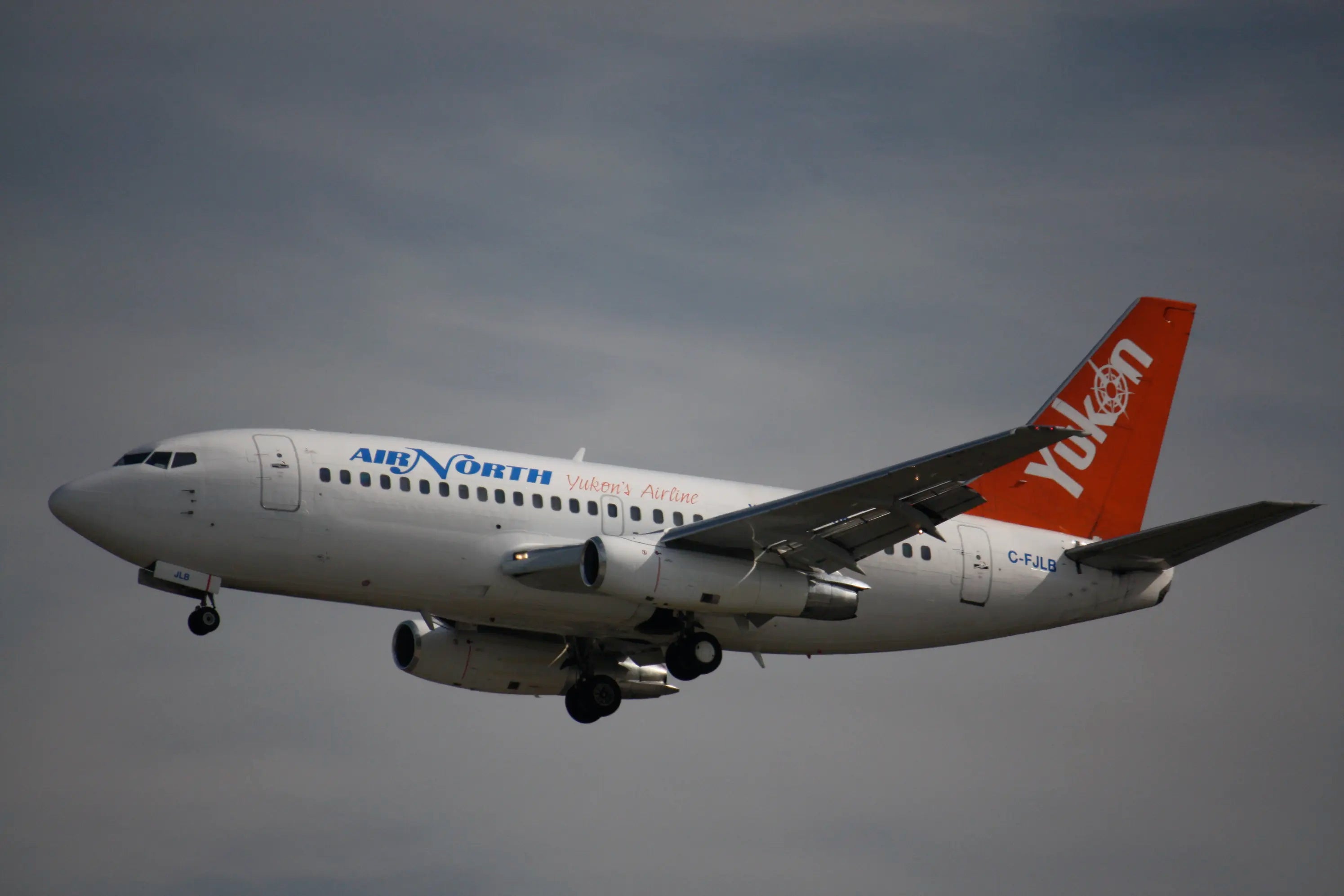
Air North, Yukon's Airline (legally Air North Charter and Training Ltd., IATA 4N, ICAO ANT) is a Canadian scheduled and charter operator based at Erik Nielsen Whitehorse International Airport (YXY) in Whitehorse, Yukon. It was founded on 1 February 1977 by two pilots, Joe Sparling and Tom "Ace" Wood, and began with a single Cessna 206 doing flight training and mining charter work. Nearly five decades later it operates Boeing 737 jets across Canada and ATR 42 turboprops into remote northern communities, from a head office at 150 Condor Road in Whitehorse.
What makes Air North structurally unusual is its ownership. The airline's official company page states that it is 100% owned by Yukoners and that "one in 15 Yukoners holds an equity or employment stake in our airline." The Vuntut Development Corporation, the economic arm of the Vuntut Gwitchin First Nation of Old Crow, is the major institutional shareholder; published accounts of the ownership structure place its holding at approximately 49%, with founder Joe Sparling holding roughly half and the balance spread across individual Yukon investors. The First Nation investment dates from around 1999 to 2000 and helped finance the airline's move into 737 jet operations in 2002. Air North's About page confirms the VDC relationship but does not itself publish a percentage.
For a pilot, that ownership model matters in a practical way. Air North is not a subsidiary being managed toward a group-level margin target, and it is not private-equity owned. It is a locally held business whose largest shareholder is a First Nation whose community, Old Crow, depends on the airline for its only scheduled air link. That tends to produce longer planning horizons and unusual route retention, but it also means there is no parent balance sheet to absorb a bad year.
Scale is modest. Air North's own material describes "nearly 500 employees," making it one of Yukon's largest private employers, and the airline's federally filed 2025 labour report used a figure of approximately 450. The most recent published breakdown of flight crew specifically, from a Skies Magazine profile, put the airline at around 30 pilots and 30 flight attendants within roughly 220 full-time equivalent staff at that time. That pilot figure is dated and is almost certainly higher now given the addition of two Boeing 737-800s and the Yellowknife network expansion, but Air North does not publish a current flight crew headcount. Treat any pilot group of this size as a small, tightly held seniority pool where a handful of retirements or resignations can move progression significantly in either direction.
The airline is not a member of Star Alliance, oneworld or SkyTeam, and it does not operate its own frequent flyer programme. It holds full interline agreements with China Airlines, Condor, Hahn Air, Philippine Airlines and WestJet, plus baggage transfer arrangements with Air Canada and Alaska Airlines. In national terms it is small: a 2023 Competition Bureau estimate placed Air North at roughly 1.3% of Canada's domestic passenger market, against 34.1% for Air Canada and 30.1% for WestJet. Within Yukon and its northern markets its position is far stronger than that national number implies, but the airline competes directly with both national carriers on the Whitehorse to Vancouver trunk.
Air North is also more than an airline. It runs airport ground handling, in-flight catering, the Black Wolf Bistro, cargo operations and a Jet-A fuel business. Its affiliate Chieftain Energy, formed in 2014 with the Kluane Dana Shäw Limited Partnership (a Kluane First Nation entity), distributes bulk fuel, heating oil and lubricants. In an earlier 2022 revenue split, roughly 75% of sales came from scheduled service, 15% from charter and 10% from handling and other work. That diversification is part of why the airline has survived 49 years in a thin market.
Air North is privately held and its pilot group has no publicly filed collective agreement. That means several data points a pilot would normally expect to find, including pay scales, guaranteed days off, bidding rules, upgrade criteria and loss of licence cover, are not publicly verifiable. This article states clearly, section by section, where that is the case rather than filling the gaps with estimates borrowed from other carriers. Where Canadian market benchmarks are used, they are labelled as benchmarks and not presented as Air North rates. Note also that a separate Australian operator trades as "Airnorth" (IATA TL, Darwin); its enterprise agreement, rosters and pay tables are frequently mistaken for this airline's and are not applicable.
Fleet Composition & Type Ratings
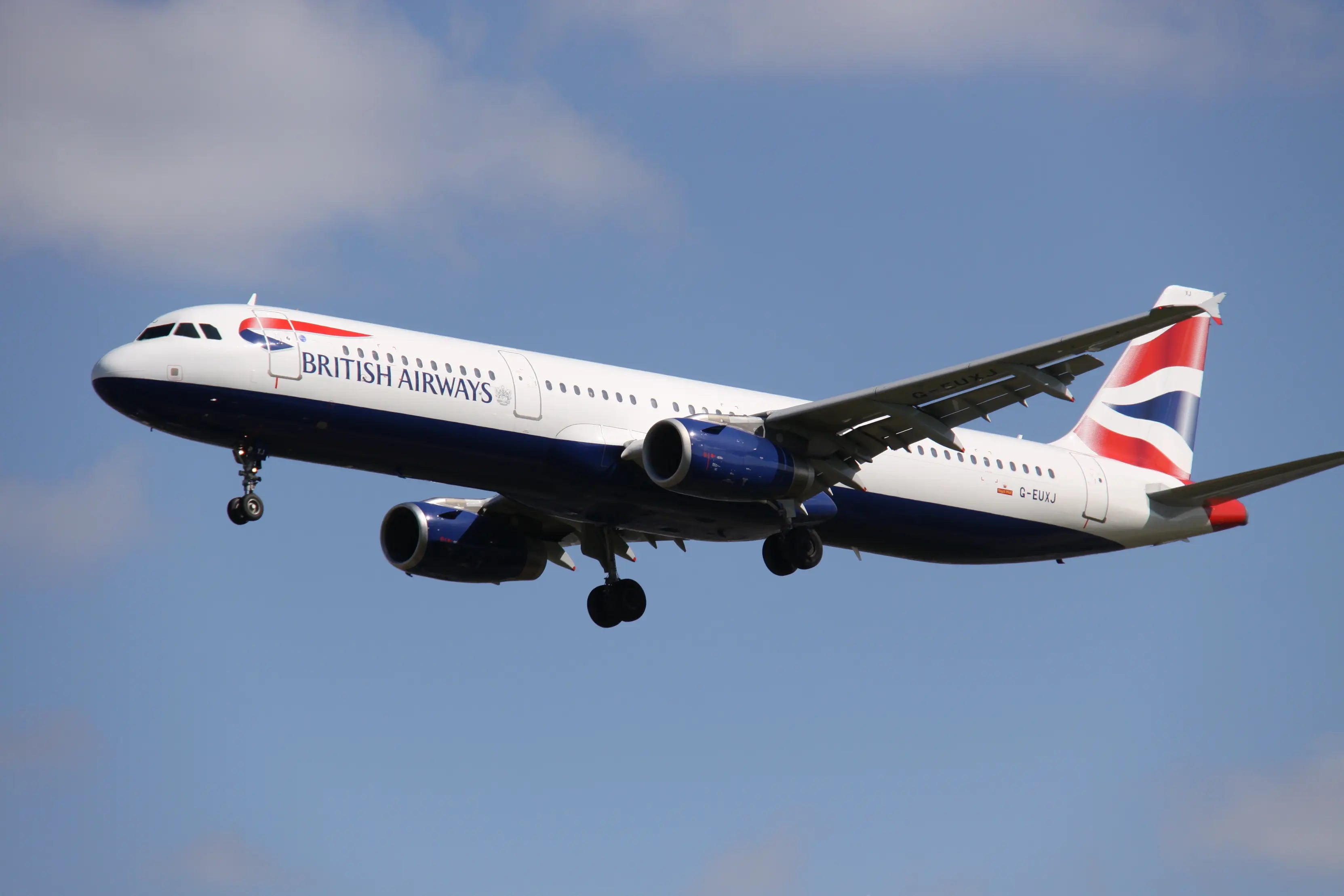
Air North's published fleet consists of 11 aircraft: seven Boeing 737s and four ATR 42s. That split defines almost everything about the pilot job here. The 737 fleet flies the long southern and eastern trunk routes; the ATRs fly the short, weather-exposed sectors into Yukon and Northwest Territories communities. Very few Canadian operators of this size give a pilot access to both a Western-built jet and a regional turboprop under one seniority number.
| Aircraft Type | Role | In Service | Seats | Notes |
|---|---|---|---|---|
| Boeing 737-800 | Jet, trunk routes | 2 | 174 (all economy) | Registrations C-FNYA and C-FNYB. Both airframes built in 2013 and refurbished. The fleet renewal aircraft. |
| Boeing 737-500 | Jet, trunk and mid-density | 4 | 122 (all economy) | 737 Classic. Registrations reported as C-FANF, C-GANH, C-GANJ and C-GANU. To be replaced gradually. |
| Boeing 737-400 | Jet, trunk routes | 1 | 156 (all economy) | 737 Classic, reported as C-FANB. Also a long-term replacement candidate. |
| ATR 42 (passenger) | Regional turboprop | 3 | 42 | Marketed by Air North as ATR 42-320. Registry data classifies the individual airframes across the ATR 42-300 and -320 families, including QC variants. |
| ATR 42 (freighter) | Dedicated cargo | 1 | Cargo only | C-FVGY, an ATR 42-300F registered in Canada on 7 May 2021. Air North's first dedicated ATR freighter. |
Counts and seat figures are from Air North's official fleet page. Registrations are drawn from aviation fleet databases and can change through sale, lease return or re-registration; verify individual marks in the Transport Canada Canadian Civil Aircraft Register.
The 737 renewal: what it means for a pilot
The most consequential fleet development of the last three years is the arrival of the 737-800. The first aircraft, C-FNYA (a 737-8K5, MSN 37960, formerly N191TS), was ferried out of desert storage in September 2023, entered the Canadian register on 26 September 2023, and flew its first scheduled Air North service on 25 July 2024. A second 737-800, C-FNYB, followed. Both are 2013-build airframes with winglets and refurbished cabins, not new deliveries.
The programme was part-funded by a C$6 million repayable federal contribution through the Canadian Northern Economic Development Agency, which covered aircraft, tooling, spare parts and a new 52,800 square foot hangar in Whitehorse. Management has publicly stated the intent to acquire additional 737-800s while gradually retiring the Classics, but no binding order, registration list or delivery schedule has been announced, and as of the most recent fleet listing all four 737-500s and the 737-400 remain in service. A candidate should not assume a rapid full transition to the NG.
The age profile is the honest weak point. Reported fleet analysis put the 737 Classics at an average of roughly 32 years, and the ATR 42 airframes are also mature. A pilot joining today should expect to fly steam-and-hybrid Classic flight decks alongside the newer NGs, and should ask directly which fleet and which variant a given vacancy sits on. On the upside, a 737 Classic PPC plus 737NG differences training is a genuinely portable combination in the Canadian and international market, and the ATR 42 remains one of the most widely operated regional turboprops in the world.
No Air North document located in this research states whether the airline pays for a new hire's Boeing 737 or ATR 42 type rating, whether it requires candidates to arrive already rated, whether a training bond or repayment agreement applies, or whether it uses its own simulator or a third-party training provider. The only Air North pilot posting available in full, a 2021 direct-entry 737 Captain competition, expressed a current 737 PPC as a preference rather than a requirement, which suggests the airline has been willing to train. That is an inference, not a policy statement. Get the training funding, bonding and repayment terms in writing before accepting an offer.
Pilot Salary: What Is and Is Not Public
This is the section where honesty matters more than completeness. Air North does not publish pilot pay scales, and no collective agreement exists in the federal Negotech repository to reveal them. The airline's own 2021 Boeing 737 Captain posting listed the wage simply as "commensurate with experience." Salary aggregator sites that appear to show Air North pilot figures are, on inspection, frequently displaying rates belonging to other carriers: a widely circulated "$66.25 per credit hour" figure attached to Air North searches actually originates from a Jazz Aviation First Officer posting. That number should not be applied here.
What follows therefore separates three things clearly: what Air North has actually published, what the surrounding Canadian market pays, and what a candidate must ask for directly.
What Air North has actually published
| Pay element | Publicly verifiable position |
|---|---|
| First Officer hourly or annual scale | Not disclosed |
| Captain hourly or annual scale | Not disclosed. The 2021 B737 Captain competition stated only "commensurate with experience." |
| Monthly block hour range | 60–70 block hours per block full-time; 35–40 part-time (2021 B737 Captain posting). This is a workload figure, not a pay guarantee. |
| Part-time flying | Explicitly offered in the 2021 posting, which is unusual for a Canadian 705 jet operator and may be attractive to some pilots. |
| Per diem / expense allowance | Not published for pilots. Away-from-base allowances are used operationally but the rate is not disclosed. |
| Profit sharing | Yes, advertised across Air North job postings as a company-wide programme. Discretionary and results-dependent; no published formula or percentage. |
| Group RRSP | Yes, group RRSP investment options advertised; several postings reference an employer RRSP match, but the pilot-specific match rate and vesting are not published. |
| Employee share ownership | No formal employee share purchase plan is documented. Broad Yukon community share ownership exists, but that is not the same as an ESOP and should not be counted as compensation. |
| Overtime or premium formula | Not disclosed |
Sources: Air North competition 4N21-079 (Boeing 737 Captain, November 2021) and current Air North job postings on the airline's Greenhouse job board, August 2026.
Canadian market benchmarks for context
Because Air North's own numbers are unavailable, the useful thing a candidate can do is bracket the range using comparable Canadian operators that do publish. These are not Air North rates. They are the market Air North recruits against, and a candidate should expect any offer to be read against them.
| Benchmark carrier / market | First Officer | Captain | Basis & date |
|---|---|---|---|
| Canadian regional market, broad guide | ~C$55,000–75,000 year 1; C$75,000–90,000 by year 3 | ~C$95,000–120,000 junior; C$120,000–145,000 senior | General 2026 Canadian regional ranges; varies materially by aircraft and carrier. |
| Canadian North (ATR / B737, ALPA) | ~C$60,000 year 1; ~C$85,000 by year 5 | ~C$120,000 junior; ~C$160,000 senior | Industry compilation, March 2026, including northern allowances. New credit-based scale from the April 2026 agreement is not fully public. |
| Flair Airlines (B737NG / MAX, ALPA) | C$103.00/hr year 1 rising to C$156.56/hr year 10 | C$206.00/hr year 1 rising to C$289.43/hr year 12 | Published pre-July-2026 scale on a 75-credit guarantee. A new three-year agreement was ratified 14 July 2026, so current rates will differ. |
| Central Mountain Air (Dash 8 / Beech 1900) | No 2026 range published | Dash 8 Captain C$92,700–128,750; Beech 1900 Captain C$90,177–127,308 | Official CMA postings, July 2026, quoted as annual salary rather than hourly flight pay. |
| PAL Airlines (Dash 8, ALPA) | ~C$54–58/hr year 1 to ~C$76.50–80.50/hr year 10 | ~C$95/hr entry to ~C$133/hr senior | Publicly reconstructed scales, generally on 75–80 monthly credits. |
Benchmark figures only. None of these are Air North rates and none should be quoted as such. Hourly rates annualise very differently depending on the monthly guarantee.
No defensible Air North-specific First Officer or Captain salary figure exists in the public record as of August 2026. Any website presenting one should be treated with suspicion until the underlying Air North document is produced. Before resigning from a current employer, a candidate should obtain in writing: the pay step table and how steps advance; whether pay is hourly, per credit, or annual salary; the monthly guarantee and what happens below it; overtime thresholds; the per diem rate and its tax treatment; the profit sharing formula and eligibility date; the RRSP match percentage and vesting; and any training cost repayment schedule. At a non-union carrier, the offer letter is the contract, and there is no collective agreement to fall back on.
One genuine offsetting factor deserves attention and is covered in detail in Section 9: a Whitehorse-domiciled pilot pays Yukon territorial income tax, among the most favourable rate structures in Canada at professional pilot income levels, and qualifies for the Northern Residents Deduction at the highest Zone A rate. Two pilots with identical gross pay, one in Whitehorse and one in Vancouver or Toronto, do not take home the same amount. Any comparison of Air North against a southern carrier that stops at the gross figure is incomplete.
Roster, Duty Limits & Quality of Life
Air North is a CAR 705 airline operation under the Canadian Aviation Regulations, which means its flight and duty time limits, rest requirements and fatigue management obligations are set by Part VII of the CARs. Those regulatory limits are the one part of the roster picture that is fully public and fully verifiable.
| Regulatory limit | Rule for a CAR 705 operator | |
|---|---|---|
| Maximum flight duty period | Normally 9 to 13 hours | |
| Flight time, 28 consecutive days | 112 hours | |
| Flight time, 90 consecutive days | 300 hours | |
| Flight time, 365 consecutive days | 1,000 hours | |
| Work hours, 365 consecutive days | 2,200 hours (CAR 700.29) |
Maximum FDP varies with report time, number of sectors, average sector length and whether the crew is augmented. Extensions, split duty and unforeseen operational circumstances are conditional provisions, not blanket permissions.
What Air North itself publishes about rosters
Very little. The only company figure available is from the 2021 Boeing 737 Captain competition, which described full-time work as 60 to 70 block hours per block and part-time as 35 to 40. There is no published minimum days off, no published bid period structure, no published reserve system and no published line award process. That is a direct consequence of the pilot group being non-union: at Canadian North, by contrast, the filed ALPA agreement sets a contractual minimum of 12 days off per full bid period, and a candidate can read that number before applying.
Most airline career guides show a four-week roster grid at this point. This article does not, because no reliable Air North pilot roster, bid pack or pairing document is publicly available, and constructing a plausible-looking one from schedule data would be a fabrication. Ask the recruiter for a redacted sample line from each fleet, for a typical month and for a peak-season month, before making a decision. Beware also of "eight RDOs per month" figures circulating online: those belong to the unrelated Australian carrier Airnorth.
What the schedule structure implies
Even without a bid pack, the published timetable tells a pilot a good deal about the shape of the work. Air North's network is built around a single base, and a large share of its flying returns to Whitehorse the same day.
- ATR 42 flying is short-sector, multi-leg and northern: Dawson City at roughly 1h15–1h30, Old Crow at roughly 1h45–2h, Inuvik at about 2h15. These are the day trips, often multiple sectors, in the most demanding weather and infrastructure environment on the network.
- 737 flying to Vancouver (about 2h15–2h30), Calgary (about 2h15–2h30) and Edmonton (about 2h–2h15) is trunk-route work and much of it is turnaround-shaped rather than overnight.
- 737 flying to Toronto and Ottawa is the long end of the network, routed via Yellowknife, at roughly 4h30–5h15 total on the eastern legs. These are seasonal and date-limited services rather than year-round daily operations.
- Charter work, including mining, camp movement, government and special-event flying, adds irregularity that a pure schedule read will miss.
The practical consequence is that Air North's roster profile sits between a pure day-trip regional and a conventional overnighting airline. Many duties end at home, which is a genuine lifestyle advantage over a rotational Arctic operation where crews are away for a week or more. Against that, seasonality is pronounced: Yellowknife services expanded materially in 2026 with a Vancouver seasonal route from August 2026 to March 2027, a new year-round Edmonton to Yellowknife service from December 2026 and Whitehorse to Yellowknife rising to six weekly, so a pilot should expect the shape of the month to change through the year.
Vacation and statutory entitlements
As a federally regulated employer, Air North's minimum vacation entitlement is set by the Canada Labour Code: 2 weeks with 4% vacation pay after one year, 3 weeks with 6% after five consecutive years and 4 weeks with 8% after ten years. The airline may offer more, but no pilot vacation schedule is public and there is no published vacation bidding procedure. These federal minimums are less generous than what a mature European or major-carrier agreement provides, and they are the floor a non-union pilot group can rely on with certainty.
Benefits, Travel Perks & Retirement
Benefits are the area where Air North's public record is strongest, because the airline advertises a consistent package across all of its job postings. A representative August 2026 Air North posting describes "competitive compensation and an attractive benefits package, including travel privileges for you and your family on more than 95 airlines worldwide, health and dental coverage, group RRSP investment options, and profit sharing." Other current and recent postings add cargo shipping privileges, fuel and heating discounts through Chieftain Energy, hotel and cruise interline benefits, an employee assistance programme and an RRSP match.
An important caveat applies throughout: these are the company-wide employee benefits Air North advertises. No pilot-specific benefits booklet is public, and pilot eligibility dates, dependant premiums, cost sharing and any flight crew supplements are unverified.
No dedicated pilot loss of licence policy was identified for Air North in this research. General life and disability insurance appears in some job advertising, but standard group disability is not equivalent to specialised loss of medical certificate cover, which is the risk that actually ends a flying career. At carriers with an ALPA agreement this benefit is normally contractual and documented. Here it is not. Request the insurance certificate and the specific definition of disability before accepting an offer, and price private loss of licence cover as a possible personal expense.
Air North's retirement offering is a group RRSP with an employer match, not a pension. In practical terms that puts the investment risk and the contribution discipline on the pilot rather than on the employer, which is now the norm at most Canadian regional and low-cost carriers but is a step down from Canadian North's employer pension after six months of service. On the other hand, RRSP contribution room is generated by earned income and is fully portable if a pilot later moves to a major carrier, and Yukon's low territorial tax rates mean the tax deferral is worth somewhat less at the margin than it would be in a high-rate province. A pilot planning a long Whitehorse career should model the RRSP match, the profit sharing history and the Northern Residents Deduction together rather than treating them as separate line items.
Career Progression & Seniority
Career progression at Air North is best understood by starting from the arithmetic. The airline operates 11 aircraft with a pilot group last publicly numbered at around 30. Upgrades and fleet moves are therefore driven almost entirely by vacancy, retirement and growth, not by a large seniority list grinding forward on its own momentum. In a group that size, one retirement or one additional 737-800 can shift an individual's position by years in either direction.
Air North's own recruitment language emphasises internal advancement. Company postings carry the line "Promote from within, your career growth is about to take-off with Air North," and the 2021 Captain competition explicitly noted that internal candidates required a recommendation from their current supervisor before transition or promotion, and that candidates who did not meet the minimum requirement could still be considered based on experience and a recommendation from the training staff. That is a strong indicator of a discretionary, relationship-based progression system rather than a strictly date-of-hire seniority system.
| Career question | What the public record supports |
|---|---|
| Entry fleet for a new First Officer | Not fixed publicly. Both ATR 42 and Boeing 737 First Officer positions have existed. Assignment appears driven by operational need and qualifications rather than by candidate choice. |
| Average time to Captain | No verified figure exists. Any published claim of a specific upgrade timeline at Air North is speculation. |
| ATR to 737 transition | Operationally plausible and increasingly relevant as 737-800s arrive, but no published time-in-seat requirement, bid procedure or guaranteed pathway. |
| 737 Classic to NG transition | Differences training will be required as Classics are replaced. This is the most valuable qualification the fleet renewal creates for existing crews. |
| Direct-entry Captain | Yes, historically. The November 2021 competition recruited a direct-entry Boeing 737 Captain externally. This establishes that the door is not closed, not that a vacancy exists now. |
| Seniority system | No pilot seniority list, bidding manual or upgrade matrix is public. Whether date of hire governs aircraft, upgrade, vacation and line awards is unverified. |
| Training / instructor roles | The airline runs its own training organisation as a CAR 705 operator, so training pilot, check pilot and standards roles exist. No published selection process. |
The single most important structural fact about career progression at Air North is that there is no collective agreement defining it. At an ALPA carrier, seniority governs upgrade, fleet, vacation and line awards, a pilot can read the rules before applying, and a disputed award can be grieved. At Air North, none of those mechanisms are publicly documented. That is not evidence of unfair treatment, and small owner-operated carriers frequently manage progression well. It does mean the pilot bears more personal risk and must do more due diligence.
Pilot community discussion boards have, over several years, described Air North as hiring predominantly from inside the company, with ramp and other ground roles used as an entry route into the flight deck. That reporting is unverified anecdotal commentary, not company policy, and no Air North document confirms it. It is worth raising directly with the recruiter, because if accurate it materially changes how an external candidate should approach the airline.
Questions worth putting to Air North recruitment in writing: Does date of hire govern upgrade and fleet awards, or is progression by selection? If a direct-entry Captain is hired, do they receive status only or full system seniority ahead of existing First Officers? What is the process and required experience for an ATR First Officer to bid the 737? Is there a minimum time in seat before a fleet or seat change? How many Captain upgrades have been awarded in each of the past three years, and how many were internal?
Two developments should create movement. First, the fleet renewal: further 737-800 acquisitions have been signalled by management, and every NG that arrives generates conversion training and, if the Classics retire on schedule, a re-balancing of the pilot group. Second, network growth: the Yellowknife expansion is the airline's most significant route development in years, adding a seasonal Vancouver to Yellowknife service from August 2026 through March 2027, a new year-round Edmonton to Yellowknife service from December 2026, six weekly Whitehorse to Yellowknife flights, and a new seasonal Kamloops to Vancouver service announced for May 2027. Growth of that kind is what creates upgrade opportunity at a carrier of this size. None of it, however, comes with a published hiring plan.
Recruitment Process & Requirements
Air North recruits through a single professional pilot stream. There is no cadet programme, no ab-initio scheme and no self-sponsored type rating pathway advertised. Vacancies are posted on the airline's official Greenhouse job board and, historically, as competition-numbered PDFs on the airline's own website. As of the most recent check in August 2026, the board carried 13 open positions across finance, IT, catering, cargo, ground operations, northern outstations and aircraft maintenance, and no flight operations vacancy. Pilot competitions at a carrier this size appear intermittently rather than continuously, so setting a job alert is more productive than repeated speculative applications.
Published minimum requirements
Only one Air North pilot competition is available in full: competition 4N21-079, Boeing 737 Captain, Whitehorse, closing 24 November 2021. It remains the single best evidence of the airline's standards, and its requirements are reproduced below. Treat it as historical policy rather than a current vacancy.
Air North has not published First Officer minimum hours for either the Boeing 737 or the ATR 42. Do not assume a figure. As a baseline for any Canadian CAR 705 operation, a First Officer candidate will need, at minimum, a valid Transport Canada CPL(A) with a Group 1 multi-engine instrument rating, completed IATRA or SAMRA and SARON examinations (ATPL preferred and usually competitive), a valid Category 1 medical, English language proficiency, unrestricted authorisation to work in Canada, RAIC eligibility and a passport permitting travel to the United States. Competitive hour levels at any given Air North competition may be considerably higher than the regulatory floor. For calibration only, Canadian North publishes 750 hours total for ATR First Officer and 1,000 hours minimum (1,500 preferred) for B737 First Officer.
Licence and medical pathway
A Canadian ATPL(A) requires the applicant to be at least 21 years of age with a minimum of 1,500 hours total flight time, including at least 900 hours in aeroplanes, plus the prescribed pilot-in-command, cross-country, night and instrument experience. Detailed standards are set out in CARs Standard 421. Both CPL and ATPL commercial airline operations require a valid Transport Canada Category 1 medical certificate, issued through a Civil Aviation Medical Examiner.
Selection stages
Air North's published application flow is short and HR-led. Stages 1 to 3 below are confirmed by current Air North postings; the later stages are standard CAR 705 practice and should be confirmed with recruitment for any specific pilot competition rather than assumed.
Application
Résumé and cover letter submitted through the Greenhouse job board or by email to talent@flyairnorth.com, quoting the competition number where one has been issued. Older competitions used careers@flyairnorth.com. For pilot roles, include a logbook summary, licence and medical copies, and PPC currency.
Introductory recruiter call
Air North postings state that shortlisted candidates are contacted within approximately 15 days of the closing for a brief introductory call. This is a screening conversation covering eligibility, licensing, relocation willingness and availability.
Interview with recruiter and hiring manager
Successful candidates proceed to an interview with the recruiter and the hiring manager. For a flight operations vacancy expect the hiring manager to be a management or training pilot, and expect technical questioning on the type, on CAR 705 operations and on northern and winter operations.
Records, references and technical or simulator assessment
Not confirmed in Air North's published process, but normal practice at Canadian 705 operators: training record and reference checks, licence and medical validation, and in many cases a technical evaluation or simulator assessment. Confirm whether a simulator session forms part of the specific competition.
Conditional offer, security clearance and training
Offer conditional on medical, background checks and the ability to obtain a Restricted Area Identity Card within three months. Then company indoctrination, ground school, type or differences training, PPC and line indoctrination. Clarify who pays for training and whether any bond applies before signing.
Three things distinguish a strong Air North application. First, demonstrate genuine relocation intent: the 2021 competition made willingness to relocate to Whitehorse an explicit requirement, and the airline's other postings repeatedly state that candidates must be willing to move. Recruiters at a single-base northern carrier are wary of applicants treating the job as a stepping stone. Second, lead with northern and winter operating experience, which the airline lists as an asset: gravel, contaminated runway, cold soak, limited alternates and remote outstation experience carries real weight here in a way it does not at a southern carrier. Third, be flexible on aircraft and status: with 11 aircraft and two very different fleets, an applicant who is open on type will be easier to place than one who is not.
The Flying: Network & Key Stations
Air North's 2026 published network covers 12 scheduled destinations: Whitehorse, Dawson City, Old Crow, Inuvik, Yellowknife, Vancouver, Victoria, Kelowna, Calgary, Edmonton, Toronto and Ottawa, with a new seasonal Kamloops service announced for May 2027. Several of those points are seasonal or date-limited, and the eastern services route via Yellowknife rather than flying Whitehorse to Toronto nonstop.
The operational split is clean: Boeing 737s handle the southern and eastern trunk, and ATR 42s handle the northern communities. That produces two very different flying experiences under one roof, which is the main reason pilots find this airline interesting. It is also the reason a candidate needs to establish which fleet a vacancy sits on, because the day-to-day job is not remotely the same.
The stations above are described by route, aircraft and operating character, not as confirmed crew layover points. Air North does not publish crew pairings, hotel contracts or per diem rates, and a passenger timetable cannot establish where crews sleep. Vancouver, Calgary, Edmonton, Yellowknife and the eastern points are all operationally plausible overnight locations depending on aircraft rotation, season and duty limits, but that is inference, not verified fact. Ask recruitment for the actual pairing structure, hotel standard and per diem rate for the fleet you would be joining.
The professional argument for Air North rests here. A pilot who spends several years on this network accumulates a genuinely uncommon skill set: subarctic and Arctic winter operations, contaminated and short runway work, remote airports with limited navigational aids and few alternates, conservative fuel planning over long distances, and the operational judgement that comes from flying to communities where a diversion has real consequences. Layered on top of that is jet trunk flying into Canada's busiest airports and, through the charter side, mining, camp movement, freight and government work. That combination is portable and it is respected. It is not, however, the same as high-cycle jet time at a large carrier, and a pilot whose sole objective is a fast path to a major airline should weigh that carefully.
Living in Whitehorse: Base, Tax & Costs
Air North has one pilot domicile: Whitehorse. There is no base bidding, no published commuter programme, no positive-space commuting, no travel day pay and no commuter hotel provision identified in any Air North document. The 2021 Captain competition made willingness to relocate an explicit requirement, and the airline's other current postings consistently state that successful candidates must be willing to move. A candidate should plan on living in Whitehorse and should assume full personal responsibility for reporting fit and on time, unless a written offer says otherwise.
Because relocation is effectively mandatory, the financial case for the job cannot be assessed on gross salary alone. Two factors materially change the arithmetic in a pilot's favour.
Yukon territorial income tax
Yukon's 2026 personal income tax structure is one of the most favourable in Canada at professional pilot income levels, principally because its second-highest rate of 12.8% extends all the way to $500,000 rather than cutting over to a top rate far earlier as most provinces do.
| 2026 taxable income | Yukon territorial rate | Combined federal + Yukon marginal rate |
|---|---|---|
| $0 to $58,523 | 6.40% | 20.40% |
| $58,524 to $117,045 | 9.00% | 29.50% |
| $117,046 to $181,440 | 10.90% | 36.90% |
| $181,441 to $500,000 | 12.80% | 42.23% to 45.80% |
| Above $500,000 | 15.00% | 48.00% |
Rates and thresholds per the Government of Canada 2026 tax bracket tables and the Yukon Budget 2026 tax alert. Yukon indexes its brackets using the same formula as the federal government; the 2026 inflation factor was 2.0%. Verify current figures before making financial decisions.
The Northern Residents Deduction
Whitehorse sits in a CRA prescribed northern zone (Zone A), the highest-value category. A taxpayer who lives in the zone for a continuous period of at least six consecutive months can claim a basic residency deduction of $11.00 per day, plus an additional $11.00 per day where no other household member claims the basic amount and the claimant maintains the dwelling. At the full combined rate that is $22.00 per eligible day, or up to $8,030 over a full year. A separate travel deduction is also available for eligible trips, based on actual expenses and capped by the lowest return airfare to the nearest designated city, generally for up to two personal trips per person annually plus medical travel. Full rules are on the CRA northern residents deductions page. This is a deduction against taxable income, not a tax credit, and it is worth more to a higher-rate taxpayer.
Cost of living
Whitehorse is substantially cheaper than Vancouver or Toronto for housing but is not a cheap place to live overall. The Yukon Rent Survey for October 2024 recorded a median rent of $1,447 across all rental unit types in Whitehorse with a vacancy rate of 1.4%, and a median of $1,386 for units in buildings with two or more units. That vacancy rate is the number that matters: inventory is genuinely tight and a relocating pilot should secure accommodation before the start date rather than after. Groceries, consumer goods, vehicle costs and air travel all carry a northern premium because almost everything is trucked or flown in, and detached home heating through a subarctic winter is a real annual expense (partly offset by Air North's Chieftain Energy fuel and heating discounts).
Budget for a winter-capable vehicle with winter tires and a block heater or indoor parking, cold weather clothing, higher heating and electricity costs, and a housing contingency given the low vacancy rate. Whitehorse winters commonly run around -10°C to -15°C by day and -20°C to -25°C overnight, with colder periods and very short winter daylight. Against that, Whitehorse is Yukon's capital and by a wide margin its largest community, with full urban services, a hospital, schools and an established professional population, and the outdoor access is exceptional. For pilots with families, the practical questions are schooling, spousal employment and the cost of flying south to see relatives, which is precisely where the staff travel benefit and the Northern Residents Deduction travel component become genuinely useful rather than nominal.
How Air North Compares: Airline Radar Chart
The two most useful comparators for a pilot weighing Air North are Canadian North, the closest peer in northern Canadian scheduled operations, and Flair Airlines, the most transparent Canadian Boeing 737 pay benchmark. Both are ALPA carriers with ratified 2026 collective agreements, which is precisely the contrast that matters. Scores below are editorial estimates derived from the published evidence in this article and are explained in the takeaways that follow.
| Factor | Air North | Canadian North | Flair Airlines |
|---|---|---|---|
| Pilot representation | None identified | ALPA, agreement ratified April 2026, expires 31 Dec 2028 | ALPA, three-year agreement ratified 14 July 2026 with 89% support |
| Approx. pilot group | ~30 at last published count | ~240 | ~270 |
| Published pay scale | None | Moved to credit-based pay in 2026; full new table not public | Yes. Pre-2026 scale: FO C$103.00–156.56/hr, Capt C$206.00–289.43/hr |
| Contractual days off | None published | Minimum 12 per full bid period at permanent base | 12–13 guaranteed, averaging around 15 |
| Commuting support | None published | Commuter reimbursement advertised up to C$2,000/month for pilots over 150 km from base | Multiple bases (YYZ, YEG, YYC, YVR) reduce the need to commute |
| Fleet | 2× 737-800, 5× 737 Classic, 4× ATR 42 | Boeing 737, ATR 42/72, Dash 8 | Boeing 737-800 and 737 MAX 8 |
| Retirement | Group RRSP with match | Pension after six months of service | RRSP match from first day |
| Recent stability signal | No pilot layoffs identified; 49 years continuous operation | 15 B737 pilot layoffs announced November 2025 following route transfer and charter wind-down | Low-cost carrier exposure to demand and cost volatility |
Key takeaways from the comparison
Flair wins decisively on published pay and fleet. A Flair First Officer on the pre-2026 scale started at C$103.00 per hour with a 75-credit guarantee and overtime after 88, on a young 737-800 and MAX 8 fleet, with an advertised First Officer salary range of C$93,627 to C$152,172. Air North publishes none of those numbers and flies 737 Classics averaging roughly 32 years alongside two 2013-build NGs. A pilot whose primary objective is maximum jet earnings and modern equipment should look south. Flair's counterweight is low-cost carrier volatility, which is why its job security score is the lowest of the three.
Canadian North wins on contractual protection. Its ALPA agreement gives a candidate something Air North structurally cannot: rules that can be read before applying and enforced afterwards. A contractual 12-day minimum per bid period, a published B737 upgrade threshold (ATPL plus 4,000 hours total with specified company or heavy turbine time), an employer pension after six months and a commuter reimbursement of up to C$2,000 per month are all real, documented advantages. The trade-off is Arctic rotational living, remote bases and a November 2025 round of 737 pilot layoffs that shows the operation is not immune to route economics.
Air North wins on stability, benefits breadth and home life. Forty-nine years of continuous operation, 100% Yukon ownership with a First Nation as major shareholder, an essential-service role for communities with no road access and federal fleet support add up to a genuinely durable business. The benefits package (employer-paid health and dental, group RRSP with a match, profit sharing, travel privileges on more than 95 airlines, cargo and fuel discounts) is strong for a carrier of this size, and the Yukon tax structure plus the Northern Residents Deduction meaningfully improve net pay. A single base with a high proportion of same-day flying also means more nights at home than a rotational Arctic operation.
The decisive question is how much you value a contract. Air North's low salary and career progression scores are driven as much by absence of published terms as by any evidence of poor conditions. A pilot who is comfortable negotiating an individual employment agreement, who wants northern flying with jet exposure, and who genuinely wants to live in Whitehorse will find real value here. A pilot who wants to know before applying what year five pays, how many days off are guaranteed and how upgrades are awarded will be better served by an ALPA carrier. Other Canadian alternatives worth benchmarking include Central Mountain Air, which publishes annual salaries directly in its 2026 postings (Dash 8 Captain C$92,700 to C$128,750; Beech 1900 Captain C$90,177 to C$127,308), and PAL Airlines, which advertises an employee share purchase plan alongside its ALPA agreement.
Radar and scorecard values are editorial estimates based on the research documented throughout this article: airline career pages, published job competitions, filed collective agreements, government tax and labour standards data, ratification reporting and fleet databases. They represent a general assessment for an experienced pilot considering a long-term career, not a measurement. Air North's salary, career progression and fleet scores are depressed in part by the absence of published data, which is itself a legitimate consideration for a candidate but should not be read as a finding that conditions are poor. Individual experience will vary by fleet, seat and personal priorities.
Union & Industrial Relations
Air North is an unusual case in Canadian airline labour relations: parts of the workforce are certified and represented, and the pilot group, on the available evidence, is not.
Pilots
No Canada Industrial Relations Board certification order, no filed agreement in the federal Negotech repository and no union source identifies a bargaining agent for Air North pilots. ALPA Canada represents more than 12,000 pilots at 21 Canadian airlines, including Canadian North, Flair and PAL; Air North does not appear among them. The correct characterisation is therefore no record of a certified pilot bargaining agent as of August 2026. That is an evidentiary statement, not proof that no voluntary or unregistered pilot association exists, and certification status can change.
The practical consequence for a pilot is direct and should not be underestimated. Without a collective agreement there is no negotiated pay scale, no contractual minimum days off, no defined seniority system governing upgrades and fleet awards, no bid procedure, no grievance and arbitration process, and no negotiated discipline or termination protections beyond the statutory floor of the Canada Labour Code. Everything rests on the individual employment agreement and company manuals.
Represented groups at Air North
Labour history
This is not a judgement about Air North as an employer. Small, owner-operated carriers frequently look after their pilots well, and the airline's own recruitment language emphasises internal promotion and long service. It is a statement about where risk sits. At a non-union carrier a pilot's protections are only as good as the offer letter, so that document should be read as the contract it effectively is. Ask for, and keep, written terms covering: pay steps and progression; monthly guarantee; per diem; overtime; days off and reserve rules; vacation entitlement and bidding; seniority and how upgrades and fleet awards are decided; training funding and any repayment obligation; insurance including loss of licence; probation length; and notice and severance terms. A candidate should also understand that any of these can be changed by the employer in a way a collective agreement would prevent.
One safety-record note for completeness. Published accident compilations record three fatal occurrences from Air North's earlier charter and cargo era: a Piper PA-31 Navajo in September 1987, a Douglas C-47B in August 1995 and a Douglas DC-4 in August 1996. No comparable fatal accident has been identified in the airline's modern scheduled 737 and ATR operation. These entries come from secondary compilations and the corresponding Transportation Safety Board occurrence reports were not verified for this article; a candidate wanting a rigorous safety picture should consult the TSB occurrence database directly.
Verdict: Who Is Air North For?
🎯 The Assessment
Air North is a genuinely distinctive Canadian pilot job that resists easy comparison. It offers something almost no other operator of its size does: Boeing 737 jet flying across Canada and ATR 42 turboprop flying into Arctic and subarctic communities, under one roof, from a single base, at an airline that has operated continuously since 1977 and is owned by the territory it serves. For a pilot who wants northern operational depth without giving up jet time, that combination is rare and valuable.
The strengths are real and documented. Ownership is stable and locally rooted, with the Vuntut Gwitchin First Nation's development corporation as the major institutional shareholder and one in fifteen Yukoners holding an equity or employment stake. The benefits package is strong for a 500-person company: employer-paid health and dental, group RRSP with a match, profit sharing, travel privileges on more than 95 airlines, cargo shipping and fuel discounts. Fleet renewal is underway with two Boeing 737-800s in service and federal support behind further modernisation. Yukon's tax structure and the Zone A Northern Residents Deduction improve net pay in a way gross comparisons miss entirely. And a network with a high proportion of same-day flying means more nights at home than a rotational northern operation.
The weaknesses are equally real. Air North's pilot group has no identified collective agreement, and as a result the most important terms a candidate needs, pay scales, guaranteed days off, seniority rules, upgrade criteria and loss of licence cover, are simply not publicly verifiable. Five of the seven 737s are Classics averaging around three decades old. The pilot group is small, so progression depends on vacancy rather than momentum. Whitehorse relocation is effectively mandatory with no published commuting support, in a rental market with a 1.4% vacancy rate. And no pilot vacancy was posted at the time of writing, which is normal for a carrier this size but means timing matters.
The fair conclusion is that Air North is probably better than its public information makes it look, and that the burden falls on the candidate to prove it. Everything that would normally be published here has to be extracted directly from the airline during recruitment. A pilot willing to do that work, and who genuinely wants to live in the Yukon rather than merely tolerate it, has a strong case. A pilot who wants to compare contracts on paper before applying does not have that option here.
1 Are Air North pilots unionized?
No certified bargaining agent for Air North pilots was identified in Canada Industrial Relations Board records, the federal Negotech collective agreement repository or union sources as of August 2026, and Air North does not appear among ALPA Canada's represented carriers. Air North pilots should therefore be treated as a non-union group. Other employee groups are represented: flight attendants certified with PSAC through the Yukon Employees' Union, Local Y036, in 2013, and Vancouver check-in and baggage handling staff certified with the United Steelworkers in December 2017. Certification status can change, so verify before making decisions.
2 How much do Air North pilots earn?
Air North does not publish pilot pay scales, and with no collective agreement on file there is no public source for them. The airline's 2021 Boeing 737 Captain competition listed the wage only as "commensurate with experience." Be cautious with aggregator sites: a widely repeated "$66.25 per credit hour" figure that surfaces in Air North searches actually comes from a Jazz Aviation First Officer posting. For market context, the broader Canadian regional range in 2026 runs roughly C$55,000 to C$75,000 for a first-year First Officer and C$95,000 to C$145,000 for a Captain, but those are benchmarks and not Air North rates. Request the pay step table in writing during recruitment.
3 Do you have to live in Whitehorse?
Effectively yes. Whitehorse is the only pilot domicile, there is no base bidding, and no published commuter programme, positive-space travel, travel day pay or commuter hotel provision exists. The airline's 2021 Captain competition made willingness to relocate to Whitehorse an explicit requirement and its other postings consistently repeat that expectation. Note that recent postings say relocation assistance "may be available" while some older postings stated relocation expenses were not reimbursed, so confirm for the specific vacancy. The Whitehorse rental market is tight: the October 2024 Yukon Rent Survey recorded a 1.4% vacancy rate and a median rent of $1,447 across all unit types.
4 What are the minimum flight hours to fly for Air North?
Air North has not published First Officer minimums for either the Boeing 737 or the ATR 42. The only firm published Air North minimum is from its 2021 direct-entry Boeing 737 Captain competition: 6,000 hours total time and 3,500 hours in CAR 705 multi-crew operations, with an ATPL, Group 1 instrument rating and Category 1 medical, and preference for a current 737 PPC. That competition also stated that candidates below the minimum could still be considered based on experience and a training staff recommendation. For First Officer roles, expect at minimum a CPL with Group 1 multi-engine IR, IATRA or SAMRA and SARON completed, a Category 1 medical and unrestricted Canadian work authorisation, with competitive levels likely well above that floor.
5 Does Air North hire direct-entry Captains?
It has done. Competition 4N21-079 in November 2021 recruited a direct-entry Boeing 737 Captain externally, which establishes that the airline is prepared to hire into the left seat when it needs to. That is evidence of historical practice, not of a current vacancy, and no pilot competition was posted on the airline's job board at the time of writing. A candidate considering a direct-entry Captain role should ask specifically whether it confers status only or full system seniority, because at a non-union carrier the answer is not governed by any published rule.
6 Does Air North have a cadet programme or pay for type ratings?
Air North has no cadet, ab-initio or self-sponsored type rating programme. It recruits qualified pilots only. Despite the company's legal name (Air North Charter and Training Ltd., which reflects its 1977 origins in flight training), there is no evidence it currently operates a public flight school. On type rating funding, no Air North document states whether the airline pays for the Boeing 737 or ATR 42 type rating, whether it requires candidates to arrive rated, or whether a training bond applies. The 2021 Captain posting treated a current 737 PPC as a preference rather than a requirement, which suggests willingness to train, but that is an inference. Get it in writing.
7 Which aircraft would a new First Officer fly?
There is no published entry fleet policy. Air North operates two Boeing 737-800s, four 737-500s and one 737-400 on southern and eastern trunk routes, plus three ATR 42 passenger aircraft and one ATR 42 freighter on northern community services. Both ATR and 737 First Officer positions have existed historically. Assignment appears to be driven by operational need and qualifications rather than candidate preference, and the two fleets produce very different working lives: short multi-sector northern day trips on the ATR, versus 2 to 5 hour jet sectors to Vancouver, Calgary, Edmonton, Yellowknife, Toronto and Ottawa on the 737. Establish which fleet a vacancy is for before accepting.
8 How does Air North compare with Canadian North?
Canadian North is larger (roughly 240 pilots against Air North's last published figure of about 30) and is represented by ALPA, with a three-year agreement ratified in April 2026 running to 31 December 2028. That gives it a documented pay structure, a contractual minimum of 12 days off per full bid period, a published Boeing 737 upgrade threshold of ATPL plus 4,000 hours with specified company or turbine experience, an employer pension after six months and advertised commuter reimbursement of up to C$2,000 per month. Air North offers none of those in published form, but it offers a single base with substantial same-day flying, a stable 49-year-old locally owned business, Yukon tax advantages and a broad benefits package. Canadian North also announced 15 Boeing 737 pilot layoffs in November 2025, so scale does not equate to immunity.
9 Is Air North hiring pilots right now?
At the time of writing, Air North's official Greenhouse job board listed 13 open positions across finance, IT, catering, cargo, ground operations, northern outstations and aircraft maintenance, with no flight operations vacancy. That is normal for a carrier with a pilot group of this size: competitions appear intermittently rather than continuously. The most productive approach is to set a job alert on the official board and register interest with talent@flyairnorth.com so that an application is ready when a flight operations competition opens. Fleet renewal and the 2026 to 2027 Yellowknife expansion are the two developments most likely to generate crewing requirements.
Official Links & Resources
Because so much of Air North's pilot-facing information is unpublished, going directly to primary sources matters more here than at a carrier with a filed collective agreement. These are the working links relevant to an Air North pilot career:
For an Air North application specifically, the highest-value preparation is not research, it is a written list of questions. Because there is no public collective agreement, the recruitment conversation is where the terms of the job are actually established. Take the pay, guarantee, per diem, days off, seniority, upgrade, training funding, insurance and probation questions listed in Section 3 and Section 11 into the interview and ask for the answers in writing. Recruiters at well-run small carriers expect this and it signals a serious long-term candidate rather than someone passing through.
- 01Overview & Company Profile
- 02Fleet & Type Ratings
- 03Salary & Compensation
- 04Roster & Quality of Life
- 05Benefits & Retirement
- 06Career Progression
- 07Recruitment & Requirements
- 08Network & Key Stations
- 09Living in Whitehorse
- 10Airline Comparison
- 11Union & Industrial Relations
- 12Verdict & FAQ
- 13Links & Resources