Helvetic Airways Overview & Company Profile
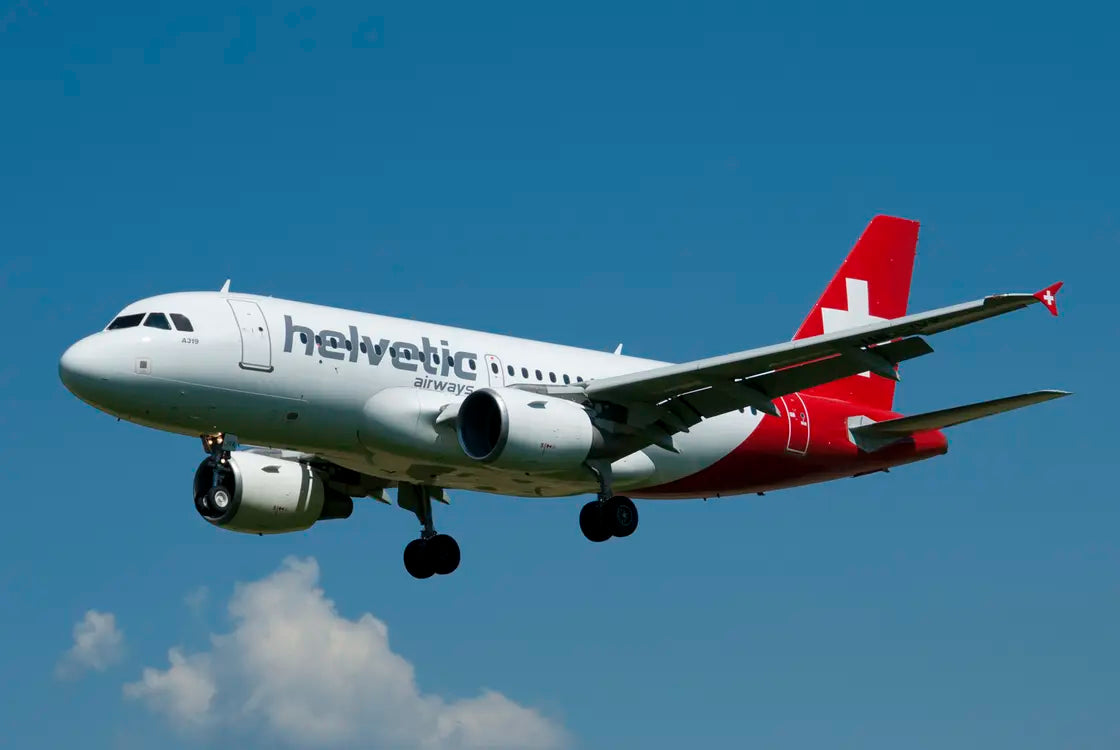
Helvetic Airways is a Swiss regional airline founded in 2003 and headquartered in Freienbach, near Zurich. The airline commenced operations with a single Fokker 100 and three destinations, growing steadily into one of Europe's most modern regional carriers. Since March 2006, all shares in Helvetic Airways AG have been held by Patinex AG, the private investment company of Swiss financier Martin Ebner and his wife Rosmarie. The airline's slogan, "Swiss through and through," reflects its deep commitment to Swiss quality standards, safety, and reliability.
Helvetic Airways operates according to a distinctive three-pillar business model. The largest pillar is ACMI wet-lease operations, where the airline provides aircraft, crew, maintenance, and insurance to partner airlines, most notably Swiss International Air Lines (SWISS). Since 2007, Helvetic has served as the primary ACMI partner for SWISS, with up to 15 aircraft operating on behalf of SWISS across its European network as of 2024. The second pillar covers charter operations for tour operators, while the third (and smallest) consists of the airline's own scheduled services from Zurich, Bern, and Basel to underserved European destinations. This diversified approach provides revenue stability and operational flexibility that many single-model carriers lack.
With approximately 600 employees (including an estimated 160 to 200 pilots), a fleet of 20 modern Embraer jets, and around 34 destinations across Europe, Helvetic Airways occupies a well-defined niche in the Swiss and European aviation landscape. The airline holds IOSA certification (since 2008) and operates its own EASA Part 145-certified maintenance facility at Zurich Airport, giving it full control over aircraft maintenance standards and scheduling.
Fleet Composition & Type Ratings
Helvetic Airways operates an all-Embraer fleet, making it one of Europe's largest operators of the E-Jet family. The airline is in the middle of a major fleet transition from first-generation Embraer E190/E195 aircraft to the newer, more efficient E190-E2 and E195-E2 variants. The E2 family features Pratt & Whitney PW1900G geared turbofan engines delivering approximately 10 to 15 percent fuel savings over the previous generation, along with advanced glass cockpits, improved passenger comfort, and reduced noise signatures.
| Aircraft Type | Role | In Service | Seats | Notes |
|---|---|---|---|---|
| Embraer E190-E2 | Regional jet | 8 | 110 | New-generation flagship. Advanced avionics, PW1900G engines. |
| Embraer E195-E2 | Regional jet | 4 | 134 | Largest variant. 3+5 more on order (delivery from late 2026). |
| Embraer E190 | Regional jet | 4 | 112 | First generation. Being phased out as E2s arrive. |
| Embraer E195 | Regional jet | 4 | 120 | First generation. Gradual retirement planned. |
Fleet data as of late 2025. Numbers are approximate and change with ongoing deliveries and retirements.
In November 2025, Helvetic Airways placed a firm order for 3 additional Embraer E195-E2 aircraft with options for 5 more, announced at the Dubai Air Show. The first new E195-E2 is expected in late 2026, with further deliveries in spring 2027. Once all options are exercised, the E2 fleet could grow from 12 to 20 aircraft, potentially bringing the total fleet size to around 24 to 28 aircraft. This expansion signals management's confidence in the ACMI and charter business and will create additional pilot positions.
The airline completed its transition away from Fokker 100 aircraft in summer 2019. The first-generation E190s entered service in 2014 and will be fully replaced by E2 variants over the coming years. All Embraer types share a common type rating within their respective generations, which simplifies training and transition for pilots moving between the E190 and E195 within the same family.
Helvetic Airways covers the cost of type rating for pilots recruited through its official selection process. Type rating and recurrent training are conducted on an Embraer E190-E2 full-flight simulator at Zurich, operated in partnership with Lufthansa Aviation Training (LAT). This simulator, one of only a few in Europe, became operational in 2020 and supports approximately 1,500 training hours annually for Helvetic crews. The Zurich location minimizes travel disruption for pilots and allows flexible scheduling of simulator sessions.
Pilot Salary & Compensation Breakdown
Helvetic Airways pilot salaries reflect the airline's position as a Swiss regional carrier. While compensation is lower than at full-service flag carriers like SWISS, it remains competitive within the European regional segment and benefits from being denominated in Swiss francs. The cost of living in Switzerland is among the highest in Europe, but so are the social protections, pension contributions, and overall quality of life that come with Swiss employment.
First Officer (F/O) Pay Scale
| Seniority | Annual Gross (CHF) | Monthly Gross (est.) | Notes |
|---|---|---|---|
| Year 1 (entry) | ~CHF 54,575 | ~CHF 4,550 | Starting salary for new F/Os. |
| Year 2-4 | ~CHF 56,700 | ~CHF 4,725 | Incremental seniority increases. |
| Year 5-7 (mid) | ~CHF 61,905 | ~CHF 5,160 | Growing experience recognition. |
| Senior F/O (8+ yrs) | ~CHF 64,260 | ~CHF 5,355 | Top of F/O scale before upgrade. |
Annual gross figures based on available industry data. Monthly estimates assume 12 equal payments. Actual take-home depends on Swiss cantonal tax rates and social deductions.
Captain (CDB) Pay Scale
| Seniority | Annual Gross (CHF) | Monthly Gross (est.) | Notes |
|---|---|---|---|
| Year 1 Captain | ~CHF 101,300 | ~CHF 8,440 | Significant jump from senior F/O. |
| Year 3-7 Captain | ~CHF 105,600 | ~CHF 8,800 | Steady progression through seniority. |
| Year 8-9 Captain | ~CHF 122,975 | ~CHF 10,250 | Experienced command rank. |
| Senior Captain (10+ yrs) | ~CHF 129,168 | ~CHF 10,764 | Top of scale. |
Captain figures represent base salary. Additional duty hour bonuses and nightstop allowances increase total compensation.
Additional Compensation Elements
Beyond base salary, Helvetic Airways pilots receive several supplementary payments. A uniform and personal appearance allowance of CHF 400 per month helps cover clothing and grooming costs. Pilots who operate flights requiring overnight stays away from base receive CHF 40 per nightstop. The airline also operates a tiered duty hour bonus system: pilots accumulating between 145 and 165 duty hours per month receive an additional CHF 10 per hour above the 145-hour threshold, with further premiums for hours exceeding 165. These incremental payments reward higher utilization and can add meaningful income for pilots on busy rosters.
These figures are estimates compiled from aviation employment databases, pilot reports, and industry sources. Actual compensation depends on the latest collective arrangements, individual seniority steps, and duty hours flown. Switzerland's average pilot salary across all carriers is approximately CHF 166,000 per year, placing Helvetic below the national average but competitive within the regional sector. Swiss income tax rates vary by canton (typically 20-35% effective rate) and social contributions (AHV/IV, BVG, ALV) further reduce take-home pay. Always verify with the latest Helvetic Airways recruitment materials.
Roster Pattern & Quality of Life
Helvetic Airways operates under European flight time limitation (FTL) regulations as implemented in Switzerland through the Federal Office of Civil Aviation (FOCA/BAZL). These rules, aligned with EASA standards, set strict limits on duty periods, block hours, and rest requirements. The airline's short-haul European focus (average flight time around 1.5 hours, with 2 to 4 flights per day) creates a different fatigue profile compared to long-haul operations: more takeoffs and landings per day, but pilots sleep at home most nights.
📅 Sample Month — E190-E2 First Officer (ZRH)
One of Helvetic Airways' standout features is its commitment to flexible working arrangements. The airline offers innovative part-time employment models including "Ski&Fly" and "Fly&Study" programs, which allow pilots (and cabin crew) to balance aviation careers with other life priorities such as further education, family, or seasonal activities. These programs are relatively rare in European aviation and reflect a modern approach to crew scheduling. The airline also operates an "off-wish" system, where pilots can express preferences about specific days they would like off, and management incorporates these preferences into roster planning where operationally possible.
Zurich Airport (ZRH) is the primary base for the vast majority of Helvetic pilots, as it serves both the airline's own operations and the ACMI partnership with SWISS. Bern and Basel are secondary bases used for specific seasonal and charter routes. Zurich is well-connected by public transport (S-Bahn, trams, buses), and many pilots live within a 30 to 60-minute commute of the airport. The cost of living in the greater Zurich area is high by European standards, but Swiss wages, social security, and quality of life consistently rank among the best globally.
Benefits, Travel Perks & Retirement
As a Swiss employer, Helvetic Airways provides a comprehensive benefits package anchored by Switzerland's robust social security system and supplemented by aviation-specific perks. While the package may not match the scale of a major flag carrier, the Swiss regulatory framework ensures strong baseline protections that exceed what many European pilots receive elsewhere.
Switzerland's three-pillar pension system is one of the most robust in the world. The first pillar (AHV/AVS) provides a basic state pension funded by payroll contributions. The second pillar (BVG/LPP) is the mandatory occupational pension, where both employer and employee contribute to an individual retirement account. This capital accumulates over the career and provides a retirement pension, survivor's pension, and disability coverage. The third pillar (voluntary private savings) offers tax-advantaged retirement savings. For Helvetic Airways pilots, the BVG second pillar alone represents a substantial benefit, as Swiss occupational pensions are among the most generous in Europe.
Career Progression & Seniority
Career progression at Helvetic Airways follows a seniority-based system typical of European regional carriers. Pilots advance from First Officer to Captain through accumulated experience, demonstrated operational proficiency, and command assessment. The airline also accepts direct-entry Captains from other carriers, which is an important distinction from some legacy airlines that promote exclusively from within.
The upgrade from First Officer to Captain at Helvetic represents a significant career milestone, with a compensation increase of approximately 60 to 78 percent. Typical upgrade timelines at European regional carriers range from 7 to 12 years, depending on fleet growth, pilot turnover, and company profitability. Helvetic's ongoing fleet expansion (with 3 to 8 new E195-E2s on order) should create additional command positions over the next few years, potentially accelerating upgrade timelines.
| Career Milestone | Typical Timeline | Notes |
|---|---|---|
| Cadet training (APCP path) | ~24 months | Through Horizon Swiss Flight Academy. Preliminary employment contract with Helvetic. |
| Join as F/O (E190 or E190-E2) | Day 1 post-training | Entry fleet depends on availability. Type rating funded by airline. |
| Transition to E195-E2 | 3-5 years | Fleet transition within Embraer family. Simplified by common type rating. |
| Captain upgrade | ~7-12 years | Command assessment required. Timeline depends on fleet growth and vacancies. |
| Senior Captain | 10+ years in command | Top of seniority scale. Training Captain / TRI / TRE roles available. |
Helvetic Airways' fleet composition creates a somewhat narrower career pathway compared to airlines operating multiple aircraft families (narrowbody + widebody). All aircraft are Embraer E-Jets, so career progression is measured primarily through seniority, command authority, and potential instructor roles rather than fleet transitions between fundamentally different aircraft types. However, the ongoing generational shift from E1 to E2 aircraft provides meaningful transition opportunities and training variety.
With 3 firm E195-E2 orders and options for 5 more, plus the deepening ACMI partnership with SWISS (up to 15 aircraft in SWISS service), Helvetic is positioned for meaningful growth. Each new aircraft typically requires 8 to 10 pilots (accounting for leave, training, and reserves), suggesting 25 to 80 new pilot positions could be created by 2028 if all options are exercised. This growth, combined with natural attrition, should create upgrade opportunities for current First Officers and entry positions for new recruits.
Recruitment Process & Requirements
Helvetic Airways recruits pilots through two main pathways: the Airline Pilot Cadet Program (APCP) for candidates with little or no flight experience, and direct-entry recruitment for experienced First Officers and Captains. Both pathways lead to employment on the same seniority list. The airline's recruitment portal is hosted at career.helvetic.com.
Airline Pilot Cadet Program (APCP)
The APCP is conducted in partnership with Horizon Swiss Flight Academy, which is part of the Helvetic Airways Group. Horizon has been training pilots since 1979, and thousands of its graduates have gone on to fly for Helvetic, SWISS, easyJet, Edelweiss Air, REGA, and other carriers. Cadets receive a preliminary employment contract with Helvetic Airways and benefit from jumpseat observation flights during training.
Direct Entry (Experienced Pilots)
Selection Stages
Online Application
Submit CV, cover letter, license copies, and references through the Helvetic Airways careers portal. Ensure all documentation is up to date and in the required format.
Assessment Center (Cadets) / Technical Screening (Experienced)
Cadet candidates undergo Horizon Swiss Flight Academy's initial assessment, evaluating cognitive ability, personality, teamwork, and aviation aptitude. Experienced pilots may complete a technical screening or competency-based interview covering CRM, decision-making, and operational scenarios.
Interview with Management & Line Training Captains
A panel interview with airline management and experienced line-training captains. Focus on personality fit, German and English language proficiency, motivation, and alignment with Helvetic's "Swiss through and through" culture and values.
Simulator Assessment (if applicable)
Experienced pilots may be invited for a simulator evaluation on Embraer E-Jet equipment at the Zurich training center. The assessment evaluates aircraft handling, crew coordination, and decision-making under pressure.
Medical & Contract
Successful candidates provide a valid Class 1 Medical certificate and receive a formal employment offer. Cadets begin training at Horizon SFA. Experienced pilots proceed to type rating and line training on the assigned Embraer type.
German language is non-negotiable. Helvetic Airways conducts internal communications, briefings, and much of daily operations in German. English is used for ATC communication and international operations, but genuine German proficiency is required for the workplace. French is an asset but not mandatory. The airline seeks "independent and proactive" individuals who embody Swiss precision and professionalism. Recent recruitment postings (autumn 2025) indicate active hiring for First Officer positions, suggesting ongoing growth and replacement needs.
How Helvetic Airways Compares: Airline Radar Chart
How does Helvetic Airways stack up against its two closest Swiss competitors, Swiss International Air Lines (SWISS) and easyJet Switzerland? Below is a comparative analysis across six key metrics. Scores are editorial estimates based on publicly available data, pilot reports, and industry benchmarks.
Key Takeaways from the Comparison
SWISS dominates on salary and benefits. As Switzerland's flag carrier and a member of the Lufthansa Group, SWISS offers substantially higher pilot compensation. Senior Captains at SWISS can earn CHF 250,000+ annually, roughly double the top Helvetic Captain rate. SWISS also provides more extensive staff travel (Star Alliance-wide), a more established pension structure, and longer upgrade timelines that come with the scale of a major carrier. However, this comes with higher operational pressure and less scheduling flexibility.
Helvetic wins on fleet modernity and flexibility. With an average fleet age well under 5 years for the E2 aircraft, Helvetic operates some of the newest regional jets in Europe. The innovative part-time models (Ski&Fly, Fly&Study) and the off-wish scheduling system offer a quality-of-life advantage that neither SWISS nor easyJet can match. The Swiss base locations (Zurich, Bern, Basel) also provide genuine choice.
easyJet Switzerland offers faster upgrades but lower pay. Entry-level F/O pay at easyJet Switzerland (estimated CHF 50,000 to 60,000) is comparable to Helvetic, but the LCC model offers potentially faster Captain upgrades. However, easyJet's high-utilization roster patterns, with more sectors per day and tighter turnarounds, create higher workload intensity. easyJet operates A320 family aircraft, which opens doors to a wider range of future employers compared to Embraer-only experience.
Scores are editorial estimates based on publicly available salary data, pilot reports, airline publications, and industry benchmarks. They represent a general assessment for a pilot evaluating long-term career options. Individual experiences vary based on seniority, fleet, base, and personal priorities. SWISS data is partially estimated due to ongoing collective agreement negotiations with the Aeropers pilot union.
Verdict: Who Is Helvetic Airways For?
🎯 Our Take
Helvetic Airways is an excellent choice for pilots seeking a modern, well-managed Swiss regional carrier with genuine work-life balance and a clear growth trajectory. The all-Embraer fleet is among the newest in Europe, the ACMI partnership with SWISS provides operational stability, and the flexible scheduling models (Ski&Fly, Fly&Study) are virtually unique in European aviation.
The trade-offs are real: salaries are below the Swiss national average for pilots and significantly lower than at SWISS or other major carriers. The Embraer-only fleet limits type rating portability compared to A320/737 experience. Career progression is confined to a single aircraft family, and the airline's relatively small size means fewer command positions compared to larger operators.
For German-speaking pilots with Swiss or EU citizenship who value quality of life, fleet modernity, and Swiss employment protections over maximum earning potential, Helvetic offers a compelling and stable career in one of Europe's most desirable countries to live and work.
1 Do I need to speak German to fly for Helvetic Airways?
Yes. Good German language proficiency is mandatory for all pilot positions at Helvetic Airways, both the Cadet Program and direct-entry pathways. Internal communications, briefings, and daily operations are conducted primarily in German. English at ICAO Level 4 or higher is also required for ATC communication and international operations. French is an asset but not a requirement.
2 Does Helvetic Airways pay for the type rating?
Yes. Pilots recruited through Helvetic's official selection process (both APCP cadets and experienced direct-entry pilots) receive company-funded type rating on the assigned Embraer aircraft. Training is conducted on a dedicated E190-E2 full-flight simulator at Zurich, operated in partnership with Lufthansa Aviation Training.
3 How long does it take to upgrade to Captain?
Typical upgrade timelines at European regional carriers range from 7 to 12 years. At Helvetic, the exact timeline depends on fleet growth, pilot turnover, and individual performance. The airline's ongoing fleet expansion (3 to 8 new E195-E2s ordered) could accelerate upgrades in the coming years. Helvetic also accepts direct-entry Captains from other carriers.
4 Can non-EU citizens apply?
Helvetic Airways requires candidates to hold EU, EFTA, or Swiss citizenship with legal authorization to live and work in Switzerland (residence permit B or C). Swiss citizens are preferred, but EU/EFTA nationals with appropriate Swiss residence permits are eligible. There is no sponsorship pathway for non-EU/EFTA citizens.
5 What is the relationship between Helvetic and SWISS?
Helvetic Airways has been the primary ACMI wet-lease partner for Swiss International Air Lines since 2007. Up to 15 Helvetic aircraft operate on behalf of SWISS across its European network. Helvetic provides the aircraft, crew, maintenance, and insurance, while SWISS handles ticketing, marketing, and passenger service. This means Helvetic pilots regularly fly routes branded as SWISS flights, but they remain employed by Helvetic and subject to Helvetic's pay scales and working conditions.
6 Is the Embraer type rating a disadvantage for future career moves?
Embraer E-Jet experience is valued at regional carriers worldwide but is less widely held than A320 or 737 type ratings. If you plan to move to a major carrier flying Airbus or Boeing, you will need a new type rating. However, the fundamental skills, CRM experience, and multi-crew jet time accumulated on Embraer aircraft are fully transferable. Many pilots have moved from Embraer operators to A320/737 carriers without difficulty.
7 What are the Ski&Fly and Fly&Study programs?
These are innovative flexible employment models offered by Helvetic Airways. The Ski&Fly program allows pilots to combine a flying career with seasonal winter sports activities (reflecting Switzerland's ski culture). The Fly&Study program enables pilots to pursue further education alongside their aviation career. Both involve part-time or reduced-schedule arrangements. These programs are relatively rare in European aviation and reflect Helvetic's modern approach to work-life balance.
8 How does Helvetic Airways pilot pay compare to other Swiss carriers?
Helvetic salaries are competitive within the regional segment but significantly lower than at SWISS (Switzerland's flag carrier). A senior Helvetic Captain earns approximately CHF 129,000 annually, while SWISS Captains can exceed CHF 250,000. Compared to easyJet Switzerland, Helvetic's pay is roughly comparable or slightly higher at the F/O level (CHF 54,000 to 64,000 vs. an estimated CHF 50,000 to 75,000 at easyJet). The Swiss cost of living is high, so salary is an important factor to weigh alongside benefits, pension contributions, and quality of life.
Official Links & Resources
Before applying or making any career decisions, always verify information directly with official sources. These are the key websites and organisations relevant to Helvetic Airways pilot careers:
Check the Helvetic careers portal regularly, as pilot vacancies are posted on a rolling basis and can appear at short notice, especially during fleet expansion phases. The APCP cadet programme intake typically runs once per year. For Embraer-specific training information, the Helvetic media release on the LAT simulator partnership provides useful background on the Zurich-based training infrastructure.