

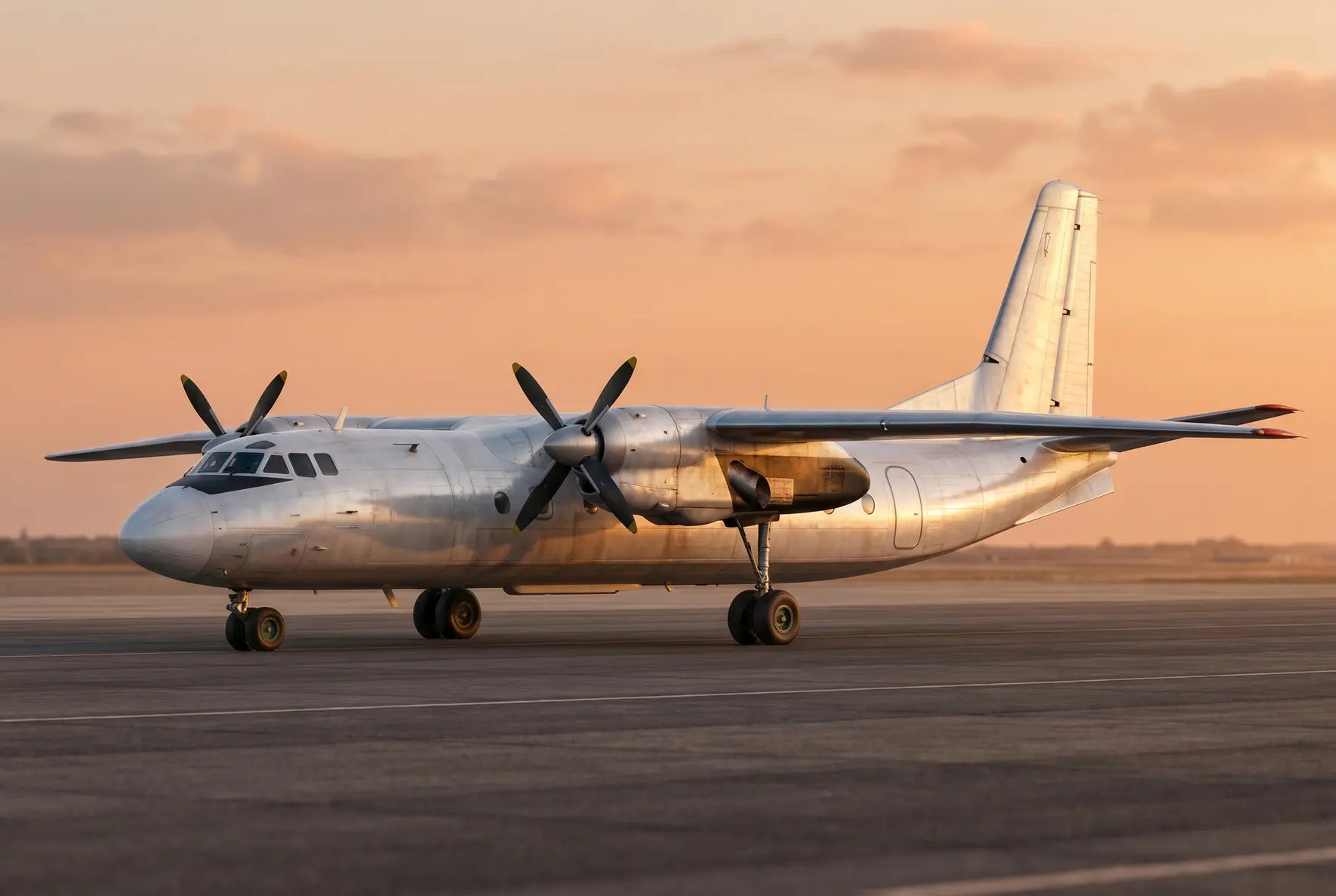
Xian Y-7: History, Development Path and Evolution of China's First Regional Turboprop
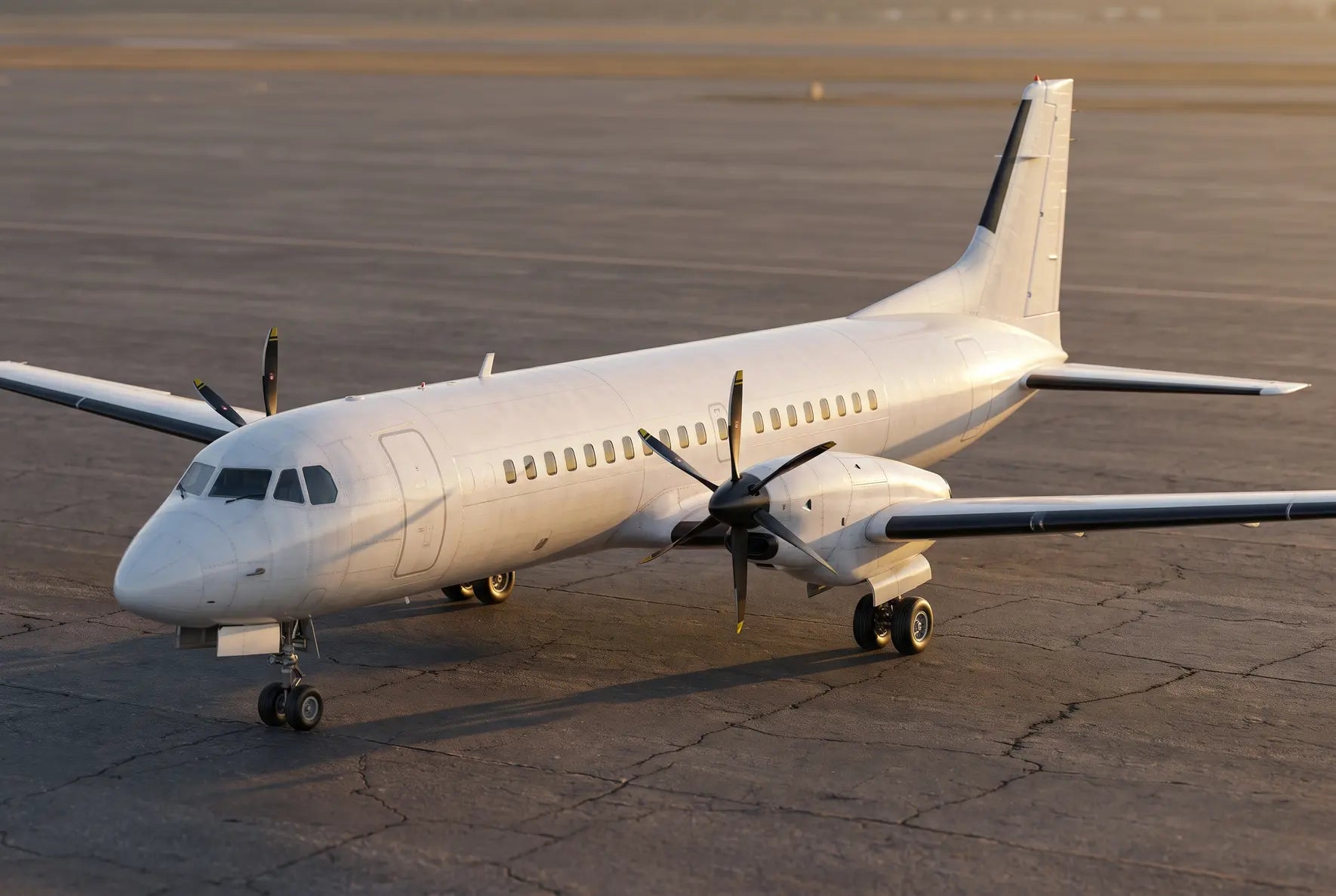
The Xian Y-7 (also written Xi'an Y-7 or Yunshuji Y-7) is a twin-turboprop transport and regional airliner built in China as a license-produced and progressively redesigned derivative of the Soviet Antonov An-24. Developed and manufactured by Xi'an Aircraft Industrial Corporation (XAC) in Shaanxi province, the Y-7 program was not merely a copy of a proven airframe. It became a strategic platform through which China built its first complete cycle of civil aircraft design, testing, certification, series production and airline operation.
The original Antonov An-24 first flew in the Soviet Union in 1959 as a rugged short-haul turboprop designed for poorly equipped airfields. China imported several An-24s during the early 1960s and, impressed by their rough-field performance, negotiated a license to build the type domestically. In April 1966, Xi'an Aircraft Factory officially launched the reverse-engineering and local production project for the An-24, assigning the new designation Y-7.
Progress was severely disrupted by the Cultural Revolution. Although the first Chinese-assembled prototype completed its maiden flight on 25 December 1970, meaningful industrial momentum stalled for years. Two formal design-finalisation evaluations were held in 1977 and 1979, but the state declined to approve the design on both occasions due to incomplete systems and testing programmes.
By 1980, the Y-7 had completed demonstration and appraisal flights with the more powerful Dongan WJ-5A-1 turboprop engine. On 24 July 1982, China's Commission for Finalisation of Military Products approved the Y-7 design, and small-batch production was authorised. A pre-production aircraft was publicly displayed at Nanyuan Air Base near Beijing on 17 April 1982. The Civil Aviation Administration of China (CAAC) formally issued the Y-7's airworthiness certificate on 23 January 1984, and the first production Y-7 flew in February 1984, roughly 18 years after the licence was originally granted. The aircraft entered regular passenger service in 1986 as a 48-to-52-seat regional airliner, becoming the first domestically built passenger aircraft to operate scheduled flights in Chinese civil aviation.
XAC then pursued a series of incremental upgrades. The Y-7-100, introduced around 1985, added winglets, a redesigned cockpit with Western-sourced avionics and a three-person flight crew. A subvariant, the Y-7-100C, accommodated alternative customer equipment. The Y-7-200B, which first flew in November 1990, featured upgraded Dongan WJ-5E engines and a fuselage stretch of approximately 74 cm (29 in) for the domestic market.
The most significant civil evolution came with the Y-7-200A. Developed under dual Chinese and United States airworthiness review standards, the Y-7-200A replaced the Chinese WJ-5 powerplant with two Pratt & Whitney Canada PW127C turboprops driving high-efficiency, low-noise all-composite Hamilton 247F propellers. The cockpit was redesigned for a two-person crew and an auxiliary power unit (APU) was added. Seating capacity rose to 56 to 60 passengers, and range extended to approximately 1,100 to 1,200 km. The Y-7-200A completed its maiden flight at Yanliang Airport on 26 December 1993 and received commercial certification in 1998. It served as the direct basis for the MA60 (Modern Ark 60), a further Westernised export-oriented development whose initial delivery took place in August 2000.
On the military side, XAC produced the Y-7H-500, a cargo and tactical transport derivative inspired by the An-26 configuration and fitted with a rear cargo door. A VIP/transport variant designated Y-7G was built for the PLA Air Force (PLAAF) on the MA60 airframe, also powered by PW127C engines. Forecast International estimated that approximately 153 Y-7 and MA60 family airframes had been produced through 2004. The type was broadly comparable in mission and size to turboprops such as the Bombardier Dash 8, though it never achieved broad Western certification and served a primarily domestic and limited export market.
What Distinguishes the Xian Y-7 from Related Sub-Variants
The baseline Y-7 is the foundation from which all later variants evolved, and its identity centres on its direct An-24 lineage, Chinese-built WJ-5A-series turboprops, and an analogue cockpit sized for a larger crew. Later sub-variants diverged in engines, avionics, crew complement and fuselage length, but the baseline Y-7 retained the original Soviet-era structural philosophy and dimensional envelope largely unchanged. In contrast, the Y-7-100 introduced winglets and Western avionics, the Y-7-200B stretched the fuselage and upgraded to WJ-5E engines, and the Y-7-200A made the leap to Western PW127C turboprops and a two-crew glass cockpit. The MA60, while structurally descended from the Y-7, is marketed as a distinct product with international certification ambitions.
Key identifiers that define the Xian Y-7 family and its variants:
- Engines: Baseline Y-7 uses two Dongan WJ-5A-1 turboprops (~2,400 to 2,800 shp each); Y-7-200B uses WJ-5E; Y-7-200A and Y-7G use Pratt & Whitney Canada PW127C
- Winglets: Absent on baseline Y-7 and Y-7-200; present on Y-7-100
- Crew: Baseline Y-7 uses a larger crew (up to 5); Y-7-100 has a three-person flight deck; Y-7-200A reduces to two-person crew with APU
- Passenger capacity: 48 to 52 seats on baseline and Y-7-100; 56 to 60 seats on Y-7-200A and MA60
- Max takeoff weight: Approximately 21,800 kg for the baseline tactical transport variant
- Performance: Max speed approximately 500 to 518 km/h; service ceiling around 8,750 m; range 500 to 700 km (baseline civil) rising to 1,100 to 1,200+ km (Y-7-200A)
- Fuselage stretch: Y-7-200B adds approximately 74 cm (29 in) over the baseline

A Xian Y-7-100 aircraft of China General Aviation is captured while taxiing on a runway. The plane features a distinctive red and blue design on its tail and body.
Xian Y-7 Technical Specifications, Systems and Engine Options
The Xian Y-7 is a twin-turboprop, high-wing transport aircraft derived from the Soviet Antonov An-24 and built in China by Xi'an Aircraft Industrial Corporation (XAC). Designed primarily for short-to-medium-range regional transport, the Y-7 inherited the An-24's emphasis on rugged simplicity, rough-field capability and operational independence from well-equipped airports. Its high-mounted wing protects propellers from foreign-object damage on unprepared strips, while the sturdy tricycle landing gear with twin-wheel main units allows operations from semi-prepared surfaces. These design priorities trade aerodynamic refinement for versatility in austere environments, a philosophy that shaped every variant from the original Y-7 through the improved Y-7-100 and Y-7-200A.
Much like the Fokker F27 in Western regional aviation, the Y-7 served as a workhorse feeder airliner and military transport across China's domestic network from the mid-1980s onward. Where the F27 was optimised for paved-runway airline service, the Y-7 retained the An-24 family's ability to operate from short, rough airstrips at relatively high altitudes. The Y-7-100 introduced winglets, a redesigned cockpit and improved cabin in collaboration with Hong Kong Aircraft Engineering Company (HAECO), while the Y-7-200A adopted Western engines and a two-crew flight deck to meet both Chinese and international airworthiness standards.
- Crew: 3 (Y-7/Y-7-100); reduced to 2 on Y-7-200A
- Passenger capacity: up to 52 (Y-7-100); 56 to 60 (Y-7-200A)
- Length: 24.22 m (79 ft 5 in)
- Wingspan: 29.64 m (97 ft 3 in); Y-7-100 fitted with winglets, removed on Y-7-200 series
- Height: 8.55 m (28 ft 1 in)
- Wing area: approximately 75.26 m²
- Operating empty weight (OEW): approximately 14,900 to 15,000 kg (Y-7-100)
- Maximum takeoff weight (MTOW): 21,800 kg (approximately 48,060 lb)
- Maximum payload: 5,500 kg
- Maximum speed: 503 km/h (313 mph / 272 kn)
- Cruise speed: 423 km/h (263 mph / 228 kn) at 6,000 m (19,700 ft)
- Range: approximately 910 km with maximum payload; up to approximately 1,980 km with maximum standard fuel (Y-7-100)
- Service ceiling: 8,750 m (28,700 ft)
- Takeoff run at MTOW: approximately 640 m
- Landing run: approximately 645 m
- Engines (early variants): 2 x Dongan WJ-5A-I turboprops, approximately 2,080 kW (2,790 shp) each
- Engines (Y-7-200A): 2 x Pratt & Whitney Canada PW127C, approximately 2,050 kW (2,750 shp) each
- Propellers: 4-blade constant-speed, feathering; diameter approximately 3.9 m (WJ-5A); Hamilton Standard 247F composite propellers (PW127C)
- Auxiliary booster (early Y-7): one RU-19A-300 turbojet in dorsal fairing for short-field/hot-and-high takeoff assistance
Systems, Flight Controls and Handling Technology
The Y-7 uses a conventional mechanical flight control system inherited from the An-24 architecture. Primary surfaces (ailerons, elevator and rudder) are actuated through cables, pushrods and mechanical linkages, with no fly-by-wire or fully powered irreversible controls. Large double-slotted trailing-edge flaps provide the short-field performance central to the type's mission. Trim is managed via mechanical and electric trim tabs. This design philosophy prioritises reliability and ease of maintenance in remote operating environments over automation, keeping the aircraft accessible to operators with limited ground-support infrastructure.
The hydraulic system powers landing-gear retraction and wheel brakes. The tricycle undercarriage is designed for unprepared surfaces, and braking uses conventional hydraulic units without advanced anti-skid electronics on original variants. Engine control on WJ-5A-powered aircraft is managed via a traditional hydromechanical fuel control system. The Y-7-200A, with its PW127C engines, benefits from a more modern full-authority digital engine control (FADEC) arrangement inherent to the PW100 family, reducing crew workload and improving engine-life management. Avionics on early Y-7 and Y-7-100 variants consist of analogue instrumentation with basic VHF communications, VOR/NDB navigation and weather radar. The Y-7-200A's two-crew cockpit introduced modernised avionics to satisfy dual Chinese and international airworthiness requirements.
Published performance figures for the Y-7 vary depending on the specific sub-variant (Y-7, Y-7-100, Y-7-200A), operator configuration, cabin density and atmospheric assumptions. Military transport versions report slightly different dimensions and empty weights compared with civil passenger models. Range figures are particularly sensitive to payload, fuel load and whether auxiliary tanks are fitted. Takeoff and landing distances depend on runway elevation, temperature and surface condition. All numbers should therefore be read as representative of typical conditions rather than absolute guarantees.
Engines: Dongan WJ-5A and Pratt & Whitney Canada PW127C
Early and standard Y-7 variants are powered by two Dongan WJ-5A-I turboprops, a Chinese single-shaft turboprop engine developed by the Dongan Engine Manufacturing Company (DEMC) based in Harbin. The WJ-5 family is derived from the Soviet Ivchenko AI-24A, the engine that originally powered the Antonov An-24. China began adapting the AI-24 design in the 1960s as part of its effort to domestically produce the An-24 airframe. The WJ-5A was certificated in 1980, and subsequent improvements led to variants such as the WJ-5A-1 and WJ-5E, the latter developed in cooperation with General Electric. Rated at approximately 2,080 kW (2,790 shp) at takeoff, the WJ-5A drives a four-blade Baoding J16-G10A constant-speed, feathering propeller with a diameter of roughly 3.9 m. Beyond the Y-7, the WJ-5A-1 variant also powers the Harbin SH-5 maritime patrol amphibian. The original Ivchenko AI-24, from which the WJ-5 descends, powered a broad family of Soviet Antonov aircraft including the An-26 tactical transport, the An-30 aerial survey platform and the An-32 hot-and-high transport.
The modernised Y-7-200A replaced the Chinese engines with two Pratt & Whitney Canada PW127C turboprops, each rated at approximately 2,050 kW (2,750 shp). The PW127C belongs to the PW100 three-shaft turboprop family, one of the most successful regional turboprop engine programmes in aviation history. PW100-series engines feature a low-pressure compressor spool, a high-pressure compressor spool and a free power turbine driving the propeller through a reduction gearbox, all within a compact envelope of roughly 2.13 m in length and approximately 480 kg dry weight. On the Y-7-200A, the PW127C drives Hamilton Standard 247F all-composite, low-noise propellers, significantly reducing external noise and improving fuel efficiency compared with the WJ-5A. The broader PW127 family powers a wide range of regional aircraft worldwide, including the ATR 72-500/600 (PW127F/M/N), the Airbus C-295 military transport (PW127G), the Ilyushin Il-114-100 (PW127H) and the Xi'an MA60 (PW127J). The latest evolution, the PW127XT series, now powers new-build ATR aircraft and the upcoming Deutsche Aircraft D328eco. This engine upgrade on the Y-7-200A represented a pivotal step in moving the Y-7 platform toward international standards and laid the groundwork for the export-oriented MA60 programme.
Xian Y-7 vs An-24RV vs MA60 vs ATR 72-500 Specifications Comparison
Scroll horizontally to see more →
| Parameter | Xian Y-7 | Antonov An-24RV | Xian MA60 | ATR 72-500 |
|---|---|---|---|---|
| Entry into service | 1984 | 1967 | 2005 | 1989 |
| Engines | 2 × Dongan WJ-5A turboprops, 2,400 shp each | 2 × Ivchenko AI-24VT turboprops, 2,820 shp each + 1 × RU-19-300 turbojet | 2 × Pratt & Whitney Canada PW127J turboprops | 2 × Pratt & Whitney Canada PW127F/M turboprops |
| Length | 24.2 m | 23.5 m | 24.7 m | 27.2 m |
| Wingspan | 29.2 m | 29.2 m | 27.6 m | 27.1 m |
| Height | 8.6 m | 8.3 m | 8.9 m | 7.7 m |
| Typical seating and layout (short description + approximate passengers) | Single-class: 48–52 passengers | Single-class: 44–52 passengers | Single-class: 50–60 passengers | Single-class: 68–74 passengers |
| MTOW | 21.8 t | 21.0 t | 21.8 t | 22.5 t |
| Range | 1,070 nm | 1,380 nm | 1,360 nm | 825 nm |
| Cruise speed | 0.36 Mach | 0.40 Mach | 0.42 Mach | 0.41 Mach |
| Service ceiling | 28,700 ft | 26,250 ft | 25,000 ft | 25,000 ft |
| Program note | Chinese license-built development of the An-24, configured as a short-haul regional passenger and transport turboprop. | Soviet baseline An-24 variant with auxiliary turbojet, widely used as the reference design for later licensed and derivative aircraft. | Modernized Chinese derivative of the Y-7/An-24 family with Western engines and systems, aimed at improving performance and export appeal. | Western high-volume regional turboprop benchmark in the same size class, offering higher seating and efficiency for short-haul routes. |
Scroll horizontally to see more →
The table compares four regional turboprops, highlighting how the Xian Y-7 closely matches the An-24RV in size and MTOW, reflecting its licensed origins. The MA60 updates the family with PW127 engines and a similar range, while the ATR 72-500 is longer and seats more passengers but shows a shorter listed range. Cruise speeds cluster around Mach 0.36–0.42, with the Y-7 having the highest ceiling among the group.
Xian Y-7 Operations: Typical Routes, Missions and Airlines Around the World
The Xian Y-7, a twin-turboprop derived from the Soviet Antonov An-24, was designed for short-to-medium-range regional transport. In civil airline service, it typically carried 48 to 56 passengers on sectors ranging from approximately 500 km to 900 km at maximum payload, with a maximum range of around 1,982 km with full fuel tanks. At a cruise speed of roughly 423 km/h, most revenue flights lasted between one and two hours, making the aircraft well suited for high-frequency domestic shuttle routes. Its short-field performance, requiring approximately 640 m of takeoff roll, allowed it to serve airfields with limited runway length and basic ground infrastructure.
In operational terms, the Xian Y-7 excelled in hub-and-spoke feeder networks, connecting secondary cities and remote provincial airports to major hubs across China. Airlines deployed it on routes linking smaller centres with large gateway airports such as Beijing, Guangzhou and Chengdu. Some operators also used it on point-to-point regional links between secondary cities where jet service was not economically viable. Military operators, including the People's Liberation Army Air Force (PLAAF), employed the aircraft for tactical transport of personnel (up to 38 combat-equipped troops), cargo movement and training missions, often from austere airfields with limited support.
Operators faced several challenges with the type. The analog avionics and three-crew cockpit of early variants imposed a higher pilot workload than contemporary Western turboprops. Cabin noise and vibration levels were considerable, reducing passenger comfort and commercial appeal as expectations rose during the 1990s and 2000s. As production wound down and focus shifted to the successor Xian MA60, spare-parts availability and manufacturer support declined, increasing maintenance costs for the remaining fleet. A series of accidents, including the fatal crash of Wuhan Airlines Flight 343 in June 2000, also contributed to the type's gradual phase-out from scheduled passenger service. By the mid-2000s, most major Chinese carriers had retired their Xian Y-7 fleets in favour of modern regional aircraft.
Where the Xian Y-7 Operates and Key Airlines
The Xian Y-7 has been operated almost exclusively in Asia and, to a limited extent, in Africa. In China, the aircraft formed the backbone of domestic regional aviation from the mid-1980s through the early 2000s, serving dozens of routes for state-owned carriers. Outside China, a small number of Asian and African civil and military operators acquired the type, primarily through government-to-government agreements. No documented evidence exists of the Xian Y-7 entering scheduled service in Europe or North and South America, where operators typically relied on the original Antonov An-24/26 family or Western-built turboprops for comparable missions. Regional aviation in those areas, including carriers profiled on resources such as Helvetic Airways, has been served by different aircraft types entirely.
- Asia: The vast majority of Xian Y-7 operations took place in China. China Southern Airlines, Air China, China Eastern Airlines, China Northern Airlines, Sichuan Airlines, Wuhan Airlines, Shanxi Airlines, Zhongyuan Airlines and China General Aviation all operated the type on domestic regional routes. Air Changan (Changan Airlines) became the launch operator of the improved Y-7-200A in 1999, and later received the first passenger-to-freighter conversion. The Civil Aviation Flight University of China used the aircraft for pilot training. Beyond China, Lao Airlines operated approximately four Y-7s on domestic Laotian routes, while in Cambodia, Phnom Penh Airways and President Airlines used the type for short regional services. Iran's military also operated the Y-7 for transport logistics through the Islamic Republic of Iran Air Force.
- Africa: Air Zimbabwe is documented as a former civilian operator, using the Xian Y-7 on short-haul domestic and regional routes in southern Africa. The Mauritanian Air Force operated the type in a military transport role for troop and cargo movement.
- Europe: No confirmed European airline or military operator of the Xian Y-7 has been documented. European regional aviation during the same period relied on Western turboprops and jet aircraft, or in some Eastern European countries, on the original Antonov An-24.
- North and South America: The Xian Y-7 was not operated by any known airline or military force in the Americas. Regional turboprop needs in these markets were met by aircraft from manufacturers such as de Havilland Canada, ATR and Embraer.
Typical Seating Configurations
The Xian Y-7 features a 2+2 abreast economy-class seating layout with a single centre aisle, consistent with a cabin width of approximately 2.5 to 2.6 m inherited from the Antonov An-24 cross-section. The base Y-7 and Y-7-100 variants were typically configured for 48 to 52 passengers. The improved Y-7-200A, which incorporated a fuselage plug of approximately 0.5 m forward of the wing, increased capacity to 52 to 56 seats. The further-stretched Y-7-200B added a 740 mm plug, allowing layouts of up to 56 passengers in a denser configuration.
Given the aircraft's role as a short-haul regional workhorse, operators generally fitted a single all-economy cabin with no business or premium class. Seat pitch and amenities were basic by modern standards, consistent with flight durations rarely exceeding two hours. Military and cargo variants dispensed with passenger seating entirely, featuring utilitarian interiors with fold-down troop seats or open cargo floors with a rear loading ramp in the case of the Y-7H-500 freighter derivative.
In this video, Episode 5 of China Aviation follows a flight on the rare Xi’an Modern Ark MA60 turboprop with Joy Air, exploring China’s answer to the Soviet Antonov An-24 and what makes it unique.
Xian Y-7 Safety Record: Accident History and How Safe Is This Turboprop?
The Xian Y-7 entered service in the mid-1980s as a licence-built derivative of the Antonov An-24, and approximately 100 to 130 classic Y-7 airframes were produced for both civil airlines and the Chinese military. Over roughly four decades of operation, the type accumulated a modest service record compared with its Soviet ancestor, which was built in around 1,200 examples. Public accident databases list at least three hull-loss events involving the Y-7 family, resulting in a combined total of approximately 55 fatalities. That figure must be read in context: the fleet was small, flight-hour data has never been published by the Civil Aviation Administration of China (CAAC) or by the People's Liberation Army, and military incidents in China are not always reported internationally. By the early 2010s most Y-7s had been withdrawn from scheduled passenger service, replaced by the modernised MA60 and Western-built regional turboprops, which significantly reduced exposure.
Major Accidents and Incidents Involving the Xian Y-7
- Wuhan Airlines Flight 343 (22 June 2000) - A Y-7-100C (registration B-3479) operating from Enshi to Wuhan entered an area of severe convective weather during approach. The crew circled for approximately 30 minutes; the first officer suggested diverting to an alternate airport, but the captain elected to continue the approach. The aircraft was struck by lightning, encountered extreme turbulence and windshear, lost control and crashed near Sitai village, Yongfeng. All 42 people on board and seven people on the ground were killed, making it the deadliest accident involving the Y-7. The investigation attributed the loss to severe atmospheric turbulence and cited inadequate weather avoidance and crew decision-making as contributing factors. In the aftermath, CAAC reinforced thunderstorm-avoidance procedures, tightened diversion policies for regional turboprop operators and placed greater emphasis on crew resource management (CRM) training across Chinese carriers.
- Y-7-100 accident (19 September 2000) - A Y-7-100 was destroyed during a flight in China. Three crew members and one passenger were killed, and ten other occupants were injured. Limited detail has been published in English-language databases, but the aircraft was classified as a hull loss.
- PLA Air Force training flight near Hengshui (19 October 2006) - A military Y-7-100 flying at low altitude attempted a sharp turn to avoid high-tension power lines near Lishan village, Hebei Province. The crew lost control and the aircraft crash-landed in a field before being destroyed by post-impact fire. Two of the six crew members on board were killed and four were injured. The event highlighted the risks of low-level operations near obstacles and led to reviews of military flight-training procedures in the area.
In each of these cases, the primary causal factors related to operational decisions, weather exposure or obstacle avoidance rather than to a fundamental structural or design deficiency in the airframe itself. Following the Wuhan Airlines disaster, CAAC accelerated inspections of in-service Y-7 flight-control systems and engines, mandated updated maintenance programmes and progressively restricted the type from scheduled passenger routes on challenging sectors.
How Safe Is the Xian Y-7 Today?
Assessing the safety of the Xian Y-7 in absolute terms is difficult because fleet-wide flight-hour and cycle totals remain unpublished. The known hull-loss rate, however, is broadly consistent with other first-generation turboprops of similar vintage when adjusted for fleet size and the demanding environments in which many Y-7s operated, including high-altitude airports, mountainous terrain and regions with limited radar coverage. The aircraft shares the rugged structural philosophy of the An-24 platform, designed for short, unprepared runways and austere conditions. Modern aviation safety depends on far more than airframe design alone: standard operating procedures, well-maintained aircraft systems, continuous crew training and strong regulatory oversight all play decisive roles. In practice, CAAC's decision to phase most Y-7s out of front-line airline service and replace them with newer, better-equipped turboprops has been the single most effective measure in reducing passenger exposure to the type's older technology. For the remaining military airframes, ongoing maintenance programmes and updated operational procedures continue to manage residual risk. According to industry data compiled by Allianz and IATA, the global hull-loss rate for commercial aviation stood at 0.30 per million flights in recent years, underscoring that air travel, taken as a whole, remains one of the safest modes of transport available.
01 What kind of routes and missions is the Xian Y-7 typically used for?
The Xian Y-7 is mainly used on short-haul regional routes, often linking smaller cities or remote areas with larger hubs. Its range of roughly 1,500–2,000 km, depending on variant and load, makes it suitable for flights of 1–3 hours. Operators have used it for scheduled passenger services, cargo operations, and utility roles such as military transport and training. It has also seen use on routes serving airports with shorter runways and more basic infrastructure.
02 How comfortable is the cabin on the Xian Y-7 for passengers?
The Xian Y-7 has a narrow, turboprop-style cabin with a typical single-aisle layout and around 40–50 seats, depending on configuration. Passengers can expect a relatively basic interior compared with newer regional aircraft, with simpler seats and limited overhead storage. As a high-wing turboprop, cabin noise near the engines can be noticeable, especially around the propeller area. Many operators using the Y-7 focus on short sectors, so flight times are usually brief enough that the simpler comfort level is acceptable for most travellers.
03 Which airlines and operators have used the Xian Y-7, and on what types of routes?
The Xian Y-7 has been operated mainly by Chinese airlines and military or government organizations, with some aircraft exported to countries such as North Korea and others in Asia and Africa. In civilian service, it has been used on regional and commuter routes, often serving secondary airports that do not justify larger jets. Some aircraft have also been converted for cargo and utility operations, including freight runs and special-purpose missions. Over time, many airlines have replaced the Y-7 on busier routes with newer regional jets or modern turboprops.
04 How does the performance of the Xian Y-7 compare with similar regional turboprops?
The Xian Y-7 is broadly comparable in role and capacity to aircraft like the Antonov An-24, from which it was derived, and older Western turboprops such as early-generation Dash 8 or ATR models. Its cruise speed and range are adequate for regional operations but generally lower and less efficient than modern turboprops. The aircraft is valued more for its ruggedness and ability to operate from less-developed airfields than for cutting-edge fuel efficiency. Newer designs typically offer quieter cabins, better fuel burn, and more advanced avionics than the Y-7.
05 What is known about the safety record and design features of the Xian Y-7?
The Xian Y-7 has had a mixed safety record, with several hull-loss accidents over its service life, often involving challenging weather, operational factors, or older airframes. As a derivative of the An-24, it was designed with robust landing gear and a high wing, helping it operate from rougher runways and in varied climates. Many Y-7s were built with relatively simple analog cockpits, reflecting the era of their design. Safety on any individual flight depends heavily on the operator’s maintenance standards, crew training, and adherence to modern procedures.
06 As a traveller, what should be considered when flying on a Xian Y-7?
Travellers on a Xian Y-7 can expect a straightforward, no-frills experience with higher cabin noise than on modern regional jets. Seats near the wing and propellers tend to be noisier, so some passengers prefer seats farther forward or aft when possible. Because the Y-7 is often used on short regional legs, inflight services are usually minimal and the focus is on getting passengers to remote or secondary destinations. Checking the operating airline’s overall safety and service reputation is often more informative than focusing on the aircraft type alone.