

History and Development of the Avro York: From Lancaster Bomber to Transport Icon
The Avro York was a four-engined British transport aircraft developed by A.V. Roe & Company (Avro) during the Second World War. Conceived in 1941 as the Avro Type 685, the York was designed by chief designer Roy Chadwick, the same engineer responsible for the legendary Avro Lancaster heavy bomber. The aircraft family existed to meet a pressing wartime requirement for a long-range strategic transport, while also anticipating post-war civil aviation demand. Rather than starting from a blank sheet, Chadwick's team reused the Lancaster's proven wings, tail unit, undercarriage and Rolls-Royce Merlin engines, mating them to a completely new, tall, square-section fuselage that offered roughly double the internal volume of the bomber it was derived from.
The programme was formalised under Air Ministry Specification C.1/42. The prototype, serial LV626, made its maiden flight on 5 July 1942 from Ringway Airport (now Manchester Airport). Early flight testing quickly revealed that the large, slab-sided fuselage caused directional stability problems. To address this, Avro added a third central fin between the two outer fins carried over from the Lancaster, a modification that became standard on all production Yorks. Three further prototypes (LV628, LV629 and LV633) followed, each used to refine the design and demonstrate different interior configurations including VIP, troop transport and airline layouts.
Early production Yorks entered RAF Transport Command service during 1943-1944, though output remained limited because Lancaster bomber production held higher priority in Avro's factories. The third prototype, LV633, was completed as a high-standard VIP transport and joined the King's Flight in May 1943. This aircraft carried King George VI on visits to North Africa and Italy, and served as Prime Minister Winston Churchill's personal transport for several key wartime conferences, earning it the name Ascalon.
British Overseas Airways Corporation (BOAC) became the first civil operator, receiving its initial York (G-AGJA) in 1944. After the war, BOAC deployed the type extensively on long-haul routes, including the prestigious Springbok Service to Johannesburg operated jointly with South African Airways. The York's spacious cabin allowed various configurations, from around 30 airline seats to 12 sleeping bunks for overnight long-haul sectors, or up to 56 troops in military configuration.
The aircraft's defining operational moment came during the Berlin Airlift (1948-1949). Yorks became a critical component of Operation Plainfare, the British contribution to the allied effort to supply West Berlin. According to the RAF Museum, Yorks flew 58,124 of the 131,800 RAF sorties during the airlift, carrying a significant share of the total British tonnage. One preserved example, MW232 (later registered G-ANTK), delivered the 100,000th ton of British supplies into Berlin on 17 December 1948.
Production ran from 1943 to 1948, with approximately 258 aircraft built including four prototypes. Roughly 208 went to the RAF, with the remainder delivered to BOAC and other airlines. In the 1950s, many surplus RAF Yorks entered service with independent airlines such as Skyways and Dan-Air London, flying freight and trooping contracts. Dan-Air became the last commercial operator of the type, finally retiring the York in 1964. While later decades saw aviation evolve towards jet-powered types like the McDonnell Douglas MD-90-30, the Avro York represented a pivotal step in the transition from wartime bomber derivatives to purpose-built transport aircraft.
What Distinguishes the Avro York From Its Variants and Sub-Types
The York did not produce a wide range of sub-variants in the manner of later transport programmes, but there were notable distinctions within the family. The standard production version was the York C.1, powered by four Rolls-Royce Merlin 24 engines, each rated at approximately 1,280 hp. Civil operators such as BOAC used Yorks fitted with the Merlin 502, a civil-rated derivative of the same powerplant. The sole engine variant was the York C.2, an experimental conversion of the first prototype (LV626) re-engined with Bristol Hercules VI radial engines to explore alternative powerplant options. This remained a one-off and did not enter production.
Compared with the Avro Lancaster from which it was derived, the York's completely new fuselage was the defining difference. The Lancaster's deep, narrow bomber fuselage was designed around a long bomb bay, while the York featured a wide, square-section cabin with a shoulder-mounted wing arrangement, minimising spar intrusion and maximising usable internal space. This made the York a genuinely transport-oriented aircraft rather than a modified bomber.
Key identifiers that distinguish the Avro York and its sub-types include:
- York C.1: Standard production variant; four Rolls-Royce Merlin 24 engines (military) or Merlin 502 (civil); triple-fin tail configuration.
- York C.2: Experimental only; four Bristol Hercules VI radial engines; converted from prototype LV626; not produced in series.
- Maximum take-off weight: Approximately 68,000-72,000 lb depending on configuration.
- Range: Approximately 2,700 miles with standard payload.
- Cruise speed: Around 200-215 mph.
- Payload: Up to approximately 10 tons of freight or 56 troops.
- Distinctive feature: Central third fin added for directional stability, distinguishing it visually from the twin-finned Lancaster.

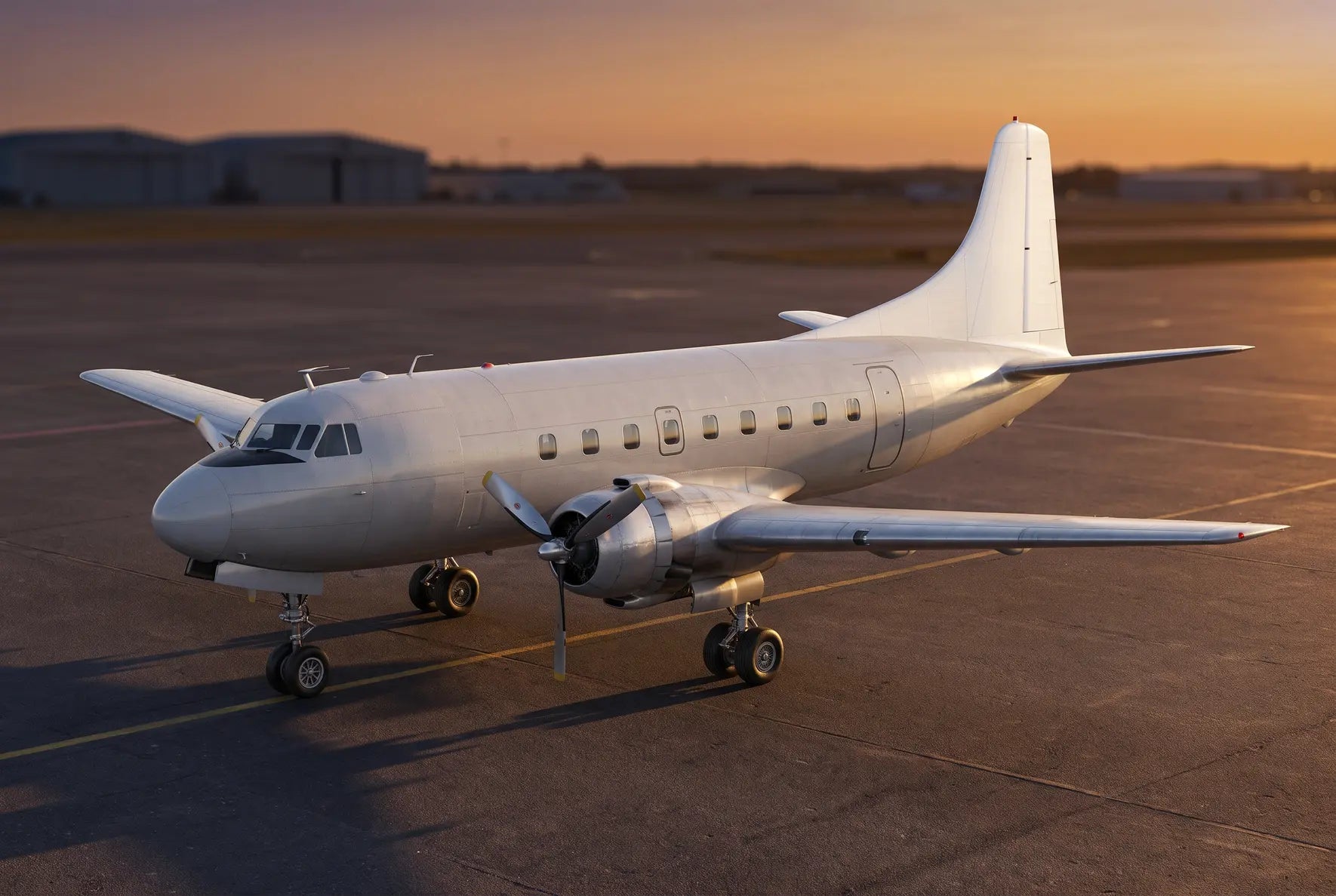
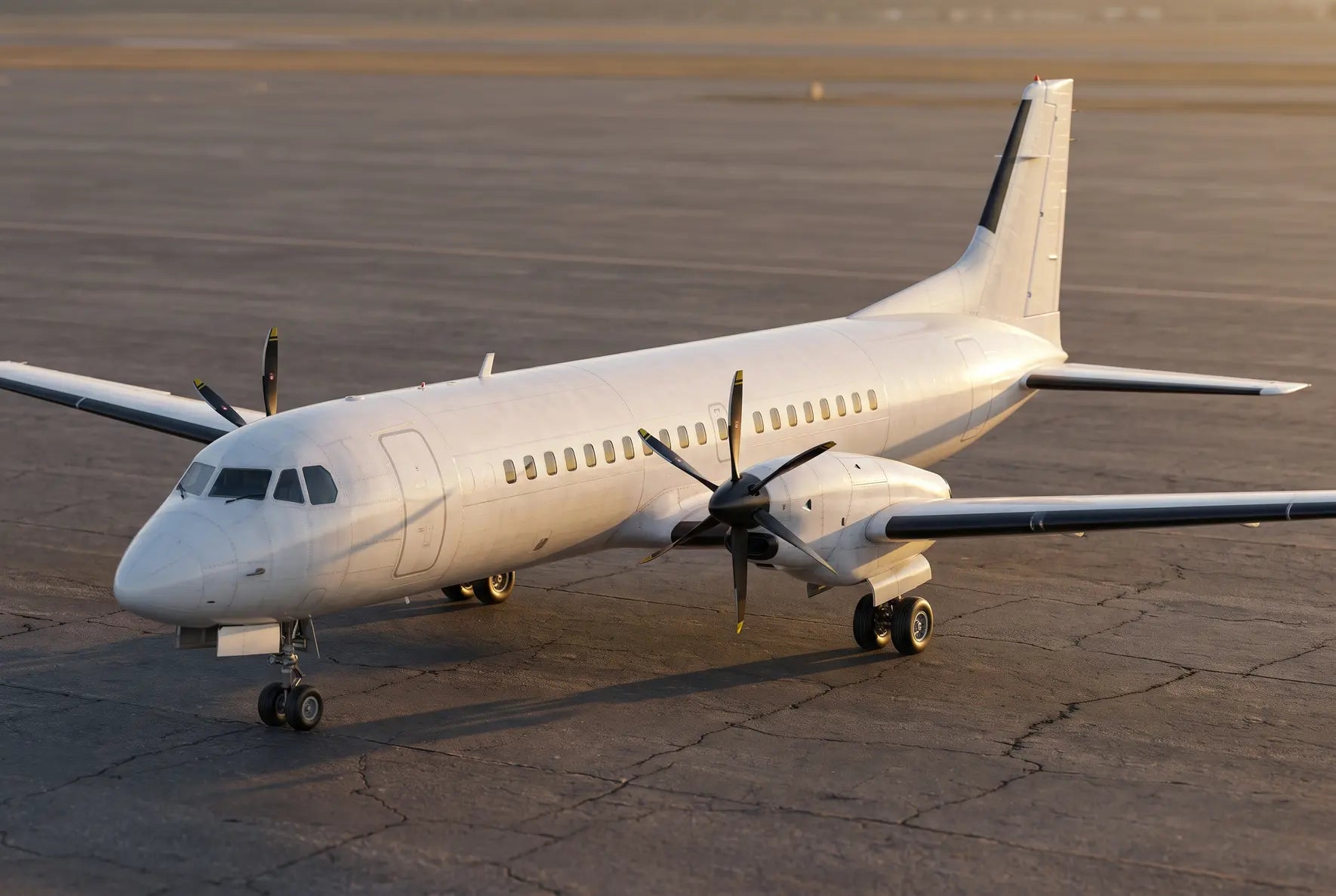
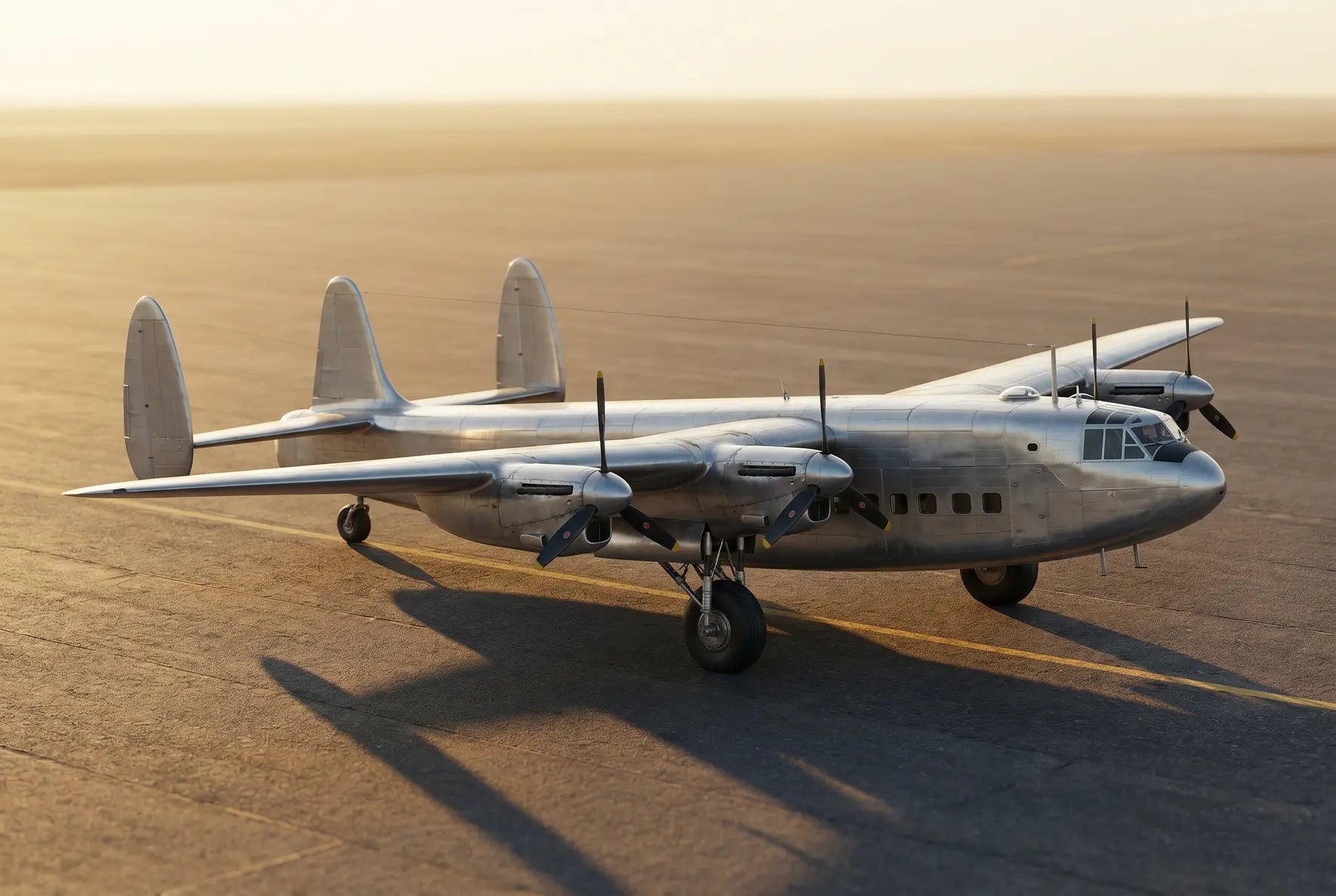
The image displays an Avro York airplane, a British transport aircraft from the 1940s. It is parked on a flat surface, showcasing its four-engine design and distinctive high-wing structure.
Avro York Technical Specifications, Systems and Engine Details
The Avro York (Type 685) was a four-engined, long-range transport aircraft developed by A.V. Roe & Company during the Second World War. Its design philosophy centred on maximising commonality with the Avro Lancaster heavy bomber: the York retained the Lancaster's wings, tail assembly, undercarriage and Rolls-Royce Merlin engines, but mated them to a completely new, square-section fuselage that roughly doubled the available internal volume. This approach shortened development time and simplified production logistics, though it meant the York inherited both the strengths and limitations of a bomber-derived airframe, including relatively high empty weight and conventional mechanical flight controls.
The wing was mounted in a shoulder position, which eliminated spar intrusion through the cabin and produced a long, flat, unobstructed cargo floor. This made the York versatile enough for passenger airline service (up to 56 seats), freight operations (approximately 7,500 kg payload), VIP transport and troop carrying. The trade-off was that the York's aerodynamic profile, optimised for wartime Lancaster components rather than purpose-built transport efficiency, limited its cruise speed and fuel economy compared to dedicated postwar airliners. A total of 258 Yorks were built between 1943 and 1948, serving with the RAF, BOAC and several independent airlines. In a parallel era of ambitious long-range air transport, the Boeing 314 Clipper similarly pushed the boundaries of transoceanic passenger travel, though with a flying boat configuration rather than a conventional landplane.
- Length: 78 ft 6 in (23.93 m)
- Wingspan: 102 ft 0 in (31.09 m)
- Height: 16 ft 6 in (5.03 m)
- Wing area: 1,297 sq ft (120.5 m²)
- Empty weight: approximately 42,040 lb (19,070 kg)
- Gross weight: 65,000 lb (29,484 kg)
- Maximum takeoff weight: approximately 68,600 lb (31,115 kg)
- Capacity: up to 56 passengers or 16,500 lb (7,500 kg) cargo
- Crew: 5 (two pilots, navigator, wireless operator, cabin steward)
- Maximum speed: 298 mph (480 km/h) at altitude
- Cruise speed: 200 to 215 mph (long-range settings)
- Range: 2,700 to 3,000 miles (4,345 to 4,828 km), depending on payload
- Service ceiling: 23,000 ft (7,010 m)
- Rate of climb: 820 ft/min (4.2 m/s)
- Fuel capacity: approximately 11,270 litres (2,478 US gal) in seven wing tanks
- Engines: 4 x Rolls-Royce Merlin 24, liquid-cooled V-12, approximately 1,280 hp each (rated continuous)
- Propellers: three-bladed, constant-speed, full-feathering
Systems, Flight Controls and Handling
As a wartime design derived directly from a heavy bomber, the Avro York employed conventional mechanical flight controls typical of 1940s four-engined aircraft. The primary controls (ailerons, elevators and rudder) were actuated through cable-and-pulley linkages, with trim tabs fitted to reduce pilot workload during long-range operations. The cockpit featured a side-by-side dual-control arrangement, standard for transport aircraft of the period. Flaps, inherited from the Lancaster wing design, were hydraulically actuated to improve low-speed performance during approach and takeoff. The retractable tailwheel undercarriage was also carried over from the Lancaster. There were no powered flight controls or autopilot systems of the type found on later-generation transports; piloting the York on extended sectors demanded sustained physical input from the crew.
Published performance figures for the York vary depending on the operator configuration, cabin density, fuel load, atmospheric conditions and weight assumptions. The commonly cited maximum range of 3,000 miles reflects lighter payloads and economy cruise settings, while the 2,700-mile figure corresponds to more typical operational loads. Similarly, maximum speed of 298 mph represents a clean-configuration figure at altitude rather than a routine cruise value. When comparing published data across sources, it is important to note whether values refer to normal gross weight (65,000 lb) or maximum overload weight (approximately 68,600 lb), as these assumptions significantly affect climb rate, ceiling and range calculations.
Rolls-Royce Merlin Engines: History and Variants
The Avro York was powered by four Rolls-Royce Merlin liquid-cooled V-12 engines, the same engine family that defined British military aviation during the Second World War. The Merlin was a 27-litre (1,649 cu in) supercharged engine with a 60-degree cylinder bank angle, bore of 5.4 inches and stroke of 6.0 inches. Developed from the early 1930s as a private venture by Rolls-Royce, the Merlin evolved through dozens of marks, with power output rising from around 1,000 hp in early variants to over 1,600 hp in late-war and postwar versions.
Production Yorks predominantly used the Merlin 24, a two-speed, single-stage supercharged variant from the Merlin 20 series, rated at approximately 1,280 hp for continuous output. Some early production aircraft also received Merlin 22 engines, which shared nearly identical power-altitude characteristics. Both marks were widely used in other British types: the Merlin 22 powered later variants of the Hawker Hurricane and Merlin-engined Bristol Beaufighter night fighters, while the Merlin 24 and its transport derivative, the T24/2, also served in the Avro Lancastrian. Beyond the York, the broader Merlin family powered the Supermarine Spitfire, de Havilland Mosquito, Avro Lancaster, North American P-51 Mustang and the Canadair North Star, among many others.
A single York prototype (LV626) was rebuilt as the York C.2, re-engined with four Bristol Hercules XVI 14-cylinder, two-row, sleeve-valve air-cooled radial engines. The Hercules XVI produced approximately 1,675 hp and was also used on late-production Vickers Wellington bombers and certain Handley Page Halifax variants. However, the Hercules-powered York remained a one-off conversion. The decision to standardise on the Merlin was driven by the logistical advantages of engine commonality with the Lancaster and the extensive existing support infrastructure for Merlin maintenance and spares across RAF and civilian operators.
Avro York vs DC-4 vs L-749 Constellation vs Handley Page Hermes: Specs and Performance Comparison
Scroll horizontally to see more →
| Parameter | Avro York | Douglas DC-4 | Lockheed L-749 Constellation | Handley Page Hermes |
|---|---|---|---|---|
| Entry into service | 1944 | 1942 | 1946 | 1950 |
| Engines | 4 × Rolls-Royce Merlin piston engines | 4 × Pratt & Whitney R-2000 Twin Wasp piston engines | 4 × Wright R-3350 Duplex-Cyclone piston engines | 4 × Bristol Hercules piston engines |
| Length | 23.9 m | 28.6 m | 29.1 m | 26.8 m |
| Wingspan | 31.1 m | 35.8 m | 37.5 m | 35.0 m |
| Height | 5.0 m | 8.4 m | 7.4 m | 8.8 m |
| Typical seating and layout (short description + approximate passengers) | Mixed-class, high-density: 40–56 passengers | 2-class: 44–80 passengers | 2-class: 60–81 passengers | 2-class: 50–76 passengers |
| MTOW | 32.7 t | 29.7 t | 47.0 t | 37.6 t |
| Range | 2,700 nm | 4,200 nm | 4,995 nm | 3,100 nm |
| Cruise speed | 0.35 Mach | 0.33 Mach | 0.44 Mach | 0.35 Mach |
| Service ceiling | 22,000 ft | 22,300 ft | 24,000 ft | 25,000 ft |
| Program note | WWII-era British long-range transport derived from the Lancaster bomber, used in both military and civil roles including the Berlin Airlift. | Contemporary US four-engined propliner widely used for medium- to long-haul routes and military transport duties. | Higher-performance long-range propliner aimed at intercontinental premium passenger services in the immediate post-war era. | British post-war pressurised airliner designed to modernise medium- to long-haul services and complement earlier unpressurised transports. |
Scroll horizontally to see more →
The table compares four post-war piston airliners/transports across size, weight, range and speed. Avro York is the smallest and lower MTOW, offering 40–56 seats and 2,700 nm range. The DC-4 trades moderate MTOW for strong 4,200 nm range. Constellation is the standout for performance: highest MTOW (47.0 t), longest range (4,995 nm) and fastest cruise (0.44 Mach). Hermes sits between, with 3,100 nm range but the highest ceiling (25,000 ft).
Avro York Operations: Routes, Missions and Airlines Around the World
The Avro York was a long-range British transport aircraft derived from the Avro Lancaster bomber, designed primarily for moving passengers, troops and cargo over intercontinental distances. With a practical range of approximately 2,700 to 3,000 miles (4,345 to 4,800 km) and a cruising speed of around 210 to 233 mph (338 to 375 km/h), the type was well suited to the long-haul routes that connected the British Empire during the 1940s and 1950s. Typical long-range sectors, such as Cairo to Durban, could last 8 to 12 hours, while shorter intra-European or Middle Eastern legs took 2 to 6 hours. The aircraft served in both military and civilian roles between 1943 and 1964, with a total of 257 units built.
In military service, the Avro York operated mainly on point-to-point long-range logistics routes linking the United Kingdom with the Middle East, Africa, India and the Far East, staging through major RAF bases such as RAF Lyneham and RAF Honington. The type played a critical role during the Berlin Airlift (1948-1949), where seven RAF York squadrons flew approximately 58,000 sorties and delivered over 230,000 tons of coal, food and essential supplies into RAF Gatow, accounting for roughly 43% of the British contribution. During the Airlift, utilisation rates were exceptionally high, with multiple daily turnarounds from bases such as RAF Wunstorf and RAF Fassberg in western Germany.
For civilian operators, the Avro York functioned on long-haul point-to-point routes rather than modern hub-and-spoke networks. British Overseas Airways Corporation (BOAC) used Yorks to replace Short Empire flying boats on established imperial routes, operating via intermediate staging airfields across North Africa and the Middle East. Independent charter airlines used the type for trooping flights and ad-hoc cargo missions from UK airports to destinations across Europe, the Mediterranean and Africa. Operational challenges included the high noise levels generated by four Rolls-Royce Merlin piston engines, limited pressurisation, and increasing obsolescence as more modern types like the Douglas DC-4 and later jets entered service.
Where the Avro York Operated: Airlines and Regions
The Avro York saw service across four broad regions. In Europe, it was heavily used by RAF Transport Command and British charter operators for trooping, cargo and relief operations, most notably during the Berlin Airlift. In the Americas, British South American Airways (BSAA) operated Yorks on transatlantic services from the United Kingdom to South America, connecting cities such as Buenos Aires and Rio de Janeiro. Across Africa and the Middle East, BOAC ran scheduled services on routes such as London to Cairo to Durban, while South African Airways leased Yorks as interim capacity. Several Middle Eastern carriers also operated the type on regional routes. In Asia, Yorks supported RAF operations linking the UK with India, Malaya and Hong Kong, though no major Asian commercial airline operated the type independently.
- Europe: The Royal Air Force was the largest European operator, using Yorks across Transport Command squadrons for long-range logistics and the Berlin Airlift. BOAC based its York fleet in the London area for long-haul departures. Skyways used Yorks extensively for charter and trooping flights across the continent and to the Suez Canal zone during the 1950s. Dan-Air was the last commercial operator, retiring its final Avro York in 1964, using the type mainly for cargo and charter work. Other British independents included Air Charter, Eagle Aviation, Hunting-Clan Air Transport and Scottish Airlines, all of which operated Yorks on charter, freight and trooping missions. The French Aeronavale purchased three Yorks in 1954 for naval logistics and transport duties.
- North and South America: British South American Airways (BSAA) operated approximately 12 Yorks on transatlantic routes from the UK to South America until the airline was absorbed into BOAC in 1949. The Royal Canadian Air Force (RCAF) used a small number of Yorks for long-range transport and VIP duties, including transatlantic support flights between Canada and Europe.
- Africa: BOAC operated Yorks on the Cairo to Durban route from late 1946, replacing the earlier Short Empire flying boat services. South African Airways (SAA) leased Yorks from BOAC as stopgap capacity while awaiting delivery of Douglas DC-4s. Tropic Airways, a smaller South African operator, used Yorks for regional charter and freight services within Southern Africa. The RAF also operated Yorks from bases in Egypt and Kenya for military logistics.
- Asia and Middle East: Several Middle Eastern airlines used the Avro York on regional routes. Middle East Airlines (MEA) operated Yorks on Beirut-centred services across the Eastern Mediterranean. Trans Mediterranean Airways (TMA) used the type as a freighter on cargo routes linking Beirut with Europe, the Gulf and North Africa. Air Liban and Persian Air Services also operated small fleets on regional Middle Eastern routes. In the wider Asian theatre, RAF Yorks connected the UK with India, Malaya and Hong Kong, while the Royal Australian Air Force (RAAF) and Royal New Zealand Air Force (RNZAF) used the type for long-range transport between Australasia and the UK.
Typical Cabin Layouts and Seating Configurations
Cabin configurations for the Avro York varied considerably depending on the operator and mission. In standard BOAC airline service, the aircraft was typically arranged with around 21 seats in a three-abreast layout, split between forward and aft cabins separated by a vestibule containing cloakrooms, a lavatory and the main entrance door. A galley and baggage hold were located at the rear. For long-haul overnight sectors, such as segments of the UK to South Africa route, some Yorks were fitted with 12 sleeping berths to improve passenger comfort on flights that could exceed 10 hours per leg.
In high-density military and trooping configurations, the cabin could accommodate up to 56 fully equipped soldiers or approximately 60 passengers, with utilitarian bench-style seating. Dedicated freighter variants featured strengthened floors and widened cargo doors, with a payload capacity of around 16,500 lb (7,500 kg), while some accounts cite loads of up to 20,000 lb for Berlin Airlift missions. Combi configurations that combined a small forward passenger cabin with a rear cargo section were also common among charter operators. According to the aircraft's technical record, the crew typically consisted of five: two pilots, a navigator, a wireless operator and a cabin steward. BOAC's York fleet logged approximately 226,996 flying hours and carried around 90,000 passengers over the type's service life with the airline.
In this video, watch the first stages of building a Mach 2 1/72 Avro York, as the project begins for a Duxford diorama in the Tiny Flying Legends series, covering kit overview and early assembly.
Avro York Safety Record: Accident History and How Safe Was This Transport?
The Avro York was one of the most heavily used British transport aircraft of the immediate post-war era. A total of 258 were built between 1943 and 1948, serving with the Royal Air Force, BOAC, British South American Airways, Skyways, Dan-Air and several other military and civilian operators worldwide. The type remained in active service until 1964, accumulating more than two decades of operations across demanding routes and austere airfields. During the Berlin Airlift alone, RAF Yorks flew over 58,000 sorties and delivered approximately 230,000 tonnes of supplies, representing roughly 43 percent of the British contribution to that effort.
Despite this remarkable service record, the Avro York suffered a high attrition rate. According to compiled accident records, 87 hull-loss accidents or incidents were recorded across the fleet, meaning roughly one in three airframes built was eventually written off. This figure must be understood in the context of its era: wartime-derived aircraft routinely operated from short, poorly surfaced runways, often in adverse weather with limited navigational aids and rudimentary air traffic control. Many of the losses were non-fatal landing accidents, gear collapses or ground incidents. Nevertheless, numerous fatal accidents did occur, underscoring the hazards of early large-transport operations. A dedicated list of Avro York accidents and incidents documents these events in detail.
Notable Accidents Involving the Avro York
Several incidents stand out for their severity and the operational lessons they prompted:
- 14 November 1944, near Grenoble, France (RAF): An RAF Avro York carrying Air Chief Marshal Sir Trafford Leigh-Mallory, his wife and eight others struck a mountain slope near Le Rivier d'Allemont in snowstorm conditions. All ten occupants were killed. The court of inquiry determined the aircraft had continued into deteriorating weather against crew reservations, a classic case of controlled flight into terrain (CFIT). The loss of such a senior commander highlighted the dangers of pressing on in marginal conditions and reinforced the importance of weather-related decision-making, a theme that would recur across many subsequent transport accidents of the decade.
- 7 September 1946, Bathurst (now Banjul), The Gambia (BSAA): British South American Airways York Star Leader (G-AHEW) lost control shortly after departing Yundum Airport. The aircraft crashed and caught fire, killing all 24 passengers and crew. The official investigation, documented by the Aviation Safety Network, concluded that the captain lost control very shortly after leaving the ground, though the precise cause could not be determined. Pilot mishandling of the controls was considered a possibility. The accident drew attention to the challenges of operating heavily loaded four-engine transports from tropical airfields and contributed to ongoing reviews of crew training and departure procedures for BSAA services.
- 4 July 1948, Northwood, United Kingdom (RAF / SAS): RAF York C.1 MW248, inbound to Northolt from Malta, collided in mid-air with a Scandinavian Airlines System Douglas DC-6 near Northwood, Middlesex. All 39 people aboard both aircraft perished. The inquiry found that the cause lay in human fallibility and procedural shortcomings, particularly the inadequate 500-foot vertical separation standard then in force and ambiguities in barometric pressure (QFF) settings transmitted by controllers. This tragedy, the deadliest mid-air collision in British aviation history, led directly to the Ministry of Civil Aviation doubling the mandatory vertical separation in control zones to 1,000 feet in November 1948. It also accelerated improvements in altimeter-setting procedures and coordination between military and civilian traffic.
- Berlin Airlift period, 1948-1949 (various operators): Multiple Avro Yorks were lost during the intense flying programme of the Berlin Airlift, with incidents including approach accidents in poor weather at Gatow and structural or icing-related failures en route. Although the York was not singled out as especially unsafe relative to contemporary types, the extreme sortie rates exposed fatigue, maintenance and airfield design shortcomings. Lessons from this period fed into stricter fatigue inspection regimes, improved runway obstacle clearance standards and more conservative performance planning for heavily loaded transports operating from constrained airfields.
How Safe Was the Avro York?
Assessing the safety of the Avro York requires placing it firmly within its historical and technological context. The aircraft was derived directly from the Avro Lancaster heavy bomber, sharing its wings, tail, undercarriage and Rolls-Royce Merlin engines. It was never designed as a purpose-built airliner with modern redundancy and crashworthiness standards. Its operational environment, including unpaved strips, limited radar coverage, basic cockpit instrumentation and rudimentary air traffic control, bore little resemblance to the highly regulated system that governs commercial aviation today.
With 87 hull losses from 258 airframes, the attrition rate of approximately 34 percent appears stark by modern standards, where the global hull-loss rate for commercial jets is measured in fractions per million flights. However, similar or even worse ratios were common among other post-war piston transports such as the Douglas DC-3, Handley Page Hastings and various converted bomber types. The York's record reflected the systemic risks of its era rather than a uniquely dangerous design flaw. Where the type did prove problematic, such as vulnerability of fuel lines during gear collapses or directional control difficulties on takeoff, the lessons fed into progressive improvements in aircraft certification, cockpit procedures and airport design that benefited later generations of transport aircraft.
Regulatory oversight evolved significantly during the York's operational lifespan. The accident at Northwood accelerated reforms in vertical separation and altimeter protocols. Incidents during the Berlin Airlift drove fatigue awareness and maintenance scheduling forward. Each event, however tragic, contributed to the incremental safety culture that has made modern aviation one of the safest modes of transport in the world, a reality documented in annual safety reviews published by organisations such as the International Civil Aviation Organization (ICAO).
01 What was the Avro York mainly used for, and on which routes did it typically fly?
The Avro York was primarily a long-range transport aircraft used during and after World War II for troop movements, freight, and government or VIP flights. It linked the United Kingdom with destinations across Europe, the Middle East, India, Africa, and routes to Canada and Australia. Early post-war services included trunk routes such as London–Cairo, London–Karachi, and long-haul Commonwealth connections. It also played a major role in airlift operations where high payload capacity was more important than passenger comfort.
02 What was it like to fly as a passenger on an Avro York?
Passenger experience on the Avro York was functional rather than luxurious, with a spacious but relatively basic cabin derived from a bomber airframe. Noise and vibration levels were higher than on later pressurised airliners because the York was unpressurised and powered by four large piston engines. Seats were often arranged in airline-style rows or as facing bench seats, depending on the operator and mission. Heating and ventilation were adequate for the era, but comfort varied significantly between military transport configurations and more refined civil airline layouts.
03 Which airlines and operators used the Avro York in regular service?
The largest civil operator of the Avro York was British Overseas Airways Corporation (BOAC), which used it on long-range services across its global network. Other operators included British charter and freight companies such as Skyways, Dan-Air London, and various smaller carriers that used surplus aircraft after the war. Several air forces, notably the Royal Air Force, operated the York for transport, medical evacuation, and VIP duties. The type was also used by charter operators for inclusive tours and ad hoc freight flights as newer airliners entered service.
04 How did the Avro York perform compared with other transport aircraft of its time?
The Avro York offered a strong combination of payload and range for the mid-1940s, with typical cruising speeds around 200–220 mph (320–350 km/h) and the ability to carry substantial cargo or 20–50 passengers depending on layout. It compared well to contemporary military transports in lifting capacity but lagged behind later purpose-built airliners in fuel efficiency and comfort. Because it was unpressurised, it usually cruised at moderate altitudes, which increased exposure to weather compared with later pressurised types. Its performance made it particularly valuable for airlift operations, humanitarian missions, and routes where runway length and infrastructure were limited.
05 What is known about the Avro York’s safety record and design features affecting safety?
The Avro York had a mixed but generally respectable safety record for its era, operating in demanding conditions, including wartime and early post-war long-haul flights. Its four-engine layout provided redundancy, allowing continued flight after an engine failure, a valuable feature over oceans or remote regions. However, the airframe was based on the Lancaster bomber, and operations often involved rough weather, unpaved or improvised airfields, and heavy loads, which contributed to several accidents typical of the period. Safety expectations and navigation aids were not as advanced as today, so many incidents were influenced by environmental and operational factors rather than inherent design flaws.
06 Can travellers still fly on an Avro York today or visit one in a museum?
The Avro York no longer operates commercial or passenger flights, as all remaining examples have been retired from active service. Aviation enthusiasts can still see preserved Avro York airframes in a few museums, notably in the United Kingdom, where examples illustrate its role as a transport and Berlin Airlift workhorse. These exhibits often show the fuselage layout and the connection to the Lancaster design. For a modern traveller, the Avro York is now a historical aircraft to be visited rather than flown, offering insight into the early days of long-range air transport.