

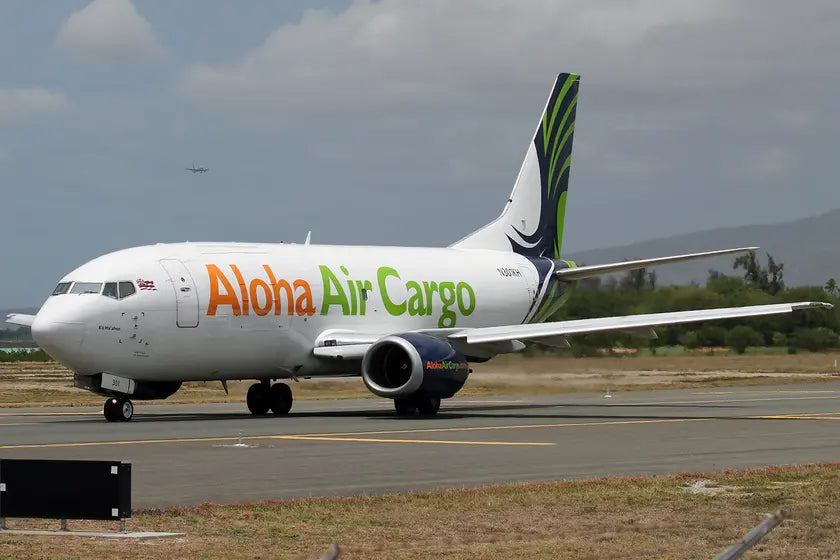
Aloha Air Cargo Overview & Company Profile
Aloha Air Cargo (IATA: KH, ICAO: AAH, callsign "ALOHA") is an all-cargo airline based at Daniel K. Inouye International Airport in Honolulu, Hawaii. It is operated by the legal entity Aeko Kula, LLC, and it carries the name of the historic Aloha Airlines, a passenger carrier that flew across the Hawaiian Islands from 1946 until its Chapter 7 bankruptcy and final passenger flights in March 2008. When the passenger operation shut down, the cargo division was restructured into a stand-alone freight carrier and has flown continuously since mid-2008. For a pilot, that lineage matters mainly as context: the modern company is a specialized narrowbody freighter operator, not a passenger airline with a cargo sideline.
Today Aloha Air Cargo is part of Saltchuk Aviation, the aviation arm of Saltchuk, a privately held American transportation and logistics group. Within that structure, corporate control runs from Saltchuk Resources through Northern Aviation Services down to Aeko Kula, LLC. The most important consequence of this ownership for pilots is that Aloha shares a single joint pilot seniority list with its Alaska-based sister carrier, Northern Air Cargo (NAC). According to the Saltchuk Aviation company page, Aloha is "the largest air-freight carrier in Hawaii," providing scheduled and charter cargo service into and throughout the islands and describing itself as a "critical lifeline" for the state since 2008.
The network is built around Honolulu as a hub, with scheduled interisland service six days a week to Kahului (OGG) on Maui, Līhuʻe (LIH) on Kauaʻi, Hilo (ITO) and Kona (KOA) on Hawaiʻi Island. The carrier has at times reached the United States mainland: a dedicated Honolulu to Los Angeles freighter lane operated for several years, but FreightWaves reported that Aloha decided to cease its Los Angeles to Honolulu service effective June 1, citing weak demand. As of 2025, the scheduled flying that a pilot would actually be rostered to is overwhelmingly interisland, with any mainland link handled within the wider Saltchuk group rather than as a core Aloha schedule.
Aloha is a small operator, and public figures should be read with care. Profession-specific source AirlinePilotCentral lists roughly 64 pilots, all active with none furloughed, which is consistent with an independent estimate of a combined Aloha plus Northern Air Cargo seniority list of around 284 pilots. Total headcount is harder to pin down: commercial databases place the company in the mid-200s of employees, but their revenue estimates diverge so widely (from tens of millions to several hundred million dollars) that no precise figure can be responsibly cited. There are no audited public financials for the carrier.
Aloha Air Cargo does not publish detailed pilot terms, schedules, or financials. The figures in this guide are compiled from professional pilot databases (chiefly AirlinePilotCentral), the parent company's own pages, Teamsters union communications, fleet trackers (Planespotters, ch-aviation), Wikipedia, and trade press such as FreightWaves and Cargo Facts. Where reliable public data does not exist, this guide says so explicitly rather than estimating. Always verify pay, schedule, and benefit details directly with the company and the union before making a career decision.
Fleet Composition & Type Ratings
Aloha Air Cargo flies an all-Boeing, all-737 narrowbody freighter fleet built around the 737 "Classic" family. Fleet trackers and the airline's Wikipedia entry (updated through 2025) point to roughly four Boeing 737-300SF and two Boeing 737-400SF converted freighters in active service, with at least one additional 737-400SF reported on order. ch-aviation's breakdown of the same fleet shows a mix of 737-300(F)/(SF) and 737-400(F) frames that reconciles to the same totals. These are mature airframes: the 737-300 and 737-400 are 1980s-generation Classics, valued in the freight world for low ownership cost and proven reliability rather than fuel efficiency.
The widebody question is where pilots need to read the fine print. Local coverage and some databases associate a Boeing 767-300 BCF (Boeing Converted Freighter) with Aloha, and a 767 did fly the Honolulu to Los Angeles lane under the Aloha brand. However, the 767s are Northern Air Cargo aircraft operated on Aloha-marketed flying under charter or wet-lease arrangements. ch-aviation explicitly notes the 767-300ER(BCF) frames are "wet-leased from sister company Northern Air Cargo," and Wikipedia now lists the 767s among Aloha's "previously operated" types. In practical terms, a pilot hired by Aloha should plan on flying the 737 Classic, and treat any 767 time as something accessed through the wider Saltchuk group rather than as a core Aloha aircraft.
| Aircraft Type | Role | Approx. In Service | Notes |
|---|---|---|---|
| Boeing 737-300SF | Narrowbody freighter | ~4 | Core interisland workhorse. Converted freighter, 737 Classic. |
| Boeing 737-400SF | Narrowbody freighter | ~2 (+1 on order) | Stretched Classic, higher volume. First 737-400F added in recent years. |
| Boeing 767-300ER (BCF) | Widebody freighter | Via NAC | Operated by Northern Air Cargo on Aloha-marketed service. Listed as "previously operated" by Aloha. |
| Boeing 737-200C | Narrowbody freighter (legacy) | 0 (retired) | Six former Aloha Airlines frames. Fully retired. |
| Saab 340A | Turboprop (legacy) | 0 (retired) | Three previously operated. Retired from service. |
Fleet data compiled from Wikipedia, Planespotters, and ch-aviation, late 2024 to 2025. Counts are approximate and change with conversions and retirements. Older marketing pages that still list 737-200s and Saab 340s are out of date.
At the group level, Saltchuk Aviation has been investing in widebody freighter capacity. Boeing and Saltchuk announced an initial order for four firm 767-300BCF conversions in 2021, followed by an additional order for up to four more 767-300BCFs unveiled at the Farnborough Airshow in July 2022. Those aircraft support the group's cargo operations broadly, and no public document assigns a specific number of them to Aloha versus Northern Air Cargo. For a pilot, the relevance is that 767 ETOPS Pacific flying exists somewhere inside the Saltchuk system, and the joint seniority list is the mechanism that could eventually open a path to it.
Aloha lists a Boeing 737 type rating as a preferred qualification, not a hard minimum, which suggests new hires may either arrive type-rated or be trained on type by the company. Public sources do not confirm whether Aloha pays for the type rating, whether a training bond applies, or whether pilots receive full pay during training. These are important questions to raise directly during recruitment. Because the operation centers on short interisland sectors, expect 737 Classic flying with frequent takeoffs and landings rather than long cruise legs.
Pilot Salary & Compensation Breakdown
Pilot pay at Aloha Air Cargo is set by a Joint Collective Bargaining Agreement (JCBA) between the International Brotherhood of Teamsters and Saltchuk Aviation that covers both Aloha and Northern Air Cargo. The most detailed public pay data comes from AirlinePilotCentral, which publishes a twelve-year hourly progression for Boeing 737 Captains and First Officers, with a note that the contract carries a 2% scheduled annual increase. These rates are reported by pilots rather than published by the company, but they are widely used across the industry and were consistent across multiple captures.
Boeing 737 Pay Scale: First Officer & Captain
| Seniority Year | First Officer (USD/hr) | Captain (USD/hr) |
|---|---|---|
| Year 1 | ~$92 | ~$146 |
| Year 2 | ~$97 | ~$151 |
| Year 3 | ~$102 | ~$156 |
| Year 5 | ~$113 | ~$166 |
| Year 7 | ~$125 | ~$178 |
| Year 10 | ~$141 | ~$195 |
| Year 12 (top) | ~$150 | ~$208 |
Hourly rates per AirlinePilotCentral (last updated early 2024). The progression is essentially linear, reflecting the 2% contractual annual raise. No separate published 767 pay scale exists for Aloha.
What That Means in Annual Terms
Aloha provides a monthly pay guarantee of 65 hours for both line holders and reserve pilots. That guarantee multiplied across twelve months gives 780 guaranteed hours per year, which is a useful floor for estimating income. At the guarantee level, a Year 1 First Officer at about $92 per hour earns roughly $71,800 in base flight pay, a Year 1 Captain at about $146 per hour earns roughly $113,900, and a top-of-scale Year 12 Captain at about $208 per hour reaches roughly $162,200. Pilots who fly above the guarantee earn more: AirlinePilotCentral shows a worked example of a First Officer credited 75 hours at $150 per hour producing $11,250 in a single month, which annualizes well above the 780-hour floor.
| Role & Seniority | Hourly | Est. Annual at 65-hr Guarantee |
|---|---|---|
| First Officer, Year 1 | ~$92 | ~$71,800 |
| First Officer, Year 5 | ~$113 | ~$88,100 |
| First Officer, Year 12 | ~$150 | ~$117,000 |
| Captain, Year 1 | ~$146 | ~$113,900 |
| Captain, Year 6 | ~$172 | ~$134,200 |
| Captain, Year 12 | ~$208 | ~$162,200 |
Annual estimates assume only the 65-hour monthly minimum (780 hours/year). Actual pay rises with credited hours above the guarantee. Per diem and 401(k) contributions are additional.
On top of hourly pay, pilots receive per diem for time away from base, in both domestic and international categories with small contractual annual increases. The exact per diem figures are not reliably reported: the values shown on AirlinePilotCentral appear to be a data-entry artifact and cannot be confirmed against the contract, so this guide does not state a specific dollar rate. For scale, a comparable carrier (Kalitta Air) publishes domestic per diem of $2.65 per hour and international per diem of $3.55 per hour, which is the order of magnitude typical of US cargo operators. Because Aloha's flying is almost entirely same-day out-and-back with very few overnights, per diem is a minor part of total income regardless of the precise rate.
These scales place Aloha in the mid-range of US cargo pay: meaningfully below large global widebody operators (a Kalitta Captain tops out near $316 per hour against Aloha's ~$208), but reasonable for a small interisland freighter carrier. Two important caveats apply. First, the JCBA is reported to be in Section 6 negotiations under the Railway Labor Act, so a successor contract could revise these numbers upward. Second, Honolulu has a high cost of living, which erodes the real value of the pay. There are no published sign-on bonuses, retention bonuses, or profit-sharing programs specific to Aloha pilots. Treat the figures above as a baseline and confirm current rates with the Teamsters and the company.
Roster Pattern & Quality of Life
The single biggest lifestyle feature of Aloha Air Cargo is captured in one statistic from AirlinePilotCentral: about 99% of daily flights do not include a layover. The operation is built on same-day, out-and-back interisland sectors that start and end in Honolulu, where flight times between islands run from roughly half an hour to about an hour. For most pilots that means sleeping in your own bed almost every night rather than rotating through hotels. The trade-off is a denser duty day with multiple short legs, rapid turnarounds, and limited cruise time, which rewards sharp instrument flying and tight schedule discipline.
All Aloha pilots share a single domicile in Honolulu (HNL). There is no base-bidding system across islands, so living on Oahu, or commuting to it, is effectively part of the job. Public sources do not describe any company commuting support, positive-space privileges, or hotel provisions for commuters, and because Aloha has no passenger cabin, commuting on its own metal is constrained. Pilots living on a neighbor island or the mainland would need to arrange their own travel to Honolulu before duty, which is a real consideration given Hawaii's geography.
📅 Illustrative Month — Interisland First Officer (HNL)
Illustrative only. Aloha does not publish roster patterns. This grid reflects the documented "no layover" out-and-back operation and the roughly 13 days off per month with a 4-on/3-off rhythm reported for the joint-list sister carrier, Northern Air Cargo. Confirm actual rosters with the company.
How many days off per month does an Aloha pilot actually get? Honestly, there is no Aloha-specific public figure. The closest reliable proxy is Northern Air Cargo, which sits on the same seniority list and the same contract: NAC pilots are publicly described as receiving about 13 days off per month under a structured line-bid system, often on a 4-on/3-off pattern, with both line holders and reserves guaranteed at least 65 compensable hours. Given the shared JCBA and harmonized pay guarantees, it is plausible that Aloha's days-off expectations are broadly similar, but pilots should treat this as an open question to verify, not a documented company commitment.
Aloha operates under FAA Part 121 as an all-cargo carrier. A point that surprises many pilots: cargo-only operators are not required to comply with the stricter FAR Part 117 flight and duty time limitations that govern passenger airlines, including the well-known 30-consecutive-hours-free-in-168 rest rule. Cargo crews instead fall under the older Part 121 Subpart Q duty and rest framework. There is no public statement that Aloha has voluntarily adopted Part 117-equivalent rules, so prospective pilots should ask specifically about maximum scheduled duty, minimum rest, and any fatigue protections written into the JCBA rather than assuming the passenger-airline limits apply.
Benefits, Retirement & 401(k)
Because the JCBA text is not public, the benefits picture at Aloha Air Cargo is assembled from union announcements, professional pilot databases, and employee-reported sites. The retirement plan is the best-documented piece, while several other benefits are confirmed to exist but not described in detail.
The retirement structure is a 401(k) with no traditional A-fund (defined benefit) or B-fund pension. Per AirlinePilotCentral, the company provides a 100% match on the first 4% a pilot contributes, vested immediately from date of hire, plus an additional 4% direct company contribution that vests over a five-year schedule. A pilot contributing at least 4% can therefore receive up to 8% of eligible pay in employer money. The immediate vesting on the match is a genuine plus for newer pilots, while the five-year vesting on the direct contribution rewards staying. This compares interestingly with Kalitta Air, which gives a larger flat 12% direct contribution but no match.
On health and welfare, employee-reported data confirms that company-sponsored health insurance and sick leave are offered, but plan options, premium sharing, and accrual rates are not disclosed publicly. One concrete data point on parental benefits comes from an employee Q&A: eligibility for maternity leave begins after six months of employment, though whether it is paid, and how it applies to paternity or adoptive leave, is not specified. The Teamsters described the 2018 contract as delivering "wage increases, benefit improvements and increased job protections," which signals that the package was enhanced in bargaining even though the specifics remain behind the contract.
Several benefits common at airlines are simply not described in any public source for Aloha Air Cargo: loss-of-license insurance, long-term disability, life insurance, non-revenue travel privileges on passenger carriers, jumpseat reciprocity for personal travel, uniform allowances, and training pay. As a cargo carrier with no passenger network, Aloha is unlikely to offer the broad staff-travel perks of a legacy passenger airline. AirlinePilotCentral does list a jumpseat contact number, confirming a cockpit jumpseat program exists, but its scope is not detailed. Treat all of these as questions for HR and the union rather than assumptions.
Career Progression & Joint Seniority
The defining feature of a career at Aloha Air Cargo is that you do not join an isolated seniority ladder. AirlinePilotCentral states plainly that "Saltchuk Aviation operates two 121 Air Carriers under one Pilot Seniority List: Aloha Air Cargo & Northern Air Cargo," and that pilots "can bid to either certificate, all fleets, all bases." Your date of hire fixes your position on a single combined list of roughly 284 pilots, of which Aloha contributes around 64 and Northern Air Cargo the larger remainder of roughly 220. That means your upgrade prospects, vacation bidding, and equipment options are governed by where you sit on the joint list, not just by Aloha's own size.
On upgrade timing, the public record is encouraging but imprecise. AirlinePilotCentral highlights "Rapid Captain Upgrades, all fleets, all bases," which is consistent with a tight pilot market and an aging senior demographic across the group. There is, however, no published median or average upgrade time in years, so this guide will not put a specific number on it. The honest summary: command can come relatively quickly for a US Part 121 carrier, but the exact pace depends on retirements, fleet allocation, and how many pilots ahead of you on the joint list bid for the same seats.
| Career Milestone | Typical Path | Notes |
|---|---|---|
| Hire onto joint seniority list | Day 1 | Placed by date of hire across Aloha + NAC. |
| Boeing 737 First Officer | Entry seat | Interisland out-and-back flying from HNL. |
| Captain upgrade (737) | "Rapid" per APC | Seniority-driven. No published year figure. |
| Cross-certificate / base move | Seniority-dependent | Bid to NAC bases (e.g. Anchorage) or fleets. |
| 767 ETOPS Pacific (within group) | Senior bid | Widebody flying exists in the Saltchuk system; allocation not public. |
Equipment progression is more nuanced than at a single-fleet carrier. AirlinePilotCentral references "B767 ETOPS Pacific" as a bid-able position within the joint group, but it does not say how those seats split between Aloha and Northern Air Cargo. With NAC having moved to an all-737 narrowbody fleet after a 2025 restructuring, and with Saltchuk holding orders for additional 767-300BCFs, it is plausible (though not publicly confirmed) that more of the group's widebody flying gravitates toward Aloha or another affiliate over time. For planning purposes, view 767 opportunities as a Saltchuk-system possibility reached through seniority and bidding, not as a guaranteed Honolulu upgrade.
There is no public posting indicating that Aloha hires direct-entry Captains from outside the company. The safer assumption is that command seats are filled by internal upgrade through the joint seniority system, with external hires entering at the bottom of the combined list as First Officers. Lateral movement between Aloha and Northern Air Cargo happens through contractual bidding on the shared list rather than through resign-and-rehire, which would restart seniority. The exact cross-certificate bidding rules live in the JCBA and are not published, so confirm them with the Teamsters before counting on a Hawaii-to-Alaska or 737-to-767 move.
AirlinePilotCentral reports Aloha is hiring, with zero pilots furloughed. Across the joint group, senior pilots are retiring in growing numbers each year, and Saltchuk's continued investment in freighter capacity points to a stable, slowly modernizing operation rather than a shrinking one. For a pilot who wants to live in Hawaii and build command time, that combination (active hiring plus retirement-driven movement plus a small list) is the core of the appeal.
Recruitment Process & Requirements
Aloha Air Cargo recruits experienced pilots rather than running an ab-initio cadet program. The published requirements, drawn from AirlinePilotCentral and echoed on PilotCareerCenter and JSfirm, position the airline as a step for pilots who already hold solid qualifications and want to fly jets in Hawaii. Applications are submitted online through the company's careers portal.
Minimum Requirements
Preferred Qualifications
Because 1,500 hours and the 737 type rating are preferred rather than mandatory, Aloha can in principle consider lower-time pilots who qualify for a Restricted ATP through military or approved university pathways. In a competitive applicant pool, though, pilots near or above 1,500 hours with turbine or Part 121/135 experience will naturally stand out. The emphasis on multi-engine time and a preference for the type rating reflects a small carrier that values applicants who can transition into jet-freighter operations with modest training overhead.
How the Process Works
Online Application
Apply through the official careers portal at alohaaircargo.com/careers. Submit resume, certificates, medical, and written-test scores. Be prepared to indicate willingness to fly within the wider Saltchuk system, since Aloha and Northern Air Cargo recruit into one seniority list.
Screening & Interview
Aloha does not publish its exact stages, but US Part 121 norms point to resume screening followed by HR and pilot-recruiter interviews. Expect competency and CRM-focused questions and a review of your records for the required background, criminal-history, and security checks.
Simulator / Skills Assessment
A simulator or flying assessment is typical at this stage for jet-freighter hiring, though Aloha's specific format is not documented publicly. Clarify whether a 737 type rating is expected up front or trained in-house.
Class 1 Medical & Onboarding
A current FAA First-Class Medical is required. Successful candidates proceed to Part 121 ground school, simulator training, and Initial Operating Experience (IOE) on type, supervised by a check airman until released to the line.
Line Flying from Honolulu
New First Officers fly the interisland 737 operation out of HNL. Short sectors and multiple legs per day give frequent takeoff and landing practice, which can make IOE intensive but well-rounded.
Because Aloha does not publish a step-by-step pipeline, do your homework directly: ask who pays for the type rating, whether a training bond or claw-back applies, how long training lasts, and whether you are paid during training. Confirm your willingness to fly for either carrier on the joint list, and have your ATP-CTP certificate, written-test scores, and First-Class Medical current before applying. Networking toward an internal recommendation, a listed preferred qualification, is worth the effort at a carrier this size.
How Aloha Air Cargo Compares: Airline Radar Chart
The most useful benchmarks for Aloha Air Cargo are its own sister carrier, Northern Air Cargo (same owner, same contract, same seniority list, but Alaska-based with longer sectors and newer 737-800s), and Kalitta Air, a large global widebody freight operator that represents the high-pay, high-time-away end of the cargo world. The chart below scores all three across the same six dimensions used in the scorecard. Scores are editorial estimates based on the public data gathered for this guide, not official ratings.
Key Takeaways from the Comparison
Work-life balance is Aloha's strongest card. Almost no layovers, a single Honolulu base, and home-most-nights flying are hard to beat for a pilot who wants stability and family time. Northern Air Cargo shares the contract but flies longer Alaska and Seattle sectors with more time away, and Kalitta's global long-haul model puts pilots on the road for days at a stretch. If lifestyle and a fixed home base rank highest for you, Aloha scores well above the other two.
Pay is mid-pack and effectively identical to Northern Air Cargo. Aloha and NAC sit on the same JCBA, so their hourly scales match; the differences are lifestyle and fleet, not money. Kalitta clearly leads on top-end pay, with senior Captain rates well above Aloha's, reflecting its heavy widebody, long-haul flying. Remember that Honolulu's cost of living eats into Aloha's real take-home compared with many mainland bases.
Fleet is the weak spot. Aloha's 737-300/400 Classics are reliable but old, and its widebody flying is borrowed from NAC. Northern Air Cargo edges ahead by operating newer 737-800 freighters in an all-737 fleet, and Kalitta flies large 747-400s and 777-200s. A pilot motivated mainly by modern equipment will find more of it at the other two.
Benefits and job security are comparable and solid. All three are established operators; Aloha and NAC share the same Teamsters 401(k) package (up to 8% employer money), while Kalitta offers a larger flat direct contribution but no match. Saltchuk's long-term ownership, Aloha's "largest in Hawaii" position, and zero current furloughs support reasonable job security, tempered by the carrier's small size and the recent trimming of mainland flying.
These scores are editorial estimates derived from publicly available pay data (AirlinePilotCentral), fleet trackers, union communications, and trade reporting. They describe a general assessment for an experienced pilot weighing a long-term career, and individual experience will vary by seniority, fleet, and personal priorities. Northern Air Cargo and Aloha share a contract and seniority list, so several of their scores are deliberately close. Treat the chart as a directional comparison, not a precise ranking.
Union & Industrial Relations
Aloha Air Cargo pilots are represented by the International Brotherhood of Teamsters (IBT) through its Airline Division, with Teamsters Local 986 and Local 959 identified in the joint agreement. Crucially, Aloha pilots do not bargain alone: they are covered by a single Joint Collective Bargaining Agreement shared with Northern Air Cargo, the natural counterpart to the joint seniority list. For a pilot, that means contract terms, pay scales, and seniority protections are negotiated for the combined Aloha plus NAC pilot group rather than for Aloha in isolation.
How Representation Is Structured
Labor relations at US airlines run under the Railway Labor Act, which is why the contract does not simply "expire." Instead it becomes amendable, and the parties negotiate a successor under Section 6 of the Act. During that process the existing agreement stays in force, and self-help (strikes or lockouts) is only permitted after a long, mediated procedure overseen by the National Mediation Board. AirlinePilotCentral indicates the Aloha/NAC contract is in Section 6 negotiations, which is the single most important industrial-relations fact for a prospective hire: pay and work rules could be revised in a new deal.
Recent Industrial History
Union representation at Aloha is a net positive for a new hire: the Teamsters contract provides defined pay scales, seniority protection, and a grievance process that non-union carriers lack, and the joint structure ties Aloha pilots to a larger, more leverage-rich bargaining group. The flip side is that current published scales are a baseline that could move in the active Teamsters-negotiated Section 6 talks. Because the full JCBA text is not public, the most reliable way to understand scheduling protections, cancellation pay, minimum-day rules, and benefits detail is to speak directly with Teamsters representatives for the Aloha/NAC group.
Verdict: Who Is Aloha Air Cargo For?
🎯 Our Take
Aloha Air Cargo is a niche but stable career destination for pilots who genuinely want to live in Hawaii and fly jets without living out of a suitcase. The standout feature is lifestyle: an operation where roughly 99% of flights have no layover means sleeping at home almost every night, all from a single Honolulu base, under a Teamsters contract with a 65-hour monthly guarantee and a 401(k) worth up to 8% in employer contributions. The joint seniority list with Northern Air Cargo adds optionality, including a possible path toward 767 ETOPS flying somewhere in the Saltchuk system, plus genuinely "rapid" command upgrades on a small list.
The trade-offs are equally clear. Pay is mid-pack for US cargo and well below large widebody operators, and Honolulu's high cost of living erodes it further. The fleet is aging 737 Classics, with widebody flying effectively borrowed from the sister carrier. Many quality-of-life specifics (exact days off, reserve rules, per diem rates, loss-of-license cover) are simply not published, and the contract is in Section 6 negotiations, so today's numbers are a baseline rather than a guarantee. This is a small carrier: the upside is community and stability, the downside is limited scale and route breadth.
For a US-authorized pilot with around 1,500 hours who values a fixed home base in Hawaii, quick command potential, and union protection over top-tier pay and modern widebodies, Aloha Air Cargo is a compelling and underrated option. For a pilot chasing maximum earnings or international widebody flying, the same Saltchuk system (via Northern Air Cargo) or a larger operator like Kalitta will fit better.
1 How much do Aloha Air Cargo pilots earn?
Per AirlinePilotCentral, Boeing 737 First Officers earn roughly $92 per hour in Year 1 rising to about $150 per hour at Year 12, while Captains earn roughly $146 per hour in Year 1 rising to about $208 per hour at Year 12, with a 2% contractual annual increase. With a 65-hour monthly pay guarantee (780 hours per year), that works out to a base of about $71,800 for a first-year First Officer and about $113,900 for a first-year Captain, before per diem and 401(k). Pilots who fly above the guarantee earn more. These figures are a baseline and may change in the ongoing Section 6 contract talks.
2 What aircraft will I fly at Aloha Air Cargo?
You will fly the Boeing 737 Classic, specifically the 737-300SF and 737-400SF converted freighters that make up Aloha's roughly six-aircraft fleet, with at least one more 737-400SF reported on order. The 767-300 widebody freighters associated with Aloha are actually Northern Air Cargo aircraft flown on Aloha-marketed service, and are now listed among Aloha's previously operated types. Older 737-200s and Saab 340 turboprops have been retired.
3 Where are Aloha Air Cargo pilots based?
There is one pilot domicile: Honolulu (HNL). There is no interisland base-bidding system, so living on Oahu (or commuting to it) is effectively part of the job. The flying is built on same-day, out-and-back interisland sectors, so pilots are home most nights. Public sources do not describe any company commuting support, and because Aloha has no passenger cabin, commuting on its own aircraft is limited.
4 What are the minimum hiring requirements?
Minimums include an FAA Commercial Multi-Engine Land certificate with instrument rating, eligibility for a Restricted ATP under 14 CFR 61.160, an ATP-CTP graduation certificate, a passed ATP written test, a current First-Class Medical, US work authorization, a clean background and security check, English fluency, a valid passport, and a high school diploma. Preferred qualifications are a full ATP, a Boeing 737 type rating, 1,500 total hours, 300 multi-engine hours, a bachelor's degree, and an internal recommendation.
5 How does the joint seniority list with Northern Air Cargo work?
Saltchuk Aviation runs Aloha Air Cargo and Northern Air Cargo as two Part 121 carriers under one combined pilot seniority list of roughly 284 pilots, governed by a single Teamsters Joint Collective Bargaining Agreement. Your date of hire fixes your position, and pilots can bid to either certificate, all fleets, all bases, subject to the contract. In practice that means an Aloha pilot may have pathways to Northern Air Cargo bases (such as Anchorage) and to 767 ETOPS flying within the group, though the precise bidding rules are in the non-public JCBA.
6 How fast is the upgrade to Captain?
AirlinePilotCentral describes "rapid Captain upgrades" across all fleets and bases, consistent with a tight pilot market and retirements across the joint group. However, no median or average upgrade time in years is published, so any specific number would be speculation. Upgrade pace depends on retirements, fleet allocation, and how many pilots ahead of you on the joint list bid for the same seats. Aloha does not appear to hire direct-entry Captains; command seats are filled by internal upgrade.
7 Does Aloha Air Cargo follow FAR 117 rest rules?
Aloha operates under FAA Part 121 as an all-cargo carrier. Cargo-only operators are not legally required to comply with the stricter FAR Part 117 flight and duty limitations that apply to passenger airlines; instead they fall under the older Part 121 Subpart Q duty and rest framework. There is no public statement that Aloha has voluntarily adopted Part 117-equivalent rules, so pilots should ask specifically about maximum duty, minimum rest, and any fatigue protections in the JCBA.
8 Is Aloha Air Cargo a stable employer?
Aloha has flown continuously since 2008, is described by its parent as the largest air-freight carrier in Hawaii, is owned by the well-capitalized Saltchuk group, and shows zero furloughed pilots while actively hiring. Those are positive signals. The counterweights are its small size (about 64 pilots), the recent ending of mainland Los Angeles freighter service, and a lack of transparent financials. On balance it reads as a stable niche carrier rather than a high-growth or at-risk one.
Official Links & Resources
Because so many details of Aloha Air Cargo's pilot terms are not published, verify everything directly with primary sources before making a decision. These are the key websites and organizations relevant to an Aloha Air Cargo pilot career:
The single most valuable move for a serious applicant is to talk to a current Aloha or Northern Air Cargo pilot and a Teamsters representative for the joint group. They can answer the questions public sources cannot: real days off per month, reserve call-out windows, who pays for the type rating, whether a training bond applies, per diem rates, and where the Section 6 talks stand. Pair those conversations with the official careers page and the fleet trackers above to build an accurate, current picture before you apply.