

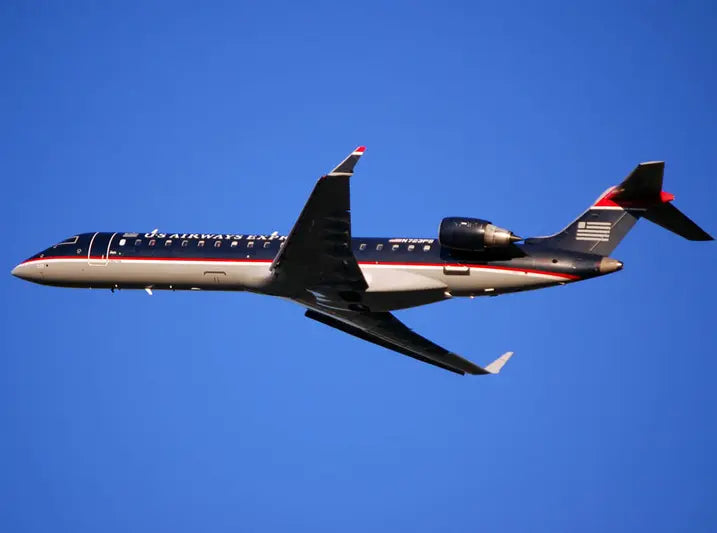
PSA Airlines Overview & Company Profile
PSA Airlines (IATA code OH, ICAO code JIA, callsign "Blue Streak") is a regional airline in the United States and a wholly owned subsidiary of the American Airlines Group. It does not sell tickets under its own name. Instead, PSA is paid by American Airlines to staff, operate, and maintain aircraft flown entirely as American Eagle, the regional brand whose flights are scheduled, marketed, and sold by American. For a pilot, that distinction matters: the schedule, the route map, and the long-term career path are tightly linked to mainline American, not to an independent business chasing its own customers.
The company traces its roots to 1979, when it was founded as Vee Neal Airlines in Latrobe, Pennsylvania. It became Jetstream International Airlines in 1983 and was renamed PSA Airlines in 1995 by then-parent USAir, which had bought the Pacific Southwest Airlines trademark and wanted to preserve the "PSA" brand. For decades the operation was anchored in Dayton, Ohio. In early 2026 PSA relocated its corporate headquarters to Charlotte, North Carolina, the largest American Airlines hub it serves, while retaining a substantial operational footprint in Dayton.
Today PSA is one of the fastest-growing regional carriers in the country. It flies an all-Bombardier CRJ fleet of roughly 150 aircraft, employs close to 5,000 people, and operates several hundred daily departures across American's eastern and central network out of hubs at Charlotte (CLT), Washington National (DCA), Philadelphia (PHL), and Dallas/Fort Worth (DFW), plus a focus operation at Dayton (DAY). The pilot group is represented by the Air Line Pilots Association (ALPA), and PSA has spent the past few years aggressively repositioning itself as the highest-paying regional in the industry.
What makes PSA distinctive among US regionals is the combination of three things working together: industry-leading pay negotiated with ALPA, a guaranteed flow-through agreement to mainline American Airlines, and a deliberate growth strategy backed by the parent group. The trade-off is the nature of the work itself, which is short-haul regional flying on an aircraft type that, while reliable, is no longer in production. The sections below break down what that means in practice for compensation, schedule, career timeline, and day-to-day life.
Fleet Composition & Type Rating
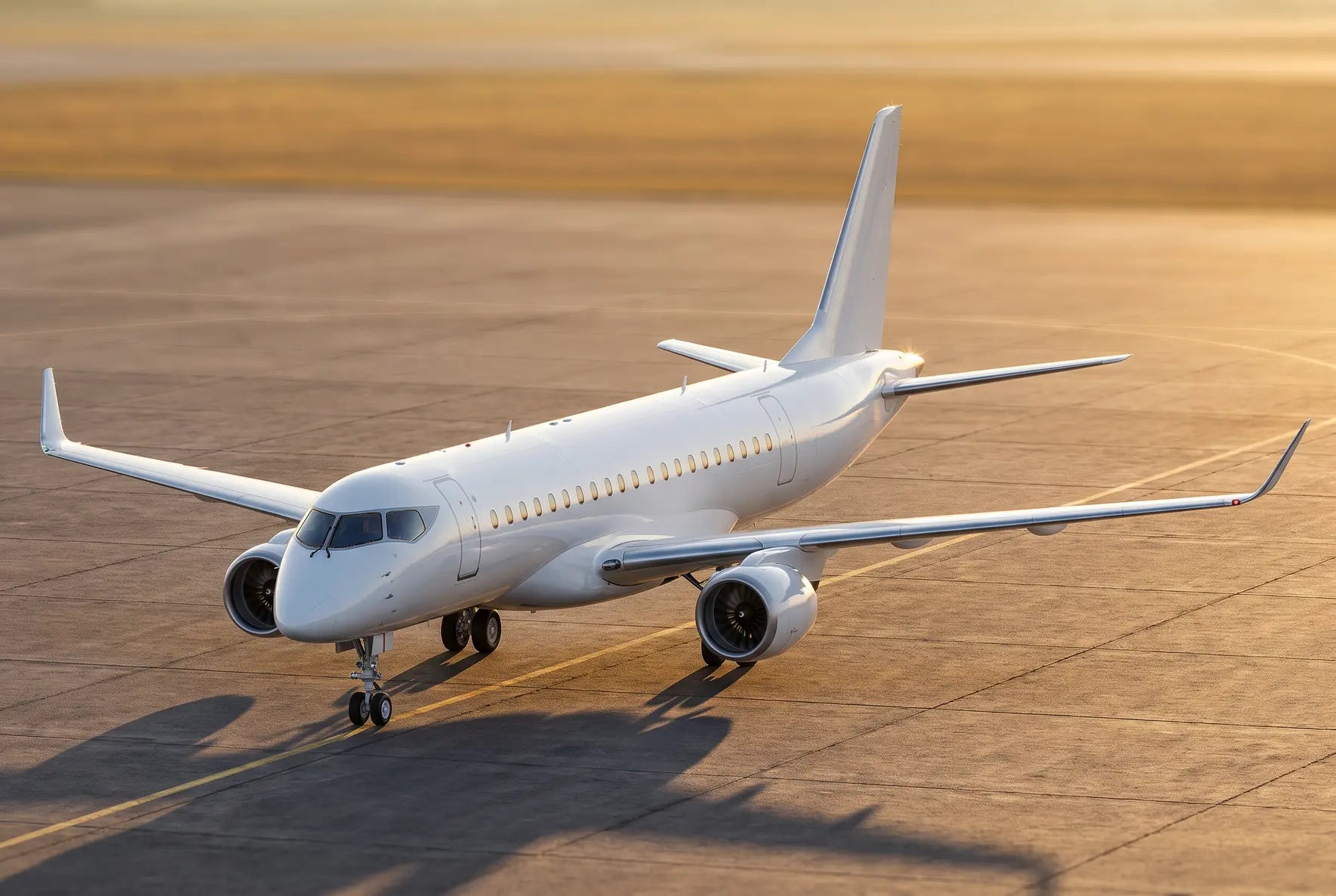
PSA operates a single-family fleet built entirely around the Bombardier CRJ regional jet. There are two variants in service: the 65-seat CRJ700 and the larger 76-seat CRJ900. PSA introduced the CRJ700 in 2002 and the CRJ900 in 2014. By late 2025 the fleet had grown to roughly 150 airframes, weighted increasingly toward the CRJ900 as American Airlines purchases additional aircraft and channels them to its regional subsidiaries.
In October 2024 PSA confirmed it would take 14 additional CRJ900s, part of a broader push that has American Airlines buying used and refurbished CRJ900s to feed its wholly owned regionals. New deliveries arrive with refreshed interiors and a three-cabin layout (First, Main Cabin Extra, and Main Cabin) consistent with the American Eagle product. The CRJ700 fleet has been holding steady at around 60 aircraft, while the CRJ900 count has climbed past 90.
| Aircraft Type | Role | Seats | In Service (approx.) | Notes |
|---|---|---|---|---|
| Bombardier CRJ700 | Regional jet | 65 | ~60 | In PSA service since 2002. Three-cabin American Eagle layout. |
| Bombardier CRJ900 | Regional jet | 76 | ~90 | In service since 2014. Growing fleet; 14 added from 2024–25 with refreshed NextGen interiors. |
Fleet data compiled from PSA Airlines and public fleet trackers, late 2025 to early 2026. Counts shift with ongoing deliveries.
Both variants share the same Bombardier CL-65 type rating, which simplifies training and crew planning enormously. A pilot does not transition between fleets at PSA the way a mainline pilot might bid from a narrowbody to a widebody. You hold one rating and fly both the CRJ700 and CRJ900 interchangeably, which means upgrade and seniority moves are about seat (First Officer to Captain) and base, not about switching airframes.
PSA provides the CL-65 (CRJ) type rating as part of new-hire training at no cost to pilots hired through its programs. Because the CRJ700 and CRJ900 fall under one common type rating, a single qualification covers the entire fleet. For experienced applicants who already hold a current CL-65 rating or prior CRJ Part 121 captain time, PSA has historically offered enhanced bonuses (see the salary section), reflecting how much it values pilots who can move quickly to the line and into the captain seat.
The Bombardier CRJ program ended production after Mitsubishi acquired the program and wound it down, so PSA's fleet is composed of an aircraft type that is no longer being built new. The CRJ is a proven, dependable regional jet, but it is older-generation technology compared with the Embraer E175 flown at some competing regionals. Pilots who prioritize flying the most modern equipment should weigh this honestly. That said, the CL-65 remains one of the most common type ratings in North America, which keeps a PSA pilot's skill set broadly marketable.
Pilot Salary & Compensation Breakdown
Compensation is where PSA has made its loudest statement. Following a January 2024 agreement between the company and ALPA, PSA, alongside fellow American-owned regionals Envoy Air and Piedmont, restructured its pay to become, in the company's own words, the highest-paid pilot group in the regional industry. The hourly rates below are published on the official PSA Airlines pay scale and take effect on June 15, 2025, with a further scheduled step increase on June 15, 2026.
US regional pilots are paid by the flight hour, not a fixed salary. PSA guarantees a minimum of 75 hours of pay per month for both line holders and reserve pilots, so the annual estimates below assume a pilot credits somewhere between the 75-hour floor and a more typical 85 to 90 hours once trips, premiums, and reassignments are counted. Per diem is paid at $1.75 per hour on duty.
First Officer Pay Scale (effective 06/15/2025)
| Year of Service | Hourly Rate | Annual Gross (est.) | Notes |
|---|---|---|---|
| Year 1 (0–1) | $99.00 | ~$89,000 – $107,000 | Industry-leading new-hire rate for a regional First Officer. |
| Year 2 (1–2) | $106.50 | ~$96,000 – $115,000 | Step increase on each work anniversary. |
| Year 3 (2–3) | $114.00 | ~$103,000 – $123,000 | Most pilots upgrade to Captain before reaching the top FO step. |
| Senior F/O (3–4+) | $117.75 | ~$106,000 – $127,000 | Top First Officer rate. |
Annual estimates assume 75–90 credited hours per month. Actual earnings depend on trips flown, premium pay, and reassignments.
Captain Pay Scale (effective 06/15/2025)
| Year of Service | Hourly Rate | Annual Gross (est.) | Notes |
|---|---|---|---|
| New Captain (0–1) | $157.50 | ~$142,000 – $170,000 | Captain pay credit begins at 750 Part 121 hours under the supportability premium. |
| Captain, 5 yrs | $176.25 | ~$159,000 – $190,000 | Steps rise roughly $3.75/hr per year. |
| Captain, 10 yrs | $195.00 | ~$176,000 – $210,000 | Senior narrowbody-equivalent regional pay. |
| Senior Captain (19–20) | $225.00 | ~$203,000 – $245,000 | Top of the published captain scale. |
Captain rates run from $157.50 at year one to $225.00 at the top step. The 2026 scale lifts every step by roughly $3.75/hr.
Two structural features stand out. First, the captain pay credit at 750 hours: under a supportability premium, qualifying pilots can be paid at captain rates once they accumulate 750 hours of applicable Part 121 flight time, well before they would normally upgrade by seniority. Second, the quality-of-pay rules negotiated with ALPA, including 100% deadhead pay, premium pay for picking up open trips, and additional days off, which together push real-world earnings above the bare hourly math.
Bonuses & Premiums
PSA has used aggressive bonuses to fill classes during the pilot-supply crunch. Across recent campaigns these have included a retention bonus for new First Officers paid after the one-year anniversary, larger bonuses for First Officers arriving with significant experience, and Direct Entry Captain packages advertised at up to $175,000 for pilots who already hold a CL-65 type rating or prior CRJ Part 121 captain experience. Cadets receive tuition assistance toward their flight training. These figures vary by campaign and expire or reset over time, so treat any specific number as a snapshot.
Hourly rates above are taken directly from PSA's published pay scale (effective June 15, 2025). Annual figures are estimates that depend on credited hours, premiums, reserve versus line-holding status, and base. Bonus amounts are campaign-specific and change frequently. US regional pay has risen dramatically since 2022 and remains competitive across the American-owned carriers, but it can move quickly in either direction with the labor market. Always confirm current rates and bonuses on the official PSA careers portal before making a decision.
Roster, Bases & Quality of Life
PSA flying is domestic short-haul. A CRJ crew typically operates several legs per duty day across the eastern and central United States, with trips that may be turns (out and back in a day) or multi-day pairings with overnights at outstation hotels. Schedules are governed by US FAR Part 117 flight and duty rules and by the ALPA collective bargaining agreement. In 2024 PSA became the first wholly owned American Eagle subsidiary to move from manually built lines to a Preferential Bidding System (PBS), software that constructs each pilot's monthly schedule from their stated preferences while honoring seniority and operational coverage.
Reserve and line holding both carry a 75-hour monthly pay guarantee. Line holders bid trips and days off through PBS; reserve pilots are assigned to a reserve grid and called out to cover open flying. Quality-of-life letters of agreement negotiated with ALPA added days off, tied trip trades to the reserve grid, and improved deadhead and premium pay. Seniority drives almost everything here: the more senior the pilot, the better the base, the schedule, and the days off they can hold.
📅 Sample Month — CRJ First Officer (Line Holder, CLT)
Illustrative only. A representative line-holder month showing roughly 13 days off; actual lines are built in PBS and vary widely by seniority and base.
Day-to-day quality of life at PSA depends heavily on seniority and on whether a pilot lives in base. Junior pilots tend to sit reserve and hold less desirable schedules; senior pilots can string together favorable trips and long blocks of days off. Because the flying is regional, pilots are usually home more often than long-haul crews, but the work is also more intensive per duty day, with multiple takeoffs and landings and frequent weather-driven disruption in the eastern US.
PSA operates crew bases at Charlotte (CLT), Dayton (DAY), Washington National (DCA), Philadelphia (PHL), and Dallas/Fort Worth (DFW), and has announced an additional base at Cincinnati/Northern Kentucky (CVG). Many regional pilots commute to base by jumpseat rather than relocate. To support that reality, PSA offers a commuter hotel allowance (reported at around $250 per month) for registered, eligible commuters at its bases. Choosing a base you can live in, or commute to easily, is one of the biggest levers a new pilot has over their own quality of life.
Benefits, 401(k) & Retirement
Because PSA is a wholly owned subsidiary of the American Airlines Group, its benefits package blends a standard US airline structure (a 401(k) retirement plan rather than a defined-benefit pension) with the considerable advantage of plugging into American's company-wide programs, including group profit sharing and travel privileges across the American network.
The 401(k) match is structured to reward tenure. Reporting on PSA's plan describes a match that grows from a modest level in a pilot's early years to a 75% match on the first 8% of pay once a pilot passes the ten-year mark. In practice, many PSA pilots flow to American before reaching the highest tiers, so the most valuable retirement years tend to accrue after the move to mainline, where the 401(k) percentages are richer still.
One genuine advantage of being owned by American rather than by an independent holding company is access to the American Airlines Group profit-sharing program, which extends to wholly owned regionals including PSA. The program directs 5% of every pre-tax dollar of group profit into a pool shared by employees. In profitable years this adds a meaningful annual payout on top of hourly earnings; in lean years it can be small or zero. It is a variable benefit, not a guaranteed one, but it ties a PSA pilot's upside to the performance of one of the world's largest airlines.
Benefit details here are compiled from PSA Airlines materials, the American Airlines Group, and pilot-reference databases such as Airline Pilot Central. Exact match percentages, vacation accrual, insurance plan design, and travel-benefit rules are governed by the current collective bargaining agreement and company policy, and they change over time. Verify the specifics with PSA recruiting and the ALPA contract before relying on any single figure.
Career Progression & Seniority
Career progression at PSA, like every US airline, is governed by a seniority list. Your seniority number determines the order in which you bid for upgrades, bases, schedules, and vacation. There are two distinct progression stories at PSA, and a pilot needs to understand both: progression within PSA (First Officer to Captain), and progression out of PSA to mainline American Airlines (the flow-through, covered in the next section).
Within PSA, the upgrade from First Officer to Captain has been unusually fast by historical standards because the airline is growing and constantly losing captains to the flow. PSA has openly marketed a "rapid upgrade" opportunity for First Officers who reach the regulatory requirements. The exact timeline moves with hiring waves and the pace of the flow to American, but in a strong growth environment, motivated First Officers have been able to upgrade in a relatively short span once they hold the required hours, far quicker than the decade-plus upgrades seen at legacy carriers.
| Career Milestone | Typical Timeline | Notes |
|---|---|---|
| Join as First Officer (CRJ) | Day 1 post-training | CL-65 type rating provided by PSA. Assigned to a CRJ700/900 base. |
| Captain pay credit | At 750 Part 121 hours | Supportability premium pays qualifying pilots at captain rates before formal upgrade. |
| Upgrade to Captain | Seniority-dependent (often rapid) | Requires ATP and minimum hours; awarded by seniority. PSA markets fast upgrades during growth. |
| Flow to American Airlines | ~5 years (target) | Guaranteed flow; top-captain-rate backstop if not flowed by year five (see next section). |
| Check Airman / Instructor | Variable | Line Check Airmen earn up to 200% pay credit on IOE flights. |
The defining feature of the PSA career is that, for most pilots, it is not meant to be a destination. It is a fast, well-paid, guaranteed on-ramp to American Airlines. That changes how you should read the upgrade timeline: many pilots upgrade to Captain at PSA, build command time, and then flow to mainline as a First Officer. The seniority you build at PSA secures your schedule and your captain seat while you wait for the flow, and the strong pay (including the captain pay credit at 750 hours) means the waiting years are financially comfortable by regional standards.
PSA announced plans to hire more than 1,000 pilots across a two-year window and has described itself as the fastest-growing regional in the United States. That growth, combined with captains continuously flowing to American, has historically kept upgrade times short. The important caveat is cyclicality: American Airlines paused mainline pilot hiring for part of 2024 and signaled a restart later in 2025, with flow commitments to PSA, Envoy, and Piedmont among its priorities. When mainline hiring slows, the flow slows, captains stay longer, and upgrade and flow timelines stretch. When it accelerates, everything speeds up. Plan for the average, but expect the timeline to breathe with the cycle.
The Flow-Through to American Airlines
For most pilots, the single most important reason to choose PSA over an independent regional is the guaranteed flow-through to American Airlines. A flow-through is a contractual pathway: rather than reapplying, re-interviewing, and competing against the open market, an eligible PSA pilot is guaranteed a First Officer position at mainline American on a defined schedule, with no additional interview required. It converts the biggest uncertainty in an aviation career, the jump from regional to major, into a known quantity.
PSA's flow agreement has been enhanced over successive negotiations. The company and its ALPA pilots ratified an agreement that nearly doubled the number of pilots flowing, building toward roughly 100 pilots flowing to American per year. Management and union leadership have publicly framed this as a "guaranteed career path to the world's largest airline." More recent structuring aligned PSA's flow with the arrangements at American's other wholly owned carriers and pointed to a transition to mainline within roughly five years of joining.
A standout feature in the enhanced flow framework is a financial backstop: arrangements at the American-owned regionals committed that an eligible pilot who has not been offered a mainline position by the end of their fifth year would be paid at the top captain rate. In effect, the contract uses high regional pay as a safety net, so that any delay in the flow does not become a financial penalty for the pilot. Confirm the precise current terms with the ALPA contract, as flow language is periodically renegotiated.
There is one honest nuance worth understanding. Because regional pay has risen so far so fast, a senior PSA captain who flows to American will start over as a first-year mainline First Officer, and first-year mainline pay can be comparable to or even below a top regional captain's earnings in the short term. The flow is a long-game decision: a mainline American career offers far higher lifetime earnings, widebody flying, and global seniority, but the first year or two after the flow can feel like a lateral or even a temporary step back on the paycheck. Pilots who understand this go in with the right expectations.
PSA also publicizes alternative pathways for pilots whose goals differ, including arrangements that have been described as fast-track options toward other majors, and a guarantee that pilots not flowing on schedule receive top-of-scale pay. The flow to American remains the headline benefit and the reason a large share of applicants choose PSA over carriers without an ownership link to a major. Prospective pilots can read American's side of the regional-to-mainline pipeline through the American Airlines pilot journey resources.
A guaranteed flow is guaranteed in order and destination, not in exact date. The actual time to flow depends on how fast American is hiring at the mainline level. During hiring booms the flow accelerates; during pauses (as in part of 2024) it slows and the queue lengthens. Treat the "around five to six years" figures reported by pilots as a cycle-dependent average rather than a promise. The contractual backstops exist precisely because the timeline can move.
Recruitment Process & Requirements
PSA recruits through several streams: a Cadet Program for pilots still building hours, a standard First Officer hire for pilots who meet airline minimums, and Direct Entry Captain hiring for experienced pilots who already hold a CL-65 type rating or prior CRJ Part 121 command time. The airline has run classes on a frequent, often biweekly, cadence to support its growth. To fly for any US Part 121 airline, the foundational legal requirement is an Airline Transport Pilot (ATP) certificate or a Restricted ATP (R-ATP), which sets the floor on flight hours.
First Officer — Core Requirements
Cadet Program — How It Works
Selection Stages
Application
Apply through the PSA careers portal (or via a partner flight school / cadet pathway). Cadets join while still building hours; First Officer and Direct Entry Captain applicants apply once they meet or approach minimums.
Interview
A pilot interview assesses technical knowledge, professionalism, and fit. Cadets complete an interview to enter the program; those already accepted as cadets are placed into a class on reaching minimums without an additional interview.
Conditional Offer & Medical
Successful candidates receive a conditional offer. A valid FAA First Class Medical Certificate is required, along with the standard background, drug-testing, and documentation checks mandated for Part 121 airlines.
New-Hire Training & Type Rating
New hires complete ground school, the CL-65 (CRJ) type rating, simulator training, and checkrides at company expense, followed by Initial Operating Experience (IOE) on the line with a Line Check Airman before flying as a qualified crewmember.
Because PSA hires frequently and offers a guaranteed flow, demand for seats is strong, but the bottleneck for most applicants is hours, not interview slots. If you are early in training, the Cadet Program is the cleanest way to lock in a future class and tuition help while you build time. If you already hold a CL-65 type rating or CRJ captain experience, look at the Direct Entry Captain stream, which has carried the largest bonuses. Confirm the current minimums and any hour reductions (for example, the R-ATP path with a qualifying aviation degree) directly on the PSA careers site, since these details change with the labor market.
How PSA Compares: Airline Radar Chart
The most useful comparison for PSA is against its closest peers: Envoy Air, the largest of American's wholly owned regionals (and PSA's sister carrier under the same parent), and Endeavor Air, Delta's wholly owned regional, which is widely regarded as the benchmark on the Delta side of the industry. All three offer guaranteed flows to a major and sit at the top of regional pay. The scores below are editorial estimates across the same six metrics used in the scorecard, drawn from public pay data, pilot-reference sites, and company materials.
Key Takeaways from the Comparison
Pay is effectively a three-way tie at the top. PSA, Envoy, and Piedmont share an identical American-owned pay scale, which in early 2024 was reported to run 50 to 70 percent (about 57 percent on average) above the next highest regional, Endeavor. Since then Endeavor raised its own rates: by October 2025 its first-year First Officer rate sat slightly above PSA's $99 starting figure. The honest summary for 2025 to 2026 is that all four carriers pay at the top of the regional market, with differences measured in a few dollars per hour and in premium structures rather than in tiers.
Fleet favors Envoy. Envoy operates the larger and newer Embraer E175 alongside CRJ aircraft, giving its pilots a more modern, more comfortable jet and a type rating that maps onto the most in-demand regional aircraft. PSA is all-CRJ on the out-of-production Bombardier CL-65, and Endeavor flies a CRJ family (including the CRJ900 and CRJ550). On pure equipment, PSA scores lowest of the three, which is the single clearest knock against it.
Flow destination is the real decision. PSA and Envoy both flow to American; Endeavor flows to Delta. Endeavor's Career Advancement Program is large in volume (reported targets in the hundreds of pilots per year to Delta), while PSA's enhanced flow builds toward roughly 100 per year to American. The right choice here is less about the regional and more about which major you want to spend your career at, since the flow locks you onto that path.
Job security is strong across all three because each is owned by its major rather than by an independent contractor competing for flying. That ownership is the foundation of both the flow and the stability. Endeavor and Delta edge slightly ahead on perceived stability in pilot circles, but the gap is narrow.
Scores are editorial estimates based on research into published pay scales (PSA, Envoy, Endeavor), pilot-reference databases such as Airline Pilot Central, company press releases, and industry reporting. They represent a general assessment for a pilot weighing a multi-year regional commitment, not a precise ranking. Pay figures in particular move quickly in the current market. Individual experience varies with seniority, base, and the hiring cycle at the parent major.
Union & Industrial Relations
PSA pilots are represented by the Air Line Pilots Association, International (ALPA), the largest airline pilot union in the world. ALPA negotiates the collective bargaining agreement that governs pay, work rules, scheduling, reserve, training, and the flow to American. US airline labor relations are governed by the Railway Labor Act (RLA), which is structured to keep airlines operating: contracts do not simply expire, they become "amendable," and pilots cannot legally strike unless federal mediation is exhausted and the National Mediation Board releases the parties. As a result, US regional pilot strikes are extremely rare, and PSA has not had one in the modern era.
How PSA's ALPA Representation Is Organized
The PSA pilot relationship with ALPA has been productive in recent years, focused on extracting value during the pilot-supply shortage rather than on conflict. The contract was extended through a 2022 ratification (with the agreement becoming amendable in 2028), and the MEC has since layered on a series of improvements: the landmark 2024 pay restructure, the move to a Preferential Bidding System, quality-of-life letters of agreement adding days off and improving the reserve grid, and successive enhancements to the flow-through to American.
Recent Agreements & Milestones
A unionized, ALPA-represented seniority environment is a clear positive for a new regional pilot: it standardizes pay, protects scheduling rights, and gives the flow-through contractual force rather than leaving it to management discretion. PSA's recent labor history has been about negotiating gains during a strong market, not about industrial conflict, and the union's national resources back the local MEC. Membership and engagement are strongly encouraged. Keep in mind that the contract becomes amendable in 2028, so the next negotiating cycle, and the broader regional pay environment at that time, will shape what comes after.
Verdict: Who Is PSA Airlines For?
🎯 Our Take
PSA Airlines is built for one purpose above all others: to be a fast, well-paid, guaranteed bridge to American Airlines. If a mainline American career is your goal, it is one of the most direct routes in the industry. You get top-tier regional pay (a $99/hour first-year First Officer rate and captain rates climbing past $200/hour), a captain pay credit at 750 hours, profit sharing through the American Airlines Group, an ALPA contract, and a flow-through that nears 100 pilots per year with a top-captain-rate backstop if the flow runs late.
The trade-offs are equally clear. The work is intensive domestic short-haul flying on the Bombardier CRJ, an out-of-production airframe that lags the Embraer E175 flown at some peers. Junior life means reserve and commuting, quality of life rides on seniority, and the flow timeline expands and contracts with American's mainline hiring cycle. Pilots who want the newest jet, or who want a regional carrier to be a long-term destination in itself, may find better fits elsewhere.
Against its closest peers, PSA pays the same as sister carriers Envoy and Piedmont and trades blows with Delta's Endeavor on pay. Envoy edges it on fleet; the deciding question is usually which major you want to flow to. For pilots aimed at American, PSA is a strong, credible choice.
1 How much do PSA Airlines pilots make?
Per PSA's published pay scale effective June 15, 2025, First Officers start at $99.00 per hour in year one and rise to $117.75 at the top step. Captains start at $157.50 per hour and climb to $225.00 at the senior steps. With a 75-hour monthly guarantee and typical credited hours of 85 to 90, that works out to roughly $89,000 to $127,000 a year for First Officers and roughly $142,000 to $245,000 for Captains, before profit sharing and bonuses. A further step increase is scheduled for June 15, 2026.
2 Does PSA guarantee a flow-through to American Airlines?
Yes. PSA is a wholly owned subsidiary of the American Airlines Group, and its ALPA contract includes a guaranteed flow-through: eligible pilots advance to a mainline American First Officer position in seniority order with no additional interview. The enhanced agreement builds toward roughly 100 pilots flowing per year and targets a transition within about five years. The flow is guaranteed in order and destination, but the exact timing depends on how fast American is hiring at the mainline level.
3 What aircraft do PSA pilots fly?
PSA operates an all-Bombardier CRJ fleet: the 65-seat CRJ700 and the 76-seat CRJ900, roughly 150 aircraft in total and growing on the CRJ900 side. Both share the CL-65 type rating, so a single qualification covers the whole fleet and pilots fly both variants interchangeably. The CRJ is a reliable but out-of-production airframe, older-generation technology than the Embraer E175 flown at some competing regionals.
4 How long does it take to upgrade to Captain at PSA?
Upgrade is by seniority and has historically been fast at PSA because the airline is growing and continuously loses captains to the American flow. The company has marketed a "rapid upgrade" opportunity for First Officers who meet the regulatory hour and experience requirements. A supportability premium also pays qualifying pilots at captain rates once they reach 750 Part 121 hours, even before a formal upgrade. Actual timing speeds up in hiring booms and stretches when mainline hiring slows.
5 What are the minimum requirements to be hired?
As with any US Part 121 airline, the legal floor is an ATP or Restricted ATP certificate, which generally means 1,500 total hours (reduced to 1,250, 1,000, or 750 with a qualifying aviation degree or military background). You also need a Commercial certificate with multi-engine and instrument ratings, an FAA First Class Medical, to be at least 21, US work authorization, English proficiency, and a valid passport. PSA's Cadet Program lets pilots with as little as a Private certificate lock in a future class while building hours. Verify exact minimums on the PSA careers site, as they shift with the market.
6 Where are PSA's pilot bases?
PSA's crew bases are Charlotte (CLT), Dayton (DAY), Washington National (DCA), Philadelphia (PHL), and Dallas/Fort Worth (DFW), with an additional base announced at Cincinnati/Northern Kentucky (CVG). There is no nationwide base network like a major's, so commuting is common; PSA offers a commuter hotel allowance (reported around $250 per month) for registered, eligible commuters. Base availability is awarded by seniority.
7 Is PSA a good first airline job?
For a pilot aiming at American Airlines, yes, it is one of the strongest first airline jobs available. You get among the highest regional pay, a fast captain upgrade, an ALPA contract, profit sharing through the American Airlines Group, and a guaranteed flow to a major. The main caveats are the CRJ fleet, the reserve-and-commuting reality of junior life, and a flow timeline that moves with American's hiring cycle. If your goal is a different major, a regional that flows there may suit you better.
8 How does PSA pay compare to Envoy, Piedmont, and Endeavor?
PSA shares an identical pay scale with American's other wholly owned regionals, Envoy and Piedmont. In early 2024 those rates were reported to run about 57 percent on average above the next highest regional, Endeavor (Delta's wholly owned carrier). Endeavor has since raised its own rates, and by late 2025 its first-year First Officer pay sat slightly above PSA's $99 starting figure. The practical takeaway: all four pay at the top of the regional market, with differences now measured in a few dollars per hour and in premium structures rather than in clear tiers.
Official Links & Resources
Before applying or making a career decision, verify everything directly with official sources, since pay, bonuses, minimums, and flow terms all change with the market. These are the key websites relevant to a PSA Airlines pilot career:
Cross-check PSA's official pay scale against the Airline Pilot Central profile and the ALPA PSA site before you apply. Regional pay and bonuses have moved fast since 2022, and the flow timeline tracks American's mainline hiring, so the most current numbers and the latest letters of agreement matter more here than at a stable legacy carrier. When comparing offers, weigh the flow destination (American versus Delta) as heavily as the headline hourly rate.