Envoy Air Overview & Company Profile
Envoy Air (IATA: MQ, ICAO: ENY) is the largest of the regional carriers that fly under the American Eagle brand, and it is a wholly owned subsidiary of the American Airlines Group. Headquartered at 4301 Regent Boulevard in Irving, Texas, inside the Dallas-Fort Worth metroplex, Envoy operates more than 1,000 daily flights to over 150 destinations across the United States, Canada, Mexico, the Caribbean, and South America. Every Envoy flight is sold, scheduled, and revenue-managed by American Airlines, so for pilots the company functions as the front door to the American mainline system rather than as an independent airline competing for its own passengers.
The company traces its roots to 1984 and to the original American Eagle Airlines that began jet operations in the late 1990s. It was renamed Envoy Air on April 15, 2014, when American restructured its wholly owned regional holdings. Today Envoy employs roughly 20,000 people, including approximately 2,400 pilots, and is led by President and CEO Pedro Fábregas. Its single most important distinction for any aspiring or current regional pilot is structural: Envoy offers a guaranteed, no-interview flow-through to American Airlines, and it has been the single biggest feeder of new pilots into American, accounting for roughly two-thirds of American's pilot hires since 2010.
Envoy flies from four primary crew bases that double as American hubs, which keeps the network concentrated and the commuting options strong. Because it is a regional operator, the flying is short-haul and domestic in character: day trips, turns, and short overnights rather than international layovers. That trade-off, less exotic flying in exchange for a fast, secured path to a major airline, is the central theme that runs through every section of this guide.
American Airlines flies its regional feed through three wholly owned subsidiaries (Envoy, PSA, and Piedmont) plus several contracted partners such as SkyWest and Republic. Being wholly owned matters because the parent company directly funds pilot pay and guarantees a flow agreement to mainline. When American faced a pilot shortage in 2022, it was able to fund industry-transforming raises across its own regionals almost overnight, something an independent contractor cannot do unilaterally. For a pilot, Envoy is therefore best understood as a stepping stone that American itself owns and is motivated to keep attractive.
Fleet Composition & Type Rating
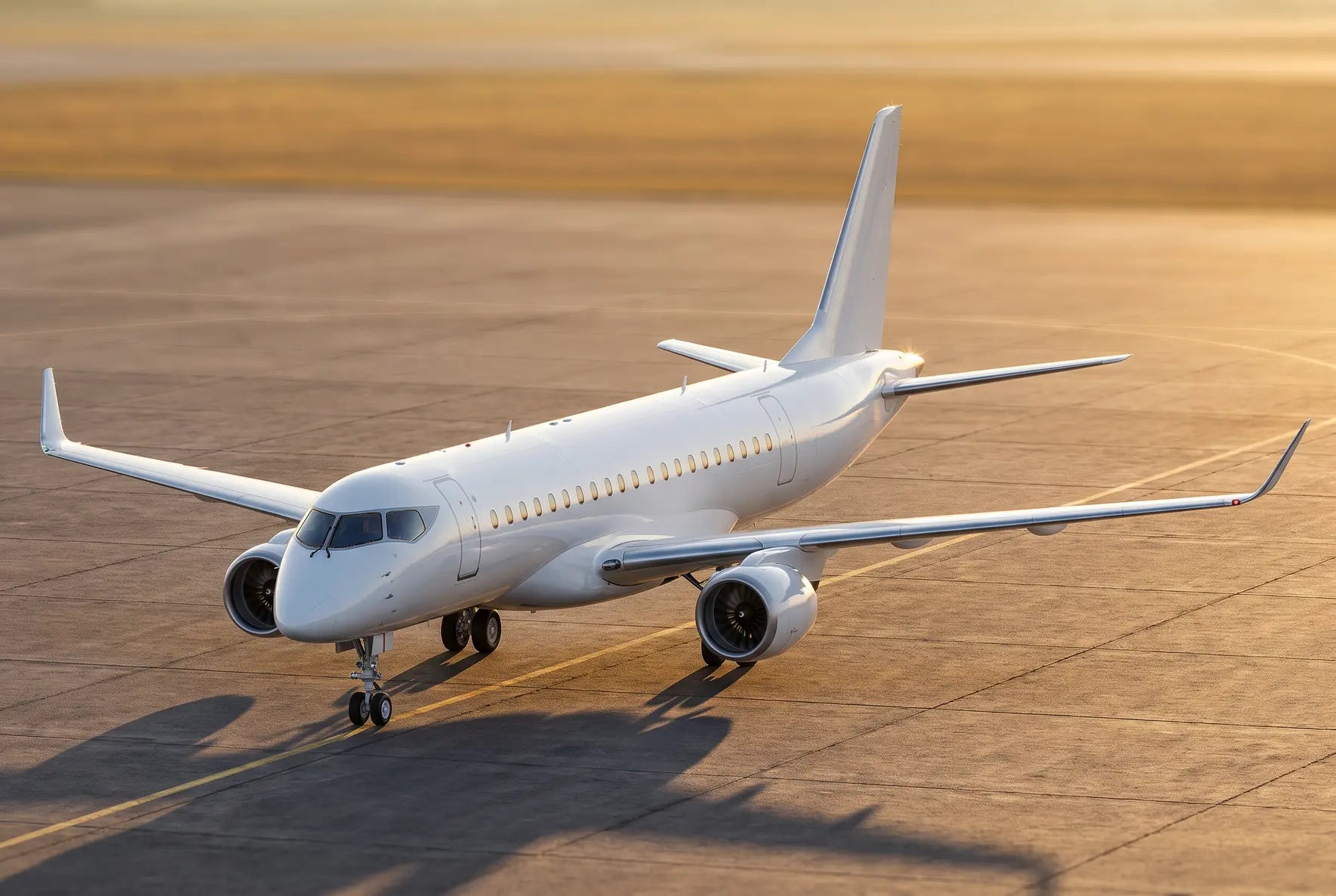
Envoy operates an all-Embraer, all-jet fleet built around two closely related members of the E-Jet family: the Embraer E175 and the Embraer E170. As of August 2025 the airline listed approximately 179 aircraft in service, with around 136 E175s and 43 E170s, plus a further block of jets on order. American has publicly committed to growing the Envoy fleet toward roughly 214 aircraft by the end of 2027, making Envoy one of the largest single operators of the E175 type in the world. Crucially, Envoy no longer operates 50-seat aircraft. The older 50-seat Embraer ERJ-145s that once flew under American Eagle were transferred to sister carrier Piedmont, leaving Envoy with a uniform, modern, dual-class regional jet fleet.
This single-family fleet is a genuine advantage for pilots. The E170 and E175 share a common type rating, so a pilot can fly either airframe without a separate qualification, scheduling is simpler, and the cockpit is a modern Honeywell Primus glass flight deck rather than a legacy 1990s panel. The two-class cabin (First, Main Cabin Extra, and Main Cabin) also means the flying feels closer to mainline operations than the cramped 50-seat regional experience of the past.
| Aircraft Type | Role | In Service (approx.) | Notes |
|---|---|---|---|
| Embraer E175 | Regional jet (76 seats, 2-class) | ~136 | Backbone of the fleet. Additional deliveries ongoing toward ~214 total by end 2027. |
| Embraer E170 | Regional jet (~69-76 seats, 2-class) | ~43 | Shares a common type rating with the E175. Same modern glass cockpit. |
| Embraer ERJ-145 | 50-seat regional jet | 0 | No longer operated by Envoy. These aircraft were transferred to Piedmont Airlines. |
Fleet data as of August 2025. Numbers are approximate and shift continuously with new deliveries. Figures cross-checked against Embraer filings, Envoy releases, and AirlinePilotCentral.
New First Officers are trained and type-rated on the EMB-170/175 at Envoy's expense as part of new-hire training. Because Envoy operates a single common type, there is no fleet bidding decision to make and no competing seniority lists by aircraft. Every pilot flies the same E-Jet family, which keeps upgrade and reserve dynamics straightforward and makes the eventual transition to American's larger Airbus and Boeing types a clean, single step rather than a series of regional type changes.
Pilot Salary & Compensation Breakdown
Pilot pay is the area where Envoy changed the most dramatically in recent years. After American funded a sweeping pay restructure for its wholly owned regionals, Envoy pilots moved to a pay scale that sits at the very top of the regional industry. Following the 2022 agreement with the union, and the harmonized American-owned scale that PSA and Piedmont also adopted, regional rates at these carriers run far above the rest of the regional market. The headline figures are published directly on the Envoy pilot compensation page, and the contractual longevity scale is tracked publicly on AirlinePilotCentral.
Two features make Envoy pay unusual for a regional. First, a 50% Pilot Supply Premium is added to every compensable hour. Second, eligible First Officers are paid at Captain rates once they reach 750 Part-121.436 flight hours, even while still flying as an FO. Both of these incentives are currently scheduled to run through December 31, 2026. The result is that a new First Officer who starts the year on the standard scale can earn well above the base rate almost immediately.
First Officer (FO) Pay Scale
| Longevity | Base Hourly Rate | Annual Est. at 75-hr Guarantee | Notes |
|---|---|---|---|
| Year 1 | ~$99/hr | ~$89,000 | With the 50% Pilot Supply Premium, effective first-year pay exceeds ~$130,000. |
| Year 2 | ~$106/hr | ~$95,000 | Many FOs reach Captain pay before this step via the 750-hour rule. |
| Years 3-5 | ~$114/hr | ~$103,000 | Senior FO is increasingly rare given fast upgrade times. |
| Year 6 (senior FO) | ~$117/hr | ~$105,000 | Few pilots remain FOs this long under current upgrade trends. |
Annual estimates assume the 75-hour reserve guarantee and exclude the 50% premium, per diem, deadhead, holiday pay, and profit sharing. Real-world totals are typically higher.
Captain (CA) Pay Scale
| Longevity | Base Hourly Rate | Annual Est. at 75-hr Guarantee | Notes |
|---|---|---|---|
| Year 1 (new Captain) | ~$157/hr | ~$141,000 | Upgrade currently possible in roughly two years. |
| Year 5 | ~$169/hr | ~$152,000 | Plus premiums, profit sharing, and overtime. |
| Year 10 | ~$191/hr | ~$172,000 | Few pilots stay this long before flowing to American. |
| Year 20 | ~$225/hr | ~$202,000 | Top of scale; most flow to mainline long before reaching it. |
Most captains fly 85 to 90 hours per month rather than the 72 to 75 hour guarantee, so realized annual earnings frequently land in the $160,000 to $230,000+ range once premiums and profit sharing are included.
Beyond the base rates, Envoy compensation includes a per diem of $1.95 per hour domestically, plus an extra $5 for international overnights or consecutive-day-off trips, 100% deadhead pay, and 150% holiday pay across a generous list of holidays. Pilots also participate in American Airlines Group profit sharing and receive a 401(k) plan with an employer match that escalates from 50% in the early years to 80% at ten years of service. Pilots arriving with prior Part-121 experience receive 1:1 longevity credit, meaning their previous airline years count toward pay rate, vacation, and retirement.
These figures combine the published Envoy compensation page, the AirlinePilotCentral longevity scale, and industry reporting. Sources differ on exact step amounts because the marketing rates fold in the temporary 50% premium and the Captain-pay-at-750-hours incentive, while the contractual scale lists base rates. Actual pay depends on hours flown, base, premiums in effect, and the current collective bargaining agreement. The Pilot Supply Premium and 750-hour Captain pay are time-limited (currently through December 31, 2026) and can change. Always confirm current numbers on the official Envoy compensation page before making a decision.
Roster, Reserve & Quality of Life
Envoy flying follows the rhythm of a U.S. regional carrier operating under FAR Part 117 flight and duty time rules. Schedules are built monthly and awarded by seniority through a bidding system, with the most senior pilots holding the best lines and the most junior pilots typically sitting reserve. The contract sets a minimum of 12 days off per month, a monthly guarantee of 72 hours for lineholders and 75 hours for reserves, and a commitment to provide at least 12 hours of notice before a trip assignment, which is a meaningful quality-of-life protection for reserve pilots compared with shorter-notice systems elsewhere.
Because Envoy is short-haul and domestic, trips are usually one to four days built from short legs, turns, and overnights in the continental U.S. There are no transoceanic layovers and no augmented long-haul crews. The upside is that pilots based where they live can be home far more often than a long-haul pilot; the downside is more takeoffs and landings, earlier report times, and the operational wear of high-frequency regional flying.
📅 Illustrative Month — E175 First Officer (Lineholder)
Illustrative only, based on the published 12-days-off minimum and the trip structure of a regional lineholder. Actual lines vary by base, seniority, and month.
Envoy pilots are based at Dallas-Fort Worth (DFW), Chicago O'Hare (ORD), Miami (MIA), and Phoenix (PHX). DFW and ORD are long-established and large, Miami is a stable hub base, and Phoenix is a more recently added domicile. One of Envoy's strongest practical perks is its commuting policy: pilots can commute to work on Envoy, on American Airlines, and across the oneworld network, and the company provides up to four commuter hotel stays per month. That flexibility lets many pilots live well away from their base, which softens the fact that the bases are concentrated in the southern and central United States.
Benefits, Travel Perks & Retirement
Because Envoy is part of the American Airlines Group, its pilots receive a benefits package that is closer to a major airline than to a typical standalone regional. The standout perk is travel: Envoy crews and their eligible family members enjoy non-revenue travel privileges across the entire American Airlines and oneworld alliance network, which spans the globe. That is a materially better travel benefit than most independent regionals can offer, and it is available from early in employment.
For a regional pilot, the ability to fly standby worldwide on a global alliance is unusually generous. Independent regionals generally offer travel only on their own small network plus limited partner agreements. Envoy crews effectively inherit American's travel footprint, which extends across the oneworld alliance to hundreds of destinations. Combined with profit sharing and an escalating 401(k) match that few regionals can match, the total package narrows the gap between Envoy and a mainline job long before a pilot actually flows.
Specific plan details such as disability and loss-of-license coverage, life insurance amounts, and parental leave terms are governed by the collective bargaining agreement and American Airlines Group plan documents, which change over time and are not always published in full publicly. Where this guide does not list an exact figure, it is because a reliable public source was not available at the time of writing. Confirm current plan specifics directly with Envoy recruitment or the union before relying on them.
Career Progression & the Flow to American
This is the section that defines Envoy. Career progression at Envoy is strictly seniority-based within the company, but the real prize sits one level up: a guaranteed flow-through to American Airlines mainline with no additional interview. Once a pilot completes the flow requirements and a slot opens at American, the move to a mainline narrowbody or widebody seat happens automatically through the agreement rather than through a fresh hiring competition. Envoy has historically been the largest single source of American's pilots, supplying around two-thirds of American's new hires since 2010, and it crossed its 2,000th flowed pilot back in late 2019.
Internally, the upgrade picture has been strong. Under recent conditions Envoy markets a Captain upgrade in roughly two years, exceptionally fast by historical standards and driven by fleet growth plus the steady outflow of senior pilots to American. From there, the typical end-to-end flow from an Envoy new-hire date to an American Airlines seat has been reported at roughly 5.5 to 6 years, though that number is highly sensitive to American's mainline hiring pace.
| Career Milestone | Typical Timeline | Notes |
|---|---|---|
| Join as E175 First Officer | Day 1 post-training | Company-funded EMB-170/175 type rating during new-hire training. |
| Captain pay at 750 hours | ~First year | FOs paid at Captain rates once they reach 750 Part-121.436 hours (through Dec 31, 2026). |
| Upgrade to Captain | ~2 years | Seniority-based; fast under current growth and attrition, but cyclical. |
| Flow to American Airlines | ~5.5-6 years | Guaranteed, no additional interview. Timing depends on American's hiring pace. |
The flow agreement is guaranteed, but the speed is not. American paused mainline pilot hiring for part of 2024 and signaled a restart later in 2025, with flow commitments to Envoy, PSA, and Piedmont among its stated priorities. When American hires aggressively, the flow accelerates and upgrade times shrink; when mainline hiring slows, flow stalls and the regional seniority list moves more slowly. Treat published flow timelines as a snapshot of favorable conditions, not a contractual delivery date. The destination is guaranteed; the schedule moves with the industry cycle.
All three American-owned regionals (Envoy, PSA, and Piedmont) offer a guaranteed flow, so the question for many candidates is which one to choose. Envoy's pitch rests on scale and speed: it is the largest of the three, it has historically flowed the most pilots, and it advertises among the fastest guaranteed flows in the regional sector alongside a roughly two-year Captain upgrade. For a pilot whose primary goal is reaching American Airlines as quickly and reliably as possible, that volume and velocity are the core of the value proposition.
Recruitment, Requirements & Cadet Program
Envoy hires through two main channels: an experienced Part-121 / direct-entry stream for pilots who already meet ATP minimums, and a structured Cadet Program for student and low-time pilots building toward the airlines. Both lead to the same seniority list and the same flow to American. The published minimum qualifications follow standard FAA restricted-ATP (R-ATP) thresholds, and the airline applies the FAA's reduced-hour pathways for qualifying aviation degree holders and military pilots. Detailed, current requirements are maintained on the Envoy pilot minimum qualifications page.
Core Minimum Qualifications
Flight Time Pathways (R-ATP)
| Pathway | Total Time Required | Notes |
|---|---|---|
| Standard ATP | 1,500 hours | Default minimum for most applicants. |
| 4-year aviation degree (R-ATP) | 1,000 hours | Qualifying program with required aviation coursework. |
| 2-year aviation degree (R-ATP) | 1,250 hours | Qualifying associate-level aviation program. |
| Military flight training | 750 hours | Graduates of U.S. military pilot training. |
Sub-minimums also apply, including roughly 50 hours multi-engine (reducible to 25), 250 hours fixed-wing PIC, 200 hours cross-country, 100 hours night, and 75 hours instrument. These follow standard FAA ATP and R-ATP rules. Verify exact current sub-minimums on the official page.
Selection Process
Online Application
Applications are submitted through AirlineApps (airlineapps.com), the standard industry portal. Candidates can also reach Envoy pilot recruitment directly by phone or email for guidance on eligibility and timing.
Interview
Qualified candidates are invited to a pilot interview covering professional background, technical knowledge, and fit. For cadets, Envoy frames this as your "first and last airline pilot interview," because clearing it secures the path with no further interviews required at Envoy or, via the flow, at American.
Conditional Offer, Medical & Documents
Successful applicants receive a conditional job offer and complete medical, background, and document verification, including the First Class Medical and FCC license. Candidates still needing the ATP/CTP course can have it sponsored under the cadet pathway.
New-Hire & Type Rating Training
Hired pilots proceed to company-funded new-hire ground school, the EMB-170/175 type rating, simulator training, and initial operating experience (IOE) on the line before being released to fly trips.
Envoy's Cadet Program partners with university aviation programs and commercial flight schools to track student pilots from training into a regional jet seat. Cadets join after an HR interview, receive mentorship and travel privileges, and can build the required 1,500 hours as flight instructors at partner schools. Envoy advertises up to $15,000 in cadet bonuses (commonly structured as a $7,500 sign-on and a further $7,500 at 750 hours), and the airline will sponsor the ATP/CTP course for qualified candidates, including hotel and ground transportation. The defining benefit is interview security: clear the Envoy interview as a cadet and your path to American is locked in with no future interviews required. Full details are on the Envoy Cadet Program page.
How Envoy Compares: Airline Radar Chart
The most decision-relevant comparison for an Envoy candidate is not against a mainline carrier, but against the other two American Airlines wholly owned regionals that share the same flow benefit: PSA Airlines and Piedmont Airlines. All three pay on the same American-owned scale and all three guarantee a flow to American, so the real differences come down to fleet, network scale, and flow volume. Scores below are editorial estimates based on publicly available data, pilot reporting, and the structural facts of each carrier.
Key Takeaways from the Comparison
Pay is effectively identical. Envoy, PSA, and Piedmont moved to a shared American-owned pay scale, which is why all three sit at the same point on the Salary axis and all three top the regional market by a wide margin (reported at roughly 50% to 70% above the next-highest independent regional). For a pilot choosing among the three, salary is essentially a tie, so the decision shifts to the other four axes.
Fleet is where Envoy leads. Envoy flies a modern, uniform fleet of dual-class Embraer E175 and E170 jets. PSA operates Bombardier CRJ-700 and CRJ-900 aircraft, a capable but older-generation airframe, while Piedmont flies the 50-seat, single-class Embraer ERJ-145, the oldest and least comfortable of the three to crew. If you want to fly the newest regional jet with a glass cockpit and a two-class cabin, Envoy is the clear pick.
Job security and flow volume favor scale. All three are protected by American's ownership and guaranteed flow, but Envoy is the largest, has historically flowed the most pilots, and advertises among the fastest guaranteed flows. PSA is also large and well established; Piedmont is the smallest of the three. More volume generally means more upgrade and flow movement over a career.
Benefits are shared. All three pilots groups draw on American Airlines Group benefits, oneworld travel, profit sharing, and the escalating 401(k) match, so the Benefits axis is close across the board, with only minor structural differences.
Scores are editorial estimates derived from published pay scales, fleet data, company materials, and pilot community reporting. They reflect a general assessment for a pilot weighing a long-term path to American Airlines. Because the three carriers share a pay scale and benefits framework, several axes are intentionally close; the meaningful separation is on Fleet and on flow scale. Individual experience will vary by base, seniority, and the state of American's mainline hiring. Scores will be revisited as we publish dedicated PSA and Piedmont guides.
Union & Industrial Relations
Envoy pilots are represented by the Air Line Pilots Association, International (ALPA), the largest airline pilot union in the world. ALPA represents pilots at dozens of U.S. and Canadian carriers, including several other American Eagle regionals, which gives the Envoy group access to a deep bench of legal, safety, and negotiating resources. Local representation is organized through an Envoy Master Executive Council (MEC) and base-level Local Executive Councils, while ALPA national handles federal advocacy, the legal department, and the union's safety structure. You can review the Envoy pilot group directly on the official ALPA Envoy page.
How Representation Is Structured
How Negotiations Work
U.S. airline labor relations are governed by the Railway Labor Act (RLA), not ordinary labor law. Under the RLA, airline contracts do not expire; they become amendable on a set date and remain in force until a new agreement is reached. Strikes are only legally permitted after a long, federally mediated process and a formal release by the National Mediation Board, which is why work stoppages at U.S. regionals are rare. The practical consequence for an Envoy pilot is stability: pay and work rules remain enforceable while negotiations continue, and disputes are typically resolved through mediation and grievance procedures rather than walkouts.
Recent Industrial History
Envoy's labor environment has been cooperative in recent years, largely because American chose to fund generous regional raises rather than risk losing pilots during the shortage. ALPA representation gives Envoy pilots a strong, well-resourced voice and a clear grievance and safety structure from day one. Union membership and engagement are standard across the pilot group. The key variable to watch is not strike risk, which is low under the RLA, but American's mainline hiring pace, since that is what ultimately governs how quickly the flow moves.
Verdict: Who Is Envoy Air For?
🎯 Our Take
Envoy Air is, for most candidates, the most logical regional in the United States if your goal is to reach American Airlines. It pairs top-of-industry regional pay with a modern, uniform Embraer E175/E170 fleet, a guaranteed no-interview flow to a major airline, and the travel and profit-sharing benefits of the American Airlines Group. The temporary 50% Pilot Supply Premium and Captain pay at 750 hours mean new First Officers can earn well above six figures early, and the roughly two-year Captain upgrade is fast by any historical standard.
The trade-offs are the trade-offs of all U.S. regional flying. The work is short-haul and domestic, with more legs and earlier report times than long-haul flying and no international layovers. The four bases are concentrated in the central and southern U.S., so many pilots commute, although Envoy's commuting policy and oneworld jumpseat access make that easier than at most carriers. Above all, the flow is guaranteed but its speed is cyclical: when American's mainline hiring slows, the timeline stretches, and that is largely outside any individual pilot's control.
For a pilot who wants the fastest, most reliable, best-paid on-ramp to American Airlines and is comfortable with regional flying as the means to that end, Envoy is hard to beat.
1 How much do Envoy Air pilots make?
New First Officers start at roughly $99 per hour, and with the temporary 50% Pilot Supply Premium effective first-year pay can exceed $130,000. Captain base rates run from about $157 per hour for a new captain to roughly $225 per hour at the top of the longevity scale. Because most pilots fly above the 72 to 75 hour monthly guarantee and earn premiums, deadhead, holiday pay, and profit sharing, realized captain earnings frequently land in the $160,000 to $230,000+ range. Always confirm current figures on the official Envoy compensation page, since the premiums are time-limited.
2 Is the flow to American Airlines actually guaranteed?
Yes. As a wholly owned American Airlines Group subsidiary, Envoy offers a contractual flow-through to American mainline with no additional interview required. What is not guaranteed is the timing. The flow accelerates when American is hiring aggressively and slows when mainline hiring pauses, as it did for part of 2024. The destination is locked in; the schedule moves with the industry cycle.
3 How long does it take to upgrade to Captain at Envoy?
Under recent conditions Envoy advertises a Captain upgrade in roughly two years, which is very fast by historical standards. Upgrade is strictly seniority-based and depends on fleet growth and how quickly senior pilots flow to American, so the exact timeline fluctuates. Separately, eligible First Officers are paid at Captain rates once they reach 750 Part-121.436 flight hours, an incentive currently scheduled through December 31, 2026.
4 What aircraft will I fly at Envoy?
Envoy operates an all-Embraer fleet of E175 and E170 jets, both two-class regional aircraft with a modern glass cockpit that share a common type rating. Envoy no longer flies the 50-seat ERJ-145, which was transferred to Piedmont. New First Officers receive the EMB-170/175 type rating during company-funded new-hire training.
5 What are the minimum requirements to be hired?
You need an FAA Commercial certificate with multi-engine and instrument ratings, a current First Class Medical, a passed ATP written, an FCC license, IFR currency, and to be at least 21 and authorized to work in the U.S. Total time follows R-ATP rules: 1,500 hours standard, 1,250 with a qualifying 2-year aviation degree, 1,000 with a qualifying 4-year aviation degree, and 750 for military flight training graduates, alongside standard sub-minimums for multi-engine, PIC, cross-country, night, and instrument time.
6 Should I choose Envoy, PSA, or Piedmont?
All three are wholly owned by American, pay on the same scale, and offer a guaranteed flow, so the decision comes down to fleet and scale. Envoy flies the newest aircraft (E175/E170), is the largest of the three, and historically flows the most pilots. PSA flies Bombardier CRJ-700 and CRJ-900s and is also large. Piedmont flies the 50-seat ERJ-145 and is the smallest. If a modern two-class jet and maximum flow volume matter most to you, Envoy is the strongest choice.
7 Where are Envoy's pilot bases?
Envoy bases pilots at Dallas-Fort Worth (DFW), Chicago O'Hare (ORD), Miami (MIA), and Phoenix (PHX). All four are American hubs. Because the bases are concentrated, many pilots commute, but Envoy offers a flexible commuting policy with jumpseat access across American and the oneworld alliance plus up to four commuter hotel stays per month.
8 Does Envoy have a cadet program for low-time pilots?
Yes. The Envoy Cadet Program partners with university and commercial flight schools to track student pilots into a regional jet seat. Cadets receive mentorship, travel privileges, up to $15,000 in bonuses (commonly a $7,500 sign-on plus $7,500 at 750 hours), and sponsorship of the ATP/CTP course for qualified candidates. The biggest benefit is interview security: passing the Envoy cadet interview locks in your path to American with no future interviews required.
Official Links & Resources
Before applying or making a career decision, verify everything directly with official sources, because pay premiums, hiring minimums, and flow timing all change. These are the key resources for an Envoy Air pilot career:
Bookmark the official Envoy compensation page and check it before every decision point. The 50% Pilot Supply Premium and Captain pay at 750 hours are time-limited incentives (currently through December 31, 2026), so the headline pay you see today may not be the pay in effect when you start. Pair it with the ALPA Envoy page for contract updates and the latest on American's mainline hiring, which is what really drives your flow timeline.