

Empire Airlines Overview & Company Profile
Empire Airlines is a privately held U.S. regional cargo carrier headquartered in Hayden, Idaho, with its main operating base at Coeur d'Alene Airport (COE). Founded in 1977 as Clearwater Flying Service in Orofino, Idaho, the company has spent the past four decades building one of the most stable regional cargo operations in the western United States. Empire is best known as a long-standing FedEx feeder operator under the CargoConnect network, flying daily routes that connect small and medium-sized airports to FedEx's national sort hubs.
Empire operates under both FAR Part 121 (scheduled cargo on ATR aircraft) and FAR Part 135 (on-demand and feeder operations on Cessna 208 Caravan and Cessna 408 SkyCourier aircraft). Following the January 2022 acquisition of California-based West Air, Empire roughly doubled its Caravan fleet and extended its network deeper into the western U.S. The parent company, Empire Holdings, Inc., also owns Empire Aerospace (MRO services) and Empire Unmanned (UAS operations), giving pilots access to a broader aerospace ecosystem beyond line flying.
Unlike most U.S. regional airlines, Empire has never pursued scheduled passenger service as its core business since exiting the "Ohana by Hawaiian" operation in 2021. The company's identity is built around cargo, maintenance, and FedEx partnership. This positioning gives pilots a different experience than a Part 121 passenger regional: no cabin crew interactions, no passenger-service disruptions, no weather diversions tied to missed connections. The flying is operational, the turns are tight, and the boxes don't complain.
Fleet Composition & Type Ratings
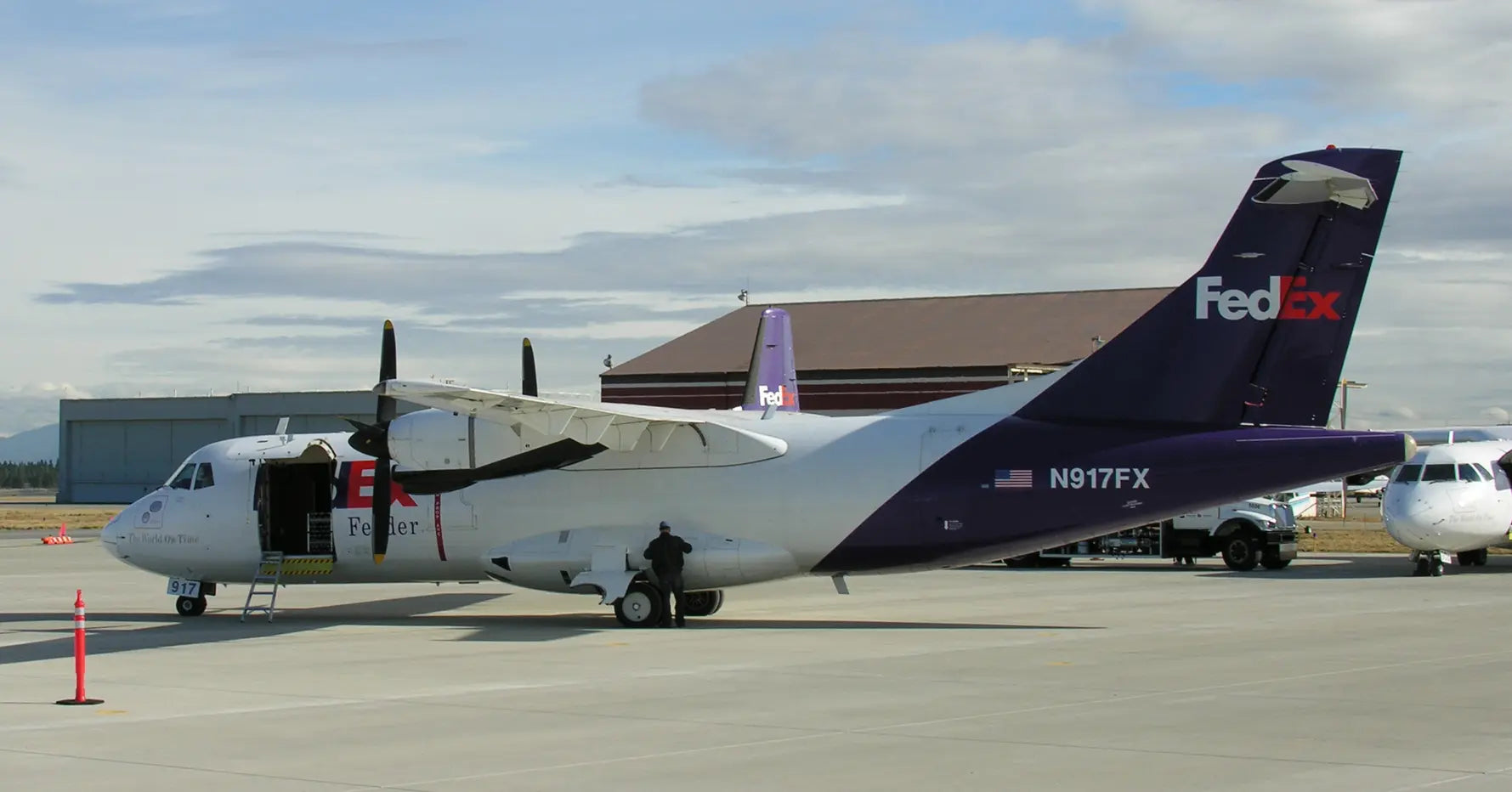
Empire Airlines operates an all-turboprop fleet of four distinct aircraft types, spanning single-engine to twin-engine and Part 135 to Part 121 operations. This variety is unusual among U.S. cargo regionals and gives pilots a natural progression path entirely within the company: start on the Cessna 208, upgrade to Captain, transition to the Cessna 408 SkyCourier or directly to the ATR 42/72. The fleet is modern overall, with the ATR 72-600F and Cessna 408 SkyCourier representing the newest generation of turboprop freighters in commercial service.
| Aircraft Type | Role | In Service (approx.) | Operation / Notes |
|---|---|---|---|
| ATR 42-320 / 42-500 | Part 121 cargo | ~14 | Backbone of the ATR fleet. Classic reliable freighter, widely used on short/medium haul FedEx feeder routes. |
| ATR 72-600F | Part 121 cargo | ~7 | Newer generation. Higher payload, improved fuel efficiency. Empire was among the early launch customers of the 72-600F variant in North America. |
| Cessna 208B Caravan | Part 135 cargo | ~36 | Largest single-engine turboprop fleet at Empire. Flies feeder routes into small airfields across the western U.S. Fleet nearly doubled after 2022 West Air acquisition. |
| Cessna 408 SkyCourier | Part 135 cargo | Small, growing | Twin-engine successor to the Caravan. Empire took early deliveries starting in 2022. Replaces some Caravan routes where higher payload is required. |
Fleet figures are approximate and based on publicly disclosed data as of 2025. Exact counts fluctuate with ongoing deliveries, maintenance rotations, and the West Air integration.
Empire Airlines pays for type rating training for qualified new-hire pilots. The airline may provide up to $5,000 toward ATP-CTP certification for candidates who still need it, according to the official careers page. Most new First Officers are assigned to the ATR 42/72 on the Part 121 side, while the 135 side hires directly into the Cessna 208 Caravan or the newer Cessna 408 SkyCourier. Experienced pilots joining as direct-entry Captains are also accepted, a notable difference from major-airline progression models where all Captains must come from within.
A distinctive feature of Empire's operation: on the ATR, Captains can sit in either seat (left or right) and still receive Captain-level pay. This is a pilot-friendly policy rarely seen at larger carriers and reflects the operational flexibility inherent in single-fleet cargo work. It also benefits pilots who have transitioned from the Caravan and want to maintain their Captain pay while building ATR right-seat time before formally upgrading.
Pilot Salary & Compensation Breakdown
Empire Airlines publishes its pilot pay scales directly on its careers site, which is unusually transparent for a privately held regional. Pay is tiered by aircraft type and years of service, with separate scales for ATR Captains and First Officers (Part 121), and Cessna 208 and Cessna 408 Captains (Part 135). Empire also offers a $50,000 signing bonus for new-hire ATR Captains, as advertised in 2025 job listings for its Fort Worth (AFW) base.
ATR 42/72 Pay (Part 121)
| Seniority | Captain Annual | First Officer Annual | Weekly Rate (Captain) |
|---|---|---|---|
| Year 1 | $110,032 | $62,036 | $2,116 |
| Year 2 | $112,216 | $63,232 | $2,158 |
| Year 3 | $114,452 | $64,480 | $2,201 |
| Year 4 | $116,220 | $65,468 | $2,235 |
| Year 5+ | $117,936 – $138,944 | $66,456+ | $2,268 – $2,672 |
ATR Captain pay ranges into the upper tier ($138,944) at peak seniority. FO pay progresses to $66,456+ in year 5. Both figures exclude per diem, regional incentive pay, and overtime adders.
Cessna 208 Caravan & Cessna 408 SkyCourier Captain Pay (Part 135)
| Seniority | Cessna 208 Captain | Cessna 408 Captain | Notes |
|---|---|---|---|
| Year 1 | $72,020 | $85,020 | Single-engine (208) vs. twin-engine (408) differential |
| Year 2 | $73,424 | $86,632 | Standard step progression |
| Year 3+ | $74,516+ | $88,452+ | Progression continues annually |
| Top of scale | Up to $96,044 | Up to $114,400 | Reached after multiple years in seat |
Part 135 Captain pay scales apply to direct-entry Caravan/SkyCourier Captains. Pilots holding Part 135 Captain status can transition to the ATR First Officer seat while preserving their Caravan Captain salary: a significant pay advantage during the type transition period.
Additional Compensation
These figures come from Empire's public pilot page and aggregated industry references, including the Airline Pilot Central cargo-airline database. Empire pay is broadly competitive among U.S. cargo regionals but below major passenger regional airlines (PSA, Envoy, Piedmont), where new-hire FO pay in 2025 often exceeds $90,000 annually with larger signing bonuses. The value proposition at Empire lies less in absolute salary and more in the combination of no training contract, up to 4 years of seat credit, signing bonus, and direct FedEx Purple Runway pathway. Always verify the latest pay scales directly on empireairlines.com/pilots.
Roster Pattern & Quality of Life
Life at Empire Airlines looks very different from a passenger regional, and different again from a long-haul cargo operator. The vast majority of flying is domestic feeder work: short legs connecting outlying cities to a FedEx sort hub, with the operational rhythm built around nightly sorts in Memphis, Indianapolis, or Oakland. For pilots, this typically means evening or night departures, an early-morning arrival at base, and sleep during the day, a schedule that works well for some and poorly for others. Duty limits are governed by FAR Part 117 on the Part 121 ATR side and by FAR Part 135 flight-time limits on the Caravan and SkyCourier side.
📅 Sample Month: ATR First Officer (West Coast base)
The schedule shown above is illustrative and based on pilot reports describing a typical ATR line: roughly 16 days on duty per month, with 14–15 days off. Block hours usually fall in the 65–80 hours per month range. Caravan and SkyCourier lines on the Part 135 side tend to follow a similar day-count structure but with shorter average legs and more takeoffs/landings per duty period.
Empire maintains crew bases in several locations across the western U.S. and Alaska. Publicly confirmed domiciles include Coeur d'Alene (COE) in Idaho, Anchorage (ANC) in Alaska, Fort Worth / Alliance (AFW) in Texas, and additional outstations in the Phoenix, Seattle, and Portland regions depending on ATR and Caravan route structure. Unlike legacy airlines with rigid base bidding, Empire typically assigns base by aircraft type and operational need. Commuting is common, and jumpseat arrangements via CASS and Known Crewmember (KCM) make it manageable for pilots living outside their base city.
Because FedEx feeder operations pivot around overnight sort hubs, a significant portion of Empire's flying happens between roughly 6pm and 8am local time. Pilots who prefer daytime flying or have young families with fixed school schedules sometimes find this pattern challenging. On the other hand, many pilots appreciate having weekdays free for appointments, errands, and personal time that passenger regionals rarely allow. It is a lifestyle: understanding it before you apply is essential.
Benefits, 401(k) & Travel Perks
Empire Airlines offers a standard U.S. regional benefits package layered with a few aviation-specific perks. The package is not as rich as major passenger carriers (no profit-sharing, no boarding-priority travel benefits, no defined-benefit pension), but it covers the essentials and includes jumpseat privileges that make personal travel straightforward.
Empire's 50% match on the first 6% (a 3% effective employer contribution) is typical for U.S. regional airlines but below the 6–8% matches now offered at many major passenger regionals after recent pay revisions. For pilots using Empire as a stepping stone to FedEx mainline, the retirement advantage ultimately comes from reaching FedEx Express, where pilot retirement accounts consistently rank among the strongest in U.S. aviation. Empire's role in this equation is to build turbine PIC time quickly with minimal financial friction: no training bond, signing bonuses where applicable, and a defined pathway forward.
A notable absence in the benefits package is positive-space travel on partner airlines, which is standard at mainline passenger carriers. Empire pilots rely on the CASS jumpseat network and industry-standard ID90 agreements (where applicable) for leisure travel, rather than a revenue-ticket discount program. For pilots whose primary motivation is free leisure flying on global networks, this is worth understanding in advance.
Career Progression & FedEx Purple Runway
Career progression is arguably Empire Airlines' strongest pilot-facing feature. The company offers a rare combination of fast in-house upgrades, flexible fleet transitions, and a formal partnership with FedEx Express via the Purple Runway Pathways Program, a pipeline that leads qualifying pilots directly to FedEx's mainline jet fleet, one of the most sought-after destinations in U.S. aviation.
In-House Progression
| Career Milestone | Typical Timeline | Notes |
|---|---|---|
| Hire as Caravan (208) Captain (Part 135) | Day 1 (if qualified) | Common entry point for pilots with ~1,200 TT. Immediate Captain pay. |
| Hire as ATR First Officer (Part 121) | Day 1 (if R-ATP/ATP) | Requires 1,500 TT, 250 PIC, 50 ME. |
| Direct-entry ATR Captain | Day 1 (if eligible) | Requires 2,500 TT, 1,000 PIC, 1,000 ME. $50k signing bonus. |
| Caravan Captain → ATR transition | After 2 years | Can serve as ATR FO while keeping Caravan Captain pay. |
| First Officer → Captain upgrade | After 12 months | Must meet all 121 Captain requirements and be in good standing. |
| Flow to FedEx Express | 36 months (Purple Runway) | Guaranteed interview path. See below. |
Purple Runway Pathway to FedEx Express
Empire Airlines is a participating feeder in FedEx Express Purple Runway, a structured program that connects FedEx's feeder carriers to FedEx's mainline jet fleet (Boeing 757, 767, 777, MD-11, and the retiring A300). For pilots whose ultimate career goal is flying wide-body cargo jets at one of the world's most financially stable airlines, the Purple Runway is the most direct route available.
Join Empire Airlines
Hire on as a First Officer or Captain on any of Empire's four fleet types. All Empire pilots are automatically eligible to enroll in the Purple Runway program.
Build Required Experience
Accumulate the time-in-seat and PIC experience required by the program, typically reached after roughly 36 months of active service with the combination of First Officer and Captain time that Empire's fleet progression allows.
Submit Interview Request
Once eligibility thresholds are met, Empire pilots in good standing receive a guaranteed interview with FedEx Express through the Purple Runway process. This removes the single biggest barrier in U.S. cargo hiring: getting the interview.
Transition to FedEx Mainline
Upon successful hire by FedEx Express, pilots enter class for their assigned fleet. Compensation, schedule, and long-haul international flying at FedEx represent a substantial step up from regional feeder work.
Empire is actively hiring across all four fleet types in 2025, per its public careers page and third-party listings like ATP Flight School's partnership page. Fleet growth, West Air integration, and ongoing FedEx feeder contract renewals have created sustained demand. With FedEx Express mainline hiring cycles typically moving in multi-year waves, pilots evaluating Empire today should weigh the Purple Runway's long-term upside against their current financial needs. For a pilot in their late 20s or early 30s with 1,500+ hours, the math often favors joining a program like Empire's over accepting a similar First Officer seat at a non-flow regional.
Recruitment Process & Requirements
Empire Airlines recruits pilots through multiple pathways depending on qualifications: Part 121 First Officer, direct-entry ATR Captain, and Part 135 Caravan or SkyCourier Captain. The company maintains a published application portal via AirlineApps and lists open positions directly on the empireairlines.com/careers page. Empire also works with partner flight schools, including being listed as one of ATP's 39 Career Tracks, which provides direct recruiting access to newly certified pilots.
Position-Specific Minimums
| Position | Total Time | PIC | Multi-Engine | Other |
|---|---|---|---|---|
| Part 121 ATR First Officer | 1,500 TT | 250 PIC | 50 ME | ATP or R-ATP, MEL rating, Class 1 medical, FCC Radio License, IFR current |
| Part 121 ATR Captain | 2,500 TT | 1,000 PIC | 1,000 ME | Plus 300 turbine, 500 multi-crew. Meets all 14 CFR 61.159 requirements. |
| Part 135 Caravan (C208) Captain | 1,200 TT | 800 PIC | N/A | Commercial SEL with Instrument rating. 500 XC, 100 night, 75 IFR (50 actual). |
| Part 135 SkyCourier (C408) Captain | 1,200 TT | 500 PIC | 100 ME | Commercial with IR. 500 XC, 100 night. IFR current and proficient. |
Minimums are published on the Empire Airlines pilots page. Empire accepts Restricted ATP (R-ATP) candidates from qualifying university aviation programs for the Part 121 ATR FO seat.
Selection Stages
Online Application
Submit through Empire's careers portal or AirlineApps. Include logbook summary, certificates, medical, and references. First-round screening is based on meeting the published minimums for the target position.
HR & Recruiter Screening
Initial phone or video interview with Empire's recruiting team. Covers experience, motivation for choosing Empire, availability for training classes, base preferences, and basic behavioral fit.
Technical Interview
In-person or video interview with check airmen or flight operations leadership. Expect systems knowledge for the aircraft you are applying to fly (ATR turboprop systems, Caravan systems, or 408 SkyCourier), Part 121/135 regulations, IFR scenarios, CRM questions, and judgment-based scenario discussions.
Simulator / Flight Assessment (if applicable)
For ATR positions and some Captain roles, a simulator evaluation may be required. Expect a standard instrument profile: departure, enroute, approach, go-around, single-engine handling, and basic checklist discipline. The assessment is less about perfection and more about demonstrating safe, structured decision-making.
Background, Drug Screen & Class Date
Successful candidates receive a conditional offer, complete FAA-required background checks and drug/alcohol testing under 14 CFR Part 120, and are then assigned to a training class. Empire provides up to $5,000 toward ATP-CTP certification if needed.
Empire hires year-round and often runs multiple class dates per month, so timing is flexible but submit early to get the base assignment you want. Candidates with cargo or turboprop experience typically move through the process faster than those coming directly from flight instruction. For those still flight instructing, Empire's partnerships with ATP and other flight schools can accelerate the path to an interview. Emphasize safety culture, decision-making under pressure (especially weather and mechanical scenarios), and a genuine interest in cargo operations: these are the themes Empire's interviewers focus on.
How Empire Airlines Compares: Cargo Regional Radar
For pilots weighing Empire against similar U.S. regional cargo operators, the two most relevant comparisons are Mountain Air Cargo (another FedEx feeder, based in North Carolina) and Ameriflight (a large mixed-contract cargo regional operating Beech 1900, EMB-120, and SA-227 Metroliner types). The three airlines overlap on mission profile but differ substantially on pay structure, fleet type, upgrade speed, and flow agreements. The radar below scores them across the six standard metrics used in this review series.
Key Takeaways from the Comparison
Empire leads on salary among FedEx feeders. ATR Captain year-one pay of $110,032 at Empire is meaningfully higher than Mountain Air Cargo's published ATR/408 base of around $68,000 (before geographic adders), though Mountain Air closes some of the gap with geographic pay bonuses of up to $30,000 per year at certain bases. Ameriflight's Captain pay sits in the $91,135–$117,701 range depending on aircraft type, placing it closer to Empire for experienced Captains but well below Empire's top-of-scale ATR pay of $138,944.
Ameriflight has the slight edge on work-life consistency. Its published $35 per day "away from base" per diem and more traditional 135 operating structure suits pilots who prefer predictability over the flow-through incentives. Empire's Part 121 ATR lines follow a consistent 16-on pattern, giving it a solid score here, though night flying on feeder routes remains a lifestyle factor.
Empire's Purple Runway is the differentiator. Neither Mountain Air Cargo's participation in the same program nor Ameriflight's independent path changes the basic calculus: Empire is one of the cleanest, most structured on-ramps to FedEx Express mainline available anywhere in U.S. cargo aviation. For a pilot whose target is wide-body FedEx jets, this is the category where Empire's score genuinely earns its "high" rating.
Fleet diversity favors Empire. Four modern turboprop types (ATR 42, ATR 72-600F, Cessna 208, Cessna 408) gives pilots visible in-house progression and exposure to multiple systems and operating rules. Ameriflight's older-generation Beech 1900, EMB-120, and SA-227 Metroliner fleet builds a different kind of experience (a grittier, more classic cargo profile), but lacks the newer-generation platforms that pair well with a future FedEx interview.
Comparative scores are editorial estimates drawn from the Airline Pilot Central pay-scale database, the official Pilot Career Center profile for each carrier, airline career pages, and pilot community discussions (PPRuNe, Airline Pilot Forums). They reflect a general assessment for an experienced pilot considering a long-term career in regional cargo. Individual experiences vary based on base, seniority, and fleet. Scores for Mountain Air Cargo and Ameriflight will be updated as we publish dedicated guides.
Union & Labor Status
Empire Airlines pilots are not represented by a union as of 2025. Pay scales, benefits, and working conditions are set directly by the company and published on the official pilots page, rather than negotiated through a collective bargaining agreement under the Railway Labor Act. This is an unusual position for a U.S. Part 121 carrier: most Part 121 operators are represented either by ALPA (Air Line Pilots Association), the Teamsters, or an independent in-house association.
Historical Context
Empire has been the subject of at least one organizing effort in its history. A 2008 representation election involving the Independent Freight Pilots Association (IFPA) resulted in pilots voting to remain non-union. There has been no successful representation campaign in the years since, and no active public campaign is under way in 2025. Pilots who prioritize formal collective bargaining protections typically look to unionized regionals (most major passenger regionals and some cargo operators like Kalitta Air or ABX Air) rather than Empire.
For new pilots evaluating Empire, the practical implications are worth weighing carefully. On the positive side: direct communication with management, no union dues, simpler internal processes, and faster policy adjustments. On the negative side: no formal grievance procedure codified in a contract, no guaranteed scope protections against fleet outsourcing, and compensation changes depend on management decisions rather than contractual escalators. The published pay scales, signing bonuses, and benefits at Empire are competitive in the cargo-regional segment, but pilots should understand that these can change without the contract protections that union-represented peers rely on.
Industry Affiliations That Still Matter
Even without union representation, Empire pilots operate within a broader U.S. aviation framework that includes FAA oversight, ALPA's industry-wide policy advocacy (which benefits all pilots even if not members), and participation in the CASS and Known Crewmember systems that facilitate commuting and personal travel across U.S. air carriers. The FAA's Northwest Mountain Region is the primary regulatory contact for Idaho-based operations. Pilots who want to stay informed on sector-wide issues (FTL updates, retirement age debate, 1500-hour rule discussions) can follow ALPA publications and the broader global pilot community even without formal membership.
Verdict: Who Is Empire Airlines For?
🎯 Our Take
Empire Airlines is one of the better regional cargo options available in the United States in 2025, particularly for pilots whose long-term target is FedEx Express. The combination of a modern four-type turboprop fleet, fast 12-month in-house upgrades, up to $50,000 signing bonuses for qualified Captains, no training contract, and the formal FedEx Purple Runway flow-through agreement creates a rare combination of short-term accessibility and long-term career upside.
The trade-offs are real and should not be ignored. Salaries, while competitive among cargo peers, trail major passenger regionals and certainly the legacy carriers. The schedule is dominated by overnight and early-morning flying driven by FedEx sort hub timing, which is a meaningful lifestyle factor for pilots with families or strong daytime commitments. The absence of union representation means pay and work rules are set unilaterally by the company. Staff travel benefits are jumpseat-based rather than positive-space, and there is no profit-sharing.
For a pilot in the 1,200–2,500 hour range, holding an ATP or R-ATP, looking for a turbine-PIC-building program with a credible path to FedEx Express, Empire Airlines is one of the most structurally favorable cargo regionals currently hiring. For a pilot prioritizing passenger flying, unionized work rules, or maximum absolute salary in their first regional job, other operators may be a better fit.
1 Does Empire Airlines have a flow agreement with FedEx Express?
Yes. Empire Airlines is a participating feeder in the FedEx Express Purple Runway Pathways Program, which provides qualifying Empire pilots a direct interview at FedEx Express after meeting the program's time-in-service and experience thresholds. This is a meaningful difference compared to non-flow cargo regionals where pilots must apply to FedEx through the standard competitive process.
2 What are the minimum flight hours to be hired at Empire?
Minimums vary by position. Part 121 ATR First Officer requires 1,500 total time, 250 PIC, and 50 multi-engine, with an ATP or R-ATP. Direct-entry ATR Captain requires 2,500 total, 1,000 PIC, and 1,000 multi-engine. Part 135 Caravan Captain requires 1,200 total and 800 PIC. Cessna 408 SkyCourier Captain requires 1,200 total and 500 PIC with 100 multi-engine. Always confirm the current requirements at empireairlines.com/pilots.
3 Is there a training contract at Empire?
No. Empire Airlines does not require a training contract or training bond for new-hire pilots. The company may also provide up to $5,000 toward ATP-CTP certification for candidates who still need it. This is a pilot-friendly policy compared to some U.S. regionals that require multi-year service commitments to offset training costs.
4 What does the signing bonus cover?
As of 2025, Empire advertises a $50,000 signing bonus for new-hire ATR Captains, most visibly referenced in listings for the Fort Worth Alliance (AFW) base. Signing bonus amounts and eligibility can vary by position and base; First Officer and Part 135 Captain roles may offer different incentives or none. Always confirm the current offer with Empire's recruiting team before accepting.
5 What is the upgrade time to Captain?
Empire states that First Officers in good standing who meet all Part 121 Captain requirements may be considered for upgrade after 12 cumulative months in revenue service. The actual timeline depends on meeting the PIC and hour requirements under 14 CFR 61.159, plus internal training availability. By regional-airline standards, 12 months is a fast upgrade benchmark.
6 Can I keep my Caravan Captain pay if I move to the ATR?
Yes. After two years, Caravan Captains who meet the 121 qualifications can transition to the ATR as a First Officer while retaining their Caravan Captain salary, according to the official pilots page. This creates a rare opportunity to gain Part 121 turboprop multi-crew experience without taking a pay cut, which is typically the biggest financial disincentive to a seat downgrade during fleet transitions at other airlines.
7 Where are Empire's pilot bases?
Empire maintains crew bases across the western U.S. and Alaska. Publicly confirmed domiciles include Coeur d'Alene (COE) in Idaho (main base), Anchorage (ANC) in Alaska, and Fort Worth Alliance (AFW) in Texas, along with additional operational outstations depending on ATR and Caravan route requirements. Base availability varies by fleet type and by hiring need at any given time. Confirm current openings with the Empire recruiting team.
8 Is Empire a good fit if I eventually want to fly for a passenger major?
Empire's flow-through agreement is specifically with FedEx Express, not with passenger majors like Delta, United, or American. That said, the turbine PIC time, Part 121 experience on the ATR, and cargo operational discipline built at Empire are all valuable qualifications when applying to passenger majors independently. If your target is specifically a passenger major, a mainline-partner regional (Envoy for American, Endeavor for Delta, PSA for American, Piedmont for American) offers a more direct path via dedicated passenger flow agreements. Empire is the stronger choice if FedEx Express or cargo mainline is your long-term goal.
Official Links & Resources
Before applying to Empire Airlines or making any career decisions, verify the most current information directly with official sources. The following are the key websites and industry resources relevant to an Empire Airlines pilot career:
Bookmark the Empire pilots page and the Airline Pilot Central entry side by side. Empire updates its pay scales and signing bonuses on the official site, while the Airline Pilot Central community thread is the fastest way to see how current pilots describe interview questions, class experiences, and base life. Cross-referencing the two gives you the clearest picture available short of talking to a current Empire pilot directly, which is strongly recommended before committing.