

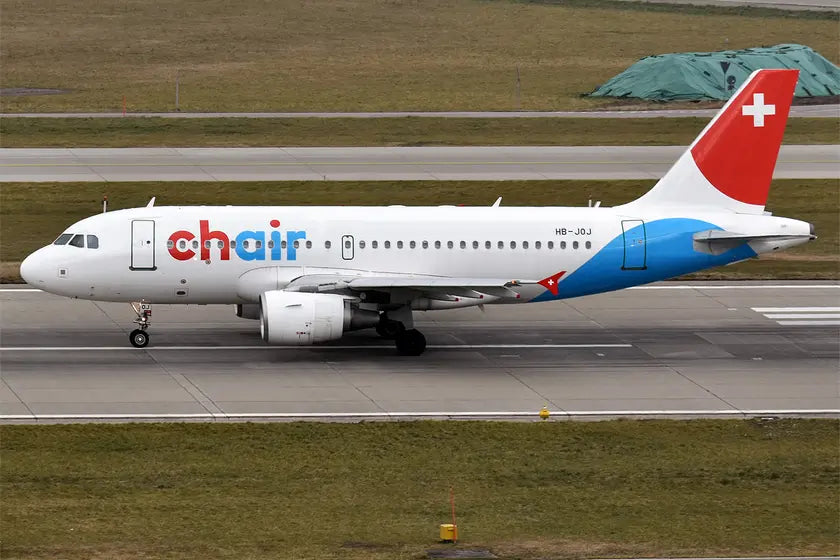
Chair Airlines Overview & Company Profile
Chair Airlines AG is a Swiss leisure and ethnic-traffic carrier based at Zurich Airport, with its head office at Flughofstrasse 57 in Glattbrugg, part of the municipality of Opfikon a few minutes from the terminal. It is a small operation by any European measure: five Airbus narrowbodies, roughly 200 employees as of 2026, and 855,000 passengers carried in 2025. For a pilot, that scale is the single most important fact about the airline, because it shapes everything from upgrade prospects to how much bargaining power the cockpit workforce has.
The company was founded in August 2014 as Germania Flug AG, a joint venture between the German carrier Germania and the Swiss travel group Hotelplan, and started flying in March 2015. When the German parent collapsed into insolvency in February 2019, the Swiss subsidiary was legally separate and survived. It was rebranded as Chair Airlines on 11 June 2019 and has traded under the lower-case "chair" brand ever since. Ownership was structured at launch as 50.01 per cent held on the Swiss side by Albex Aviation AG and 49.99 per cent by the Polish charter operator Enter Air. The Enter Air stake has been consistently reported since and remains in place; more recent German-language reference sources list the Swiss majority block as held by Leyla Ibrahimi rather than Albex, so treat the exact identity of the Swiss majority shareholder as something to verify in the Swiss commercial register before drawing conclusions. The executive team is CEO Shpend Ibrahimi, COO Nicolas Bühler and CFO Christof Aregger.
Chair Airlines flew under the IATA designator GM, inherited from Germania, until 29 April 2025. From that date the airline switched to CS, standing for "Chair Switzerland". Its ICAO designator is CSW and its radio callsign is EIGER. Older job boards, timetable databases and pilot forums still list GM and the legacy ICAO code GSW. If you are searching for roster data, flight-tracking history or route information, search both codes or you will miss most of the recent record.
Two developments in 2025 changed how the airline presents itself to the market and, indirectly, to pilots. Chair completed the IATA Operational Safety Audit (IOSA) and became IOSA registered, then joined IATA as its 365th member with effect from 1 November 2025. IOSA registration matters for a pilot CV: it signals that the operator has passed an internationally recognised audit of its flight operations, training, maintenance and safety management systems, and it makes interline and codeshare arrangements far easier to build. For a carrier this size, it is a meaningful investment in operational maturity rather than a marketing badge.
The airline holds a Swiss Air Operator Certificate issued and supervised by the Federal Office of Civil Aviation (FOCA / BAZL), which applies EASA rules including flight time limitations to Swiss operators through the bilateral air transport agreement. Chair describes itself on its own company page as relying on "a lean structure, which allows us maximum flexibility and agility in the market", and that is an accurate description of how it is run. There is no alliance membership; distribution is a mix of direct online sales, a service centre, tour operator charter contracts and ad-hoc work for sports clubs, events and corporate customers. An interline agreement with Hahn Air provides limited connectivity beyond the network.
The network core is not the Mediterranean beach market that the "leisure airline" label implies. Scheduled services to Pristina and Skopje accounted for roughly 45 per cent of total passenger volume in 2024. That diaspora traffic between Switzerland and the Western Balkans is the commercial backbone, and it is a year-round business rather than a summer-only one, which has a direct effect on how the roster is built. Zurich is the operational base and the only crew base, with additional services flown from Basel/Mulhouse (notably Pristina, at up to twice daily in peak summer) and seasonal flying from Bern.
Fleet Composition & Type Rating Policy
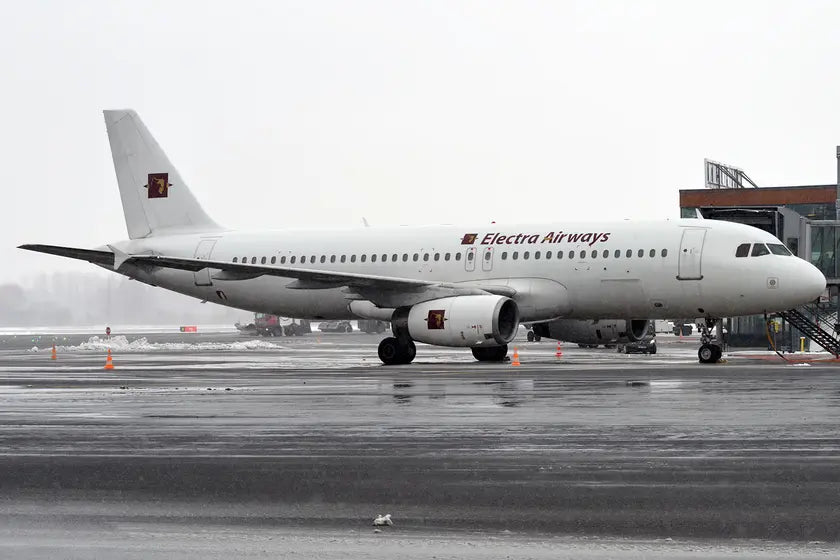
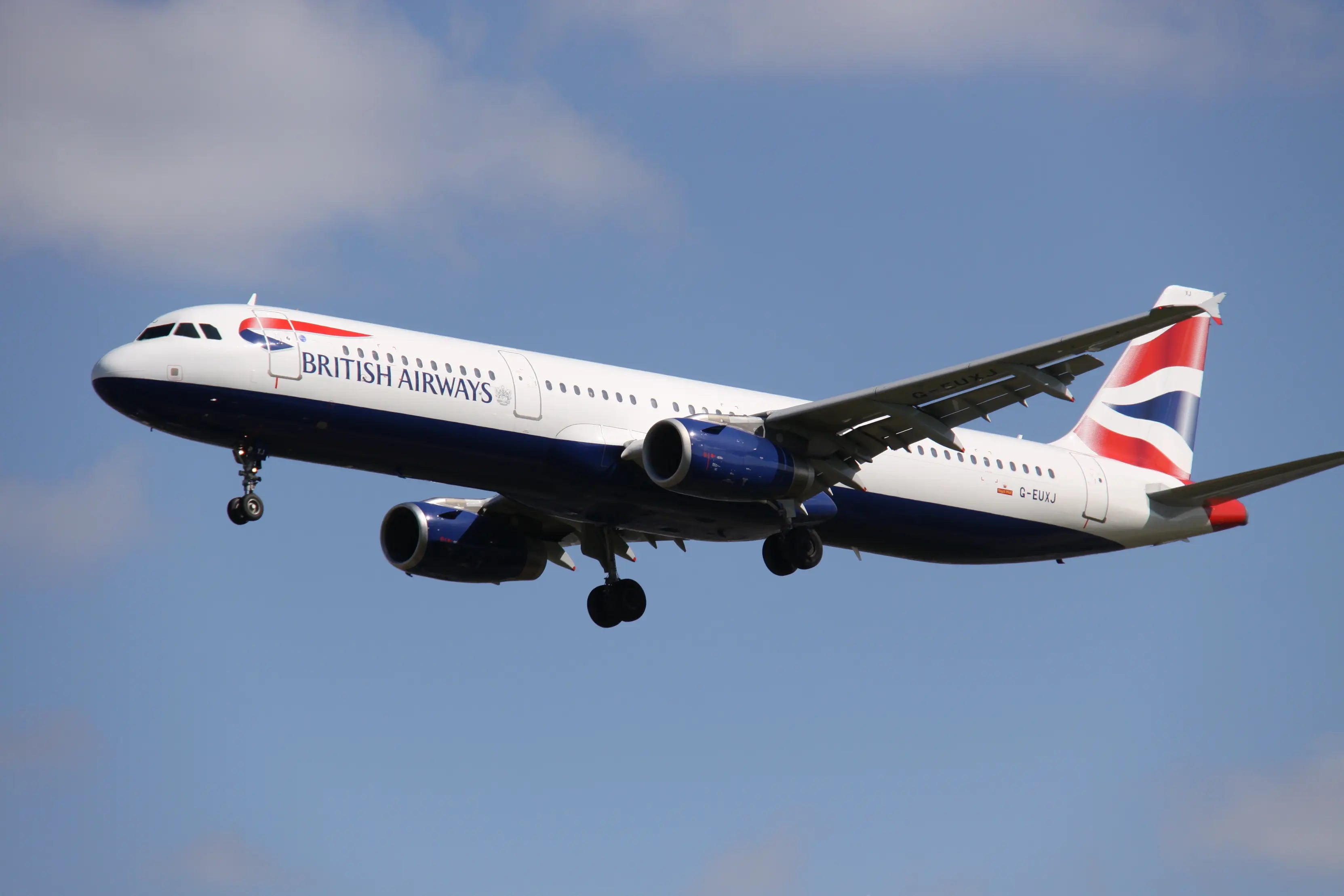
Chair operates an all-Airbus, single-type-rating fleet of A319 and A320 ceo aircraft in high-density single-class configuration. As of mid-2026 the fleet stands at five aircraft: one A319-100 with 150 seats and four A320-200 with 180 seats, at an average age of about 17.5 years. The fifth aircraft, A320-214 HB-JOO (MSN 4092), was delivered to Zurich on 26 June 2026 and entered revenue service on 1 July 2026 with first rotations to Pristina and Skopje.
The fleet strategy has been consistent since the first A320 arrived: standardise on the larger A320 and retire the A319s as leases run out. That plan has slipped more than once. Chair took its first A320, HB-JOK, in December 2021 from ex-Aeroflot stock at 12.6 years of age, and has added further A320s including HB-JOP and HB-JOS. Two A319s were originally planned to leave by early 2025, but the lease on the last remaining A319 was extended rather than allowed to expire, which tells you something useful about how the airline manages capacity: aircraft are held or released according to short-term demand and lease economics, not a published multi-year plan. A third A319, HB-JOH, was written off at Naples in 2020.
| Aircraft Type | Role | In Service | Configuration / Notes |
|---|---|---|---|
| Airbus A320-200 (ceo) | Narrowbody | 4 | 180 seats, single-class economy. Backbone of the fleet. Newest frame HB-JOO delivered June 2026. |
| Airbus A319-100 | Narrowbody | 1 | 150 seats, single-class economy. Lease extended past the original retirement date. Oldest type in the fleet. |
| Boeing 737-800 | Historic wet-lease | 0 | Enter Air aircraft wet-leased in 2020 and 2021 to cover capacity. Not part of the current operation. |
| A320neo family | Not operated | 0 | No neo aircraft in service and no publicly recorded orders or commitments. |
Fleet data as of July 2026 from public fleet records and Swiss aviation press. Registrations and counts change with lease movements; verify against the FOCA Swiss aircraft register before making a career decision on fleet grounds.
What this means in practice for a line pilot is simple and worth being blunt about. You will fly one aircraft family, from one base, on short and medium-haul sectors, on airframes that are mid-life rather than new. There is no widebody, no long-haul, no second fleet to bid onto and no fleet-transition ladder. Against that, the operational simplicity is real: a single type rating covers the A318, A319, A320 and A321 under EASA Part-FCL, so every pilot can operate every aircraft in the fleet, recurrent training is straightforward, and crew scheduling is not fragmented across sub-fleets.
The A320ceo also has a practical advantage for anyone building a CV. It remains the most widely operated narrowbody type in Europe, and hours on it are highly portable. A pilot leaving Chair with several thousand hours on the A320 family is a credible candidate at SWISS, Edelweiss, Enter Air and the wider European market, in a way that hours on a less common type would not be.
Chair recruits First Officers on two tracks. The Direct Entry First Officer A320 stream requires a valid A320 type rating already in hand. Separately, the airline has advertised non-type-rated First Officer positions where the type rating is provided by the company, with a valid A320 rating listed only as an advantage. Pilot recruitment databases recorded Chair as hiring both TR and NTR First Officers as of late 2024, and the airline has posted both variants on LinkedIn. Chair does not publish the commercial terms attached to a company-funded type rating, including whether a training bond or repayment clause applies and over what period. Ask about this explicitly at first contact with HR, in writing, before you accept anything.
Pilot Salary & Compensation Breakdown
Chair Airlines does not publish a pilot pay scale, and there is no collective agreement in the public domain that would set one. The most detailed figures available come from the crowd-sourced PilotJobsNetwork factfile for Chair Airlines, whose brief pay scale entries were last updated on 22 April 2026 for the captain figures and February 2025 for the first officer figures. That same factfile explicitly states that no detailed year-by-year pay scale has been submitted. Everything below should be read in that light: these are reported figures from pilots, not published company scales, and they carry real uncertainty.
Swiss pay is normally structured as 13 monthly salaries rather than 12, with the extra month paid in a lump sum toward the end of the year. That convention is not required by Swiss law, but it is close to universal in the Swiss labour market and the Chair figures below are recorded on that basis. On top of base pay, Chair pays a duty-hour supplement that increases in bands as monthly hours rise, which is a meaningful part of total pay in a high-utilisation summer season.
First Officer Pay
| Scale Point | Monthly (CHF) | Annual Gross, 13 Payments (CHF) | Duty-Hour Supplement |
|---|---|---|---|
| First Officer, entry / base | 7,200 | 93,600 | CHF 30/h (1 to 40 h) |
| First Officer, mid band | See note | See note | CHF 50/h (41 to 60 h) |
| First Officer, top of reported range | 9,100 | 118,300 | CHF 80/h (61 to 100 h) |
Reported figures, before tax and before social deductions. The submitter note attached to the first officer entry indicates a fixed monthly element of around CHF 6,800 with an average monthly total nearer CHF 9,100 once variable pay is included, so the "top" figure is best read as a realistic all-in monthly average for an established First Officer rather than a pure base rate. No intermediate seniority steps have been published.
Captain Pay
| Scale Point | Monthly (CHF) | Annual Gross, 13 Payments (CHF) | Duty-Hour Supplement |
|---|---|---|---|
| Captain, entry / base | 11,700 | 152,100 | CHF 50/h (50 to 70 h) |
| Captain, mid band | See note | See note | CHF 70/h (70 to 90 h) |
| Captain, top of reported range | 18,500 | 240,500 | CHF 100/h (90 h and above) |
Reported figures, before tax and before social deductions. The captain duty-hour bands were recorded earlier than the base figures and may not reflect current practice.
The shape of this is worth reading carefully. The captain range is genuinely competitive by Swiss standards. Swiss salary reference data puts the average captain's pay in Switzerland at roughly CHF 165,000 per year, so a Chair captain at the reported entry point is already close to the national average and a senior captain is well above it. That is unusual for a five-aircraft leisure operator, and it reflects the reality that Chair has to compete for experienced A320 commanders against SWISS, Edelweiss and the wider European market, from a single base in one of the most expensive cities in Europe.
The First Officer side is weaker in relative terms. A reported top-of-range around CHF 118,300 is respectable in absolute terms but sits below what a senior First Officer earns at SWISS or Edelweiss, and the gap between the FO ceiling and the captain floor is large. In other words, the money at Chair is in the left seat, and the economic case for joining depends heavily on how quickly you can realistically get there. Third-party job boards that have carried Chair vacancies have quoted indicative First Officer ranges of roughly EUR 60,000 to 84,000, which is broadly consistent with the lower end of the reported CHF figures once currency is accounted for, though these estimates are generated by the job boards rather than by the airline.
| Swiss Carrier | First Officer (CHF, annual gross) | Captain (CHF, annual gross) | Source Basis |
|---|---|---|---|
| Chair Airlines | 93,600 to 118,300 | 152,100 to 240,500 | Crowd-sourced, no published scale |
| SWISS | approx. 89,000 to 170,673 | approx. 155,000 to 219,956 | GAV-based, brief scale reported 2025 |
| Edelweiss Air | approx. 74,000 to 121,608 | approx. 118,000 to 188,868 | Published pilot-job sources |
| Helvetic Airways | approx. 54,575 to 64,260 | approx. 101,300 to 129,168 | Published pay scale, excludes bonuses |
Cross-carrier comparison for orientation only. Figures are drawn from different sources with different vintages and different treatment of allowances, so they are indicative of relative position rather than directly comparable line by line. The SWISS captain "base" is theoretical because years served as First Officer count toward the captain scale.
One further point that pilots relocating to Switzerland routinely underestimate: gross pay and take-home pay diverge less dramatically than in France or Germany, but the cost side is severe. Zurich is among the most expensive cities in Europe for housing, and Swiss health insurance is a compulsory private premium paid by the individual rather than a payroll deduction. Old-age and survivors' insurance (AHV/AVS) contributions run at roughly 5.3 per cent of gross salary for the employee, matched by the employer, and occupational pension (BVG/LPP) contributions are deducted on top. Income tax is levied at federal, cantonal and communal level and varies substantially between municipalities in the Zurich region. Model your net position against a specific commune before treating a Swiss gross figure as comparable to a EUR figure elsewhere.
Chair Airlines publishes no pilot pay scale, no collective agreement and no seniority-step table. Every salary figure in this section originates from pilot-submitted entries on PilotJobsNetwork or from third-party job-board estimates, and the underlying factfile itself carries the note "no detailed payscale available yet". Individual entries date from between 2018 and April 2026. Treat these numbers as a starting point for negotiation and verification, not as a scale you can rely on. Ask Chair HR directly for the written pay table, the duty-hour bands currently in force, the pension regulations and any type-rating bond terms before you sign.
Roster Pattern & Quality of Life
This is the area where Chair Airlines has made a deliberate, documented decision that sets it apart from most European leisure operators, and it is the strongest single argument for working there.
With effect from 1 January 2023, Chair introduced year-round block rostering. As reported at the time by the Swiss daily Blick, the pattern is five days of work followed by four days off, then five days of work followed by three days off, and the airline committed to applying it for at least eight months of the year. Crucially, the roster is published a year in advance, blocks can be swapped between crew members, and the airline maintains a standby crew for each flight so that short-notice sickness does not routinely destroy other people's days off. Management framed the change explicitly as a response to crew demand for a private life that can actually be planned, at a moment when rostering stability was a live grievance elsewhere in Swiss aviation.
In the four peak months, reported by pilot databases as April, July, August and December, the block pattern gives way to conventional variable rostering. Those are the months when charter demand, Easter and Christmas diaspora traffic, and the Mediterranean summer programme all put maximum pressure on a five-aircraft fleet. Expect the flexibility to be needed and expect leave to be harder to obtain in those windows.
📅 Sample Month, A320 First Officer, Zurich Base (Block Rostering Period)
Illustration of the published 5-on/4-off then 5-on/3-off block cycle. Standby and simulator days fall inside the working blocks rather than eating into days off. Peak months (April, July, August, December) revert to variable rostering.
Run the arithmetic on that cycle and it produces roughly 12 to 13 days off in a 30-day month during the block-rostering period, which is at or slightly above the European short-haul norm, but the more valuable feature is not the count. It is the predictability. A pilot who knows in July which weekends are free the following March can commit to family events, part-time study, a second property or a partner's shift pattern in a way that a pilot on a month-by-month bid line simply cannot. Very few European operators of any size publish rosters a year ahead.
Paid annual leave is reported at five weeks, which sits above the Swiss statutory minimum of four weeks for employees aged 20 and over under Article 329a of the Swiss Code of Obligations. Swiss law also requires that at least two of those weeks be granted consecutively.
The regulatory ceiling that frames all of this is the EASA flight time limitation scheme, applied in Switzerland through FOCA. The cumulative hard limits are 100 block hours in any 28 consecutive days, 900 block hours in a calendar year, and 190 duty hours in any 28 days, with sub-limits of 60 duty hours in seven days and 110 in fourteen. Recurrent extended recovery rest of at least 36 hours including two local nights must occur within every 168-hour window, and twice a month that extended rest must be increased to two local days. The European Cockpit Association publishes accessible reference material on how these limits interact, and it is worth understanding them properly before accepting any European short-haul contract, because on a five-aircraft fleet in August the schedule will be built close to those limits.
Zurich is the only crew base. There is no base bidding, no satellite base and no realistic prospect of one on a five-aircraft fleet. Services operated from Basel/Mulhouse and Bern are flown by Zurich-based crews. Zurich Airport has excellent rail and road connections into the city and out to the Zurich lake region, Aargau, Schaffhausen and southern Germany, and the block roster makes commuting from a wider radius genuinely workable because you know your duty blocks a year out. Set against that, Zurich rents and property prices are among the highest in Europe, and Swiss health insurance premiums are paid privately per household member rather than deducted at source. Budget for both before comparing the gross salary with a non-Swiss offer.
On employee sentiment, the Swiss employer-review platform kununu carries a small sample for Chair Airlines: an overall score of 3.4 out of 5 across roughly eight reviews as of 2026, with a 75 per cent recommendation rate. The sub-scores are informative and consistent with everything above: work-life balance rates highest at 4.1, while salary and benefits rate lowest at 2.9, with working conditions, atmosphere, colleagues and management all around 3.4. The sample is far too small to be statistically meaningful and covers all staff groups rather than pilots specifically, but the direction of travel matches the documented roster policy and the reported pay position.
Benefits, Staff Travel & Swiss Pension
Chair Airlines does not publish a benefits schedule, and its job advertisements describe the package only in general terms as "a competitive salary structure and benefits package tailored to meet the needs of skilled applicants". What follows separates what is actually documented from what Swiss employment law guarantees regardless of what the airline chooses to publish, because the second category is substantial and is often the strongest part of a Swiss aviation package.
Loss-of-licence insurance is not mandatory in Switzerland and is not part of the compulsory three-pillar system. At the large Swiss carriers it is typically arranged through the collective agreement or through union membership. Chair has no publicly documented collective agreement and publishes nothing about loss-of-licence cover. This is the single most important benefits question to resolve before signing. Ask in writing whether the airline provides group cover, what the sum insured is, what the deferred period is, and whether the definition covers permanent loss of a Class 1 medical or only accident-related incapacity. If the answer is that there is no company scheme, price an individual policy and factor the premium into your salary comparison. A pilot in their thirties without loss-of-licence cover is carrying an uninsured risk against their entire future earnings.
The pension position deserves a similarly clear-eyed reading. The publicly recorded entry for Chair's pension provision is "minimum according to Swiss law", which means BVG/LPP occupational cover at the legal floor rather than an enhanced airline scheme. Under BVG, coverage is compulsory above an annual earnings threshold of roughly CHF 22,000, contributions are calculated on "coordinated salary" (gross pay less a coordination deduction, with an upper insured ceiling), and the employer must fund at least half. Because the insured ceiling truncates high salaries, a captain earning well into six figures will find that a legal-minimum scheme insures only part of that income unless the employer has arranged supplementary cover above the BVG maximum. Request the pension fund regulations (Vorsorgereglement) and check the insured salary ceiling, the contribution rates by age band and the conversion rate. This is a five-figure annual difference over a career and it is the least visible part of any Swiss offer.
Staff travel through myIDTravel is a genuine perk but a modest one at this scale. Chair's own network is 17 to 20 short-haul destinations, so the value of the benefit depends almost entirely on the reciprocal agreements the airline holds with other carriers, and those are not published. Ask for the current list. It is a materially different proposition depending on whether it covers a broad slate of European and long-haul partners or only a handful of leisure operators.
Because so little is published, the burden of due diligence sits with the applicant. A short written list at offer stage costs nothing and protects you: the pay table with all seniority steps and current duty-hour bands; whether the 13th salary is contractual; the pension fund regulations including the insured salary ceiling; whether loss-of-licence cover is provided and at what level; type-rating funding and any bond amount, duration and repayment schedule; the myIDTravel reciprocal partner list; leave entitlement and the rules for leave in the four peak months; and whether the block roster commitment is contractual or a policy the airline can withdraw.
Career Progression & Command Upgrade
Career progression is the weakest dimension of the Chair proposition, and prospective applicants should be realistic about it rather than hopeful. A five-aircraft, single-type, single-base airline supports a small number of command positions. There is no widebody, no long-haul, no second fleet and no group structure offering internal moves to a larger operator.
Chair does not publish a seniority list, an upgrade timeline or a bidding system, and no reliable public data exists on internal upgrade times. What is publicly documented, and genuinely useful, is that Chair recruits direct-entry Captains from outside the company. That is a fundamental structural difference from SWISS, which does not accept direct-entry commanders and requires every externally hired pilot to start in the right seat. At Chair, an experienced A320 commander can join straight into the left seat, and correspondingly an internal First Officer is competing for command seats against the external market rather than being guaranteed them by seniority.
Read that in both directions. If you already hold an A320 command with the required hours, Chair is one of the few Swiss employers where you can walk into a captain's seat at a Swiss carrier without spending years as a First Officer first, and the reported captain pay makes that attractive. If you are joining as a First Officer expecting a predictable upgrade path, the honest position is that no such path has been published and the fleet has grown by exactly one aircraft between late 2025 and mid-2026.
| Career Milestone | Typical Timeline | Notes |
|---|---|---|
| Join as non-type-rated First Officer | Type rating provided | Requires frozen ATPL, IR/ME, Class 1 medical, ICAO English 4, German and English fluency. Bond terms not published. |
| Join as type-rated First Officer (direct entry) | Line training on joining | Requires valid A320 type rating, EASA ATPL or CPL with ATPL theory, Swiss/EU/EFTA passport. |
| Internal upgrade to Captain | Not published | No published seniority system or upgrade timeline. Depends entirely on fleet growth and captain turnover on a five-aircraft fleet. |
| Join as direct-entry Captain | Immediate command | Advertised at 4,000 h total on CS-25 aircraft, 2,000 h multi-crew jet under an EASA AOC, 1,000 h as commander on the A320 family. |
| Fleet or aircraft change | Not applicable | Single type rating across the whole fleet. No widebody and no second fleet exists. |
| Instructor roles (TRI / TRE / LTC) | Variable | Required by any EASA operator, but the number of positions on a five-aircraft fleet is very small. |
| Management and nominated-person roles | Variable | Chair recruits nominated persons for flight operations, ground operations and continuing airworthiness, which are realistic routes off the line for senior pilots. |
Requirements taken from published Chair Airlines vacancies and pilot recruitment databases. Timelines marked "not published" are genuinely unavailable rather than omitted; do not accept a verbal upgrade estimate at interview without asking how many command vacancies have actually arisen in the last three years.
The more constructive way to frame a Chair career is as a high-quality hours-building and lifestyle position rather than a lifetime seniority employer. The A320 family is the most transferable narrowbody type in Europe. A First Officer who accumulates 800 or more hours on type at Chair meets the on-type hours requirement that SWISS specifies for its own direct-entry First Officer recruitment, and hours from an IOSA-registered Swiss AOC holder carry weight with any European recruiter. Edelweiss, Enter Air and the broader European A320 market are all realistic destinations. For a pilot who wants a Zurich base, a planned life and a Swiss employment contract while building type hours, that is a coherent plan. For a pilot whose priority is a guaranteed route to a widebody command, Chair is not the airline.
Chair is in a modest growth phase rather than a hiring boom. The fleet moved from four to five aircraft with the delivery of HB-JOO in June 2026, and the airline announced six new destinations for summer 2026, added IOSA registration and IATA membership in 2025, and reported 855,000 passengers in 2025. Pilot recruitment databases recorded Chair as actively hiring both type-rated and non-type-rated First Officers with a positive overall hiring outlook as of late 2024, and the airline has advertised both variants since. There is no published order book beyond the aircraft already delivered, so plan on the basis of the current five-aircraft fleet rather than on assumed expansion.
Recruitment Process & Requirements
Chair recruits through its own careers page and through a dedicated Direct Entry First Officer A320 page, with applications sent to fly@chair.ch. There is no cadet programme, no ab-initio scheme and no sponsored flight training pathway. Every entry route requires you to arrive with at least a frozen ATPL already in hand.
The most important filter, and the one that eliminates the largest number of otherwise qualified applicants, is the right to work. Chair requires an unrestricted right to live and work in Switzerland and a valid Swiss, EU or EFTA passport. No visa sponsorship is offered. A third-country national holding a Swiss residence permit that already grants unrestricted labour market access may be considered, but there is no pathway for a candidate who needs the airline to obtain a permit.
Direct Entry First Officer A320 (Type Rated)
First Officer A320, Non-Type-Rated
Direct Entry Captain A320
Selection Stages
Application Pack
Complete and sign the airline's application form, then submit it with a CV, a motivation letter, your EASA licence and your EASA medical to fly@chair.ch. Recent advertisements have also asked for logbook extracts and a no accident / no incident declaration. Send a complete, gap-free flying record: a documented break in commercial flying without explanation is the most common reason a small airline sets an application aside.
Document Screening & Eligibility Check
Verification of licence validity, medical, type rating currency, recency (12 months for First Officers, 6 months for Captains) and above all work authorisation. Chair is a small HR function and screens hard on the non-negotiables before investing any time in an applicant.
Assessment
Pilot recruitment databases record Chair's selection process as "assessment plus simulator". Expect a competency and personality-oriented assessment covering CRM, decision-making, customer orientation and cultural fit. The airline's own recruitment language emphasises "enjoyment of the job, good teamwork and mutual appreciation" and excellent customer service, which is a genuine signal about what the assessors are looking for in a small crew community where everyone flies with everyone.
Simulator Assessment
A simulator session on the A320 or a comparable device. For direct-entry Captains this is a command assessment rather than a handling check: expect standard raw-data handling, a non-normal or two, and close attention to how you manage the flight deck, brief and delegate. Chair does not publish the profile, so ask the recruiter what device and what profile will be used.
Offer, Type Rating and Line Training
Swiss permanent contract based at Zurich. Non-type-rated recruits proceed to the A320 type rating course before line training; type-rated recruits go directly to operator conversion and line flying. This is the stage at which the written terms, including any training bond, pension regulations and duty-hour bands, become visible. Read them before signing rather than after.
Treat German as required, not optional. The type-rated advert lists German fluency as an advantage rather than a hard requirement, but the non-type-rated advert requires fluency in German and English, and pilot databases record "good German knowledge" as an entry requirement. Chair is a Swiss company of around 200 people; internal communication, crew room life and much of the customer-facing work happen in German. A B2 level or better is the practical threshold. Do not skip the swimming requirement, which appears explicitly on the type-rated advert and reflects Chair's over-water sectors to the Greek islands, Egypt and the Canaries region. Apply directly rather than only through aggregators: several third-party listings for Chair are stale or closed, while the airline itself posts openings on its careers page and on LinkedIn.
Route Network & The Real Duty Day
Chair is a short and medium-haul operator with no long-haul flying, so there is no layover programme in the sense that a legacy carrier's pilots would understand. The overwhelming majority of duties are out-and-back rotations from Zurich operated within a single duty period. This section is included in place of a layover chapter because it describes what the flying actually consists of, which matters far more to a pilot evaluating this airline than a list of hotels would.
The network divides into three distinct commercial blocks, and understanding them explains the roster.
| Market Block | Key Destinations | Character | Effect on the Duty Day |
|---|---|---|---|
| Western Balkans (core) | Pristina, Skopje, Ohrid, Tirana, Tuzla | Year-round diaspora and visiting-friends-and-relatives traffic. Pristina and Skopje alone were around 45% of 2024 passenger volume. Pristina operates up to three times daily from Zurich and up to twice daily from Basel/Mulhouse. | Short sectors, high frequency, multiple turnarounds per duty. This is the bread and butter of the roster and it does not disappear in winter. |
| Mediterranean leisure | Crete, Kos, Rhodes, Patras/Araxos, Larnaca, Mallorca, Jerez de la Frontera | Strongly seasonal summer programme sold both direct and through Swiss tour operators. | Medium sectors, peak-season intensity, early departures and late arrivals to maximise aircraft utilisation. |
| North Africa and Red Sea | Hurghada, Marsa Alam, Marrakesh | Longer leisure sectors, partly winter-sun. Marrakesh operates twice weekly from summer 2026. | The longest sectors in the network. Duty periods approach the practical limits of a two-sector day. |
Network structure as published by Chair Airlines and reported in Swiss and regional aviation press for the 2026 season. Frequencies are seasonal and change between summer and winter programmes.
The summer 2026 programme is the largest expansion Chair has announced. In August 2025 the airline unveiled six new destinations from Zurich for the season: Marrakesh (two weekly, from 2 September 2026), Porto (three weekly), Tirana (three weekly), Tuzla (two weekly), Patras/Araxos and Vlora. Chair was the first airline in the world to announce scheduled service to the new Vlora International Airport in Albania, but the Vlora service was subsequently cancelled for summer 2026 because of delays to the airport's opening, and the planned triangular routings were reconfigured via Ohrid and Patras instead. Separately, a weekly seasonal service from Bern to Jerez de la Frontera launched on 7 April 2026. Route announcements at a five-aircraft carrier are volatile by nature; check the current timetable rather than the announcement.
For a pilot, three consequences follow from this network shape. First, you sleep at home most nights. There is no meaningful night-stop programme, which is a substantial quality-of-life advantage over a long-haul operation and removes the jet-lag burden entirely. Second, the duty days are dense. Multiple sectors per day with short turnarounds, into airports such as Pristina and the Greek islands that are busy, slot-constrained in season and not always forgiving of weather. Third, the seasonality is real but asymmetric. Unlike a purely Mediterranean charter operator whose winter collapses, Chair's Balkan traffic runs all year and peaks again around Christmas and New Year, which is precisely why December appears alongside April, July and August as a month when the block roster gives way to variable rostering.
Short-haul leisure flying into secondary and regional airports is demanding in ways that are undervalued by pilots benchmarking against long-haul. In a single duty you may handle a full workload of departures and arrivals rather than one of each, operate into fields with limited approach aids or challenging terrain, manage minimum turnaround times with a full load of leisure passengers, and make repeated commercial and technical decisions without dispatch holding your hand. Over a few thousand hours that produces a very well-exercised pilot. It is one of the reasons A320 short-haul hours from a Swiss AOC holder travel well in the European recruitment market.
How Chair Airlines Compares: Airline Radar Chart
The right comparators for Chair are not Europe's flag carriers but the two other Swiss operators a pilot would realistically weigh against it: Edelweiss Air, the Lufthansa Group leisure carrier at Zurich with an A320 family and widebody fleet, and Helvetic Airways, the Zurich-based Embraer operator that also flies extensively for SWISS. All three offer a Zurich base and a Swiss employment contract, which makes them direct competitors for the same candidates. Scores below are editorial estimates built from the salary data, roster information, fleet records and union position set out in this article.
Key Takeaways from the Comparison
Chair wins clearly on roster predictability. Neither Edelweiss nor Helvetic publishes rosters a year in advance. Chair's documented 5-on/4-off then 5-on/3-off block system, applied for at least eight months of the year with swappable blocks, is the most planable short-haul roster structure of the three and is the reason its work-life score sits highest. Helvetic's published conditions specify a minimum of nine days off per month and a minimum of 32 days off per quarter, and Edelweiss's published conditions specify the same monthly and quarterly minima. Those are floors rather than patterns; Chair's block system is a pattern you can plan a year of your life around.
Chair captain pay is competitive; Chair First Officer pay is not the market leader. On the reported figures, a Chair captain outearns a Helvetic captain by a wide margin and sits above the published Edelweiss captain range at the top of scale. A Chair First Officer, by contrast, sits above Helvetic but below the Edelweiss ceiling and well below what a senior SWISS First Officer earns. If you are joining in the right seat, the pay case for Chair is decent but not decisive. If you are joining in the left seat, it is strong.
Edelweiss wins on fleet, benefits and job security. Edelweiss operates both an A320 family narrowbody fleet and widebody long-haul equipment, sits inside the Lufthansa Group, and its pilots are covered by a collective labour agreement negotiated with Aeropers, with a new agreement accepted by union members in 2025. That combination of fleet variety, a widebody career path, group backing and enforceable collective terms is something a five-aircraft independent cannot match on any dimension. Helvetic in turn operates a modern Embraer E-Jet and E2 fleet and funds type ratings for pilots recruited through its own process, which gives it the strongest equipment score of the three despite the lowest pay.
The collective-agreement gap is the most consequential difference. Edelweiss pilots have a CLA. Chair pilots, as far as the public record shows, do not. That difference determines whether pay scales, roster protections, loss-of-licence cover and pension terms are enforceable collective entitlements or matters of company policy that can change. It does not automatically mean Chair's terms are worse, and the block roster is evidence that management has moved in the crew's favour without being forced to. It does mean the protections are less durable.
Radar scores are editorial estimates on a 0 to 100 scale derived from the salary, roster, fleet, benefits and corporate data cited throughout this article, including crowd-sourced pay databases, published pilot-condition sources, Swiss aviation press and the airlines' own recruitment material. They represent a general assessment for an experienced A320 or E-Jet pilot considering a Zurich-based career. The underlying data quality differs sharply between the three carriers: Edelweiss and Helvetic have published or CLA-derived pay scales, while Chair's figures are crowd-sourced with no published scale. Individual experience will vary with seniority, licence, language and personal priorities.
Union Landscape & Industrial Relations
This section carries an unusual conclusion, and it needs to be stated plainly: there is no publicly documented collective labour agreement covering Chair Airlines cockpit crew, and no publicly identifiable union representing them. Extensive searching of Swiss union material, aviation press and pilot databases produces no Gesamtarbeitsvertrag (GAV) for Chair pilots, no Chair section within any Swiss pilot association, and no record of a labour dispute, ballot or industrial action involving Chair crew. The most likely position is that Chair pilots are employed on individual Swiss employment contracts governed by the Code of Obligations, with terms set by company policy.
That is not automatically a red flag. Small Swiss employers frequently operate without a sector CLA, Swiss employment law provides a solid statutory floor, and Chair's own conduct on rostering suggests management responds to crew preferences. But it does change what you are buying. Without a CLA, the pay table, the block roster commitment, leave entitlement above the statutory minimum, loss-of-licence cover and pension terms above the BVG floor all rest on company policy and your individual contract rather than on a collectively negotiated and enforceable instrument. Get them into the contract.
The Swiss Cockpit Representation Landscape
Swiss Industrial Relations Backdrop
Even without a Chair-specific union, the wider Swiss cockpit bargaining climate matters, because it sets the market rate against which Chair must compete for A320 pilots and because Chair has demonstrably responded to it. The timeline below records the events that shape that climate, with the actor clearly identified in each case.
Swiss law gives you a genuine floor: four weeks minimum paid leave, mandatory AHV and BVG pension participation with employer co-funding at least matching yours, compulsory accident insurance, statutory notice periods and 14 weeks of maternity leave at 80 per cent of salary. EASA flight time limitations, enforced by FOCA, cap your duty and block hours regardless of what any employer wants. What a CLA adds on top is enforceability and durability for everything above that floor: pay progression, roster structure, loss-of-licence cover, enhanced pension and leave. At Chair, those sit in company policy and your individual contract. Individual membership of a professional pilot body such as SwissALPA still gives you access to legal advice and professional support even where no company section exists, and is worth considering.
Verdict: Who Is Chair Airlines For?
🎯 The Verdict in Short
Chair Airlines is a small, focused Swiss operator that does one thing and does it with a level of crew planning that larger airlines rarely match. The year-ahead block roster, published a year in advance and applied for at least eight months annually, is a genuine and documented advantage that translates directly into a life you can plan. Add a Zurich base with almost no night stops, five weeks of leave, an IOSA-registered operation and a captain pay range that is competitive by Swiss standards, and the proposition is coherent and honest.
The limitations are equally clear and should not be talked around. Five aircraft, one type rating, one base, no widebody and no long-haul mean there is nowhere internal to go. No published seniority system or upgrade timeline exists, and because Chair hires direct-entry Captains from the market, a First Officer has no structural claim on the next command seat. Pay, pension, loss-of-licence cover and the roster commitment all rest on company policy rather than a collective agreement, because no CLA for Chair cockpit crew exists in the public record. Aircraft average 17.5 years and there is no neo order. Salary and benefits is the lowest-scoring category in Chair's own employee reviews.
The clearest case for joining is as an experienced A320 commander who wants a Swiss contract, a Zurich base, competitive left-seat pay and a schedule they can plan a year out, without the seniority wait a legacy carrier imposes. The second-clearest case is a European First Officer who needs A320 type hours from a reputable Swiss AOC holder, values sleeping at home, and treats Chair as a strong stage of a career rather than the whole of it.
1 Is Chair Airlines still IATA code GM?
No. Chair Airlines changed its IATA designator from GM to CS on 29 April 2025, with CS standing for "Chair Switzerland". The GM code was inherited from Germania and was retired with that change. The ICAO designator is CSW and the callsign is EIGER. Many job boards, timetable databases and aviation sites still carry the legacy GM and GSW codes, so search both if you are researching the airline's routes, fleet history or recruitment record.
2 Do I need to speak German to fly for Chair Airlines?
In practice, yes. The type-rated Direct Entry First Officer advert lists German fluency as a distinct advantage rather than a hard requirement, but the non-type-rated First Officer advert requires fluency in German and English, and pilot recruitment databases record "good German knowledge" as an entry requirement. Chair is a Swiss company of around 200 people headquartered in the German-speaking canton of Zurich. English at ICAO Level 4 is the licensing minimum for the flight deck, but German at roughly B2 level or better is the practical threshold for being a credible candidate and for functioning day to day in the company.
3 Does Chair Airlines pay for the A320 type rating?
For non-type-rated First Officer positions, yes: those vacancies have been advertised with the type rating provided by the airline, with an existing A320 rating listed only as an advantage. Pilot recruitment databases recorded Chair as hiring both type-rated and non-type-rated First Officers. However, Chair does not publish the commercial terms attached, including whether a training bond applies, the bond amount, its duration or the repayment schedule. Ask for those terms in writing before accepting an offer. Direct-entry First Officer and Captain vacancies require a valid A320 type rating already held.
4 Does Chair Airlines hire direct-entry Captains?
Yes, and this is a significant structural difference from SWISS, which does not. Chair has advertised A320 Captain positions requiring a valid EASA ATPL(A), a valid A320 family type rating, a minimum of 4,000 hours total on multi-crew CS-25 aircraft, a minimum of 2,000 hours on multi-crew jets with an EASA AOC holder, and a minimum of 1,000 hours as Commander on the A320 family, plus a Class 1 medical, ICAO English Level 4 and a last commercial flight within the preceding six months. The corollary is that internal First Officers compete with the external market for command seats rather than being guaranteed them by seniority.
5 What is the roster pattern at Chair Airlines?
Chair introduced year-round block rostering on 1 January 2023: five days of work followed by four days off, then five days of work followed by three days off. The airline committed to applying it for at least eight months of the year, publishes the roster one year in advance, allows blocks to be swapped between crew members and maintains a standby crew per flight. In the four peak months, reported as April, July, August and December, the pattern reverts to variable rostering. The block cycle produces roughly 12 to 13 days off in a 30-day month, and paid annual leave is reported at five weeks.
6 Can non-EU citizens apply to Chair Airlines?
Only if they already hold unrestricted Swiss work rights. Chair's pilot vacancies require an unrestricted right to live and work in Switzerland and a valid Swiss, EU or EFTA passport, and no visa sponsorship is offered. A third-country national holding a Swiss residence permit that grants unrestricted labour market access may be considered on that basis, but there is no route for a candidate who would need the airline to obtain a work permit. This is a hard screening filter applied before any assessment.
7 Do Chair Airlines pilots have a union or collective agreement?
No collective labour agreement (GAV) covering Chair Airlines cockpit crew appears in the public record, and no Swiss pilot union publicly lists Chair among the companies it represents. Aeropers covers SWISS and Edelweiss pilots; SwissALPA is the umbrella association focused on those groups; kapers represents cabin crew only. Chair pilots therefore appear to be employed on individual Swiss employment contracts. Swiss statutory protections and EASA flight time limitations still apply in full, but pay scales, roster commitments, loss-of-licence cover and any pension provision above the BVG minimum rest on company policy and your individual contract rather than on an enforceable collective instrument. Individual membership of a professional pilot association remains available and provides legal support.
8 Is there any long-haul or widebody flying at Chair Airlines?
No. Chair operates five Airbus narrowbodies, one A319-100 and four A320-200, all in single-class configuration, on short and medium-haul routes from Zurich with additional services from Basel/Mulhouse and Bern. The longest sectors in the network are to Egypt and Morocco. There is no widebody, no long-haul, no aircraft on order and no publicly announced plan to add either. Almost all duties are same-day out-and-back rotations, which means very few night stops and no jet lag, but also no layover programme and no fleet-transition path within the company.
Official Links & Resources
Because Chair Airlines publishes so little about pilot terms, verifying information against primary sources matters more here than at a large carrier. These are the sites worth checking before you apply or accept an offer:
Chair posts vacancies on its own careers page and on LinkedIn, and has advertised both type-rated and non-type-rated First Officer positions there. Because the airline is small and hires in small numbers, openings can appear and close quickly. Send a complete, gap-free application pack to fly@chair.ch even between advertised campaigns, and keep an eye on the Swiss aviation trade press, which reports Chair's fleet and route moves well before the recruitment consequences show up in a vacancy listing.