

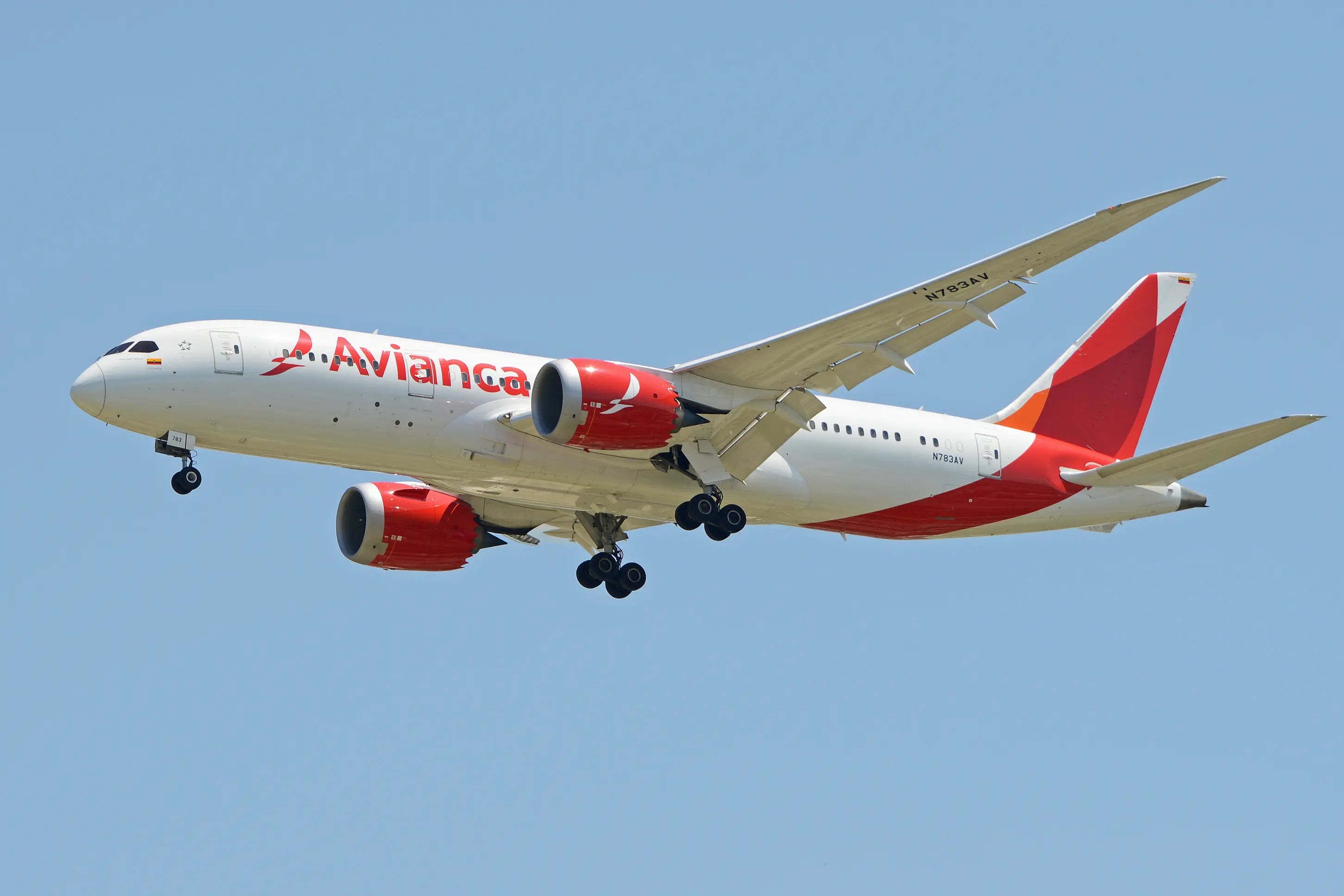
Avianca Overview & Company Profile
Avianca (IATA AV, ICAO AVA) is Colombia's flag carrier and one of the oldest continuously operating airlines in the world. It traces its founding to 5 December 1919, when it was established as SCADTA (Sociedad Colombo-Alemana de Transporte Aéreo) in Barranquilla. Today its corporate headquarters sit on Avenida Calle 26 in Bogotá, and its operational centre of gravity is Bogotá El Dorado International Airport (BOG), the busiest airport in South America by passenger traffic.
For a pilot, the important context is that Avianca is no longer the airline it was a decade ago. It filed for Chapter 11 protection in May 2020, had its reorganisation plan approved on 2 November 2021, and formally exited Chapter 11 on 1 December 2021 with a substantially reduced debt load and more than US$1 billion in liquidity. The restructuring stripped out the regional turboprop and Embraer operations, retired the passenger A330 and A321 fleets, and rebuilt the airline around a simplified two-type model: the Airbus A320 family for everything short and medium haul, and the Boeing 787-8 for long haul. That simplification has direct consequences for pilots, and they run in both directions. Training and standardisation are cleaner, but the number of distinct type ratings you can hold across a career at Avianca is now very small.
Avianca is a member of the Star Alliance, which it joined in 2012 and where it remained as of 2026, and it sits inside Abra Group, the holding company that also controls Brazil's GOL and holds a strategic investment in Wamos Air. Abra is the entity that now signs the large aircraft orders, which matters when you are trying to work out how many new aircraft will actually arrive on the Colombian certificate.
On scale: Avianca operates more than 700 flights per day, around 262,000 flights in 2025, and its own corporate fleet page describes a network of over 140 aircraft serving more than 75 destinations across Colombia, Latin America and Europe. Group reporting through 2025 put the network at roughly 80 to 83 destinations across 25 or more countries. The airline carried 37.8 million passengers in 2024 and approximately 36.9 million in 2025 at an 80% load factor. Avianca's standalone FY2024 operating revenue was US$5.275 billion. Detailed quarterly filings are published on the airline's investor relations portal, which is the most reliable public source for current operating metrics.
Total workforce sits at roughly 13,000 to 14,000 employees. Avianca does not publish an audited pilot headcount. The best available public proxy is the collective agreement signed with the pilots' union ACDAC on 25 June 2025, which the union stated would benefit approximately 1,000 pilots, plus a separate Avianca Cargo agreement covering around 100 cargo pilots. Those figures describe the Colombian bargaining population rather than the total group pilot count, which also includes crews on the Central American certificates.
Avianca's 2020 to 2021 restructuring is not ancient history for pilots. It reset seniority dynamics, permanently removed several fleet types and the career paths attached to them, and coincided with the tail end of the litigation from the 2017 pilot strike. On the other side of it, the airline reported a net income of US$331 million for 2025 at group pro-forma level with an adjusted EBITDAR margin of 27.4%, so the current financial picture is genuinely healthier than at any point in the previous decade. Both facts are relevant when you assess job security here.
Fleet Composition & Type Ratings
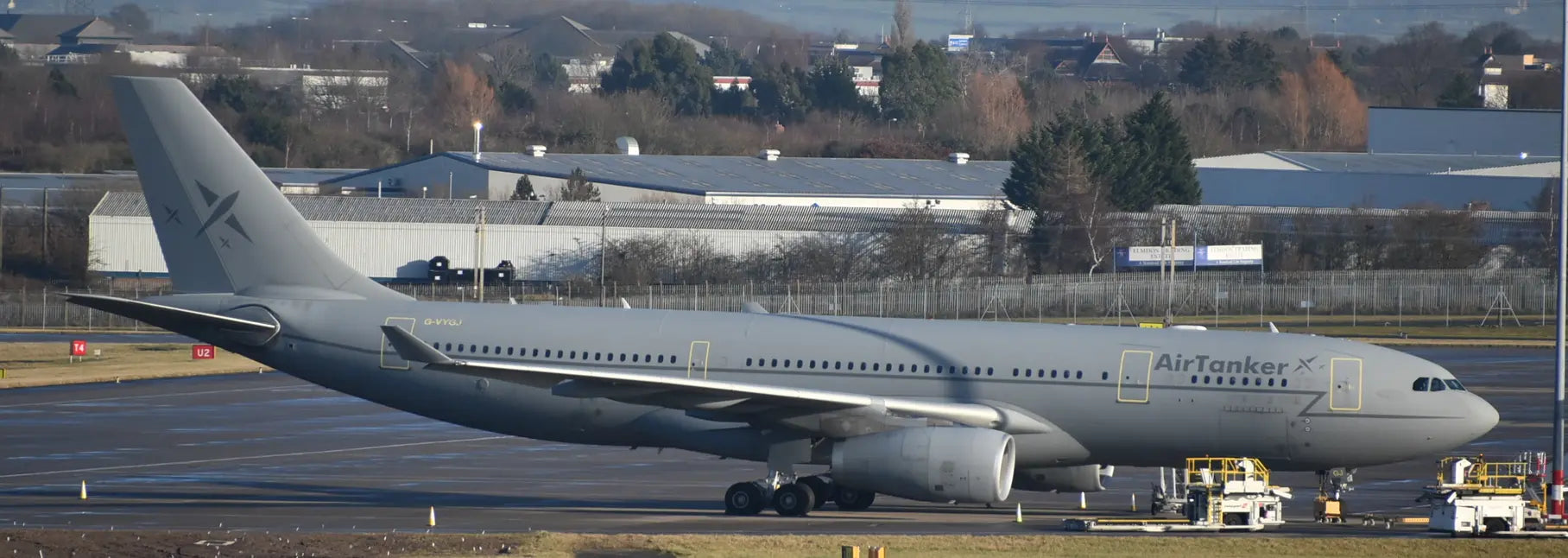
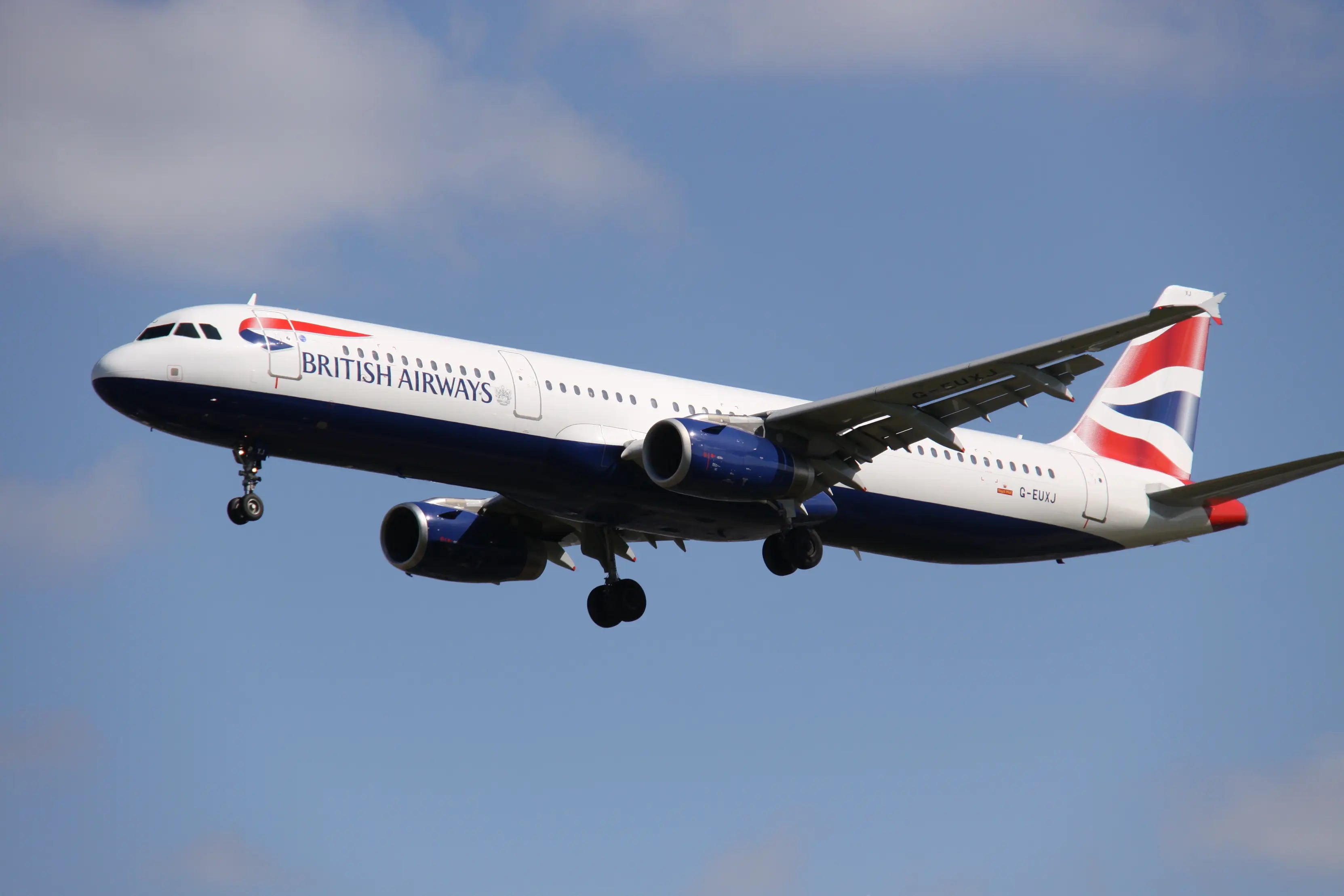
Avianca runs one of the most deliberately simplified fleets of any full-service carrier of its size. After the restructuring, the passenger operation was reduced to two families: the Airbus A320 family and the Boeing 787-8. The entire A321 fleet was retired by early 2026, the passenger A330ceo left in 2023, and the A319 is in the final stages of being drawn down. For a pilot, that means there are effectively two type ratings available on the passenger side, plus the A330 on the cargo operation.
The growth story is the A320neo. Abra Group holds a combined commitment of 138 A320neo family aircraft after exercising 50 options, with deliveries scheduled through 2032. In July 2026 Abra selected CFM LEAP-1A engines for a further 50 A320neo family aircraft destined for Avianca, covering the remainder of the airline's roughly 134-aircraft A320neo order book. That is a large and sustained delivery stream, and it is the single most important variable behind hiring and upgrade rates over the rest of the decade. One caveat matters: Abra allocates aircraft across its airlines according to operational need, so the full 138 should not be read as guaranteed Avianca Colombia frames.
| Aircraft Type | Role | In Service | Orders / Notes |
|---|---|---|---|
| Airbus A319-100 | Narrowbody | 7 | Being phased out and replaced by A320neo. Around two thirds of the 2019 A319 fleet had left by January 2026. |
| Airbus A320-200 (ceo) | Narrowbody | 67 | The backbone of the operation and by far the largest pilot category. Progressive replacement by A320neo from 2025 onward. |
| Airbus A320neo | Narrowbody | 38 | 88 firm remaining, 138 total Abra commitment including 50 exercised options. Deliveries run to 2032. |
| Airbus A321ceo / A321neo | Narrowbody | 0 | Entire A321 fleet retired by early 2026. No current separate Avianca A321neo backlog publicly confirmed. |
| Boeing 787-8 | Widebody | 16 | Sole passenger widebody. Reported as 13 standard aircraft plus 3 former Norwegian Long Haul frames in a higher-density layout. |
| Airbus A330-900neo | Widebody | 0 | 2 announced for Avianca's Americas network. Abra agreements cover up to 7 across the group. No confirmed Avianca induction date. |
| Airbus A330-200F | Freighter | 6 | Factory-built freighters, Avianca Cargo core fleet. |
| Airbus A330 P2F | Freighter | 3 | Passenger-to-freighter conversions. Combined cargo fleet reached 9 A330 freighters in Q3 2025. |
Snapshot reconciled from Avianca corporate reporting and public fleet databases, current to the first half of 2026. Counts shift as aircraft transfer between the Colombian and Central American operating certificates, which is why the corporate "over 140 aircraft" figure will not exactly match a type-by-type mainline table.
Average fleet age was approximately 9.5 years in January 2026, with the A320 family average sitting nearer 10.5 years. The neo induction will compress that figure meaningfully each year. Abra has also announced 5 Airbus A350-900s and 20 Embraer E195-E2s at group level, but as of mid-2026 no public commitment assigns the A350s specifically to Avianca or establishes an Avianca pilot transition date, and the E195-E2 operator had not been publicly determined. Treat both as group-level options rather than Avianca career paths until an official allocation is announced. Abra's own corporate site is where these allocation announcements appear first.
Realistically, an Avianca pilot career looks like this: you join on the A320 family, you stay on the A320 family for a long time, and the single widebody progression available on the passenger side is the Boeing 787-8. With only 16 widebodies against roughly 112 narrowbodies, widebody seats are scarce, and the ratio is getting more narrowbody-heavy as neos arrive faster than any widebody replacement. The A330 exists only on the cargo certificate. If flying multiple widebody types across a career is a priority for you, this is the clearest structural limitation at Avianca and it should weigh heavily in your decision.
Avianca has not published a general public policy statement on who pays for the initial type rating. Its published five-phase selection process ends with "contratación y curso de formación inicial" (hiring and initial training course), which indicates company-run initial training after the contract stage, but the specific bonding, cost-sharing or training-agreement terms are not disclosed in any public source we could verify. Ask this question directly and in writing during the recruitment process, and get the answer before you sign.
Pilot Salary & Compensation Breakdown
This is the section where honesty matters most, because Avianca does not publish its pilot pay scales. The monetary schedules attached to the June 2025 collective agreement with ACDAC are private, and the union's public communiqué announcing the agreement described its pillars without releasing figures. What follows separates three distinct categories of information: verified structural facts, credible market estimates, and clearly labelled historical union proposals. Nothing here is presented as an official Avianca scale, because no official scale is public.
The one structural change that is confirmed is significant. The June 2025 convention introduced a productivity-based remuneration model ("remuneración por productividad"). ACDAC subsequently reported that more than 94% of participating pilots generated additional income under the mechanism, averaging roughly 6% to 8% annually. This is a meaningful shift: a portion of Avianca pilot pay is now variable and tied to output rather than being purely a fixed monthly figure.
First Officer Estimated Earnings
| Stage / Fleet | Monthly Gross (COP) | Approx. Monthly (USD) | Approx. Annual Gross (USD) |
|---|---|---|---|
| Entry First Officer, A320 family | COP 10,000,000 to 12,500,000 | US$3,200 to US$4,000 | US$38,000 to US$48,000 |
| Mid-seniority First Officer, A320 family | COP 12,500,000 to 14,000,000 | US$4,000 to US$4,475 | US$48,000 to US$54,000 |
| First Officer, Boeing 787-8 | COP 14,000,000 to 16,000,000 | US$4,475 to US$5,115 | US$54,000 to US$61,000 |
| Senior First Officer, upper reported band | COP 16,000,000 to 18,000,000 | US$5,115 to US$5,750 | US$61,000 to US$69,000 |
Estimated bands compiled from independent aviation salary databases and Colombian press reporting. USD conversions use a reference rate of COP 3,128.65 per US$1. Annual figures are 12 monthly payments and exclude the Colombian statutory extras described below, which add materially to total annual value.
Captain Estimated Earnings
| Stage / Fleet | Monthly Gross (COP) | Approx. Monthly (USD) | Approx. Annual Gross (USD) |
|---|---|---|---|
| Junior Captain, A320 family | COP 20,000,000 to 22,000,000 | US$6,390 to US$7,030 | US$77,000 to US$84,000 |
| Senior Captain, A320 family | COP 22,000,000 to 25,000,000 | US$7,030 to US$7,990 | US$84,000 to US$96,000 |
| Captain, Boeing 787-8 | COP 24,500,000 to 28,000,000 | US$7,830 to US$8,950 | US$94,000 to US$107,000 |
| Top reported Captain earnings | up to COP 31,000,000 | up to US$9,910 | up to ~US$119,000 |
The COP 31,000,000 upper figure comes from Colombian press reporting of statements made by Avianca during pay disputes and represents a ceiling rather than a typical Captain salary. Actual earnings depend on fleet, seniority, productivity pay and allowances.
Historical Fleet Differentials: The 2017 ACDAC Proposal
The only detailed, fleet-by-fleet, seniority-by-seniority pilot pay schedule ever made public in the Avianca context is the one contained in ACDAC's 2017 pliego de peticiones (bargaining proposal). It is roughly a decade old and it was a union demand, not an agreed scale. It is included here for one narrow reason: it is the clearest published illustration of how fleet and seniority differentials were structured at Avianca. Do not treat these as current rates.
| Position (2017 union proposal) | Seniority | Proposed COP / month | Relative index |
|---|---|---|---|
| A320 First Officer | Junior | 12,318,532 | 100 (baseline) |
| A320 First Officer | Senior | 13,499,761 | 110 |
| B787 First Officer | Junior | 14,174,749 | 115 |
| B787 First Officer | Senior | 15,187,231 | 123 |
| A330 First Officer | Senior | 17,437,191 | 142 |
| A320 Captain | Junior | 21,374,622 | 174 |
| A320 Captain | Senior | 23,905,827 | 194 |
| B787 Captain | Junior | 24,468,317 | 199 |
| B787 Captain | Senior | 25,312,052 | 206 |
| A330 Captain | Senior | 28,124,502 | 228 |
Source: ACDAC 2017 bargaining proposal. Junior to senior movement was proposed after five years. The relative index column is our own calculation to show the structural spread, which is the genuinely useful part of this table.
Two patterns are worth taking from that structure. First, the Captain to First Officer differential is large, roughly 1.7 to 1.8 times on the same fleet, which is a wider spread than at many European carriers. Second, the fleet differential is comparatively narrow: moving from A320 to 787 as a Captain was worth only about 6% in the proposed structure. The financial incentive to chase a widebody seat at Avianca is far smaller than the incentive to get the fourth stripe.
Comparing a Colombian monthly salary directly against a European or US annual figure understates it. Under the Código Sustantivo del Trabajo, every employee on a Colombian labour contract also receives: prima de servicios equal to 30 days of salary per year, paid in two instalments in June and December; cesantías equal to one month of salary per year deposited into a severance fund; and 12% annual interest on those cesantías. Together these add roughly two months of salary in equivalent annual value on top of the twelve monthly payments, before any productivity pay or per diems. When you build your own comparison model, use approximately 14 months, not 12.
Current viático rates are not publicly disclosed. The structure is confirmed: hotels, ground transport, meals and per diems are provided for duty travel, and the December 2022 Avianca Cargo agreement with ACDAC explicitly aligned cargo pilot entitlements with passenger pilots across health, food, education, tickets, bonuses, vacations, hotels and service-trip viáticos. For historical reference only, the 2017 ACDAC proposal sought US$8 per duty hour, €10 per hour outside the Americas and Cuba, and a US$250 extraordinary allowance for a 24 or 31 December overnight. Those were demands. There is no public basis for stating what the current rates are.
Every figure in this section is an estimate assembled from independent pilot salary databases, Colombian press reporting on Avianca pay disputes, and the publicly available 2017 union proposal. Avianca has never published its pilot pay scales, and the monetary annexes to the June 2025 ACDAC convention are private. There is an additional exposure specific to this airline: pilots are paid in Colombian pesos, so your salary measured in US dollars or euros moves with the COP exchange rate and you carry that risk personally. Verify current terms directly with Avianca recruitment and, if you are joining, with ACDAC before making any decision.
Roster, Flight Time Limits & Quality of Life
Unlike pay, the regulatory framework governing Avianca rosters is public, and it is the most concrete quality-of-life information available for this airline. Avianca operates under the Colombian Reglamentos Aeronáuticos de Colombia (RAC), administered by the Unidad Administrativa Especial de Aeronáutica Civil (Aerocivil). The relevant limits differ meaningfully from EASA FTL and from FAR 117, and generally in a less generous direction.
The headline number a pilot from Europe or North America should focus on is nine days off per month. That is the Colombian regulatory minimum at the home base, and it is arranged as three periods of two consecutive days plus one period of three consecutive days, with proportional reduction in months containing vacation, illness or leave. Days off are accumulable. Nine is materially fewer than the 12 to 15 typical at European legacy carriers, and it is the single largest quality-of-life gap between Avianca and a comparable full-service airline in Europe.
The 90 block hours per calendar month ceiling is also high. EASA-regulated carriers work to a 100-hour rolling 28-day limit but rarely roster close to it; a Colombian operator with a 90-hour monthly cap and a 1,000-hour annual cap has room to schedule densely. Whether Avianca actually rosters near those ceilings is not something any public source establishes, and it will vary by fleet, season and seniority.
📅 Illustrative Month at the Colombian Regulatory Minimum, A320 First Officer (BOG)
Important: this grid illustrates the Colombian regulatory minimum day-off structure (nine days off, arranged as three two-day blocks plus one three-day block). It is not a published Avianca roster. Avianca does not release rosters, bid rules or trip-construction rules, so no source can honestly present a real sample month. Treat this as a floor, not a forecast.
The 787 operation works differently. Long-haul rotations from Bogotá to Europe or the Southern Cone build block hours in large chunks with layovers at destination, so widebody pilots fly fewer duty days per month but log more hours per trip. Away-from-base rest under the RAC is 18 hours after a sector of more than nine and up to twelve hours, which for a Bogotá to Madrid rotation means a meaningful layover rather than a quick turn.
ACDAC's public communiqué on the 25 June 2025 convention specifically cites "ajustes en el esquema de programación de itinerarios" (adjustments to the itinerary programming scheme) as a pillar of the deal, described as contributing directly to crew wellbeing and health. This confirms that rostering practice was a live bargaining issue and that changes were agreed. The detail of those changes is not public. The same agreement also highlighted specific provisions for women aviators and for single mothers, which is an unusually explicit rostering and welfare commitment for a Latin American carrier.
Bogotá (BOG) is the dominant pilot base and where the overwhelming majority of Colombian flight crew are assigned. Medellín (MDE) supports a growing secondary operation. San Salvador (SAL) is a genuine hub, but it is normally crewed through the Avianca El Salvador entity rather than being an available posting for a Colombia-based pilot. Base assignment depends on the employing entity, vacancy, fleet and seniority, not simply on preference. Practically, plan on living in Bogotá. On the plus side, Bogotá's cost of living is a fraction of Paris, London or New York, so a Captain's salary that looks modest in USD terms delivers a genuinely comfortable local standard of living.
Benefits, Travel Perks & Retirement
Avianca's benefits package combines statutory Colombian social protections, which are reasonably strong, with airline-specific perks whose exact terms are internal. As with pay, the honest position is that the structure is documented while the numbers largely are not.
The CAXDAC Question
Colombia has a genuinely unusual piece of aviation pension history, and it generates persistent confusion among candidates. CAXDAC (Caja de Auxilios y de Prestaciones de la Asociación Colombiana de Aviadores Civiles) is the special pension fund for Colombian civil aviators, operating under the special and transitional regime established by Decreto 1282 de 1994. It historically administered pensions for aviators covered by that regime, financed in part by actuarial contributions from air transport companies plus five additional contribution points.
The practical answer for anyone joining Avianca today is straightforward: new pilots do not enter the CAXDAC special regime. That regime and its transitional provisions apply to aviators who met the qualifying conditions under the pre-Ley 100 framework. A pilot hired now contributes to the general Colombian pension system, meaning Colpensiones or a private pension fund of their choosing, at the standard 16% rate. CAXDAC continues to exist and administer its existing affiliates, with an active member portal at caxdac.com, but it is not a benefit you will accrue as a new hire.
CAXDAC's own situation has become contentious. In 2026 the Ministerio de Hacienda circulated a draft decree proposing to commute CAXDAC's pension liabilities to Colpensiones, and in April 2026 affiliated pilots publicly denounced what they characterised as a pension expropriation following an order to transfer the savings of 347 pilots, challenging the Superintendencia Financiera's handling of the matter. This affects legacy affiliates rather than new hires, but it is worth knowing about as context on how aviation pension arrangements are treated in Colombia.
Colombia's pension reform, Ley 2381 de 2024, has not entered general force. The Corte Constitucional suspended its entry into force via Auto 841 de 2025 pending a definitive ruling on its constitutionality, and that suspension was still in place as of August 2026, with the Court having again postponed debate. The pre-reform framework therefore remains operative. If you are modelling a long Colombian career, be aware that the retirement rules applicable to you are genuinely unsettled at a national level and could change during your working life.
Colombia's 2026 statutory minimum monthly wage is COP 1,750,905, with a transport allowance of COP 249,095 for those entitled to it. These matter as a benchmark: an entry First Officer on approximately COP 10,000,000 per month is earning around 5.7 times the national minimum wage, and a 787 Captain on COP 25,000,000 is at roughly 14 times. Measured against the local economy, Avianca pilot pay is firmly upper-tier. Measured in US dollars against a global pilot market, it is not. Both statements are true and which one matters depends entirely on where you intend to live and spend.
Career Progression & Seniority
Avianca operates a seniority-driven career structure. Company seniority, combined with fleet and category lists, governs pay progression, vacancy allocation, fleet transitions and command upgrade. The actual seniority list is private. Historically, ACDAC's bargaining position sought a single consolidated list recording date of hire, fleet, category, base and seniority position for every pilot, which tells you that list transparency has itself been a bargaining issue.
On upgrade timing, no reliable public figure exists specifically for Avianca. A defensible Colombian industry benchmark is roughly five to eight years from First Officer to Captain, but at Avianca the real figure moves with retirements, fleet growth, training capacity, individual performance and seniority position. It could be faster or slower. Anyone quoting you a precise Avianca upgrade number is estimating.
That said, the structural factors currently point in a favourable direction. A delivery stream of A320neos running through 2032 creates sustained left-seat demand, and the A320 family is where the overwhelming majority of command positions sit. Compared with European legacy carriers where 12 to 18 years to command is common, an upgrade window in the five to eight year range is a genuine competitive advantage for Avianca, and it is the strongest single argument in the airline's favour for an early-career pilot.
| Career Milestone | Indicative Timeline | Notes |
|---|---|---|
| Entry as First Officer, A320 family | Day 1 after selection | Standard entry fleet. A319, A320ceo or A320neo depending on assignment. |
| Consolidation on type | 1 to 2 years | Line experience, recurrent training cycle, route qualification. |
| Boeing 787-8 First Officer transition | Seniority and vacancy dependent | Only 16 widebodies against ~112 narrowbodies. Widebody seats are structurally scarce. |
| Captain upgrade, A320 family | ~5 to 8 years (regional benchmark) | No Avianca-specific published figure. Subject to command course, simulator assessment and line check. |
| Captain, Boeing 787-8 | Senior, vacancy dependent | Top of the passenger progression. Financial uplift over A320 command is modest by historical structure. |
| A330 freighter positions | Separate pathway | Avianca Cargo operates the 9-aircraft A330 freighter fleet under its own ACDAC agreement. |
| Instructor / examiner roles | Variable | Requires separate selection and instructor qualification. |
Timelines are indicative benchmarks, not published Avianca commitments. Avianca does not release upgrade statistics or bid award data.
Direct-Entry Captains
Avianca is not running a standing direct-entry Captain campaign, and no general Colombia direct-entry Captain vacancy was open on the careers portal during 2026. The airline's internal pilot selection procedure does define direct-entry Captain criteria, which is useful for understanding what would be required if a campaign opens: a Captain entering with prior airline experience needs approximately 5,000 total hours, 3,000 jet hours and 500 hours PIC, and the same document explicitly records that Captain entry without prior airline experience is not acceptable. There is also a defined "fast track" category: a First Officer recruited for accelerated command with prior experience on the type, at approximately 4,000+ total hours and 2,000+ on type.
The one significant historical exception was 2018, when Avianca ran an exceptional foreign pilot campaign during the post-strike crew shortage. It sought roughly 20 foreign A320 pilots on six-month renewable contracts at a reported US$17,500 per month, requiring 5,000 total hours and 2,000 hours on the A320 plus a validated licence, working 90 flight hours per month on an eight-weeks-on, two-weeks-off pattern with four-star hotel accommodation. That was a one-off crisis measure under exceptional circumstances and it is not representative of how Avianca hires.
Colombian type-rated pilots operating under RAC 121 must complete recurrent ground and flight or simulator training twice within each 12-month period, plus an annual proficiency check. That is a heavier baseline recurrent cadence than some jurisdictions and is worth factoring into your expectations around days consumed by training each year, since simulator and ground school days come out of your roster.
Recruitment Process & Requirements
Avianca's pilot recruitment runs through its official careers portal at jobs.avianca.com, with dedicated pilot categories in Spanish, English and Portuguese. Hiring is campaign-based rather than continuous: the pilot category frequently displays no open vacancies, and campaigns open when crew planning requires them. If you are serious about Avianca, set up alerts on the portal and check it regularly, because windows can be short.
The single most important eligibility filter is nationality. Avianca's Colombian pilot campaigns have consistently required applicants to be Colombian citizens or naturalised Colombians. This is not a soft preference, it is a stated requirement, and there is no published sponsorship or work-permit route for foreign nationals into the mainline Colombian pilot ranks. Separate campaigns run on the Central American certificates carry their own national requirements: an Avianca Costa Rica co-pilot campaign, for example, required Costa Rican citizenship and 500 certified hours.
First Officer Requirements (Colombian Campaigns)
Experienced and Cargo Campaigns
Thresholds rise sharply for experienced vacancies. Avianca Cargo's 2026 A330 First Officer campaign, one of the clearest recent published examples, required Colombian nationality, a PCA or PTL, 1,000 total hours all certified on jet equipment, experience or rating on A318/A319/A320/A321/A330, ICAO English Level IV minimum, a Class 1 medical, and the same documentary set of valid passport, US visa and swimming certificate. Avianca's internal selection procedure also records a First Officer entry standard for experienced candidates of approximately 500 total hours with 200 on jet or turboprop.
The Five-Phase Selection Process
Phase I: Requirements Validation and Screening
Document and requirement validation against the vacancy criteria, followed by an English test, a competencies assessment and a complementary test. Your logbook certification, licence, medical, visa and swimming certificate are all checked at this stage, so incomplete documentation ends the process here. This phase eliminates a large proportion of applicants on paperwork alone.
Phase II: Non-Technical Skills, Assessment Centre and Basic Subjects
Testing of non-technical skills, a group assessment centre, and examination on basic aeronautical subjects. This is where CRM behaviour, teamwork, communication and decision-making under observation are evaluated alongside technical knowledge. Expect the classic assessment-centre format: group exercises with assessors scoring interaction rather than the outcome.
Phase III: Simulator and Operational Interview
A simulator assessment combined with an operational interview. For low-hour candidates this is typically a generic handling and instrument-flying evaluation rather than a type-specific check. The operational interview probes technical knowledge, operational judgement and motivation.
Phase IV: Medical Examinations
Company medical examinations and drug testing, in addition to your existing UAEAC Class 1 certificate. Complete vaccination records have been required in recent campaigns.
Phase V: Hiring and Initial Training Course
Contract, onboarding and entry into the initial training course, followed by type rating and line training. Avianca has historically used CAE for specialised simulator and type training, covering the A320 and A330 among other types.
Three things trip up otherwise strong candidates. First, the US visa: it is a hard requirement, not a nice-to-have, and processing times in Colombia can be long, so start early. Second, the swimming certificate: an odd requirement by international standards but a genuine eliminator, and it must come from the Red Cross or a recognised swimming league. Third, operational recency: a gap of more than two years since you last flew disqualifies you from entry campaigns, so if you are between jobs, keep flying. On language, published campaigns specify ICAO English Level 4 and do not list a separate Spanish examination, but operations, documentation and internal communication at Avianca are conducted in Spanish. When Avianca ran its exceptional 2018 foreign pilot campaign it listed Spanish knowledge as desirable rather than mandatory, which tells you it is operationally expected even where it is not formally tested.
The Scholarship Route into the Flight Deck
Avianca does not operate a conventional ab-initio cadet programme under its own airline certificate in the way European carriers do. There is no Avianca flight academy that takes you from zero hours to a right-hand seat on a guaranteed pathway. What it does operate is a scholarship programme run through partner flight schools, and because it is one of the few genuinely funded routes into a Latin American flight deck, it deserves proper treatment rather than a footnote.
"El Cielo es de Ellas" (The Sky Belongs to Them) offers 20 full scholarships for Colombian women, covering 100% of commercial pilot (PCA) training. Per Avianca's official programme description, the scholarship covers the complete course of study including ground school and flight phases, enrolment fees, uniforms, study materials required by the school, flight hours, and graduation fees. Training is delivered through five partner aviation schools located in Bogotá, Medellín, Barranquilla, Cali and Villavicencio.
The selection process is separate from the standard pilot recruitment sequence: document validation, a psychotechnical test with security validation, an English assessment conducted by telephone, then a group interview or assessment centre and an individual interview in Bogotá. Candidates must additionally meet the entrance requirements of whichever partner aviation school they apply to, and the school application costs are borne by the applicant. Failing the school's own admission process ends the scholarship candidacy.
This is the most important thing to understand about the programme, and it is stated in Avianca's own material. Graduating from the scholarship does not guarantee employment at Avianca. A graduate still has to apply for and pass the standard five-phase pilot selection process on the same terms as any other candidate. The scholarship removes the financial barrier to obtaining a PCA, which in Colombia is substantial, with private ab-initio training commonly cited around COP 156,000,000. It does not remove the selection barrier.
On outcomes and diversity context: Avianca stated in 2024 that it had more than 130 women pilots on its team, and that its first all-female pilot cohort produced 12 graduates who were subsequently employed by the company. The airline has also stated that since 2016 its pilot selection processes have targeted at least 30% women candidates. Avianca does not publish a total pilot headcount alongside these figures, so a precise percentage of women in the pilot workforce cannot be calculated from public sources. The June 2025 collective agreement with ACDAC separately included provisions specifically addressing women aviators and single mothers, which suggests the diversity commitment extends into negotiated working conditions rather than sitting only in recruitment marketing.
The mainstream Colombian route remains self-funded ab-initio training at a certified school, which takes 18 months to two years, followed by application to an Avianca entry campaign at 200 certified hours. Colombia also has a military route: begin with the Fuerza Aérea Colombiana, then validate hours through a civilian school to convert to a commercial licence. Both paths lead to the same five-phase selection process.
Top 5 Layover Destinations
Avianca's long-haul network is compact and almost entirely flown by the 16-aircraft Boeing 787-8 fleet, which means layover flying is a genuine but scarce commodity at this airline. The European operation out of Bogotá is the crown jewel, and it grew meaningfully into summer 2026. South of Bogotá, the Southern Cone rotations to Buenos Aires, Santiago and São Paulo produce overnight patterns, while the North American network is dominated by A320 flying that generally turns rather than layers over.
One honest caveat before the list: operating a route does not guarantee a hotel layover on every pairing. Avianca does not publish its pairing construction, so route frequency is the best available proxy for how much layover flying a given station generates, not a guarantee of it. Rest periods away from base are governed by the Colombian RAC, which mandates 18 hours after a sector of more than nine and up to twelve hours, so the transatlantic rotations do produce meaningful downtime.
Avianca also operates daily Paris Charles de Gaulle 787 service from Bogotá, approximately daily 787 to Santiago (SCL), and roughly two daily to New York JFK with at least one published 787 rotation. Miami runs up to four daily but is mostly A320 flying and is less likely to produce a classic long layover. The network keeps expanding: daily Montevideo and Asunción service to Bogotá launched in 2026, alongside new Fort Lauderdale routes to Barranquilla and Cali in July 2026 and a second daily Fort Lauderdale to Bogotá frequency from June 2026. Note that layover allocation follows fleet assignment and seniority, and with only 16 widebodies in the fleet, the pool of pilots who get to fly these routes at all is small.
How Avianca Compares: Airline Radar Chart
The two most relevant comparators for a pilot weighing Avianca are Copa Airlines and the LATAM Airlines Group. Copa is the direct hub-versus-hub competitor, running its Panama City operation against Bogotá for Latin American connecting traffic. LATAM is the region's largest airline group and Avianca's principal rival across South America, including a substantial Colombian operation. Scores below are editorial estimates derived from the research in this article and from published salary databases, union material and public fleet data.
| Metric | Avianca | Copa Airlines | LATAM Group |
|---|---|---|---|
| Primary base | Bogotá (BOG) | Panama City (PTY), effectively single base | Santiago (SCL) and São Paulo (GRU) largest, multi-country |
| Fleet | ~128 passenger: A320 family + 787-8, plus 9 A330 freighters | ~100 aircraft: 737 MAX, 737-800, E190 | Region's largest group fleet, multiple narrowbody and widebody types |
| First Officer indicative pay | ~US$38k to US$69k | ~US$52k yr1, ~US$90k yr10 | ~US$40k to US$80k |
| Captain indicative pay | ~US$77k to US$107k | ~US$125k yr1, ~US$200k yr10 | ~US$100k to US$180k |
| Currency of payment | Colombian peso (FX exposure) | Panama uses the US dollar (no FX exposure) | Varies by country of employment |
| Pilot representation | ACDAC, 3-year convention signed June 2025 | Unionised; Panamanian pilot union in negotiations | Country-specific: SPLA (Chile), Aeronautas/ABRAPAG (Brazil) |
| Widebody opportunity | Limited: 16 aircraft, single type | None: all-narrowbody mainline | Extensive across multiple widebody types |
Copa and LATAM salary bands are drawn from published independent pilot salary guides and are estimates, not contractual scales. Fleet figures are approximate and current to 2025 to 2026.
Key Takeaways from the Comparison
Copa leads clearly on pay, and the currency matters as much as the number. Published salary guides put Copa Captains at roughly US$125,000 in year one rising toward US$200,000 by year ten, well ahead of Avianca's estimated bands. Just as importantly, Panama uses the US dollar, so a Copa pilot carries no currency risk. An Avianca pilot paid in Colombian pesos sees their internationally comparable salary move with the exchange rate, a real and uncompensated exposure over a thirty-year career. This single factor accounts for much of Avianca's low score on the salary axis.
LATAM wins decisively on fleet variety and widebody access. LATAM operates the largest and most diverse fleet in the region across multiple widebody types and multiple national operations. Avianca offers essentially two type ratings on the passenger side, with only 16 widebodies. A pilot who wants to fly several widebody types across a career will find LATAM structurally better positioned, though LATAM's country-by-country employment structure fragments seniority and union representation in ways that Avianca's single Colombian bargaining unit does not.
Avianca's real strength is command access. Copa is entirely narrowbody with a single base and a mature seniority structure. LATAM's scale is offset by long seniority ladders. Avianca's combination of a large sustained A320neo delivery stream through 2032 and a Colombian industry upgrade benchmark of roughly five to eight years makes it a genuinely fast route to the left seat by international standards. For an early-career Colombian pilot, that matters more than most other variables.
On job security, Copa edges ahead. Copa has the strongest sustained profitability record of the three and never entered bankruptcy protection. Avianca has recovered well, posting group net income of US$331 million for 2025, but the Chapter 11 history and the aftermath of the 2017 strike dismissals are recent enough to remain relevant. LATAM also went through Chapter 11, emerging in 2022, so both South American carriers carry that history.
Work-life balance is a weak point across the region, and Avianca is at the bottom end of it. Nine guaranteed days off per month under Colombian RAC rules and a 90-hour monthly block limit are less generous than what pilots at European legacy carriers receive. Pilots relocating from Europe should treat this as the single biggest lifestyle adjustment.
These scores are editorial estimates, not measured data. They are built from independent pilot salary databases, union publications, public fleet records, regulatory texts and airline financial reporting, and they assess each airline from the perspective of a pilot considering a long-term career. None of the three airlines publishes its pilot pay scales, so all salary comparisons carry meaningful uncertainty. Individual experience will vary substantially with seniority, fleet, base and national employment terms, and LATAM in particular is not a single employer but a group of national operations with materially different conditions.
Union & Industrial Relations
Avianca has the most consequential and most litigated pilot labour history of any airline in Latin America. Understanding it is not optional background for a candidate, because it directly shaped the current agreement, the seniority landscape and the legal boundaries of what pilots in Colombia can and cannot do.
The principal pilots' union is ACDAC, the Asociación Colombiana de Aviadores Civiles, which has represented Colombian civil aviators since 1949. A frequent point of confusion for candidates: ACAV (Asociación Colombiana de Auxiliares de Vuelo) is a cabin crew union, not a pilots' union, and holds separate agreements with Avianca. If you are researching Avianca labour relations, make sure you are reading about the right organisation.
ACDAC Structure and Scope
The 2025 Collective Convention
The current agreement was signed on 25 June 2025 and runs for three years. ACDAC's public communiqué describes it as the product of several years of open dialogue with Avianca and identifies its pillars as wellbeing, competitiveness and operational safety. The specific highlighted provisions are: care for women aviators, explicitly recognising their growing participation in the industry and promoting a more equitable working environment particularly for single mothers; implementation of a productivity-based remuneration model; and adjustments to the itinerary programming scheme aimed at crew health and wellbeing. ACDAC expressed hope the agreement would serve as a reference point for other Colombian airlines. The monetary annexes were not published.
Post-implementation, ACDAC reported that over 94% of participating pilots generated additional income under the productivity mechanism, averaging roughly 6% to 8% annually. That is a positive early indicator, but it also means a portion of pilot income is now variable and contingent on output.
Strike History and Legal Disputes
The most important structural takeaway from 2017 is not the strike itself but the legal finding. Colombian courts treated air transport as an essential public service, which sharply constrains the legal right of Colombian airline pilots to strike. That is a materially weaker industrial position than pilots hold in France, Germany or the United States. It does not mean ACDAC is ineffective, and the union has won significant litigation against Avianca including the COP 500 million anti-union conduct judgment. But it does mean that the primary escalation tool available to pilots elsewhere carries substantial legal risk in Colombia, and pilots who used it in 2017 lost their jobs for years.
Industrial relations at Avianca are in a materially better place than at any point in the last decade. The June 2025 convention was signed without a dispute, ACDAC publicly characterised the process as constructive dialogue built over several years, and the union expressed hope it would set a precedent for the wider Colombian industry. Union membership is not mandatory, and ACDAC does not publish its unionisation rate; note also that "1,000 pilots benefited" is not equivalent to 1,000 dues-paying members, because Colombian collective conventions can extend benefits beyond the membership. For a new pilot, the practical position is that ACDAC is the only meaningful vehicle for influencing your pay and rostering conditions, and joining it is worth serious consideration.
Verdict: Who Is Avianca For?
🎯 Our Take
Avianca is the strongest career option available to a Colombian pilot, and it is largely inaccessible to anyone else. The nationality requirement is the first and hardest filter: mainline Colombian campaigns require Colombian citizenship or naturalisation, with no published sponsorship route. If you hold a Colombian passport, this is your flag carrier, the largest operator at the busiest airport in South America, a Star Alliance member, and an airline with one of the largest narrowbody order books in the region running through 2032.
The genuine strengths are real. A sustained A320neo delivery stream creates durable hiring and upgrade demand. A regional upgrade benchmark of roughly five to eight years to command is fast by international standards and far quicker than most European legacy carriers. Entry hour requirements of 200 certified hours on ab-initio campaigns are among the most accessible at any full-service carrier anywhere. Relative to the Colombian economy, pilot pay is firmly upper-tier, with a Captain earning roughly fourteen times the national minimum wage. And after a difficult decade, the airline is financially healthier than it has been in years.
The weaknesses are equally real and should not be glossed over. Nine guaranteed days off per month against a 90-hour monthly block ceiling is a demanding regulatory baseline. Pay is in Colombian pesos, so your internationally comparable salary carries permanent, uncompensated currency risk. Fleet variety on the passenger side amounts to two type ratings, with only 16 widebodies for a pilot group of roughly a thousand. Colombian courts have treated air transport as an essential public service, which materially weakens pilots' industrial position. And the airline publishes almost nothing about pay scales, loss-of-licence cover, type-rating funding or roster construction, which means you will be making a career decision with less hard information than you would have at a European or North American carrier.
1Do I need to be a Colombian citizen to fly for Avianca?
For mainline Colombian pilot positions, yes. Avianca's published Colombian pilot campaigns consistently require applicants to be Colombian citizens or naturalised Colombians, and there is no published work-permit or sponsorship pathway for foreign nationals. The Central American operations run separate campaigns with their own national requirements: an Avianca Costa Rica co-pilot campaign, for example, required Costa Rican citizenship. The only significant exception on record was an exceptional 2018 campaign for around 20 foreign A320 pilots on six-month contracts during the post-strike crew shortage, requiring 5,000 total hours and 2,000 on type. That was a crisis measure and has not been repeated.
2How many flight hours do I need to join Avianca as a First Officer?
Entry-level Colombian campaigns have required 200 flight hours certified by the UAEAC, which is among the most accessible thresholds at any full-service carrier globally. You also need a PCA or PTL licence, a valid Class 1 medical, ICAO English Level 4, a valid Colombian passport and US visa, a Red Cross swimming certificate, a minimum age of 21, defined military status for male applicants, at least six to twelve months of work experience in any field, and operational inactivity of less than two years. Experienced campaigns set higher bars: Avianca Cargo's 2026 A330 First Officer campaign required 1,000 total hours, all certified on jet equipment.
3How much does an Avianca pilot actually earn?
Avianca does not publish pilot pay scales, and the monetary annexes to the June 2025 ACDAC convention are private, so every public figure is an estimate. Credible market estimates place First Officers at roughly COP 10,000,000 to 18,000,000 per month (approximately US$3,200 to US$5,750) and Captains at roughly COP 20,000,000 to 28,000,000 (approximately US$6,390 to US$8,950), with Colombian press reporting a ceiling near COP 31,000,000 for top Captain earnings. Add to that the Colombian statutory extras: prima de servicios (30 days' salary per year), cesantías (one month per year) and 12% interest on cesantías, which together add roughly two months of equivalent annual value. The June 2025 convention also introduced productivity-based pay, which ACDAC reported generated additional income averaging 6% to 8% annually for over 94% of participating pilots.
4How long does it take to upgrade to Captain at Avianca?
Avianca does not publish upgrade statistics, so no precise figure exists. A defensible Colombian industry benchmark is roughly five to eight years, but the actual timeline at Avianca moves with retirements, fleet growth, training capacity, performance and your seniority position. The structural signals are currently favourable: the A320neo delivery stream running through 2032 creates sustained left-seat demand, and the A320 family is where nearly all command positions sit. Anyone quoting you a precise number for Avianca is estimating.
5Does Avianca hire direct-entry Captains?
Not as standing practice. No general Colombia direct-entry Captain campaign was open on the careers portal during 2026. Avianca's internal pilot selection procedure does define the criteria that would apply: a Captain entering with prior airline experience needs approximately 5,000 total hours, 3,000 jet hours and 500 hours PIC, and the same document explicitly records that Captain entry without prior airline experience is not acceptable. A "fast track" First Officer category also exists for candidates with roughly 4,000+ total hours and 2,000+ on type recruited for accelerated command. In practice, plan on joining as a First Officer and upgrading internally.
6Do I need to speak Spanish?
Published campaigns specify ICAO English Level 4 as the language requirement and do not list a separate Spanish examination. In practice, Spanish is essential: the operation is Colombian, the nationality requirement means your colleagues are Colombian, and internal documentation, briefings and company communication are conducted in Spanish. When Avianca ran its exceptional 2018 foreign pilot campaign it listed Spanish knowledge as desirable rather than mandatory, which is a good indication of how it is treated operationally. If you cannot function professionally in Spanish, this is not a realistic airline for you.
7What aircraft will I fly, and can I get onto a widebody?
You will almost certainly start and spend most of your career on the Airbus A320 family, which comprises around 112 of Avianca's roughly 128 passenger aircraft (7 A319, 67 A320ceo, 38 A320neo) and is growing fast. The only passenger widebody is the Boeing 787-8, with 16 aircraft. That ratio means widebody seats are structurally scarce and transition is seniority and vacancy dependent. The A330 exists only on the Avianca Cargo freighter certificate (9 aircraft), which is a separate pathway. Two A330-900neos have been announced for Avianca's Americas network, and Abra Group has announced 5 A350-900s and 20 Embraer E195-E2s at group level, but as of mid-2026 no public commitment allocates the A350s to Avianca or sets an Avianca induction date. Treat those as possibilities rather than career plans.
8How many days off will I get, and is Avianca financially stable?
On days off: the Colombian RAC guarantees a minimum of nine days off per month at your home base, arranged as three periods of two consecutive days plus one period of three, with a monthly ceiling of 90 block hours and 1,000 hours per calendar year. Statutory annual leave is 15 working days per completed year; Avianca's contractual enhancement above that floor is not published. This is a demanding baseline compared with European carriers and is the biggest lifestyle adjustment for anyone arriving from Europe. On stability: Avianca exited Chapter 11 on 1 December 2021 with more than US$1 billion in liquidity, carried 36.9 million passengers in 2025 at an 80% load factor, and reported group pro-forma net income of US$331 million for 2025 with an adjusted EBITDAR margin of 27.4%. Combined with a large committed order book running to 2032, the current financial position is solid, though the 2020 bankruptcy is recent enough to remain part of an honest assessment.
Official Links & Resources
Given how little Avianca publishes about pilot terms, going to primary sources matters more here than at most airlines. These are the organisations and pages worth checking directly before you apply or accept an offer:
Because Avianca publishes so little, four questions carry disproportionate weight and you should get written answers before signing: (1) who pays for the initial type rating and what bonding or training-agreement terms apply; (2) what the loss-of-licence cover is and what it pays; (3) what the contractual annual leave entitlement is above the 15 working day Colombian legal floor; and (4) how the productivity-based remuneration component is calculated and what it realistically adds. None of these are answerable from public sources, and all four materially change the value of the offer.
- 01Overview & Company Profile
- 02Fleet & Type Ratings
- 03Salary & Compensation
- 04Roster & Quality of Life
- 05Benefits & Retirement
- 06Career Progression
- 07Recruitment & Requirements
- 08Scholarship Route
- 09Top 5 Layover Destinations
- 10Airline Comparison
- 11Union & Industrial Relations
- 12Verdict & FAQ
- 13Links & Resources