

Arkia Overview & Company Profile
Arkia Israeli Airlines (IATA: IZ, ICAO: AIZ, callsign "ARKIA") is Israel's second-largest airline and one of the oldest aviation companies in the country, founded in 1949. Its Hebrew name, ארקיע, translates loosely as "I will soar." The airline is headquartered in Bnei Brak, adjacent to its main operating base at Ben Gurion Airport (TLV) near Tel Aviv, and maintains a domestic hub at Ramon Airport (ETM) serving the Red Sea resort city of Eilat. Unlike a legacy flag carrier, Arkia positions itself as a leisure and tourism-focused operator, blending domestic scheduled flights, international scheduled services, and holiday charter programs. It is not a member of any global alliance.
For a pilot, the most important context is scale. Arkia is a small carrier. Public workforce figures range from around 420 employees (reported in 2020) to roughly 540 in later corporate profiles, and the airline is understood to employ on the order of 60 pilots, a figure repeatedly cited in Israeli labor reporting on Arkia's collective agreements. That compact size shapes almost everything about the pilot experience here: a short seniority list, a limited number of command positions, a close-knit operation, and industrial relations that are handled airline-by-airline rather than across a giant bargaining unit. Annual revenue is not published in detail, but independent estimates place it in the region of 100 to 250 million US dollars.
Ownership sits primarily with the Nakash family, the entrepreneurs behind the Jordache brand, who acquired a controlling interest from the airline's employees in the mid-2000s (employees had earlier bought a majority stake themselves). In 2024, Oz Berlowitz, a long-serving Arkia executive, took over as CEO and has driven an aggressive long-haul expansion using leased widebody aircraft. Details of Arkia's corporate identity, contacts, and its designation are confirmed on the airline's own site and on the Israel Airports Authority carrier page and the IATA airline directory.
Arkia is not a graduate gateway airline with a structured cadet pipeline and a thousand-seat seniority list. It is a lean, family-owned leisure carrier where most flying is short and medium haul out of a single base, most pilots already hold significant experience (many from the Israeli Air Force or other local operators), and the recent burst of long-haul routes to New York and Asia is flown on wet-leased widebodies rather than Arkia's own metal. Understanding that distinction is central to evaluating a career here.
Fleet Composition & Type Ratings
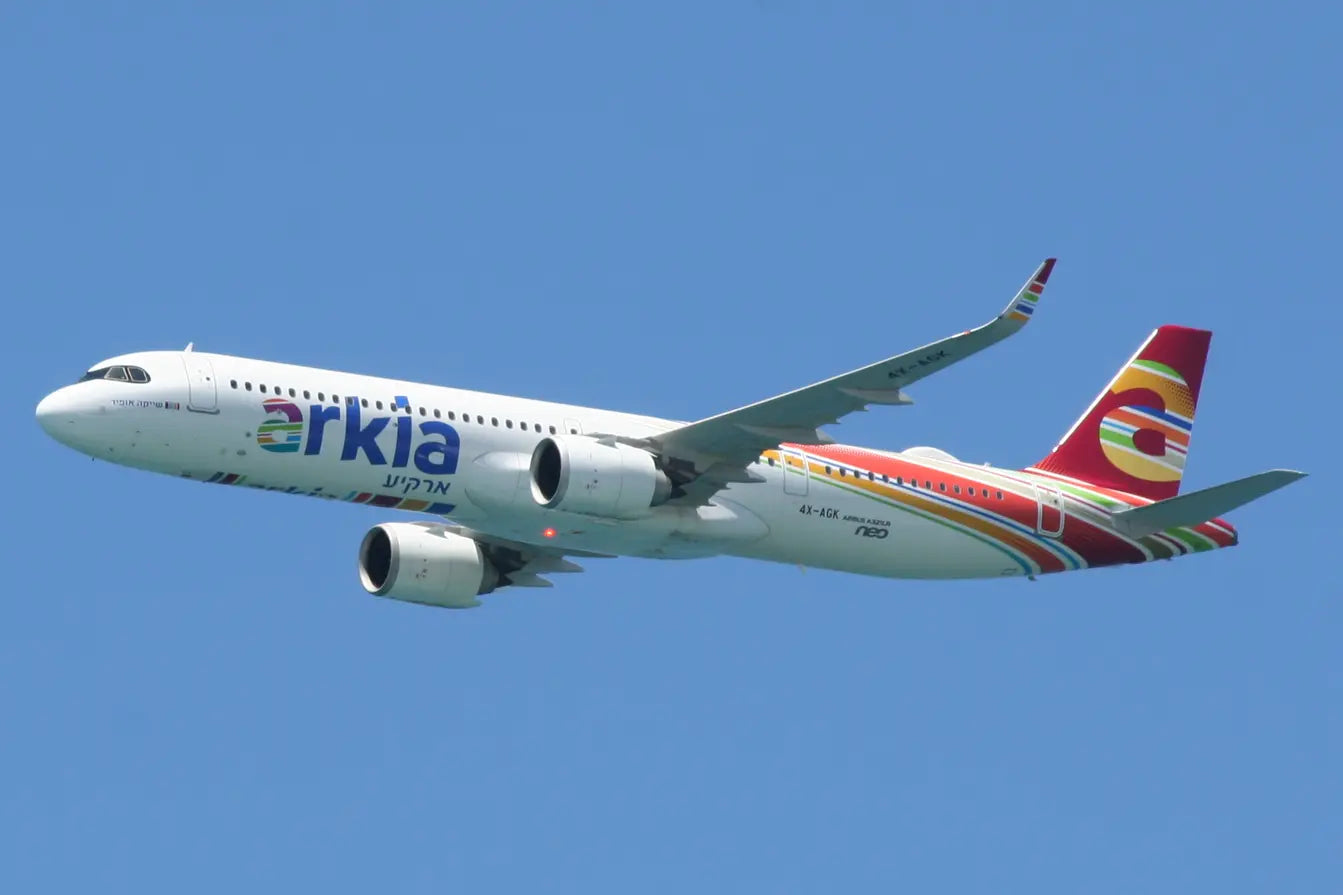
Arkia operates a compact, mostly narrowbody fleet built around Airbus A320-family jets and Embraer E-Jets, supplemented since 2025 by leased widebody Airbus A330s for its new long-haul routes. Public fleet counts vary between sources and change frequently because of aircraft disposals and seasonal leases, so the numbers below should be read as an approximate 2025 to 2026 snapshot rather than a fixed roster. The airline earned a place in aviation history as the global launch customer for the Airbus A321LR, taking delivery of the first-ever example of the type in 2018, and it has signalled an intention to move toward an all-Airbus in-house fleet by eventually retiring its Embraer jets.
| Aircraft Type | Role | In Service (approx.) | Notes |
|---|---|---|---|
| Airbus A321neo / A321LR | Narrowbody, long-range | 2 | Around 214 to 220 seats. Launch customer for the A321LR. Longer European and higher-demand routes. |
| Airbus A320-200 | Narrowbody | 2 to 3 | Around 180 seats. European and Mediterranean routes; some now offer a business cabin (e.g. Paris). |
| Embraer 195 | Regional jet | 2 to 3 | Around 122 seats. Domestic Eilat/Ramon flying and short regional routes. Earmarked for phase-out. |
| Embraer 190 | Regional jet | ~1 | Around 110 seats. Mixed domestic and short international sectors. |
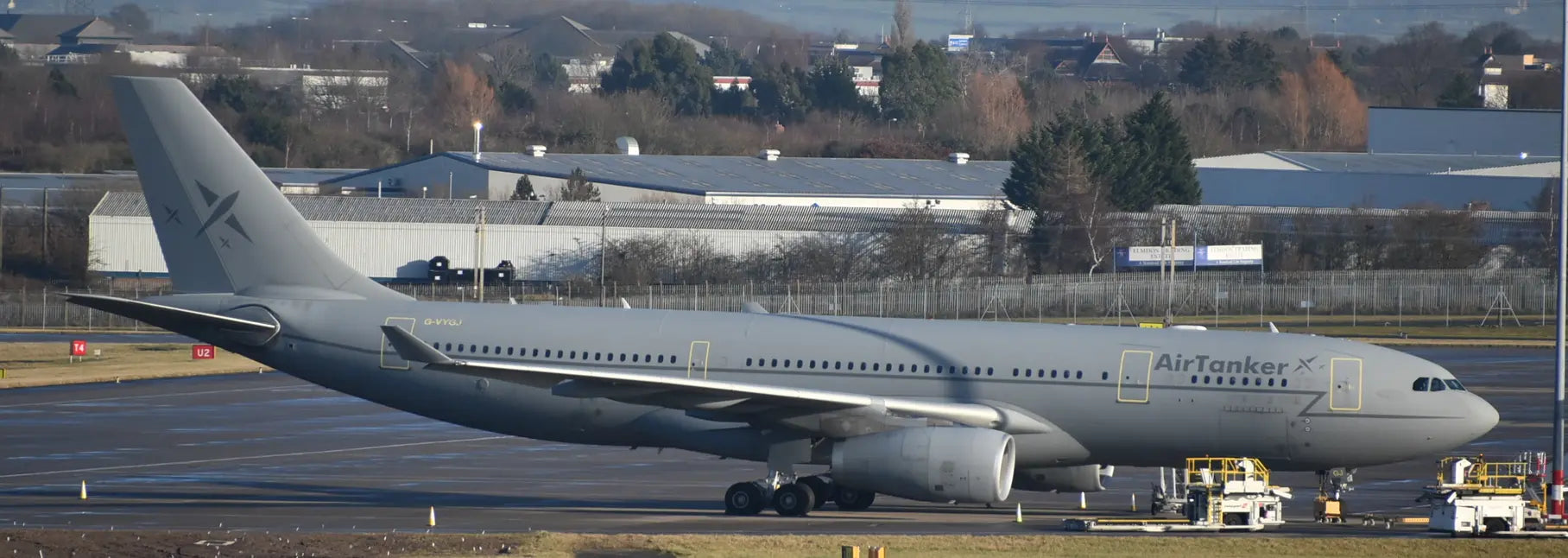
| Airbus A330-200 / -900 (wet-leased) | Widebody, long-haul | 3 to 4 (ACMI) | Leased with crews from Hi Fly, GullivAir and Iberojet. Operates TLV to JFK, Bangkok, Hanoi and more. |
| Boeing 737 (occasional lease) | Narrowbody | Seasonal | Ad-hoc ACMI capacity for summer peaks. |
Fleet data reflects mid to late 2025 reporting and is approximate. In-house counts shift with disposals and leasing; widebody A330s are wet-leased, not Arkia-owned.
The crucial point for anyone weighing a job here is the split between what Arkia owns and crews and what it markets but leases. Arkia's own line pilots fly the narrowbody fleet: the Airbus A320 and A321neo/LR, plus the Embraer 190 and 195. The glamorous long-haul additions (New York JFK, Bangkok, Hanoi, Phuket, plus Indian Ocean leisure routes) are operated on an ACMI (wet-lease) basis, meaning the A330s come with the lessor's own foreign flight crews. As of 2025 to 2026, Arkia holds no widebody of its own, though CEO Oz Berlowitz has publicly said the airline is "pondering options for adding in-house widebody capacity." A 2016 memorandum of understanding for up to four A330-900neo aircraft never converted into firm orders.
A new Arkia First Officer will most commonly be placed on the Airbus A320 family or the Embraer E-Jet, depending on operational need. Because the airline recruits mostly experienced pilots, candidates frequently already hold a relevant type rating; Arkia's cabin crew notices, for example, explicitly prefer applicants with prior A320 experience, and the same logic applies to the flight deck. Do not expect to fly the A330 as an Arkia employee under current arrangements: those widebodies are leased with their own crews. If in-house widebodies eventually arrive, that picture could change, but as of today the realistic career fleet is narrowbody Airbus and Embraer.
Pilot Salary & Compensation
Arkia does not publish a public pay scale, and Israeli carriers guard salary detail closely, so the figures below are estimates assembled from Israeli media reporting and from the terms of the airline's collective agreements. The clearest published data point comes from Israeli financial coverage, which describes Arkia pilots earning monthly salaries roughly between 15,000 and 30,000 shekels, with experienced pilots reaching up to about 35,000 shekels per month. Newcomers start near the bottom of that band, and pay rises with accumulated flight hours, seniority and command. Compensation is a mix of base salary, flight-hour pay, per diems and, following recent negotiations, an hourly formula specifically for international flights plus bonuses for training and qualification duties.
Estimated Arkia Pilot Pay (gross)
| Role / Stage | Monthly Gross (ILS) | Monthly (approx. USD) | Annual Gross (approx.) |
|---|---|---|---|
| New First Officer (entry) | ₪15,000 – ₪18,000 | ~$4,200 – $5,000 | ~₪180,000 – ₪215,000 (~$50k – $60k) |
| Experienced First Officer | ₪18,000 – ₪25,000 | ~$5,000 – $6,900 | ~₪215,000 – ₪300,000 (~$60k – $83k) |
| Captain (narrowbody) | ₪28,000 – ₪35,000+ | ~$7,800 – $9,700+ | ~₪340,000 – ₪420,000+ (~$95k – $117k) |
Estimates only. Sources report an overall Arkia band of ₪15,000 to ₪35,000/month without an official FO/Captain split. Figures are gross (before Israeli income tax and social deductions) and use an approximate rate of 3.6 shekels per US dollar.
Israeli Market Reference: El Al Contract
| El Al Reference Point | Monthly (ILS) | Notes |
|---|---|---|
| First Officer, contractual base | ₪30,000 (~₪16,000 net) | Per the 2018 collective agreement, before allowances and bonuses. |
| Captain, contractual base | ₪45,000 (~₪22,000 net) | Widebody flag-carrier scale, higher than any Arkia role. |
| Captain, reported average (2019) | ~₪95,000 | All components combined; some pilots reported up to ₪160,000 in peak months. |
El Al data drawn from Israeli press (Ynet, Globes). Shown for context: it illustrates the ceiling of the Israeli market, which Arkia's leisure-carrier pay does not reach.
The takeaway is that Arkia pilots earn a solid Israeli professional income that sits comfortably in the middle to upper-middle tier locally, but well below the country's flag carrier. El Al captains reach base salaries of 45,000 shekels a month and, in profitable years, share collective bonuses that have averaged around a quarter of a million shekels per pilot, as detailed in Globes reporting on El Al pilot pay. Arkia does not compete at that level. What it offers instead is steadier, mostly short-haul flying with recently improved terms.
No official Arkia pay scale is public. The bands above are synthesized from Israeli media reporting (notably Taxref's analysis of Israeli pilot pay) and from the structure of Arkia's collective agreements, which in the most recent round delivered raises of 15 to 20 percent depending on rank and seniority. Because sources do not cleanly separate First Officer and Captain scales, the split shown is an informed estimate. Actual pay depends on type, flight hours, seniority and the current agreement. Israeli income tax and mandatory social contributions materially reduce take-home pay versus these gross figures. Always verify against the latest terms negotiated by ISRALPA.
Roster Pattern & Quality of Life
Pilot rosters at Arkia are governed by the flight time limitation (FTL) rules of the Civil Aviation Authority of Israel (CAAI), layered with the airline's collective agreements. Under the Israeli FTL framework, a flight crew member is capped at roughly 8 flight hours per day, 120 per month, 300 per quarter and 1,000 per year, with rest periods that scale up with duty length (a minimum of 8 hours rest after duties up to 10 hours, rising to 14 hours or more after very long duties). The regulations also guarantee minimum time off: at least four days off per month, one day off in every ten, and 30 days off per year including a block of ten consecutive days. These are regulatory floors, and airlines and unions typically negotiate more generous real-world patterns on top of them.
The character of the flying is defined by Arkia's network. A large share of the operation is domestic (Ben Gurion to Ramon/Eilat) and short-haul European, which lends itself to same-day, out-and-back duties where the crew starts and ends the day at Tel Aviv. That structure is genuinely attractive for family life: many duties finish with the pilot sleeping at home, and Israel's compact geography makes commuting to Ben Gurion practical for most crew. The trade-off is intensity within the day, since short sectors mean multiple take-offs and landings and quick turnarounds, and a pronounced summer peak when leisure demand surges.
📅 Illustrative Month — Narrowbody First Officer (TLV base)
Illustrative only. Arkia does not publish crew rosters; the pattern above is a representative short/medium-haul month consistent with CAAI flight time limits, not an official Arkia schedule.
Arkia is effectively a single-base airline. Pilots operate out of Ben Gurion, with some domestic activity oriented toward Ramon/Eilat. There is no US-style base-bidding system, so living within reach of the Tel Aviv metropolitan area is the practical norm. The upside of Israel's small size is that commuting from most of the country is feasible, and short-haul flying keeps pilots home more nights than a long-haul career would. The seasonal swing is real, though: expect heavier utilisation in summer and around Jewish holiday periods, and lighter months in the off-season. For the exact FTL rules, the CAAI publishes its regulations through the Israeli government portal (see the Official Links section).
Benefits, Perks & Retirement
Arkia pilots are covered by Israel's statutory employment protections plus benefits negotiated through their collective agreements. Public detail is thinner than for El Al, but the terms disclosed around Arkia's and comparable Israeli deals give a reliable outline. Recent bargaining has explicitly improved pilots' social benefits, introduced compensation for cancelled flights, added bonuses for training and qualification courses, and created an hourly pay formula for international flights. Parallel agreements at sister carrier Israir, negotiated in the same union environment, spelled out private health insurance, improved per diems and a regulated retirement age of 65 to 67, which gives a strong indication of the benefit structure across Israel's leisure carriers.
One of the more distinctive features to come out of Arkia's collective bargaining is an employment-security mechanism. Agreements resolving the airline's disputes guaranteed pilots a defined minimum workload, reported as roughly 50 percent of a defined workload in the first year and the full defined workload thereafter, applying even to newly hired pilots. In a pay system where a meaningful slice of income is tied to hours flown, that floor matters: it smooths the seasonal swings inherent in a leisure operation and gives new joiners a degree of income predictability that many small carriers do not offer.
Loss-of-licence cover, exact per diem rates, and detailed maternity and paternity provisions specific to Arkia pilots are not publicly itemised in the sources available. Israel's labour law mandates parental-leave protections regardless, and loss-of-licence protection is a recognised norm in Israeli aviation, so these almost certainly exist in some form. But a candidate should confirm the specifics directly with Arkia and with ISRALPA rather than assume they match El Al's more lavish package.
Career Progression & Seniority
Career progression at Arkia follows the standard seniority-based logic of airline flying: pilots join as First Officers and advance to Captain based on seniority, accumulated experience on type, and successful command assessment. The defining constraint here is size. With only around 60 pilots and a fleet of roughly eight in-house aircraft, the number of command seats is small, and upgrade opportunities depend heavily on retirements, fleet growth and attrition rather than on a fast-moving expansion of narrowbody metal. Sources do not publish a specific upgrade timeline for Arkia, so any single number would be speculation; realistically, command depends on being in the right place on a short list when a seat opens.
The long-haul story complicates the picture in an important way. Arkia's headline growth into New York and Asia does not currently widen the career ladder for its own pilots, because those A330 widebodies are wet-leased with the lessor's foreign crews. In other words, the exciting routes on the timetable are not, at present, seats that an Arkia line pilot progresses into. If the airline follows through on CEO Oz Berlowitz's stated interest in acquiring in-house widebodies, that would meaningfully change the progression map, but as of 2025 to 2026 the in-house career remains a narrowbody one across the Airbus A320 family and the Embraer E-Jets.
| Career Stage | Typical Reality at Arkia | Notes |
|---|---|---|
| Join as First Officer | A320 family or Embraer E-Jet | Most recruits already experienced; often ex-military or from other carriers. |
| Build experience on type | Several years | Domestic and short/medium-haul international. Seniority accrues. |
| Upgrade to Captain | Seniority-dependent, not fixed | Limited command seats; timing driven by retirements and fleet size. |
| Widebody (A330) command | Not available in-house | Long-haul currently wet-leased with foreign crews. |
| Instructor / Examiner (TRI/TRE) | Selective | Recognised and separately compensated under recent agreements. |
Arkia is in an expansion phase on the commercial side, adding routes and leased widebody capacity, and its most recent pilot agreement was explicitly framed as enabling the company "to recruit new aircraft and additional pilots." That points to genuine hiring appetite. For a pilot, the honest framing is this: Arkia is a strong platform for a stable, home-based narrowbody career in Israel, and a reasonable stepping stone toward larger operators such as El Al for those who later want widebody and long-haul command. It is a less obvious choice for a pilot whose primary goal is rapid command upgrade or widebody flying under their own airline's employment.
Recruitment Process & Requirements
Arkia does not run a large ab-initio cadet scheme in the mould of European flag carriers. As a small operator, it recruits primarily qualified, experienced pilots, and in the Israeli context that pool is heavily shaped by the Israeli Air Force (IAF), which has long been the country's principal source of highly trained commercial pilots. Civilian-trained pilots who completed their licences in Israel or abroad also feature, but they compete against a deep bench of ex-military candidates. Applications are handled through the airline's own website, which serves as the hub for current vacancies and the application process.
Core Requirements
How the Process Typically Works
Application via the Arkia website
Vacancies are posted on the airline's careers pages and its LinkedIn presence. Candidates submit an application with licence, medical, logbook and supporting documents. There is no standing public cadet campaign; hiring tracks operational need and fleet growth.
Screening & qualification check
Licences, ratings, hours and medical status are verified against CAAI requirements. Prior A320-family or E-Jet experience is an advantage given the fleet, and the airline generally seeks candidates who can be productive quickly.
Assessment & interview
Expect technical evaluation, likely a simulator assessment, and interviews with flight operations management covering airmanship, crew resource management, decision-making and cultural fit. Hebrew fluency is important for briefings, company culture and union matters.
Medical, security & onboarding
A valid Class 1 medical and security/background clearance are prerequisites in the Israeli aviation environment. Successful candidates proceed to type rating or differences training as required, followed by line training on the assigned fleet.
Arkia does not publish a formal, stage-by-stage pilot selection guide the way large European carriers do. The sequence above is a reasonable reconstruction based on how the airline recruits (its published cabin-crew process, its emphasis on experienced hires) and standard Israeli airline practice. Confirm the current requirements, openings and steps directly on the Arkia website before applying.
If you are an Israeli-citizen pilot, fluent in Hebrew, with military or prior airline experience and ideally an Airbus or Embraer background, Arkia is a credible and stable employer to target. If you are a low-hours graduate looking for a fully funded first job, or a non-Israeli without local status and language, Arkia is a difficult entry point, and El Al's structured programs or overseas carriers are more realistic starting places.
Route Network & Layover Destinations
Arkia's network has grown markedly, from around 25 destinations to roughly 35 to 40 for the 2025 to 2026 seasons, with an announced push toward about 40 routes for summer 2026 including new points such as Vilnius, Malaga, Ibiza and Phuket. The network splits into three layers: domestic (Ben Gurion to Ramon/Eilat), a broad short and medium-haul international program across Europe, the Mediterranean, the Caucasus and the Gulf, and a new long-haul layer to New York and Asia. For pilots, the key nuance is which of these an Arkia crew actually flies.
The long-haul flights (Tel Aviv to New York JFK, Bangkok, Hanoi, Phuket, plus leisure services toward Sri Lanka, the Seychelles and Zanzibar) are operated on wet-leased A330 widebodies with the lessors' foreign crews. They are impressive routes, but they are not, at present, layovers that Arkia's own pilots work. The realistic layover experience for an Arkia line pilot is on the narrowbody network: shorter European, Mediterranean, Caucasus and Gulf destinations, where the longer sectors generate genuine night-stops while the shortest routes are often flown as same-day turns. The cards below highlight representative narrowbody destinations rather than the wet-leased long-haul routes.
Arkia does not publish crew hotel standards or fixed layover lengths, so the cards above describe the routes and typical sector characteristics rather than guaranteed rest details. Whether a given service is a same-day turn or an overnight depends on scheduling, and the shortest routes (Larnaca, the Greek islands, some Caucasus flying) are frequently operated as day trips. The marquee long-haul destinations (New York, Bangkok, Hanoi, Zanzibar, the Seychelles) are flown on wet-leased widebodies with foreign crews and are therefore not, under current arrangements, part of an Arkia pilot's layover life. Treat any specific layover expectation as something to confirm with the airline.
How Arkia Compares: Airline Radar Chart
The natural comparison set for Arkia is its two Israeli peers: El Al, the flag carrier, and Israir, the other leisure-focused operator. All three recruit from the same national pilot pool and bargain within the same union environment, which makes the contrast especially instructive. The radar below scores each across the same six-into-five metric set used in the scorecard. Scores are editorial estimates based on public data, media reporting and union publications, not official rankings.
Key Takeaways from the Comparison
El Al leads on pay, fleet and prestige. The flag carrier operates an all-Boeing fleet of roughly 48 aircraft, including 787-9, 787-8 and 777-200ER widebodies, flies genuine long-haul under its own employment, and pays contractual captain bases of 45,000 shekels a month plus profit-share bonuses that Arkia simply cannot match. If maximising income and flying widebodies under your own airline are the priority, El Al is the clear Israeli choice.
Arkia edges ahead on lifestyle. El Al's advantage in pay comes with demanding long-haul rosters, multi-day layovers and heavy time-zone disruption. Arkia's short and medium-haul, single-base operation keeps pilots home far more often, which for many crew and their families is worth a meaningful pay difference. That is the core trade Arkia offers.
Arkia and Israir are close peers. Israir is the most direct comparison: a similar-sized leisure carrier (around 50 pilots, an Airbus A320-centred fleet with some ATR turboprops) that bargains in the same union setting and secured comparable improvements, including a reported 22 percent raise in an earlier agreement and a move toward an all-jet fleet after its stock-market listing. Israir is now exploring its own A330 acquisition, which could shift the balance if it brings widebody flying in-house before Arkia does.
Job security is a wash at the leisure carriers. Both Arkia and Israir are exposed to tourism cycles and regional instability, and both cut pilot pay during the pandemic before restoring it. El Al scores higher on stability thanks to its scale and national importance, but even it has weathered severe financial stress. Arkia's negotiated workload "safety net" is a genuine differentiator that softens the volatility for its pilots.
Radar scores are editorial estimates for an experienced pilot weighing a long-term career, based on public salary reporting, fleet data, union publications and industry benchmarks. They are not precise measurements and individual experience varies by seniority, fleet and personal priorities. Where hard Arkia-specific data is thin (roster detail, benefit specifics), the scores reflect the balance of available evidence and are flagged as estimates throughout this guide.
Union & Industrial Relations
Israeli airline pilots are represented by the Israel Airline Pilots Association (ISRALPA), in Hebrew האיגוד הארצי לטייסי נתיבי אוויר בישראל. Established as an association in 1976, ISRALPA represents pilots across the Israeli industry, explicitly including El Al, Israir, CAL and Arkia (as well as Israel Aerospace Industries), and it also represents certain flight engineers. It holds an independent status within the New Histadrut, Israel's national labour federation, sitting in the federation's professional-associations wing, and it is a member of IFALPA, the global federation of pilot unions. That dual footing (national bargaining muscle through the Histadrut, international backing through IFALPA) is the framework within which Arkia pilots' pay and conditions are set.
How Representation Is Structured
Recent Disputes & Agreements
Arkia's industrial relations have followed a familiar pattern: periodic disputes that resolve into multi-year agreements, rather than chronic strife. The union environment works in pilots' favour, delivering real pay rises and, unusually for a small carrier, a workload safety net. One practical point for anyone joining now: the recovery agreement runs through the end of 2025, so a renewal round is due around 2026, and the terms that emerge will shape near-term pay and conditions. Follow ISRALPA's publications to track it.
Verdict: Who Is Arkia For?
🎯 Our Take
Arkia is a small, family-owned Israeli leisure carrier that offers something specific and genuinely valuable: a stable, home-based, mostly short and medium-haul narrowbody career operated from a single base at Ben Gurion. Recent collective agreements have pushed pay up by 15 to 20 percent, added social benefits and, distinctively for a carrier this size, secured a negotiated workload safety net that cushions the seasonal swings of leisure flying. For a pilot who wants to fly modern Airbus and Embraer jets and sleep at home most nights, that is a strong package.
The limits are equally clear. Pay tops out well below El Al, and Israeli tax and social charges bite into gross figures. The seniority list is short, so command depends on timing rather than a fast-moving expansion. And the headline long-haul routes to New York and Asia are flown on wet-leased widebodies with foreign crews, so they do not, for now, widen the career ladder for Arkia's own pilots. This is a narrowbody job with a leisure-carrier's exposure to tourism cycles and regional events.
Set against its true peer, Israir, Arkia holds up well, and against El Al it competes on lifestyle rather than money. For the right pilot, that trade is exactly the point.
1 Do I need to be an Israeli citizen and speak Hebrew to fly for Arkia?
In practice, yes on both counts. Israeli carriers strongly favour Israeli citizens for security and background-check reasons, and Hebrew is the working language for briefings, company culture and union matters, alongside English to ICAO standard for operations. There is no documented English-only or foreign-national pathway into an Arkia flight-deck job.
2 Does Arkia run a cadet program for low-hours pilots?
No large ab-initio cadet scheme is documented. As a small operator, Arkia recruits mainly qualified, experienced pilots, and the Israeli pool is dominated by ex-Israeli Air Force aviators plus civilian-trained pilots. If you are just starting out with minimal hours, Arkia is a difficult first job; more structured entry points exist elsewhere in the Israeli and international market.
3 Will I get to fly the A330 long-haul routes to New York and Asia?
Under current arrangements, no. Arkia's long-haul network (New York JFK, Bangkok, Hanoi, Phuket, and leisure services toward Sri Lanka, the Seychelles and Zanzibar) is flown on wet-leased A330 widebodies that come with the lessors' own foreign crews. Arkia's employed pilots fly the narrowbody fleet: the Airbus A320 family and the Embraer E-Jets. This could change if Arkia acquires in-house widebodies, which the CEO has said the airline is considering, but there is no firm order yet.
4 How much do Arkia pilots earn compared with El Al?
Arkia pilots are reported to earn roughly 15,000 to 35,000 shekels per month gross depending on experience and rank, recently lifted by a 15 to 20 percent raise. El Al is significantly higher: its contractual captain base alone is around 45,000 shekels a month, with average captain earnings reported near 95,000 shekels in a strong year, plus profit-share bonuses. Arkia competes on lifestyle and stability rather than headline pay.
5 How long does it take to upgrade to Captain at Arkia?
There is no published figure, and it would be misleading to invent one. Upgrade is seniority-based, and with only around 60 pilots and a small fleet, command seats are limited and open up mainly through retirements and fleet growth. Timing therefore depends heavily on where you sit on a short seniority list when a vacancy arises, rather than on a fixed timeline.
6 What aircraft would I fly as a new First Officer?
Most likely the Airbus A320 family (A320-200 or A321neo/LR) or an Embraer E-Jet (E190/E195), depending on operational need. Because the airline prefers experienced hires, candidates who already hold an A320 or E-Jet type rating have an advantage. Note that Arkia has signalled a long-term intention to move toward an all-Airbus in-house fleet, which would eventually retire the Embraers.
7 Is Arkia a secure employer?
It is a small leisure carrier, so it is inherently exposed to tourism cycles and regional instability, and it did cut pilot pay during the pandemic before restoring it. On the other side, its collective agreements include a negotiated workload safety net, its most recent deal funded expansion and hiring, and strong union representation through ISRALPA provides a real backstop. Security is moderate: better protected than a typical small operator, but without the scale and national importance that support El Al.
8 How do I apply to Arkia as a pilot?
Applications go through the airline's own website, which lists current vacancies, and the company is also active on LinkedIn. You will need a CAAI-recognised CPL or ATPL, a valid Class 1 medical, Hebrew and English proficiency, and the ability to clear Israeli security and background checks. Because the process is not published in stage-by-stage detail, confirm the current requirements and openings directly with Arkia before applying.
Official Links & Resources
Before applying or making any career decision, verify the details directly with official sources. The airline's own site is the definitive place for current vacancies and requirements; the union and regulator pages are the authoritative references for conditions and licensing. Key resources for an Arkia pilot career:
Because Arkia publishes little pay and roster detail publicly, the single most useful ongoing source is ISRALPA. The current pilot agreement runs to the end of 2025, so watch for the renewal round: the terms that emerge will tell you more about real-world pay and conditions than any third-party estimate. Cross-check anything you read here against the airline and the union before making a decision.