

Air Atlanta Icelandic Overview & Company Profile
Air Atlanta Icelandic is not an airline in the way most pilots picture one. It sells no tickets, publishes no timetable, and paints its aircraft in whatever livery the customer requests. It is an ACMI and charter operator: it supplies Aircraft, Crew, Maintenance and Insurance to other airlines, cargo operators, freight forwarders, brokers, governments and NGOs that need widebody capacity they do not own. Understanding that distinction is the single most important thing for any pilot evaluating this company, because it shapes the pay structure, the roster, the contract and the risk profile far more than the aircraft type does.
The company was established on 10 February 1986 by Captain Arngrímur Jóhannsson and his wife Þóra Guðmundsdóttir. According to the airline's own account on its official About Us page, operations began with Boeing 707 charter work, and the first flights were rooted in the Caribbean before a second 707 joined. The airline flew its first Hajj project in 1988, and the Boeing 747 arrived in 1993, with Saudia among the earliest 747 and Hajj customers. Air Atlanta marked 40 years of operations in February 2026.
Today the Air Atlanta brand consists of two sister airlines: Air Atlanta Icelandic, headquartered at Hlíðasmári 3 in Kópavogur, Iceland, and Air Atlanta Europe, established in Malta in 2021 and based in Birkirkara. The two operate under separate Air Operator Certificates, one issued by the Icelandic Transport Authority (Samgöngustofa) and one by Transport Malta's Civil Aviation Directorate, but they share ownership, senior management and a common operational culture. For a pilot, the AOC on your contract determines your regulatory framework, your social security jurisdiction and, in practice, your employment law protections.
The ownership picture changed materially in 2026. On 28 May 2026, Atlas Air Worldwide announced a Share Purchase Agreement to acquire a 49% minority equity stake in Air Atlanta, and the transaction was completed in early August 2026. In a parallel move, Atlas subsidiary Titan Aviation Holdings acquired the aircraft owned by the Air Atlanta group and leased them back to the operating airlines. The continuing Air Atlanta management team retains a 51% controlling interest. In the same announcement, the two groups described themselves as jointly operating the world's largest fleet of Boeing 747 freighters.
That deal matters to pilots in two ways. First, it injects capital and a strategic partner into a business that has historically been thinly capitalised relative to its aircraft values. Second, it links Air Atlanta commercially to a US operator whose pilot terms are governed by a Teamsters collective agreement, which sets up an unavoidable comparison every candidate should make before signing. Whether that comparison eventually pulls Air Atlanta terms upward is, at this stage, speculation rather than fact.
Most airline career guides assume a seniority list, a fixed base, a published pay scale and an employment contract. Air Atlanta has none of those in the conventional sense for the majority of its flight deck workforce. Pay is quoted as a daily fee, not an annual salary. The base can move when an ACMI contract moves. Most expatriate pilots work under a one-year renewable service agreement rather than a permanent employment contract. Reading the rest of this guide with that framework in mind will make the numbers far easier to interpret.
Fleet Composition & Type Ratings
Air Atlanta is a pure widebody operator. There is no narrowbody, no regional jet and no Airbus in the current fleet. Everything on the line is either a Boeing 747-400 or a Boeing 777, which means every pilot who joins ends up with heavy jet time in the logbook. For pilots chasing widebody hours, that is the core commercial proposition of this company.
Counting the fleet accurately requires care, because databases count aircraft by AOC registration while the company counts commercially operating aircraft. In its August 2026 transaction announcement, Atlas Air stated that Air Atlanta operates 14 widebody freighters (Boeing 747 and 777) plus four passenger Boeing 777s, giving an operational total of 18. Registration-based fleet records show additional aircraft, including at least one parked or stored airframe on each certificate.
| Aircraft Type | AOC | Approx. Count | Role / Notes |
|---|---|---|---|
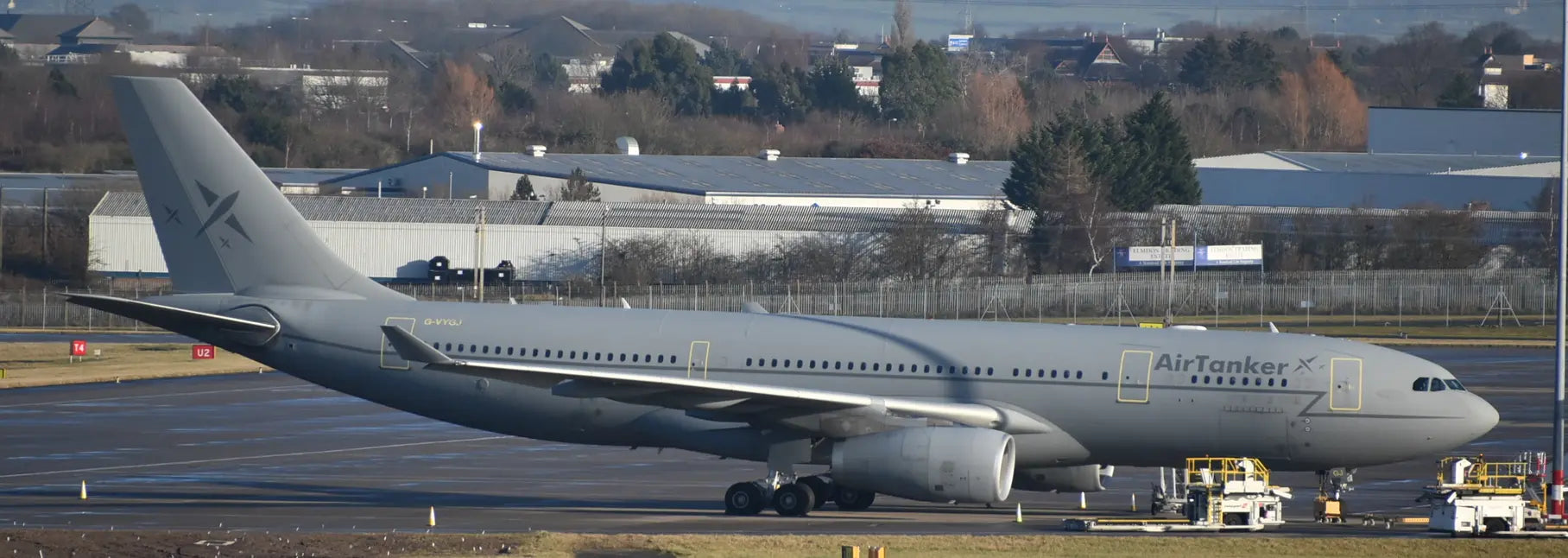
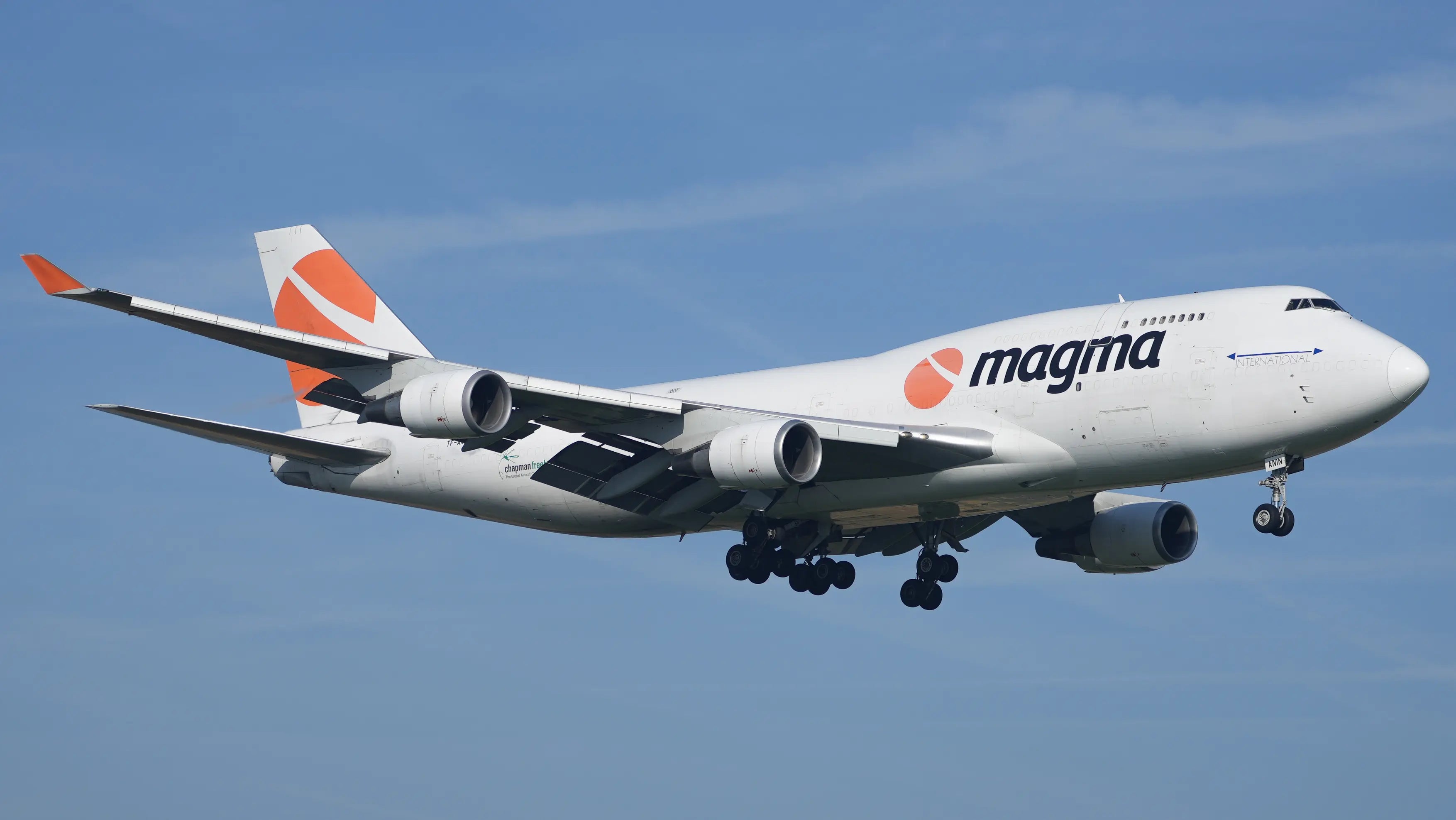
| Boeing 747-400F / FSCD | Icelandic (TF-) | ~8 | Pure cargo. Fleet records identify aircraft placed with Network Aviation Group, Magma Aviation and one parked at Jakarta associated with Aquiline International. |
| Boeing 747-400BCF / BDSF | Maltese (9H-) | ~6 | Converted freighters. Three BDSF plus three FSCD reported on the Malta certificate. A fifth 747-400BCF joined Network Airline Management at Liège in July 2026. |
| Boeing 777-300ER | Maltese (9H-) | 2 | High-density passenger. Published configuration 492 seats (14 business, 478 economy). Both are 2005 build aircraft, formerly with Emirates and Royal Flight. |
| Boeing 777-200ER | Maltese (9H-) | 2 | Passenger ACMI. Acquired by Air Atlanta Europe in 2024 and placed on wet lease. |
| Boeing 777-300ERSF | Maltese (9H-) | 2 | "Big Twin" passenger-to-freighter conversions operated under a CMI arrangement with Fly Meta for Hungary Airlines out of Budapest. First unit delivered December 2025. |
| Boeing 777-200ER | Icelandic (TF-) | 1 | Registered but not operational. Reported parked at Tarbes-Lourdes. Should not be treated as a line flying vacancy driver. |
| Boeing 747-400 passenger | Retired | 0 | The last passenger 747-400 left the fleet in late 2024, closing the airline's passenger Queen of the Skies chapter. |
Fleet data compiled from the airline's own aircraft page, ch-aviation reporting and public registration records, current to August 2026. ACMI placements change when contracts change, so aircraft allocations are inherently fluid.
Two structural points stand out. First, the fleet is old. Icelandic-register fleet reporting placed the average age at roughly 29 years in August 2026, and the Maltese 747s are broadly comparable. The 777-300ERs and their converted freighter siblings are 2005-era airframes. Pilots joining should expect classic-generation systems knowledge, real hands-on flying and the maintenance realities that come with high-cycle aircraft.
Second, the fleet is transitioning. Air Atlanta Europe became the first European operator of the Boeing 777-300ERSF in December 2025. The original tripartite arrangement with Fly Meta and Hungary Airlines covers three aircraft, with the remaining unit scheduled for the fourth quarter of 2026, and management has publicly discussed adding further 777 freighters in the 2026 to 2027 window as a gradual complement to the ageing 747 fleet. For a pilot planning a five-year horizon, that is the most important fleet signal: the 747 remains the backbone today, but the 777 is where incremental growth is heading.
Air Atlanta recruits both type-rated and non-type-rated pilots. Type-rated candidates join with an existing B747-400 or B777 rating and go straight to conversion and line training. Non-type-rated First Officers enter under a loan and type rating training agreement, which is explicitly listed in current vacancy terms. Historic documentation from recruitment partner Confair Consultancy quoted a B747-400 type rating at USD 23,000, payable either upfront or deducted in monthly instalments of USD 1,667, an arrangement commonly described as a training bond. During training the airline arranges accommodation and travel, but hotel costs were charged back to the candidate from the first payment under the service agreement while in line training. Anyone entering non-type-rated should obtain the current figure, the repayment schedule and the release clauses in writing before signing.
Air Atlanta does not publish a live fleet table with registration-level detail on its official aircraft page, which describes the fleet in general terms as B777-300ER, B777-200ER and B747-400F. The counts above reconcile company statements with third-party databases and may shift with each new ACMI placement, conversion delivery or storage decision. Verify the current fleet before making a career decision based on type availability.
The ACMI Contractor Model Explained
Every figure in the rest of this guide depends on understanding how Air Atlanta actually sells its flying and how that flows down to the flight deck. The airline describes three product lines on its services page: ACMI, where it provides a fully crewed, maintained and insured aircraft operating under its own AOC for an agreed period; CMI, a hybrid where the customer supplies the aircraft and Air Atlanta supplies crew, maintenance and insurance; and full charter, where Air Atlanta arranges traffic rights, permits, fuel and handling.
In all three cases the customer controls the commercial schedule. Air Atlanta does not decide where its aircraft fly. That decision belongs to Saudia, to Magma Aviation, to Network Airline Management, to Hungary Airlines or to whoever holds the contract. When a contract ends, the associated flying, the associated station and sometimes the associated crew requirement end with it.
What This Means for a Pilot in Practice
The consequences are concrete and worth stating plainly, because they are the difference between a good decision and a bad one:
None of this is unique to Air Atlanta. It is broadly how the European and Middle Eastern ACMI sector operates, and pilots who have flown for other wet lease specialists will recognise the pattern immediately. What matters is that a candidate compares Air Atlanta against other ACMI operators on like-for-like terms, and against network carriers on a fully loaded basis that includes pension, paid leave, employer social contributions and loss of licence cover.
Current vacancy adverts from Air Atlanta's recruitment partners describe compensation only as a "competitive fee" with "daily fee basic payment and additional per diem fee." Specific amounts are not disclosed publicly. Before accepting, obtain written answers on: the daily fee and the scale point applied; the per diem rate; the number of guaranteed paid days per year; which entity employs you; which country handles your social security and tax; whether loss of licence and pension are included or excluded; the type rating bond amount and release terms; and what happens to your pay if an ACMI contract is cancelled mid-term.
Pilot Pay & Compensation Breakdown
Air Atlanta does not publish a current unified pay table, and its recruitment partners withhold the numbers from public adverts. The figures below are reconstructed from three source types: historic recruiter contract documentation (Confair Consultancy's Boeing 747 worldwide contract briefing), pilot-reported contract data collected by salary aggregators such as AircrewNetwork and PilotJobsNetwork, and pilot forum reports on PPRuNe. All amounts are in US dollars, gross, before tax. They should be treated as a planning range, not a quoted offer.
The compensation architecture has four components: a daily fee set by scale point according to experience, a per diem paid for every day on base or on duty (including standby days), an overtime allowance for block hours above a threshold within the rotation, and a hard days premium for duty days falling outside the contracted rotation.
First Officer Pay Ranges
| Basis | Daily Fee (USD) | Per Diem | 21-Day Rotation Gross | Annualised Monthly Avg (21/14) |
|---|---|---|---|---|
| Entry / low scale point | $240 – $305 | $50 – $75/day | $5,040 – $6,405 | ~$4,380 – $5,565 |
| Mid scale (pilot-reported) | $303 – $375 | $50 – $75/day | $6,363 – $7,875 | ~$5,530 – $6,845 |
| Upper scale / experienced | $375 – $410 | $50 – $85/day | $7,875 – $8,610 | ~$6,845 – $7,485 |
Historic Confair documentation quoted the First Officer scale as USD 7,194 to USD 9,306 per 30 worked days across scale points 1 to 11, which equates to roughly $240 to $310 per day. Annualised column assumes a 21-days-on / 14-days-off cycle and excludes per diem.
Captain Pay Ranges
| Basis | Daily Fee (USD) | Per Diem | 21-Day Rotation Gross | Annualised Monthly Avg (21/14) |
|---|---|---|---|---|
| Entry / low scale point | $307 – $400 | $50 – $75/day | $6,447 – $8,400 | ~$5,600 – $7,300 |
| Mid scale (pilot-reported) | $400 – $465 | $50 – $85/day | $8,400 – $9,765 | ~$7,300 – $8,485 |
| Upper scale / senior command | $465 – $515 | $50 – $85/day | $9,765 – $10,815 | ~$8,485 – $9,400 |
Historic Confair documentation quoted the Captain scale as USD 9,210 to USD 12,240 per 30 worked days across scale points 1 to 11, roughly $307 to $408 per day. Broker-quoted ranges reported on pilot forums in the 2021 to 2023 period placed captains at $400 to $515 per day.
Additional Pay Elements
How Rotation Choice Changes Your Annual Income
Because pay is per day worked, the rotation pattern is a compensation decision as much as a lifestyle decision. A pilot on the same daily fee can earn 33% more or less depending on which pattern they select. The table below shows paid days per year for each advertised pattern.
| Rotation Pattern | Cycle Length | Paid Days / Year | Avg Paid Days / Month | Annual Gross at $400/day |
|---|---|---|---|---|
| 20 on / 10 off | 30 days | ~243 | ~20.3 | ~$97,200 |
| 24 on / 12 off | 36 days | ~243 | ~20.3 | ~$97,200 |
| 21 on / 14 off | 35 days | ~219 | ~18.3 | ~$87,600 |
| 21 on / 21 off | 42 days | ~183 | ~15.2 | ~$73,200 |
Calculated from the four rotation patterns listed in current Air Atlanta vacancy terms. Excludes per diem, overtime and hard days premium. Illustrative daily fee used for comparison only.
Air Atlanta does not publish an official pilot pay scale, and every current vacancy advert from its recruitment partners states only "competitive fee." The figures above are compiled from a recruiter contract briefing document, crowd-sourced pilot pay databases and pilot forum reports spanning roughly 2017 to 2026. They are estimates with real variance: two pilots on the same fleet can sit on different scale points. Critically, these are gross contractor fees with no employer pension contribution, no paid annual leave and, in most cases, no employer-funded loss of licence cover. Comparing them directly against an employed pilot's salary at a network carrier will overstate Air Atlanta's competitiveness. Always request a written offer with the specific daily fee, scale point, per diem and guaranteed paid days before making any commitment.
Rotation Patterns & Quality of Life
Air Atlanta runs a rotational, commuting roster, not a monthly bid line. Current vacancy terms across both the Boeing 747 and Boeing 777 fleets list four fixed patterns: 20 on / 10 off, 21 on / 14 off, 21 on / 21 off, and 24 on / 12 off. Pattern availability is subject to company allocation rather than free choice, and a pilot's requested pattern is not guaranteed.
Historically the airline also offered a "worldwide" contract, under which the pilot submitted their own availability and the company decided whether and when to use it. Older recruitment documentation described a pilot nominating, for example, the first sixteen days of a month as available, with the remaining fourteen protected unless the pilot chose to sell off days back to the company. Rosters were issued four weeks in advance, with the first two weeks confirmed and the latter two provisional. Recent pilot reports indicate the worldwide package has been withdrawn in favour of fixed patterns, though older 3/2 and 4/2 arrangements still appear in legacy documentation. Candidates should confirm which options are actually on the table at the time of their offer.
📅 Sample 35-Day Cycle — B747-400F First Officer, 21/14 Rotation
Illustrative shape of a 21/14 cycle only. Air Atlanta does not publish sample rosters. The split between flying days, standby days and positioning within a rotation varies substantially with the ACMI contract, the season and aircraft utilisation. Some rotation days are spent at a station without a scheduled sector.
The critical nuance is that "days on" does not mean "days flying." Historic contract documentation was explicit on this point: a pilot could be positioned to Jeddah and not scheduled for any flights, and would still receive the daily fee for that day. That cuts both ways. It protects income during quiet periods on a fixed pattern, but it also means 21 consecutive days living out of a hotel with an uncertain workload rather than 21 days of productive flying.
Duty periods begin on the day of travel from domicile to base. Under the historic contract structure, after 30 days on duty a new duty period commenced for a further 30 days, continuing until the pilot travelled home from domicile.
Flight Time Limitations
Both AOCs sit inside the EASA regulatory system, so EASA Part-ORO flight and duty time limitations apply. The cumulative ceilings are the same ones every European commercial pilot works to:
Pilot reviews published on PilotsGlobal in January 2026 raised concerns about how the company defines a home base for FTL calculation purposes, with one current First Officer alleging that the company treats the pilot's home address as the base. Air Atlanta has not publicly responded to these claims, and they represent individual pilot opinion rather than a regulatory finding. Any candidate should ask directly, in writing, how their assigned home base is defined for FTL and social security purposes, and which authority (Samgöngustofa or Transport Malta) oversees the operation they will fly. This is not a minor administrative detail: home base definition drives rest requirements, acclimatisation calculations and social security jurisdiction.
The genuine upside of the rotational model is that off days are truly off. There is no home standby, no reserve, no phone call at 05:00. A pilot on 21/21 has roughly half the calendar year at home with no company obligation, which is a lifestyle very few network carriers can offer. Return flights between the nearest accepted international airport to your domicile and the assigned base are provided by the airline for each rotation, so the commute itself is funded. The trade-off is that the on-rotation period is total immersion: three consecutive weeks away, living in company hotels, with your income tied to the days you are actually rostered.
Benefits, Insurance & Coverage Gaps
The Air Atlanta benefits package is best understood in two columns: what the company provides so you can do the job, and what it does not provide that a network carrier normally would. The first column is reasonable and clearly documented in vacancy terms. The second column is where the real cost of this contract sits, and it is the single most under-appreciated factor among candidates comparing daily fees against monthly salaries elsewhere.
What Is Provided
What Is Typically Not Provided
A useful exercise before signing: take the offered daily fee, multiply by the paid days per year for your rotation pattern, add annual per diem, then subtract what you will now pay yourself. Private loss of licence cover for a widebody pilot is a meaningful annual cost. Private pension contribution at a rate matching a typical European employer scheme is another. Unpaid leave weeks have an opportunity cost. Class 1 medical renewals, licence fees and personal accident cover add more. Only after those deductions is the figure comparable to an employed pilot's package at a network carrier or at a unionised cargo operator.
Pilots holding an Icelandic contract, or otherwise eligible for membership, can access services through Félag íslenskra atvinnuflugmanna (FÍA), the Icelandic Airline Pilots Association. FÍA states that its purpose includes wage negotiation, flight safety work, protection of members' professional interests and assisting members during ill health through its sickness fund. Membership also gives access to association insurance arrangements that individual contractors would otherwise have to source privately at retail rates. For pilots on a Maltese or agency contract, eligibility is less clear and should be confirmed directly with the association.
Career Progression & Command Upgrade
Air Atlanta has no published seniority list and no guaranteed upgrade timeline. This is the opposite of the European legacy model, and it produces a genuinely different career risk profile: there is no queue to wait in, but there is also no queue to protect your place in.
Advancement depends on vacancies, operational need, training performance, aircraft type, which AOC you sit on, and the company's commercial requirements at that moment. Two pilots joining in the same month can have very different trajectories. Interestingly, "upgrade opportunities" is the highest-rated category in the PilotsGlobal pilot review dataset for this airline, scoring 4 out of 5 against an overall airline rating of 2.1 across ten reviews. That pattern is consistent with a company where command comes faster than average but the surrounding conditions are weaker than average.
| Career Stage | Typical Position | Notes |
|---|---|---|
| Non-type-rated First Officer entry | 1,000 hrs CS-25 or 500 hrs Boeing | Entry with a type rating loan and training agreement. Fastest documented route into a widebody cockpit at this operator. |
| Type-rated First Officer entry | 1,500 hrs TT / 500 hrs on type | Direct entry with an existing B747-400 or B777 rating. Expired B747 ratings have been considered in past campaigns. |
| Cruise relief / SO to First Officer | ~500 hrs on type | Historic route where relief pilots were considered for First Officer positions. Timing depended on course availability. |
| First Officer to Captain (internal) | No published timeline | Vacancy and performance driven. One public career record shows a pilot moving from B747 First Officer in 2022 to B747 Captain in 2025, roughly three years. That is an example, not a commitment. |
| Direct-entry Captain | Actively recruited | 6,000 hrs total with 4,500 on medium or heavy turbojets, 1,500 hrs in command, and 500 PIC hours on type for type-rated vacancies. An alternative published standard is 5,000 total with 4,500 on turbojets above 40 tonnes. |
| Fleet transition 747 to 777 | Company demand driven | The 777-300ERSF programme is the growth area. Transition requires a new rating, company need and training capacity. |
| Training Captain / TRI / TRE | Selection based | Air Atlanta has advertised B747 Training Captain positions externally. These are selection and performance appointments, not automatic seniority steps. |
Air Atlanta's willingness to recruit direct-entry Captains is a double-edged feature. If you arrive with 500 hours PIC on the 747 or 777, you can walk into a left seat quickly, which is a genuine advantage over any seniority-based carrier. If you arrive as a First Officer hoping to upgrade internally, that same policy means the company can fill command vacancies externally whenever the market allows. Historic pilot commentary describes internal upgrade opportunity as limited for exactly this reason. Ask, during interview, how many of the last ten command positions were filled internally versus externally. The answer is more informative than any published policy statement.
Two factors currently favour pilots at this operator. First, the 777-300ERSF conversion programme with Fly Meta and Hungary Airlines is adding a genuinely new fleet type, with a third aircraft scheduled for the fourth quarter of 2026 and management publicly discussing further 777 freighters in the 2026 to 2027 window. New fleet means new crew requirements and new command positions. Second, the Atlas Air investment completed in August 2026 brings a strategic partner into a business that operates, jointly with Atlas, the world's largest 747 freighter fleet. Against that, the 747-400 fleet averages around 29 years of age, and every ACMI placement is contract-dependent. Growth here is real but it is not the same as structural, decade-long expansion at a network carrier.
Recruitment Process & Requirements
Air Atlanta recruits primarily through specialist aviation recruitment partners rather than through a large in-house selection department. The two names that appear most consistently across current and historic campaigns are Airborne Personnel and Confair Consultancy, with AeroProfessional and MHC Aviation also running campaigns. The airline maintains its own job opportunities portal, which routes candidates toward current openings.
There is no cadet programme. Air Atlanta does not train ab-initio pilots, does not sponsor licence training, and does not operate an integrated flight school pathway. The minimum realistic entry point is a qualified commercial pilot with meaningful multi-crew jet experience.
Non-Type-Rated First Officer Requirements
Type-Rated First Officer Requirements
Direct-Entry Captain Requirements
Selection Stages
Application & Recruiter Screening
Applications go through the recruitment partner. Required documentation historically includes a signed Air Atlanta application form, valid pilot licence copy, current CV, EASA-approved medical certificate, passport copy including any visas, and the last five logbook pages. Vacancy notes state that only candidates shortlisted for the second round are contacted.
Client Screening
Air Atlanta reviews the shortlisted files directly. This stage checks licence validity, hour breakdowns, recency, right to work and type rating currency against the specific vacancy and AOC.
Written Testing
Historic assessment structure included a written technical and psychometric test conducted during an assessment day. Past assessment centres have been held in London and Amsterdam, with candidates travelling at their own expense.
Face-to-Face Interview
Current vacancy terms describe a face-to-face interview as the final documented stage. Expect a technical and HR blend covering widebody systems, ETOPS and long-haul operations, oceanic and remote-area procedures, CRM in a multinational crew environment, and your honest motivation for choosing a rotational contractor role.
Simulator Assessment
Historic Confair process included a simulator assessment in London. For type-rated candidates this is a currency and standards check. For non-type-rated candidates it assesses raw handling, instrument flying and capacity under load on an unfamiliar heavy jet.
Contract Offer & Training
A one-year renewable service agreement is offered on successful screening. Non-type-rated candidates then enter type rating training under the loan agreement, followed by line training. Historic terms included a 30-day notice period on both sides.
Three things separate successful candidates here. First, document your heavy jet and multi-crew hours precisely: the thresholds (1,000 hours CS-25, 500 hours Boeing, 500 PIC on type) are hard gates, and vague logbook summaries get filtered out at screening. Second, demonstrate genuine comfort with rotational life. Recruiters and the airline both know that the highest turnover risk is a pilot who signs for the aircraft type and quits after two rotations because they underestimated the lifestyle. Third, be ready to talk about non-standard operations: African cargo networks, Hajj high-density passenger flying, remote airfields and short-notice charter work are the daily reality, not the exception. Note also that Icelandic language is not required and operations are conducted in English, which makes this one of the more accessible European widebody operators for non-native candidates who hold EU or UK work rights.
Network, Bases & Layover Life
Air Atlanta has no route network of its own. Where you fly is determined by which ACMI customer your aircraft is placed with, and that placement can change. The stations below are the operating hubs and destinations that have been publicly documented in 2025 and 2026 reporting. They are best understood as work stations rather than bid-able layover destinations: there is no seniority-based layover bidding system, and hotels are contracted by the airline.
The current customer picture spans four main threads: Magma Aviation and Network Airline Management operating 747 freighters out of Liège into Africa and North America, Fly Meta / Hungary Airlines operating 777-300ERSF freighters out of Budapest to China and Hong Kong, Saudia for high-density passenger and Hajj flying plus a Jeddah-based cargo network, and Aquiline International with a 747 associated with Jakarta.
There is no layover bidding, no seniority preference and no choice of hotel. Accommodation is contracted by the airline at base and layover stations, with ground transport provided. Historic pilot reports described four and five star hotels with bed and breakfast covered and all other costs coming out of the per diem, though some 2026 reviews allege a decline in hotel standards. Rest periods are governed by EASA FTL requirements rather than by a company layover policy. The practical experience is closer to expedition work than to the classic legacy carrier layover: you are placed where the contract needs you, sometimes for consecutive days without a scheduled sector, and your ability to enjoy a station depends entirely on that week's utilisation.
Every station listed above exists because of a commercial contract, not because Air Atlanta chose it strategically. When an ACMI placement ends, the station can disappear from the network within weeks. This has happened repeatedly across the airline's history, including the complete withdrawal of the passenger 747 operation in 2024. Do not accept a contract on the assumption that a specific base will still exist in twelve months, and be cautious about relocating a family on that basis.
How Air Atlanta Compares: Airline Radar Chart
Two comparators make sense for Air Atlanta. Atlas Air is the closest direct analogue: a widebody ACMI and charter operator flying 747s and 777s, now a 49% shareholder in Air Atlanta, but with a fundamentally different labour model built on a Teamsters collective agreement. Icelandair is the natural domestic comparator: the other significant Icelandic pilot employer, sharing the same union (FÍA) and the same national labour framework, but operating a conventional scheduled network. Together they bracket the two alternatives most Air Atlanta candidates are genuinely weighing.
Key Takeaways from the Comparison
The pay gap against Atlas Air is large and structural. Atlas Air pilots work under a Teamsters Local 2750 collective agreement with published hourly rates. Public rate tables show a 747 Captain progressing from roughly $247 per hour in year one to about $332 per hour at year twelve, and a 747 First Officer from around $103 to $225 per hour over the same period, against a 62-hour monthly guarantee. Even before accounting for retirement contributions, that produces a materially higher annual figure than Air Atlanta's daily fee structure delivers on any of the four rotation patterns. Atlas per diem is set at $3.05 per hour on domestic trips and $3.80 per hour on international, escalating annually.
Contractual protection is the biggest single difference. Atlas pilots have a collective agreement that guarantees a minimum of 14 days off in a 31-day bid month and provides guaranteed days off allocations. Icelandair pilots are covered by a FÍA collective agreement. Most Air Atlanta expatriate pilots hold a one-year renewable individual service contract with no collective coverage, no pension and no employer-funded loss of licence. This is the factor that drives the benefits and job security scores far more than any pay figure.
Air Atlanta wins on speed of access to widebody command. Neither Atlas Air nor Icelandair will put a low-time pilot into a 747 seat quickly, and neither offers a realistic direct-entry command route for a pilot who already holds heavy jet PIC time. Air Atlanta does both. For a pilot with 500 PIC hours on the 747 or 777 who wants a left seat now, or a pilot with 1,000 hours on CS-25 aircraft who wants a widebody type rating now, Air Atlanta is a genuinely faster door.
Fleet quality is a nuanced comparison. Air Atlanta's fleet is old, averaging roughly 29 years on the Icelandic register, but it is exclusively widebody and includes the 777-300ERSF, one of the newest freighter conversions in Europe. Atlas operates a larger and broader freighter fleet including 747-8Fs, 777Fs and 767s, and has ordered A350Fs for 2029. Icelandair operates a younger, more modern narrowbody-led fleet including 737 MAX aircraft, which serves a completely different flying profile.
Iceland-based comparison is not straightforward. Icelandair pilots are covered by a FÍA collective agreement that was approved in 2020 and ran to late 2025, after which negotiations continued into 2026. Reported terms included an increase in annual block hours from roughly 525 to around 640. Publicly verifiable Icelandair pilot salary tables are limited, so the Icelandair scores here lean more heavily on structural factors (employed status, collective coverage, single stable base at Keflavík) than on precise pay figures.
Scores are editorial estimates derived from publicly available contract documents, published union pay tables, crowd-sourced pilot pay databases, pilot review platforms and aviation trade reporting. They represent a general assessment for an experienced widebody pilot considering a multi-year commitment, not a precise measurement. Atlas Air figures come from published Teamsters Local 2750 material and public rate tables. Icelandair scores are constrained by limited public salary disclosure and lean on structural employment factors. Individual experience will vary substantially with contract type, AOC, scale point and which ACMI placement you land on.
Union & Industrial Relations
The relevant union is Félag íslenskra atvinnuflugmanna (FÍA), the Icelandic Airline Pilots Association. Founded in 1947, FÍA joined IFALPA in 1956 and became a member of the European Cockpit Association in 2001. It states that it currently negotiates with twelve partners, a list that includes Icelandair, Air Atlanta, Bluebird, Eagle Air, Norlandair, Mýflug Air, the Icelandic Coast Guard and several flight training organisations.
The critical caveat for most readers of this guide: FÍA collective coverage applies to pilots on Icelandic employment contracts. The majority of Air Atlanta's expatriate flight deck workforce sits on individual service agreements, frequently arranged through recruitment intermediaries and sometimes under the Maltese AOC. Those pilots do not automatically receive collective agreement benefits.
FÍA Structure & Role
The Air Atlanta Collective Agreement
FÍA and Air Atlanta Icelandic signed a collective agreement on 5 December 2020. Electronic voting on ratification closed on 16 December 2020, and the agreement was approved by almost 96% of votes cast. Union newsletter material described it as running with limited changes until the end of 2025. Notably, those negotiations specifically addressed legal uncertainty around permanent pilot employment created by the establishment of the Maltese operation in 2021, which tells you that the two-AOC structure was already a live industrial issue five years ago.
As of August 2026, no publicly accessible successor agreement has been identified following the expiry of the 2020 agreement at the end of 2025. This does not necessarily mean no agreement exists, as Icelandic collective agreements are not always published in English or promptly indexed. But it is an open question that any candidate on an Icelandic contract should raise directly.
Industrial Relations Record
Air Atlanta has a notably quiet strike record. No well-documented pilot strike at this airline was identified in recent decades, and the high-profile Icelandic pilot disputes reported in 2014 and again in 2025 and 2026 concerned Icelandair, not Air Atlanta. That quiet record, however, is not straightforwardly good news. It partly reflects a workforce structure in which most flight deck crew hold individual contractor agreements and therefore have limited collective bargaining leverage. Pilots who value union protection should establish, before signing, whether their specific contract falls under a FÍA collective agreement, under Maltese employment law, or under a purely commercial service agreement with no collective coverage at all. The FÍA website is the correct starting point for that question.
Verdict: Who Is Air Atlanta Icelandic For?
🎯 The Verdict
Air Atlanta Icelandic sells one thing exceptionally well: fast, accessible access to widebody flying. A pilot with 1,000 hours on CS-25 aircraft can get a Boeing 747-400 type rating and a right seat here. A pilot with 500 PIC hours on type can walk into a widebody command without waiting years for a seniority list to move. Very few operators in Europe offer either of those doors, and almost none offer both. Add genuinely global operations, an all-widebody fleet, English-language operations with no local language requirement, and a fully funded commute to base each rotation, and the appeal is clear.
The costs are equally clear and should not be softened. Compensation is a daily fee, not a salary, running roughly $300 to $410 per day for First Officers and $400 to $515 per day for Captains on pilot-reported data, which annualises well below the widebody market and far below unionised cargo operators. The standard contractor package carries no pension, no employer-funded loss of licence cover, no paid annual leave and no guaranteed multi-year employment. Rotations mean 20 to 24 consecutive days living in hotels. Bases follow ACMI contracts and can disappear when a contract ends. Pilot reviews on public platforms average 2.1 out of 5, with only 20% recommending the airline to other pilots.
The 2026 Atlas Air investment is the most interesting variable. It brings capital, a strategic partner and a link to a company whose own pilots work under a collective agreement with published rates. Whether that eventually pulls Air Atlanta's terms upward is unknowable today, and no candidate should sign on the assumption that it will.
1 Do I need to speak Icelandic to fly for Air Atlanta?
No. Air Atlanta operates a genuinely multinational workforce, described by the company as more than 1,000 employees and contractors from over 50 nationalities. Operations are conducted in English, and vacancy requirements specify ICAO English Language Level 5 or higher with no Icelandic language requirement. This makes it one of the more accessible European widebody operators for non-native candidates, provided they hold the required work rights.
2 Do I need an EU passport to apply?
Current vacancy requirements for both the Boeing 747 and Boeing 777 fleets specify a valid EU passport or citizenship, and several campaigns have also accepted UK passport holders. Historic worldwide contracts accepted a broader range of nationalities subject to visa and licence conditions, but candidates should not assume visa sponsorship is available today. Both AOCs are EASA-based, so an EASA Part-FCL ATPL is also required. If you hold a non-EASA licence, you will need to convert before you are competitive.
3 Does Air Atlanta pay for the type rating?
Not outright. Non-type-rated First Officer vacancies explicitly list "loan and type rating training agreements" in their terms, which means a bond arrangement. Historic Confair Consultancy documentation quoted the B747-400 type rating at USD 23,000, payable either upfront or deducted in monthly instalments of USD 1,667 from the daily fee payments. During training, accommodation and travel are arranged by the airline, but the candidate was historically charged hotel costs from the first payment under the service agreement during line training. Obtain the current figure, the repayment schedule and the early-release terms in writing before committing.
4 How much does an Air Atlanta 747 Captain actually earn?
Air Atlanta does not publish a pay scale, and current adverts state only "competitive fee." Pilot-reported data places Captain daily fees roughly between $400 and $515, with per diem of $50 to $85 per day on base or duty. On a 21-on / 14-off rotation that produces approximately 219 paid days per year, giving a gross basic range of roughly $87,600 to $112,800 annually, plus per diem and any overtime. Historic Confair documentation quoted the Captain scale as USD 9,210 to USD 12,240 per 30 worked days across eleven scale points. Remember that these are contractor fees with no pension contribution, no paid leave and no employer loss of licence cover, so they are not directly comparable to an employed pilot's salary elsewhere.
5 Does Air Atlanta hire direct-entry Captains?
Yes, regularly. This is one of the airline's defining features and a genuine advantage for experienced pilots. Current direct-entry Captain requirements include an unrestricted EASA ATPL, Class 1 medical, valid type rating, ICAO English Level 5 or higher, EU or UK work rights, and approximately 6,000 total hours with 4,500 on medium or heavy turbojets, 1,500 hours as Commander and 500 PIC hours on the specific type. An alternative published standard is 5,000 total hours with 4,500 on turbojets above 40 tonnes. The flip side is that the same policy limits internal upgrade opportunity for serving First Officers.
6 What rotation patterns are available and which one should I choose?
Four patterns appear in current vacancy terms: 20 on / 10 off, 21 on / 14 off, 21 on / 21 off, and 24 on / 12 off. The choice is a direct income decision because pay is per day worked. The 20/10 and 24/12 patterns both yield around 243 paid days per year. The 21/14 pattern yields around 219. The 21/21 pattern yields around 183, roughly 25% less annual income than 20/10 on the same daily fee, in exchange for roughly half the year at home with no company obligation. Pattern allocation is subject to company approval and availability rather than free choice, and it can be changed. Ask what happens if the company reassigns your pattern mid-contract.
7 Is there a pension or loss of licence insurance?
Not on the standard contractor package. There is no documented company pension scheme for freelance contract pilots, and loss of licence cover is generally not supplied, with pilot reports stating it must be arranged privately. Travel insurance and MedAire emergency medical access are listed in current vacancy terms, and life insurance appears on some Boeing 747 offers. Pilots on permanent Icelandic employment contracts may have statutory and collective arrangements, but those posts are limited and should not be assumed for expatriate recruitment. Budget for private loss of licence cover and private retirement provision when assessing any offer.
8 Where will I actually be based?
Recruitment documentation describes the "contract base" as the nearest international airport to your domicile, with the airline providing return flights to the assigned operating base for each rotation. The operating base itself follows the ACMI contract. Documented stations include Jeddah for the Saudia passenger, Hajj and cargo operation, Liège for the Magma Aviation and Network Airline Management 747 freighter operation into Africa, and Budapest for the Fly Meta and Hungary Airlines 777-300ERSF operation. A base can be added or withdrawn when a contract changes, so do not relocate a family on the assumption of permanence at any specific station.
9 What does the Atlas Air investment mean for pilots?
Atlas Air Worldwide announced a Share Purchase Agreement for a 49% minority stake in May 2026 and completed the transaction in early August 2026, with Titan Aviation Holdings separately acquiring the group's aircraft and leasing them back. Air Atlanta management retains 51% control. The publicly stated rationale is expanding Atlas's global widebody platform and creating incremental growth opportunities, and the two groups jointly operate the world's largest 747 freighter fleet. For pilots, the honest answer is that no changes to pilot terms have been announced. The investment adds capital and a credible partner, which is positive for stability, but there is no basis today for assuming it will change the contractor pay model.
Official Links & Resources
Because Air Atlanta publishes very little pilot-specific information directly, verification matters more here than at a typical network carrier. The sources below are the primary official references for anyone evaluating this airline.
Take the written offer and check three things against these official sources. First, confirm which AOC and which legal entity is named in the contract, then check that entity against the relevant regulator's AOC holder list. Second, check whether your role is covered by a FÍA collective agreement by contacting the association directly rather than relying on the recruiter's answer. Third, read the ECA's published material on atypical employment in European aviation before accepting any self-employed or service-company structure, because it explains the social security, tax and liability consequences far better than any job advert will. Fifteen minutes on these three checks is worth more than any amount of forum reading.
- 01Overview & Company Profile
- 02Fleet & Type Ratings
- 03The ACMI Contractor Model
- 04Pay & Compensation
- 05Rotations & Quality of Life
- 06Benefits & Coverage Gaps
- 07Career & Command Upgrade
- 08Recruitment & Requirements
- 09Network, Bases & Layovers
- 10Airline Comparison
- 11Union & Industrial Relations
- 12Verdict & FAQ
- 13Links & Resources