Widerøe Overview & Company Profile
Widerøe's Flyveselskap AS, commonly known simply as Widerøe, is Scandinavia's oldest airline and the largest regional carrier in the Nordics. Founded in 1934 and headquartered in Bodø, Northern Norway, the company operates one of the most demanding short-field flight networks in the world, connecting remote coastal villages in the Arctic Circle to major Norwegian hubs and a growing list of European destinations. In January 2024, Widerøe was acquired by Norwegian Air Shuttle ASA for approximately NOK 1.125 billion, becoming a wholly-owned subsidiary while retaining its own brand, operations, and collective agreements.
The airline employs roughly 3,500 people across flight operations, engineering, ground handling (through its subsidiary Widerøe Ground Handling), and administration, with its pilot workforce estimated at around 400 crew members operating a 50-aircraft fleet. In 2024, Widerøe carried a record 3.8 million passengers and generated approximately NOK 3.5 billion in revenue. Its network covers 47 domestic destinations and 6 international routes, with approximately 400 take-offs and landings every day, many of them on the iconic short-takeoff-and-landing (STOL) airfields of Northern Norway where runways can be as short as 800 metres.
Widerøe's operation is tightly tied to Norway's Public Service Obligation (PSO) routes, a government-contracted network of socially essential short-haul services for which the airline is the primary provider under multi-year contracts (the current contract covers 2024 to 2028). This gives the carrier unusually strong operational stability for a regional airline, as a substantial portion of its revenue is state-subsidised through the Norwegian Ministry of Transport. Following the Norwegian Air Shuttle acquisition, Widerøe also entered a codeshare partnership with the Lufthansa Group in 2024, replacing its historical SAS tie-ups and opening connections to Frankfurt and Munich hubs.
No other scheduled airline in Europe operates to as many short-field airports as Widerøe. The regional network includes destinations such as Røst, Leknes, Stokmarknes, and Hasvik, where the turboprop fleet routinely lands on gravel-adjacent runways in weather conditions that regularly include crosswinds above 30 knots, icing, and limited approach aids. For pilots, this means a skill set that is genuinely rare in European aviation: precise short-field handling, weather-critical decision-making, and a level of daily stick-and-rudder airmanship that disappears in most jet-only careers. Widerøe markets this as "one of the world's most challenging flight operations," and that description is not marketing hyperbole.
Fleet Composition & Type Ratings
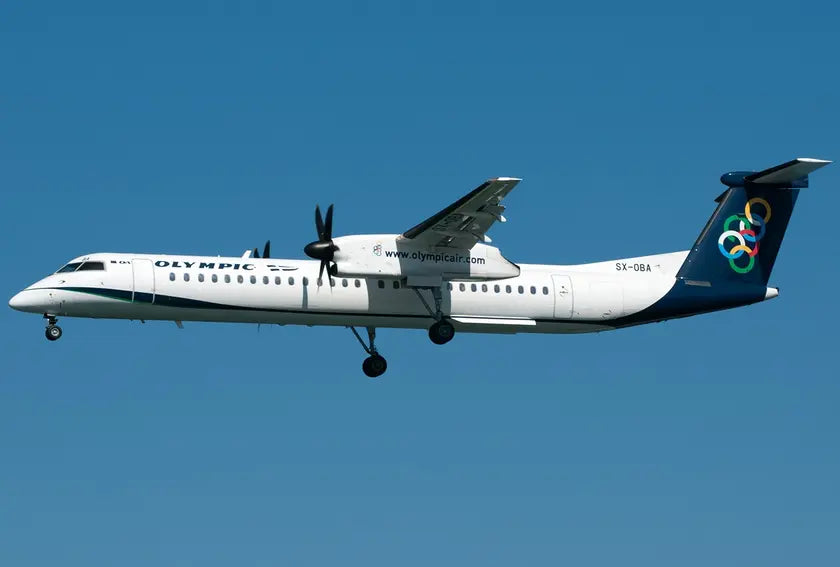
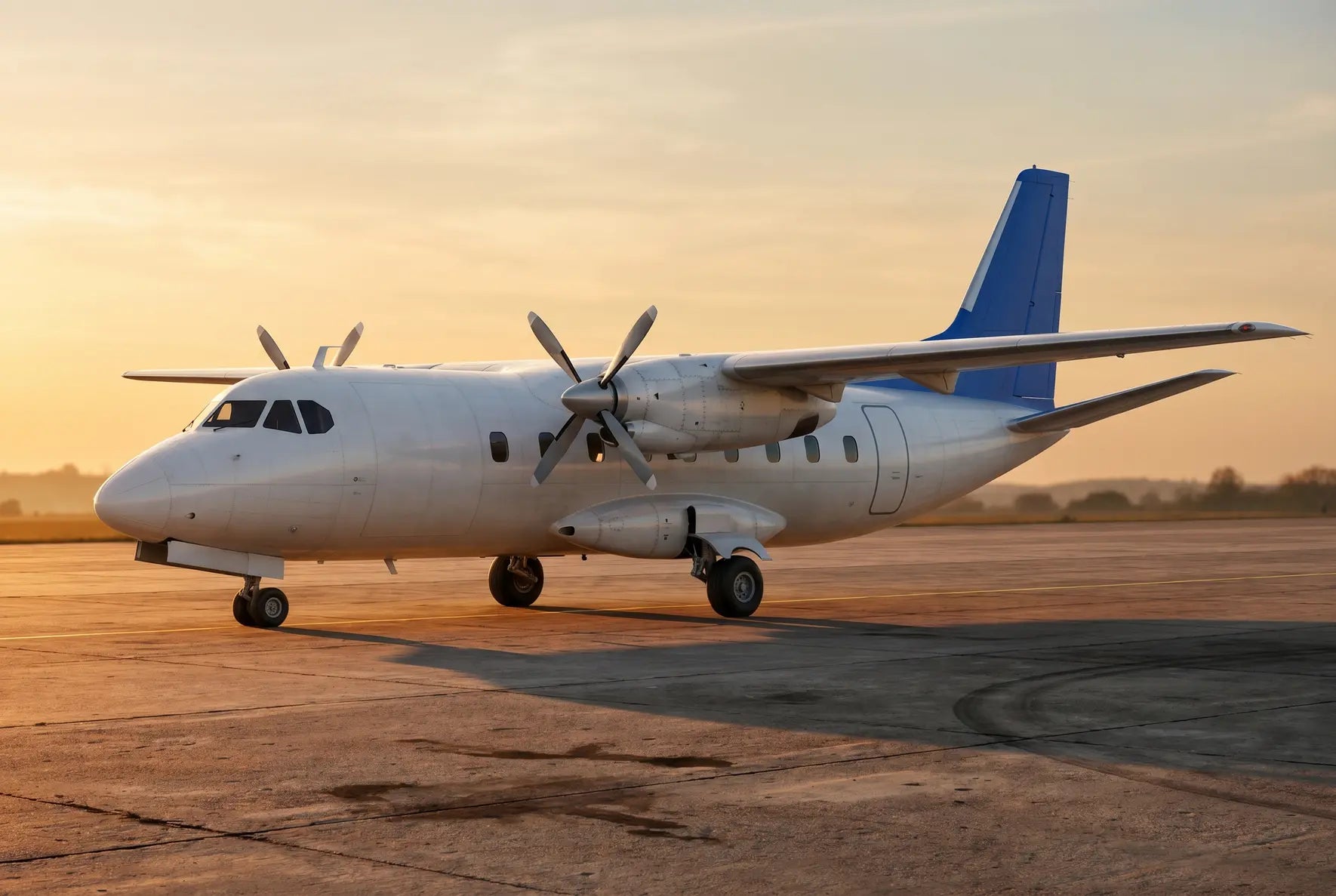
Widerøe operates one of the most distinctive fleets in European commercial aviation, built around two pillars: the De Havilland Canada Dash 8 turboprop family for short-field and PSO operations, and the Embraer E190-E2 regional jet for longer European and inter-city services. The Dash 8 workhorse comes in four variants, each tailored to a specific operational role, and Widerøe is the world's largest civil operator of the older Dash 8-100. On the jet side, Widerøe made aviation history in April 2018 when it became the global launch customer of the Embraer E190-E2, introducing the type into commercial service ahead of any other carrier.
| Aircraft Type | Role | In Service (2025) | Seats | Notes |
|---|---|---|---|---|
| Dash 8-Q100 | STOL short-haul | 22 | ~37 | Core of the PSO operation. Extended service life programme to 160,000 cycles. |
| Dash 8-Q200 | STOL short-haul | 4 | ~37 | Higher-powered variant. Universal Avionics flight-display upgrade underway. |
| Dash 8-Q300 | Regional turboprop | 3 | ~50 | Lightest-used variant. Transitional role between Q200 and Q400. |
| Dash 8-Q400 | High-capacity turboprop | 18 | ~78 | Main inter-city and international turboprop. Two refurbished units added in 2024, two leased from TrueNoord. |
| Embraer E190-E2 | Regional jet | 3 | ~114 | Launch customer (2018). Operates Bergen, Tromsø, European routes. |
Fleet data per Widerøe fleet pages and independent sources (ch-aviation, Wikipedia) as of late 2025. Totals approximate 50 aircraft.
Dash 8: The Backbone of STOL Flying
The Dash 8-Q100 is the aircraft most closely associated with Widerøe. With its high wing, powerful Pratt & Whitney PW120 engines, and rugged landing gear, it is one of very few 30-plus-seat airliners certified for the kind of short, obstructed runways found along the Norwegian coast. De Havilland Canada announced in 2024 that Widerøe's Q100 fleet would benefit from its ESP PLUS programme, effectively doubling the airframe service life to 160,000 cycles. This indicates a clear strategic decision to keep the Q100 in service well into the 2030s, a move driven both by the lack of a direct replacement certified for the same airfields and by the favourable economics of a paid-off airframe on short, high-frequency PSO sectors.
The larger Q400, by contrast, is the aircraft pilots typically aspire to in the turboprop ladder. With roughly 78 seats, modern avionics, and cruise speeds approaching 360 knots, it operates Widerøe's busier trunk routes and international services such as Bergen to Aberdeen. In July 2024, De Havilland Canada announced the sale of two factory-refurbished Q400s to Widerøe, and lessor TrueNoord added two more Q400s on operating lease in September 2024. These additions support the cost-efficiency programme launched by CEO Tore Jenssen after the Norwegian acquisition.
Embraer E190-E2: The Jet Fleet
Three Embraer E190-E2 jets form Widerøe's jet operation. They were ordered in a firm-plus-options deal (3 firm + up to 12 options) and entered service in 2018. These jets operate high-demand routes from Bergen and Tromsø, along with seasonal services to London, Aberdeen, and other European points. No additional E2 deliveries have been confirmed publicly as of the time of writing, although the option slots technically remain open. For pilots, the E190-E2 represents the jet entry point into the airline and the natural step-up from the Q400.
All newly hired Widerøe pilots, including those with jet experience from other carriers, start as First Officers and are typically assigned to the Dash 8 fleet (Q100/Q200 or Q400 depending on base and manning needs). According to Widerøe's official pilot careers page, type rating training is provided by the company at no cost to the successful candidate. Transition to the Embraer E190-E2 fleet, or to the Dash 8-Q400 from the Q100, is driven by operational need and seniority, and is not a role pilots can freely bid.
Widerøe has not publicly committed to a large-scale turboprop replacement for the Q100 fleet, and no Part 25 aircraft is currently certified for the full STOL capability the Q100 delivers on the smallest Norwegian airports. ATR and the reborn De Havilland Canada are both studying next-generation turboprops, but nothing is on firm order at Widerøe as of late 2025. Aspiring pilots should expect the Q100 to remain a central type well into the 2030s, while also monitoring announcements that could trigger significant fleet transitions and training opportunities later in the decade.
Pilot Salary & Compensation Breakdown
Pilot pay at Widerøe is set by the collective bargaining agreement (CBA) negotiated between airline management and Widerøes Flygerforening, the dedicated Widerøe pilot union affiliated with Norsk Flygerforbund (NF). The current agreement runs from 2023 to 2026 and establishes fixed annual wage increases of 6 percent in 2023, 4 percent in 2024, 4 percent in 2025, and 6 percent in 2026, along with a 2 percent profit-sharing bonus tied to company performance. Compensation is paid in Norwegian kroner (NOK) and consists of a base salary tied to seniority and rank, duty-day per diems, pension contributions, and variable bonuses.
Widerøe salaries are strong by Nordic regional aviation standards and sit comfortably above typical European regional turboprop pay scales, though they trail the top-end long-haul Captain packages at SAS or global carriers. The Norwegian personal income tax burden, which averages around 30 to 35 percent for pilot-level earners, and the country's high cost of living (especially in Oslo and Bergen) should be factored into any comparison with other European markets.
First Officer (F/O) Pay Scale
| Seniority | Annual Gross (NOK) | Approx. EUR Equivalent | Notes |
|---|---|---|---|
| Year 1 (entry) | NOK 565,000 – 650,000 | €49,000 – €57,000 | Base + per diems. Dash 8 fleet typical entry point. |
| Year 3 – 5 | NOK 700,000 – 900,000 | €61,000 – €78,000 | Seniority step increases under the CBA. |
| Year 6 – 10 | NOK 950,000 – 1,250,000 | €82,000 – €109,000 | Senior F/O. Jet fleet (E190-E2) becomes accessible. |
| Senior F/O (10+ yrs) | NOK 1,250,000 – 1,492,000 | €109,000 – €130,000 | Top of F/O scale. Usually in final year before Captain upgrade. |
Figures are annual gross estimates including base salary, flight-pay components, and standard allowances, based on pilot-network data referencing the 2023 to 2026 CBA. Take-home is lower after Norwegian income tax and social charges.
Captain Pay Scale
| Seniority | Annual Gross (NOK) | Approx. EUR Equivalent | Notes |
|---|---|---|---|
| Entry Captain (Dash 8) | NOK 1,220,000 – 1,350,000 | €106,000 – €117,000 | Typically on Q100 or Q400. First command position. |
| Captain, 5 years | NOK 1,400,000 – 1,600,000 | €122,000 – €139,000 | Mid-career. May transition to E190-E2 based on seniority. |
| Senior Captain (E190-E2) | NOK 1,600,000 – 1,764,000 | €139,000 – €153,000 | Top of current scale for commercial line Captain. |
Top gross earnings include per-diem payments, overtime, profit-sharing, and fleet premiums. Instructor or management roles carry additional allowances.
Allowances, Per Diems, and Bonuses
Beyond base pay, Widerøe pilots receive several routine compensation components. The per-diem allowance can reach up to NOK 940 per duty day (approximately €82), paid tax-free within applicable Norwegian limits to cover meals and incidentals. A profit-sharing bonus worth roughly 2 percent of wages is paid annually under the current CBA when the company meets agreed targets, giving pilots a direct stake in Widerøe's financial performance. Instructor pilots, training Captains, and those holding secondary responsibilities such as base manager roles receive additional functional allowances on top of their fleet pay.
The salary ranges shown here are compiled from publicly available sources, including the collective bargaining agreement referenced by union publications, the Pilot Jobs Network Widerøe profile, and industry salary comparisons. Exact figures depend on base, fleet, seniority step, fleet premium, and the precise terms of future collective agreements that will be renegotiated after 2026. Prospective applicants should verify current terms directly with Widerøes Flygerforening or through the official Widerøe careers portal before making career decisions.
Roster Pattern & Quality of Life
Quality of life is arguably Widerøe's strongest selling point. The combination of Norwegian labour law (the Arbeidsmiljøloven or Working Environment Act), EASA Flight Time Limitations, and collectively bargained provisions produces one of the most predictable, family-friendly rosters in European commercial aviation. The most common pattern used at the larger bases is 7 days on followed by 7 days off, a block structure that gives pilots nearly half the year as protected time away from work. At other bases the standard is a 5 days on, 5 days off rotation. Because Widerøe's network is almost entirely point-to-point within Norway with short sectors, most duty periods involve multiple legs of 30 to 90 minutes and a return to base the same day, with layovers being the exception rather than the rule.
📅 Sample Month — Dash 8 First Officer (Bodø base, 7/7 rotation)
A 7-on / 7-off pattern has powerful quality-of-life implications. With roughly 26 weeks of protected time off each year, plus statutory annual leave on top, Widerøe pilots enjoy more consecutive days away from duty than crew at almost any mainline legacy carrier in Europe. For those who live close to base, it also means no commuting costs and a predictable family life. For those who commute from other parts of Norway or from abroad, it makes commuting genuinely viable without eroding time at home.
Pilot Bases
Widerøe operates pilot bases at multiple locations across Norway, with the exact pattern and availability depending on fleet, seniority, and manning needs. Confirmed base cities include:
Base availability and rotation pattern are subject to manning needs and the applicable collective agreement. Bases can open or close seasonally.
Widerøe operations happen where the weather does most of the talking. Winter flying along the Norwegian coast routinely involves crosswinds near the Dash 8 demonstrated limit, blowing snow, severe icing conditions, and approaches into airfields with only non-precision guidance. This is a significant factor in quality of life: pilots get more days off than most carriers, but the flying days themselves are demanding. Many new recruits describe their first winter on the line as the steepest learning curve of their career. Widerøe's internal training culture, which includes extensive line training with dedicated mentors, is widely regarded as among the strongest in the Nordics specifically because this demanding environment leaves little room for guesswork.
Benefits, Travel Perks & Retirement
Norwegian employment law delivers one of the most protective benefits frameworks in Europe, and Widerøe supplements the statutory baseline with an airline-specific pension scheme, discounted staff travel on the Widerøe and Norwegian Group networks, and the full package of parental, sick-leave, and holiday entitlements that make Norway routinely rank among the top countries in the world for work-life balance. The non-salary component of Widerøe's offer is a large part of what offsets its base pay versus, for example, Gulf or US carriers.
The Pension System: Public Base Plus Company Top-Up
Understanding the Norwegian pension structure is essential for any pilot considering Widerøe. The system has three layers. First, the Folketrygden (National Insurance) provides a universal state pension based on career earnings. Second, the Obligatorisk tjenestepensjon (OTP) mandates that Norwegian employers contribute at least 2 percent of qualifying earnings into a private occupational pension plan, with most airlines going well beyond this minimum. Third, many employees build personal savings through an Individuell pensjonssparing (IPS) account, a tax-advantaged individual retirement product.
Widerøe's occupational pension scheme contributes 7 percent on earnings up to roughly NOK 842,000 and then scales up to 25.1 percent on earnings above that threshold, up to the statutory ceiling. For a Senior First Officer or a Captain whose salary falls partly above the cross-over point, this high marginal contribution rate is a meaningful deferred-compensation boost that compounds over a career. Unlike France's CRPN or UK-style defined-benefit pilot pensions, the Norwegian scheme is a defined-contribution product: the final pension depends on how the invested contributions perform over the years.
Norway's parental leave regime is widely cited as a competitive advantage for pilots starting or growing a family. The combined pot of 49 weeks at 100 percent pay (or 59 weeks at 80 percent pay) is shared between parents, with dedicated weeks reserved for each. For pilot crews with unpredictable schedules, the flexibility to split the leave over up to three years, combine part-time return with continued benefit, and adjust assignments through the union-managed rostering process is particularly valuable. The Widerøe collective agreement preserves seniority during parental leave, meaning no loss of standing on the upgrade list.
Career Progression & Seniority
Career progression at Widerøe is strictly seniority-driven, which has implications that cut both ways. On the positive side, the system is predictable, transparent, and free from the political games that plague some airlines: your position is your position, and promotions follow the list. On the negative side, there is no fast track. According to Widerøe's official pilot careers page, all newly hired pilots start as First Officers regardless of prior experience, and the current estimated time to Captain upgrade is approximately 10 years.
Widerøe does not operate a direct-entry Captain pathway. A former Airbus A320 Captain with 10,000 hours from another airline will join Widerøe on the same First Officer entry step as a new graduate. This is one of the most important facts for experienced applicants to absorb before applying: moving to Widerøe is a career move, not a role move. For many pilots the trade is worth it because of the Norwegian quality of life, but for some it is a dealbreaker.
| Career Milestone | Typical Timeline | Notes |
|---|---|---|
| Cadet / ab-initio training (if applicable) | 18 – 24 months | Through partner schools (Pilot Flight Academy, OSM Aviation Academy). Self-funded. |
| Join as F/O (Dash 8) | Day 1 | Type rating provided by Widerøe. Initial line training with dedicated mentors. |
| Fleet transition (Q100 to Q400) | 3 – 7 years | Seniority and manning driven. Not guaranteed. |
| Transition to E190-E2 (jet) | Variable | Limited jet slots (only 3 aircraft). Highly seniority-dependent. |
| Captain upgrade | ~10 years | Requires promotion board evaluation. Usually on Dash 8 fleet first. |
| Captain on E190-E2 | Highly variable | Top of seniority list only. Very limited slots. |
| Instructor / Training Captain | Post-Captain | Separate selection and instructor course. Additional allowance. |
Timelines are approximate and depend on retirement waves, fleet growth, and overall company hiring. Widerøe has historically been a stable long-term employer with relatively low pilot turnover.
The Promotion Board
Captain upgrades require passing an internal promotion board. This typically involves a review of the pilot's training file, recurrent check results, and safety record, followed by an interview with a panel including senior Captains and management. Successful candidates then move into command training, which involves additional simulator sessions and line training before the final line check. The process is not a rubber stamp: pilots can be deferred if their file shows weaknesses, although Widerøe's internal training culture emphasises identifying and addressing such gaps well before the upgrade year rather than at the board itself.
Single Seniority List
Widerøe operates on a single pilot seniority list covering all fleets and all bases. This means fleet changes (Q100 to Q400, Q400 to E190-E2) and base transfers do not reset a pilot's seniority. It also means, crucially, that despite becoming a subsidiary of Norwegian Air Shuttle in 2024, Widerøe pilots remain on their own seniority list separate from Norwegian's 737 pilot list. There is no automatic career interchange between the two carriers, although partnership opportunities may evolve over time as the group integrates certain corporate functions.
Widerøe is actively hiring in 2025 and 2026, with the official jobbiwideroe.no job board listing multiple First Officer openings with application deadlines throughout April and May 2026. The hiring pace is driven by fleet additions (the leased and refurbished Q400s), natural attrition, and the ongoing build-up of operations after the Norwegian Group acquisition. This is a favourable window for applicants with the right profile (EASA license, Scandinavian language skills, Class 1 medical issued by a Scandinavian authority). Pilots should not expect a direct-entry Captain opportunity to emerge, but the First Officer pipeline is open.
Recruitment Process & Requirements
Widerøe recruits First Officers through its official careers portal at jobbiwideroe.no, with ongoing openings published as fleet and base needs demand. Unlike some legacy carriers with large in-house cadet schemes, Widerøe primarily hires pilots who already hold a valid EASA license, typically a CPL with IR/ME and frozen ATPL or a full ATPL. There is no company-funded ab-initio pathway at Widerøe itself, though the airline maintains close partnerships with two of Norway's leading flight schools, Pilot Flight Academy in Sandefjord and OSM Aviation Academy, through which aspiring pilots can follow a clear airline-ready curriculum that aligns with Widerøe's hiring standards.
Core Requirements
Scandinavian Language: The Non-Negotiable
The single most common reason talented international applicants are filtered out is the Scandinavian language requirement. Widerøe's operations, internal communications, maintenance documentation, and PSO route SOPs are delivered in Norwegian. While English is the language of the cockpit for international and some jet operations, a working fluency in Norwegian, Swedish, or Danish is essential for day-to-day effectiveness on the line, for participating in company briefings, and for meeting the regulatory Language Proficiency Requirement (LPR) that Norwegian authorities apply to operations in Norwegian airspace. This is not a formality: Luftfartstilsynet, the Norwegian CAA (available at luftfartstilsynet.no), independently assesses LPR compliance.
Selection Stages
Online Application
Submitted via jobbiwideroe.no. Includes CV, copies of all licenses, medical certificate, passport, education documents, and evidence of Scandinavian language ability. Candidates may also submit open applications when no live vacancy is posted, in which case their file enters a database for future consideration.
Aptitude and Technical Testing
Shortlisted candidates complete a psychometric and aptitude test battery assessing multi-tasking, spatial awareness, numerical and verbal reasoning, and aviation-specific knowledge. Depending on the batch, this may be conducted remotely or on-site. Technical aviation knowledge is also tested at an ATPL-appropriate level.
Simulator Assessment
Held at a Widerøe approved training partner. Candidates fly a standardised profile, usually in a Dash 8 or equivalent twin turboprop simulator, focused on raw-data instrument flying, standard operating procedures, and crew coordination. The simulator ride is not a pass-or-fail line check but a developmental assessment: assessors look for coachability and sound basic airmanship, not polished type-familiarity.
Panel Interview
Held at a Widerøe facility (typically Bodø or Oslo). Competency-based interview with senior pilots and HR. Questions focus on motivation, decision-making, CRM, handling of unusual situations, personal background, and understanding of Widerøe's unique operational environment. Authentic knowledge of why Widerøe (as opposed to another Nordic carrier) is expected.
Medical & Reference Checks
Final Class 1 medical verification, security vetting, and reference checks from previous employers and flight schools. Candidates must hold or obtain a Class 1 medical issued by a Scandinavian authority before starting operational training.
Type Rating & Line Training
Successful candidates receive a conditional offer and start the Dash 8 type rating at company expense. Type rating is followed by line training with dedicated line training Captains, operating into the challenging short-field network. Only after satisfactory completion of line training and the associated line check does the pilot assume full First Officer duties.
Cadet / Airline-Ready Pathways
Candidates without an existing EASA license can follow an approved ab-initio route through Widerøe's partner schools. OSM Aviation Academy runs an Airline Ready programme at its Arendal and US campuses, and flyosm.com/wideroe describes the specific Widerøe pathway, which aligns the frozen ATPL curriculum with the operational demands pilots will face on Dash 8 line flying. Pilot Flight Academy in Sandefjord is the other main Norwegian ab-initio school with a historical pipeline into Widerøe. Both routes are self-funded at the training-school stage, with Widerøe providing the paid type rating once the candidate is hired.
Widerøe values candidates who can demonstrate a genuine understanding of why they want to fly regional STOL operations in Norway rather than somewhere else. Generic airline-career motivations tend to score poorly. Candidates who can articulate a real interest in Northern Norway, in short-field flying, in the social mission of the PSO network, and in the low-ego team culture of the airline consistently do better in the interview. Practical preparation for the simulator assessment should emphasise raw instrument flying, pitch-plus-power attitude management, and standard callouts, rather than memorised airline SOPs.
How Widerøe Compares: Nordic Pilot Airlines Radar Chart
How does Widerøe stack up against the two other major pilot employers in the Nordic region, its own parent Norwegian Air Shuttle and legacy flag carrier SAS Scandinavian Airlines? Below is a comparative assessment across the same metrics used in the scorecard at the top of this article. Scores are editorial estimates based on publicly available data, union documents, and industry benchmarks.
Key Takeaways from the Comparison
Widerøe wins on work-life balance and job security. The 7 on / 7 off roster pattern, minimal overnight layovers, strong Norwegian labour protections, and the PSO-underpinned revenue base make it the most predictable and family-friendly career of the three. SAS has a wider network and long-haul variety, but multi-day rotations, crew basing in multiple countries, and the 2022 to 2023 restructuring history (including the Chapter 11 filing and associated pilot strike) show up as reduced stability in this dimension. Norwegian Air Shuttle offers a competitive quality-of-life package but its short-haul and leisure-heavy network produces more irregular duty patterns than Widerøe.
SAS leads on fleet modernity and route variety. SAS operates an all-Airbus mainline fleet with A320neo short-haul and A350 long-haul aircraft, plus an order book for further A320neo and E195-E2 deliveries. Norwegian operates a modern 737 and 737 MAX fleet. Widerøe's fleet is more specialised: the Dash 8-100 is a unique tool for STOL operations but is also a 1980s-era airframe, and only three E190-E2 jets are in service. Pilots seeking modern glass-cockpit jet time and long-haul exposure will find more of it at SAS or Norwegian.
Salaries are broadly comparable in NOK terms at mid-career. SAS Captains on long-haul widebodies sit at the top of the Nordic scale, but Norwegian 737 Captains and Widerøe Dash 8 Captains land in a similar NOK 1.2M to 1.7M annual gross range depending on seniority. First Officer entry pay at all three is broadly competitive at around NOK 500,000 to 650,000 gross for year-one pay, with Widerøe's specific figures backed by the 2023 to 2026 CBA.
Career progression is fastest at Norwegian. Industry data suggests Norwegian Air Shuttle offers faster upgrade paths (approximately 3 to 7 years in some periods) due to its LCC growth model and more fluid crew base, while SAS and Widerøe are both strict seniority systems with roughly 10-year upgrades or longer. Widerøe's unique advantage here is predictability: the list is transparent, retirement waves are forecastable, and the airline's operational stability means the upgrade pipeline rarely stalls.
Radar scores are editorial estimates based on publicly available salary data (Pilot Jobs Network, industry salary comparisons), collective agreements, airline press releases, and pilot-community sources. They are meant as a high-level comparison for an experienced pilot evaluating long-term career options in the Nordics. Individual experiences will vary based on seniority, fleet, base, and personal priorities. Dedicated guides for SAS and Norwegian Air Shuttle will update and refine these scores as they are published.
Union & Industrial Relations
Widerøe pilots are represented by Widerøes Flygerforening, a dedicated pilot association that is a member of Norsk Flygerforbund (NF), the umbrella Norwegian Airline Pilots Association. The NF is the national federation that represents approximately 850 Norwegian airline pilots across several member associations, and its official website at flyger.no is the main channel for union publications, statements, and member services. Widerøes Flygerforening is one of NF's newer members and is led by Sindre Haanshuus (identified in NF publications as the current chair).
This structure is different from the Air France or Lufthansa models (where a single large pilot union directly owns the collective agreement) and different from the Ryanair or easyJet models (where a patchwork of national works councils and company-specific bodies negotiate separately). The Nordic model places a small, focused airline-level body inside a larger national federation, giving Widerøe pilots both dedicated representation on company-specific issues and access to the research, legal support, and industry-wide coordination that a national federation provides.
Widerøes Flygerforening: Structure and Role
The 2023 to 2026 Collective Agreement
The current collective agreement between Widerøe and Widerøes Flygerforening runs from 2023 through 2026. Its key published features include annual wage increases of 6 percent in 2023, 4 percent in 2024 and 2025, and 6 percent in 2026, along with a 2 percent profit-sharing bonus tied to company results, and protections on working-time patterns, rest periods, and the pension contribution formula described in the benefits section. Pilots should bookmark the Norsk Flygerforbund site for timely updates as the successor agreement is negotiated during 2026.
Recent Industrial-Relations History
Widerøe has been one of the most industrially stable pilot employers in the Nordics over the past decade, with no major pilot strike on the public record and a collective agreement renewal (2023) completed without industrial action. The small-federation-plus-national-body union structure keeps bargaining close to company realities while still providing the research and legal depth of a larger federation. For new pilots, union membership is optional but strongly recommended, and the overwhelming majority of Widerøe's line pilots are members of Widerøes Flygerforening. The union also provides the first point of contact for questions about the upgrade process, disputes over roster patterns, and career progression issues.
Verdict: Who Is Widerøe For?
🎯 Our Take
Widerøe is one of the most distinctive pilot careers in Europe, and arguably the most distinctive in Scandinavia. It is not the right airline for the pilot who wants long-haul variety, a modern widebody cockpit, or a rapid path to a Captain seat. It is the right airline for the pilot who values quality of life above gross salary, who finds genuine interest in demanding short-field flying, and who wants a stable career anchored in a country with some of the strongest labour protections, parental leave provisions, and social safety nets in the world.
The trade-offs are real and should be understood before applying. The path to Captain is roughly 10 years regardless of prior experience, with no direct-entry shortcut. Base salary is strong by Nordic regional standards but does not match long-haul Gulf or US jet contracts. The Dash 8-Q100 fleet is ageing, even with the extended-service-life programme, and the fleet renewal picture for the 2030s remains open. The weather on the Norwegian coast is, by any objective measure, among the hardest operating environments in European commercial aviation.
What Widerøe offers in return is rare: a 7 on / 7 off rotation at the main bases, a 2023 to 2026 collective agreement with guaranteed wage increases, a strong supplementary pension, Norway's world-class parental leave and sick-pay regime, and a role in flying the social mission of Norwegian PSO aviation. For the right pilot, that combination adds up to one of the best long-term careers on the continent.
1 Do I need to speak Norwegian to fly for Widerøe?
Yes, in practice. A working fluency in a Scandinavian language (Norwegian, Swedish, or Danish) is required for day-to-day operations, company communications, and the Language Proficiency Requirement that Norwegian authorities apply. English is the language of the cockpit on international services, but it does not replace the Scandinavian-language requirement. This is the single most common filter that removes international applicants.
2 Does Widerøe pay for the type rating?
Yes. According to Widerøe's official pilot careers page, successful candidates receive Dash 8 type rating training at company expense as part of onboarding. Candidates are expected to arrive with a valid EASA license and Class 1 medical, but the airline-specific training is fully funded. Transitions between fleets (for example from Dash 8 to E190-E2) are also employer-funded.
3 How long does it take to upgrade to Captain at Widerøe?
Approximately 10 years, per Widerøe's own published information. The timeline is strictly seniority-based and varies with retirement waves, fleet growth, and company expansion. All newly hired pilots, regardless of prior experience, start as First Officers and must pass an internal promotion board when their seniority places them in line for command. There is no direct-entry Captain pathway.
4 Can I commute to Widerøe from outside Norway?
Technically possible, especially with the 7 on / 7 off rotation that makes commuting practical for a full week at home. However, Widerøe expects pilots to be able to operate from their assigned base with a reasonable margin for irregular operations, and you must have the legal right to work in Norway (EEA citizenship or a valid work permit). A Class 1 medical issued by a Scandinavian authority is also required, which usually means relocating the medical file to Norway even if you do not physically relocate.
5 Now that Widerøe is owned by Norwegian, will my seniority transfer?
No. Widerøe pilots remain on their own seniority list, separate from Norwegian Air Shuttle's 737 pilot list. The acquisition in January 2024 preserved both the distinct brand and the existing collective agreements. Any future integration of seniority lists would require a formal negotiated process between the two pilot unions and the company, and there has been no such announcement as of the time of writing. For now, moving between Widerøe and Norwegian is a job change, not a transfer.
6 Is Widerøe a good first airline job?
For the right candidate, yes. Widerøe offers a paid type rating on a demanding but highly educational aircraft, a structured line-training programme, and a long-term career inside a stable Nordic employer. The short-field operations build a rare skill set that is respected across the industry. That said, competition for F/O slots is meaningful, and applicants without a Scandinavian language or without a Class 1 medical issued by a Scandinavian authority will struggle to clear the early filters. For those who meet the criteria, it is a strong first airline.
7 What is the rostering pattern like day to day?
At the main bases (Bodø, Oslo, Tromsø), the standard pattern is 7 days on followed by 7 days off. At Bergen and Trondheim the pattern is typically 5 days on and 5 days off. On flying days, a Dash 8 F/O can expect 4 to 8 short legs within Norway, most of them under 90 minutes, often returning to the home base in the evening. Overnight layovers do happen on longer routes, including European services, but they are the exception. The overall rhythm is demanding on flying days and protected on off days, which most pilots describe as a favourable trade.
8 Which flight schools feed Widerøe?
The two main partner schools are Pilot Flight Academy in Sandefjord and OSM Aviation Academy (Arendal and US campuses). Both operate integrated ATPL courses aligned with Norwegian regulatory standards and have established pipelines of graduates hired by Widerøe. Neither programme is company-funded by Widerøe itself: the training-school stage is self-financed by the cadet, after which Widerøe covers the type rating on successful hire.
Official Links & Resources
Before applying or making any career decisions, pilots should verify information directly with official sources. These are the primary websites and organisations relevant to a Widerøe pilot career, including the airline's own portals, the pilot union, Norwegian regulatory authorities, and the main partner flight schools.
Bookmark the Widerøe job board at jobbiwideroe.no/en and set a calendar reminder to check it once a week. Pilot openings are posted with short application windows (typically two to four weeks) and the best opportunities tend to fill quickly. Combining this with the Norsk Flygerforbund news page at flyger.no provides the most complete early-warning system for both hiring openings and CBA news that will shape the next generation of Widerøe contracts.