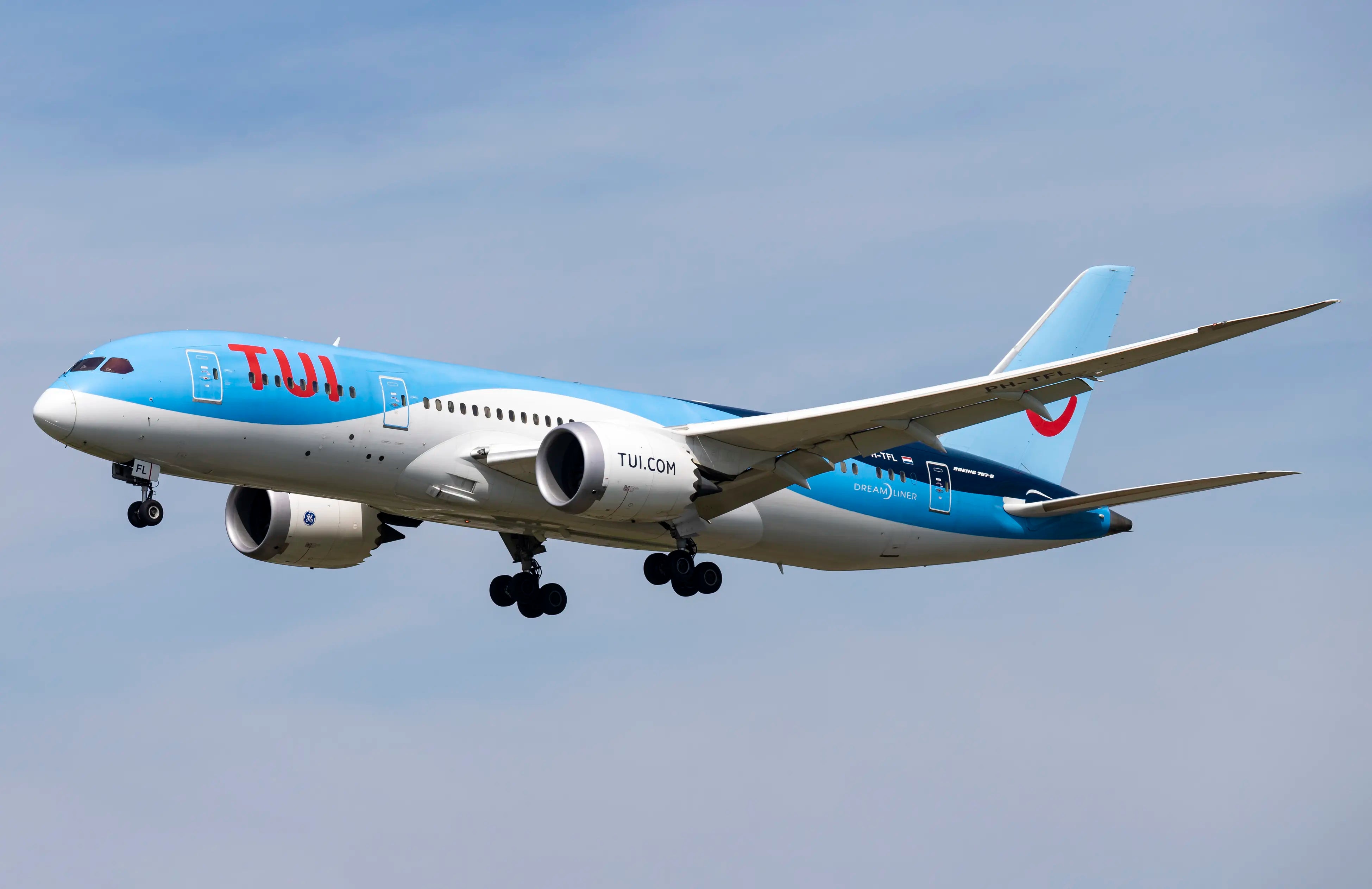
TUI fly Netherlands Overview & Company Profile
TUI fly Netherlands, legally incorporated as TUI Airlines Nederland B.V., is the Dutch leisure airline of the TUI Group, the largest integrated tourism company in the world. It flies under the IATA code OR, the ICAO code TFL and the radio callsign "Orange." The airline began operations in 2005 as Arkefly, the aviation arm of the long-established Dutch tour operator Arke. It was shortened to Arke in 2013 and rebranded to TUI fly in 2016 as part of a group-wide effort to unify the TUI airline brands across the Netherlands, Belgium, Germany and the United Kingdom.
Unlike a scheduled network carrier such as KLM, TUI fly Netherlands is a leisure and charter operator: its network is built around sun-and-holiday demand rather than business travel or hub connectivity. Its main crew base and operational hub is Amsterdam Airport Schiphol (AMS), with commercial flights also offered from Eindhoven, Rotterdam The Hague and Groningen Eelde, though those regional airports are no longer pilot crew bases. The carrier is not a member of any global alliance (SkyTeam, Star Alliance or oneworld); its pilots fly almost entirely within TUI's own point-to-point leisure network.
The airline is deliberately compact. It operates a fleet of roughly 10 aircraft and, according to a 2024 Dutch court judgment involving the airline and the pilots' union, employs approximately 208 pilots. That makes it one of the smaller carriers in the Dutch cockpit labour market, but it sits inside a financially substantial parent: TUI Group reported total revenue of €23.2 billion for its financial year to 30 September 2024, and operates around 134 aircraft across all of its airlines. For a pilot, that combination (a small, tight-knit Dutch operation backed by a diversified pan-European tourism group) is the defining feature of the airline.
TUI operates several national airlines under one umbrella: TUI Airways (UK), TUI fly Deutschland (Germany), TUI fly Belgium and TUI fly Netherlands. Each holds its own Air Operator Certificate and its own national labour agreements. That distinction matters for pilots: pay, rostering and union representation at the Dutch operation are set by Dutch law and the Dutch pilots' union, and are not interchangeable with the UK, German or Belgian TUI carriers. This guide covers the Dutch operation only.
Fleet Composition & Type Ratings
TUI fly Netherlands operates an all-Boeing, dual-fleet operation that is unusual for its size: a narrowbody short-haul fleet and a widebody long-haul fleet under a single small AOC. As of 2025 to 2026, independent fleet trackers and TUI's own Dutch corporate pages list a fleet of around 10 aircraft: six Boeing 737 MAX 8 narrowbodies and four Boeing 787-8 Dreamliner widebodies, with an average fleet age of roughly 8.4 years. That is a genuinely modern fleet by European leisure standards.
The fleet has been simplified sharply in recent years. The airline's own Boeing 737-800s were traded in for the more efficient 737 MAX 8, and TUI Netherlands management has publicly confirmed that the single-aisle fleet now consists only of the MAX. The airline still occasionally uses 737-800s during peak summer periods, but these are short-term wet-leases (for example from Go2Sky) flown by external crews, not by TUI fly Netherlands' own pilots. On the widebody side, the airline retired its last Boeing 767-300ER on 3 November 2024 (a farewell flight from Lanzarote and Fuerteventura back to Amsterdam), an event that also ended 767 operations across the entire TUI Group. The 787-8 is now the sole long-haul type.
| Aircraft Type | Role | In Service | Routes / Notes |
|---|---|---|---|
| Boeing 737 MAX 8 | Narrowbody | 6 | Short/medium-haul Europe, North Africa, Atlantic islands. Replaced the 737-800. |
| Boeing 787-8 Dreamliner | Widebody | 4 | Long-haul flagship. Caribbean, Mexico and other sun destinations from Amsterdam. |
| Boeing 737-800 | Narrowbody (wet-lease) | Seasonal | Peak-summer capacity only, operated by external crews (e.g. Go2Sky). Not flown by TUI fly NL pilots. |
| Boeing 767-300ER | Widebody (retired) | 0 | Last aircraft (PH-OYJ) retired 3 November 2024, ending 767 ops across all of TUI Group. |
Fleet data as of late 2025 / early 2026, from Planespotters, TUI corporate information and Dutch aviation press. Numbers change with deliveries, leases and seasonal capacity.
For pilots, the practical picture is clean and current-generation. The MAX 8 brings the latest single-aisle engines, avionics and updated flight-control systems, while the 787-8 offers an advanced widebody flight deck, large displays and integrated electronic flight bags. The passenger cabins across both types share a three-class layout of Deluxe (around 106 cm / 42 inches of legroom), Comfort (at least 78 cm) and Economy (around 71 cm), a configuration relevant to cabin operations though the cockpit workflow is standardised across the operation.
TUI fly Netherlands recruits primarily type-rated, experienced pilots. For the widebody operation, published vacancies ask specifically for a valid Boeing 777/787 type rating with completed base training, meaning the airline prefers pilots who already know Boeing's long-haul systems. Some pilots operate both types as multi-fleet flyers (MFF) and receive a structural salary supplement for doing so. Because the fleet is only two types and the pilot list is small (~208), fleet assignment and any 737-to-787 transition are governed by seniority and operational need rather than by a large menu of aircraft choices.
Pilot Salary & Compensation Breakdown
Pilot pay at TUI fly Netherlands is set by the CAO Vliegers TUI fly Nederland 2024–2026, the collective labour agreement negotiated between TUI Airlines Nederland B.V. and the Dutch pilots' union VNV (Vereniging Nederlandse Verkeersvliegers), which is currently in force through 31 January 2026. Unlike carriers that build pay around flight-hour rates, the TUI fly Netherlands CAO uses a fixed, formula-based monthly salary. This makes earnings unusually transparent and predictable, but it also means there is no large variable "block-hour" bonus stacked on top of base pay.
The gross monthly salary is calculated as (L + D + F + E) × V, where L is the age component (set at €46 per year of age, with a floor of €1,135), D is the service component (accruing per year of employment, with per-year amounts such as €182 or €227 depending on function group), F is the function component (higher for a Captain than a First Officer) and E is an experience component. The whole sum is scaled by a common factor V. That V-factor was raised by 7% on 1 July 2024 to approximately 1.4463, applying a general pay rise across every rank and seniority step at once. The CAO caps the sum (L + D + F + E) at €11,561/month for Captains and €7,771/month for (Senior) First Officers, before the 8% holiday allowance.
First Officer Pay Scale
| Seniority | Monthly Gross (est.) | Annual Gross (est.) | Basis |
|---|---|---|---|
| Year 1 (type-rated entry) | €5,000 – €6,500 | ~€65,000 – €85,000 | Estimate; entry sits well below the CAO scale maximum |
| Mid-career F/O (5–8 yrs) | €7,500 – €9,000 | ~€97,000 – €117,000 | Estimate; L and D components building toward the cap |
| Senior First Officer (top of scale) | ~€11,200 | ~€145,000 | CAO maximum: €7,771 × 1.4463, plus 8% holiday allowance |
The top-of-scale figure is calculated directly from the CAO 2024–2026 maximum and V-factor. Entry and mid-career figures are estimates and depend on age, prior experience and years of service. All figures are gross, before Dutch income tax and social charges.
Captain Pay Scale
| Seniority | Monthly Gross (est.) | Annual Gross (est.) | Basis |
|---|---|---|---|
| New Captain (upgrade) | €12,000 – €14,000 | ~€155,000 – €180,000 | Estimate; function component steps up on command |
| Mid-seniority Captain | €14,500 – €16,000 | ~€188,000 – €207,000 | Estimate; age and service components accruing |
| Senior Captain (top of scale) | ~€16,700 | ~€217,000 | CAO maximum: €11,561 × 1.4463, plus 8% holiday allowance |
Top annual totals of roughly €217,000 gross represent the ceiling of the published CAO scale, before profit-related payments and before the additional net allowances described below. Long-tenure Captains reach this cap and then progress only through allowances and holiday pay.
On top of the base salary, the CAO adds several defined elements. Every pilot accrues an 8% holiday allowance (vakantietoeslag), paid annually with the May salary. There is a fixed net allowance of €96.95 per month covering uniform upkeep, professional literature, parking and similar incidental costs, paid equally to Captains and First Officers. Multi-fleet flyers who are line-checked on a second type receive a structural supplement equal to one twelfth of their monthly salary. Commuting is reimbursed on a net monthly scale: €68.96 for a one-way home-to-base distance of 10 to 15 km, €96.54 for 15 to 20 km, and €137.92 for 20 km or more (no reimbursement under 10 km).
The top-of-scale figures here are derived directly from the published CAO Vliegers TUI fly Nederland 2024–2026 and are reliable. The entry and mid-career figures are estimates, because the CAO does not publish a simple year-by-year table and a pilot's exact pay depends on age, hire-in experience and accrued service. Crucially, all numbers are gross: Dutch income tax and social contributions substantially reduce take-home pay, and TUI fly Netherlands uses a fixed-salary model with no large flight-hour bonus. Always verify against the current CAO and any offer letter.
Roster Pattern & Quality of Life
Rostering at TUI fly Netherlands operates within EASA Flight Time Limitations (FTL), Dutch labour law and the CAO, with oversight by the Dutch regulator, the Human Environment and Transport Inspectorate (ILT). EASA FTL sets the hard ceilings that every European airline must respect: a maximum of 900 flight hours per calendar year, no more than 100 flight hours in any rolling 28 days, and minimum rest and days-free-of-duty requirements. Within those limits, the airline builds its own schedule.
The most distinctive feature the airline promotes to pilots is its five-weekly roster cycle. Published widebody vacancies describe a predictable, transparent five-week rhythm and explicitly market work-life balance as a selling point. A repeating cycle gives pilots medium-term visibility of working and off days, which is valuable for planning family life, and stands in contrast to the more reactive month-by-month bidding at some carriers.
📅 Illustrative Month — Boeing 737 MAX 8 First Officer (AMS)
Illustrative only. TUI fly Netherlands publishes a five-weekly roster cycle; the exact working pattern varies by fleet, season and seniority. Short-haul duties often contain two to four sectors per day.
The two fleets create two very different lifestyles. On the 737 MAX 8, a pilot flies short and medium sectors to Mediterranean, Canary Islands, North African and Atlantic-island destinations, frequently two to four legs a day with quick turnarounds, early starts and same-day returns to Amsterdam. Fatigue here is driven by early reporting and repetitive duty, not time zones. On the 787-8, duty days stretch to eight to ten hours of flying each way to the Caribbean or Mexico, with overnight layovers and genuine time-zone shifts, but far fewer take-offs and landings. Multi-fleet flyers experience both.
Amsterdam Schiphol is the only pilot crew base. Rotterdam and Eindhoven, though commercial TUI airports, are no longer crew bases, and the airline states plainly that commuting contracts are not offered. Recruitment material requires pilots to be able to report to Schiphol within 60 minutes when on standby, which in practice means living in or around the Randstad region of the Netherlands. For pilots who want to live near their base and avoid long positioning commutes this is an advantage; for those hoping to base-commute from abroad, it is a firm constraint to weigh before applying.
Benefits, Travel Perks & Retirement
Because TUI fly Netherlands employs pilots under Dutch social law and a detailed CAO, the benefits package is comprehensive and heavily protective, in the tradition of the Dutch employment model. It also carries a distinctive advantage that few airlines can match: the pilot works for a company that also owns hotels, resorts and holidays, and those products come at a discount.
The loss-of-licence and occupational disability cover is one of the most important protections for any professional pilot, whose entire career depends on retaining a Class 1 medical. Under the CAO, a pilot who becomes medically unfit receives 100% of gross salary during the first year of incapacity and 70% during the second. From two years after the first day of sickness until retirement at age 65, the loss-of-licence insurance pays 70% of the last earned annual wage. The CAO even permits a pilot on that benefit to earn up to €20,000 gross per year from other work without any reduction, encouraging retraining while keeping the safety net intact.
The standout non-cash perk is access to TUI's own tourism ecosystem. Staff travel runs through an industry travel arrangement (IPB), and pilots and their families receive discounts on TUI Netherlands and TUI Belgium holidays, meaning the same Caribbean, Mediterranean and long-haul products the pilot flies professionally can be booked privately at reduced rates. For a leisure-oriented crew this can be worth a meaningful amount each year and is a real part of the overall value of the job, partly offsetting the fact that gross salaries sit below the KLM mainline level.
Career Progression & Seniority
Career progression at TUI fly Netherlands is built on a seniority system embedded in the CAO. Years of service and function feed directly into both salary (through the D and E components) and into bidding rights for leave, rotations and fleet assignment. In a company of only around 208 pilots, that seniority list is short, which cuts both ways: individual movements matter a great deal, and a single wave of retirements or a fleet change can noticeably shift upgrade prospects.
The realistic path is: join as a type-rated First Officer (on the 737 MAX 8 or, with the right rating, the 787), accrue seniority, and upgrade to Captain from within. TUI fly Netherlands does not publish a fixed upgrade timeline, and command timing depends on growth, retirements and command vacancies. Across comparable European leisure operators, First Officer to Captain typically falls somewhere in the region of 8 to 12 years, but at a carrier this small the figure is genuinely variable and should be treated as an indication rather than a promise.
| Career Milestone | Typical Timeline | Notes |
|---|---|---|
| Join as First Officer | Day 1 (type-rated hire) | 737 MAX 8, or 787 with a B777/787 rating. Experienced/direct-entry F/O route. |
| Consolidation on fleet | 1–3 years | Line experience, recurrent checks, seniority accrual. |
| Fleet transition (737 ⇄ 787) | Seniority-dependent | Multi-fleet flying (MFF) is recognised with a salary supplement. |
| Captain upgrade | ~8–12 years (est.) | Command course, simulator and line checks. Not guaranteed; depends on vacancies. |
| Widebody / senior command | Top of seniority list | 787 command and the top of the CAO pay scale. |
| Trainer roles (TRI / TRE) | Variable | Separate selection and instructor qualification. |
The main trade-off at TUI fly Netherlands is scope versus scale. A pilot here gets rare access to genuine long-haul widebody flying (the 787) inside a compact company, plus the variety of also flying short-haul, something most leisure carriers cannot offer. But with only about 208 pilots and 10 aircraft, the number of command slots and annual openings is limited, so upgrades move with retirements and fleet decisions rather than with rapid expansion. Pilots who prioritise a fast, high-volume command ladder sometimes look to larger operators; those who value a modern mixed fleet and a stable Dutch employer find the smaller footprint an acceptable price.
Recruitment Process & Requirements
TUI fly Netherlands recruits mainly experienced, type-rated pilots and advertises its cockpit vacancies through the TUI Group careers portal. This is not primarily an ab-initio airline: the published requirements are aimed at pilots who already hold the licences, ratings and legal right to work needed to step onto the line with minimal conversion. The clearest example is the recurring "B787 Type Rated Pilot Netherlands" vacancy, which spells out the standard the airline expects.
Core Pilot Requirements
The selection process is not published stage-by-stage, but the profile of requirements tells you what it verifies. Because candidates arrive licensed and, for the widebody role, already type-rated, the emphasis falls on confirming competence, experience and regulatory compliance: document and licence checks, a simulator assessment testing handling, procedures and crew resource management, and an interview probing motivation, judgement and fit with TUI's operating culture. A valid Class 1 medical and completed base training are prerequisites, not things the airline provides for you at this stage.
What the Selection Typically Involves
Application & Screening
Apply through the TUI Group careers portal for the relevant vacancy (for example the B787 Type Rated Pilot role). CV, licences, ratings, medical validity and right-to-work are screened against the published requirements before any invitation.
Assessment & Simulator
Shortlisted candidates are evaluated on technical flying, procedures and CRM, generally including a simulator session. This is where handling standards and decision-making under pressure are confirmed against the airline's expectations.
Interview & Fit
An interview assesses motivation, attitude, teamwork and cultural fit within TUI's operation. For a small, tight-knit airline, alignment with the company's leisure-operation culture carries real weight.
Offer, Line Training & Induction
Successful candidates receive an offer under the current CAO, complete any required conversion or line training, and are inducted into TUI's standard operating procedures and safety management system before flying the line.
Two points matter for aspiring applicants. First, on cadet entry: TUI Group has historically run an MPL cadet programme that trains low-experience candidates to 737 co-pilot, but that scheme has been suspended for the 2026 intake and is a group-level pathway rather than a guaranteed door into the Dutch operation. If your goal is TUI fly Netherlands, plan on arriving already licensed. Second, on language: cockpit operations run in English (ICAO Level 4 minimum), and Dutch is not stated as a cockpit requirement, but the right to live and work in the Netherlands (EU/EEA/Swiss) is non-negotiable and there is no visa-sponsorship route advertised.
Top 5 Layover Destinations
The 787-8 is what makes TUI fly Netherlands stand out among Dutch leisure carriers: it is the reason a pilot here can hold a long-haul widebody and still fly for a compact company. The Dreamliner network is anchored in the Dutch Caribbean and Mexico, the sun destinations that dominate Dutch holiday demand. TUI even named one of its Dreamliners after Curaçao, and reporting from Caribbean Journal confirms the Amsterdam–Curaçao long-haul is flown on the 787-8. The five destinations below are the core of the widebody layover programme; exact frequencies and seasonality vary.
Crew hotels are contracted by the airline, and pilots are provided accommodation and transport rather than choosing their own. Under EASA FTL, long-haul crews must receive their minimum rest before the next duty, and sectors of these lengths mean overnight layovers are the norm. Beyond the five core destinations above, the Dutch 787 has also appeared on routes such as Sint Maarten and Montego Bay (Jamaica). With only four Dreamliners and a strongly seasonal schedule, the exact long-haul map shifts through the year, and access to the most sought-after rotations is governed by seniority.
How TUI fly Netherlands Compares: Airline Radar Chart
The most useful comparison for a pilot weighing TUI fly Netherlands is against its closest Dutch peers competing for the same crews: Transavia (the Air France-KLM leisure and low-cost carrier) and Corendon Dutch Airlines (an independent Dutch leisure operator). The radar below rates the three across five metrics. Scores are editorial estimates based on publicly available data, CAO documents and industry benchmarks.
Key Takeaways from the Comparison
Fleet variety is TUI fly Netherlands' clearest edge. It is the only one of the three that offers genuine long-haul widebody flying, with four Boeing 787-8 Dreamliners alongside a modern 737 MAX 8 narrowbody fleet (average age around 8.4 years). Transavia flies short-haul only, on the Boeing 737-800 and Airbus A321neo, and Corendon operates an all-737 fleet (737-800 and 737 MAX 9). For a pilot who wants both short-haul and long-haul on one licence at a Dutch employer, TUI is close to unique.
Salaries are broadly comparable, with different structures. Transavia's published CAO scale runs to roughly €20,000 gross per month at the very top of the largest-aircraft Captain band, and experienced First Officers start around €6,461 to €7,552 gross per month, on a fixed all-in salary with no flight pay. TUI fly Netherlands tops out near €16,700 gross per month for Captains and about €11,200 for Senior First Officers, also on a fixed salary. Corendon's cited base pay (First Officers roughly €3,590 to €6,900, Captains roughly €6,500 to €11,200) is lower but adds block-hour pay on top. Net of everything, the three sit in a similar mid-range, below KLM mainline.
Job security narrowly favours Transavia. Transavia's backing by the Air France-KLM group and its larger pilot body give it a slight edge on stability, though TUI Group's €23.2 billion scale and diversification across hotels, cruises and tour operating make TUI fly Netherlands a solid employer too. Corendon, as a smaller independent, scores lower on this axis. All three are exposed to the cyclicality of leisure demand.
Benefits and work-life are strengths across the Dutch carriers, and TUI's travel perks stand out. Dutch labour law gives all three strong loss-of-licence, sick-pay and pension protections. TUI's edge is the holiday-discount ecosystem and a predictable five-weekly roster; Transavia is prized for short-haul lifestyle and home nights, while its higher utilisation and tight turnarounds are the trade-off.
These scores are editorial estimates drawn from published CAO documents, airline career pages, fleet databases and pilot-market sources. They represent a general assessment for an experienced pilot considering a long-term career, not a precise measurement. Individual experience varies with seniority, fleet, contract type and personal priorities, and figures shift as new collective agreements are signed. Verify current terms with each airline and union before making a decision.
Union & Industrial Relations
Cockpit labour relations at TUI fly Netherlands are dominated by the VNV (Vereniging Nederlandse Verkeersvliegers), the Dutch airline pilots' association and trade union. VNV describes itself as a genuine union pursuing above-average employment conditions for airline pilots, and it represents cockpit crew across most of the Dutch industry, including KLM, Transavia, Martinair, easyJet Netherlands and TUI fly. A 2024 Dutch court judgment involving the airline recorded that TUI fly employs around 208 pilots and that roughly 90% of them are VNV members, a very high density that gives the union a strong mandate at the negotiating table.
How Pilot Conditions Are Set
The current agreement, the CAO Vliegers TUI fly Nederland 2024–2026, runs through 31 January 2026 and codifies the salary formula, allowances, pension arrangement, loss-of-licence cover and rostering rules discussed throughout this guide. Its most visible recent outcome was the 7% increase to the V-factor on 1 July 2024, a general pay rise applied uniformly across all ranks and seniority steps, negotiated against a backdrop of sector-wide inflation pressure that has driven similar increases at other Dutch carriers.
Recent Context & Disputes
Industrial relations on the pilot side at TUI fly Netherlands have been comparatively stable, with the 2024–2026 CAO reached through negotiation and no recent major pilot strike. The very high VNV membership (~90%) works in a new joiner's favour: the union has real leverage to protect pay, rostering and job scope. Membership is not compulsory, but the overwhelming majority of TUI fly pilots are members, and joining is the norm rather than the exception.
Verdict: Who Is TUI fly Netherlands For?
🎯 The Verdict
TUI fly Netherlands offers something genuinely rare: long-haul widebody flying on the Boeing 787-8 alongside modern short-haul on the 737 MAX 8, all inside a compact, stable Dutch operation of around 208 pilots. Add strong Dutch labour protections, a transparent formula-based CAO, robust loss-of-licence cover, and holiday discounts across the TUI ecosystem, and it becomes a very attractive home for a pilot who values fleet variety and lifestyle over maximum gross pay.
The trade-offs are equally clear. Pay tops out below KLM mainline, and Dutch tax and social charges take a real bite from gross figures. The pilot list is small, so command upgrades depend on retirements and fleet decisions rather than rapid growth. There is a single crew base at Amsterdam Schiphol, no commuting contracts, and a 60-minute standby callout, which effectively requires living in the Netherlands. And this is a leisure carrier, so demand (and therefore scheduling) is seasonal.
For an EU, EEA or Swiss pilot who is already licensed, wants to fly both short-haul and the Dreamliner, and is happy to be based in the Randstad, TUI fly Netherlands is one of the most interesting mid-size seats in the Dutch market.
1Do I need to speak Dutch to fly for TUI fly Netherlands?
Cockpit operations run in English, and published requirements specify ICAO English Language Proficiency Level 4 or higher. Dutch is not listed as a cockpit requirement, though it is useful for integration and everyday life. Far more important is holding an EU, EEA or Swiss passport and the legal right to live and work in the Netherlands, which is mandatory and not sponsored.
2What aircraft does TUI fly Netherlands operate?
An all-Boeing fleet of about 10 aircraft: six Boeing 737 MAX 8 for short and medium-haul, and four Boeing 787-8 Dreamliner for long-haul. The airline retired its last Boeing 767 on 3 November 2024 and has traded its own 737-800s for the MAX 8, though it occasionally wet-leases 737-800s (flown by external crews) for peak summer capacity.
3How much do TUI fly Netherlands pilots earn?
Pay follows the CAO Vliegers TUI fly Nederland 2024–2026 formula (L + D + F + E) × V. At the top of the published scale, a Captain reaches roughly €16,700 gross per month (about €217,000 per year including the 8% holiday allowance) and a Senior First Officer roughly €11,200 gross per month (about €145,000 per year). Entry and mid-career figures are lower and are estimates. All figures are gross, before Dutch income tax and social charges, and the airline uses a fixed salary with no large flight-hour bonus.
4Does TUI fly Netherlands hire direct-entry pilots or run a cadet scheme?
It primarily recruits experienced, type-rated pilots directly, for example a valid B777/787 type rating with completed base training for the Dreamliner role. TUI Group has historically run an MPL cadet programme, but it is a group-level pathway and has been suspended for the 2026 intake. If your goal is the Dutch operation specifically, plan on arriving already licensed rather than relying on an in-house ab-initio route.
5Where are TUI fly Netherlands pilots based?
Amsterdam Schiphol is the only pilot crew base. Rotterdam The Hague and Eindhoven are commercial TUI airports but are no longer crew bases. The airline does not offer commuting contracts and requires pilots to reach Schiphol within 60 minutes when on standby, which in practice means living in or near the Randstad region of the Netherlands.
6How long does it take to upgrade to Captain?
The airline does not publish a fixed timeline. Upgrade is seniority-based and depends on retirements, fleet decisions and command vacancies. A typical figure at comparable European leisure carriers is roughly 8 to 12 years, but with only about 208 pilots and 10 aircraft, the pace at TUI fly Netherlands is variable and should be treated as an indication, not a guarantee.
7What long-haul destinations would I fly on the 787?
The Dreamliner network centres on the Dutch Caribbean and Mexico: Curaçao (the airline even named a Dreamliner after the island), Aruba, Bonaire, Cancún and Punta Cana, with routes such as Sint Maarten and Montego Bay also appearing. With only four 787s and a seasonal schedule, the exact map changes through the year, and access to the most popular layovers is governed by seniority.
8How does TUI fly Netherlands compare to Transavia and Corendon?
All three are Dutch leisure carriers with strong Dutch labour protections. TUI fly Netherlands is the only one offering long-haul widebody flying (the 787) plus short-haul on one licence. Transavia is short-haul only (Boeing 737-800 and Airbus A321neo), backed by Air France-KLM, with a slightly higher top-of-scale fixed salary and strong job security. Corendon operates an all-737 fleet with lower base pay plus block-hour pay. Pay across the three is broadly mid-range and below KLM mainline; the deciding factors are usually fleet, base and lifestyle rather than headline salary.
Official Links & Resources
Before applying or making any career decision, verify the details directly with official sources. These are the key organisations and pages relevant to a TUI fly Netherlands pilot career:
Keep the TUI Group Netherlands careers page and the VNV news feed bookmarked. TUI fly Netherlands hires in campaigns tied to fleet and seasonal needs rather than continuously, so pilot vacancies (especially the type-rated 787 role) can open and close quickly, and the union is the fastest place to track CAO changes that affect pay and rostering.