

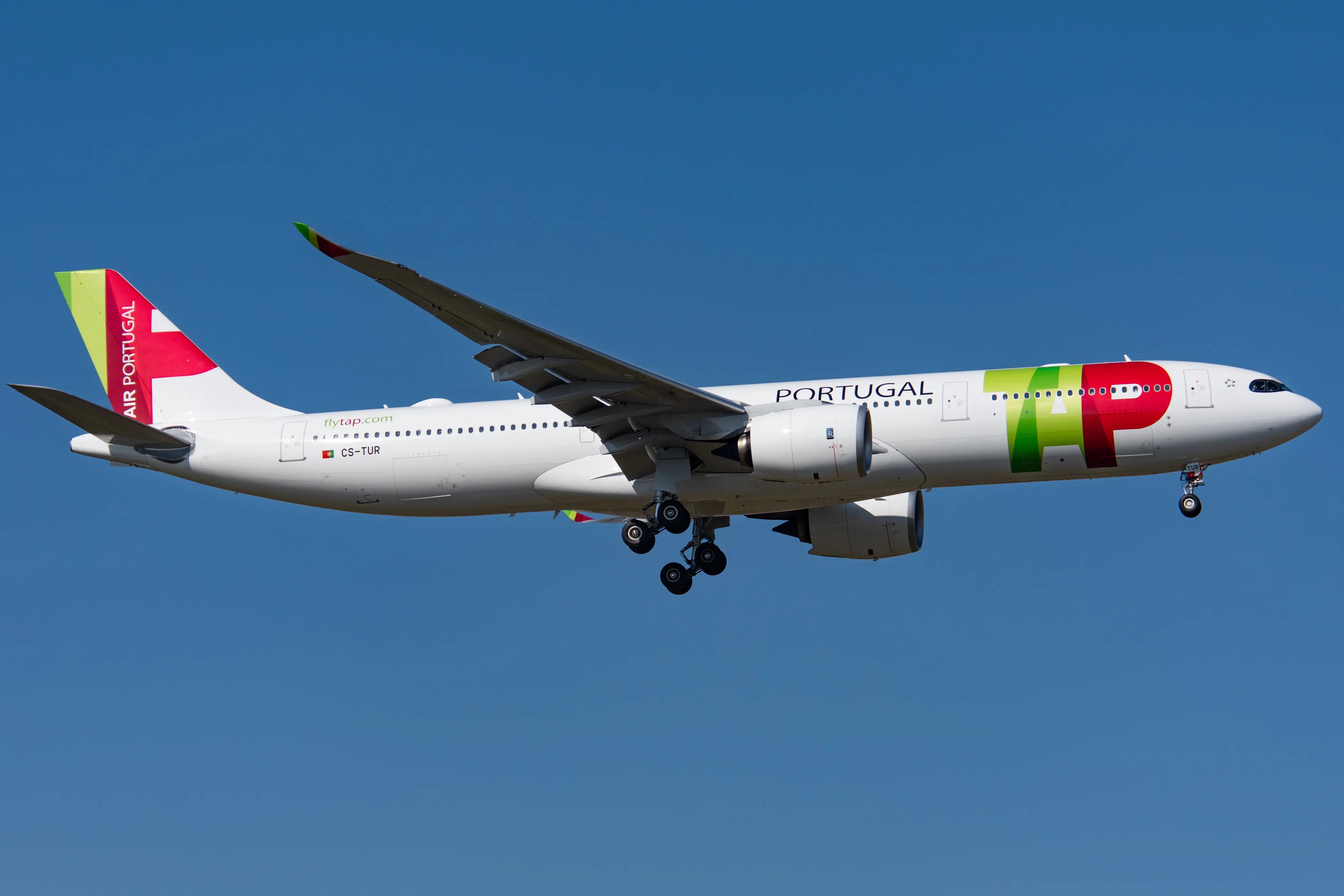
TAP Air Portugal Overview & Company Profile
TAP Air Portugal is the flag carrier of Portugal, founded on March 14, 1945, and headquartered at Lisbon's Humberto Delgado Airport (LIS). Originally named Transportes Aereos Portugueses, the airline has been a member of the Star Alliance since 2005 and today operates a fleet of approximately 102 aircraft to over 90 destinations across 34 countries. TAP is renowned for its strong transatlantic network, particularly to Brazil (14 destinations, the most of any European carrier) and Portuguese-speaking Africa, as well as a growing North American operation with up to 13 daily departures to the United States.
Currently 100% state-owned, TAP is in the final stages of a long-awaited privatization process. The Portuguese government is aiming to sell a 49.9% stake, with 5% reserved for employees. In late 2025, all three major European airline groups (Air France-KLM, Lufthansa Group, and IAG) formally expressed interest in acquiring the minority stake. The outcome of this privatization will likely reshape TAP's future, its alliance membership, and its pilot career structure. In 2024, TAP posted record operating revenues of ~4.2 billion euros, carried 16.1 million passengers, and reported a net income of 53.7 million euros for its third consecutive year of profitability. The airline operates from its primary hub in Lisbon and a secondary base in Porto (OPO).
Fleet Composition & Type Ratings
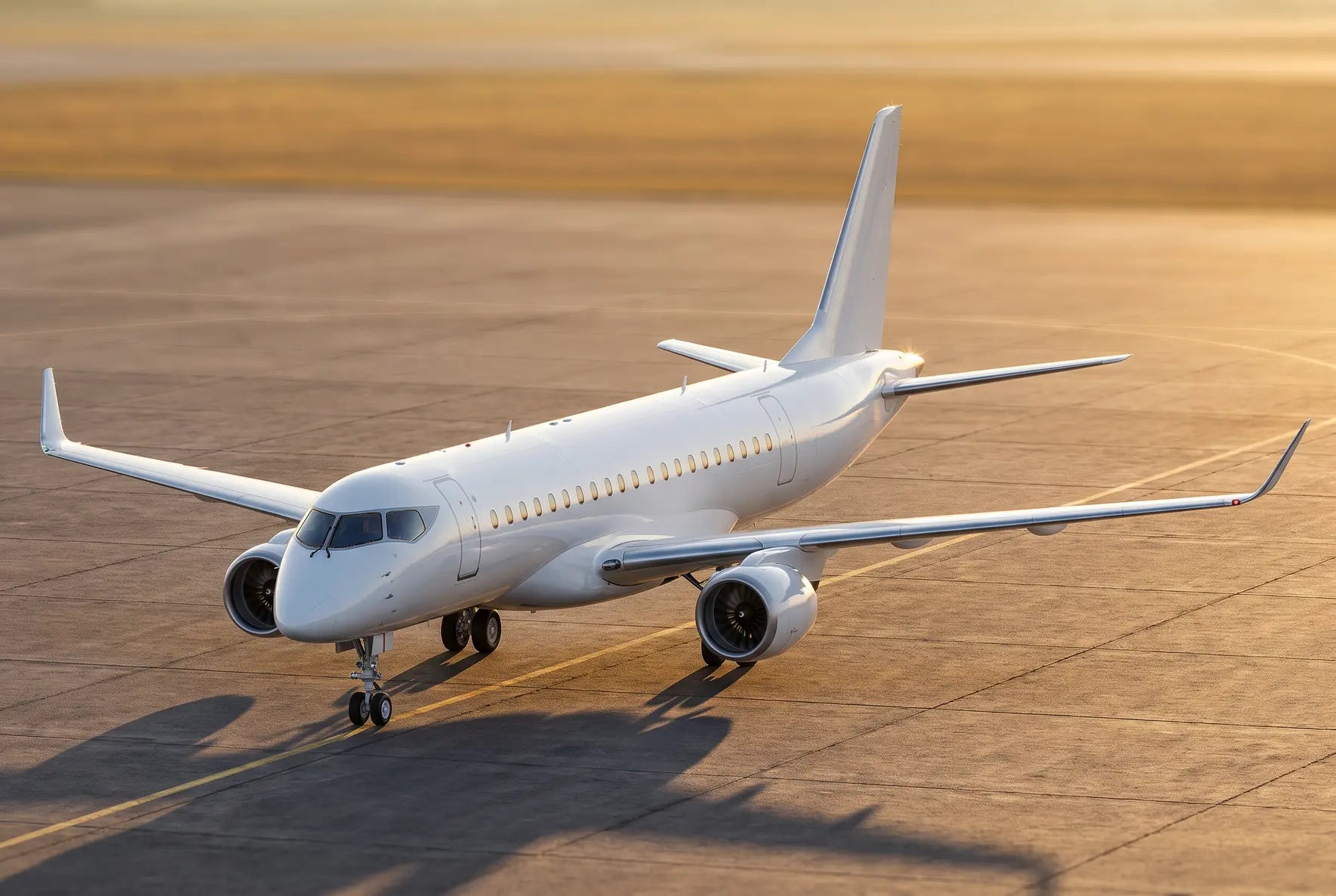
TAP Air Portugal operates an exclusively Airbus mainline fleet, complemented by Embraer regional jets under the TAP Express brand (operated by Portugalia Airlines). The airline underwent a significant fleet renewal starting in 2018, when it became the launch customer for the Airbus A330-900neo, a landmark for the carrier. The narrowbody fleet is dominated by A320neo and A321neo/LR variants, while the older A319 and A320ceo types are being phased out. The A321LR plays a distinctive role: TAP uses it for transatlantic routes to smaller US and Canadian cities that cannot support widebody capacity.
| Aircraft Type | Role | In Service | Routes / Notes |
|---|---|---|---|
| Airbus A320neo | Narrowbody | ~16 | European short/medium-haul. Core of the neo fleet renewal. |
| Airbus A321neo | Narrowbody | ~24 | European medium-haul and some transatlantic (LR variant). TAP's most numerous type. |
| Airbus A320ceo | Narrowbody | ~15 | European routes. Gradually being replaced by neo variants. |
| Airbus A321ceo | Narrowbody | ~3 | Medium-haul. Among the oldest in fleet, phasing out. |
| Airbus A319 | Narrowbody | ~3 | Short-haul. Active phase-out, only 3 remaining. |
| Airbus A330-900neo | Widebody | ~19 | Long-haul flagship. Brazil, US, Africa. TAP was launch customer. |
| Airbus A330-200 | Widebody | ~3 | Long-haul. Being retired, replaced by A330neo. |
| Embraer E190 | Regional | ~12 | TAP Express. Domestic and short European routes. |
| Embraer E195 | Regional | ~7 | TAP Express. Slightly larger capacity, European feeders. |
Fleet data as of early 2026 based on Flightradar24 and industry sources. Numbers are approximate and change with ongoing deliveries and retirements.
New First Officers at TAP Air Portugal are typically assigned to the A320 family (A320neo or A321neo). TAP covers the cost of type rating for pilots recruited through the official selection process. The A321LR is a unique asset in TAP's fleet, enabling single-aisle transatlantic flights to destinations like Newark, Washington, Montreal, and Boston. Transition to the widebody A330neo is seniority-based. Pilots assigned to TAP Express fly Embraer E190/E195 jets under a separate operational structure managed by Portugalia Airlines.
Pilot Salary & Compensation Breakdown
TAP Air Portugal pilot salaries are governed by collective agreements negotiated with the SPAC (Sindicato dos Pilotos da Aviacao Civil), the main Portuguese pilots' union. Compensation includes a monthly base salary that encompasses flight-hour pay, with no separate per-hour premium on top. Additional earnings come from per diem allowances, bonus schemes tied to company profitability, and pension contributions. Portuguese income tax rates are progressive (up to 48%), but Portugal's cost of living is significantly lower than Western European capitals like Paris or London, which improves purchasing power considerably.
First Officer (F/O) Pay Scale
| Seniority | Monthly Gross | Annual Gross (est.) | Notes |
|---|---|---|---|
| Year 1 (entry) | ~3,500 - 4,500 euros | ~42,000 - 54,000 euros | Entry level, A320 family |
| Year 3-5 | ~4,500 - 5,500 euros | ~54,000 - 66,000 euros | Seniority increments apply |
| Year 5-10 | ~5,500 - 6,500 euros | ~66,000 - 78,000 euros | Possible widebody transition |
| Senior F/O (10+ yrs) | ~6,500 - 7,000 euros | ~78,000 - 84,000 euros | Top of F/O scale, pre-upgrade |
Figures are gross estimates including base salary and standard allowances. Actual take-home pay depends on Portuguese tax brackets (14.5% to 48%) and social security deductions (~11%).
Captain (CDB) Pay Scale
| Seniority | Monthly Gross | Annual Gross (est.) | Notes |
|---|---|---|---|
| Entry Captain (narrowbody) | ~6,000 - 9,000 euros | ~72,000 - 108,000 euros | A320 family command |
| Captain, 5+ yrs | ~9,000 - 13,000 euros | ~108,000 - 156,000 euros | Mid-career, possible widebody |
| Senior Captain (A330neo LH) | ~13,000 - 18,000 euros | ~156,000 - 216,000 euros | Long-haul widebody command |
Senior long-haul Captains on the A330neo can exceed 200,000 euros annually when per diems and bonuses are included. Glassdoor data reports an average airline pilot salary at TAP of approximately 183,000 euros per year, with the 90th percentile reaching around 335,000 euros.
These figures are estimates compiled from multiple public sources including Glassdoor, aviation industry reports, and pilot community feedback. Actual compensation depends on the latest SPAC collective agreement, individual seniority steps, aircraft type, and flight hours logged. TAP's ongoing privatization may lead to salary renegotiations depending on the acquiring airline group. Portuguese social security contributions (~11% employee) and progressive income tax (up to 48%) reduce take-home pay. However, Portugal's lower cost of living compared to France, Germany, or the UK means purchasing power can be competitive. Always verify with the latest official SPAC publications.
Roster Pattern & Quality of Life
TAP Air Portugal operates under EASA Flight Time Limitation (FTL) rules combined with Portuguese labour regulations and the SPAC collective agreement. Pilots typically receive approximately 10 to 12 days off per month, with annual leave of around 22 to 30 working days depending on seniority and the applicable collective agreement terms. Rostering is managed centrally and follows a variable/random pattern, with schedule preferences influenced by seniority.
📅 Sample Month: Short/Medium-Haul First Officer (LIS)
Long-haul crews operating the A330neo to Brazil, the US, and Africa typically work 2 to 4 day rotations with layovers of 24 to 48 hours at destination, followed by 2 to 4 days off for recovery. Augmented crews (3 pilots) are used on sectors exceeding approximately 10 hours, which includes most transatlantic flights.
TAP pilots are based in Lisbon (primary) or Porto (secondary, limited positions). Lisbon is the main hub for both short-haul European and long-haul intercontinental operations. Porto handles a smaller set of European routes. Lisbon's cost of living is considerably lower than Paris, London, or Frankfurt, making it one of the more affordable European base cities for airline pilots. The city benefits from a mild climate year-round, excellent public transport, and a growing international community.
Benefits, Travel Perks & Retirement
As Portugal's flag carrier, TAP offers a comprehensive benefits package that combines Portuguese statutory employee rights with airline-specific perks. While individual benefits may not match the most generous legacy carriers in Western Europe, the lower cost of living in Portugal means the overall package delivers solid value, particularly for pilots who appreciate the lifestyle Lisbon offers.
The ongoing privatization of TAP is a key factor for prospective pilots to monitor. Depending on which airline group acquires the 49.9% stake (Air France-KLM, Lufthansa Group, or IAG), benefits and working conditions could evolve. The Portuguese government has stipulated that existing labour commitments must be respected by any buyer, which provides some protection. However, integration into a larger airline group typically brings harmonization of working conditions over time, which could be positive (access to group-wide benefits) or negative (cost-cutting pressures).
Career Progression & Seniority
Career progression at TAP Air Portugal is strictly seniority-based. The airline does not accept direct-entry Captains: all command upgrades come from internal promotion. This means every TAP Captain started as a First Officer with the airline. While this provides predictability and fairness, it also means wait times can be significant, particularly during periods of slow growth. The typical upgrade timeline to Captain is estimated at approximately 8 to 15 years, depending on fleet growth, retirement waves, and the pace of new aircraft deliveries.
TAP mainline and TAP Express (Portugalia) operate as separate entities with distinct pilot groups. Portugalia pilots are represented by SIPLA (Independent Union of Airline Pilots) and have different terms and conditions. There is currently significant tension between the two pilot groups regarding the Regulation on External Contracting (RRCE), which governs how TAP uses Portugalia crews.
| Career Milestone | Typical Timeline | Notes |
|---|---|---|
| Join as F/O (A320 family) | Day 1 post-training | Most common entry fleet. A320neo or A321neo. |
| Widebody F/O transition (A330neo) | 5-8 years | Seniority-dependent. Opens long-haul flying to Brazil, US, Africa. |
| Captain upgrade (narrowbody) | ~8-15 years | Command assessment: interview + simulator check. Not guaranteed. |
| Captain on widebody (A330neo) | 15-20+ years | Top of the seniority list. Long-haul command. |
| Training Captain / TRE / TRI | Variable | Requires separate selection and instructor qualification. |
TAP has been actively recruiting pilots in recent years. The airline recruited approximately 90 new First Officers per year during its fleet expansion phase, with plans to maintain recruitment as older aircraft types are retired and replaced by A320neo/A321neo deliveries. The FTEJerez cadet partnership provides a pipeline of ab-initio graduates, and TAP also recruits experienced EASA-licensed pilots on a rolling basis. The privatization process is expected to conclude in 2026, and the acquiring airline group may bring additional fleet orders or network expansion that could accelerate career progression.
Recruitment Process & Requirements
TAP Air Portugal recruits First Officers through its official careers portal. The airline also has a cadet partnership with FTEJerez in Spain, which allows graduates who meet TAP's criteria to be invited for assessment in Lisbon. TAP does not operate its own ab-initio cadet programme, but the FTEJerez pathway provides a structured route for aspiring pilots with no prior airline experience. For experienced pilots, positions are advertised on a rolling basis depending on fleet needs.
Minimum Requirements
Selection Stages
Online Application
Candidates submit their application via the TAP careers portal with all required documentation: license, medical, logbook summary, CV, and language proficiency certificates.
ATPL Knowledge & Aptitude Test
Shortlisted candidates are invited for an online aptitude test that assesses aeronautical knowledge, logical reasoning, and cognitive ability. This stage filters a large portion of applicants.
Psychometric Testing & Group Exercise
Candidates who pass the aptitude test attend an in-person session in Lisbon. This includes psychometric assessments (often the WOMBAT test), personality inventories, and a group exercise evaluating CRM skills and teamwork.
Medical Examination
A comprehensive medical assessment is conducted to verify physical and mental fitness for the role. TAP's medical requirements may be more stringent than the standard EASA Part-MED minimums.
Interview & Simulator Assessment
A panel interview with the Director of Flight Operations, HR, and a psychologist, followed by a simulator evaluation on the A320 family. This tests technical proficiency, decision-making, and stress management.
Conditional Offer & Type Rating
Successful candidates receive a formal offer conditional on background checks. TAP funds the type rating on the assigned aircraft (typically A320 family). Line training follows before full line operations begin.
Portuguese language proficiency is a significant advantage, and for some recruitment rounds it has been listed as a requirement. All internal communications, company culture, and much of the operational environment at TAP are Portuguese-language. English proficiency at ICAO Level 4 or above is mandatory. The selection process is competitive but less notoriously difficult than Air France or Lufthansa. Previous attempts at TAP that resulted in failure carry a minimum 1-year exclusion before reapplying. Monitor the TAP recruitment page regularly, as campaigns open on a rolling basis.
Top 5 Layover Destinations
TAP Air Portugal's unique geographic position at the western tip of Europe makes it the gateway to Brazil, Portuguese-speaking Africa, and increasingly North America. The airline serves 14 Brazilian destinations (more than any other European carrier), multiple US cities, and a strong African network. Layovers typically last 24 to 48 hours, with hotel accommodation arranged by the airline. Long-haul pilots benefit from some of the most diverse and culturally rich layover destinations in European aviation.
TAP's layover network is distinctive among European airlines. While carriers like Lufthansa and Air France dominate Asian and Middle Eastern routes, TAP's strength lies in Brazil (14 destinations, more than any other European airline), Portuguese-speaking Africa (Maputo, Luanda, Cape Verde), and a growing US network. For pilots who value South American and African destinations over the more typical Asian layovers, TAP offers an unmatched route portfolio.
How TAP Air Portugal Compares: Airline Radar Chart
How does TAP stack up against two comparable European legacy carriers: Iberia (Spain's flag carrier, part of IAG) and Brussels Airlines (Belgium's flag carrier, part of Lufthansa Group)? Both airlines operate from Southern/Western European hubs, share similar fleet sizes, and compete for transatlantic traffic. Below is our comparative analysis across five key metrics.
Key Takeaways from the Comparison
TAP leads on fleet modernity. With 19 A330-900neos (as launch customer) and a rapidly growing neo narrowbody fleet, TAP operates one of the youngest fleets among mid-size European flag carriers. Iberia is also modernizing with A350-900s and A321XLRs, while Brussels Airlines flies an older A330-200/300 widebody fleet.
Iberia offers higher salaries. As part of the IAG group, Iberia Captains on the A350 can earn 180,000 to 280,000 euros annually, and the carrier's larger network provides more route variety. TAP salaries are competitive for Southern Europe but trail Iberia and Northern European carriers in gross terms. However, Lisbon's lower cost of living partially compensates.
TAP's unique selling point is its network. No other European airline matches TAP's 14-destination Brazil network or its Portuguese-speaking Africa connections. For pilots who value South American and African layovers over Asian destinations, TAP is uniquely positioned.
Job security is evolving. TAP's privatization introduces uncertainty but also opportunity. A successful acquisition by Lufthansa, Air France-KLM, or IAG would bring financial stability, fleet orders, and network growth. Brussels Airlines, already inside the Lufthansa Group, offers more stability but less growth potential.
Scores are editorial estimates based on publicly available salary data, pilot community feedback, airline financial reports, fleet data, and industry benchmarks. They represent a general assessment for an experienced pilot considering a long-term career. Individual experiences will vary based on seniority, fleet assignment, and personal priorities. Scores will be updated as dedicated guides for Iberia and Brussels Airlines are published.
Union & Industrial Relations
The pilot union landscape at TAP Air Portugal is split between two main organizations: SPAC (Sindicato dos Pilotos da Aviacao Civil) represents TAP mainline pilots, while SIPLA (Sindicato Independente dos Pilotos de Linha Aerea) represents the majority of Portugalia (TAP Express) pilots. Understanding this dual structure is essential for any pilot considering TAP, as the relationship between the two pilot groups has been a recurring source of tension.
Union Structure
The RRCE is a key mechanism in TAP's industrial relations. Created in 1998, it was intended to limit the airline's reliance on external crews (including its own subsidiary Portugalia). When limits are exceeded, TAP pilots receive compensation, reportedly costing the airline approximately 60 million euros in 2024 through payments equivalent to six extra basic salaries per TAP pilot, according to media reports.
Recent Strike History & Key Disputes
TAP's industrial relations are complex but active. The SPAC-SIPLA dynamic is the key tension point: TAP mainline pilots benefit from RRCE compensation when the airline relies heavily on Portugalia, while Portugalia pilots feel treated as second-class employees within the group. For new recruits joining TAP mainline, union membership via SPAC is optional but strongly encouraged. The privatization outcome will be decisive: integration into a larger group (Lufthansa, Air France-KLM, or IAG) may bring harmonization of conditions, new collective agreements, and potentially improved career prospects through a wider network.
Verdict: Who Is TAP Air Portugal For?
🎯 Our Take
TAP Air Portugal is a compelling option for pilots seeking a unique combination of a modern all-Airbus fleet, unmatched South American and African route network, and the quality of life that Lisbon offers as a base city. The airline's position as Portugal's flag carrier, its Star Alliance membership, and the privatization-driven growth prospects make it a solid medium-term career choice with significant upside potential.
The trade-offs are real: salaries are competitive for Southern Europe but trail Northern European legacy carriers in gross terms, the seniority-based system means a potential 8 to 15 year wait for Captain upgrade with no direct-entry shortcut, and the privatization process creates short-term uncertainty. The SPAC-SIPLA tension adds complexity to the industrial relations landscape, and Portuguese language proficiency is effectively required.
For EU-licensed pilots who value a transatlantic network focused on Brazil and the Americas, a young fleet centred on the A330neo and A321neo/LR, and the lifestyle benefits of living in one of Europe's most affordable and liveable capitals, TAP Air Portugal deserves serious consideration.
1 Do I need to speak Portuguese to fly for TAP?
Portuguese proficiency is strongly preferred and has been listed as a requirement in some recruitment campaigns. While English ICAO Level 4 is mandatory, the internal culture, company communications, and operational environment are predominantly Portuguese. Non-Portuguese speaking EU pilots have been recruited, but fluency in Portuguese significantly improves your chances.
2 Does TAP pay for the type rating?
Yes. For pilots recruited through the official selection process, TAP covers the cost of type rating training on the assigned aircraft (typically A320 family). This includes both the theoretical and simulator phases, as well as line training under supervision.
3 Can TAP hire direct-entry Captains?
No. TAP Air Portugal does not accept direct-entry Captains. All command upgrades are internal, meaning every Captain must have started as a First Officer with the airline and progressed through the seniority system. This is a long-standing policy that provides strong internal promotion opportunities.
4 How long does it take to upgrade to Captain?
The upgrade timeline at TAP is estimated at approximately 8 to 15 years, depending on fleet growth, retirement patterns, and company expansion. The privatization outcome could accelerate this if the acquiring airline group brings significant fleet orders or network expansion.
5 Can non-EU citizens apply to TAP?
TAP requires candidates to have the unrestricted right to live and work in the EU. In practice, this means EU/EEA/Swiss nationals or holders of permanent EU residence permits. There is no sponsorship pathway for non-EU citizens.
6 What will happen to TAP after privatization?
The Portuguese government is selling a 49.9% stake (with 5% for employees). Air France-KLM, Lufthansa Group, and IAG have all expressed interest. The government has set 11 evaluation criteria including long-term industrial planning and adherence to existing labour commitments. Portugal maintains routes to Portuguese-speaking countries as a priority in any deal. The outcome, expected in 2026, will shape TAP's alliance membership, fleet orders, and pilot career prospects for decades.
7 What is the difference between TAP mainline and TAP Express?
TAP Express is operated by Portugalia Airlines, TAP's wholly-owned regional subsidiary. It flies Embraer E190 and E195 jets on shorter European routes. TAP mainline and Portugalia have separate pilot groups, separate unions (SPAC vs SIPLA), and different terms and conditions. There has been significant tension between the two groups, particularly around the RRCE (Regulation on External Contracting). Pilots joining TAP mainline are not assigned to Portugalia and vice versa.
8 How does TAP pilot pay compare to other European airlines?
TAP salaries are competitive within Southern Europe but trail Northern European legacy carriers (Lufthansa, Air France, British Airways) in gross terms. A senior TAP Captain on the A330neo can earn 156,000 to 216,000 euros annually, while equivalent positions at Lufthansa or Air France range 190,000 to 260,000 euros. However, Portugal's lower cost of living, lower tax rates (compared to France), and Lisbon's affordability significantly narrow the gap in purchasing power and net take-home pay.
Official Links & Resources
Before applying or making any career decisions, always verify information directly with official sources. These are the key websites and organisations relevant to TAP Air Portugal pilot careers:
Monitor the TAP recruitment page regularly at recrutamento.tap.pt, as pilot campaigns open on a rolling basis without fixed annual cycles. Also follow TAP's corporate communications and Portuguese aviation news outlets for updates on the privatization process, which will have significant implications for future pilot career prospects and working conditions.