Swiftair Overview & Company Profile
Swiftair S.A. is a Spanish cargo and ACMI (Aircraft, Crew, Maintenance, Insurance) operator founded in 1986 and headquartered at Madrid-Barajas Airport (MAD). Over nearly four decades, it has grown from a small regional operator into one of Spain's top three airlines by fleet size and the country's largest dedicated cargo carrier. The airline operates more than 77 routes across 45+ countries, with a strong focus on European and North African express airfreight.
Swiftair's business model centres on providing outsourced cargo capacity to the world's largest logistics integrators, including DHL Express, FedEx, UPS, Royal Mail, and La Poste. Many of these client relationships span multiple decades, providing operational stability that is rare in the aviation sector. In addition to cargo ACMI operations, Swiftair has historically offered passenger charter services and ad-hoc flights for governments and international organisations such as the United Nations.
A major milestone came in October 2025, when Paris-based private equity firm Antin Infrastructure Partners acquired a 70% majority stake in Swiftair for approximately €280 million. Founder and CEO Salvador Moreno retained a significant minority shareholding and continues to lead the company. The acquisition is expected to accelerate fleet modernization, organic expansion, and potential strategic acquisitions in the European cargo market. The Swiftair Group also includes subsidiaries Swiftair Hellas (based in Athens, Greece) and Cygnus Air (a Spanish cargo operator acquired in 2019), which together bring the consolidated group fleet to approximately 71 aircraft.
Fleet Composition & Aircraft Types
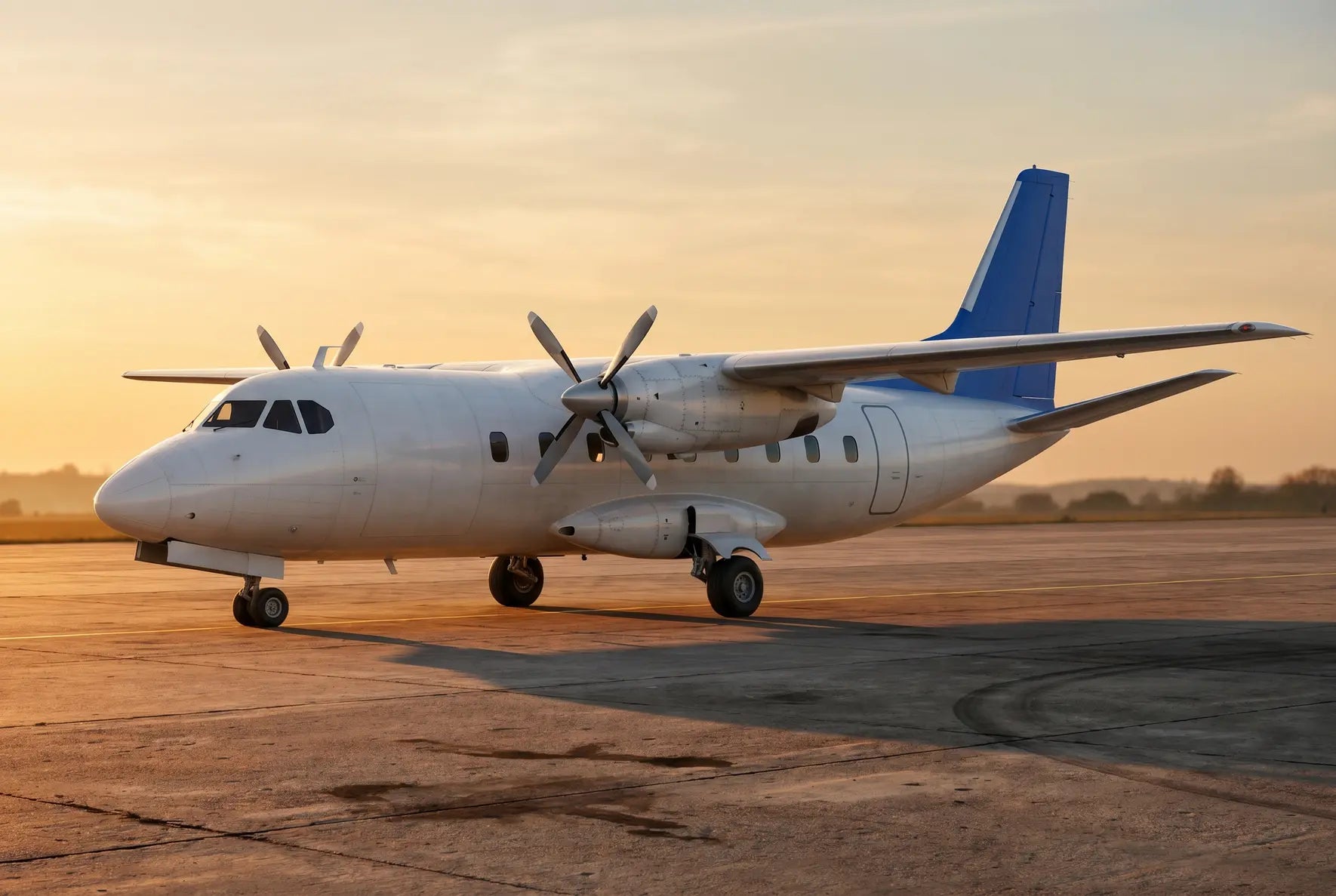
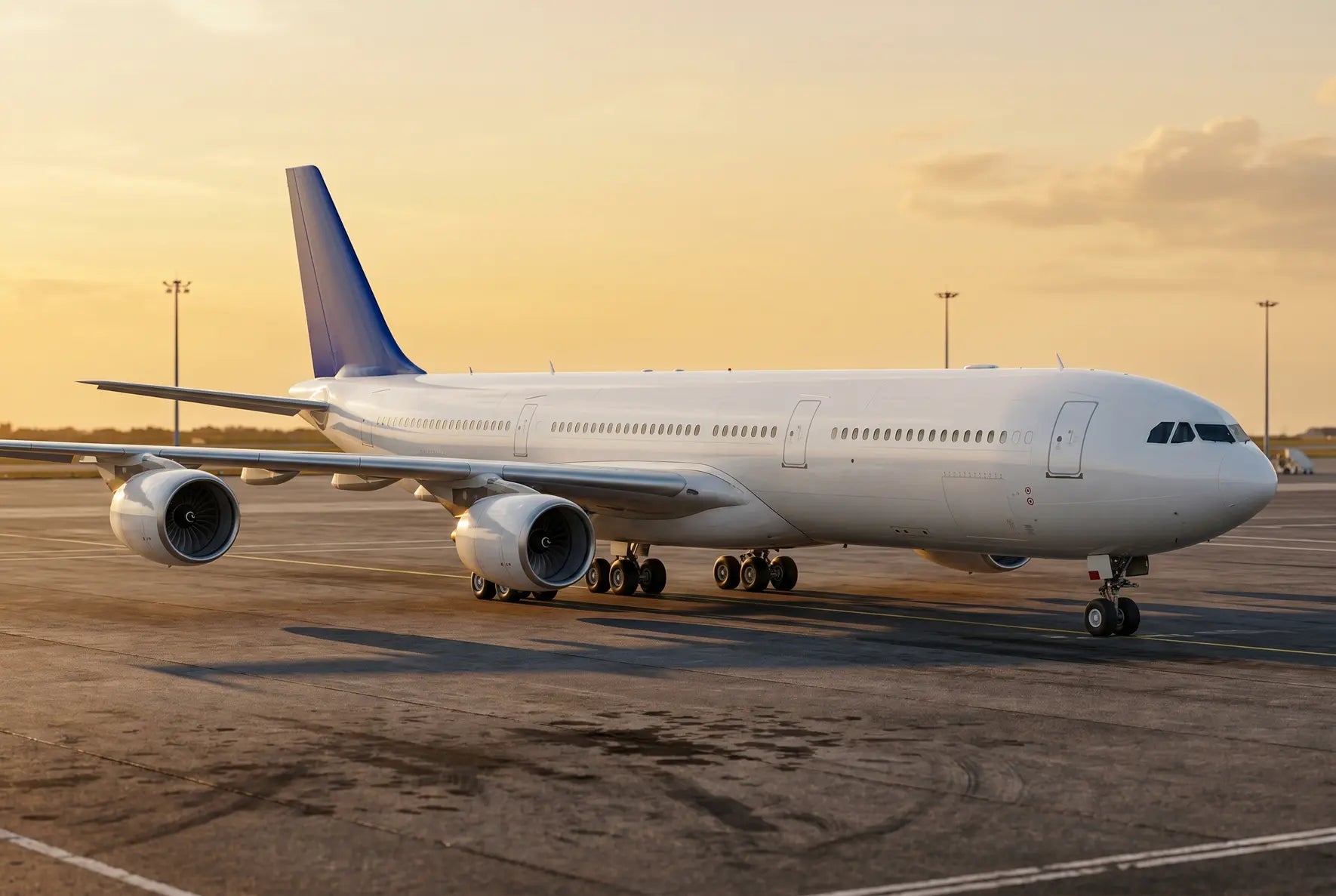
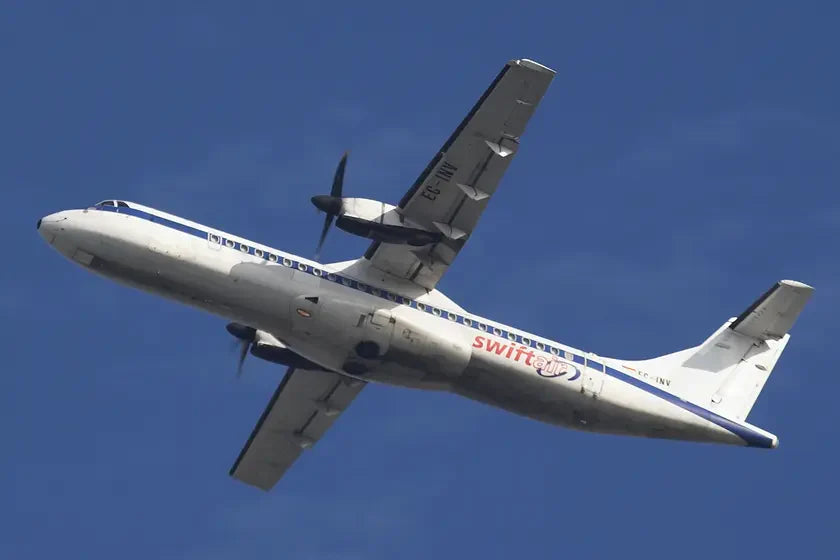
Swiftair operates one of Europe's most versatile all-freighter fleets, combining narrow-body jets and turboprops to serve everything from major trunk routes between European hubs to regional feeder services at smaller airfields. The fleet is predominantly cargo-configured, with almost all aircraft operated in freighter or quick-change layouts. The airline has been undergoing a gradual modernization, with recent deliveries of Boeing 737-800BDSF (Bedek Special Freighter) conversions and Airbus A321P2F (Passenger-to-Freighter) variants. The group also maintains 38 maintenance centres across Europe and Africa, all supported from the primary MRO facility at Madrid-Barajas.
| Aircraft Type | Role | In Service (approx.) | Notes |
|---|---|---|---|
| Boeing 737-800F (BDSF) | Narrowbody Freighter | ~12 | Fleet workhorse. ~25-tonne payload. Recent deliveries ongoing. On order: 4 additional units. |
| Airbus A321-200P2F | Narrowbody Freighter | ~4 | Newest type. Modern conversion. 1 additional on order. Replacing older 737 variants. |
| Boeing 757-200F/PCF | Narrowbody Freighter | ~3 | Longer-range European and North African routes. Passenger-Convertible Freighter config. |
| Boeing 737-400SF | Narrowbody Freighter | ~5 | Older generation. Being phased out gradually in favour of 737-800BDSF and A321P2F. |
| Boeing 737-300F | Narrowbody Freighter | ~2 | Legacy type. Nearing retirement. |
| ATR 72 | Regional Turboprop Freighter | ~5 | European regional feeder routes. 1 additional wet-leased from Bridges Air Malta. |
| ATR 42-300F | Regional Turboprop Freighter | ~5 | Smaller regional operations. Ideal for low-volume airfields. |
Fleet data as of late 2025/early 2026. Numbers are approximate and subject to change with ongoing deliveries, retirements, and wet-lease adjustments. Subsidiary fleets (Cygnus Air: 5x B757-200PCF; Swiftair Hellas: 5x Embraer 120) are excluded from this table.
New pilots joining Swiftair are typically assigned to either the ATR 72/42 turboprop fleet or the Boeing 737 jet fleet, depending on their experience level and operational demand at the time of hiring. Type rating costs are generally covered by the airline for pilots recruited through the standard selection process, though contract terms may vary. The transition from turboprops to jets (or between 737 and A321 types) is seniority-based and subject to operational requirements. Pilots should expect to spend their initial years on whichever fleet is assigned at entry.
Pilot Salary & Compensation
Swiftair pilot compensation follows a structure common among European cargo and ACMI operators: a monthly base salary supplemented by per-flight-hour payments. Actual monthly earnings vary depending on block hours flown, aircraft type, and duty assignments. The airline's pay rates have historically been a point of tension with SEPLA, the Spanish pilots' union, which has publicly criticised Swiftair's compensation levels in the past. That said, rates have improved in recent years, and the Antin acquisition may bring further changes as the company scales up.
First Officer (F/O) Pay Indicators
| Fleet | Monthly Base (gross) | Hourly Rate | Estimated Annual Gross |
|---|---|---|---|
| ATR 42/72 | €1,400 - €2,260 | ~€15/hr flight pay | ~€20,000 - €32,000 |
| Boeing 737 | ~€2,000 - €3,500 | ~€30/hr flight pay | ~€30,000 - €50,000 |
F/O salary data compiled from pilot-reported sources (PilotJobsNetwork, updated 2025). ATR F/O base range reflects entry (€1,404) to experienced (€2,263 gross). Annual estimates include base + flight pay at typical block hours.
Captain (CPT) Pay Indicators
| Fleet | Monthly Base (after tax) | Hourly Rate | Estimated Annual Gross |
|---|---|---|---|
| ATR 42/72 | ~€2,200 (after tax) | ~€50/hr flight pay | ~€45,000 - €65,000 |
| Boeing 737 | ~€2,800 (after tax) | ~€70/hr flight pay | ~€65,000 - €96,000 |
Captain salary data from pilot-reported sources (PilotJobsNetwork, updated March 2025). Monthly base figures quoted after tax. Annual gross estimates factor in base salary, flight pay, and typical block hours of 70-80 hrs/month. "Top" Captain salary reported at ~€8,000/month (November 2023).
These figures are estimates compiled from pilot-reported data on industry platforms and should be treated as indicative ranges rather than guaranteed compensation. Actual pay depends on the current collective agreement, individual contract terms, aircraft type, monthly block hours, and seniority. Swiftair's compensation sits in the lower-to-middle tier among European cargo operators. Spanish income tax rates (19-47% depending on bracket) and social security contributions further reduce take-home pay. The Antin acquisition announced in October 2025 may lead to revised pay structures as the company expands. Always verify directly with Swiftair's recruitment team before making career decisions.
Roster Pattern & Quality of Life
As a dedicated cargo and ACMI operator, Swiftair's roster patterns differ significantly from those at passenger airlines. Express airfreight operations are predominantly nocturnal: aircraft depart in the evening, fly overnight distribution routes between European hubs, and land in the early morning hours. This is the nature of the cargo business, where flights must land before commercial sorting facilities open for the day. Pilots considering Swiftair should be prepared for a career built largely around night flying.
Swiftair operates under EASA Flight Time Limitation (FTL) regulations, as implemented by the Spanish aviation authority AESA. These rules cap flight duty at 60 hours in any 7-day period and 100 block hours per 28-day rolling period. Weekly rest must include at least 45 consecutive hours off. Within this regulatory framework, Swiftair constructs rosters that reflect the specific demands of its ACMI contracts with DHL, FedEx, and other logistics providers.
📅 Sample Month: Marseille-Based ATR First Officer (3 on / 1 off)
According to pilot-reported data, the Marseille (MRS) base operates a "3 weeks on, 1 week off" rotation or a full-time roster pattern. Madrid-based pilots may follow different schedules depending on contract type and fleet assignment. The 3/1 pattern is common in European cargo aviation and provides predictable blocks of time off, which can be attractive for pilots who live away from base and prefer concentrated rest periods over scattered days off.
Night flying is the backbone of Swiftair's operation. Express freight networks require aircraft to be loaded, flown, and unloaded between roughly 20:00 and 06:00 local time to meet morning delivery deadlines. This means pilots report for duty in the evening and finish in the early morning hours. While the EASA FTL framework includes specific protections for night duty (reduced maximum flight duty periods and mandatory rest), the reality is that cargo aviation demands a lifestyle adjustment. Pilots must manage their sleep cycles carefully, and the impact on social and family life should be a key consideration for anyone evaluating this career path.
Benefits & Employment Provisions
Swiftair's benefits package reflects its positioning as a mid-sized cargo operator rather than a major legacy passenger airline. The airline provides the statutory employment benefits required under Spanish labour law, but the package is notably leaner than what pilots would find at carriers like Iberia, Air Europa, or major European flag carriers. Pilot-reported data indicates that some benefits commonly associated with airline employment, such as staff travel and company pension schemes, are either absent or minimal at Swiftair.
The absence of staff travel, company pension, and confirmed loss-of-license insurance represents a meaningful gap compared to major European airlines. Pilots joining Swiftair should budget for private loss-of-license coverage (typically €1,500-€3,000/year depending on age and coverage level) and consider private pension contributions early in their career. Spanish social security provides a state pension, but it may not be sufficient for pilots accustomed to the supplementary schemes offered by larger carriers. The Antin acquisition could lead to improvements in this area as the company professionalizes its HR offering.
Career Progression & Seniority
Career advancement at Swiftair follows a seniority-based system typical of European airlines, where upgrade to Captain and fleet transitions depend on your position in the seniority list, operational demand, and successful completion of command assessments. One significant advantage of cargo aviation over large passenger carriers is that upgrade timelines tend to be shorter. While a pilot at Air France or Iberia might wait 12-15+ years for a Captain's seat, Swiftair pilots can realistically expect to upgrade within 2-4 years, depending on fleet growth and turnover.
Swiftair also accepts direct-entry Captains for experienced pilots meeting the minimum requirements (3,000+ total hours, 1,000+ PIC hours, 500+ PIC on type for ATR). This creates opportunities for experienced pilots from other airlines or the military to enter at command level, bypassing the First Officer stage entirely.
| Career Milestone | Typical Timeline | Notes |
|---|---|---|
| Join as F/O (ATR 42/72) | Day 1 | Most common entry fleet for lower-hour pilots. Type rating provided. |
| Join as F/O (Boeing 737) | Day 1 | Requires 500+ hours on CS-25 (large aircraft) category. Higher entry pay. |
| Captain upgrade (ATR) | 2 - 4 years | Seniority-dependent. Requires command assessment (sim + interview). |
| Transition to 737 fleet | 3 - 6 years | Seniority-based bid. Subject to operational demand and vacancies. |
| Captain upgrade (737/A321) | 4 - 8 years | Depends heavily on fleet expansion and retirement patterns. |
| Direct Entry Captain | Day 1 | For experienced pilots with 3,000+ TT, 1,000+ PIC, 500+ PIC on type. |
The Antin Infrastructure Partners acquisition positions Swiftair for significant fleet expansion and potential acquisitions of complementary cargo operators. The global freighter fleet is projected to grow by 41% by 2044, driven by e-commerce expansion and supply chain diversification. For pilots, this means more hiring, faster upgrade timelines, and expanded fleet transition opportunities. Current active recruitment for ATR Captain and F/O positions signals that growth is already underway. Swiftair also serves as a strong stepping-stone carrier: pilots who build command experience on the 737 or A321 at Swiftair are well-positioned to move to larger European cargo carriers such as ASL Airlines, Cargolux, or European Air Transport (DHL).
Recruitment Process & Requirements
Swiftair recruits pilots on an ongoing basis through its careers portal, with positions advertised for both ATR turboprop and Boeing 737 fleets. The airline accepts applications from experienced pilots holding valid EASA licenses. There is no cadet or ab-initio programme; all recruits must already hold at minimum a frozen ATPL with appropriate ratings. The selection process is straightforward compared to major legacy carriers, typically completed within a few weeks rather than months.
First Officer Requirements
Captain Requirements
Selection Process
Online Application
Submit CV, license copies, medical certificate, and flight hours documentation via the Swiftair careers page or by email to the recruitment contact. Applications are kept on file for 6 months.
First Screening: Knowledge & English Tests
Written examination covering aeronautical knowledge, English grammar, comprehension, and aeronautical listening (ATC communications). This stage filters for baseline technical competence and language proficiency.
Second Screening: Simulator & Interview
Simulator assessment on the relevant aircraft type, followed by a personal interview with line management. The sim check evaluates standard operating procedures, CRM skills, and handling ability. The interview focuses on motivation, professional background, and cultural fit.
Medical & Contract
Successful candidates proceed to medical verification and contract offer. Type rating training (if needed) follows. Line training and initial operating experience complete the onboarding process.
Swiftair's recruitment is less formal than major legacy carriers, but the technical screening is thorough. Brush up on aeronautical knowledge, ATC English listening, and standard operating procedures for the type you're applying for. Spanish language skills are not formally required for international cargo operations, but basic Spanish can be helpful for base life in Madrid or Barcelona. The airline historically uses its training partner AEROTEC in Madrid for parts of the selection process. Check the careers page regularly, as vacancies are posted on a rolling basis without fixed campaign dates.
How Swiftair Compares: Airline Radar Chart
How does Swiftair stack up against two comparable European ACMI and cargo operators? ASL Airlines (Belgium/Ireland/France, part of ASL Aviation Holdings) is Europe's largest independent cargo airline group with 140-150 aircraft and major DHL/FedEx contracts. Titan Airways (UK, based at London Stansted) is a smaller but well-regarded charter and ACMI specialist with a modern Airbus fleet of 12-14 aircraft. Below is our comparative assessment across five key pilot career metrics.
Key Takeaways from the Comparison
Swiftair's strongest asset is job security. With long-term contracts from DHL, FedEx, and UPS, plus the backing of Antin Infrastructure Partners' investment, the airline offers solid employment stability. The express airfreight sector is structurally growing, driven by e-commerce and supply chain trends, making cargo aviation a more recession-resistant career choice than many passenger operations.
Salary is the main weak point. Swiftair's compensation trails both ASL Airlines and Titan Airways, which themselves are not at the top of the European pay scale. ATR First Officer salaries starting around €1,400/month gross are significantly below what comparable carriers offer. However, the faster upgrade timeline partially offsets this: reaching Captain sooner means accessing higher pay bands earlier in your career.
ASL offers scale and fleet diversity. With 140-150 aircraft across its group (including Boeing 747-400F widebody freighters), ASL provides access to larger aircraft types and a broader geographic network. ASL is the natural next step for pilots who want to progress beyond narrowbody cargo operations.
Titan offers a different lifestyle. As a passenger charter and ACMI specialist, Titan operates primarily during daytime hours on varied worldwide routes. The modern Airbus fleet (A320/A321neo/A330) offers a more "airline pilot" lifestyle compared to Swiftair's nocturnal cargo focus. However, Titan is much smaller (12-14 aircraft), meaning fewer positions and potentially slower career movement.
Scores are editorial estimates based on publicly available data, pilot-reported information, and industry benchmarks. They represent a general assessment for a pilot evaluating long-term career options. Individual experiences will vary significantly based on fleet assignment, base, seniority, and personal priorities. Salary data for ASL and Titan is limited in public sources, so compensation scores are based on industry positioning and reported ranges.
Union & Industrial Relations
Pilot representation at Swiftair falls under SEPLA (Sindicato Espanol de Pilotos de Lineas Aereas), Spain's primary pilots' union. Founded in 1965, SEPLA represents approximately 8,000 commercial pilots across most Spanish-based airlines, including Iberia, Vueling, Air Europa, Ryanair, easyJet, and Swiftair. The union maintains a dedicated Swiftair section that handles company-level negotiations and represents pilot interests within the carrier. SEPLA is a member of both the European Cockpit Association (ECA) and IFALPA at the international level.
SEPLA Structure
Swiftair-SEPLA Relations: A Tense History
The relationship between Swiftair management and SEPLA has been historically strained. The union has publicly criticised the airline on multiple occasions for what it described as inadequate compensation levels. In 2013-2014, SEPLA highlighted Swiftair's salary structure in its internal magazine Mach 82, pointing to entry-level salaries that the union considered among the lowest in European commercial aviation. The union also raised concerns about the use of trainee pilots in operational roles.
More recently, following the Antin Infrastructure Partners acquisition announcement in October 2025, SEPLA issued a public statement welcoming the change of ownership while simultaneously criticising Swiftair's existing management team for what the union described as a continued unwillingness to negotiate updates to the labour relations framework. This dual message suggests that pilots and the union view the new ownership as an opportunity for improved working conditions and compensation structures.
SEPLA membership is optional but strongly recommended for all pilots based in Spain. With approximately 95% of Spanish commercial pilots as members, SEPLA provides significant collective bargaining power, legal support, insurance and banking discounts, and career advisory services through its Programa VIA for pilots working abroad. For pilots joining Swiftair, the union represents the primary channel for influencing working conditions and pay. The Antin acquisition creates a window of opportunity for SEPLA to push for meaningful improvements to the Swiftair collective agreement.
Verdict: Who Is Swiftair For?
🎯 Our Take
Swiftair occupies a specific niche in European aviation: it is a well-established cargo and ACMI operator with strong client relationships, a diversified freighter fleet, and genuine growth prospects under new private equity ownership. For the right pilot, it can be an excellent career move, particularly as a stepping stone into the broader European cargo sector.
The trade-offs are significant and should not be minimised. Salary levels are among the lowest for a European airline of this size, the benefits package is thin (no pension, no staff travel), and the lifestyle demands of night cargo operations are real. The historically tense relationship between management and SEPLA also deserves attention, though the Antin acquisition may catalyse improvements.
Where Swiftair shines is in opportunity: faster upgrade timelines than legacy carriers, direct-entry Captain positions for experienced pilots, a growing fleet with new aircraft types (A321P2F, 737-800BDSF), and the structural growth tailwinds of European express airfreight. For pilots willing to accept lower initial compensation in exchange for rapid career progression and command experience, Swiftair provides a credible pathway to larger cargo carriers and higher-paying positions down the line.
1 Do I need to speak Spanish to fly for Swiftair?
Spanish is not a formal requirement for pilot positions. Flight operations and ATC communications are conducted in English. However, basic Spanish is helpful for daily life at the Madrid or Barcelona bases, internal company communications, and interactions with ground staff. Pilots from across Europe have been recruited without Spanish proficiency.
2 Does Swiftair pay for the type rating?
Type rating costs are generally covered by Swiftair for pilots recruited through the standard selection process, though contract terms may include a training bond that requires you to remain with the airline for a specified period (typically 2-3 years). Pilots should clarify the exact terms during the recruitment process, as conditions may vary by fleet and contract type.
3 How quickly can I upgrade to Captain?
Upgrade timelines at Swiftair are significantly faster than at major legacy carriers. Based on industry data for comparable European cargo operators, First Officers can realistically expect to upgrade to Captain within 2-4 years, depending on fleet growth, retirements, and operational demand. The ongoing Antin-backed expansion may accelerate this further. Pilots entering directly on the ATR fleet often see the fastest upgrade paths.
4 Is Swiftair a good stepping stone to larger cargo carriers?
Yes. Building command experience on the Boeing 737 or Airbus A321 at Swiftair positions you well for roles at larger European cargo operators such as ASL Airlines, European Air Transport (DHL), or Cargolux. The freight sector values command time on relevant types, and Swiftair's ACMI contracts with major integrators provide credible operational experience that transfers directly to larger carriers.
5 What is the lifestyle like for cargo pilots at Swiftair?
Cargo aviation at Swiftair means predominantly night operations. Pilots typically report for duty in the evening, fly overnight distribution routes, and finish in the early morning. The 3-weeks-on/1-week-off roster pattern (at the Marseille base) provides concentrated blocks of time off but requires adaptation to a nocturnal schedule. The impact on sleep, social life, and family should be carefully considered. That said, many cargo pilots appreciate the predictability, the absence of passenger-related cabin crew coordination, and the quieter airport environment during off-peak hours.
6 Can non-EU citizens apply to Swiftair?
Swiftair requires pilots to hold EU/EEA citizenship or valid work authorization for Spain. Non-EU citizens would need to obtain a Spanish work permit independently, which is uncommon in European cargo aviation. There is no sponsorship pathway. In practice, the vast majority of Swiftair pilots are European nationals.
7 What happened with the Air Algerie Flight 5017 crash?
On July 24, 2014, a Swiftair-operated McDonnell Douglas MD-83 operating as Air Algerie Flight AH5017 crashed near Gossi, Mali, killing all 116 people on board. The aircraft was wet-leased by Swiftair to Air Algerie for a scheduled passenger route. Investigations attributed the accident to failure of the crew to activate the engine anti-ice systems, leading to a loss of engine performance in icing conditions. The MD-83 type has since been retired from Swiftair's fleet, and the airline has invested in more modern, reliable aircraft platforms.
8 What will the Antin Infrastructure Partners acquisition change?
The €280 million acquisition by Antin (announced October 2025) is expected to accelerate fleet modernization, fund organic growth, and potentially support acquisitions of other European cargo operators. For pilots, this likely means expanded hiring, new aircraft deliveries, and potential improvements to compensation and benefits as the company scales under professional private equity management. Founder Salvador Moreno remains as CEO, providing operational continuity. SEPLA has publicly expressed hope that the new ownership will lead to improved labour relations and updated collective agreements.
Official Links & Resources
Before applying or making any career decisions, always verify information directly with official sources. These are the key websites and organisations relevant to Swiftair pilot careers:
Monitor the Swiftair careers page regularly, as vacancies are posted on a rolling basis without campaign announcements. Also check PilotJobsNetwork for pilot-reported salary updates and condition changes. Since Swiftair does not run large-scale recruitment campaigns like major airlines, positions can appear and fill quickly. Having your documents (EASA license copies, Class 1 medical, English proficiency certificate, detailed CV) ready to submit at short notice gives you a significant advantage.