

Saudia Overview & Company Profile
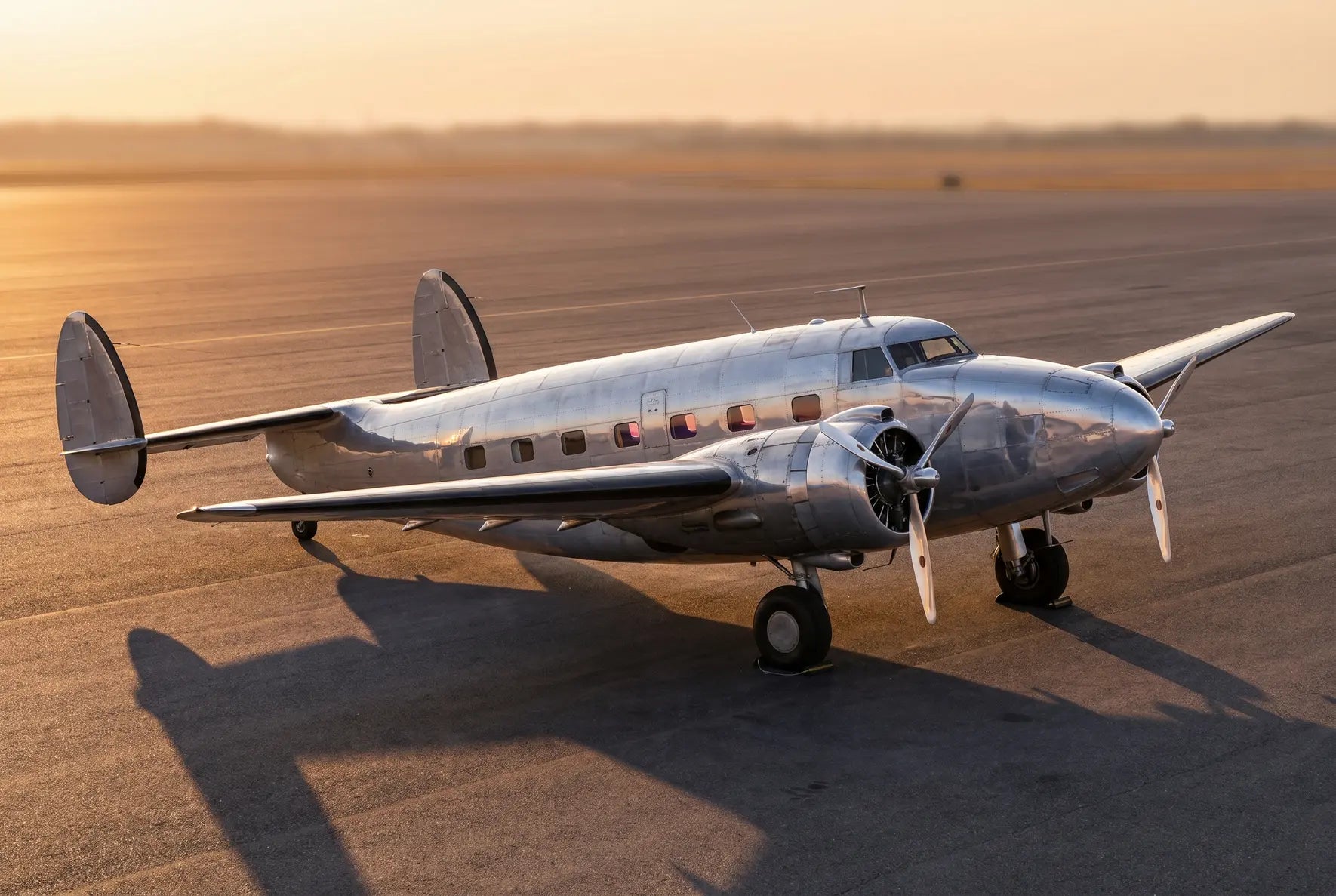
Saudia, formally Saudi Arabian Airlines, is the flag carrier of the Kingdom of Saudi Arabia. Founded in 1945 with a single Douglas DC-3 gifted by the United States, Saudia has grown into one of the largest carriers in the Middle East and a founding member of the modern Gulf aviation landscape. The airline joined the SkyTeam alliance in 2012, gaining access to a global network alongside Air France, KLM, Delta, and Korean Air. Saudia is wholly owned by the Kingdom of Saudi Arabia through the Saudia Group and operates as a central pillar of the country's Vision 2030 aviation expansion plan.
According to Saudia's official fleet page, the carrier operates a fleet of 149 aircraft, comprising 95 Airbus and 54 Boeing machines. Its primary hub is at Jeddah King Abdulaziz International Airport (JED), with major secondary bases at Riyadh King Khalid International (RUH), Dammam King Fahd International (DMM) and Medina Prince Mohammad bin Abdulaziz International (MED). Saudia currently serves more than 90 destinations across Asia, Africa, Europe, the Middle East and North America, with a target of reaching 250 destinations by 2030 under Vision 2030 aviation goals.
The airline operates approximately 500 flights per day and crossed the milestone of 17.5 million passengers carried in the first half of 2025 (per Economic Times Travel reporting). Saudia's brand value has accelerated rapidly under its current transformation, rising from US$1.1 billion in 2025 to US$1.3 billion in 2026 according to Brand Finance rankings cited in Saudia's own press releases. The pilot workforce is estimated at roughly 1,500 to 2,000 flight deck crew across the mainline operation, although the airline does not publicly disclose this figure.
One specific feature of working at Saudia is the carrier's role in religious aviation. Saudia handles a major share of the world's Hajj and Umrah pilgrim traffic into Jeddah and Medina, with millions of additional passengers transported during peak religious seasons each year. This creates a unique seasonal operational rhythm that has no real equivalent at most other legacy carriers, with capacity surges, wet-lease support flights, and dedicated pilgrim terminals built into the network model.
Fleet Composition & Type Ratings
Saudia's fleet is split between a substantial Airbus narrowbody operation for domestic and regional routes, and a mixed widebody fleet of Airbus A330s and Boeing 777-300ERs handling medium and long-haul missions. Per Saudia's official fleet disclosure, the total is 149 aircraft (95 Airbus, 54 Boeing), with an estimated average fleet age in the region of 6 to 7 years. The airline is in the middle of a major fleet renewal aligned with Vision 2030, with new A321neos arriving on a rolling basis, a fresh order for 15 long-range A321XLRs, and 54 additional A321neos earmarked for the broader Saudia Group. A separate national carrier, Riyadh Air, has been launched in parallel and will operate its own fleet (including 39 Boeing 787s on order) from Riyadh, allowing Saudia to consolidate its hub strategy around Jeddah.
| Aircraft Type | Role | In Service | Routes / Notes |
|---|---|---|---|
| Airbus A320-200 | Narrowbody | ~37 | Domestic and regional Middle East / Africa. Phasing out gradually. |
| Airbus A321-200 | Narrowbody | ~15 | Higher-density regional sectors. 165 seats typical. |
| Airbus A321neo | Narrowbody | ~12 | Newest narrowbody. 188 seats. Replacing older A320s. |
| Airbus A321XLR | Narrowbody (long-range) | On order: 15 | Future thin long-haul missions. Range up to 4,700 nm. |
| Airbus A330-300 | Widebody | ~31 | Medium and long-haul. Europe, Asia, Africa. 298 seats typical. |
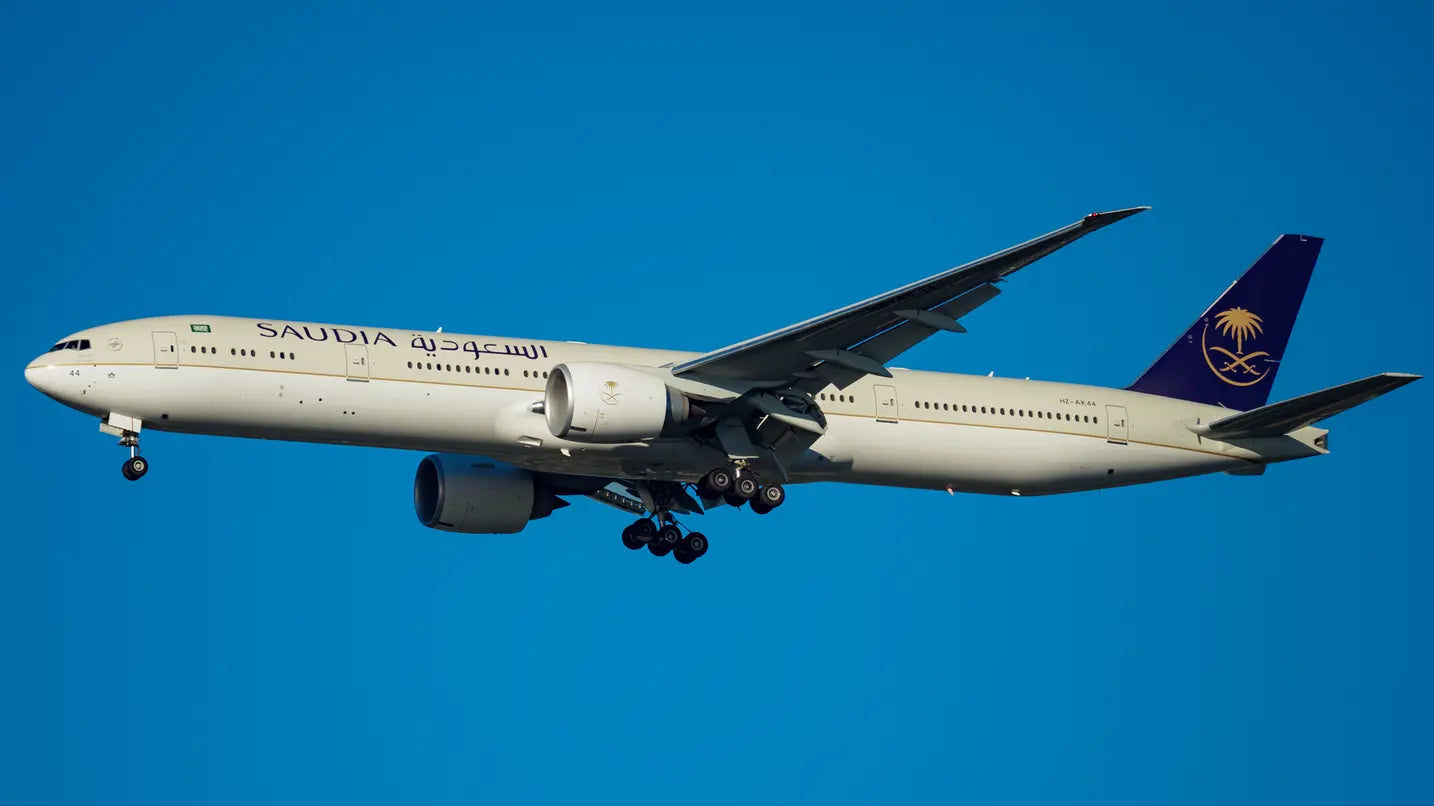
| Boeing 777-300ER | Widebody | ~33 to 35 | Long-haul flagship. Only Saudia type with First Class. Used to LHR, JFK, IAD, CDG. |
| Cargo (via Saudia Cargo) | Freighter | ~10 | B747-400F and B777F operations to 90+ cargo destinations. |
Fleet figures based on Saudia's own published data and Centre for Aviation profiles in 2025. Numbers shift continually as new A321neos arrive and older airframes retire.
Saudia covers the cost of type rating training for direct-entry pilots recruited through its official selection process, including direct-entry Captains on the A320 family. Type rating and recurrent training is delivered primarily through Prince Sultan Aviation Academy (PSAA), also branded as Saudia Academy, a strategic business unit of Saudi Arabian Airlines based in Jeddah. PSAA is an IATA Regional Training Partner and an Authorized Training Center, equipped with advanced full-flight simulators for the A320, A330 and B777 families. Entry-level First Officers are usually assigned to the A320/A321 fleet, with widebody bids opening up later based on seniority.
The fleet mix has direct career implications. A pilot recruited as a First Officer on the A320 will likely cross-train onto the A321neo as those airframes arrive, before eventually bidding to the A330-300 or B777-300ER as widebody command opportunities open. The 777-300ER remains the prestige aircraft inside the network: it is the only Saudia type with a true First Class cabin, and it operates almost all of the airline's most coveted routes including London Heathrow, New York JFK, Washington Dulles and Paris CDG. The A330-300, by contrast, anchors the medium-haul backbone connecting Saudi hubs to Asia, Europe and Africa with a flexible 298-seat layout.
Pilot Salary & Compensation Breakdown
Saudia pilot pay is structured around a fixed monthly base salary calculated on a 75 block-hour baseline, plus per-block-hour flight pay, overtime tiers for hours flown above 75 per month, a substantial monthly housing allowance, education and transportation allowances, and a Ramadan month bonus. Saudi Arabia levies no personal income tax on employment earnings, so gross is effectively net for expatriate pilots, which materially changes the value proposition compared to European or North American carriers.
According to compensation reporting from Aviation A2Z's 2025 Saudia pay survey and forum data from PPRuNe Middle East threads, base salary scales for direct-entry Captains and First Officers in 2025 sit broadly in the following ranges. Note that Saudi nationals and expatriates are paid on broadly the same base scale, with the main practical difference being whether housing is delivered as cash allowance (typical for expats) or company-provided accommodation.
First Officer (FO) Pay Scale
| Seniority | Monthly Base (SAR) | Annual Gross (est. SAR) | USD Equivalent |
|---|---|---|---|
| Entry FO (Year 1) | 18,000 - 22,000 | ~216,000 - 264,000 | ~US$57,000 - 70,000 |
| Mid FO (Year 3 to 5) | 22,000 - 26,000 | ~264,000 - 312,000 | ~US$70,000 - 83,000 |
| Senior FO (5+ years) | 26,000 - 30,000 | ~312,000 - 360,000 | ~US$83,000 - 96,000 |
Base salary only. Add 25,000 SAR/month housing allowance, flight pay at ~250 SAR per block hour, overtime tiers and Ramadan bonus to arrive at the true take-home figure. The SAR is pegged at 3.75 to 1 USD.
Captain (CPT) Pay Scale
| Seniority | Monthly Base (SAR) | Annual Gross (est. SAR) | USD Equivalent |
|---|---|---|---|
| Direct Entry / Junior CPT (A320) | 33,000 - 36,000 | ~396,000 - 432,000 | ~US$106,000 - 115,000 |
| Mid CPT (5 to 10 years) | 36,000 - 40,000 | ~432,000 - 480,000 | ~US$115,000 - 128,000 |
| Senior CPT (777-300ER / A330) | 40,000 - 45,000 | ~480,000 - 540,000 | ~US$128,000 - 144,000 |
Captains can routinely add SAR 60,000 to SAR 120,000 per year through flight pay, overtime tiers and Ramadan bonus. Senior wide-body Captains regularly exceed SAR 650,000 (~US$173,000) tax-free in total annual earnings.
Variable Pay Components
The figures above are compiled from multiple public sources including Glassdoor Saudia salary submissions, Aviation A2Z's 2025 pay survey, and direct-entry recruitment threads on PPRuNe. Actual offers vary by aircraft type, prior experience, contract round, and whether the pilot enters via the Saudization scheme or as an expatriate hire. Saudia does not publish a standardized public pay scale, so confirm current numbers directly with Saudia recruitment before making any career decision. Also note that Saudization quotas now influence priority during recruitment campaigns, with Saudi nationals first in line for many positions.
Roster Pattern & Quality of Life
Saudia rosters operate under GACA Flight and Duty Limitations (GACAR Part 117), which broadly mirror ICAO standards on duty periods, rest opportunities and cumulative flying limits. The most important headline numbers for any pilot considering Saudia: a guaranteed minimum of 5 consecutive days off per month, a generous 56 days of paid annual leave, and a baseline target of 75 block hours per month for the fixed salary. Hours flown above 75 per month are paid at the higher overtime tiers described in the salary section, which means roster flexibility is also a direct earnings lever.
📅 Sample Month — Long-Haul First Officer (Jeddah base)
Narrowbody pilots based at Jeddah or Riyadh typically operate a high-frequency domestic and regional pattern with multiple daily sectors, often returning to base on the same day. Long-haul widebody crews on the 777-300ER and A330-300 see a very different rhythm: rotations of 3 to 5 days with one or two intercontinental layovers, followed by extended rest at base. Augmented crews (three or four pilots) are standard on ultra-long routes such as Riyadh to Washington Dulles, where total block time can exceed 14 hours and Saudia is launching new ultra-long-haul routes of up to 17 hours under Vision 2030 expansion.
Saudia's main pilot base is Jeddah, with smaller pilot presences in Riyadh, Dammam and Medina. Most expatriate pilots live in dedicated compounds in Jeddah's western coastal areas, which provide swimming pools, gyms, security, and English-speaking communities. Schooling for dependents is available through international schools including the Jeddah Knowledge International School and the British International School Jeddah, generally covered by the company education allowance for up to three children. Compared to Dubai or Doha, the cost of living in Jeddah is lower, but the social and entertainment environment is more conservative, although Saudi Arabia has loosened restrictions significantly under Vision 2030 reforms.
The 5-day-per-month minimum off figure is one of the more polarising aspects of the Saudia offer. While it is lower than the 8 to 10 days off typical at European legacy carriers, two factors offset it materially: first, the 56 days of paid annual leave (often split into two 4-week blocks) which substantially elevates the total non-duty time across the year, and second, the option to remain inside the 75-hour block envelope rather than flying overtime. Pilots prioritising time at home tend to bid for routes that maximise efficient block usage; those prioritising earnings target the >85-hour overtime tier.
Benefits, Allowances & End of Service
The benefits package at Saudia is one of the strongest elements of the overall offer, especially when combined with a 0% income-tax regime. Where European or American pilots pay substantial income tax and out-of-pocket education and healthcare costs, Saudia pilots receive most of these as employer-funded benefits, materially raising the effective value of the total package.
Saudi Arabia operates under a statutory end-of-service gratuity model rather than a pension fund for most expatriate workers. The calculation, governed by the Saudi Ministry of Human Resources end-of-service benefit framework, is 15 days of base salary for each of the first five years of service, then 30 days per year for every subsequent year, paid as a lump sum on contract end. For a senior Captain on SAR 40,000/month base, a 10-year tenure delivers a tax-free gratuity of roughly SAR 525,000 (~US$140,000), on top of all monthly earnings. Combined with the absence of personal income tax, the gratuity acts as a forced savings mechanism that materially closes the gap with higher-base European carriers.
For Saudi nationals, the picture is somewhat different. Saudi citizens are enrolled in GOSI (General Organization for Social Insurance), which provides a state pension funded through contributions during employment, in addition to other social protections. Expatriate pilots are typically not enrolled in GOSI but receive the end-of-service gratuity in lieu. This dual-track structure mirrors the labour market design across most of the GCC.
Career Progression & Seniority
Career progression at Saudia is primarily seniority-based within each aircraft type, with upgrade decisions driven by date of hire on the fleet, a Command assessment process, and active fleet growth. Unlike European legacy carriers where upgrade times can stretch beyond 15 years, Saudia historically upgrades roughly 120 First Officers to Captain each year, producing typical command timelines of 5 to 8 years on narrowbody types. Widebody command upgrades take longer due to slower attrition on the senior 777-300ER and A330 seats.
Saudia also operates an active direct-entry Captain pathway, particularly on the A320 family, which means experienced Captains from other airlines can bypass the First Officer stage entirely. This dual entry model (Cadet First Officer through to direct entry Captain) gives Saudia significant recruitment flexibility and creates a unique seniority dynamic compared to closed-shop European carriers that recruit only at the bottom of the list.
| Career Milestone | Typical Timeline | Notes |
|---|---|---|
| Join as FO on A320/A321 | Day 1 post type rating | Most common entry. Type rating covered by Saudia. |
| Widebody FO transition (A330) | 3 to 6 years | Seniority-based bid. A330-300 medium and long-haul. |
| Captain upgrade (A320/A321) | 5 to 8 years | ~120 upgrades per year across the company. Command assessment + simulator. |
| Widebody FO on 777-300ER | 5 to 10 years | Flagship fleet. Top long-haul routes (JFK, LHR, IAD, CDG). |
| Captain on A330 | 10 to 15 years | Mid-tier widebody command. Strong international exposure. |
| Captain on 777-300ER | 15+ years | Top of seniority list. Highest earnings and prestige. |
| Direct Entry Captain (A320) | Lateral hire | 5,000+ total hours, 2,000+ PIC, A320 type rating preferred. |
Saudia is in an aggressive growth cycle driven by Vision 2030 targets that aim for 300 million annual air passengers in Saudi Arabia by 2030, with Saudia carrying a major share of that traffic. The airline is recruiting actively across both Saudization-priority Saudi national channels and expatriate streams. The arrival of Riyadh Air as a parallel national carrier has expanded the addressable Saudi pilot job market significantly, with both airlines competing for experienced Captains. This pulls upgrade times down at Saudia by tightening senior attrition, and creates a once-in-a-generation moment for direct-entry Captain candidates with strong A320 or 777 backgrounds.
One element worth understanding: Saudia operates within the Saudi Labour Law framework rather than under a collectively bargained pilot contract. Career progression timelines, fleet bid windows, and promotion criteria are set by company policy and overseen by GACA, not negotiated through a recognised pilot union. In practice this means the rules can change with less notice than at a unionised European or American carrier, although senior pilot input is generally taken seriously through internal flight operations committees.
Recruitment Process & Requirements
Saudia recruits pilots through two main streams: a Saudi national cadet pipeline (focused on Saudization, often via Prince Sultan Aviation Academy or partner schools), and an experienced pilot stream for both direct-entry First Officers and direct-entry Captains. Applications and updates are managed through the official Saudia careers portal and supplementary recruitment partners such as Epic Flight Academy for the cadet path.
First Officer (Direct Entry) Requirements
Direct Entry Captain Requirements
Selection Stages
Online Application & Document Screening
Submission via careers.saudia.com with full logbook copies, licences, medicals, and previous employment history. Saudization priority applies: Saudi nationals are screened ahead of expatriate applicants for many positions.
Technical Interview
Online or in-person technical Q&A covering systems knowledge on the relevant type (A320 family or B777-300ER for direct-entry Captain), regulatory understanding, jet handling theory, and general airmanship.
Simulator Assessment
Conducted at Prince Sultan Aviation Academy (PSAA) in Jeddah, or occasionally at a regional sim partner. Tests raw flying ability, instrument scan, hand-flown procedures, and standard call-out discipline. Crew Resource Management (CRM) behaviours are observed closely.
HR Interview & Cultural Fit
Competency-based interview covering leadership, decision-making, and ability to integrate into a Saudi-based operation. Candidates should expect questions on motivation, family considerations for relocation, and adaptability to the cultural environment.
Medical, Background Check & Contract
Successful candidates undergo GACA-recognised Class 1 medical revalidation, criminal record and security clearance, and visa processing. Expatriates receive a one-time relocation allowance of approximately US$10,000 plus support in establishing residency.
The Saudia simulator profile is a fairly standard direct-entry style: raw data ILS, single-engine handling, basic upset recovery, and clean instrument scan under workload. Recency on type is a much bigger factor than at European carriers, so a Captain who has been out of the A320 for 6+ months may struggle to compete. Be prepared to discuss Saudization openly: as a foreign candidate you are not in direct competition with Saudi nationals for nationality-restricted positions, but the airline expects you to acknowledge and respect the priority framework.
Top 5 Layover Destinations
Long-haul layovers at Saudia center on the Boeing 777-300ER, the only fleet type with First Class and the airline's flagship workhorse for intercontinental routes. Hotels are contracted by Saudia and meet standard international crew rest specifications, with airport-to-hotel transport provided. Layover durations are typically 24 to 48 hours, with longer stays on routes that involve crew augmentation. Per Aviation A2Z's 2025 route ranking, Riyadh to London Heathrow is currently Saudia's strongest long-haul corridor, with 22 weekly flights all operated on 777-300ER equipment.
Saudia contracts all crew hotels directly. Pilots cannot self-book and cannot exchange hotel allocations for cash. Per diems are paid in USD or SAR depending on the destination and cover meals and incidentals. Under GACAR Part 117 rest requirements, augmented widebody crews on flights above 11 to 12 hours benefit from in-flight rest in dedicated crew rest compartments on the 777-300ER, plus the standard minimum layover rest opportunity at destination. Roster bids for the most popular layover destinations follow seniority, so junior pilots typically build up on regional and short-haul rotations first.
How Saudia Compares: Airline Radar Chart
How does Saudia stack up against the other two giants of the Gulf, Emirates and Qatar Airways? Below is a side-by-side comparative read using the same six metrics as the scorecard. Scores are editorial estimates compiled from publicly available salary data, pilot reports, and industry benchmarks (Aviation A2Z, Business Insider, ECA, IFALPA, Glassdoor).
Key Takeaways from the Comparison
Emirates and Qatar lead on raw salary; Saudia closes the gap with benefits and tax. Per Business Insider reporting, Emirates direct-entry First Officers start at around US$7,000 a month and Captains can earn upward of US$200,000 annually. Qatar Airways sits in a similar band per Aviation A2Z compensation data. Saudia's base monthly numbers run lower (SAR 18,000 to 30,000 for FO, SAR 33,000 to 45,000 for Captain), but housing allowance, education allowance, end-of-service gratuity and a Ramadan month bonus close most of the gap on a total-comp basis. All three carriers operate income-tax-free.
Saudia wins on benefits depth and education cover. The 56 days of annual leave, the 25,000 SAR housing allowance, and the comprehensive dependent education allowance for up to three children represent one of the most family-friendly packages in the Gulf, marginally ahead of Emirates and Qatar on the education front in particular.
Career progression is fastest at Saudia. The 5 to 8 year FO-to-Captain timeline on narrowbody types, combined with a healthy direct-entry Captain pipeline, gives Saudia an edge over Emirates and Qatar where command lists can be longer at peak. Riyadh Air's emergence has also accelerated upward churn across the entire Saudi pilot market.
Fleet diversity slightly favours Emirates. Emirates operates one of the world's largest 777 fleets plus the world's largest A380 operation, giving it unique widebody breadth. Qatar Airways operates a broader widebody mix including the A350-1000 flagship. Saudia's widebody fleet is narrower (777-300ER and A330-300) but is being expanded with A321XLRs and continued 777 retention through the Vision 2030 fleet plan.
Work-life balance is tighter at Saudia on monthly days off. The 5-day-per-month guaranteed minimum is below Emirates' typical pattern. However, the 56-day annual leave entitlement and lower regional density of long-haul red-eye rotations partially compensate.
Scores are editorial estimates based on publicly available salary data, official airline pages, pilot forum reports, union publications and industry benchmarks. They represent a general assessment for an experienced pilot evaluating a long-term career move. Individual offers vary significantly by seniority, fleet, prior experience and contract round. Scores will be updated as we publish dedicated Emirates and Qatar Airways guides.
Regulation & Industrial Relations
One of the most important things to understand before signing with Saudia is the industrial relations environment. Saudi Arabia does not permit independent trade unions. As documented by the International Trade Union Confederation (ITUC), the right to form independent unions, to strike, and to bargain collectively is not recognised under Saudi labour law. There is therefore no Saudia pilot union in the European or North American sense, and no analogue to BALPA, ALPA or SNPL representing pilots inside the company.
Instead, pilot working conditions are governed by a regulatory and policy framework involving three actors: the General Authority of Civil Aviation (GACA) as the national aviation regulator, the Saudi Ministry of Human Resources and Social Development through the Saudi Labour Law, and Saudia's own internal flight operations policy approved by the executive management. International alignment is provided through Saudi membership of ICAO, and via Saudia's voluntary participation in IATA and IFALPA pilot safety frameworks.
Regulatory & Representation Framework
What This Means in Practice
The absence of a union has several practical consequences for pilots considering Saudia. First, there is no formal mechanism for collective salary negotiation: pay scales, allowances and roster rules are set unilaterally by the company within Saudi Labour Law minimums and the FTL constraints of GACAR Part 117. Second, dispute resolution runs through internal HR processes and ultimately through the Saudi labour court system rather than through union grievance procedures. Third, strikes by pilots are not a legitimate industrial action option in Saudi Arabia; concerted work stoppages would breach both contract and law.
The flip side is that the Saudia operational environment has historically been relatively stable on industrial relations. There have been no significant pilot strikes in modern Saudia history, in clear contrast to the recurring industrial disputes at European legacy carriers. Pay and roster rules tend to be administered consistently within each contract round, and the airline has a track record of unilaterally improving terms in response to global pilot supply pressure (the 2024-2025 housing allowance and base salary uplifts being a clear example, as recruitment competition with Emirates, Qatar Airways and the new Riyadh Air heated up).
If you are coming from a European or American carrier with strong union representation, the Saudia industrial relations model will feel materially different. There is no contract you can collectively defend, no strike option, and no union to escalate grievances through. In return, pilots get a regulator-backed operational framework (GACAR Part 117) and an employer that has clear incentives to remain competitive on total compensation, particularly with Riyadh Air actively poaching experienced Captains across the Saudi market. The trade-off is real and should be understood clearly before signing, but it is not unique to Saudia: the same dynamic applies at Emirates, Etihad and (to a slightly different degree) Qatar Airways.
Verdict: Who Is Saudia For?
🎯 Our Take
Saudia in 2026 is one of the most actively recruiting major carriers in the world, with a Vision 2030 growth trajectory that creates strong upgrade dynamics, generous tax-free total compensation, and a clearly differentiated benefits package built around family-friendly allowances. For pilots whose priorities are rapid command progression, large widebody flying on 777-300ER routes such as JFK and LHR, and tax-free family-oriented allowances (especially the comprehensive education benefit and 25,000 SAR housing allowance), Saudia is a serious option.
The trade-offs are real and should be acknowledged honestly. Base salary numbers are lower than Emirates and Qatar Airways in headline terms, the 5-day-per-month guaranteed days off baseline sits below Western European norms, and there is no pilot union or strike option to defend conditions if the company changes them. Saudi cultural and lifestyle adaptation is also a meaningful factor for expatriate pilots and their families, although the Vision 2030 social reforms have changed the day-to-day experience significantly compared to a decade ago.
The arrival of Riyadh Air as a parallel national carrier has fundamentally changed the Saudi pilot recruitment market, pulling upgrade times down and giving experienced direct-entry Captains real negotiating leverage for the first time. If you can navigate the Saudization priority framework, the cultural environment, and the absence of union representation, Saudia offers one of the strongest total-comp packages available globally in 2025-2026.
1 Do I need to be a Saudi national to fly for Saudia?
No. Saudia recruits both Saudi nationals and expatriate pilots. Saudi nationals receive priority for many positions under the country's Saudization framework, but expatriate pilots remain a significant share of the pilot workforce, particularly on direct-entry Captain positions where deep type-rating experience is essential. Expat pilots are typically engaged on 3-year renewable contracts.
2 Is salary at Saudia really tax-free?
Yes. Saudi Arabia does not levy personal income tax on employment income for either citizens or expatriates. This applies to base salary, flight pay, overtime, bonuses, and allowances. Your home country tax position may still apply depending on tax residency rules: for example, US citizens remain liable to US federal tax on worldwide income subject to the Foreign Earned Income Exclusion. Pilots from countries with proper tax residency rules (most EU states, UK, Australia, etc.) can usually structure their tax status to retain the tax-free benefit.
3 Does Saudia pay for the type rating?
Yes for pilots recruited through the official selection process. Type rating training is provided through Prince Sultan Aviation Academy (PSAA), Saudia's in-house training arm, including A320, A330 and B777-300ER full-flight simulator facilities. Direct-entry Captains who already hold a current type rating may receive a shorter conversion course rather than a full type rating.
4 How long does it take to upgrade to Captain?
Typical narrowbody (A320/A321) command upgrade times sit in the 5 to 8 year range, with roughly 120 First Officers upgraded across Saudia each year. Widebody command (A330, B777-300ER) typically takes longer due to slower senior attrition. Direct-entry Captain options also exist for highly experienced applicants with 5,000+ total hours and 2,000+ PIC hours on type.
5 Is there a pilot union at Saudia?
No. Independent trade unions are not permitted under Saudi labour law. Pilot working conditions are governed by the General Authority of Civil Aviation (GACA), Saudi Labour Law, and Saudia's internal flight operations policy. There is no collective bargaining process and strikes are not a lawful industrial action option. Internal flight operations committees collect senior pilot input but do not have negotiating authority.
6 What is the difference between Saudia and Riyadh Air?
Saudia is Saudi Arabia's long-established flag carrier hubbed in Jeddah. Riyadh Air is a brand new second national carrier launched under Vision 2030 to operate from Riyadh, with a fresh order of 39 Boeing 787s and a separate corporate identity. The two airlines compete for experienced pilots, particularly Captains, and the launch of Riyadh Air has accelerated recruitment market activity across the Kingdom. They are not part of the same pilot seniority list.
7 How many days off do Saudia pilots get?
The contract guarantees a minimum of 5 consecutive days off per month, plus 56 days of paid annual leave that can be taken in 1 or 2 week blocks. The monthly minimum is lower than at some European carriers, but the annual leave entitlement is significantly higher than typical, which evens out total non-duty time across the year.
8 What aircraft will I likely fly as a new hire?
Direct-entry First Officers are typically assigned to the Airbus A320 or A321 family for initial line operations. Widebody bids on the A330-300 or B777-300ER open up over time based on seniority. Direct-entry Captains are most commonly recruited onto the A320 family, where Saudia has had a structural shortage of command-qualified pilots during the Vision 2030 expansion phase.
Official Links & Resources
Before applying or making any career decisions, always verify information directly with official sources. These are the key websites and organisations relevant to Saudia pilot careers in 2025-2026:
For salary and condition benchmarking that is not in official channels, the PPRuNe Middle East forum (specifically the active Saudia and Riyadh Air recruitment threads) is one of the best places to read real-time pilot feedback on current contract rounds, sim assessment difficulty, and onboarding timelines. Cross-reference forum data against Saudia's official offer letter before signing, since terms can change between recruitment campaigns.
- 01Overview & Company Profile
- 02Fleet & Type Ratings
- 03Salary & Compensation
- 04Roster & Quality of Life
- 05Benefits & End of Service
- 06Career Progression
- 07Recruitment & Requirements
- 08Top 5 Layover Destinations
- 09Airline Comparison
- 10Regulation & Industrial Relations
- 11Verdict & FAQ
- 12Links & Resources