Handley Page Dart Herald: History, Development and Variant Evolution
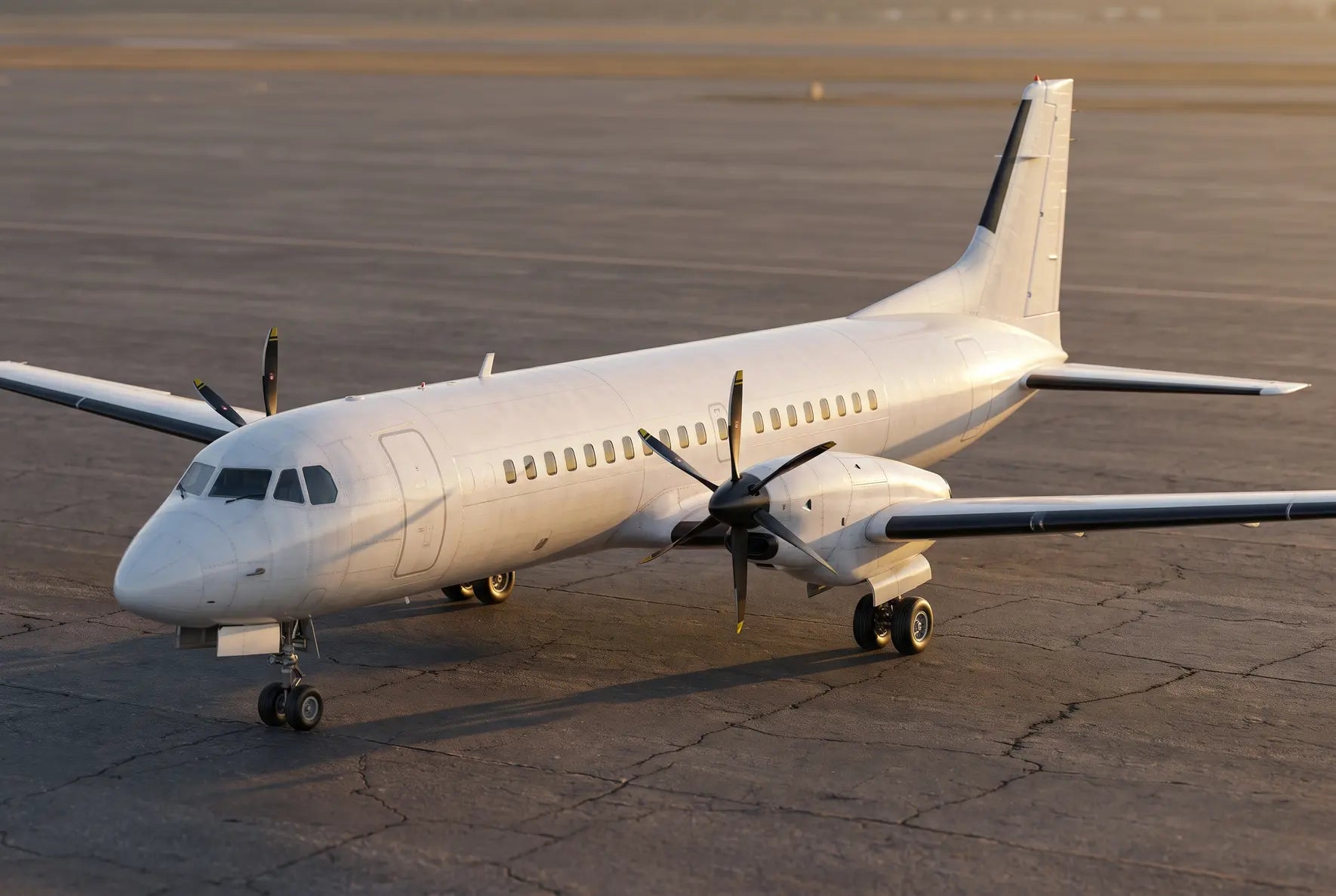
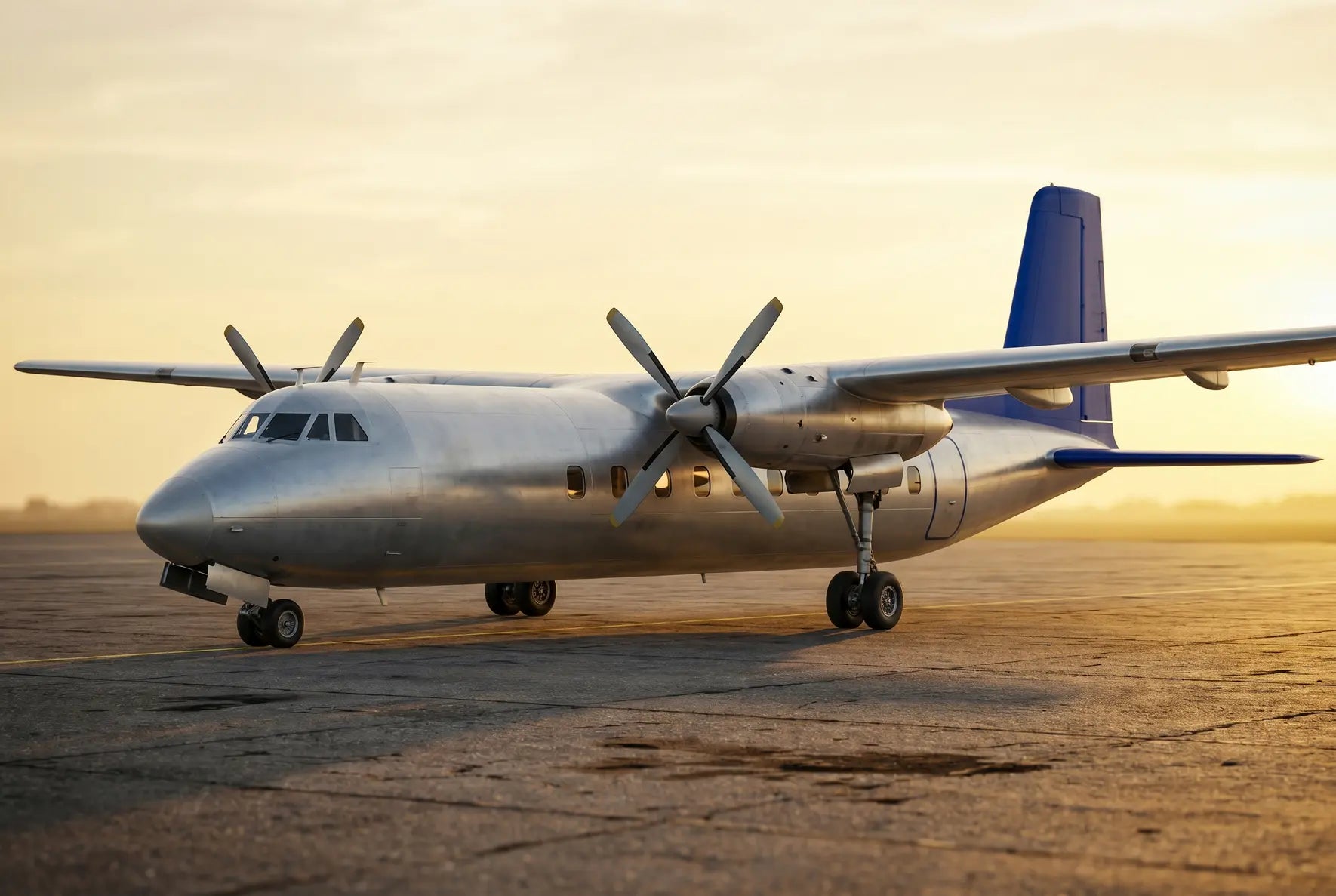
The Handley Page Dart Herald was a British twin-turboprop short-haul airliner developed during the 1950s as a modern replacement for the ageing Douglas DC-3. Originally conceived as a piston-powered design, the aircraft underwent a significant mid-programme redesign to adopt Rolls-Royce Dart turboprop engines, a decision that defined the variant but also contributed to its limited commercial success. Only 50 aircraft were built between 1959 and 1968, making it one of the less commercially successful post-war regional airliners despite its solid engineering pedigree.
Handley Page Limited, founded by Frederick Handley Page in 1909, was the United Kingdom's first publicly traded aircraft manufacturer. Based initially at Cricklewood in north London and later at Radlett Aerodrome in Hertfordshire, the company built a reputation for large bombers and transports, including the World War I O/400, the inter-war HP.42 biplane airliner for Imperial Airways, and the World War II Halifax heavy bomber. In the post-war period, through its Reading subsidiary (acquired from Miles Aircraft in 1948), Handley Page developed smaller civil types such as the HPR.1 Marathon, which informed the design of the Herald.
In the early 1950s, Handley Page identified a global need for a robust, short-field-capable airliner to replace the DC-3, particularly in developing regions and on routes with limited infrastructure. The initial design, designated HPR.3 Herald, was configured with four Alvis Leonides Major 14-cylinder radial piston engines, each producing approximately 870 hp. Airlines consulted by Handley Page had expressed a preference for proven piston technology, as turboprops were still perceived as risky for smaller operators.
The prototype HPR.3 made its maiden flight on 25 August 1955 from Radlett. At that stage, the Herald was running ahead of competitors such as the Fokker F27 Friendship. However, the rapid market success of the Rolls-Royce Dart turboprop on the Vickers Viscount shifted airline sentiment decisively toward turbine power. Key early orders, including those from Queensland Airlines and Lloyd Aereo Colombiano, were cancelled as customers chose purpose-built turboprop alternatives.
Handley Page responded by redesigning the aircraft around two Rolls-Royce Dart RDa.7 Mk.527 turboprops, each rated at approximately 2,105 equivalent shaft horsepower, driving four-bladed Dowty Rotol propellers of 12 ft 6 in diameter. The fuselage was lengthened by 20 inches (51 cm), and fuel capacity was increased. This redesigned aircraft received the designation HPR.7 Dart Herald. On 11 March 1958, the converted prototype completed its first flight as a Dart Herald. The Series 100 Dart Herald received certification in April 1958, and the first production aircraft flew on 30 October 1959.
Early customers included British European Airways (BEA), which operated the type on Scottish Highlands and Islands routes, and Jersey Airlines. Entry into airline service occurred in the early 1960s, with the aircraft's excellent short takeoff and landing capability well suited to regional operations from modest airfields. However, commercial results were disappointing: by 1963, only around 35 Heralds had been sold, compared with over 240 Fokker F27s. The Dart Herald's range of approximately 608 nautical miles with maximum payload lagged significantly behind the F27's roughly 1,400 nautical miles, a critical disadvantage rooted in the constraints of adapting an airframe originally designed for piston engines.
Production ended in 1968 after 50 airframes. Handley Page shifted resources to the HP.137 Jetstream, but mounting costs on that programme, combined with weak Herald revenues and the company's refusal to merge into larger industrial groups as the British government encouraged, led to voluntary liquidation in March 1970. Passenger operations with the Dart Herald continued under various carriers, with the last commercial passenger flights reported in 1987 and final freight operations ending in 1999. Much like the evolution seen decades later with modern narrowbody programmes such as the Boeing 737 MAX 8, the Herald's story illustrates how timing, engine selection and market positioning can determine an aircraft programme's fate regardless of underlying engineering quality.
What Distinguished the Dart Herald from Earlier and Later Variants
The Dart Herald family comprised several sub-variants built or proposed around the common HPR.7 airframe. The primary production models were the Series 100 and the Series 200, with the military Series 400 completing the built variants. Additional series (300, 500, 600, 700) remained proposals or were never produced in quantity.
The Series 100 represented the initial turboprop production standard. It retained the shorter fuselage of 71 ft 11 in (22.0 m) and seated up to 44 passengers. Four aircraft of this mark were completed. The Series 200 was the main production variant, with 36 aircraft built. Its fuselage was stretched to 75 ft 6 in (23.01 m), increasing maximum seating to 56 passengers and maximum payload to 11,700 lb (5,300 kg). Both shared the same Dart Mk.527 engines and 94 ft 9.5 in (28.9 m) wingspan.
The Series 400 was a military transport derivative of the Series 200, built for the Royal Malaysian Air Force. Eight were produced, featuring a strengthened cargo floor and a side-loading freight door, with capacity for 50 troops or 24 casualty stretchers. Among the unbuilt proposals, the Series 700 was perhaps the most notable: intended as a longer-range version with uprated Rolls-Royce Dart 532 engines producing approximately 2,320 equivalent horsepower, it attracted an order for ten aircraft from Brazilian carrier VASP, but production never commenced.
The following verified identifiers summarise the key differences across built Dart Herald variants:
- Series 100: Dart Mk.527 engines (2,105 eshp each); fuselage length 71 ft 11 in; up to 44 passengers; MTOW approximately 43,000 lb; 4 built
- Series 200: Dart Mk.527 engines; fuselage stretched to 75 ft 6 in; up to 56 passengers; max payload 11,700 lb; cruise speed 275 mph at 15,000 ft; range 608 nmi with max payload; 36 built
- Series 400: Military derivative of Series 200; strengthened floor and side cargo door; 50 troops or 24 stretchers; 8 built for Royal Malaysian Air Force

A side view of a Handley Page HPR-7 Herald 401 aircraft in flight, belonging to Air UK. The plane is painted in the airline's blue, white, and red color scheme, with visible registration G-BEYK.
Handley Page Dart Herald: Technical Specifications, Systems, and Engine Overview
The Handley Page Dart Herald (designation HPR-7) was a British high-wing, twin-turboprop regional airliner conceived in the 1950s as a rugged, modern replacement for the Douglas DC-3 on short-haul routes. Its design prioritised short-field performance, operational simplicity, and cabin flexibility over outright speed or range. The high-mounted cantilever wing provided excellent propeller clearance and an unobstructed cabin floor for quick passenger or cargo turnarounds. Powered by two Rolls-Royce Dart Mk.527 turboprops, the Herald entered a market already contested by the Fokker F27 Friendship and the Fokker F28, which limited its commercial success despite sound engineering.
Two main production series defined the Herald family. The Series 100 seated 38 to 47 passengers in a shorter fuselage (approximately 22.0 m), while the Series 200 stretched the forward fuselage to about 23.01 m (75 ft 6 in), accommodating up to 56 passengers. A military variant, the Series 400, added a strengthened floor and side-loading capability for the Royal Malaysian Air Force. All three shared the same wing, undercarriage, and engine installation, which kept maintenance commonality high across the fleet of 50 aircraft built between 1959 and 1968.
- Wingspan: 28.88 m (94 ft 9 in)
- Overall length: 23.01 m / 75 ft 6 in (Series 200); approximately 22.0 m (Series 100)
- Height: 7.34 m (24 ft 1 in)
- Wing area: 82.3 m² (886 sq ft)
- Maximum takeoff weight (MTOW): 19,504 kg (42,999 lb)
- Operating empty weight: approximately 11,684 to 11,703 kg (25,750 to 25,801 lb), varying by series
- Maximum payload: 5,300 kg (11,700 lb)
- Cruise speed: approximately 238 kt (441 km/h / 274 mph)
- Maximum speed: 495 km/h (267 kt)
- Service ceiling: 8,140 to 8,504 m (26,700 to 27,900 ft), depending on source and variant
- Range with maximum payload: approximately 1,765 km (953 nm); ferry range up to 2,800 km
- Takeoff distance to 35 ft: approximately 820 m (2,700 ft) at 17,900 kg AUW
- Landing distance from 50 ft: approximately 580 m (1,900 ft) at 17,900 kg AUW
- Engines: 2 x Rolls-Royce Dart RDa.7 Mk.527 turboprops, each rated at 2,105 shp (1,570 kW)
- Crew: 2 (captain and first officer)
- Passenger capacity: 38 to 56, depending on series and cabin configuration
Systems, Flight Controls, and Handling
The Dart Herald featured manual (unpowered) primary flight controls, with ailerons, elevators, and rudder actuated through conventional cables and rods. Aerodynamic balance and adjustable trim tabs helped keep stick forces manageable across the flight envelope. Large trailing-edge flaps on the high wing enabled the short approach and landing distances that made the type attractive to operators serving secondary airfields. The fixed tricycle undercarriage, with main units housed in streamlined fairings on the lower fuselage, traded some aerodynamic efficiency for mechanical simplicity, lower maintenance costs, and lighter structural weight. Hydraulic systems served the brakes and secondary functions. The two-crew cockpit was equipped with standard IFR instrumentation of the era, including VHF communications, VOR/ILS navigation, and ADF receivers, although exact avionics fit varied by operator and delivery date.
Published performance figures for the Herald can vary depending on the series (100, 200, or 400), operator-specific cabin density, actual takeoff weight versus MTOW, atmospheric conditions (temperature, altitude, humidity), and runway surface. The takeoff and landing distances cited above, for example, are referenced to an all-up weight of 17,900 kg (39,500 lb), which is below the structural MTOW of 19,504 kg. Range figures likewise depend on payload, fuel reserves policy, and wind assumptions. Operators serving hot-and-high airfields or carrying maximum payload would have experienced shorter stage lengths than the manufacturer's brochure figures suggest.
Rolls-Royce Dart Mk.527: The Engine Behind the Herald
The Rolls-Royce RB.53 Dart is one of the most significant turboprop engines in aviation history. Design work began in April 1945 at Rolls-Royce, and the engine first ran in July 1946. It flew for the first time in October 1947 aboard a converted Avro Lancaster testbed. The Dart entered commercial service in 1953 powering the Vickers Viscount, making it the powerplant behind the world's first turboprop airliner to carry fare-paying passengers.
The engine uses a two-stage centrifugal compressor feeding seven individual combustion chambers, driving a multi-stage axial-flow turbine. Early versions produced around 990 shp, but continuous development pushed output beyond 3,000 shp in later marks. The Mk.527 variant installed on the Herald was rated at 2,105 shp (1,570 kW) per engine, sitting in the upper-middle of the Dart power range. Production of the Dart family continued until 1987, with approximately 7,100 engines delivered and an estimated 170 million cumulative flight hours, according to the RAF Museum and the Smithsonian National Air and Space Museum.
Beyond the Herald, the Dart engine family powered a remarkable variety of aircraft. The Vickers Viscount was its most famous application, followed by the Fokker F27 Friendship, the Hawker Siddeley HS 748 (Avro 748), the Grumman Gulfstream I, the Japanese NAMC YS-11, the Armstrong Whitworth Argosy freighter, the Breguet Alizé naval patrol aircraft, and Convair 600/640 turboprop conversions of piston-engined airliners. This breadth of application across civil, military, and maritime roles underscored the Dart's reputation for reliability and low operating costs, qualities that also made it a natural fit for the Herald's regional airline mission.
Handley Page Dart Herald vs F27 Friendship vs Avro 748 vs Vickers Viscount 800: Key Specifications
Scroll horizontally to see more →
| Parameter | Handley Page Dart Herald | Fokker F27 Friendship | Avro 748 | Vickers Viscount 800 |
|---|---|---|---|---|
| Entry into service | 1961 | 1958 | 1961 | 1953 |
| Engines | 2 × Rolls-Royce Dart Mk.527 turboprops | 2 × Rolls-Royce Dart turboprops | 2 × Rolls-Royce Dart turboprops | 4 × Rolls-Royce Dart turboprops |
| Length | 23.01 m | 25.06 m | 20.42 m | 28.45 m |
| Wingspan | 28.89 m | 29.00 m | 30.48 m | 28.45 m |
| Height | 7.34 m | 8.72 m | 7.06 m | 8.53 m |
| Typical seating and layout (short description + approximate passengers) | 2-class: 44–56 passengers | 2-class: 44–52 passengers | 2-class: 48–56 passengers | 2-class: 53–65 passengers |
| MTOW | 19.50 t | 20.41 t | 20.41 t | 27.22 t |
| Range | 1,513 nm | 1,180 nm | 1,050 nm | 1,230 nm |
| Cruise speed | 0.40 Mach | 0.43 Mach | 0.40 Mach | 0.44 Mach |
| Service ceiling | 27,000 ft | 30,000 ft | 24,000 ft | 25,000 ft |
| Program note | British twin-turboprop short-haul airliner developed as a DC-3 replacement, emphasizing rugged regional service. | Closely related contemporary twin-turboprop regional airliner with similar capacity but slightly larger fuselage and broader commercial success. | British twin-turboprop regional airliner in a comparable seat class, notable for its shorter fuselage and utility-oriented design. | Earlier four-engine turboprop short-haul airliner that set the benchmark for pressurized regional transport before the Herald. |
Scroll horizontally to see more →
The table compares four classic turboprop regional airliners across size, capacity, performance, and service entry. The Dart Herald and Avro 748 entered service in 1961 with similar seating (44–56 vs 48–56) and MTOW (19.5–20.41 t), but the Herald stands out with the longest range at 1,513 nm. The F27 is slightly faster (0.43 Mach) and higher-ceiling (30,000 ft), while the four-engine Viscount carries the most passengers (53–65) and has the highest MTOW (27.22 t).
Handley Page Dart Herald Operations: Airlines, Routes and Missions Worldwide
The Handley Page Dart Herald was conceived as a direct replacement for the Douglas DC-3 on short-haul regional routes. Powered by two Rolls-Royce Dart turboprops, it typically flew sectors of 150 to 300 nautical miles, translating into flight times of roughly 30 to 60 minutes, with occasional legs stretching up to 500 nm (around 90 minutes). With a practical commercial range of approximately 600 nm with standard payload and reserves, the type was ideally suited to high-frequency, short-sector flying. Operators on busy weekday schedules could achieve an estimated five to seven block hours per day across six to ten cycles, a utilisation pattern comparable to its contemporaries, the Fokker F27 Friendship and the Avro 748.
The Handley Page Dart Herald thrived in hub-and-spoke and point-to-point regional networks, connecting secondary and island airports rather than major intercontinental hubs. In the United Kingdom, it became a familiar sight at airports such as London Southend, London Gatwick, Bournemouth, and the Channel Islands aerodromes. Its relatively low approach speed (around 89 knots) and generous wing area gave it respectable short-field performance, making it well suited to smaller runways in places like Newfoundland, the Amazon basin, and Malaysian Borneo. Operational challenges included limited range and payload compared with the Fokker F27, which outsold it significantly. Analysts have noted that ground handling could be demanding, particularly in crosswind conditions due to the aircraft's large tail surfaces, and spares support became increasingly difficult after Handley Page went into receivership in 1970.
Where the Handley Page Dart Herald Operated
Despite a modest production run of around 50 airframes, the Handley Page Dart Herald saw service across four broad regions. In Europe, it was operated primarily on domestic and near-continental scheduled services, Channel Islands routes, and inclusive-tour charters to Mediterranean resorts. In North and South America, the type served thin regional networks in Atlantic Canada, Brazilian domestic corridors, and Central American routes. Across Asia, operators deployed it on domestic services in Taiwan and the Philippines, while the Royal Malaysian Air Force used a military variant for troop and cargo transport. In Africa and the Middle East, Heralds supported oil-industry shuttle flights across Libya, regional services in Algeria and Mauritania, and domestic connections in Israel and Jordan.
- Europe: The largest concentration of operators was in the United Kingdom. British European Airways introduced three Heralds on regional routes, while British Island Airways assembled a fleet of up to 20, one of the largest, for Channel Islands and UK domestic services. British Air Ferries operated at least seven and also leased Heralds to numerous smaller carriers. Jersey Airlines and Guernsey Airlines flew them on island routes, and Channel Express operated the last commercial Herald services as freighters until 1999 from London Southend. On the continent, Globe Air (Switzerland) used three on Mediterranean charters from Basel, Bavaria Fluggesellschaft (West Germany) flew two on Alpine and holiday routes from Munich, Itavia (Italy) operated four on domestic services such as Rome to Ancona and Brindisi, and Europe Aero Service (France) used them for regional charters. Arkia (Israel) was a notable early customer with five aircraft, flying the Tel Aviv to Eilat route and other domestic sectors.
- North and South America: In Canada, Eastern Provincial Airways operated four Heralds on routes across Newfoundland and Atlantic Canada, including St. John's to Gander and Halifax. Nordair and Maritime Central Airways each took one for Quebec and Maritime province services. In Brazil, SADIA (later Transbrasil) was a major export customer with eight aircraft, flying domestic corridors from Sao Paulo and Curitiba. TABA used the type on Amazon-region routes from Belem and Santarem, where its short-field capability proved valuable. In Colombia, Lineas Aereas La Urraca operated on domestic routes, and in Guatemala, Aerovias flew regional scheduled and charter services.
- Asia: Far Eastern Air Transport (Taiwan) acquired several second-hand Heralds for domestic routes connecting Taipei Songshan with Kaohsiung, Hualien, and the Penghu Islands. Air Manila International (Philippines) operated one on domestic sectors before merging into Philippine Airlines. The Royal Malaysian Air Force used the military Series 400 variant, equipped with a side cargo door, for troop transport and logistics flights between Peninsular Malaysia and East Malaysia (Sabah and Sarawak).
- Africa: Herald operations in Africa were concentrated in North Africa, primarily supporting the oil industry. In Libya, Libyan Arab Airlines used Heralds for scheduled services while companies such as Agip Oil, Arabian Gulf Oil Co, Oasis Oil, and Occidental of Libya operated them as worker shuttles between Tripoli, Benghazi, and interior oilfields. Air Algerie (Algeria) and Air Mauritanie (Mauritania) are listed among operators for domestic and regional services. Tunisavia (Tunisia) used the type for corporate and charter flights.
Typical Seating Configurations of the Handley Page Dart Herald
The Handley Page Dart Herald featured a four-abreast cabin (2+2 layout) with a single centre aisle, similar in cross-section to the Fokker F27. Seating capacity varied significantly by variant. The Series 100, the initial production version, accommodated up to 44 passengers in a standard layout, with some operators configuring it for as few as 38 seats at a more generous pitch. The Series 200, which had a fuselage stretch of approximately 1.07 metres, was the main civil production model and seated 50 to 56 passengers. Network regional airlines such as BEA and Eastern Provincial Airways typically chose layouts in the 44 to 50 seat range with an estimated pitch of around 30 to 32 inches, prioritising passenger comfort and baggage capacity on business-oriented routes. Charter and inclusive-tour operators tended toward higher-density configurations of 52 to 56 seats at tighter pitch. The military Series 400 could be fitted with 50 troop seats, 24 stretchers, or reconfigured entirely for freight via a large side cargo door. In later years, several UK-based operators, including Channel Express and Janes Aviation, stripped out passenger interiors altogether and converted Heralds into pure freighters for overnight parcel and mail contracts. Given the small fleet size and the variety of operators, no two Herald cabins were quite alike, and pilots moving between charter, regional, and cargo assignments would encounter notably different interior configurations even within the same aircraft type.
In this video, see Handley Page HPR.7 Dart Heralds at London Southend Airport in the 1990s, highlighting the classic turboprop airliner designed in the 1950s and its role in regional aviation.
Handley Page Dart Herald Safety Record: Accidents, Incidents and Overall Assessment
The Handley Page Dart Herald entered airline service in the early 1960s and remained in commercial operation until the late 1990s, with the last passenger flights recorded in 1987 and freight services continuing until approximately 1999. With only 50 airframes built between 1959 and 1968, the HPR.7 Dart Herald was a niche regional turboprop. The small fleet size means that raw accident numbers must be interpreted carefully: even a handful of hull losses represents a significant proportion of the total production run. Over roughly four decades of flying, the type accumulated a mixed safety record. Several serious accidents resulted in total losses, while many airframes completed their operational lives without major incident and were eventually retired or preserved.
Notable Accidents and Incidents Involving the Dart Herald
A number of hull-loss events marked the operational history of the Handley Page Dart Herald. The following incidents are among the most significant and illustrate the range of causal factors involved.
- Eastern Provincial Airways Flight 102 (17 March 1965) - A Herald 202, registration CF-NAF, broke apart in flight over Nova Scotia, Canada, killing all 26 occupants. The investigation determined the probable cause was failure of a corroded fuselage skin panel along the bottom centre line, which led to catastrophic structural disintegration. The accident underscored the critical importance of corrosion detection in pressurised airframes and prompted enhanced structural inspection programmes for the Herald fleet and, more broadly, for regional turboprops of similar construction. Details of this event are documented in the dedicated record for Flight 102.
- Far Eastern Air Transport Flight 104 (24 February 1969) - A Dart Herald 201, registration B-2009, crashed near Tainan, Taiwan, during an attempted emergency landing following an engine failure. All 36 people on board perished. Investigators found that the propeller on the failed engine had not been feathered, creating excessive drag that rendered the aircraft uncontrollable. This accident highlighted the vital role of proper single-engine procedures and prompted operators to reinforce training on engine-failure management and propeller-feathering drills. Further information is available in the account of Flight 104.
- Alia (Royal Jordanian Airlines) crash near Damascus (10 April 1965) - A Herald operated by the Jordanian flag carrier struck terrain near Damascus, Syria, during approach, killing all 54 on board. The event was categorised as controlled flight into terrain (CFIT), a class of accident that was tragically common in the 1960s before the widespread adoption of ground-proximity warning systems.
- British Island Airways at Jersey (24 December 1974) - Herald 203, registration G-BBXJ, departed the runway at Jersey Airport after the crew applied asymmetric full power at insufficient airspeed during a single-engine approach. All 53 occupants survived with only minor injuries, but the aircraft was damaged beyond repair. The investigation cited the application of asymmetric power without adequate airspeed to maintain directional control as the primary cause and led to tighter procedural guidance for single-engine approaches.
These events were not unique to the Dart Herald; CFIT, corrosion-related structural failures and engine-out handling difficulties affected many turboprop and piston types of the same era. Each accident contributed to broader industry-wide advances such as the introduction of ground-proximity warning systems (GPWS), improved corrosion-control programmes and standardised crew resource management (CRM) training. A comprehensive list of incidents involving the type can be consulted on the Aviation Safety Network database for the HPR.7 Herald.
How Safe Is the Handley Page Dart Herald?
Assessing overall safety for the Handley Page Dart Herald requires context. The type served during a period when accident rates across the entire aviation industry were substantially higher than today. Navigation aids were less precise, cockpit automation was minimal, and regulations governing maintenance and crew training were still evolving. Within that environment, the Herald's accident profile was broadly comparable to other short-haul turboprops of similar vintage, such as the Fokker F27 and the Hawker Siddeley HS 748.
The Herald's high-wing, twin-turboprop configuration offered good low-speed handling and short-field performance, features that enhanced safety margins on the rough or abbreviated runways it frequently served. Its twin Rolls-Royce Dart engines were among the most reliable powerplants of their generation. However, the small production run meant that operational experience was spread across relatively few operators, some of which had limited resources for maintenance and crew training. Working conditions, training standards and regulatory oversight varied significantly among the airlines that flew the Herald, a factor that directly influenced safety outcomes across different regions. For a broader perspective on how pilot working conditions shape airline safety culture, the relationship between operator standards and accident rates remains a subject of ongoing study.
Today, the Handley Page Dart Herald is retired and only a handful of preserved examples remain. Its operational history contributed valuable lessons to the aviation safety framework that protects passengers worldwide. Modern commercial aviation benefits from decades of improvements in design redundancy, maintenance protocols, cockpit technology and regulatory oversight, all of which have made flying one of the safest modes of transport available.
01 What is the Handley Page Dart Herald best suited for?
The Handley Page Dart Herald was designed as a short-haul regional airliner, built to carry passengers efficiently on thin routes and to serve airports with shorter runways. It was also used in combi and freight roles, which made it useful for airlines that needed flexibility rather than maximum capacity. Its typical mission profile was point-to-point service between smaller cities, islands, and regional hubs.
02 How many passengers does the Handley Page Dart Herald carry?
Most passenger versions of the Handley Page Dart Herald carried around 50 to 56 passengers, depending on the interior layout and airline configuration. That relatively modest capacity made it a good fit for regional routes where demand was too low for larger airliners. Some aircraft were also converted for cargo or mixed-use operations, so seating could vary.
03 What was the passenger experience like on the Handley Page Dart Herald?
The Dart Herald is generally remembered as a practical rather than luxurious aircraft, with a cabin sized for short regional flights. Because it used turboprop engines, passengers would have expected more engine noise and vibration than in a modern jet, especially near the wings and during takeoff. Window views were usually good from a high-wing aircraft, and the cabin was well matched to short journeys where speed mattered less than reliability.
04 Which airlines operated the Handley Page Dart Herald?
The Handley Page Dart Herald was flown by several regional and national airlines, including British European Airways, Niger Airways, Jersey European Airways, and others in Africa, Asia, and the United Kingdom. It was especially suited to carriers serving secondary cities, island links, and lower-demand routes. Later in its career, many examples moved into freight, charter, or special-duty roles after passenger service declined.
05
The Handley Page Dart Herald used Rolls-Royce Dart turboprop engines, which gave it good reliability and respectable efficiency for short regional sectors. Compared with early regional jets or larger piston aircraft, it offered better low-speed handling, shorter-field capability, and lower operating costs on smaller routes. Its role was similar to other mid-century turboprops such as the Fokker F27, with the choice often coming down to airline preference, maintenance support, and route economics.
06
The Handley Page Dart Herald had a mixed service history, and like many aircraft of its era, its safety record depended heavily on operator training, maintenance, weather, and route conditions. Its all-metal airframe, high-wing layout, and turboprop design were practical features for regional operations, but there is no modern safety context to compare it with current airliners. For travellers today, the aircraft is mainly of historical interest rather than a current commercial option.