Royal Jordanian Overview & Company Profile
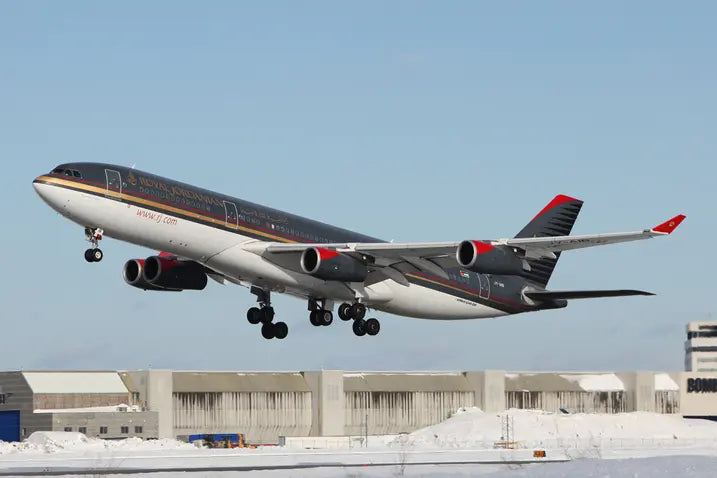
Royal Jordanian (IATA: RJ, ICAO: RJA) is the flag carrier of the Hashemite Kingdom of Jordan, founded on 9 December 1963 under the name Alia Royal Jordanian Airlines. Headquartered in Amman and operating from Queen Alia International Airport (AMM) as its sole hub and pilot base, the airline has been a full member of the oneworld alliance since 2007, placing its pilots on the same reciprocal travel network as British Airways, Qatar Airways, American Airlines, Qantas and Cathay Pacific.
The airline is owned by the Government of Jordan and operates roughly 500 flights per week, equivalent to about 70 daily departures across the Middle East, Europe, North America and Asia. Under Vice Chairman and CEO Samer Majali, Royal Jordanian returned to profitability in 2025, posting a net profit of JD 21.5 million on revenues of approximately US$1 billion, a sharp turnaround from the JD 3.5 million loss reported in 2024. Passenger traffic reached 4.4 million in 2025, up 18% year-on-year, with an 81% load factor. The airline is in the middle of a major fleet renewal and network expansion programme running through 2028.
Royal Jordanian positions itself as the natural connector between the Levant and the rest of the world, leveraging Amman's geographic location at the intersection of three continents. Unlike the Gulf super-carriers, its long-haul strategy is boutique in scale: a handful of targeted transatlantic and Asian routes operated by Boeing 787 Dreamliners, supported by a dense short and medium-haul network across the Middle East, North Africa and Europe flown on the Airbus A320neo family and Embraer E-Jets E2. The airline's corporate site describes its ambition as modernisation without overextension, and the financial turnaround in 2025 supports that thesis.
Fleet Composition & Type Ratings
Royal Jordanian is in the middle of one of the most aggressive fleet renewals in the Middle East, renewing roughly 70% of its fleet between 2024 and end of 2026. The narrowbody segment is transitioning to the Airbus A320neo and A321neo family, the regional operation is being modernised with the Embraer E190-E2 and E195-E2, and the long-haul fleet is being reinforced with six new Boeing 787-9 Dreamliners, the first of which entered service on 1 April 2026. This is effectively a dual-fleet (Airbus narrowbody + Boeing widebody), three-type (A320 family, 787, E2) operation that defines the type-rating options available to cockpit crew.
| Aircraft Type | Role | In Service (2026) | Routes / Notes |
|---|---|---|---|
| Boeing 787-8 Dreamliner | Widebody long-haul | 7 | JFK, LHR, Chicago, Bangkok, transatlantic flagship. 24J / 246Y (270 seats). |
| Boeing 787-9 Dreamliner | Widebody long-haul | 1+ (6 on order) | First delivery April 2026. Supports Dallas launch May 2026, plus LHR / BKK expansion. |
| Airbus A320neo | Narrowbody | ~12 | Backbone fleet. Order for 20 total (10 firm + 10 options). Replacing older A320ceos. |
| Airbus A321neo | Narrowbody | 1 (+2 on order) | Two additional aircraft leased from Avolon for 2027-2028 delivery. |
| Airbus A320ceo | Narrowbody | ~2 | Legacy aircraft. Being phased out as neo deliveries continue. |
| Airbus A321ceo | Narrowbody | ~1 | Legacy. Scheduled for retirement. |
| Embraer E195-E2 | Regional | 4 (+4 on order) | Europe and Middle East thin routes. Full E2 fleet target: 8 aircraft. |
| Embraer E190-E2 | Regional | ~4 | Short-haul feeder routes. Used interchangeably with E195-E2 on light demand sectors. |
Fleet figures are approximate and change with ongoing deliveries and retirements. Source: Royal Jordanian announcements, Boeing, Airbus, Avolon, aerospaceglobalnews and aerospace press, late 2025 and early 2026.
For type-rated applicants, Royal Jordanian accepts Airbus A320, Boeing 787 and Embraer E-Jets E2 type ratings interchangeably for First Officer and Captain positions. Most new-hire First Officers enter on the A320 family, which is the largest and fastest-growing fleet. Transition to the 787 widebody is seniority-based. Royal Jordanian does not publicly advertise company-funded type ratings for experienced pilots: postings target candidates who already hold a valid, current rating, with recency of six to twelve months on type (LPC and last flight within the last six months). Cadet pathways through the Royal Jordanian Air Academy and JATS follow a different commercial logic: cadets are typically expected to co-fund a large portion of their ab initio training.
Royal Jordanian does not publish a live fleet list for pilots. Numbers in the table above are compiled from Planespotters, ch-aviation, Airbus, Boeing, Avolon and Royal Jordanian press releases. They are a best-estimate snapshot for early 2026 and may shift as new aircraft enter service and older types are retired. Always verify the current type available for bidding on the airline's internal fleet assignment portal before committing to an application.
Pilot Salary & Compensation Breakdown
Royal Jordanian pilot pay is structured around a monthly base salary paid in Jordanian dinar (JOD) for local hires and US dollars (USD) for expatriate contract pilots, supplemented by per-sector pay, per-flight-hour pay, per diems, profit-sharing and end-of-service gratuity. Jordan operates a favourable income-tax regime for expatriate pilots on contract terms, and this is a material part of the overall value proposition. Published figures are less granular than for European carriers because there is no comprehensive public collective agreement for Royal Jordanian pilots, so the numbers below are compiled from job postings, pilot network databases and direct airline recruitment pages.
First Officer Pay Scale
| Rank / Seniority | Monthly Base | Annual Gross (est.) | Notes |
|---|---|---|---|
| F/O entry, type-rated A320 (local) | JD 1,500 – 2,200 | ~US$35,000 – US$50,000 | Local Jordanian contract, taxable under Jordanian income tax. |
| F/O A320 (expatriate contract, e.g. Brookfield) | ~US$5,000 – US$7,000 | ~US$60,000 – US$85,000 | Net of tax. Accommodation and transport typically provided. |
| Mid-seniority F/O A320 / E2 | ~US$6,500 – US$8,000 | ~US$80,000 – US$100,000 | Plus sector pay and flight-hour pay. |
| Senior F/O 787 (widebody) | ~US$8,000 – US$10,000 | ~US$100,000 – US$130,000 | Widebody premium, augmented crew allowances on ultra-long-haul. |
Figures are annual gross estimates compiled from PilotJobsNetwork, Brookfield Aviation, Royal Jordanian careers portal and Skybound postings. Local and expatriate contracts vary significantly in structure.
Captain Pay Scale
| Rank / Seniority | Monthly Base | Annual Gross (est.) | Notes |
|---|---|---|---|
| Entry Captain, A320 / E2 (local) | ~US$8,500 | ~US$110,000 – US$130,000 | Plus sector pay US$27, flight-hour pay US$20, per diem pay. |
| Captain A320 (expatriate contract, current postings) | ~US$9,000 – US$10,000 | ~US$120,000 – US$140,000 | Net. Accommodation allowance often included on contract terms. |
| Senior Captain A320 family (5+ yrs) | ~US$11,000 – US$13,000 | ~US$140,000 – US$170,000 | With sector, flight-hour and profit-share. |
| Captain 787 Dreamliner (widebody) | ~US$14,000 – US$17,000 | ~US$170,000 – US$210,000 | Widebody premium, intercontinental per diems. |
Top Captain totals include profit-sharing and can vary materially with block hours logged and widebody route mix. Current Royal Jordanian pilot vacancies advertise US$9,000–US$10,000 net monthly for type-rated A320 Captains.
On top of base salary, Royal Jordanian Captains historically receive US$27 per sector, US$20 per flight hour and US$2 per hour of time-away-from-base, plus per diem. Annual profit-sharing is tied to company results, and returned to modest positive territory in 2025 after years of pandemic and post-pandemic pressure. For a busy A320 Captain flying 650 to 750 block hours per year, these variable components can add US$25,000 to US$45,000 on top of base. On the 787, augmented-crew layovers and ultra-long-haul sectors push the variable component higher.
These figures are compiled from public job postings (Royal Jordanian careers portal, Brookfield Aviation, Skybound Jobs), pilot-network databases (PilotJobsNetwork) and historical reporting. Royal Jordanian does not publish a public collective-bargaining agreement with salary scales. Actual offers depend on contract type (local versus expatriate), fleet, recency, and negotiation. Expatriate pilots on Brookfield or similar brokered contracts often receive different packages from direct-hire Jordanian nationals, including housing allowance, leave flights and schooling support. Always ask for the full contract package during the offer stage.
Roster Pattern & Quality of Life
Roster patterns at Royal Jordanian are governed by the Jordan Civil Aviation Regulatory Commission (JCARC), which implements ICAO-aligned Flight Time Limitations close to EASA FTL standards. The airline uses a seniority-based bid-line system similar to other oneworld carriers, with monthly publishing and preferential bidding for senior pilots. Amman (AMM) is the only domicile, so there is no base bidding: all pilots live in or near the Jordanian capital.
Contract type has a strong impact on roster quality. Direct-hire Jordanian pilots typically receive a roster aligned with the airline's standard seniority rules, while expatriate pilots working through brokers such as Brookfield Aviation are offered structured rotations. One advertised Brookfield contract for Royal Jordanian offered 8 non-consecutive days off per month on a 12-month renewable pattern. For domestic short-haul flying, block hours tend to land in the 65 to 80 per month range; long-haul 787 pilots typically fly fewer duty days per month but accumulate longer block totals per rotation.
📅 Sample Month: A320 First Officer (Amman)
The 787 long-haul pattern is different: a typical rotation to New York JFK or London Heathrow involves 2 to 4 days on trip, with a layover at destination followed by the return sector, then 2 to 4 days of recovery at home. Longer-range services to Bangkok or transcontinental US destinations use augmented crews (3 pilots) under JCARC rules when the flight duty period exceeds FTL thresholds, with in-flight rest facilities on the 787 bunk.
All Royal Jordanian pilots are based in Amman. The city offers a comparatively low cost of living by regional standards (significantly below Dubai, Doha or Abu Dhabi), warm and stable weather, an excellent international school network for expatriate families, and strong regional connectivity via staff travel. Expatriate pilots typically live in West Amman neighbourhoods such as Abdoun, Deir Ghbar or Dabouq, with commute times to Queen Alia International of about 35 to 45 minutes. The wider security situation in Jordan has remained stable despite regional volatility, though pilots should monitor the evolving airspace environment around Iraq, Syria and Lebanon, which has at times required rerouting.
Royal Jordanian does not publish a standard annual leave entitlement for pilots on its careers pages. Jordanian labor law provides a statutory minimum of 14 working days per year, rising to 21 days after 5 years of continuous service, and most professional aviation employers grant more than the minimum. Expatriate contract pilots typically receive structured days-off packages (for example, 8 non-consecutive days off per month on some Brookfield rotations) rather than a traditional annual leave block. Verify the precise leave and days-off structure in writing before signing any contract.
Benefits, Travel Perks & End of Service
Benefits at Royal Jordanian are built around three pillars: oneworld staff travel, Jordanian social security with a complementary company medical plan, and an end-of-service gratuity that reflects the Middle Eastern labor tradition rather than a European-style defined pension. The overall package is solid for the region, though it does not match the extreme tax efficiency of Gulf carriers nor the long-term pension value of European legacy operators.
The oneworld alliance membership is one of Royal Jordanian's strongest pilot-facing benefits. Zonal Employee Discount fares on British Airways, Qatar Airways, American Airlines, Cathay Pacific, Qantas and Japan Airlines open up a global travel network that smaller regional carriers cannot match. This matters both for personal travel and for commuting flexibility: an expatriate pilot from Europe can realistically build a personal life that includes regular connections home without crippling cost. The oneworld alliance framework governs eligibility, booking rules and seating priority.
The single largest variable in Royal Jordanian pilot benefits is contract type. A direct-hire Jordanian national on a local contract receives Jordanian Social Security coverage, statutory end-of-service indemnity and local-currency salary. An expatriate on a 3 to 5 year contract, whether direct or via an agency such as Brookfield, typically receives housing or housing allowance, leave flights, potentially schooling allowance and a tax-advantaged USD package, but may not participate in Jordanian social security. Neither package is inherently better: the right choice depends on career stage, family situation and tax residency.
Career Progression & Seniority
Career progression at Royal Jordanian follows a seniority-based model typical of oneworld carriers. First Officers gain hours and company seniority, bid for widebody vacancies when eligibility requirements are met, and eventually move to the Captain selection pool. Royal Jordanian does not advertise a public direct-entry Captain cadet-to-command pipeline, but it does regularly recruit experienced direct-entry Captains through external job postings, particularly during fleet-growth phases such as the 2024 to 2028 expansion. This makes the airline somewhat more flexible than European legacy carriers that promote exclusively from within.
The current fleet renewal programme is favourable for career progression. Adding six Boeing 787-9 Dreamliners alongside the existing seven 787-8s creates new widebody positions, including fresh First Officer vacancies and potential Captain upgrade pathways. The parallel growth of the A320neo fleet (up to 20 aircraft, including 10 firm orders), the three A321neo (one in service, two more from 2027 to 2028) and eight Embraer E195-E2 supports a broader baseline of narrowbody flying jobs.
| Career Milestone | Typical Timeline | Notes |
|---|---|---|
| Cadet training (if via cadet path) | ~18–24 months | Via Royal Jordanian Air Academy, Ayla Aviation Academy or JATS. Typically self-funded. |
| Join as First Officer | Post-training | A320 family is the most common entry fleet. E-Jets E2 also a starting point. |
| 787 First Officer transition | 4–8 years | Seniority-based bid. Widebody experience a strong career asset. |
| Captain upgrade (A320 / E2) | ~6–10 years (internal) | Requires 6,000 total hrs, 3,500 PIC jet hrs, 500 PIC on type (per Captain postings). |
| Direct-entry Captain (external hire) | Immediate | Subject to recruitment cycle. Requires ICAO ATPL and type currency. |
| 787 Captain | 10+ years | Top of the seniority list. Widebody command for long-haul ops. |
| Training Captain / TRE / TRI | Variable | Separate selection. Supports cadet throughput at RJAA and JATS. |
The 2024 to 2028 fleet growth plan is the most favourable hiring window Royal Jordanian has offered in a decade. With 28 new-generation aircraft (A320neo, A321neo, 787-9 and E2) being inducted across four years, the airline is actively recruiting both direct-hire local pilots and expatriate contract pilots. Check the official careers portal for live First Officer and Captain vacancies on the A320 family, as well as the Boeing 787. The airline's 2025 return to profitability (JD 21.5 million net profit) strengthens the commercial foundation of the recruitment programme.
The internal upgrade timeline above (6 to 10 years to Captain) is an estimate based on the airline's flight-hour requirements (6,000 total, 3,500 PIC jet) cross-referenced with typical hour-building rates at Royal Jordanian's block-hour patterns (650 to 750 per year). Actual upgrade timing depends on seniority list position, retirement waves, fleet expansion pace and the rate of direct-entry Captain hires, which compete for the same command positions. Royal Jordanian does not publish a seniority list or official upgrade projection.
Recruitment Process & Requirements
Royal Jordanian recruits through two main channels: direct applications via its official careers portal, and agency contracts through brokers such as Brookfield Aviation. Jordanian nationals are prioritised for direct-hire slots but expatriates are regularly offered contract positions to cover fleet growth. Cadet entry is possible through partner academies (Royal Jordanian Air Academy, Ayla Aviation Academy, JATS) but is typically self-funded rather than airline-sponsored in the European sense.
Type-Rated First Officer (A320): Requirements
Non-Type-Rated First Officer: Requirements
Captain: Requirements
Selection Stages
Online Application & Document Review
Submission via the Royal Jordanian careers portal. Upload licence, medical, logbook summary, type rating proof and English proficiency documentation. HR screening for eligibility on total hours, type and recency.
DLR Aptitude Test
Royal Jordanian uses the DLR test, the German aerospace aptitude assessment widely used by European legacy carriers. It covers logic, mathematical reasoning, technical understanding, English, operational decision-making, multi-tasking and personality profiling. Passing the DLR is a prerequisite for progression to the technical interview but does not guarantee a job offer. Preparatory courses (including a 3-day seminar in Amman) are offered by third-party providers.
Technical Interview
Conducted by senior line pilots and training captains. Covers ATPL theory, aircraft systems on the target type, airmanship scenarios, operational judgment, meteorology and CRM. Typically held in Amman; may be conducted remotely for long-haul expatriate candidates in an initial round.
Simulator Assessment
Performed at JATS facilities in Amman using full-flight simulators. Typically includes a pre-briefing, profile flight with raw-data and automation segments, failures, manual handling and an LPC-style check. Evaluates skill, CRM, workload management and type-specific competence for type-rated candidates.
HR Interview & Personality Fit
Conducted by airline HR plus a training department representative. Covers motivation, career plans, cultural fit, adaptability (especially relevant for expatriate candidates considering a move to Amman), and long-term commitment to Royal Jordanian.
Class 1 Medical & Final Offer
Candidates clear a JCARC-approved Class 1 medical and background checks (security, criminal record, reference verification) before a formal offer. Contract signing then follows, with differing terms for Jordanian nationals and expatriates. Line training typically begins within 4 to 12 weeks of the offer.
Three things stand out from reviewing Royal Jordanian recruitment patterns. First, recency matters: being current on type within the last six months is explicitly required. Lapsed type-rating holders are routinely filtered out at the document review stage. Second, the DLR is the hard gate: it is the stage where most applicants are eliminated, and dedicated preparation pays off. Third, for expatriates, commitment to relocation is tested carefully in the HR interview. Royal Jordanian prefers candidates who are realistic about Amman life rather than those treating the job as a transitional step to a Gulf super-carrier.
Cadet aspirants in Jordan have three principal routes: the Royal Jordanian Air Academy (RJAA), established in 1966 and one of the MENA region's most experienced flying schools; Ayla Aviation Academy in Aqaba, JCARC-accredited and partnered with Atlantic Flight Training, training cadets for Royal Jordanian, Gulf Air and Kuwait Airways; and JATS (Jordan Airline Training & Simulation), the type-rating and recurrent training arm based in Amman. A separate non-pilot pathway is the Amideast "Careers in Aviation" programme, launched in 2023 with Boeing and Royal Jordanian as partners, focusing on aviation careers more broadly (cabin crew, maintenance, airport operations) rather than a direct cadet-to-flight-deck pipeline.
Top 5 Layover Destinations
Royal Jordanian's long-haul network is intentionally compact, and that actually works in favour of pilots chasing quality layovers. Instead of a sprawling mesh of lightly-served destinations, the 787 fleet concentrates on high-value North American, European and Asian cities, served daily or near-daily. Layovers are typically 24 to 48 hours on transatlantic routes, and 48 to 72 hours on longer-range services to Bangkok or the new 2026 destinations (Dallas, Detroit, Washington). Crew hotels are airline-contracted: pilots do not choose their own accommodation, but properties are typically 4-star in or near the city centre.
All crew hotels are contracted centrally by the airline: pilots do not choose or book their own accommodation. Airport transport is provided. Under JCARC Flight Time Limitations, pilots on long-haul 787 rotations must have a minimum rest opportunity that is determined by the length and time of the flight duty period. For sectors above approximately 11 hours, augmented crews of 3 pilots are used, allowing in-flight rest in the 787 bunk. The airline's 787-9 configuration (entering service in 2026) includes crew rest suites designed to meet modern long-haul augmentation standards. Layover bids are governed by seniority: senior First Officers and Captains secure the most desirable pairings.
How Royal Jordanian Compares: Airline Radar Chart
How does Royal Jordanian measure up against its closest regional competitors? We compare against Middle East Airlines (MEA), the Lebanese flag carrier and oneworld partner sharing a broadly similar operational profile, and Gulf Air, the state-owned carrier of Bahrain that combines regional density with a select long-haul network. All three are state-backed flag carriers in the Middle East, not super-connectors, which makes the comparison genuinely relevant for a pilot choosing between them.
Key Takeaways from the Comparison
Royal Jordanian wins on fleet modernity. The parallel renewal across all three segments (A320neo narrowbody, 787-9 widebody, E-Jets E2 regional) puts its fleet ahead of both MEA (older mixed Airbus fleet with Airbus A321neo and A330neo infusion) and Gulf Air (modern 787-9 plus ageing A321 mix). For pilots who care about flying new-generation aircraft with the latest cockpit systems, Royal Jordanian has the most consistent next-generation profile of the three.
Gulf Air leads on benefits and work-life. Bahrain's carrier reportedly offers around 50 days annual leave, a more generous per-block-hour allowance structure and a typically more stable roster with stronger collective bargaining through Gulf Air Pilots Trade Union. Salaries are also higher in absolute USD terms, though living costs in Bahrain are closer to Dubai than to Amman. Royal Jordanian sits in the middle on benefits and trails on work-life due to the shorter known days-off structures.
Middle East Airlines is the closest direct peer. Both carriers operate from politically complex home bases (Beirut and Amman), serve a broadly similar network, have small long-haul operations and are oneworld-aligned (MEA is a full member; RJ has been a member since 2007). MEA's Captain salaries reach up to US$13,000 per month and First Officer base pay runs roughly US$3,100 to US$4,000 pre-tax. The two airlines are genuine alternatives for pilots wanting Levantine basing.
Job security is the common weakness. All three airlines operate in politically volatile environments: Royal Jordanian's 2023 to 2025 performance was shaped by Gaza-related airspace restrictions and regional missile risks, MEA continues to operate through Lebanon's political and economic turmoil, and Gulf Air navigates periodic regional tensions. For pilots looking for geopolitical stability above all else, a European or US carrier would score materially higher.
Scores are editorial estimates based on public salary data (Royal Jordanian careers portal, Brookfield Aviation, PilotJobsNetwork, industry pilot databases), fleet age and renewal status (Planespotters, ch-aviation, airframe manufacturer announcements), IFALPA and oneworld alliance pilot bodies, published terms and conditions from comparable Middle East carriers, and aviation industry press. They represent a reasoned relative ranking and are not precise quantitative measurements. Scoring may be updated as we publish dedicated guides for MEA and Gulf Air.
Union & Industrial Relations
Jordan does not operate a pilot-specific labor model comparable to the SNPL (France), BALPA (UK) or ALPA (North America). Instead, Royal Jordanian pilots fall under the umbrella of the General Union for Air Transport and Tourism (GUATT), a sector-wide union covering airline, airport, ground-handling and tourism employees. Collective bargaining rights exist in principle but are limited in practice by Jordanian labor law, and Royal Jordanian pilots are not represented in the Oneworld Cockpit Crew Coalition, the international body that brings together pilot unions from other oneworld airlines.
Industrial Relations Structure
How Negotiations Work
Terms and conditions at Royal Jordanian are set primarily at the company level through collective agreements between Royal Jordanian management and GUATT representatives, operating within the framework of Jordanian labor law and JCARC regulations. The most recent documented agreement was a voluntary dismissal contract signed between Royal Jordanian and GUATT covering reduction-in-force arrangements during a prior restructuring phase. Because the union is not pilot-specific, bargaining power on technical roster and compensation details is structurally weaker than at a European or North American carrier with a dedicated pilot union.
For day-to-day roster and pay issues, pilots typically raise matters through the Fleet Chief Pilot and company HR channels. Structural issues (major roster changes, FTL interpretations, fleet assignment) are handled via internal captain councils and, where necessary, through GUATT's sector representation.
Industrial Relations History
The Jordanian industrial relations model is different from what European or North American applicants may be used to. Day-to-day life for a Royal Jordanian pilot is less shaped by union protections and more by company culture, fleet chief pilot relationships and contract-level terms. This has both upsides (less confrontational atmosphere, more agile negotiation, a relatively strike-free operation) and downsides (weaker protection against unilateral roster or pay changes, no dedicated pilot voice in national aviation policy discussions). Pilots who expect a robust collective-bargaining structure should enter with realistic expectations and read their contract very carefully.
Verdict: Who Is Royal Jordanian For?
🎯 Our Take
Royal Jordanian is one of the more underrated flag carriers in the Middle East for pilots. The combination of a genuinely modern and diversifying fleet (A320neo, A321neo, Boeing 787-9 and Embraer E-Jets E2), oneworld membership with its strong global staff travel network, tax-efficient expatriate contract structures, a stable base in Amman with reasonable cost of living, and a return to profitability in 2025 makes it a credible career option. The 2024 to 2028 fleet growth programme opens a genuine hiring window.
The trade-offs are real. Salaries do not match Gulf super-carriers in absolute terms, the pilot union structure is weaker than at European or North American carriers, and the regional airspace environment has been tested by conflicts in Gaza, Syria, Iraq and Lebanon over recent years. The single-base, Amman-only operation suits pilots who want to live in Jordan long-term but constrains those hoping for base flexibility. And while fleet diversity is a strength from an experience perspective, it also means less vertical depth on any one type compared with a large mono-fleet carrier.
For the right pilot, Royal Jordanian offers a distinctive career: widebody long-haul exposure without Gulf-carrier size, modern narrowbody operations across a politically complex but geographically central home base, and the prestige of Jordan's national flag airline.
1 Do I need to speak Arabic to fly for Royal Jordanian?
No. The operational and technical language at Royal Jordanian is English, in line with ICAO standards. The airline publishes pilot vacancies in English, the DLR aptitude test is conducted in English, and technical documentation, briefings and sim sessions use English. Arabic is helpful for cultural integration and for communicating with local cabin crew and ground staff, but is not a hard hiring requirement for expatriate pilots. Jordanian nationals applying for cadet or direct-hire roles will naturally use Arabic alongside English.
2 Does Royal Jordanian pay for the type rating?
For experienced pilots, no. Current published vacancies target candidates who already hold a valid, current type rating on the A320, Boeing 787 or Embraer E-Jets E2, with recency of at least 500 hours on type and last flight within the past 6 months. For non-type-rated First Officers, Royal Jordanian has historically offered some bonded arrangements, but these are not guaranteed. Cadet pilots going through the Royal Jordanian Air Academy, Ayla Aviation Academy or JATS typically bear most of their training costs themselves.
3 How long does it take to upgrade to Captain?
There is no official published upgrade timeline. Based on the airline's Captain hour requirements (6,000 total, 3,500 PIC jet, 500 PIC on type) and typical block-hour accumulation patterns of 650 to 750 hours per year, an internal upgrade from First Officer to Captain would realistically take 6 to 10 years. Royal Jordanian also hires direct-entry Captains externally when fleet growth demands it, which can affect internal upgrade pace. The 2024 to 2028 fleet expansion (including six new 787-9) is favourable for upgrade opportunities.
4 Can non-Jordanian citizens apply?
Yes. Royal Jordanian actively hires expatriate pilots on contract terms, either directly or through brokers such as Brookfield Aviation. Jordanian nationals are prioritised for certain cadet and direct-hire roles, but the type-rated First Officer and Captain pools are open to qualified international candidates. The airline values ICAO licence holders with a clean record, current type rating and strong English proficiency. Relocation to Amman is required.
5 What is the DLR test and how should I prepare?
The DLR test is a German aerospace aptitude assessment widely used in European pilot selection. It covers logic, mathematical reasoning, technical knowledge, operational decision-making, hand-eye coordination, multitasking, memory, English proficiency and personality profiling. Royal Jordanian applies it as the main pre-interview gate. Preparation typically involves 2 to 6 weeks of structured practice with online simulators and dedicated prep providers, some of whom run 3-day seminars in Amman. Passing DLR is mandatory; failing it without retest opportunity usually ends the application.
6 What is the cost of living in Amman for an expatriate pilot?
Amman is significantly more affordable than Gulf capitals. Typical costs for an expatriate family include JD 800 to JD 1,500 per month for a 3-bedroom apartment in West Amman (Abdoun, Dabouq, Deir Ghbar), US$15,000 to US$25,000 per year per child for international schooling, and relatively moderate grocery, transport and entertainment costs. Fuel is cheaper than in Europe but more expensive than in Gulf states. On a typical US$9,000 to US$12,000 monthly Captain package, a family can live comfortably with meaningful savings capacity. Many expatriate pilots find the lifestyle quieter and more manageable than Dubai or Doha.
7 How stable is Royal Jordanian given the regional situation?
Royal Jordanian has proven operationally resilient through multiple regional conflicts, including the 2023 to 2025 Gaza-related airspace disruptions and periodic tensions with Iran, Syria, Iraq and Lebanon. Operations have continued throughout, with re-routings rather than suspensions. Financially, the airline returned to profitability in 2025 (JD 21.5 million net profit) after pandemic and post-pandemic losses, and the fleet renewal programme is fully funded through ordered aircraft and leased assets. State ownership adds a layer of strategic stability, though it also exposes the airline to government policy priorities. Pilots should factor in the regional risk but the airline itself is on a clearly improving trajectory.
8 Is there a dedicated pilot union at Royal Jordanian?
Not in the European or North American sense. Royal Jordanian pilots are covered by the General Union for Air Transport and Tourism (GUATT), a sector-wide umbrella union. There is no dedicated pilot-specific bargaining body, and Royal Jordanian is not a member of the Oneworld Cockpit Crew Coalition. In practice this means that collective action is rare and that individual contract terms matter more than national pilot agreements. Day-to-day roster and pay issues are typically handled through fleet chief pilot channels and internal captain councils.
Official Links & Resources
Before applying or making any career decision, verify every detail with official sources. The list below covers the core institutions and platforms relevant to a Royal Jordanian pilot career, from the airline's own channels through the regulator to the international pilot bodies that shape the wider industry.
For the most current vacancies, subscribe to the Royal Jordanian careers portal alerts and cross-check with external aggregators such as Brookfield Aviation, Skybound Jobs and PilotCareerCenter. The 2024 to 2028 fleet renewal programme is a multi-year hiring window: applications are opened in waves tied to aircraft deliveries and cadet training intakes rather than on a fixed annual calendar. Keeping your ATPL, medical, and type recency up to date at all times dramatically increases your chances when a window opens.