

Royal Air Maroc Overview & Company Profile
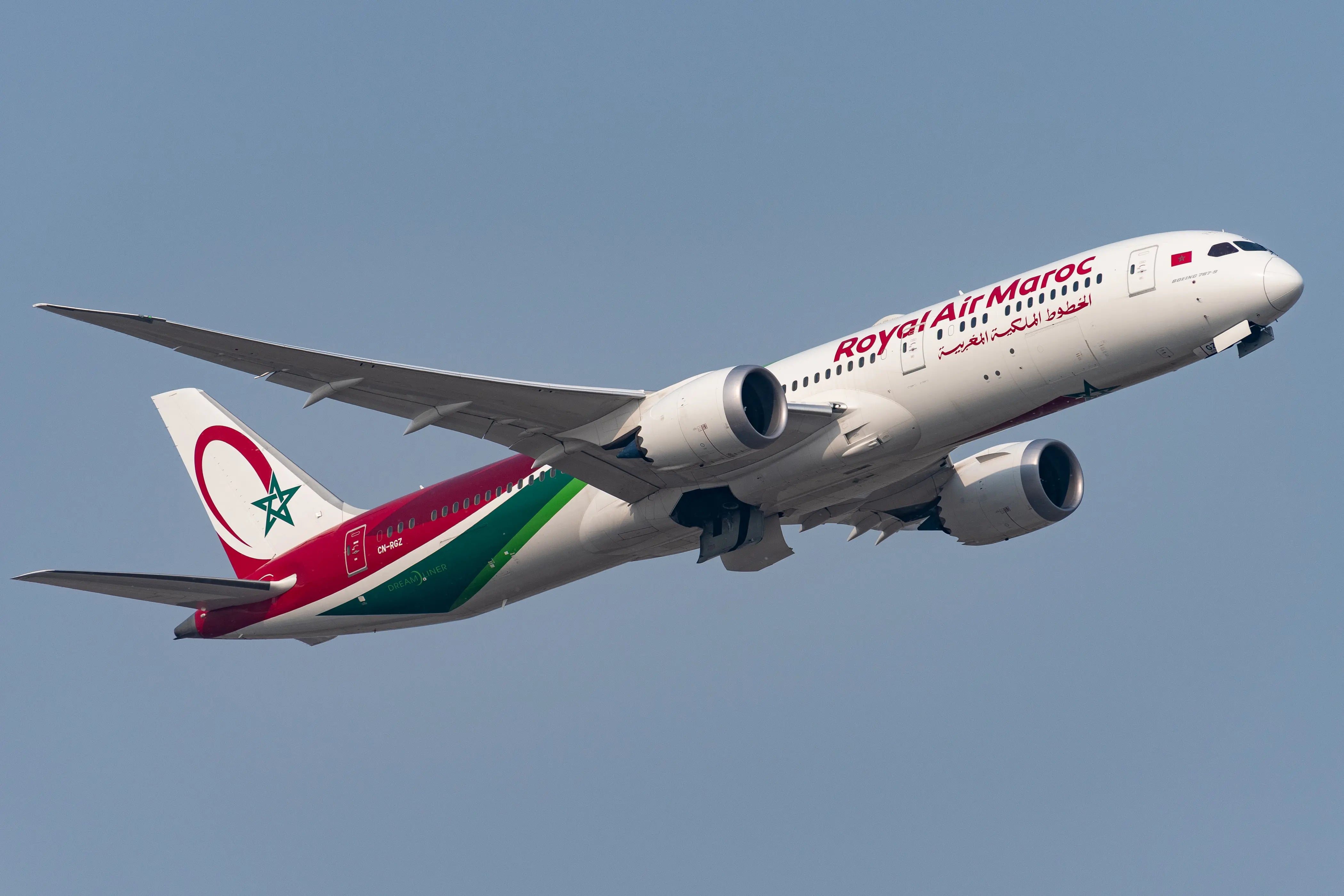
Royal Air Maroc (RAM, IATA: AT, ICAO: RAM) is the flag carrier of the Kingdom of Morocco. Founded in June 1953 through the merger of two earlier Moroccan operators, the airline is owned by the Moroccan state and has its headquarters at Casablanca-Anfa, with its operational hub at Casablanca Mohammed V International Airport (CMN). In 2020 it became the first carrier from the African continent to join the oneworld global alliance, giving its pilots and passengers connectivity with partners such as American Airlines, British Airways, Iberia and Qatar Airways.
For a pilot weighing a move, the defining feature of Royal Air Maroc in the mid-2020s is momentum. The airline carried roughly 7.2 million passengers in 2024 and posted a record turnover of around 20 billion Moroccan dirhams (approximately 1.8 to 2 billion euros), with management forecasting about 7.5 million passengers for 2025. Casablanca sits at a natural crossroads between Europe, West and Central Africa and the Americas, and RAM has built its hub-and-spoke model around that geography. It is now pursuing one of the most ambitious expansion plans on the continent, tied in part to Morocco's role as co-host of the 2030 FIFA World Cup alongside Spain and Portugal.
That expansion shapes everything a pilot should care about: recruitment volume, upgrade timelines and fleet variety. RAM and the Moroccan government have publicly framed a goal of growing the fleet from roughly 60 aircraft today toward around 200 aircraft by 2030 (with some official communications citing 2037). Whether the precise year is 2030 or 2037, the direction of travel is a fleet roughly three times larger, which would require hundreds of additional pilots. Note that several headline figures below, including pilot headcount, are not officially published by the airline and are flagged as estimates where that is the case.
Fleet Composition & Type Ratings
Royal Air Maroc operates a predominantly Boeing fleet of around 64 aircraft, according to the airline's own official fleet page. The backbone of the medium-haul operation is the Boeing 737, split between 28 Next Generation 737-800s and a growing wing of 14 newer 737 MAX 8s. Long-haul flying rests on the Boeing 787 Dreamliner family (five 787-8s and six 787-9s), while regional and domestic routes are served by four Embraer 190s and six ATR 72-600 turboprops. A single Boeing 767-300 freighter rounds out the fleet. The average fleet age is reported at roughly 11.8 years, which is competitive for a legacy carrier of this size.
| Aircraft Type | Role | In Service | Routes / Notes |
|---|---|---|---|
| Boeing 737-800 | Narrowbody | 28 | Core medium-haul: Europe, Maghreb, West & Central Africa. |
| Boeing 737 MAX 8 | Narrowbody | 14 | Fleet renewal type, largely on lease. Numbers rising. |
| Boeing 787-9 | Widebody | 6 | Long-haul flagship: North America, South America, Asia. |
| Boeing 787-8 | Widebody | 5 | Long-haul. Backbone of intercontinental network. |
| Embraer 190 | Regional jet | 4 | Thinner regional and domestic routes. |
| ATR 72-600 | Turboprop | 6 | Domestic and short regional sectors. |
| Boeing 767-300F | Freighter | 1 | Cargo operations. |
Fleet data as published on Royal Air Maroc's official fleet page (2025). The Boeing 737-700 has effectively left the declared passenger fleet. Counts shift with ongoing deliveries and leases.
The renewal picture is unusual and worth understanding before committing to RAM. As of the most recent public reporting, the airline had not yet signed a firm large-scale purchase contract. Instead, it launched a multi-manufacturer tender in 2024 and has been in talks with Boeing, Airbus, Embraer and ATR for a renewal package widely reported at up to 188 to 200 aircraft, with an estimated budget near 25 billion US dollars. Coverage has floated a possible mix of additional Boeing 737s and 787s, Airbus A220s and Embraer E2 regional jets, but none of this has been confirmed as a logged firm order. The concrete near-term growth visible today comes through leasing: RAM has been adding 737 MAX 8s on lease (around 13 in total, with several more arriving), and one industry tracker reported a target of roughly 73 aircraft by 2027.
For pilots, two practical points follow. First, the current fleet is genuinely modern in its core types: the 737 MAX 8 and 787 are both current-generation aircraft, so type-rating credentials earned at RAM remain marketable elsewhere. Second, if Airbus types do enter the fleet, RAM would run parallel Boeing and Airbus training pipelines, which historically opens instructor and conversion opportunities but also complicates rostering, since cross-fleet flying is generally not permitted.
New First Officers typically enter on the Boeing 737 or the Embraer 190, with the 787 reserved for long-haul transition later in a career. Direct-entry pilots are expected to arrive type-rated: agency listings for the 737NG First Officer role require an existing type rating and a minimum of 300 hours on type, while expatriate Captain contracts require type rating plus substantial command time. Recurrent training and type courses are run through Royal Air Maroc's own Training Center in Casablanca, which the airline has highlighted as part of its standardization investment.
Pilot Salary & Compensation Breakdown
Compensation is the area where Royal Air Maroc is least transparent, so honesty matters here. As a state-owned company, RAM does not publish internal pilot pay scales, and no reliable seniority-by-seniority salary table exists in the public domain for its permanent Moroccan pilots. What is well documented is the pay offered to expatriate contract pilots, because that data appears openly in recruitment listings. The figures below therefore separate what is solidly sourced from what can only be characterized qualitatively. Where a number is not publicly disclosed, that is stated plainly rather than estimated.
The clearest data point comes from contract Captain roles advertised by agencies such as Brookfield Aviation and listed on pilot job boards. These describe a Boeing 737 Captain package built around a base of 10,000 to 10,500 euros per month, supplemented by overtime (reported at around 100 euros per block hour above 80 hours in a month), a loyalty bonus, an accommodation allowance, positioning flights, ground transport and international health insurance. Contracts run as one-year terms renewable up to five years, based in Casablanca.
Documented & Indicative Pay by Role
| Role / Contract | Monthly Pay | Annual Gross (est.) | Key Terms |
|---|---|---|---|
| Junior First Officer (B737, pipeline) | Reduced entry pay (not disclosed) | Not disclosed | Newly type-rated, low hours. Upgrade to F/O at 500 hrs on type. |
| Direct-entry First Officer (B737NG) | Not publicly disclosed | Not disclosed | Min 300 hrs on type; ICAO English Level 4+. |
| Expatriate Captain (B737, contract) | €10,000 – €10,500 | ~€120,000 – €138,000 | + ~€100/block hr over 80; loyalty bonus, housing, intl. health cover. |
| Permanent local Captain (widebody) | Not publicly disclosed | Not disclosed | Pilots describe pay as solid for the region; scales not published. |
Expatriate Captain figures are sourced from public agency listings and pilot job boards. Junior, direct-entry First Officer and permanent local pilot pay scales are not published by Royal Air Maroc and are shown as undisclosed rather than estimated.
The entry tier deserves a clear-eyed note. RAM has historically built a junior pipeline using a Junior First Officer (JFO) model: newly type-rated pilots with little or no time on type join, fly under supervision and become eligible for a First Officer check at around 500 hours on type, with a reported pass rate near 90 percent according to the recruitment partner that ran the programme. The same case study notes that the airline's total cost for a Junior First Officer ran up to 60 percent below the market rate for an experienced First Officer. In plain terms, this is an attractive route onto a mainline jet, but it is a low-pay apprenticeship period, and exact JFO salaries are not public.
For permanent Moroccan pilots, the most that can be said responsibly is anecdotal: pilot reviews describe a "good salary" and "good life insurance" alongside complaints about workload pressure. Local pay should be read in the Moroccan context, where the cost of living is substantially lower than in Western Europe, so a competitive local salary stretches further than the gross figure suggests. RAM clearly sits above smaller North African carriers and below the Gulf and major European or US carriers in absolute terms, a placement explored in detail in the comparison section.
Royal Air Maroc does not publish pilot pay scales. The only firmly documented figures are for expatriate Boeing 737 Captain contracts (around 10,000 to 10,500 euros per month plus overtime and allowances). Pay for Junior First Officers, direct-entry First Officers and permanent local pilots is not publicly available and has deliberately not been estimated with invented numbers. Contract terms vary by nationality, fleet, currency of payment and agency, and tax treatment differs sharply between local employment under Moroccan law and euro-denominated expatriate contracts. Always confirm figures directly with the airline or the recruiting agency.
Roster Pattern & Quality of Life
Royal Air Maroc pilots fly under flight and duty time limitations set by Morocco's Direction Générale de l'Aviation Civile (DGAC), the national civil aviation authority, which aligns broadly with ICAO standards and European best practice. In practical terms that means an annual flight time ceiling in the region of 900 hours, mandatory minimum rest periods, and limits on consecutive duties and night operations. What sets RAM apart from many European legacy carriers is not the regulatory ceiling but the intensity of the published rosters, particularly on contract.
The documented contract pattern for expatriate 737 pilots is demanding: job listings describe a fixed cycle reported as 23 days of duty followed by 7 days off, or equivalently around 7 days off per month, combined with 24 days of annual leave and 6 days of sick leave per year. That is a heavier on-duty load than the typical European pattern of multiple shorter work-and-rest cycles, and it is a key trade-off against the competitive contract pay. The sample month below reflects this intense, high-sector narrowbody rhythm rather than a lighter European-style roster.
📅 Sample Month — Narrowbody Pilot (Casablanca, contract-style pattern)
Short and medium-haul flying on the 737, Embraer 190 and ATR is sector-intensive: two to four legs in a duty day, early starts and late returns into Europe, the Maghreb and West Africa, and quick turnarounds at airports with varying ground infrastructure. Long-haul pilots on the 787 experience the opposite shape: fewer duty days but longer ones, with extended layovers of 24 to 48 hours in North or South America and augmented crews (three or four pilots) on the longest sectors to allow in-flight rest. Long-haul brings circadian disruption and time away from home in exchange for genuine downtime at destination.
Royal Air Maroc is effectively a single-base airline: almost all crew are based in the Greater Casablanca area around Mohammed V International Airport. There is no multi-base bidding system, so living in or near Casablanca is the default, and pilots who choose to commute must absorb travel time into their limited days off. The upside is a comparatively low cost of living in Morocco, a pleasant climate and a central position between Europe, Africa and the Atlantic. The downside is reduced flexibility for anyone who wants to live elsewhere, and the intense duty blocks make long-distance commuting harder than at carriers offering more days off.
Benefits, Travel Perks & Retirement
Benefits at Royal Air Maroc split along the same line as pay: clearly documented for expatriate contract pilots, and largely inferred for permanent local pilots whose package follows Moroccan labour law and company policy. As a state-owned flag carrier inside the oneworld alliance, RAM offers a recognizable legacy-carrier benefits structure, though it is less lavish and less transparent than the packages published by large European or Gulf operators.
The most reliably positive benefit theme in pilot feedback is insurance: both the international health cover written into expatriate contracts and the group life insurance that long-serving pilots single out as strong. Staff travel follows the usual flag-carrier model and is enhanced by oneworld membership, which in principle extends discounted or standby travel options across a large global network, although RAM does not publish the fine print of its staff travel scheme.
Unlike France's CRPN or other aviation-specific pension funds, Morocco has no dedicated aircrew pension scheme documented in public sources. Permanent RAM pilots are most likely enrolled in general Moroccan retirement schemes such as the CMR (public sector) or the supplementary CIMR, but this is not confirmed specifically for pilots, and loss-of-license cover is not described in any public source reviewed. Because formal pilot representation has been weakened (see Section 10), these protections are exactly the items a candidate should pin down in writing before signing. Do not assume European-style coverage.
Career Progression & Seniority
Career progression at Royal Air Maroc is driven by a combination of seniority, performance and, crucially, the pace of fleet growth. Unlike strictly closed-shop carriers that promote only from within, RAM does hire direct-entry expatriate Captains on the 737 and Embraer 190 through agencies, on five-year renewable contracts. This is a double-edged feature: it tells you the airline has at times faced a command shortage (a positive sign for upgrade demand), but a standing pool of contract Captains can also slow internal upgrades if the airline leans on it instead of promoting its own First Officers.
The early-career ladder is comparatively fast where the Junior First Officer pipeline applies. A newly type-rated JFO becomes eligible for a full First Officer check at around 500 hours on type, which at typical narrowbody utilization can be reached in roughly a year. From there, the timeline to command is not officially published by RAM. Industry norms for narrowbody captaincy generally fall in the 3,000 to 4,000 total-hour range with several years as a First Officer, and RAM's aggressive expansion plan should, in principle, create command vacancies faster than a steady-state airline would. Treat any specific upgrade-year figure with caution: the airline has not published one.
| Career Milestone | Typical Timeline | Notes |
|---|---|---|
| Cadet ab-initio training (cadet path) | ~18–24 months | Moroccan nationals via RAM-sponsored training and partner schools. |
| Junior F/O → First Officer | ~500 hrs on type (≈1 yr) | Supervised line flying; ~90% pass the F/O check (per programme data). |
| First Officer (B737 / E190) | Entry on narrowbody | Direct entry requires min 300 hrs on type. |
| Widebody (787) transition | Seniority / performance | Limited slots; expanding as 787 flying grows. |
| Captain upgrade (narrowbody) | Not officially published | Industry norm ~3,000–4,000 hrs total. Expat DECs also fill commands. |
| Widebody Captain (787) | Senior | Top of the internal progression ladder. |
Timelines marked "not officially published" reflect industry norms, not confirmed RAM policy. Royal Air Maroc does not disclose a formal seniority list or upgrade schedule.
Royal Air Maroc is in a hiring cycle driven by its expansion toward roughly 200 aircraft and the 2030 World Cup. It has run cadet intakes (a 2023 campaign sought 96 cadets), continued to recruit type-rated First Officers, and used expatriate contract Captains to bridge command gaps. New 2026 routes to Los Angeles, Toronto, São Paulo (more frequencies), and several European and African points point to sustained crew demand. The main caution for career planners is structural: the COVID-era layoffs of pilots and the weakened state of the pilots' association mean career security rests heavily on the airline's growth continuing as planned, rather than on robust contractual protections.
Recruitment Process & Requirements
There are two realistic ways into a Royal Air Maroc flight deck: the cadet pilot programme for young Moroccan nationals with little or no flying experience, and direct entry for already-licensed and type-rated pilots, who are recruited both as local hires and as expatriate contractors through specialist agencies such as AeroProfessional and Brookfield Aviation. RAM does not maintain a detailed public English-language careers portal for pilots, so candidates monitor the airline's official channels and partner agencies for campaign announcements, which can open and close within short windows.
Cadet Programme — Requirements
Direct-Entry Pilot — Requirements
Selection Stages
Application & Document Screening
Candidates submit a CV, identity documents, licences and academic transcripts. Cadet applications are screened against age, nationality, education and language criteria; direct-entry files are screened against licence, type rating, hours and recency.
Aptitude & Phone Pre-Screen
Cadets sit psychometric and aptitude testing (cognitive reasoning, spatial orientation, coordination, personality inventories). For direct-entry pilots, agency campaigns typically begin with a telephone pre-screen interview to confirm credentials and intent.
Interview (Panel or Online)
A motivational and technical interview, conducted on a panel for cadets and increasingly via video call (e.g. Microsoft Teams) for direct-entry candidates. Focus areas include CRM, decision-making, stress management and cultural fit. Language ability in French and English is assessed.
Simulator Assessment (Casablanca)
Direct-entry pilots complete a simulator assessment in Casablanca to demonstrate handling and procedural competence. Cadets undergo flying-aptitude evaluation at the appropriate training stage.
Class 1 Medical & Contract / Training Start
A valid Class 1 medical is required before line operations or training begin. Successful direct-entry pilots proceed to type rating (if needed) and line training; cadets are assigned a training start date with RAM-sponsored schools.
Language is the quiet gatekeeper at Royal Air Maroc. The working environment is trilingual: Arabic and French dominate administration and operations, while English is the aviation standard. Cadet candidates should treat strong French and solid English as non-negotiable, alongside native-level Arabic. The Mohammed VI International Academy of Civil Aviation (AIAC) in Casablanca is Morocco's flagship national civil aviation institution and a useful reference point for the local training ecosystem, even though RAM cadets are trained through the airline's own sponsored pathway and partner flight schools. For direct-entry pilots, keep your recency current (within 90 days) and aim for ICAO English Level 5 or higher to stand out.
Top 5 Layover Destinations
Long-haul layovers are one of the genuine perks of the 787 fleet at Royal Air Maroc. From Casablanca, the Dreamliners reach North America, South America and Asia, with rest periods that typically run 24 to 48 hours before the return leg. The list below reflects RAM's core intercontinental network in 2025 and 2026, including the new Los Angeles service that launched in June 2026. Washington Dulles and Dakar are also frequent overnight points worth noting: Washington for its museums and proximity to the capital's landmarks, and Dakar as a familiar West African hub central to RAM's Africa strategy.
Crew hotels are contracted by the airline, and transport between hotel and airport is provided. On the longest sectors, the 787 carries an augmented crew of three or four pilots so that each can take in-flight rest in the dedicated crew rest area. Layover length and destination depend on the operating schedule and on a pilot's position relative to colleagues, so the most popular trips tend to favour more experienced crew. Per-diem allowances cover meals and incidentals, calibrated to each destination, though RAM does not publish the exact rates.
How Royal Air Maroc Compares: Airline Radar Chart
The most useful peers for Royal Air Maroc are the other North African flag carriers: EgyptAir (Star Alliance, based in Cairo) and Tunisair (based in Tunis). All three are state-owned legacy operators in the same region, which makes the comparison more meaningful than benchmarking against Gulf or European mega-carriers. The radar below scores the same six metrics used in the scorecard. These are editorial estimates drawn from publicly available salary data, fleet records, alliance status and pilot feedback, not official figures.
Regional Pay Benchmark
| Airline | First Officer (approx.) | Captain (approx.) | Basis |
|---|---|---|---|
| Royal Air Maroc | Not publicly disclosed | €10,000–€10,500/mo (expat contract) | Agency listings / pilot job boards |
| EgyptAir | ~US$6,000–13,000/mo | ~US$12,000–25,000/mo | Recruiter graphics / Glassdoor |
| Tunisair | ~US$1,000–3,000/mo | ~US$3,500–6,000/mo (est.) | Pilot job board (FO data) + ratios |
All figures are approximate, drawn from public job boards and salary aggregators, and shown for orientation only. None are official airline scales.
Key Takeaways from the Comparison
EgyptAir is the strongest of the three on fleet and reach. With roughly 73 to 83 aircraft spanning A320neo, A321neo, 737-800/MAX, A330, 777-300ER, 787-9 and the new A350-900, plus Star Alliance membership and a growth plan toward 125 aircraft by 2030, EgyptAir offers more wide-body variety and a clearer multi-type progression than RAM today. Its reported pay also sits at the top of the regional range.
Royal Air Maroc sits in the middle, with a modern but narrower fleet. RAM's core types (737 MAX 8 and 787) are current-generation, and its oneworld membership and Atlantic network are genuine strengths. But its fleet is less diverse than EgyptAir's, and the absence of a firm renewal order so far means the much-discussed expansion remains a plan rather than a delivered reality. Documented expat Captain pay (around 10,000 to 10,500 euros per month) is competitive regionally and stretches further given Morocco's lower cost of living.
Tunisair trails on nearly every axis. A small Airbus narrowbody fleet with just two A330 wide-bodies, no global alliance, well-documented financial strain and First Officer pay reported as low as 1,000 to 3,000 US dollars per month place it clearly below both RAM and EgyptAir for pay, progression and perceived stability.
Job security is a relative concept here. All three are state-backed, which reduces the risk of outright collapse, but none offers the contractual protection of a strongly unionized European carrier. RAM's COVID-era pilot layoffs and weakened pilots' association temper its otherwise solid expansion story, which is why it scores in the mid range rather than the top on this metric.
Scores are editorial estimates based on research into publicly available salary data, fleet databases (including the airlines' own fleet pages, Planespotters and ch-aviation), alliance status, route announcements and pilot testimonials. They represent a general assessment for an experienced pilot considering a long-term career, not precise measurements. Because none of the three carriers publishes full pilot pay scales, salary scoring in particular carries wide uncertainty. Individual experience will vary by contract type, nationality, fleet and seniority.
Union & Industrial Relations
Industrial relations are the area where Royal Air Maroc differs most sharply from a European legacy carrier, and a candidate should understand it before signing. The historic pilot body is the Association Marocaine des Pilotes de Ligne (AMPL), the Moroccan Association of Airline Pilots, which has long acted as the de facto representative of RAM's pilots in negotiations and disputes. Crucially, its standing has been weakened in recent years, and pilots today have less collective leverage than counterparts in France, Germany or the United Kingdom.
Where AMPL Stands
The picture is genuinely contested in public sources, which is itself important information. Some reporting describes a judicial dissolution process launched against AMPL following a prolonged standoff with management, with the association nonetheless continuing to function administratively in a kind of legal limbo, retaining a small permanent staff and financial reserves while its full liquidation has been delayed on procedural grounds. Other coverage continues to refer to AMPL as the airline's pilot union in the present tense. What is not in dispute is that the association's bargaining position is far weaker than it was a decade ago, and that there is no clearly documented, recognized alternative pilot union (acronyms such as "SNPLM" or "SPLM" do not appear as active RAM bodies in the sources reviewed).
How Working Conditions Are Set
RAM pilot conditions are governed by Moroccan labour law, the flight and duty time rules of the DGAC, the airline's internal policies, and, for expatriate pilots, individual contract terms negotiated through agencies rather than collective agreements. The weakening of AMPL means that pay scales, roster intensity and protections such as loss-of-license cover are shaped more by management policy and the global pilot supply-and-demand balance than by a strong, enforceable collective agreement. For a pilot accustomed to a European-style convention collective, this is a meaningful cultural and practical difference.
Recent Disputes & History
Royal Air Maroc has not seen a major mainline pilot strike in the past few years, but that calm reflects a weakened union rather than a settled, generous collective agreement. The practical takeaway is to rely on written contract terms, not on collective protections. Confirm pay, roster guarantees, leave, insurance and loss-of-license cover in your own contract before committing, and treat job security as resting primarily on the airline's expansion continuing as planned. This is a different bargain from a strongly unionized European carrier, and it should be weighed honestly against RAM's genuine attractions.
Verdict: Who Is Royal Air Maroc For?
🎯 Our Take
Royal Air Maroc is a flag carrier on the move. A modern core fleet of Boeing 737 MAX 8s and 787 Dreamliners, oneworld membership, an Atlantic and West African network with desirable long-haul layovers, and an expansion plan tied to the 2030 World Cup all make it an interesting place to build hours and command time, especially for pilots in or near the region.
The trade-offs are real and should not be glossed over. Rosters on the documented contract pattern are intense (around 7 days off per month), the airline is effectively single-base in Casablanca, pay for local pilots is opaque and clearly below European, Gulf and US levels in gross terms, and the weakened pilots' association leaves working conditions resting on individual contracts rather than strong collective protection. The much-discussed fleet renewal remains a tender and a plan rather than a signed order, so the expansion upside is real but not yet guaranteed.
For an aspiring Moroccan cadet, RAM is arguably the single best aviation career in the country and a credible path from ab-initio training to a 787 flight deck. For an experienced expatriate Captain, it is a competitively paid contract role with good layovers, provided the heavy duty cycle suits your lifestyle. For pilots who prize roster lightness and ironclad union protection, other carriers will fit better.
1 Do I need to be Moroccan to become a Royal Air Maroc pilot?
For the cadet pilot programme, yes. RAM's documented cadet intakes (such as the 2023 campaign for 96 cadets) required Moroccan nationality and an age under 27. Non-Moroccan pilots are generally recruited a different way: as already-licensed, type-rated expatriate First Officers and Captains on fixed-term contracts arranged through specialist agencies, with visa and work-permit support. There is no cadet pathway for non-Moroccan citizens.
2 Does Royal Air Maroc hire direct-entry Captains?
Yes. Unlike strictly promote-from-within carriers, RAM recruits direct-entry expatriate Captains on the Boeing 737 (and at times the Embraer 190) through agencies such as Brookfield Aviation, on one-year contracts renewable up to five years and based in Casablanca. Typical requirements include an unrestricted ATPL, a relevant type rating and around 1,000 or more hours of pilot-in-command time on type.
3 How much do Royal Air Maroc pilots earn?
The only firmly documented figure is for expatriate Boeing 737 Captains: a base of roughly 10,000 to 10,500 euros per month, plus overtime (around 100 euros per block hour above 80 hours), a loyalty bonus and allowances, which works out to roughly 120,000 to 138,000 euros per year before tax. Pay for Junior First Officers, direct-entry First Officers and permanent local pilots is not published by the airline. Local pilots describe the salary as good for the Moroccan context, where the cost of living is comparatively low.
4 What aircraft would I fly, and how do type ratings work?
New First Officers typically start on the Boeing 737 (737-800 or 737 MAX 8) or the Embraer 190, with the Boeing 787 reserved for later long-haul transition based on seniority and performance. Direct-entry pilots are expected to arrive type-rated (the 737NG First Officer role requires a minimum of 300 hours on type). Type and recurrent training are run at RAM's own Training Center in Casablanca. Because the 737 MAX and 787 are current-generation aircraft, the ratings remain valuable elsewhere in the industry.
5 What is the roster and work-life balance like?
The documented contract pattern is intense: a fixed cycle reported as 23 days on duty followed by 7 days off, or roughly 7 days off per month, with 24 days of annual leave on expatriate contracts. Short and medium-haul flying is sector-heavy with early starts and late returns, while 787 long-haul brings fewer but longer duties and 24 to 48 hour layovers. RAM is effectively single-base in Casablanca, so there is no multi-base bidding, and commuting eats into limited days off.
6 Is there a cadet programme, and how do I apply?
Yes. RAM runs periodic cadet intakes for young Moroccan nationals with no flying experience, training them through company-sponsored pathways and partner flight schools toward a frozen ATPL and a type rating. Campaigns are announced through official channels with short application windows (the 2023 intake sought 96 cadets, age under 27). Candidates need a Class 1 medical, a strong science background and solid French and English alongside native Arabic. Morocco's national civil aviation institution, the Mohammed VI International Academy of Civil Aviation (AIAC) in Casablanca, is a useful reference for the wider training ecosystem.
7 Is Royal Air Maroc expanding, and is the job secure?
RAM is in a clear growth phase, targeting roughly 200 aircraft by 2030 (some communications say 2037), tied to the 2030 World Cup, and adding 2026 routes including Los Angeles, Toronto and more São Paulo frequencies. This is creating real hiring and upgrade demand. However, the large fleet order remains a tender rather than a signed contract, near-term growth has come mainly through leasing, and the COVID-era pilot layoffs plus a weakened union mean job security rests on continued expansion more than on contractual guarantees. It is a growth story to verify, not a guarantee.
8 How does Royal Air Maroc compare with EgyptAir and Tunisair?
Among North African flag carriers, EgyptAir generally leads on fleet diversity (multiple wide-body types plus the A350), reach and reported pay, backed by Star Alliance membership. Royal Air Maroc sits in the middle, with a modern but narrower fleet, oneworld membership and competitive expatriate Captain pay. Tunisair trails on most axes, with a small fleet, no global alliance, documented financial strain and notably lower pilot pay. All three are state-owned, which provides a degree of stability but not the contractual protection of a strongly unionized European carrier.
Official Links & Resources
Before applying or making any career decision, verify details directly with official sources. Royal Air Maroc does not maintain a detailed public pilot careers portal, so the list below combines the airline's own pages, the Moroccan regulator and academy, the alliance and the agencies that handle most pilot recruitment.
Because Royal Air Maroc recruits in short, infrequent bursts, monitor the airline's official LinkedIn and social channels and the pilot pages of agencies like Brookfield Aviation and AeroProfessional rather than waiting for a permanent careers portal. For direct-entry candidates, keep your licence, medical and recency current at all times, since RAM and its agencies often move quickly from advertisement to simulator assessment in Casablanca.