

Privilege Style Overview & Company Profile
Privilege Style S.A. is a Spanish charter and ACMI (Aircraft, Crew, Maintenance and Insurance) airline founded in 2003. Its corporate headquarters are in Palma de Mallorca (Balearic Islands), while its main operational base, where aircraft are stationed and most flights originate, is Adolfo Suárez Madrid-Barajas Airport (MAD). Unlike a scheduled network carrier, Privilege Style does not publish a public timetable. It sells capacity: it flies bespoke charters and wet-leases its aircraft and crews to other airlines, tour operators, sports clubs, VIP customers and, more controversially, government authorities.
This is a fundamentally different employer from a flag carrier such as Iberia or Air France. Privilege Style is small, privately held, and not part of any global alliance or major group. Corporate databases such as ZoomInfo estimate roughly 200 to 500 employees and annual revenue in the region of 22 million US dollars, while the Spanish jobs portal InfoJobs lists around 250 staff with an unusually high employee approval rating. The pilot corps is not published, but for a fleet of four passenger aircraft it is realistically measured in dozens rather than hundreds. For a pilot, that scale shapes everything: a short seniority list, few command openings, close-knit operations, and career prospects tied to whether the company wins and keeps charter and ACMI contracts.
Prospective applicants should verify the airline's identity carefully, because secondary listings sometimes misstate its codes. The correct, cross-checked designators (per avcodes, AirHex, IATA's own member listing and the FAA identifier list) are IATA P6, ICAO PVG, and radio callsign PRIVILEGE. The airline operates under its own Spanish Air Operator Certificate, listed by the national safety agency AESA under reference ES.AOC.118.
Privilege Style is a small, privately held charter airline that does not publish pilot pay scales, roster rules or a collective agreement. Industry databases such as Pilot Jobs Network carry only a skeletal entry and explicitly state that no detailed pay scale is available. Where this guide gives salary, roster or benefit figures for Privilege Style specifically, they are clearly labelled as sector-based estimates drawn from Spanish collective agreements and comparable charter and ACMI carriers, not company-published data. Corporate facts (founding date, base, fleet, codes) are cross-checked against multiple independent sources and are reliable.
Fleet Composition & Type Ratings
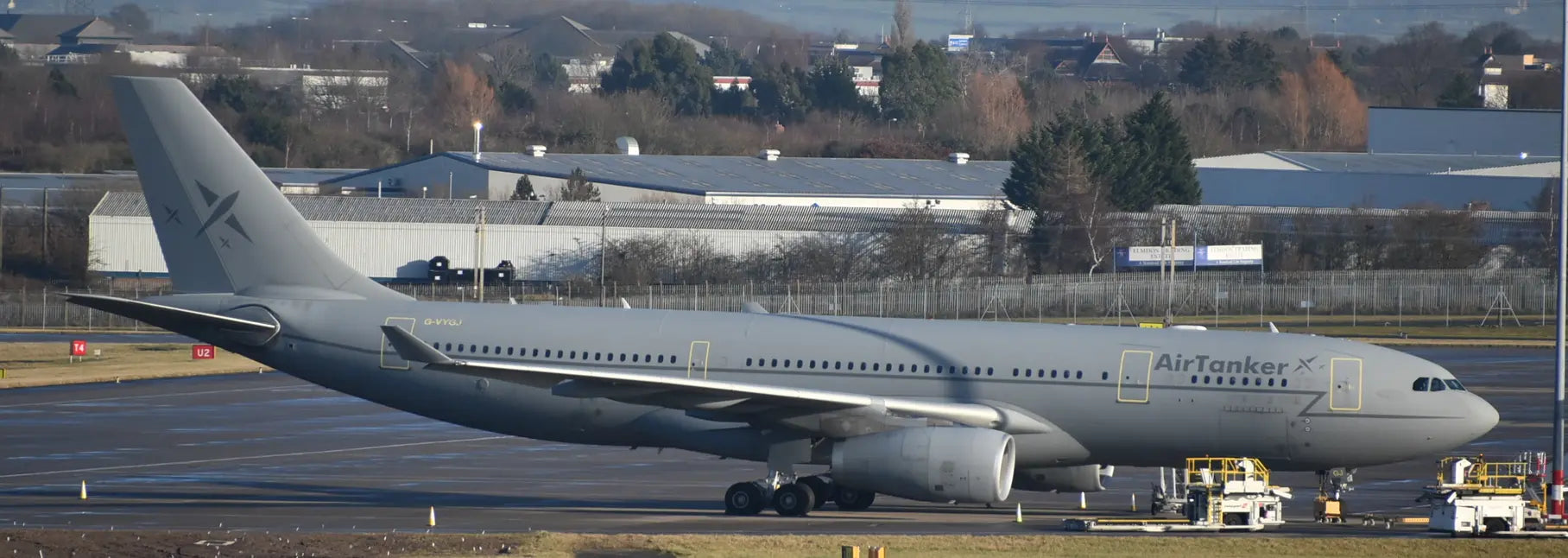
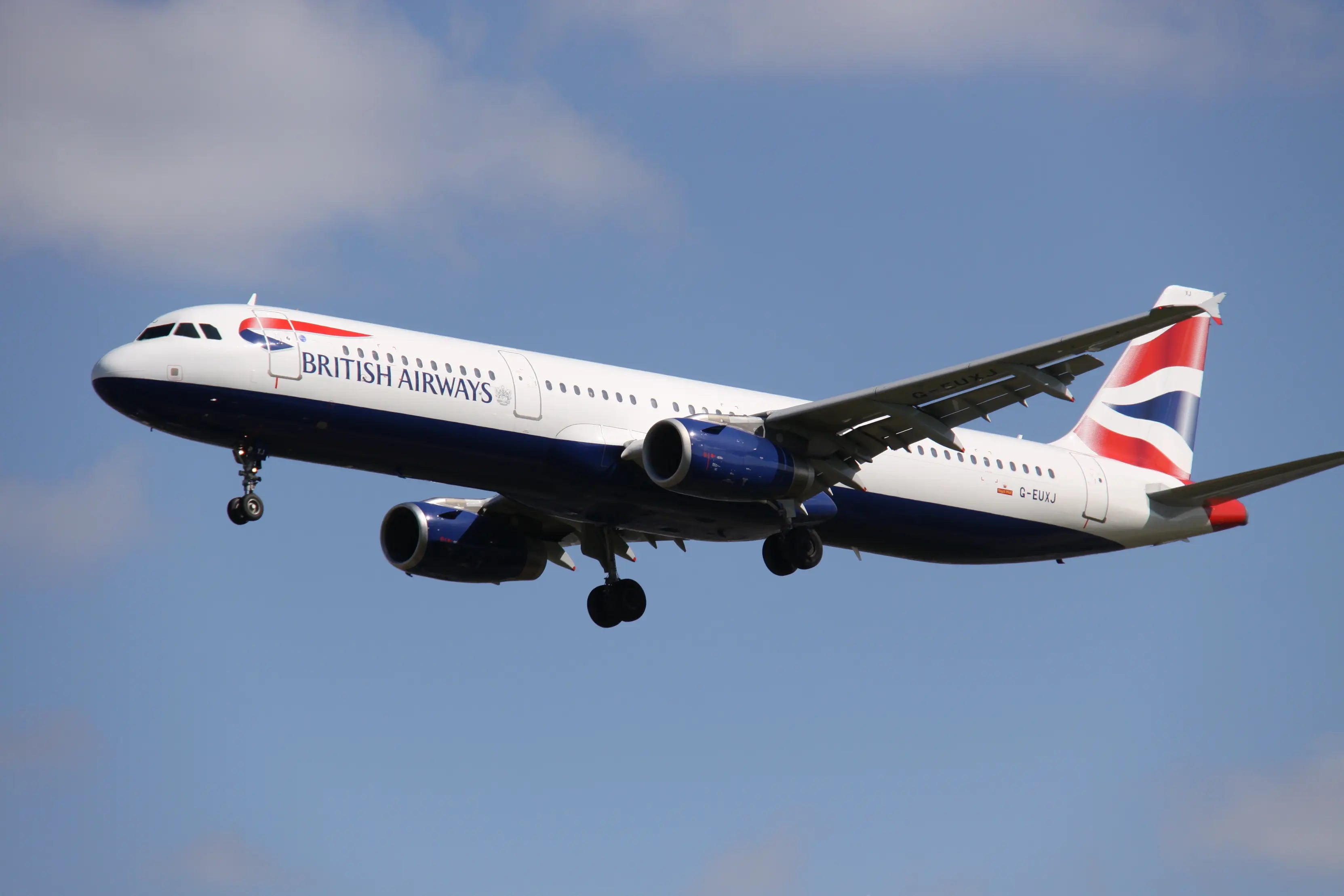
Privilege Style operates a small but deliberately mixed Airbus and Boeing fleet, spanning narrowbody and widebody types. This is typical of a charter and ACMI specialist: aircraft are acquired second-hand at lower capital cost, refurbished, and deployed flexibly wherever a contract requires. As of August 2025, cross-referenced fleet trackers (Wikipedia, Flightradar24 and Planespotters) agree on four active passenger aircraft: two Airbus A321-200s, one Airbus A330-200, and one Boeing 777-200ER, with a second 777-200ER reported on order.
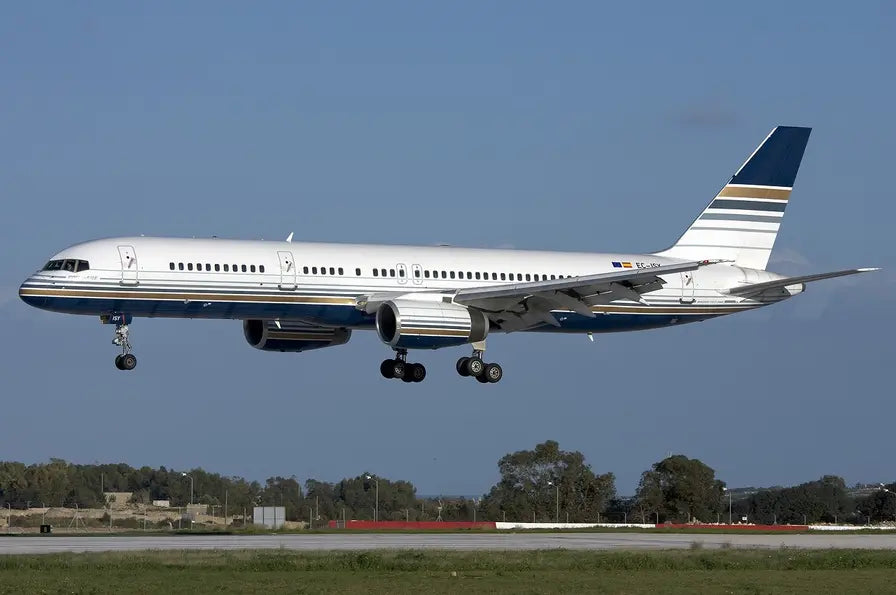
The fleet has changed substantially in recent years. The airline's classic Boeing 757-200 (EC-HDS) and Boeing 767-300ER (EC-LZO) have been withdrawn from active passenger service. According to FlightGlobal and Simple Flying, an ex-Virgin Australia A330-200 (EC-NZJ) was introduced in June 2023 specifically to replace the 767, while the 767 airframe itself was sent for passenger-to-freighter conversion. Separately, Privilege Style is entering the dedicated cargo market: the airline is reported by Cargo Facts and ch-aviation to be adding an Airbus A330-300P2F freighter, becoming the first Spanish airline to operate that converted freighter type.
| Aircraft Type | Role | In Service | Registrations / Notes |
|---|---|---|---|
| Airbus A321-200 | Narrowbody | 2 | EC-MIG, EC-NPJ. Core short/medium-haul charter & ACMI type. Main First Officer recruitment fleet, based Madrid. |
| Airbus A330-200 | Widebody | 1 | EC-NZJ (ex-Virgin Australia). Introduced June 2023 to replace the 767-300ER. Long-haul charter & ACMI. |
| Boeing 777-200ER | Widebody | 1 (+1 on order) | EC-MUA (ex-Singapore Airlines / Royal Brunei). Long-haul workhorse, wet-leased to carriers such as LOT Polish Airlines and Iberia. |
| Airbus A330-300P2F | Freighter | 1 (entering service) | New cargo venture. Reported first Spanish operator of the type (Cargo Facts / ch-aviation). |
| Boeing 767-300ER | Widebody | Retired | EC-LZO. Withdrawn from passenger service, sent for P2F conversion. |
| Boeing 757-200 | Narrowbody | Retired | EC-HDS. No longer listed in active fleet databases. |
Fleet data cross-referenced to late 2025. Numbers change with contract wins, deliveries and retirements at this small carrier.
Privilege Style does not advertise company-funded type-rating training. Its published First Officer vacancies for the Airbus A321 require candidates to already hold an EASA ATPL with the A321 type rating. In practice this makes the A320 family the main narrowbody entry point, and it positions Privilege Style as a mid-career employer for pilots who arrive fully rated rather than a first-airline for fresh cadets. The mixed Airbus and Boeing fleet means pilots are type-specialised: moving from the A321 to the Boeing 777, for example, requires a full type conversion, so fleet mobility is limited by training budget and operational need. Widebody flying (A330, 777) and the new A330-300P2F freighter are the seniority-and-experience-driven steps beyond the narrowbody.
Pilot Salary & Compensation
There is no publicly available, company-specific pay scale for Privilege Style pilots. This is the single most important caveat in this section. Neither Pilot Jobs Network nor Glassdoor holds pilot salary data for the airline, and Privilege Style does not publish a collective agreement. What can be done responsibly is to place Privilege Style inside the well-documented structure of Spanish pilot pay and the benchmarks of comparable charter and ACMI carriers, then present realistic ranges as estimates.
Spanish pilot pay, as described by flight school CESDA and the 2026 salary survey by OneAir, is built from four components: a fixed base salary (paid in 12 or 14 instalments and set by rank and seniority), variable pay per block hour, tax-exempt per diems (dietas) for time away from base, and responsibility or productivity bonuses. Typical Spanish block-hour rates cited by CESDA are around 36 euros per hour for a First Officer and 53 euros per hour for a Captain, with airlines usually guaranteeing a minimum number of paid hours (often around 70) per month. Captains typically receive an additional command responsibility premium, cited at roughly 14,000 euros per year at some carriers.
First Officer (Copiloto) — Sector-Based Estimate
| Stage | Est. Annual Gross | Block-Hour Rate | Notes |
|---|---|---|---|
| Entry / junior F/O (A321) | ~€35,000 – €45,000 | ~€36/hr | Base salary near the Spanish entry floor of €22k–€28k, lifted by block-hour pay and dietas. |
| Experienced F/O (A321) | ~€45,000 – €55,000 | ~€36/hr | Higher seniority step and more productive rosters. |
| Widebody F/O (A330 / 777) | ~€55,000 – €70,000 | higher | Long-haul ACMI flying adds hours and substantial overnight per diems. |
Estimates extrapolated from Spanish charter/ACMI norms (CESDA, OneAir) and peers such as Wamos Air. Not Privilege Style published figures.
Captain (Comandante) — Sector-Based Estimate
| Stage | Est. Annual Gross | Block-Hour Rate | Notes |
|---|---|---|---|
| Junior Captain (A321) | ~€70,000 – €85,000 | ~€53/hr | Around the Spanish captain floor, plus command responsibility premium. |
| Experienced Captain (A321 / A330) | ~€85,000 – €100,000 | ~€53/hr | Mid-band for Spanish charter/ACMI commanders. |
| Senior widebody Captain (777 / A330 LH) | ~€100,000 – €120,000 | higher | Long-haul ACMI commands, per diems and bonuses at the top of the charter band. |
For reference, Pilot Jobs Network data for peer Wamos Air indicate a Captain base near €110,000 and a First Officer base near €56,400 before tax.
Every figure above is a sector-based estimate, not a Privilege Style pay table. They are anchored to documented Spanish ranges: First Officers roughly €22,000 to €50,000 in the early years and Captains roughly €70,000 to €140,000 depending on seniority and route type (CESDA, OneAir). Charter and ACMI carriers generally sit above pure low-cost but below flag-carrier long-haul scales. Actual Privilege Style pay depends on the individual contract, aircraft, block hours flown and whether the pilot is hired directly or through an agency. Dietas are usually tax-exempt and can materially lift net income for pilots doing long-haul overnights. Verify any offer against the written contract before making a career decision.
Roster Pattern & Quality of Life
Roster stability is the defining quality-of-life issue at a charter and ACMI airline, and it is the main reason the work-life score above sits lower than at a scheduled carrier. Privilege Style builds its flying around client bookings rather than a published timetable. Sports fixtures, tour-operator series, Hajj and Umrah pilgrimage seasons and ad hoc wet-lease requests all generate irregular, seasonal demand. In practice this means periods of intense flying followed by quieter stretches, more standby, and less month-to-month predictability than a pilot would find at Iberia or Vueling.
All Spanish operators, Privilege Style included, must roster within the European Flight Time Limitations framework set by EASA and enforced nationally by AESA. The rules under ORO.FTL.205 cap the daily Flight Duty Period by start time and number of sectors, and ORO.FTL.110 governs how standby combines with duty, so that a pilot's continuous awake time cannot exceed the regulatory ceiling. These limits matter more than usual at an ACMI carrier, where crews may spend significant time on standby awaiting a call-out. The annual flight-time ceiling under EASA FTL is 1,000 hours in any 12 consecutive months.
📅 Illustrative Charter / ACMI Month (representative, not a published roster)
The grid above is illustrative only. Privilege Style does not publish rosters, so it reflects a typical Spanish charter and ACMI pattern rather than an actual company schedule: more standby than a scheduled airline, blocks of flying tied to contracts, and days off that can bunch into off-peak periods. Long-haul ACMI work (for example, operating the 777-200ER on a client airline's route) tends to mean fewer flying days but longer sectors, night departures and multi-day nightstops away from Madrid.
Madrid-Barajas is the primary domicile for Privilege Style pilots, and the airline's published A321 First Officer adverts specify base Madrid. Because the corporate headquarters are in Palma de Mallorca and cabin-crew bases have at times been opened elsewhere (for example, Lisbon for specific contracts), pilots may face commuting or temporary basing away from Madrid when an ACMI contract stations an aircraft abroad. This mobile, contract-following lifestyle is standard for the ACMI sector and is a genuine consideration for anyone weighing family life against the flexibility of charter flying.
Benefits, Contracts & Retirement
Privilege Style does not publish a benefits package, so this section describes the Spanish legal and sector framework that applies to its pilots, flagging clearly where company-specific detail is unavailable. The single most important structural benefit for any Spain-based pilot is the national social protection system: full public healthcare through the Seguridad Social, a contributory state pension, and, crucially, the aviation-specific early-retirement provisions.
Under Spanish Social Security rules, technical flight crew benefit from "coeficientes reductores," reducing coefficients that let pilots retire earlier than the ordinary age because of the demanding nature of the job. Pilots and co-pilots carry a coefficient of 0.40, meaning each year of effective flying counts heavily toward bringing the retirement age forward. This is a meaningful long-term advantage for a pilot who spends a full career in Spanish aviation, and it applies regardless of which Spanish operator employs them.
The trade-off at a small charter airline is that you give up the extensive staff-travel networks and richly documented pension top-ups of a legacy carrier, but you keep the strong statutory floor of Spanish employment and social law. That means public healthcare, robust dismissal protections (Spanish courts have ordered reinstatement and compensation for wrongfully dismissed pilots at peer carriers), tax-exempt per diems that boost long-haul earnings, and the flight-crew early-retirement coefficients. For a pilot, the practical benefit picture at Privilege Style is likely dominated by dietas and social protection rather than by airline-specific perks. Confirm the specifics (private health cover, loss-of-licence insurance, contract type) directly in any employment offer, as these are not disclosed publicly.
Career Progression & Seniority
Career progression at Privilege Style is constrained by one hard fact: the fleet is tiny. With four passenger aircraft plus an incoming freighter, the number of command positions is small, and new Captain openings arise mainly from retirements, departures, or the arrival of additional aircraft. The airline does not publish an upgrade timeline, and given the scale it would be misleading to quote a fixed number of years to command. What can be said is that upgrades depend heavily on fleet stability and contract wins rather than a large, predictable seniority escalator.
The typical path is to enter as a type-rated First Officer on the A321 based in Madrid, build experience, and move toward widebody flying (A330 or 777) and eventually command as seniority and openings allow. Because the fleet mixes Airbus and Boeing, and passenger and freighter operations, transitions are not automatic: each move can require a full type conversion, which a small airline funds selectively. On the upside, small carriers can sometimes offer accelerated responsibility to strong performers, particularly when launching new operations such as the A330-300P2F freighter, which may create fresh roles.
| Career Milestone | Typical Timeline | Notes |
|---|---|---|
| Join as type-rated F/O (A321) | Day 1 | Must already hold EASA ATPL + A321 type rating. Base Madrid. |
| Experienced / Senior F/O | Several years | Seniority accrues on a short list. Progression tied to contract volume. |
| Widebody F/O (A330 / 777) | Experience / seniority-based | Depends on ACMI contract wins and widebody openings. |
| Captain upgrade | Variable (not published) | Constrained by small fleet. Direct-entry captains likely used for widebody gaps. |
| Freighter crew (A330-300P2F) | New (2025–26) | New cargo venture may open roles, likely favouring existing A330 pilots. |
Privilege Style is best understood as a mid-career employer rather than a first-airline. There is no cadet programme, and vacancies target pilots who arrive already qualified and type-rated. The airline's active fleet renewal (the A330-200 replacing the 767, a second 777 reported on order, and the move into A330-300P2F cargo) is the most likely source of new openings in the near term. For a pilot, the realistic reading is: solid, varied flying across narrowbody and widebody, but progression that is opportunistic and contract-dependent rather than guaranteed by a long seniority ladder. Widebody command experience gained here (777, A330) can be a strong stepping stone to larger carriers.
Recruitment Process & Requirements
Privilege Style recruits experienced, type-rated pilots. It does not run a cadet scheme or a publicly advertised pay-to-fly programme, and it does not advertise company-funded type ratings. Its published First Officer vacancies (circulated via the airline and amplified by flight academies) are explicit: for the Airbus A321, the airline seeks pilots who already hold an EASA ATPL with the A321 type rating and at least ICAO English Level 4, with applications sent to the company's recruitment email using the subject line "F/O A321." The Pilot Career Center profile adds that Spanish and English speakers are preferred, reflecting the reality that internal operations run in Spanish.
First Officer (A321) — Core Requirements
Selection Stages (typical Spanish process)
Application & Document Screening
CV, licences, ratings, medical and English/Spanish evidence are reviewed. Because vacancies are type-specific, applicants without the advertised type rating are typically filtered out at this stage.
Technical & Aptitude Assessment
Standard Spanish airline practice includes technical knowledge checks and psychometric or aptitude testing, sometimes delivered remotely before any on-site stage.
Simulator Assessment
A simulator check to confirm handling, procedures and multi-crew performance on type. For direct-entry candidates this is a core gate.
Interview & CRM Assessment
A personal interview focused on Crew Resource Management, cultural fit and the flexibility a charter and ACMI operation demands. Company communications emphasise disciplined, team-based cockpit culture.
Medical & Contract
A valid EASA Class 1 medical is required, followed by line training and contract. Contract type (permanent versus seasonal "fijo discontinuo") is not disclosed publicly and should be confirmed in writing.
Because Privilege Style does not publish a formal, staged selection funnel, the process above reflects standard Spanish airline practice rather than a confirmed company sequence: treat it as a guide, not a checklist. Two things are firm from the airline's own adverts. First, hold the advertised type rating before applying, as there is no evidence of sponsored ratings for First Officers. Second, Spanish is a genuine advantage, not a formality, because the operation is run in Spanish. Follow the airline's official channels for live vacancies, and be ready for the mobility and standby that define charter and ACMI flying.
Typical Missions, Deployments & Layovers
A charter and ACMI airline has no fixed layover network. Destinations depend entirely on the contracts the airline holds at any given time, so the cards below are representative of the kinds of missions Privilege Style pilots have operated, not a scheduled route map. The variety is genuinely wide: long-haul wet-lease for other airlines, pilgrimage charters, sports-team travel, and leisure series for tour operators. That mission diversity is one of the more attractive aspects of the job for pilots who enjoy non-routine flying.
Do not expect the fixed, seniority-bid layover network of a legacy carrier. At Privilege Style, where you fly and how long you stay are dictated by the current charter and ACMI contract book, which changes over time. Some pairings are long-haul with multi-day nightstops (attractive for per diems and rest); others are single-day, high-tempo sports or leisure charters back to base the same night. This guide names only destinations tied to documented operations; it does not claim these are permanent routes, and it does not fabricate crew-hotel details, which the airline does not publish. Rest and layovers are governed by EASA Flight Time Limitations regardless of destination.
How Privilege Style Compares: Airline Radar Chart
How does Privilege Style measure up against comparable Spanish charter and leisure operators? The two most useful peers are Wamos Air (a larger Spanish long-haul charter and ACMI specialist) and World2Fly (a newer Spanish long-haul leisure carrier flying modern A330 and A350 widebodies). The chart below compares all three across five metrics. Scores are editorial estimates based on publicly available data and sector benchmarks, not audited figures.
Key Takeaways from the Comparison
Wamos Air pays the most at the top. As a larger long-haul charter and ACMI operator, Wamos Air sits highest on salary, with Pilot Jobs Network data pointing to a Captain base near €110,000 and a First Officer base near €56,400. Privilege Style and World2Fly land in a similar, slightly lower band. All three, however, trail the biggest Spanish scheduled carriers on gross pay and, importantly, none publishes a full transparent scale.
World2Fly leads on fleet. Flying modern Airbus A330 and A350 widebodies, World2Fly has the youngest, most fuel-efficient fleet of the three. Privilege Style is mid-pack: a genuinely mixed fleet with a recently added A330-200 and A321s, but an ageing Boeing 777-200ER that is over two decades old. Wamos Air's widebodies are also mature.
Job security and work-life are close, and modest across the board. All three are charter and leisure operators exposed to seasonality and contract cycles, so none scores highly on stability or predictability the way a flag carrier would. Privilege Style's very small fleet is a structural constraint on both career progression and resilience, though its 20-plus-year track record and reportedly positive internal culture temper that.
Benefits are broadly similar because all three sit under the same Spanish social framework: public healthcare, tax-exempt dietas, and the flight-crew early-retirement coefficients. Differences come down to per-diem generosity, contract type and roster stability rather than headline perks.
These scores are editorial estimates based on research into public salary data (Pilot Jobs Network, OneAir, CESDA), fleet databases, and sector benchmarks. They represent a general assessment for an experienced pilot considering a long-term charter or ACMI career in Spain. None of these three airlines publishes a complete pilot pay scale or collective agreement, so the comparison is directional, not precise. Individual experience will vary by fleet, seniority, contract type and personal priorities.
Union, Industrial Relations & Ethics
The dominant pilot union in Spain is SEPLA (Sindicato Español de Pilotos de Líneas Aéreas). According to its official site, SEPLA represents more than 8,800 pilots across all airlines based in Spain, including passenger, aerial-work and helicopter pilots, and it is financed independently through member dues rather than external subsidies. It is the primary institutional voice that could represent Privilege Style pilots. Whether Privilege Style pilots are formally covered by a SEPLA-negotiated agreement is not documented publicly, and this is an open question a candidate should raise directly with the union and the company.
SEPLA Structure & Reach
SEPLA's willingness to litigate on behalf of members matters for anyone joining a smaller Spanish operator. The union has pursued cases in the charter and ACMI sector, and Spanish courts have declared pilot dismissals null and ordered reinstatement with compensation at peer carriers. That legal backstop is part of the broader employment-protection environment that Privilege Style pilots benefit from under Spanish law, even where no company-specific pilot agreement is on public record.
Working conditions framework & recent context
This is a consideration unique to a handful of charter operators, and it is one an incoming pilot should weigh honestly. Privilege Style has repeatedly been contracted for state deportation flights, and campaigners specifically target pilots, noting that a pilot's commander authority to refuse a flight gives crew genuine agency in whether such operations proceed. Beyond the well-established right to refuse a flight on safety grounds, these missions raise ethical questions and attract protests, legal challenges and media attention. The airline's pay and rosters may look like any other charter operator, but the mission set can place crews in morally complex situations. Sources such as Corporate Watch document this dimension in detail; anyone considering the airline should read them and decide where they stand.
Verdict: Who Is Privilege Style For?
🎯 Our Take
Privilege Style is a niche Spanish charter and ACMI operator, not a legacy career airline, and it should be evaluated on those terms. Its appeal is variety and access to widebody flying at a small company: a type-rated pilot can operate anything from A321 European charters to Boeing 777 transatlantic wet-leases and, increasingly, A330 cargo. It sits under Spain's strong social and employment-law framework, with tax-exempt per diems and the flight-crew early-retirement coefficients that benefit every Spain-based pilot. Internal employee sentiment (across all roles) is reportedly positive.
The trade-offs are real and specific. The fleet is tiny, so career progression is opportunistic and contract-dependent rather than guaranteed, and the airline publishes no pilot pay scale, roster rules or collective agreement, which reduces transparency for anyone weighing an offer. Rosters follow the charter and ACMI model: seasonal, standby-heavy and less predictable than a scheduled carrier. Type ratings are expected to be self-funded, so this is a mid-career move for pilots who are already qualified. And the airline's role in government deportation charters is an ethical dimension that not every pilot will be comfortable with.
For an experienced, type-rated, Spanish-speaking pilot who values diverse flying and is comfortable with charter-life unpredictability, Privilege Style can be a solid place to log widebody hours and command experience. For a pilot seeking a long, structured, transparent career ladder, a larger carrier will fit better.
1What are Privilege Style's IATA and ICAO codes?
The verified codes are IATA P6, ICAO PVG, and radio callsign PRIVILEGE. These are confirmed across avcodes, AirHex, IATA's own member listing and the FAA identifier list. Some informal sources occasionally misquote the IATA code, so always cross-check against an official register.
2Does Privilege Style publish a pilot pay scale?
No. Privilege Style is a small, privately held charter airline that does not publish pilot pay scales or a collective agreement, and databases such as Pilot Jobs Network explicitly note that no detailed scale is available. Any salary figure you see for the airline (including the estimates in this guide) is extrapolated from Spanish sector benchmarks and comparable carriers, not company data. Confirm all numbers against a written contract.
3Do I need to be type-rated before I apply?
Yes, for the roles the airline advertises. Its published First Officer vacancies for the Airbus A321 require an EASA ATPL with the A321 type rating already held. There is no evidence of company-funded type ratings for First Officers, so plan on arriving fully qualified. This makes Privilege Style a mid-career employer rather than a first-airline for new pilots.
4Does Privilege Style run a cadet programme?
No. There is no evidence of a cadet scheme or an ab-initio pathway. The airline hires experienced, type-rated pilots. Aspiring pilots without experience should look to larger Spanish carriers or flight schools with airline partnerships for a cadet route, then consider Privilege Style later in their career.
5What language do I need to fly for Privilege Style?
English is required to at least ICAO Level 4, as stated in the airline's own First Officer adverts. Spanish is strongly preferred and, in practice, expected, because the company is Spanish and internal operations run in Spanish. A candidate without Spanish is at a clear disadvantage even if the licence requirements are met.
6Where are Privilege Style pilots based?
The primary pilot base is Madrid-Barajas (MAD), which is also the airline's main operational hub, even though corporate headquarters are in Palma de Mallorca. Because the business is contract-driven, aircraft and crews can be deployed elsewhere for specific ACMI contracts, so temporary basing away from Madrid or commuting is possible. Confirm your base and deployment expectations before signing.
7What is it like flying charter and ACMI compared with a scheduled airline?
The flying is more varied and less predictable. Instead of a fixed published network, you fly what the contract book requires: long-haul wet-leases for other airlines, pilgrimage charters, sports-team travel and leisure series. Expect more standby, seasonal peaks and troughs, and rosters that follow demand rather than a stable pattern. The upside is diverse missions and, for many pilots, quicker access to widebody and long-haul flying than a rigid seniority system would allow.
8Should I be concerned about the deportation-flight controversy?
It is a legitimate factor to consider. Privilege Style has been contracted for UK Home Office deportation flights, including a cancelled 2022 Rwanda flight, and has been described by investigative groups as a carrier used when others decline such work. Pilots retain commander authority and the right to refuse flights, and campaigners appeal directly to that agency. The material working conditions may resemble any charter operator, but the mission set can be ethically and publicly sensitive. Read the primary sources and decide where you stand before applying.
Official Links & Resources
Because Privilege Style publishes little about pilot employment, verifying information directly matters more than usual. These are the key official and authoritative sources relevant to a pilot researching this airline and the Spanish charter sector:
Because this carrier is small and opaque, the fastest way to get accurate, current information is to go direct: watch the airline's own channels and recruitment email for type-specific vacancies, and contact SEPLA to ask whether Privilege Style pilots are covered by a union agreement and what the real contract and roster terms look like. Treat any third-party salary or roster figure, including the estimates in this guide, as a starting point to verify, never as a settled fact.