

Nouvelair Overview & Company Profile
Nouvelair Tunisie, operating under IATA code BJ and ICAO code LBT, is a privately owned Tunisian leisure airline founded in 1989. It is widely described as the first private carrier in Tunisia, and it grew out of the country's tourism boom of the late 1980s. In its early years the airline was linked to the French operator Air Liberté and flew for a time as Air Liberté Tunisie, before consolidating its own identity as Nouvelair, a dedicated sun-and-sea carrier bringing European holidaymakers to Tunisian resorts.
The airline belongs to the TTS Group (Tunisian Travel Service), a major Tunisian tourism conglomerate associated with the late businessman Aziz Miled, and Tunisian financial institutions such as Union Internationale de Banques (UIB) have at various points been cited as financial partners. Unlike the national flag carrier Tunisair, Nouvelair is a fully private company, which gives it more flexibility in fleet and labor decisions but also leaves it more exposed to tourism cycles, with no automatic state backing. In 2023, Tunisian press reported that the government was studying options around the airline's ownership, a reminder that the corporate picture can shift.
Nouvelair runs a leisure-focused hybrid model that blends seasonal charter contracts for European tour operators with seat-only scheduled sales aimed at the large Tunisian diaspora in France and independent travellers. Its all-Airbus narrowbody fleet flies short and medium-haul sectors of roughly one to four hours; there is no long-haul operation and the airline does not belong to any of the three global alliances. The most recent publicly reported headcount was around 568 employees (2018), and the carrier handled close to 1.3 million passengers in 2022 as traffic recovered from the pandemic. As a Tunisian-registered operator, its flying is overseen by the Tunisian civil aviation authorities, principally the Office de l'Aviation Civile et des Aéroports (OACA) and the Direction Générale de l'Aviation Civile, even though most of its flights touch European airspace.
Nouvelair is a private airline that does not publish detailed annual reports, collective agreements, or pilot pay scales. Much of the company-level data below (fleet, passengers, employees) is drawn from aviation databases, the airline's own corporate site, and industry press, while several figures (notably internal salary scales, exact roster rules, and union representation specific to Nouvelair) are not disclosed publicly. Where that is the case, this guide says so explicitly rather than inventing numbers. Treat ranges as indicative and verify directly with the airline before making career decisions.
Fleet Composition & Type Ratings
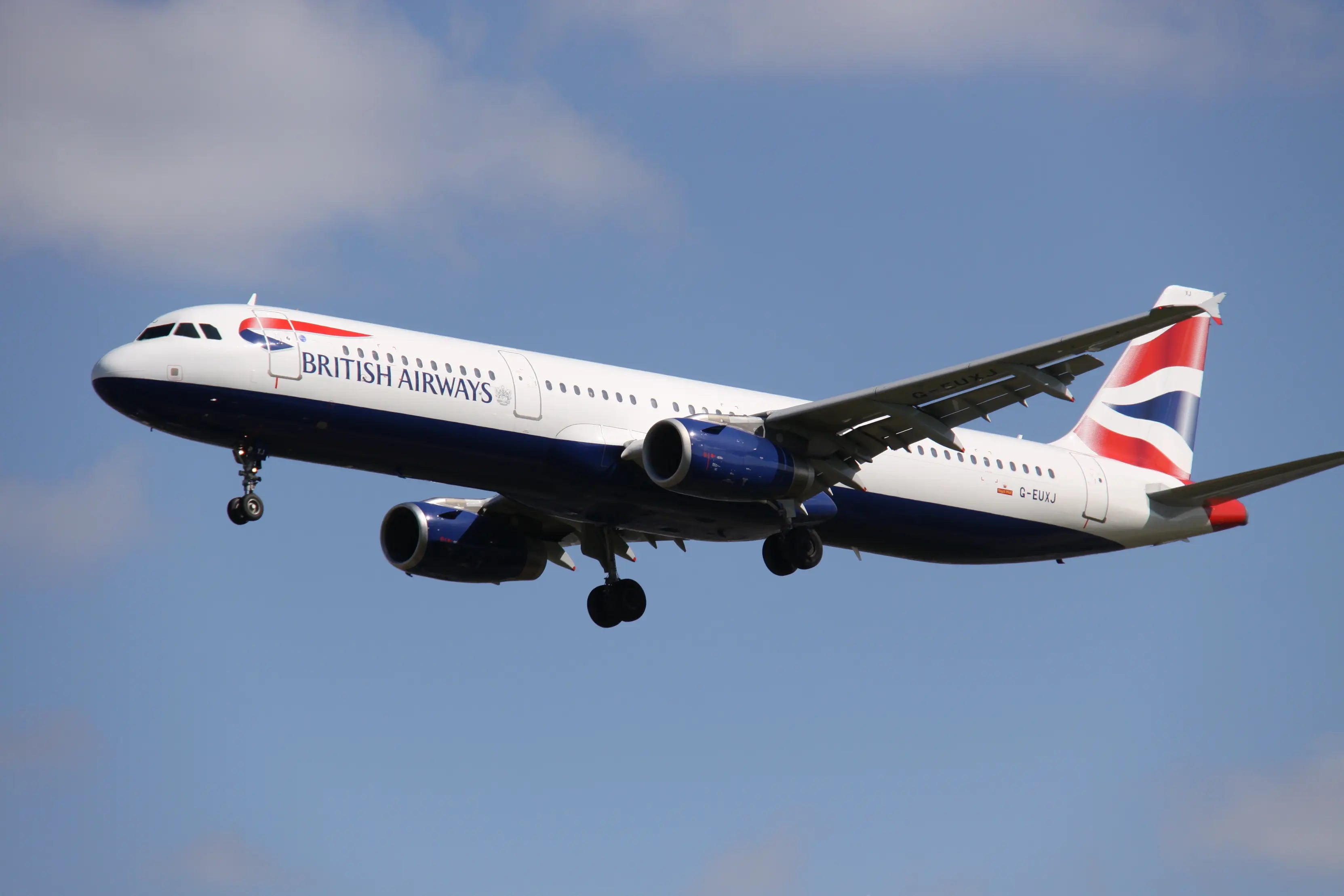
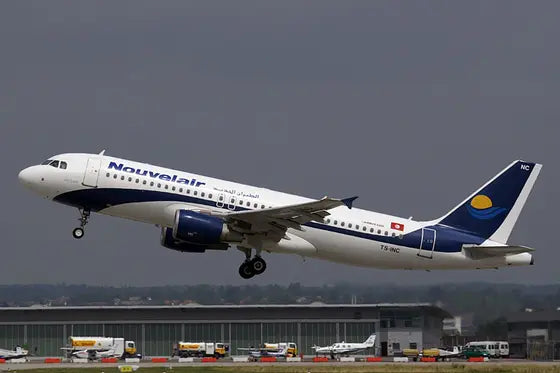
Nouvelair operates a deliberately homogeneous fleet built entirely around the Airbus A320 family. The airline's corporate site describes a fleet of around 17 Airbus A320 aircraft, and tracking databases confirm a mix of older A320-200 (ceo) airframes alongside newer-generation A320neo (A320-251N) jets, plus at least one stretched A321-200 used to add capacity on high-demand routes. The neos have been introduced on the airline's most important medium-haul sectors, including Paris Charles de Gaulle, as part of a gradual modernisation. Several A320s have been added to the fleet recently, with local reports describing batches of aircraft arriving at Monastir ahead of the summer season.
Public sources disagree on the precise active count and average age. Older references list as few as 13 aircraft, the corporate page says 17, and frame-by-frame databases show more airframes once stored and leased aircraft are counted. The honest summary is a fleet in the high-teens of A320-family jets, many of them mid-life aircraft acquired on operating leases from international lessors, with a small but growing share of new neos. A precise, reconciled fleet table for any single month is not reliably available without paid fleet databases.
| Aircraft Type | Role | Approx. In Service | Notes |
|---|---|---|---|
| Airbus A320-200 (ceo) | Narrowbody | Majority of fleet | Core leisure workhorse, single-class high-density. Mostly leased, mid-life airframes. |
| Airbus A320neo (A320-251N) | Narrowbody | Small but growing | Newest type. Used on key medium-haul routes such as Paris CDG. Lower fuel burn. |
| Airbus A321-200 | Narrowbody | At least 1 | Higher-capacity variant for peak-season, high-demand charter sectors. |
Fleet picture compiled from the Nouvelair corporate site and public fleet trackers. Exact per-type counts and average age are not consistently published; figures are approximate and change with deliveries, lease returns, and seasonal capacity.
The single-family fleet means pilots need only one type rating, the Airbus A320 family rating, which covers the A320ceo, A320neo, and A321 under the same licence endorsement. That commonality simplifies training and crew scheduling, and it makes the rating highly transferable to other A320 operators across Europe, the Middle East, and beyond. The flip side, from a recruitment angle, is that experienced A320-rated candidates are exactly the pilots best able to leave for higher-paying carriers, which shapes how Nouvelair hires (see Recruitment). For the current seasonal captain contract, the airline expects pilots to arrive already rated and current on the A320 rather than funding the rating from scratch.
Pilot Salary & Compensation
Pilot pay is the single hardest area to document for Nouvelair, because the airline does not publish salary scales and there is no public collective agreement covering its cockpit crew. Two reliable anchor points do exist, and they describe two very different populations of pilot. The first is local market data for an A320 First Officer based in Tunis, reported by Glassdoor at roughly TND 69,656 per year (around EUR 20,000 to 21,000 at 2025 to 2026 exchange rates of about 3.35 dinars to the euro). The second is the current international seasonal captain contract advertised through the recruitment agency Brookfield Aviation, which quotes a captain fee of approximately EUR 10,200 to EUR 11,000 per month based on 80 flight hours, with overtime above that and a housing allowance.
Those two figures are not directly comparable: one is a permanent locally-employed junior First Officer paid in dinars, the other a tax-arrangement-dependent foreign contractor paid in euros for a five-month summer season. They bracket the reality that Nouvelair pay is competitive within Tunisia but generally below European low-cost carriers and well below Gulf operators in gross cash terms. The tables below present what is known, with everything beyond the two anchor points clearly marked as an estimate.
First Officer (OPL) Pay
| Profile | Monthly Gross (est.) | Annual Gross (est.) | Basis |
|---|---|---|---|
| Entry-level F/O (local contract) | ~TND 5,000 – 6,000 | ~TND 65,000 – 72,000 (~EUR 19k – 21k) | Anchored to Glassdoor A320 F/O, Tunis (~TND 69,656/yr) |
| Experienced F/O (local contract) | TND 7,000 – 10,000 (est.) | ~TND 85,000 – 120,000 (~EUR 25k – 36k) | Estimate only; no verified published scale |
First Officer figures are gross estimates in Tunisian dinar. Only the entry-level row is anchored to a public data point; the experienced row is an indicative estimate and should not be treated as an official scale.
Captain (CDB) Pay
| Profile | Pay | Structure | Basis |
|---|---|---|---|
| Seasonal contract captain (2026) | ~EUR 10,200 – 11,000 / month | Based on 80 block hrs, overtime paid above 80, housing allowance provided | Confirmed: Brookfield Aviation advert for Nouvelair, summer 2026 |
| Local permanent captain | Not publicly disclosed | Paid in TND; higher than F/O, structured by seniority | No verified figure available |
The contract captain fee is a confirmed figure from the current recruitment advert. Permanent local captain salaries paid in dinars are not published and are likely structured differently from the euro-denominated seasonal contract.
For perspective, the same A320 rating earns materially more elsewhere. Gulf low-cost leader Air Arabia pays captains roughly AED 36,500 to 45,500 per month in fixed remuneration before variable flight pay, tax-free, while major European carriers commonly pay First Officers in the EUR 45,000 to 75,000 range and captains EUR 85,000 and up. Nouvelair's local pay should therefore be read in the context of Tunisian living costs and the value of being home-based, not against Gulf or Western European gross numbers.
These figures combine a single public local-market data point (Glassdoor), one current recruitment advert (Brookfield Aviation), and regional benchmarks. Nouvelair does not publish pilot pay scales, and the dinar's exchange rate against the euro fluctuates, which changes the real value of local salaries. Income is also reduced by Tunisian social security contributions and income tax. Anyone evaluating an offer should request the actual contract terms in writing from Nouvelair or the recruiting agency, and cross-check current market data on sources such as the airline's careers page.
Roster, Seasonality & Quality of Life
Life as a Nouvelair pilot is defined by two things: short-haul, home-based flying, and pronounced seasonality. As a Mediterranean leisure carrier, Nouvelair runs an intense summer schedule from roughly late spring to early autumn, when European tour operators and the diaspora drive demand to Tunisian resorts, followed by a much quieter winter when aircraft and crews are utilised less. This seasonal rhythm is one of the most important quality-of-life factors to understand before signing on.
Concrete roster detail is available from the current seasonal captain contract, which quotes 8 days off per month, including a block of 5 consecutive days off, with flying built around a minimum of 80 block hours per month and overtime above that. That is a busy summer pattern by European standards, where permanent contracts often guarantee more days off, but it is typical of peak-season charter flying. Permanent locally-employed pilots are governed by Tunisian labor law and the airline's internal rules, which set minimum rest and annual leave, though Nouvelair does not publish those specifics.
📅 Sample Summer Month — A320 Captain (Seasonal Contract, Monastir / Djerba)
The grid above is an illustrative reconstruction of the published contract pattern (8 days off, including 5 consecutive), not an official Nouvelair roster. In practice, summer duties involve multiple short sectors per day, early starts and late finishes, and a high share of weekend and holiday flying, because those are the busiest travel days for tourists. Because most routes are short, many duties are out-and-back rotations that return crews to base the same day, so overnight layovers away from home are limited compared with a network or long-haul carrier.
Crews are based in Tunisia, with the seasonal contract specifying bases at Djerba and Monastir, and Tunis-Carthage also serving as a crew base for the wider operation. For Tunisian and regional pilots, home basing is a genuine advantage: short sectors and same-day returns mean more nights at home than at a long-haul or Gulf carrier, and the cost of living in Tunisia is low relative to European salaries. The trade-offs are real income variability across the seasons and intense, holiday-heavy summers. Tunisian flight and duty time limitations broadly follow international fatigue-management principles, reinforced by the airline's regular operation into EU airspace, which is overseen against European safety expectations.
Benefits, Travel & Social Protection
As a private Tunisian employer, Nouvelair's benefits package is built on the country's statutory social protection system, topped up with airline-specific perks. For locally employed staff, social security runs through the Caisse Nationale de Sécurité Sociale (CNSS), the fund covering private-sector employees in Tunisia. Both employer and employee contribute a percentage of salary, and those contributions fund retirement pension, disability, survivor benefits, and health coverage. This is a more modest system than the dedicated aircrew pension funds or company defined-benefit schemes seen at some European legacy carriers, so retirement provision is an area where Tunisian leisure pilots fare less generously than Western European peers.
The current seasonal contract gives the clearest picture of the non-salary package on offer to incoming pilots, and it is more concrete than what is published for permanent staff. Beyond the captain fee and overtime, it includes a housing allowance that varies by base, health insurance under company terms, travel insurance, reimbursement of the assessment travel ticket on successful completion, and staff travel benefits.
Several benefits that pilots rightly care about are not publicly disclosed for Nouvelair, including loss-of-license insurance arrangements, exact per diem rates, supplementary health cover for permanent staff, and the detail of any pension top-up beyond CNSS. The seasonal contract terms summarised above apply to the current Brookfield-recruited captain role and may differ from a permanent local employment contract. Confirm every line of the benefits package, especially loss-of-license and medical cover, in writing before accepting any position.
Career Progression & Seniority
Like most airlines, Nouvelair is understood to manage pilot progression on a seniority basis, where date of joining drives bidding for rosters, leave, and eventually upgrade to captain. However, the airline does not publish an upgrade timeline, and because it is a small operator whose growth is tied to volatile leisure demand, command opportunities depend heavily on fleet growth and captain attrition rather than a fixed clock. In a small fleet, an upgrade can come reasonably quickly during an expansion phase, or stall for years when the fleet is stable.
Two structural features matter for anyone weighing a long-term career here. First, Nouvelair makes active use of direct-entry captains, currently recruiting experienced A320 commanders on seasonal contracts through Brookfield Aviation. That external pipeline can slow internal upgrade opportunities for First Officers when command seats are filled from outside. Second, the single-type A320 fleet keeps training simple but limits variety: there is no widebody or long-haul progression to aspire to, and no second fleet to move between. Career growth is essentially First Officer to Captain on the A320, then potentially into training or management roles.
| Career Milestone | Typical Path | Notes |
|---|---|---|
| Join as A320 First Officer | Type-rated entry | No branded cadet scheme publicly confirmed. Type rating generally expected rather than fully funded. |
| Build experience on type | Several years | Short-haul, multi-sector flying. Strong, transferable A320 hours. |
| Upgrade to Captain | Growth-dependent | Seniority-based; no published timeline. Competes with direct-entry captains. |
| Direct-entry Captain | Experienced hires | Recruited on (often seasonal) contracts. Requires high A320 PIC time and recency. |
| Training / management | Variable | Instructor and examiner roles within the single-fleet structure. |
For an ambitious pilot, Nouvelair works best as a place to build solid A320 hours on a globally recognised type, whether as a stepping stone toward a higher-paying European or Gulf carrier, or as a stable home base for those who want to stay in Tunisia. What it does not offer is the long, structured "cadet to widebody captain" ladder of a large legacy carrier. The single-type fleet, modest size, and use of contract captains mean progression is real but narrow, and upgrade timing is unpredictable. Because the airline does not publish seniority or upgrade data, anyone planning a long-term career should ask current line pilots and the recruiter for a realistic picture before joining.
Recruitment Process & Requirements
Nouvelair recruits through two main channels. The first is its own careers page, which currently invites spontaneous applications and states the airline is "not looking for a definite profile at the moment", meaning candidates register interest rather than apply to a fixed vacancy. The second, and the most concrete route open today, is through the international recruitment agency Brookfield Aviation, which is advertising A320 captains for the summer 2026 season. As of the current advert, only captain roles are posted through Brookfield; no First Officer vacancy is being advertised through that channel.
Seasonal A320 Captain — Requirements (via Brookfield, summer 2026)
The captain profile above is unambiguous: this is a route for current, experienced A320 commanders, not for low-hour pilots. For permanent local First Officer positions, requirements are not published in the same detail, but for an A320 operator they would typically include at least a CPL/IR-ME with frozen ATPL theory, a valid Class 1 medical, and ICAO Level 4 English, with an A320 type rating strongly preferred. Language is an important practical filter: English is mandatory for international operations, and because the network leans heavily on the French market, French is effectively necessary for day-to-day work, with Arabic widely used internally.
Typical Selection Stages
Application & Screening
Apply via the Nouvelair careers portal (spontaneous application) or through Brookfield Aviation for the advertised captain contract. Licences, logbook hours, type rating, recency, and medical are screened against the requirements.
Technical & Aptitude Assessment
Standard for A320 operators: technical knowledge checks and, for experienced pilots, a simulator assessment evaluating handling, procedures, and crew resource management. The current contract reimburses the assessment travel ticket on successful completion.
Interview & Documentation
Structured interview, verification of licences and references, English (and in practice French) proficiency, and security and background checks. Foreign pilots also need the relevant work authorisation for Tunisia.
Medical & Contract
A valid Class 1 medical is required. Successful captains join on the seasonal contract; line training and operating conversion follow as needed before flying the line.
If you are an A320 captain who meets the 5,000-hour jet and 1,000-hour A320 PIC thresholds and are current within six months, the Brookfield Aviation jobs board is the live route in. If you are a First Officer or not yet type-rated, there is no advertised Nouvelair vacancy for you right now; the realistic step is to register a spontaneous application on the airline's careers page and monitor it ahead of the summer season, when leisure carriers do most of their hiring. French fluency materially strengthens any application given the airline's French-market focus.
Route Network & Bases
Nouvelair is a short and medium-haul leisure carrier, so it does not have the long-haul layover culture of a legacy network airline. Most flying is point-to-point between Tunisian airports and European leisure markets, with a large share of out-and-back rotations that return crews home the same day. For that reason, this guide replaces the usual "top layover destinations" section with a clearer picture of the network and base structure, which matters far more to a pilot's daily life here.
France is by far the most important market, driven by both tourism and the large Tunisian diaspora, with services to Paris (Charles de Gaulle and Orly), Marseille, Lyon, Nice, and a range of French regional cities favoured by tour operators. Beyond France, Nouvelair serves or has served destinations in Italy, Germany, Belgium, the Netherlands, the Czech Republic, the Nordic countries, and at times the United Kingdom, mostly tied to seasonal holiday demand. The airline reports flying from well over 100 airports across 30-plus countries once charter and seasonal services are counted, while its core scheduled network sits in the range of roughly 25 to 39 destinations depending on the source and season.
The base structure is the practical headline: crews live and are based in Tunisia, at Monastir, Tunis, or Djerba, with Enfidha as an additional operating point. The seasonal captain contract specifies Djerba and Monastir. Because sectors are short and many rotations return to base the same day, overnight layovers in Europe do occur on some pairings but are not the defining feature of the job as they would be on long-haul. For pilots who value sleeping in their own bed most nights and staying close to home and family, this is an attractive pattern; for those drawn to the variety of long international layovers, a leisure short-haul network offers far fewer of them.
How Nouvelair Compares: Airline Radar Chart
How does Nouvelair stack up against the two carriers a Tunisian or regional A320 pilot is most likely to weigh it against: Tunisair, the national flag carrier, and Air Arabia, the large Sharjah-based low-cost group that is a realistic next step for experienced A320 crews? The radar below compares all three across the same six themes used in the scorecard. Scores are editorial estimates based on publicly available data, recruitment adverts, and industry benchmarks, not official ratings.
Key Takeaways from the Comparison
Air Arabia leads on pay, benefits, and scale. With a fleet of roughly 90 to 100-plus A320s, more than 1,200 pilots, tax-free salaries, housing and education allowances, and 45 days of annual leave, the Sharjah-based group is in a different financial league. For an A320 captain chasing maximum net income and family benefits, it is the strongest of the three by a wide margin, at the cost of relocating to a Gulf or multi-hub base and accepting a busy low-cost roster.
Tunisair edges Nouvelair on stability and benefits, but not by much. As the state-backed national carrier, Tunisair offers a broader network (around 44 to 50 destinations, a mixed Airbus fleet including A320neos and two A330-200s) and the relative security of political backing, even though it is financially fragile and undergoing restructuring. Its pilots also see some long-haul and more varied flying. Nouvelair, being private and tourism-dependent, carries more market risk, which is reflected in its lower job-security score.
Nouvelair's strengths are focus and home basing. A clean single-type A320 fleet with newer neos joining, home-based short-haul flying, and a reputation for solid day-to-day reliability are genuine positives. It scores competitively on fleet and work-life within this peer group. Where it lags is pay in hard-currency terms, depth of benefits, and long-term career breadth, since there is no widebody path and progression depends on the growth of a small fleet.
Scores are editorial estimates based on research into publicly available data: airline fleet and network figures, the current Nouvelair captain recruitment advert, Air Arabia's published pilot package, Tunisair financial reporting, and regional benchmarks. They represent a general assessment for an experienced A320 pilot and will vary with individual seniority, contract type, and personal priorities. Nouvelair publishes very little pilot-specific data, so its scores carry more uncertainty than those of the comparators. Dedicated guides for Tunisair and Air Arabia cover those carriers in detail.
Union & Industrial Relations
Tunisia has a strong labor tradition centred on the Union Générale Tunisienne du Travail (UGTT), the country's historic and dominant trade-union confederation with over a million members. Aviation workers, including pilots, cabin crew, technicians, and ground staff, are generally organised through UGTT-affiliated sectoral and company-level structures rather than through a single high-profile, independent national pilots' union. Unlike France, where the SNPL is a powerful stand-alone pilots' body, public sources do not point to an equally prominent independent Tunisian airline pilots' union by a comparable name.
For Nouvelair specifically, public information on union representation is thin. As a private carrier, its industrial relations are shaped by Tunisian labor law and internal company policy, and there is little reporting of organised pilot disputes or strikes at the airline. That can reflect either a relatively quiet industrial climate or simply a lack of public visibility; either way, prospective pilots should not assume the same depth of collective protection found at heavily unionised European carriers.
Tunisian Aviation Labor Landscape
Recent Industrial Action in Tunisian Aviation
Most recent disruption has centred on the national carrier and its maintenance arm rather than on pilots at private leisure airlines. The timeline below sets the context a pilot should understand about the wider Tunisian aviation labor climate.
Two practical points. First, the visible labor turbulence in Tunisian aviation has been concentrated at Tunisair and its subsidiaries, not at Nouvelair, so a pilot joining the private leisure carrier is less likely to be caught in flag-carrier disputes. Second, the relative absence of a strong, dedicated pilots' union means you should rely less on collective bargaining muscle and more on the specifics of your own contract. International bodies such as IFALPA provide useful professional context, but local Tunisian protection for private-carrier pilots is more fragmented than in Western Europe. Read your contract carefully and clarify dispute, leave, and termination terms up front.
Verdict: Who Is Nouvelair For?
🎯 Our Take
Nouvelair is a focused, privately owned Tunisian leisure carrier with a clean single-type A320 fleet, home-based short-haul flying, and a solid operational reputation. For the right pilot it offers real advantages: a globally transferable A320 rating, the comfort of being based in Tunisia near family, and, for experienced commanders, a clearly defined and reasonably paid seasonal captain contract through Brookfield Aviation at roughly EUR 10,200 to 11,000 per month plus overtime and housing.
The trade-offs are equally clear. Pay in hard-currency terms sits below European and Gulf carriers, the work is heavily seasonal with intense summers and only around eight days off per month on the current contract, career progression is narrow with no widebody path and unpredictable upgrade timing, and job security is exposed to tourism cycles at a private carrier whose ownership has been under review. Crucially, the airline publishes very little pilot-specific data, so candidates must verify pay, benefits, and contract terms directly.
For experienced A320 captains seeking a Mediterranean seasonal contract, and for Tunisian or regional pilots who value home basing and want to build strong narrowbody hours, Nouvelair is a credible and practical choice. For pilots chasing top pay, long-haul variety, or a structured lifelong career ladder, it is better seen as a stepping stone than a final destination.
1 Is Nouvelair currently hiring pilots?
Yes, for captains. Nouvelair is recruiting A320 captains for the summer 2026 season through the agency Brookfield Aviation, on a seasonal May-to-October contract with possible winter extension, based in Djerba and Monastir. No First Officer vacancy is advertised through that channel at present. The airline's own careers page currently invites spontaneous applications rather than posting a fixed First Officer role, so it states it is "not looking for a definite profile at the moment".
2 What does a Nouvelair A320 captain earn?
The current seasonal captain contract advertised via Brookfield Aviation quotes a captain fee of approximately EUR 10,200 to 11,000 per month based on 80 flight hours, with overtime paid for hours above 80 and a housing allowance that varies by base. Permanent locally-employed captain salaries paid in Tunisian dinar are not published and are likely structured differently. Always confirm the exact figure and structure in writing before accepting.
3 What are the requirements for the A320 captain contract?
Per the current Brookfield advert: a valid ICAO ATPL, a minimum of 5,000 hours on jet aircraft, at least 1,000 hours PIC on the A320, your last A320 flight within the past six months, ICAO English Level 4 or above, and a valid Class 1 medical. In short, this is a role for current, experienced A320 commanders, not for low-hour pilots or those without recent A320 time.
4 Does Nouvelair pay for the type rating?
There is no public evidence of a funded cadet or type-rating sponsorship programme at Nouvelair, and the current captain contract expects pilots to arrive already A320-rated and current. As a small private carrier, it is most likely to recruit pilots who already hold the A320 rating rather than fund it from scratch. If a type rating or bonding arrangement is offered to you, get the full financial terms in writing before committing.
5 Do I need to speak French or Arabic?
English to at least ICAO Level 4 is mandatory for international operations. Because the network depends heavily on the French market and the Tunisian diaspora in France, French is effectively necessary for full participation in day-to-day operations and is a strong advantage in recruitment. Arabic is the native language of much of the workforce and is widely used internally. Foreign captains who meet the English requirement can operate, but French fluency makes integration far easier.
6 How does Nouvelair compare to Tunisair?
Tunisair is the larger, state-backed national carrier with a broader network of around 44 to 50 destinations, a mixed Airbus fleet including A330-200 widebodies, some long-haul flying, and the relative security of political backing, though it is financially fragile and restructuring. Nouvelair is a smaller private leisure specialist with an all-A320 fleet, focused short-haul Tunisia-to-Europe flying, and a reputation for solid reliability, but more exposure to tourism cycles. Pay and benefits at both are modest by European or Gulf standards. Tunisair offers more variety and stability; Nouvelair offers focus and a leaner operation.
7 Is Nouvelair a stable, secure employer?
It is a long-established carrier (founded 1989) that has survived multiple tourism shocks, including the 2011 revolution, security incidents, and the pandemic. However, as a private, tourism-dependent airline without state backing, it is more exposed to demand cycles than a flag carrier, and Tunisian press has reported that its ownership has been under review. Much of its summer captain hiring is on seasonal contracts. Treat job security as moderate and tied to the health of the Tunisian leisure market rather than guaranteed.
8 What is the roster and quality of life like?
The defining features are home basing and seasonality. Flying is short and medium-haul with many same-day returns, so pilots spend more nights at home than at long-haul or Gulf carriers. Summers are intense, with the current contract specifying about eight days off per month including a five-day consecutive block and a minimum of 80 block hours. Winters are much quieter. If you value being close to home and family and tolerate busy summers and income variability across the year, the lifestyle suits; if you want long international layovers or a steady year-round workload, it is less ideal.
Official Links & Resources
Before applying or making any career decision, verify everything directly with official and primary sources. These are the key websites and organisations relevant to a Nouvelair pilot career:
Because Nouvelair posts little pilot-specific information itself, the fastest live signal of hiring is the Brookfield Aviation jobs board, which carries the current A320 captain contract with full requirements and terms. Pair that with a spontaneous application on the airline's own careers page ahead of the summer season, and verify any salary, benefit, and contract detail in writing before committing, since the public figures in this guide are estimates and partial by necessity.