

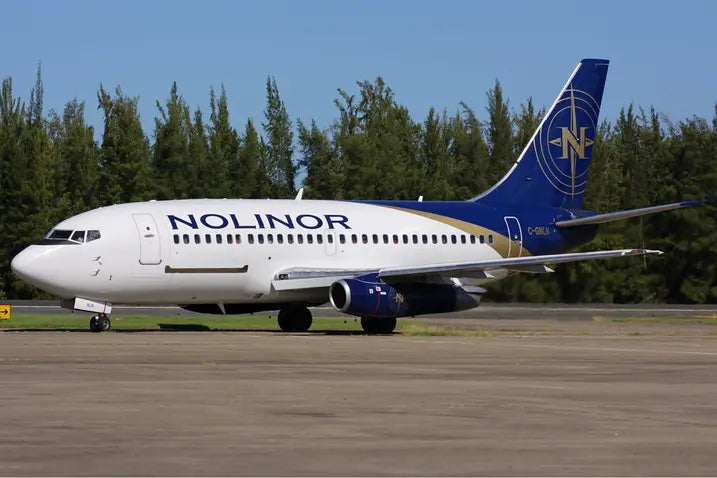
Nolinor Aviation Overview & Company Profile
Nolinor Aviation is a privately owned Canadian charter and cargo airline founded in 1992 and headquartered at Montréal-Mirabel International Airport (YMX) in Quebec. It is not a scheduled network carrier in the conventional sense. Instead, as the company describes itself on its official corporate site, Nolinor "operates where infrastructure ends": gravel strips, ice runways, and remote northern sites that appear on no commercial route map. That niche defines everything about the flying, the aircraft, and the pilot experience here.
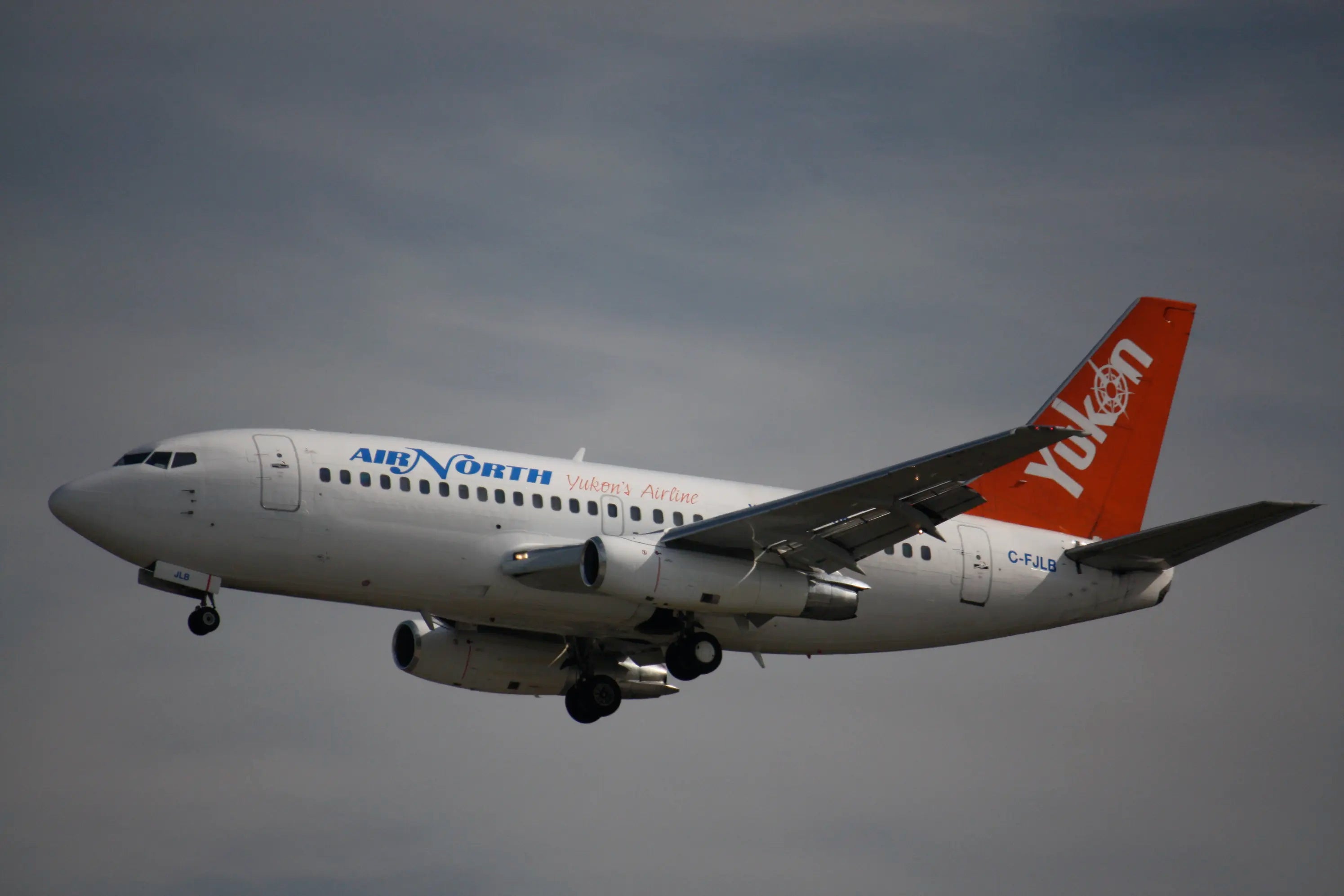
The airline is wholly owned by the Prud'homme family and led by President Marco Prud'homme. It has built its reputation on a single, unusual capability: operating the Boeing 737-200 into unpaved, short, and hostile airfields that newer jets cannot legally or safely use. Nolinor holds the distinction of being the largest operator of the Boeing 737-200 in the world, with around eight of the type in active service as of late 2025. Its core customers are mining and resource companies, remote Inuit communities, government bodies, and clients needing large-group or ad hoc charters.
Because Nolinor is privately held, it does not publish detailed financial statements, and third-party revenue estimates vary widely and should be treated with caution. What is documented is the company's continued investment: roughly 10 million CAD to modernize the avionics and glass cockpits of its 737-200 fleet, and close to 1 million CAD in its in-house pilot training program. Nolinor states on its careers page that it employs a team of around 300 people across pilots, flight attendants, dispatchers, maintenance engineers, and administrative staff. It does not disclose an official pilot headcount. The airline previously ran a leisure subsidiary, OWG (Off We Go), flying Caribbean routes; OWG ceased operations on May 1, 2025, and its aircraft were folded back into Nolinor's core charter and mining operations.
Fleet Composition & Type Ratings
Nolinor operates one of the most distinctive fleets in commercial aviation. While most airlines chase the newest, most fuel-efficient jets, Nolinor deliberately maintains a fleet of classic Boeing 737s because they can do something modern aircraft cannot: land on gravel, dirt, and ice. The company backs this with a serious investment program, spending roughly 10 million CAD to fit modern glass-cockpit avionics to its 737-200s so they can keep flying safely into the 2030s. Fleet counts for a private charter operator shift with stored, active, and special-use airframes, so the figures below reflect the best cross-referenced data from fleet trackers such as ch-aviation and industry reporting as of late 2025.
| Aircraft Type | Role | In Service | Notes |
|---|---|---|---|
| Boeing 737-200 Advanced (Combi / QC) | Narrowbody, gravel-capable | ~8 | The core fleet and the airline's identity. Gravel-kit equipped for unpaved and ice runways. Combi (passenger + cargo), up to ~119 seats, ~24,000 lb payload, ~2,000 nm range. |
| Boeing 737-300QC | Narrowbody, quick-change | 1 | Quick-change passenger/cargo variant. Up to ~130 seats. Adds flexible mid-size capacity. |
| Boeing 737-400 | Narrowbody | 2–3 | Large-group and paved-runway charters, plus mining fly-in/fly-out. Up to 159 seats. A second 737-400 was added in mid-2025 (ex-OWG airframes). |
| Boeing 737-800 | Narrowbody | 1 | The newest-generation jet in the group, acquired via the former OWG leisure brand (189 seats). |
| Bombardier Learjet 45 / 45XR | Business jet / medevac | 2 | Executive charter and air-ambulance style missions. A separate type rating and hiring stream. |
Fleet data cross-referenced from ch-aviation, industry reporting, and Nolinor releases, late 2025. Charter fleets fluctuate; figures are approximate. Nolinor has also operated legacy types (Convair) historically and uses Cessna 172s for its in-house pilot training program.
Two points matter for pilots. First, the 737-200 is not a museum piece here: it is a working airplane flown hard in demanding conditions, but with updated avionics that make the flight deck more current than the airframe's age suggests. Second, Nolinor is expanding rather than retiring this capability. The airline has publicly reaffirmed its commitment to the 737-200, and its only announced next-generation commitment is a set of production slots for the Natilus Kona blended-wing cargo aircraft, a future type designed for gravel and dirt strips and expected to complement (not replace) the 737-200s after 2028.
The Boeing 737 is the standard entry type for airline pilots joining Nolinor, and the company funds the type rating for pilots it hires. Historically this has come with a training bond (pilot forums cite figures around 24,000 CAD over two years), so read your contract carefully. Flying the 737-200 into gravel and ice runways requires specialized company training beyond a standard type rating. The Learjet 45 operation is a distinct stream with its own type rating for executive and medevac-style work. There is no large multi-fleet seniority ladder here: this is a focused 737 operation.
Operations & Mission Profile
To evaluate Nolinor as an employer, you first have to understand what the flying actually is, because it looks nothing like a legacy or low-cost airline. Roughly half of Nolinor's flights serve mining and resource sites, and the rest support remote communities and ad hoc charters. There is no fixed timetable to bid on. Missions are contracted by clients, often on short notice, which makes the work varied and operationally rich but less predictable than scheduled flying.
The signature operation is fly-in/fly-out (FIFO) mining support. Nolinor moves workers, groceries, and freight to open-pit mines and camps across Canada's North, frequently in combi configuration with passengers up front and cargo behind. Documented examples include flying for Agnico Eagle between Montréal and the Meadowbank mine in Nunavut, supply runs between Thompson (Manitoba) and Meadowbank, and charters routed via Iqaluit to Baffinland's Mary River iron-ore site. The airline has maintained a 737-200 base in Yellowknife for around a decade and has been building out a sub-base in Edmonton to support growing mining demand.
The geographic footprint centres on Nunavut, Nunavik (northern Quebec), and the Northwest Territories, where gravel, dirt, ice, and grass runways are the norm rather than the exception. This is why the gravel-kit 737-200 is central to the business: it is the only Boeing jet certified for these unprepared surfaces. For a pilot, that means real stick-and-rudder flying, contaminated and short-field operations, challenging Arctic weather, and a level of operational judgment that highly automated fleets rarely demand. Nolinor also flies conventional paved-runway work: large-group charters for sports teams, government delegations, and seasonal-worker rotations, increasingly on the 737-400s.
This is not a lifestyle for everyone. Northern rotations can mean days spent at mining camps and remote airfields, irregular hours, and long duty days in demanding weather. In exchange, pilots get genuine hands-on jet flying, unusual destinations, and a mission set that many aviators find far more engaging than repetitive city pairs. If your priority is a predictable, hub-based commute and a modern glass fleet, Nolinor is likely not the right fit. If you want to actually fly the aircraft into places few others can reach, it is close to unique in North America.
Pilot Salary & Compensation
Nolinor made headlines in the Canadian pilot community in 2024 when it announced major salary increases to counter the industry-wide pilot shortage. Per the company's own press release, effective in April 2024 the new pay scale delivered increases in the range of 25% to 40%, setting the starting salary of a new Boeing 737 Captain at 175,000 CAD and progressing to more than 250,000 CAD at the top of the scale. Unlike US majors, Nolinor pay is structured as an annual salary rather than hourly block pay, which makes take-home more predictable across a variable charter schedule.
Captain (Boeing 737) Pay Scale
| Seniority | Annual Gross (CAD) | Notes |
|---|---|---|
| New 737 Captain (entry) | ~175,000 | Starting point of the post-April-2024 scale. |
| Mid-scale 737 Captain | ~200,000 – 230,000 | Crowd-sourced Indeed data puts the Nolinor captain average near 209,562 CAD. |
| Senior 737 Captain (top of scale) | 250,000+ | Reported crowd-sourced range tops out around 262,000 CAD. |
Captain figures combine Nolinor's official 2024 announcement with crowd-sourced Indeed data. Actual pay depends on scale position and contract terms.
First Officer Pay Scale
| Reference Point | Annual Gross (CAD, est.) | Notes |
|---|---|---|
| Entry FO (historical, pre-2022) | ~25,000 + training bond | Now outdated; reflects older forum reports with a ~24,000 CAD bond. |
| FO after 2022 increases | ~60,000 – 65,000 | Pilot-reported figures on Canadian aviation forums. |
| Current FO scale | Under review / not published | Nolinor's 2024 release confirmed a first-officer scale review; no official current figure has been published. |
First-officer figures are pilot-reported estimates, not an official published grid. With captains starting at 175,000 CAD, current FO pay is very likely above the older 60,000–65,000 CAD figures, but the exact number is not public.
Captain figures come directly from Nolinor's 2024 salary announcement and are corroborated by crowd-sourced Indeed data. First-officer figures are pilot-reported and should be treated as indicative only, because Nolinor has not published a current FO grid and explicitly said the FO scale was being reviewed upward. Compensation also varies with per diems (reportedly adjusted alongside the base-pay changes), rest days, and equipment. For an exact, current offer, verify directly with Nolinor's chief pilot or HR. Canadian income tax and payroll deductions will meaningfully reduce these gross figures.
Roster, Rotations & Quality of Life
Quality of life at Nolinor is shaped almost entirely by the nature of the flying. Because so much of the operation is charter and FIFO mining support, pilots work in rotation-style patterns tied to contracts rather than fixed monthly bidlines. When Nolinor announced its 2024 pay increases, it explicitly paired them with an increase in rest days, signaling that management understands recovery time is a recruiting and retention lever in this kind of flying. The company has not, however, published a precise days-on/days-off figure, so we do not present a fabricated roster grid here.
All Canadian air operators, including Nolinor, schedule pilots under Transport Canada's Canadian Aviation Regulations (CARs) flight and duty time rules in the 700 series, which cap flight duty periods, mandate minimum rest, and require fatigue management. That regulatory floor applies regardless of contract. On top of it, the practical experience depends on how Nolinor structures its rotations, camp stays, and days off, which pilots should confirm in detail during hiring.
The company's centre of gravity is the Greater Montréal area around its Mirabel headquarters, which draws pilots from both francophone and anglophone backgrounds. Operationally, though, aircraft and crews spend significant time away at northern departure points such as Yellowknife and at mining sites. This is a lifestyle that rewards pilots who value variety and adventure over a fixed local routine. It can involve extended time away from home and exposure to isolation and extreme weather, offset by competitive pay and the increased rest days introduced in 2024. Prospective pilots should ask specifically about rotation length, commuting policy, and vacation, as these details are not published publicly.
Benefits & Retirement
Nolinor's headline non-salary benefit is unusual and genuinely valuable: a fully funded, in-house pilot training program (covered in detail in its own section below). Beyond that, the airline discloses less publicly about its standard benefits package than a large scheduled carrier would, so the honest picture is a mix of documented facts and items that prospective pilots must confirm directly.
Unlike large flag carriers, Nolinor does not publish a detailed benefits schedule, and as a non-unionized employer there is no public collective agreement to consult. The training funding and competitive captain pay are well documented; health cover, pension or RRSP matching, loss-of-licence insurance, and vacation are not detailed publicly. None of this means they are absent, only that you should ask for the full package in writing before accepting an offer. The high captain salaries likely offset a leaner published benefits profile, but that is a judgment each pilot should make with the actual numbers in hand.
Career Progression & Upgrade
Career progression at Nolinor works differently from a large seniority-driven airline. This is a focused 737 operation at a medium-sized company, so there is no long multi-fleet ladder from narrowbody to widebody. What Nolinor offers instead is a relatively fast path to a jet command. Pilot-community reporting indicates the company actively favours candidates who can upgrade to Captain quickly, typically looking for First Officers who already hold or are close to Airline Transport Pilot Licence (ATPL) experience levels of roughly 1,500 to 2,000 hours total time.
That makes Nolinor an appealing target for pilots whose goal is to accumulate genuine 737 pilot-in-command time in a comparatively short period. Because the company both hires experienced pilots directly and grows its own through the funded training program, upgrade timing depends heavily on fleet growth, retirements, and turnover rather than a rigid published seniority list. Nolinor has not disclosed a formal upgrade-time figure, so treat any specific number with caution and confirm current expectations at interview.
| Career Milestone | Typical Profile | Notes |
|---|---|---|
| Join as First Officer (Boeing 737) | ~1,000+ hrs TT | Competitive minimum. Multi-engine IFR plus turboprop/IFR experience is valued. |
| Upgrade to Captain (737) | Relatively fast | Company favours quick-upgrade candidates (often 1,500–2,000 hrs). No fixed published timeline. |
| Learjet 45 First Officer / Captain | Separate stream | Executive and medevac-style flying, with its own type rating and requirements. |
| Training & management roles | Variable | Smaller organization means fewer but more accessible internal roles. |
Nolinor is in a growth and modernization phase, expanding its 737-200 capacity for mining demand, adding 737-400s, upgrading avionics, and building out its Edmonton sub-base. That expansion, combined with the aggressive 2024 captain pay increases, points to continued pilot demand and reasonable command opportunity for the right candidates. The trade-off is that the top of the career ladder here is a 737 Captain seat, not a widebody international command. For pilots who want to build strong jet PIC time (whether as a career home or a stepping stone), that focus is a feature rather than a limitation.
Recruitment Process & Requirements
Nolinor recruits experienced pilots directly through its careers portal, and separately grows its own pilots through the internal training program described in the next section. For a direct-entry First Officer role on the Boeing 737, the requirements track standard Canadian air-carrier regulation plus the company's own preferences.
First Officer (Boeing 737) — Requirements
Selection Stages
Online Application
Apply through the Nolinor careers page with your CV, licences, and flight-experience summary. Community reports note candidates can also reach out to the chief pilot for role-specific detail.
Screening
Files are screened against licences and written exams, total and multi-engine/IFR hours, type ratings, citizenship or permanent residency, English proficiency, and soft skills such as teamwork and communication. Northern and turboprop experience helps.
Interview & Assessment
Short-listed candidates attend interviews and may complete technical or psychometric assessments, consistent with the structured selection Nolinor uses for its internal pilot program.
Company Training & Type Rating
Successful pilots complete company ground school and the Boeing 737 type rating. A training bond has historically applied (reported around 24,000 CAD over two years), so review the terms before signing.
Line & Specialized Operations Training
Beyond the standard type rating, line training includes the specialized procedures needed for gravel, ice, and short-field operations that define Nolinor's northern flying.
Strong written and spoken English is a stated requirement, and French is a real practical asset given the Quebec base. Emphasize any IFR, turboprop, and cold-weather or northern operational experience, because that maps directly onto Nolinor's mission set. If your goal is a fast jet command, make clear that you meet or are close to ATPL experience levels: Nolinor is explicitly interested in First Officers who can upgrade to Captain quickly. Always confirm current hour minimums and any bond terms directly, as published thresholds can change with demand.
The "Become a Pilot" Free Training Program
One of the most genuinely distinctive things about Nolinor is its "Become a Pilot" (Devenir pilote) program, which the company says makes it the first in Quebec to offer fully funded pilot training to its own employees. This is not a marketing gimmick: Nolinor has invested close to 1 million CAD in it and reports having trained more than 25 pilots through the pathway, with a portion already flying the line as Nolinor pilots. For career-changers who cannot self-fund flight training, it is a rare opportunity.
The structure is an internal pipeline. Any Nolinor employee, from any division (ground, office, operations), can apply once they have at least 12 months of continuous service. Each year a selection committee chooses a small cohort, reported at around 2 to 5 candidates, through interviews, a medical exam, and general-knowledge, psychometric, and aptitude testing. Nolinor then covers 100% of the training cost, described as running upwards of 75,000 to 85,000 CAD, with training conducted at Mirabel using company aircraft such as Cessna 172s.
The training is free up front, but it is tied to a retention agreement that functions like a training bond. According to Nolinor's own program description, graduates sign a contract committing them to stay until the training cost is reimbursed through a credit of roughly 1,200 CAD per month, which works out to several years (on the order of five to seven, depending on the exact cost). If a pilot leaves early, they must repay the outstanding balance in cash. In return, Nolinor guarantees graduates a pilot job with Nolinor or an affiliated company until a Nolinor seat opens. It is a strong deal for committed career-changers, but the multi-year commitment is real and should be understood before entering.
How Nolinor Compares: Airline Radar Chart
The most meaningful comparison for Nolinor is against its direct northern-Canada peers rather than legacy majors. We benchmark it here against Air Inuit (the Makivik-owned carrier serving Nunavik) and Canadian North (the Inuit-owned airline serving Nunavut and the Northwest Territories). Both operate Boeing 737s alongside turboprops into similar northern markets, and, unlike Nolinor, both are now unionized under ALPA. Scores below are editorial estimates from our research, not official figures.
Key Takeaways from the Comparison
Nolinor leads on captain pay. Its 2024 scale (175,000 CAD starting, 250,000+ CAD at the top) is at the upper end of the Canadian charter and regional sector. For context, entry pilot pay at Air Inuit has been reported in the range of roughly 55,000 to 60,000 CAD in the early years per Pilot Career Centre data, though that reflects junior and turboprop positions rather than 737 command. Nolinor's aggressive move was explicitly designed to win the recruiting battle for experienced captains.
The unionized peers score higher on benefits and structure. Air Inuit pilots joined ALPA in 2023 and ratified a first collective agreement, and Canadian North pilots are ALPA-represented with a ratified multi-year deal. A collective agreement brings formalized pay scales, scheduling protections, and grievance procedures that Nolinor's non-union pilots do not have. That is why Air Inuit and Canadian North edge ahead on the Benefits axis in our estimate.
Job security is nuanced. Nolinor's niche is protected by the fact that few operators can fly gravel-kit 737-200s, and northern mining demand is growing, which supports stability. But charter and contract flying is inherently cyclical, and the sector is not immune to downturns: Canadian North announced layoffs of roughly 15 pilots in late 2025 due to a drop in flying. Air Inuit's Makivik ownership and established scheduled network give it a steady base of community service work.
Fleet is a wash with trade-offs. All three fly classic and mixed fleets suited to the North. Nolinor's 737-200s are the oldest airframes but have been re-fitted with modern glass cockpits; Air Inuit is modernizing with new 737-800 combi and cargo aircraft; Canadian North blends 737s with regional turboprops. A direct Quebec competitor worth noting is Chrono Aviation, which also operates the 737-200 and a mixed charter fleet, though its public pay data is thinner.
Radar scores are editorial estimates based on our research into Nolinor's salary announcement, crowd-sourced pay data, ALPA pilot-group information for Air Inuit and Canadian North, fleet trackers, and industry reporting. They represent a general assessment for a pilot weighing a northern-Canada career and are not official ratings. Individual experience will vary by base, equipment, seniority, and personal priorities. First-officer pay at Nolinor in particular is not officially published and is treated as indicative only.
Union & Industrial Relations
A defining feature of working at Nolinor is that, based on all available public information, its pilots are not unionized. There is no evidence in public sources of representation by ALPA, Unifor, or Teamsters Canada, and no record of pilot strikes or collective bargaining disputes. Labour relations are handled directly between the company and its pilots. This stands in clear contrast to several of Nolinor's northern peers, where ALPA has organized pilot groups in recent years.
A non-union environment cuts both ways for pilots. On the positive side, it allowed Nolinor's management to move quickly and unilaterally deliver the substantial 2024 captain pay increases and additional rest days without protracted negotiation. Private, family ownership makes that kind of rapid, market-responsive decision-making possible. On the other side, there is no collective agreement guaranteeing pay scales, scheduling rules, seniority protections, or a formal grievance process. Improvements depend on management's continued willingness to keep conditions competitive, and pilots advocate for themselves individually rather than collectively.
If collective bargaining power and formalized job protections are important to you, note that Nolinor pilots do not currently have them, whereas ALPA-represented peers like Air Inuit and Canadian North do. If you value a lean, fast-moving employer that recently raised captain pay sharply on its own initiative, Nolinor's model has clear upside. Pilot shortages and competitive pressure could influence unionization dynamics in the future, but as of now there is no public sign of organizing activity at Nolinor. Ask current line pilots about how pay reviews, scheduling changes, and disputes are handled in practice.
Verdict: Who Is Nolinor Aviation For?
🎯 Our Take
Nolinor Aviation is one of the most characterful flying jobs in North America. It pairs some of the strongest captain pay in the Canadian charter sector (175,000 CAD starting, 250,000+ CAD at the top after the 2024 increases) with genuinely hands-on flying: gravel-kit Boeing 737-200s into unpaved and ice runways that no other Boeing jet can serve. For pilots who want to actually fly the aircraft and build serious jet command time quickly, that combination is rare.
The trade-offs are real and specific. The lifestyle involves FIFO rotations, northern camps, irregular schedules, and time away from home. The fleet is deliberately old (if modernized inside the flight deck), so pilots chasing next-generation glass and long-haul widebody careers should look elsewhere. First-officer pay is not published and appears modest relative to captain pay, benefits transparency is limited, and pilots are non-unionized, so protections rest on management goodwill rather than a collective agreement. The ceiling is a 737 Captain seat, not an international command.
For the right pilot, though, few employers match it. And for Quebec-based career-changers, the fully funded "Become a Pilot" program is a genuinely rare route into the profession, provided you accept the multi-year retention commitment that comes with it.
1 How much do Nolinor pilots earn?
Following its 2024 salary increases, Nolinor sets a new Boeing 737 Captain's starting salary at 175,000 CAD, rising to more than 250,000 CAD at the top of the scale, with crowd-sourced averages near 209,562 CAD. First-officer pay is not officially published; older pilot reports cited roughly 60,000 to 65,000 CAD after 2022, and Nolinor confirmed the FO scale was under review, so current figures are likely higher. Pay is salary-based rather than hourly. Always verify a specific offer directly.
2 Do I need to speak French to fly for Nolinor?
Fluent English (spoken and written) is the explicitly stated requirement on Nolinor's pilot and program postings. French is not listed as mandatory in the English-language job ads, but as a Quebec-based company operating out of Mirabel and Montréal, bilingualism is a real practical asset for internal communication and day-to-day operations. In short: English is required, French is strongly advantageous.
3 What are the minimum requirements for a Nolinor First Officer?
You typically need a Canadian CPL with multi-engine IFR, completion of IATRA or the ATPL written exams (SAMRA/SARON), and the relevant type rating, with an ATPL strongly preferred. Community reporting puts the competitive minimum around 1,000 hours total time, with 1,500 to 2,000 hours preferred so you can upgrade to Captain quickly. Turboprop and IFR experience is valued, and Canadian citizenship or permanent residency is required. Confirm current thresholds with Nolinor directly.
4 What is Nolinor's "Become a Pilot" program?
It is a fully funded, in-house training pathway (Nolinor says the first of its kind in Quebec) open to any employee with at least 12 months of continuous service. A committee selects roughly 2 to 5 candidates per year through interviews, a medical, and aptitude testing. Nolinor covers 100% of the training cost (about 75,000 to 85,000 CAD). In return, graduates sign a retention contract, with the cost credited back at roughly 1,200 CAD per month over several years, and must repay the balance in cash if they leave early. Graduates are guaranteed a pilot job at Nolinor or an affiliate.
5 Are Nolinor pilots unionized?
Based on all available public information, no. There is no evidence of ALPA, Unifor, or Teamsters representation for Nolinor pilots, and no record of pilot strikes. Labour relations are handled directly between the company and its pilots. This differs from northern peers Air Inuit and Canadian North, whose pilots are represented by ALPA. The upside is fast, management-driven improvements (like the 2024 pay raise); the downside is the absence of a collective agreement and formal protections.
6 What aircraft would I fly at Nolinor?
Primarily the Boeing 737, and most notably the classic 737-200, of which Nolinor is the world's largest operator. These aircraft are old but have been re-fitted with modern glass-cockpit avionics and are equipped with gravel kits for unpaved and ice runways. The fleet also includes a 737-300QC, two to three 737-400s, and one 737-800. A separate Learjet 45 operation handles executive and medevac-style flying with its own type rating.
7 How fast is the upgrade to Captain?
Nolinor has not published a formal upgrade timeline, but pilot-community reporting indicates the company favours First Officers who can move into command quickly, often looking for candidates already at or near ATPL experience levels of 1,500 to 2,000 hours. With the fleet expanding and captain pay raised sharply to attract crews, command opportunity is a genuine draw. Actual timing depends on growth, retirements, and turnover, so confirm current expectations at interview.
8 Is Nolinor a good place to build 737 jet time?
Yes, with caveats. Nolinor offers real, hands-on Boeing 737 flying in demanding conditions and a comparatively fast path to command, which makes it attractive both as a long-term home and as a way to log jet PIC time. The caveats are the lifestyle (remote rotations, time away, older airframes) and the fact that the career ceiling here is a 737 Captain seat rather than a widebody international command. If that mission set appeals to you, it is one of the more rewarding operators in Canada.
Official Links & Resources
Before applying or making any career decision, verify details directly with primary sources. These are the key websites and organizations relevant to a Nolinor Aviation pilot career:
Because Nolinor is a private, non-union charter operator, the most reliable information often comes from talking to current line pilots and reaching out to the chief pilot directly, rather than from published grids. Confirm the specifics that are not public: current First Officer pay, rotation and days-off structure, any type-rating or training bond terms, and the full benefits package. Get the numbers that matter to you in writing before you accept an offer.
- 01Overview & Company Profile
- 02Fleet & Type Ratings
- 03Operations & Mission Profile
- 04Salary & Compensation
- 05Roster & Quality of Life
- 06Benefits & Retirement
- 07Career Progression
- 08Recruitment & Requirements
- 09"Become a Pilot" Program
- 10Airline Comparison
- 11Union & Industrial Relations
- 12Verdict & FAQ
- 13Links & Resources