

Loganair Overview & Company Profile
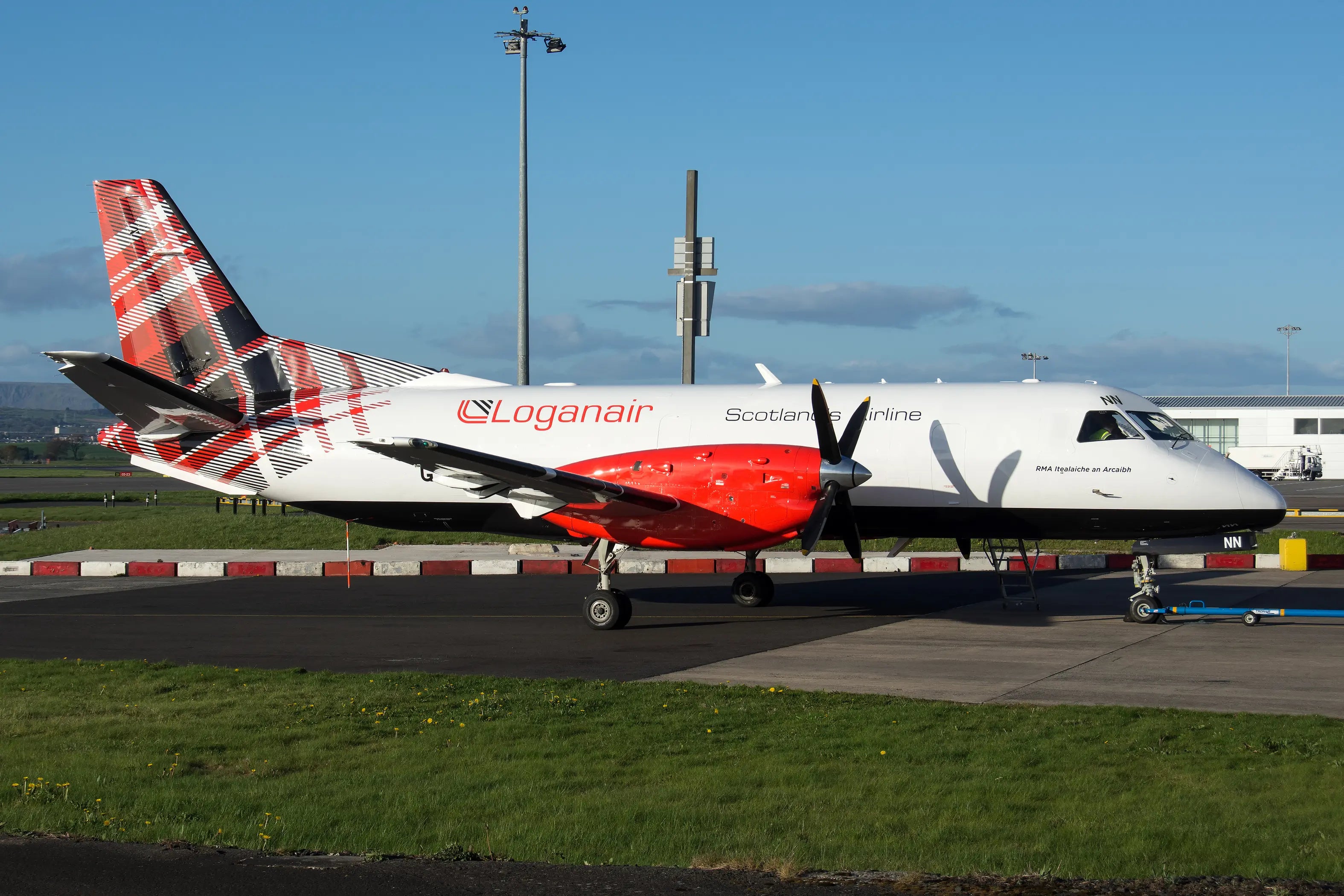
Loganair is the United Kingdom's largest regional airline and Scotland's flagship carrier, founded in 1962 by Willie Logan of the Logan Construction Company. Headquartered at Glasgow Airport in Paisley, Renfrewshire, the airline operates as a vital lifeline for remote Scottish island communities and underserved regions throughout the UK. With over 60 routes, approximately 255 pilots, and a fleet of 36 aircraft, Loganair connects 29 domestic UK destinations and a small number of international points in Ireland, Denmark, and Norway.
The airline's history spans more than six decades, beginning with a single Piper PA-23 Aztec operating charter flights from Edinburgh. The company expanded steadily through the 1960s and 1970s, establishing regular services to the Orkney and Shetland Islands. Between 1993 and 2017, Loganair operated as a franchise partner, first for British Airways and later for Flybe, before resuming fully independent operations on September 1, 2017, with new livery and a codeshare agreement with British Airways. The airline is privately owned by the Bond brothers (Stephen and Peter), who briefly explored a sale in 2022 before taking the company off the market in October 2023, citing fleet renewal priorities. Luke Farajallah was appointed CEO in March 2024, bringing experience from Flybe, BA CitiExpress, easyJet, and Wizz Air.
Loganair operates over 130 daily flight sectors from multiple hubs, with an average sector time of approximately 48 minutes. The airline holds Public Service Obligation (PSO) contracts from the Scottish Government for essential island routes and also operates Royal Mail freight contracts and oil and gas charter services. Over 95 percent of its capacity is deployed on domestic UK routes, making it the most domestically focused scheduled airline in the UK market. For the financial year ending March 2024, the carrier reported a profit of £6.9 million and carried approximately 1.5 million passengers.
Fleet Composition & Aircraft Types
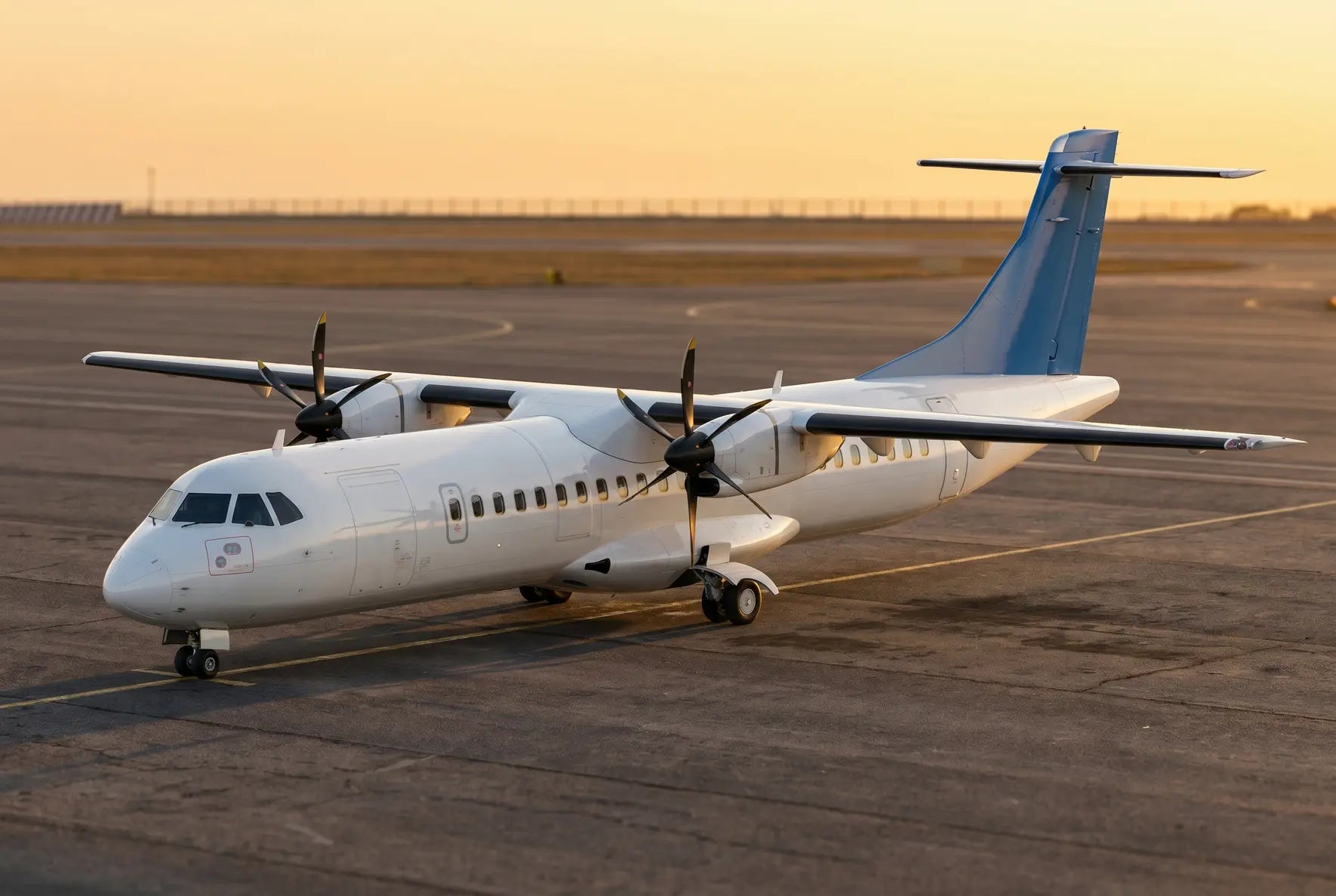
Loganair operates one of the most diverse fleets among UK regional carriers, mixing turboprops and regional jets to match aircraft capability with route requirements. The fleet underwent a major renewal programme completed in early 2024, retiring all Saab 340 and Saab 2000 turboprops in favour of newer ATR aircraft. The current fleet of 36 aircraft spans five distinct types, from the eight-seat Britten-Norman Islander used on Orkney island-hopping routes to the 72-seat ATR 72-600 serving the airline's busiest regional sectors.
| Aircraft Type | Role | In Service | Seats | Routes / Notes |
|---|---|---|---|---|
| ATR 72-600 | Turboprop | 10 | 72 | Core workhorse. Edinburgh, Glasgow, Aberdeen, Southampton routes. Replaced Saab 2000. |
| ATR 42-600 | Turboprop | 2 | 48 | Regional routes. Newer variant with improved efficiency and cabin. |
| ATR 42-500 | Turboprop | 4 | 48 | Regional and island routes. Highlands and Islands services. |
| Embraer ERJ-145 | Regional Jet | 11 | 49 | Longer sectors requiring jet speed. London, Manchester, Birmingham links. |
| DHC-6 Twin Otter | STOL Turboprop | 3 | 19 | Scottish Government PSO routes. Barra beach runway, Campbeltown, Tiree. |
| Britten-Norman Islander | Light Aircraft | 2 | 8 | Orkney inter-island services for Orkney Islands Council. World's shortest route (Westray-Papa Westray). |
| ATR 72-500F | Freighter | 4 | Cargo | Royal Mail and freight operations. Full cargo configuration. |
Fleet data as of late 2025. The last Saab 340 was retired in January 2024 and the last Saab 2000 earlier that year.
The ATR fleet (16 passenger aircraft plus 4 freighters) forms the backbone of Loganair's operations following the fleet renewal. These turboprops are well suited to the airline's short sector lengths and operate efficiently from the smaller airfields that Loganair serves across the Highlands and Islands. The 11 Embraer ERJ-145 regional jets provide capacity and speed for longer mainland-to-mainland routes where turboprop economics are less favourable and passenger expectations lean toward jet travel.
Loganair has committed to pioneering sustainable aviation technology within its network. In January 2024, the airline announced plans to introduce a hydrogen fuel cell-powered Britten-Norman Islander on Orkney island routes by 2027. In September 2024, Loganair signed an exclusive partnership with Swedish manufacturer Heart Aerospace to develop use cases for hybrid-electric aircraft within its UK network. CEO Farajallah has described the strategy as "fishing in a big pool," maintaining multiple technology pathways (sustainable aviation fuel, hydrogen, electric, hybrid-electric) rather than committing prematurely to one solution.
Pilot Salary & Compensation Breakdown
Loganair pilot salaries reflect the airline's position as a UK regional operator. Compensation is lower in absolute terms than at major UK airlines or low-cost carriers, but the airline emphasises quality-of-life factors, home-based flying, and predictable schedules as key offsets. Pay is structured around a basic annual salary supplemented by daily duty pay and a tiered sector pay system based on the number of sectors flown per day.
First Officer (F/O) Pay Scale
| Seniority | Basic Salary (Annual) | Est. Total Package | Notes |
|---|---|---|---|
| Year 1 (entry) | £39,843 | ~£42,000 - £43,000 | Includes duty pay (£9/day) + sector pay |
| Year 2 | £41,000 - £42,000 | ~£44,000 - £45,000 | Incremental annual increase |
| Year 4 | £43,500 - £45,000 | ~£46,000 - £48,000 | Mid-range F/O progression |
| Year 7 (top) | £47,531 | ~£50,000 - £52,000 | Top of F/O pay scale |
Basic salary data sourced from Pilot Jobs Network. Total package estimates include duty pay and average sector pay based on typical monthly patterns.
Captain Pay Scale
| Seniority | Basic Salary (Annual) | Est. Total Package | Notes |
|---|---|---|---|
| Year 1 (new Captain) | £72,425 | ~£75,000 - £77,000 | Includes duty pay + sector pay |
| Year 5 | £78,000 - £80,000 | ~£82,000 - £84,000 | Mid-seniority Captain |
| Year 10 | £84,000 - £86,000 | ~£87,000 - £90,000 | Senior Captain |
| Year 16 (top) | £89,210 | ~£92,000 - £95,000 | Top of Captain pay scale |
Captain basic salary data from Pilot Jobs Network. Total compensation includes duty pay and estimated sector pay based on average flight patterns.
Sector Pay Structure
On top of basic salary and the £9 daily duty pay, Loganair adds a per-day sector pay that increases with the number of sectors flown. Single or double-sector days attract £3.56, three to four sectors earn £5.57, and five to six sector days pay £11.15. Given Loganair's high-frequency, short-sector operating model, pilots regularly fly four to five sectors per duty day, making this a meaningful (if modest) addition to overall compensation.
These figures are compiled from publicly available pilot salary databases and industry sources. Actual compensation depends on the latest BALPA-negotiated collective agreement, individual seniority steps, fleet assignment, and operational tempo. Loganair salaries are positioned at the lower end of UK airline compensation. For context, British Airways CityFlyer captains earn £100,000 to £121,000 and Ryanair UK captains earn approximately £114,000 to £145,000. However, Loganair explicitly markets home-based flying, predictable schedules, and quality of life as offsets to lower absolute pay. Always verify current rates directly with Loganair's recruitment team.
Roster Pattern & Quality of Life
Quality of life is Loganair's strongest recruitment selling point. The airline operates what it describes as "the closest thing to a Monday-to-Friday 9-to-5 feel possible" in airline flying. Schedules are constructed by human rostering staff (not algorithmic tools), allowing for personal preferences and flexibility. Pilots are based at their preferred location from ten available bases across the UK, and the airline actively tries to honour base transfer requests when operational needs allow.
📅 Sample Month: ATR 72 First Officer (Glasgow Base)
The roster is a random pattern rather than a fixed rotation. A typical sequence might be two days flying, two days off, two days flying, two days off, though this varies week to week. Pilots receive three requested days off per month (which schedulers try to honour) plus two "golden days off" per year: pairs of guaranteed fixed days off that can be booked well in advance for important personal events. The first flight of the day typically departs around 05:30 and the last scheduled arrival is usually by 21:30, giving the schedule a semi-regular daily rhythm.
Loganair offers ten pilot bases across the UK: Glasgow, Aberdeen, Edinburgh, Inverness, Kirkwall (Orkney), Dundee, City of Derry, Newcastle, Isle of Man, and Southampton (opened October 2025). Southampton is the newest addition, initially operating ATR 72 services with expansion planned through early 2026. This spread of bases is a significant quality-of-life advantage, allowing pilots to live close to their assigned base rather than commuting to a single hub. The airline actively supports base transfer requests when positions allow, and recruitment roadshows specifically target pilot candidates near available bases.
Benefits, Travel Perks & Pension
As a mid-sized UK regional carrier, Loganair's benefits package is solid if not exceptional. The airline provides standard UK employee benefits plus aviation-specific perks such as staff travel and occupational health support. The benefits are strongest in the lifestyle and flexibility areas, where Loganair's home-based operational model and supportive roster practices offer genuine value beyond what the salary figures alone suggest.
Loss-of-medical-license insurance, which protects pilots against income loss if they lose their Class 1 medical, is a critical benefit that is not explicitly confirmed in Loganair's publicly available information. Pilots considering Loganair should clarify this directly during the recruitment process or arrange cover independently through BALPA group schemes. For a career where medical fitness is non-negotiable, this is not an area to leave to chance.
Career Progression & Seniority
Career progression at Loganair operates on a seniority-based system with several pathways to the left seat. The airline accepts both internal upgrades from First Officer and Direct Entry Captains from other carriers. According to Loganair's official careers page, a minimum of three years as First Officer is required before becoming eligible for command, and the airline states that "many First Officers progress rapidly," suggesting upgrade timelines of three to five years are achievable during periods of operational growth.
| Career Milestone | Typical Timeline | Notes |
|---|---|---|
| Join as Newly Qualified F/O | Day 1 | No minimum hour requirement. CPL/IR-ME + UK CAA Class 1 medical. |
| Type rating (ATR or ERJ-145) | 2-4 weeks | Fully funded by Loganair. 3-year training bond. |
| Line training & release | 4-8 weeks | Supervised line flying with a Training Captain. |
| Eligible for command | Minimum 3 years | Per Loganair official requirements. Must meet 1,500 hrs total time. |
| Captain upgrade | 3-5 years (typical) | Dependent on vacancies, seniority, operational need. |
| Fleet transition (ATR ↔ ERJ) | Variable | Seniority-dependent. Cross-fleet type rating funded by airline. |
| Training Captain / TRE / TRI | Variable | Requires separate selection and instructor training qualification. |
Fast Track to Command Programme
Loganair offers a Fast Track to Command programme designed to accelerate the upgrade timeline for high-performing First Officers. Details of this programme are discussed during recruitment roadshows and are available to eligible pilots meeting performance and experience criteria. This initiative addresses the airline's ongoing need for qualified commanders, particularly following the fleet renewal programme that created significant training demand.
Direct Entry Captain
Loganair actively recruits Direct Entry Captains from other operators. This programme targets experienced commanders holding at least 1,000 hours pilot-in-command time who can transition directly to the captain role after completing Loganair-specific type rating and line training. The airline has conducted pilot recruitment roadshows in the UK, Northern Ireland, and even Dubai and Abu Dhabi to attract returning or relocating captains.
Airline Returners Scheme
For pilots who have taken a career break, Loganair's Airline Returners Scheme provides a structured pathway back to commercial flying. The programme includes simulator refresher time, training support, and a graduated return to line operations, recognising that career breaks should not permanently close the door on professional aviation.
Loganair is actively recruiting both Newly Qualified First Officers and Direct Entry Captains across its ten bases. The UK regional pilot shortage has created favourable conditions for career progression, and Loganair's completion of fleet renewal (all Saab aircraft retired by early 2024) has stabilised training demands. With the new Southampton base opening in late 2025, additional captain and F/O positions are being created. Beyond the flight deck, Loganair encourages pilots to contribute to the wider operation through recruitment support, flight operations projects, and safety and compliance initiatives, adding breadth to the pilot career experience.
Recruitment Process & Requirements
Loganair recruits pilots through two main pathways: Newly Qualified First Officers (accepting low-hour pilots with no minimum flight time requirement) and Direct Entry Captains (experienced commanders from other airlines). The airline also partners with Skyborne Airline Academy for a mentored cadet programme and with CRM Aviation Europe for an APS MCC course tailored to Loganair's standard operating procedures.
Newly Qualified First Officer: Requirements
Selection Stages
Online Application & Screening
CV and cover letter submission via the Loganair applicant portal. Initial screening questions assess motivation, aviation knowledge, and eligibility. All applications must be submitted online.
Technical Knowledge & Psychometric Tests
Written technical assessment covering aviation fundamentals. Psychometric testing evaluates cognitive ability, personality profile, and cultural fit with Loganair's operational environment.
Simulator Assessment
Conducted at an approved simulator centre. Candidates demonstrate aircraft handling, standard operating procedure compliance, emergency procedure execution, and multi-crew cooperation in realistic normal and abnormal scenarios.
Interview & Group Exercise
In-person assessment including a group exercise testing communication, problem-solving, and teamwork. Individual interview covering CRM skills, motivation, and career aspirations.
Background Checks & Job Offer
Criminal records check, employment history verification (5 years minimum), and reference checks. Loganair is known for fast turnaround: job offers and training start dates are typically issued within 7 to 10 days of successful completion.
Cadet & Training Partnerships
Loganair partners with Skyborne Airline Academy (Gloucestershire) for a mentored cadet programme. Integrated ATPL trainees at Skyborne are "tagged" to Loganair after their first six months of ground school, receiving a conditional job offer and an assigned mentor for the remainder of their training. Separately, the Loganair-mentored APS MCC course, delivered by CRM Aviation Europe, prepares CPL/IR holders for multi-crew airline operations using Loganair-specific SOPs, with 40 hours of simulator time based on the airline's route network.
Unlike many airlines that require 500 to 1,500 hours of prior flight time, Loganair explicitly accepts newly qualified low-hour First Officers with no minimum flight hour requirement. Combined with fully funded type rating training and the airline's fast turnaround from selection to training start (7-10 days), this makes Loganair one of the most accessible first-airline opportunities in the UK for recent flight school graduates.
How Loganair Compares: Airline Radar Chart
How does Loganair stack up against two comparable UK regional carriers: Aurigny Air Services (Channel Islands) and Eastern Airways (Humberside)? Below is a comparative analysis across five key metrics. Scores are editorial estimates based on publicly available data, pilot reports, and industry benchmarks.
Key Takeaways from the Comparison
Loganair leads on work-life balance. With ten pilot bases across the UK, human-built rosters, home-based flying, and predictable daily schedules (approximately 05:30 to 21:30 operating window), Loganair offers the strongest quality-of-life package among the three. Aurigny's Guernsey Airport curfew (21:00 to 06:30) provides schedule boundaries but limits operational flexibility, while Eastern Airways' smaller network offers fewer base options.
Salary is low across all three. None of these regional carriers compete on pay with UK majors or low-cost carriers. Loganair's Captain top-of-scale at £89,210 leads Aurigny (£76,103 at year 10) but all three sit well below the £100,000+ offered by carriers like BA CityFlyer or Ryanair. This is the fundamental trade-off of UK regional aviation: lower pay for better lifestyle.
Loganair's fleet is the most modern and diverse. With 36 aircraft across multiple types (including the recently renewed ATR fleet), Loganair offers the greatest operational variety and the newest average fleet age following the 2024 renewal. Aurigny operates a smaller ATR/Dornier fleet, while Eastern Airways has faced operational challenges that have limited fleet investment.
Job security favours Loganair. As the UK's largest regional airline with essential PSO contracts, Royal Mail freight operations, and a diversified route network, Loganair offers more structural stability than smaller competitors. Aurigny is government-owned (States of Guernsey), providing some security but with political oversight and limited growth potential. Eastern Airways has experienced recent operational challenges affecting confidence.
Scores are editorial estimates based on publicly available salary data, pilot forum feedback, airline financial reports, and industry benchmarks. They represent a general assessment for an experienced pilot evaluating a long-term career. Individual experiences will vary based on seniority, base assignment, fleet type, and personal priorities.
Union & Industrial Relations
Loganair pilots are represented by BALPA (British Airline Pilots Association), the UK's professional pilots' union. BALPA has maintained a voluntary recognition agreement with Loganair since 2000, establishing it as the official bargaining unit for pilot employment terms, working conditions, and dispute resolution. BALPA represents over 10,000 pilots across the UK aviation industry and is affiliated with the European Cockpit Association (ECA) and the International Federation of Air Line Pilots' Associations (IFALPA).
Cabin Crew Representation
Loganair cabin crew are represented by Unite the Union, which in September 2024 secured an 18-month pay deal providing average basic pay increases of 23%, rising to 26.7% with allowances and benefits. Cabin crew trainers received 29.3% basic salary increases (approximately £8,300). This successful negotiation demonstrates management willingness to invest in employee compensation when retention challenges demand it, and may signal a positive precedent for future pilot pay discussions.
Industrial Relations Climate
Loganair's pilot industrial relations have been relatively stable in recent years, without the high-profile disputes seen at some larger UK carriers. BALPA's general advocacy for UK regional airline pilots focuses on adequate remuneration to compete with low-cost carriers, work-life balance protections, and ensuring that regional pilot shortage pressures translate into meaningful improvements in terms and conditions rather than simply increased workload for existing crews.
BALPA membership is voluntary but strongly recommended for Loganair pilots. Beyond collective bargaining, BALPA provides access to legal representation, loss-of-medical insurance schemes, career advice, and a professional community of over 10,000 UK pilots. The union's 25-year relationship with Loganair provides a stable framework for addressing workplace concerns. For newly qualified pilots, BALPA membership also offers peer support, mentoring networks, and guidance on navigating early-career decisions such as training bond terms and base preferences.
Verdict: Who Is Loganair For?
🎯 Our Take
Loganair occupies a unique position in UK aviation. It is not the airline for pilots chasing maximum salary, but it may be the best airline in Britain for pilots who prioritise quality of life, home-based flying, schedule predictability, and genuinely varied operational flying. From beach runway landings on Barra to Embraer jet operations into London Heathrow, few airlines offer this breadth of experience in a single career.
The trade-offs are clear: salaries are at the lower end of UK airline pay scales (F/O starting around £40,000, Captain top-of-scale around £89,000), benefits are solid but not exceptional, and the regional market segment means smaller aircraft and shorter sectors rather than long-haul international flying. The fleet renewal is complete, the operational recovery under CEO Farajallah is showing results, and the ten-base structure offers genuine lifestyle flexibility.
For newly qualified pilots, Loganair is one of the most accessible first-airline opportunities in the UK: no minimum hours, fully funded training, fast selection turnaround, and a realistic path to command within three to five years. For experienced pilots seeking work-life balance or captains wanting to relocate to Scotland or regional UK, the Direct Entry and Returners programmes provide structured pathways.
1 Do I need a minimum number of flight hours to join Loganair?
No. Loganair explicitly accepts newly qualified First Officers with no minimum flight hour requirement. You need a valid UK CAA CPL with Multi-Engine Instrument Rating, ATPL theory from an approved ATO, a Class 1 Medical, and the right to work indefinitely in the UK. This makes Loganair one of the most accessible first-airline options for UK flight school graduates.
2 Does Loganair pay for type rating training?
Yes. All type rating and line training is fully funded by Loganair. However, newly hired pilots are subject to a three-year training bond, meaning they would need to repay training costs if they leave within three years of completing their type rating. This is standard practice across UK regional carriers.
3 How long does it take to become a Captain at Loganair?
The minimum time is three years as First Officer, per Loganair's official requirements. The airline states that many F/Os progress rapidly, and industry estimates suggest three to five years is typical during periods of growth. The upgrade depends on vacancies, seniority position, and meeting the regulatory requirement of 1,500 total flight hours. Loganair also offers a Fast Track to Command programme for high performers.
4 Can I choose which base I am assigned to?
Loganair offers ten pilot bases (Glasgow, Aberdeen, Edinburgh, Inverness, Kirkwall, Dundee, City of Derry, Newcastle, Isle of Man, and Southampton). Base assignment considers both operational needs and pilot preferences. The airline actively supports base transfer requests when positions allow, and recruitment roadshows often target specific bases with openings. Base choice is one of Loganair's strongest quality-of-life advantages.
5 Do I need a UK CAA license or is an EASA license accepted?
You need a UK CAA-issued license. Since Brexit, EASA licenses are not directly valid for UK-registered aircraft operations. Pilots holding EASA licenses must convert to UK CAA equivalents before joining, which involves examinations and documentation through the UK CAA. This applies to all Loganair pilot positions.
6 What aircraft will I fly at Loganair?
Loganair operates ATR 42/72 turboprops and Embraer ERJ-145 regional jets for passenger services, plus Twin Otters and Britten-Norman Islanders for remote island routes. Your fleet assignment depends on base location and operational need. The ATR fleet is the most common assignment for new pilots, with ERJ-145 operations primarily serving longer mainland sectors.
7 Is Loganair a good stepping stone to a major airline?
Yes, for pilots seeking to build hours and airline experience before moving to a larger carrier. Loganair provides multi-crew airline operations, instrument flying experience in challenging weather and terrain, and exposure to both turboprop and jet operations. The relatively low annual flight hours (400-500) mean building total time takes longer than at high-utilisation carriers, but the quality and diversity of operational experience is highly valued by recruiters at larger airlines.
8 How does Loganair pilot pay compare to other UK airlines?
Loganair pay is at the lower end of UK airline compensation. A starting F/O earns approximately £40,000 to £43,000, while a top-of-scale Captain reaches around £89,000 to £95,000 including allowances. By comparison, BA CityFlyer captains earn £100,000 to £121,000, Ryanair UK captains earn £114,000 to £145,000, and Virgin Atlantic captains earn £161,000 to £224,000. The gap is significant, but Loganair compensates through home-based flying, ten base options, and schedule predictability that larger carriers typically cannot match.
Official Links & Resources
Before applying or making any career decisions, always verify information directly with official sources. These are the key websites and organisations relevant to Loganair pilot careers:
Loganair runs regular pilot recruitment roadshows across the UK, Northern Ireland, and internationally (including Dubai and Abu Dhabi in December 2025). These events are the best way to meet the recruitment team, ask questions about specific bases, learn about the Fast Track to Command and Returners programmes, and get a realistic picture of daily life as a Loganair pilot. Check the pilot careers page for upcoming dates.