

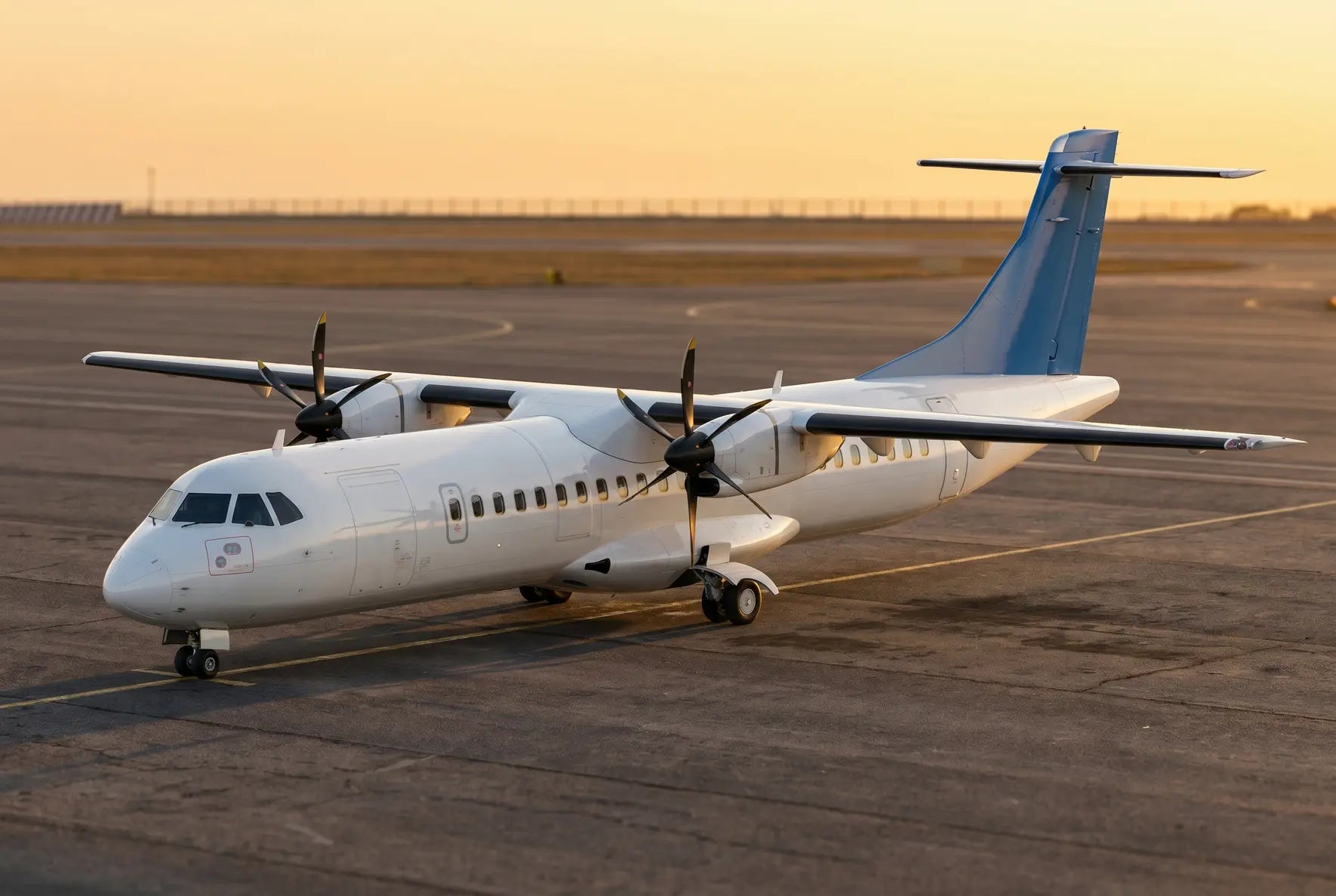
Xian MA700: Program History, Development Path and Variant Evolution
The Xian MA700 is a twin-engine, medium-range regional turboprop airliner developed by Xi'an Aircraft Industrial Corporation (XAC), a subsidiary of the state-owned Aviation Industry Corporation of China (AVIC). Designed to seat between 68 and 86 passengers in various configurations, the MA700 represents the third and most ambitious member of the "Modern Ark" (Xinzhou) turboprop family, following the MA60 and the MA600. Unlike its predecessors, which were essentially modernised derivatives of the Soviet-era Antonov An-24 airframe, the MA700 is a substantially new design intended to compete directly with the ATR 72 and the De Havilland Dash 8-400 in the global 70- to 90-seat turboprop market.
The MA700 programme was first publicly announced in 2007 by AVIC as a next-generation regional turboprop concept positioned above the MA60 and MA600 in capacity and performance. The aircraft introduced several generational leaps over its predecessors, including a fly-by-wire flight control system, a modern glass cockpit, a larger cabin cross-section and significantly higher cruise speeds. In June 2017, AVIC finalised an agreement with Pratt & Whitney Canada to power the MA700 with two PW150C turboprop engines, paired with six-blade Dowty R504 propellers. This Western powerplant choice was critical to achieving the performance targets AVIC had set for the type.
According to AVIC's original programme schedule, prototype assembly was to be completed by 2017, with a maiden flight targeted for late 2019. Type certification from the Civil Aviation Administration of China (CAAC) was planned for 2021, with first deliveries to customers around 2022. AVIC also signalled its intention to pursue EASA and FAA validation after obtaining the CAAC certificate, aiming to open the door to Western operators. By June 2019, AVIC reported that 11 operators had placed orders for 285 aircraft, including Chinese carriers Joy Air and Okay Airways, as well as lessors such as CDB Leasing and CMB Leasing.
However, the programme suffered a severe disruption in 2019-2020 when Global Affairs Canada denied export licences for the PW150C engines amid a broader diplomatic dispute between Canada and China. As Smart Aviation Asia-Pacific reported, the MA700 programme "came to a sudden halt in 2020" because of the engine embargo. A static-test airframe had been rolled out in early 2020, and in April 2021, video footage showed the MA700 on a test stand under simulated heavy rain conditions, notably without engines installed.
Despite these setbacks, industry sources and Chinese-language media reported that a prototype completed a largely undisclosed first flight around 23-24 September 2021 from AVIC's Yanliang flight-test facility near Xi'an. This milestone was traced by The Air Current to Chinese aviation publications and corroborating imagery. However, the flight was never formally celebrated or widely publicised, and no sustained flight-test campaign comparable to Western certification programmes has been documented since.
With the PW150C supply cut off, Chinese industry pivoted toward developing an indigenous replacement engine. The AEP500 turboprop engine family entered small-scale trial production around 2021, but its airworthiness certification is not expected until approximately 2028. In October 2025, Aviation Week reported that a re-engined MA700 fitted with Chinese-developed engines had been spotted conducting taxi tests, confirming that AVIC has not abandoned the programme but has effectively reset it around a new powerplant. No updated certification or entry-into-service timeline has been publicly confirmed. The regional turboprop segment the MA700 targets remains highly relevant for airlines worldwide, including operators such as those profiled in airline overviews on Ready for Takeoff, where short-haul efficiency and route flexibility are key considerations.
What Sets the Xian MA700 Apart from the MA60 and MA600
While all three aircraft belong to AVIC's Modern Ark turboprop lineage, the Xian MA700 differs fundamentally from the MA60 (in service since 2004) and the MA600 (first flight September 2008). The MA60 and MA600 are relatively modest upgrades of an An-24-derived airframe, seating around 50 to 60 passengers and using conventional flight controls and lower-power domestic engines. The MA700, by contrast, is an essentially clean-sheet design with a larger fuselage, a high wing with T-tail configuration, fly-by-wire controls, and a modern avionics suite. Its original performance targets, including a maximum cruise speed of approximately 637 km/h (344 knots) and a standard-payload range of around 1,500 km (810 nm), place it in a substantially higher performance class than its predecessors.
Key variant identifiers for the Xian MA700 include:
- Engines (original design): 2x Pratt & Whitney Canada PW150C turboprops with Dowty R504 six-blade propellers; now transitioning to Chinese AEP500-series engines
- Seating capacity: 68 to 86 passengers (typically 78-80 in standard single-class layout at 31-inch pitch)
- Maximum take-off weight (MTOW): approximately 27,600 kg
- Maximum cruise speed: approximately 637 km/h (344 knots)
- Range: approximately 1,500 km standard payload; up to 2,700 km ferry
- Flight controls: fly-by-wire system (a first for the Modern Ark family)
- Configuration: high wing, T-tail, tricycle landing gear mounted on external pods
As of 2025, the Xian MA700 has not achieved CAAC type certification and remains in an extended development phase. No EASA or FAA validation processes have been initiated. The programme's future timeline is closely tied to the maturation and certification of the Chinese-developed AEP500 engine, which is expected no earlier than 2028.

The image features a model of the MA700 aircraft displayed at an exhibition. The aircraft is branded with AVIC logos and has a sleek, aerodynamic design.
Xian MA700 Technical Specifications, Systems and Engine Options
The Xian MA700 is a twin-engine, medium-range turboprop airliner developed by Xi'an Aircraft Industrial Corporation (XAC), a subsidiary of the Aviation Industry Corporation of China (AVIC). Designed as an all-new platform rather than a derivative of the earlier MA60/MA600 family, the MA700 targets the 70- to 86-seat regional segment currently served by the ATR 72 and the former De Havilland Dash 8-400. Its configuration follows a conventional high-wing, T-tail layout with tricycle landing gear housed in external pods, optimised for short-field operations and unprepared runways common across developing regional networks.
The MA700 was conceived to bridge a gap in the turboprop market with higher cruise speeds than the ATR 72 and a larger cabin than the MA600, while retaining the low operating costs expected of turboprop operations. Key design trade-offs include a high power-to-weight ratio to support faster cruise and improved hot-and-high performance, balanced against a relatively modest range envelope compared with regional jets. For airlines operating turboprop fleets in challenging environments, these characteristics aim to deliver reduced block times without sacrificing runway flexibility.
- Configuration: high-wing, T-tail, twin turboprop, tricycle landing gear
- Length: 30.5 m (100 ft 1 in)
- Wingspan: 27.9 m (91 ft 6 in)
- Height: 8.2 m (26 ft 11 in)
- Seating capacity: 78 passengers (standard), up to 86 (high-density)
- MTOW: 27,600 kg (60,848 lb)
- Empty weight (OEW): approximately 15,800 kg (34,833 lb)
- Maximum payload: 8,600 kg (18,960 lb)
- Maximum cruise speed: 637 km/h (344 kt) at MTOW, ISA, 6,000 m
- Economical cruise speed: 550 to 580 km/h (300 to 310 kt)
- Service ceiling: 7,620 m (25,000 ft)
- Single-engine ceiling: 5,690 m (18,670 ft) at 95% MTOW, ISA+10 degrees C
- Range: approximately 1,500 km with standard payload; up to 2,700 km ferry range
- Takeoff field length: 1,400 m (4,600 ft) at MTOW, sea level, ISA
- Landing distance: 1,200 m (3,900 ft) at MLW, sea level, ISA
- Original engines: 2 x Pratt & Whitney Canada PW150C turboprops (approximately 5,000 shp each)
- Propellers: 6-bladed Dowty R504 composite units
- Cargo volume: 11.88 m3
- Flight controls: fly-by-wire
- Electrical systems supplier: Safran Electrical & Power (original configuration)
Systems, Flight Controls and Onboard Technology
One of the MA700's most notable technical choices is its fly-by-wire (FBW) flight control system, a feature rarely found on turboprops in this size class. Both the ATR 72 and the Dash 8-400 rely on conventional hydromechanical controls, making the MA700's electronic flight control architecture a generational step forward. While detailed architecture documentation (redundancy levels, control laws, envelope protection) has not been publicly released by AVIC, the manufacturer's broader experience with FBW on programs such as the ARJ21 and C919 suggests a multi-channel digital system. This approach can reduce pilot workload, improve handling qualities, and provide structural load alleviation.
The cockpit is a modern glass flight deck designed for a two-pilot crew. Although specific avionics suppliers for the primary flight displays and flight management system have not been publicly confirmed in detail, AVIC originally intended the MA700 to meet both CAAC and international certification standards (potentially FAA and EASA), implying systems architecture compliant with performance-based navigation (PBN), RVSM, TCAS and EGPWS requirements. The engine control system uses Full Authority Digital Engine Control (FADEC), consistent with the PW150 family standard.
Published performance figures for the MA700 should be interpreted with appropriate context. Manufacturer-stated values for range, takeoff distance and payload are based on specific assumptions: ISA conditions, sea-level elevation, maximum weights, and standard configurations. In real operations, factors such as runway condition, ambient temperature, airport elevation, cabin density choices and operator-specific equipment options can significantly alter achievable performance. The economical cruise speed band of 550 to 580 km/h, for example, represents a range rather than a single fixed value, varying with altitude, weight and atmospheric conditions.
Engines: From PW150C to Domestic Alternatives
The MA700 was originally designed around the Pratt & Whitney Canada PW150C, the most powerful variant in the PW100/PW150 turboprop family. Rated at approximately 5,000 to 5,100 shp, the PW150C is a three-spool, free-turbine engine featuring a third-stage power turbine, a modified reduction gearbox and an optimised low-pressure compressor compared to the PW150A baseline. It was developed specifically for the MA700 application and is not in service on any other aircraft type.
The closely related PW150A powers the De Havilland Canada Dash 8-400 (Q400), where it is rated at 5,071 shp and drives six-bladed Dowty propellers at 1,020 rpm. This engine has accumulated extensive service experience across regional turboprop operations worldwide, with the broader PW100/PW150 family logging over 217 million flight hours. The PW100 family spans a power range from 1,800 to over 5,000 shp and powers aircraft including the ATR 42/72 (PW127 series), Fokker 50 (PW125B), and various military and utility platforms.
In 2020, the Canadian government denied the export licence required to deliver PW150C engines to AVIC, effectively halting the MA700 programme as originally configured. This decision was linked to broader geopolitical tensions and export-control considerations. In response, AVIC pivoted to a domestically developed alternative: the AEP500 series turboprop, which was unveiled around 2018 with airworthiness certification tentatively targeted for approximately 2028. In October 2025, Aviation Week reported that a re-engined MA700 prototype had been seen conducting taxi tests with the new Chinese powerplant, confirming that the programme is progressing despite the engine change. The transition to the AEP500 introduces additional development risk and timeline uncertainty, but it also represents a strategic push by China to reduce dependence on Western engine suppliers for its regional aviation programmes.
Xian MA700 vs ATR 72-600 vs Dash 8-400 vs Embraer E175 Specifications Comparison
Scroll horizontally to see more →
| Parameter | Xian MA700 | ATR 72-600 | De Havilland Canada Dash 8-400 | Embraer E175 |
|---|---|---|---|---|
| Entry into service | N/A | 2011 | 2000 | 2005 |
| Engines | 2 × Pratt & Whitney Canada PW150C | 2 × Pratt & Whitney Canada PW127M | 2 × Pratt & Whitney Canada PW150A | 2 × General Electric CF34-8E |
| Length | 30.5 m | 27.2 m | 32.8 m | 31.7 m |
| Wingspan | 28.2 m | 27.1 m | 28.4 m | 26.0 m |
| Height | 8.4 m | 8.4 m | 8.3 m | 9.9 m |
| Typical seating and layout (short description + approximate passengers) | Single-class: 70–86 passengers | Single-class: 68–78 passengers | Single-class: 70–78 passengers | Dual-class: 76–88 passengers |
| MTOW | 28 t | 23 t | 29.3 t | 40.4 t |
| Range | 1,460 nm | 825 nm | 1,100 nm | 1,800 nm |
| Cruise speed | 0.52 Mach | 0.50 Mach | 0.52 Mach | 0.78 Mach |
| Service ceiling | 25,000 ft | 25,000 ft | 27,000 ft | 41,000 ft |
| Program note | Chinese next-generation 70-seat turboprop aimed at regional routes and as a domestic alternative to Western competitors. | Mature Western 70-seat turboprop benchmark focused on fuel-efficient short-haul regional operations. | High-performance 70–80 seat turboprop optimized for faster regional services and challenging airfields. | Regional jet counterpart offering higher speed and comfort on short to medium-haul routes versus turboprops. |
Scroll horizontally to see more →
The table compares key specs of the Xian MA700 against the ATR 72-600, Dash 8-400, and Embraer E175. The MA700 targets the 70–86 seat turboprop segment with 1,460 nm range, exceeding ATR 72-600 (825 nm) and Dash 8-400 (1,100 nm), while the E175 leads in speed (0.78 Mach), altitude (41,000 ft), and MTOW (40.4 t). Turboprops cruise around 0.50–0.52 Mach with 25,000–27,000 ft ceilings.
Xian MA700: Typical Routes, Missions and Airlines Ordering the Turboprop
The Xian MA700 is a twin-engine regional turboprop designed to serve short- to medium-haul routes, typically covering sectors of 370 to 1,500 km (200 to 810 nm). With an economical cruise speed of approximately 550 to 580 km/h and a maximum cruise speed near 637 km/h, the aircraft offers faster block times than many competitors in the 70- to 80-seat turboprop class. Its published range of around 1,500 km with a standard payload positions it for missions lasting roughly one to two hours, the kind of regional flying that sustains multiple rotations per day. Turboprops in this category typically target six to ten block hours of daily utilisation across five to eight sectors, and the Xian MA700 is designed to operate at a similar tempo.
AVIC markets the Xian MA700 for regional airline operations centred on secondary and tertiary airports, including those with runway lengths as short as 1,800 m. The manufacturer has specifically highlighted hot-and-high performance, stating the aircraft can operate in elevated temperatures and snow conditions, covering approximately 95% of Chinese airports. This makes the type well-suited for hub-and-spoke feeding, where it would connect smaller cities to major hubs, as well as point-to-point regional services between city pairs that do not justify narrowbody jet economics. The required takeoff distance of approximately 1,400 m and landing distance of about 1,200 m reinforce its suitability for airports with limited infrastructure. As reported by Airport Technology, the aircraft is intended to meet the short- and medium-range regional passenger transport sector, covering routes within a range of about 800 km in its core mission profile.
One significant challenge for prospective operators is the programme's extended development timeline. Originally targeting a first flight around 2017 to 2019, CAAC certification by 2021 and entry into service in 2022, the Xian MA700 has experienced substantial delays. After the original Pratt & Whitney Canada PW150C engines were replaced with a domestically sourced powerplant, the aircraft underwent major redesign work. As Aviation Week reported, the re-engined variant has been seen conducting taxi tests, but as of 2025, no CAAC type certificate has been publicly announced, and the aircraft has not entered commercial service. This uncertainty around certification and delivery timelines presents a planning challenge for airlines that have placed orders or signed letters of intent.
Where the Xian MA700 Is Expected to Operate
Although the Xian MA700 has not yet entered revenue service, its order book and the profile of its customers offer a clear picture of the regions where it is expected to fly. The aircraft is primarily aimed at the Chinese domestic market, where vast distances and a large number of regional airports create strong demand for turboprop connectivity. Beyond Asia, AVIC has secured commitments from customers in Africa, the Middle East and South Asia, markets where Chinese-financed aviation programmes and the predecessor Xian MA60 have already established a presence. There is no publicly documented order activity in Europe or North and South America to date.
The customer base of the Xian MA700 reflects a pattern of Chinese state-linked carriers, leasing companies and smaller foreign operators in developing markets. By September 2019, AVIC reported 285 intended orders from 11 customers. While many of these commitments are believed to be letters of intent rather than Western-style firm contracts, they indicate the geographic spread of expected operations. Airlines and companies that previously operated the Xian MA60 are considered natural follow-on customers for the MA700. Working conditions at the airlines likely to operate the type vary greatly by region; for a broader look at how pilot and crew working environments differ across carriers, see this overview of airline pilot conditions.
- Asia: The core market for the Xian MA700 is China, where launch customers Joy Air (Xi'an) and Okay Airways (Tianjin) were announced in 2014 as development partners. Both airlines already operated the older MA60 on domestic regional routes. Chinese lessors CDB Leasing and CMB Leasing have each committed to 30 aircraft, while Chongqing General Aviation Financing & Leasing signed for 10 units. Outside China, Cambodia Bayon Airlines is listed as a customer, building on its existing MA60 operations. Air Kasthamandap in Nepal and Hybrid Aviation in Pakistan also appear on the order list, reflecting demand for turboprop connectivity across South and Southeast Asia.
- Africa: South African entity Segers Aero is listed among the 11 customers with an order for approximately 10 aircraft. The Xian MA60 was previously exported to several African nations including Zambia and Zimbabwe, and the MA700 is positioned as a potential successor for regional routes across the continent.
- Europe: No European airlines have publicly signed orders or letters of intent for the Xian MA700. Without EASA certification, the aircraft cannot operate in European airspace, and there is currently no indication that EASA validation is being pursued.
- North and South America: No confirmed orders or commitments from airlines in the Americas have been documented in publicly available aviation sources. While the predecessor MA60 saw limited use in Bolivia, the MA700 has not attracted publicly reported interest from carriers in this region.
Typical Seating Configurations on the Xian MA700
The Xian MA700 features a single-aisle cabin with 4-abreast seating in a 2-2 layout, a cross-section common to regional turboprops in this size class. The cabin measures approximately 2.70 m in width and 1.90 m in height, with a cabin length of around 15.80 m. According to published specifications sourced from AVIC, the standard configuration seats 78 passengers at a pitch of 79 cm (31 inches), while a high-density layout accommodates up to 86 passengers with reduced pitch. The overall capacity range extends from 68 to 86 seats, suggesting that lower-density options with a small business-class section or extra-legroom rows are feasible.
Because the aircraft has not yet entered service, no airline-specific cabin configurations or seat maps have been published. However, the design flexibility mirrors that of competing turboprops such as the ATR 72-600 and the former De Havilland Dash 8-400. Network carriers feeding passengers to long-haul hubs typically favour layouts at the lower end of the density range, offering greater comfort on connecting regional sectors. Leisure or cost-focused operators tend to maximise seats, likely opting for configurations closer to the 86-seat maximum. Further technical details are available on the AeroCorner Xian MA700 profile page.
In this video, viewers get a fresh look at the MA700 aircraft, now revealed again with the Turbo Prop 10 engine installed. See the latest exposure from the 20251025 Live 4 segment and what it highlights.
Xian MA700 Safety Record: How Safe Is This Regional Turboprop?
The Xian MA700 is a twin-engine regional turboprop currently under development by Xi'an Aircraft Industrial Corporation (XAC), a subsidiary of the Aviation Industry Corporation of China (AVIC). As of mid-2025, the aircraft has not entered commercial service, so it has no operational safety record to evaluate in traditional terms. No accidents, incidents, or hull losses have been recorded for the MA700 in any recognised aviation safety database. The prototype reportedly completed its maiden flight in late September 2021, and more recently a re-engined variant was observed during taxi testing, but the programme remains at the flight-test and certification stage under the oversight of the Civil Aviation Administration of China (CAAC). With zero revenue flights, zero cycles, and no airline operators, a meaningful safety assessment based on historical data is not yet possible for this aircraft type.
However, understanding the safety context of the MA700 requires examining the track record of its predecessor, the Xian MA60, since the MA700 is designed as a larger, modernised evolution of that turboprop family. The MA60's operational history offers important lessons that have directly influenced the design philosophy and certification ambitions of the MA700 programme.
Lessons from the Xian MA60: Key Incidents and Industry Response
The Xian MA60, a 50-to-60-seat turboprop derived from the earlier Y-7, entered service in the early 2000s and was exported to operators across Southeast Asia, Africa, and South America. According to the Aviation Safety Network, the type has been involved in at least 14 recorded accidents with substantial damage through 2015, though only one was fatal.
- Merpati Nusantara Flight MZ8968 (May 2011, Kaimana, Indonesia) remains the sole fatal accident involving the MA60. All 25 occupants perished when the aircraft struck the sea on approach in poor visibility. The Indonesian National Transportation Safety Committee (NTSC) attributed the crash primarily to crew continuation of an unstabilised approach below minimum descent altitude, combined with inadequate crew resource management. Investigators found no evidence of a fundamental design defect in the airframe. Following this event, Indonesian authorities banned the MA60 from landing at three airports with particularly challenging approaches and launched a special audit of all MA60 operations in the country.
- Zest Airways runway incidents (January and June 2009, Caticlan, Philippines) saw two separate MA60 aircraft damaged beyond repair at the same short runway. Both events involved approach and landing errors at a notoriously demanding airport. These accidents contributed to heightened scrutiny of the MA60 by Philippine aviation authorities and raised wider questions about the type's suitability for operations at short, difficult airstrips.
- Myanma Airways runway excursions (2013, Myanmar) involved at least two MA60 aircraft skidding off runways in separate events. Myanmar temporarily grounded several MA60s for inspection. In Cameroon, the civil aviation authority suspended the MA60's airworthiness certificate in 2019 following a tailstrike incident. Nepal Airlines grounded its two MA60s in 2020, citing sub-standard performance and reliability, and has not returned them to service.
Across these events, the dominant causal factors were operational and environmental: insufficient pilot training on the type, unstabilised approaches, demanding runway conditions, and limited manufacturer support in remote markets. No major investigation attributed an MA60 accident to a systemic aerodynamic or structural design flaw. Nonetheless, the MA60 never received FAA or EASA type certification, which limited operator confidence and market acceptance. These lessons have shaped the MA700 programme in significant ways: the newer aircraft features fly-by-wire flight controls supplied by Parker Aerospace, modern integrated avionics by Safran, and fire detection and bleed-air monitoring systems from Meggitt, all designed to reduce pilot workload and improve system redundancy compared to its predecessor. AVIC has also publicly stated its intention to seek CAAC certification with subsequent FAA and EASA validation, a clear departure from the MA60's certification approach.
How Safe Is the Xian MA700?
Without operational data, evaluating the MA700's safety requires looking at its design philosophy, regulatory trajectory, and the broader industry context. The aircraft is being developed to transport-category standards broadly aligned with international requirements. Its fly-by-wire architecture provides flight-envelope protections and redundancy not available on conventional turboprops. The high-wing, T-tail configuration is well suited for regional operations at less-developed airstrips, and a stated single-engine ceiling of approximately 18,670 feet at 95% of maximum take-off weight suggests healthy performance margins. These characteristics place the MA700 in a comparable design class to established types such as the Bombardier CRJ440 and other modern regional aircraft built with multiple redundant systems and strict certification oversight.
A major uncertainty for the programme is its engine situation. The MA700 was originally designed around the Pratt & Whitney Canada PW150C turboprop, but Canada denied the export licence in 2020. China is now developing the domestic AEP500 engine as a replacement, with airworthiness certification not expected before approximately 2028. This engine transition introduces both a delay and a degree of technical risk that will only be resolved through a thorough certification campaign.
In the wider context, commercial aviation continues to post record-low accident rates, with the global hull-loss rate for commercial jets falling well below one per million flights in recent years. Turboprops, particularly those operating in challenging environments, tend to carry slightly higher statistical risk, but the overall trend across all aircraft categories is one of sustained improvement driven by better design, stricter regulation, and enhanced training standards. The Xian MA700, if it completes certification successfully and enters service with robust operator training programmes and adequate manufacturer support, will be judged by the same safety metrics as its international competitors. Until then, prospective operators, regulators, and passengers will rightly watch its certification progress and early service record with close attention. Aviation, across all types and regions, remains one of the safest modes of transport in the world.
01 What kind of routes and missions is the Xian MA700 designed for?
The Xian MA700 is designed primarily for short- to medium-haul regional routes, typically in the 300–800 km range, but with a maximum range of around 1,700–2,000 km depending on configuration and payload. It is intended to serve thin or developing routes between secondary cities, especially where airport infrastructure is limited or runways are relatively short. The aircraft’s turboprop design and high-wing layout make it suitable for operations in hot-and-high conditions and at regional airports with challenging environments. In practice, airlines are expected to use the MA700 on high-frequency regional connections rather than long sectors.
02 What is the passenger cabin like on the Xian MA700?
The Xian MA700 cabin is planned in a single-aisle layout with around 78 standard seats, with options for a higher-density configuration up to about 86 seats. The high-wing design keeps the wing structure above the cabin, which can improve the sense of space and reduce obstruction from wing spars near the windows. As with most modern regional turboprops, the cabin will likely feature LED lighting, overhead bins sized for typical carry-on bags, and a pressurized, air-conditioned environment comparable to jets on similar sectors. Noise levels are expected to be improved over older turboprops thanks to newer propeller and engine technology, although it will still be somewhat louder than a regional jet, especially near the propeller area.
03 Which airlines are expected to operate the Xian MA700 and on what types of routes?
Launch and early customers for the Xian MA700 are expected to be primarily Chinese and regional Asian carriers, including smaller airlines focused on domestic connectivity. These operators are likely to deploy the MA700 on secondary and tertiary routes, linking provincial capitals with smaller cities and tourist destinations that do not justify larger jet aircraft. The type may also appeal to airlines in countries with large rural or mountainous areas where short runways and challenging weather make turboprops attractive. Over time, if the program matures successfully, it could also find niche roles with governmental or corporate operators for shuttle, charter, or cargo missions.
04 How does the Xian MA700 compare with similar turboprops like the ATR 72 or De Havilland Dash 8?
The Xian MA700 is conceptually similar to aircraft such as the ATR 72 and De Havilland Dash 8, targeting the 70–80 seat regional turboprop segment. Its design goals emphasize short takeoff and landing performance, fuel efficiency on sectors of roughly one to two hours, and the ability to operate from less-developed airports. In terms of speed and range, it is positioned to be competitive, with cruise speeds and maximum range broadly comparable to Western counterparts, though real-world performance will depend on final certification data and airline configurations. For airlines, a key consideration will be operating economics, local support, and acquisition costs, where the MA700 is intended to offer a cost-effective alternative in markets with strong Chinese industrial and financial ties.
05 What is known about the safety features and certification status of the Xian MA700?
The Xian MA700 incorporates modern regional-airliner safety features such as digital avionics, advanced flight management systems, and contemporary navigation and communication equipment. It is being developed under Chinese civil aviation regulations with the goal of meeting international airworthiness standards similar to those applied to other transport-category aircraft. As of now, the MA700 has undergone a prolonged development and testing phase, and full entry into commercial service depends on the completion of flight testing and certification. Once in service, the aircraft’s safety record will be shaped by operator training, maintenance quality, and regulatory oversight in addition to the design itself.
06 What should passengers know when flying on a Xian MA700 in terms of comfort and ride quality?
Passengers on a Xian MA700 can expect a ride typical of modern regional turboprops, with relatively quick climbs and descents on short sectors and some perceptible propeller noise, especially near the wings. Seats are usually arranged 2–2 across the aisle, so there is no true middle seat, which many travellers find more comfortable than narrow-body jets with three seats abreast. Because turboprops often cruise at lower altitudes than jets, flights may occasionally encounter more noticeable turbulence in weather systems, though the aircraft is designed to handle such conditions safely. For a quieter experience, travellers who are sensitive to noise may prefer seats closer to the front of the cabin and away from the propellers.