Kalitta Air Overview & Company Profile
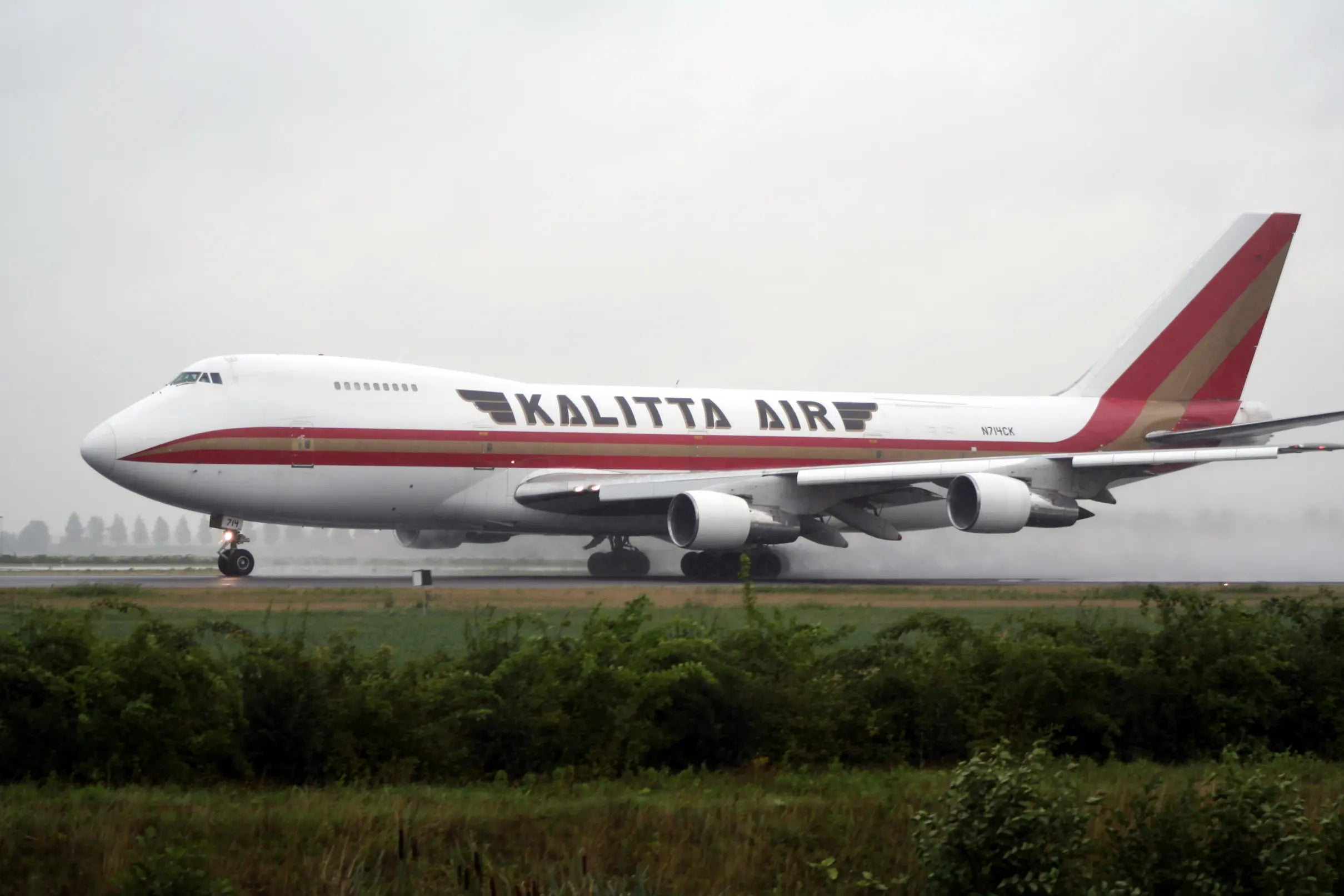
Kalitta Air is one of the largest privately held cargo airlines in the United States, specialising in heavy-lift freight, ACMI (Aircraft, Crew, Maintenance, Insurance) wet-leasing, on-demand charter, scheduled cargo, and military operations under the Civil Reserve Air Fleet (CRAF) program. Founded in 1967 by drag-racing legend Conrad "Connie" Kalitta as Connie Kalitta Services, the company was renamed Kalitta Air in November 2000 after acquiring operating rights from American International Airways. Headquartered at Willow Run Airport (YIP) in Ypsilanti Township, Michigan, the airline has grown into a global heavy-cargo operator with strategic pilot gateways in Anchorage (ANC), Cincinnati/Northern Kentucky (CVG), Los Angeles (LAX), New York JFK, Chicago (ORD), and Leipzig-Halle (LEJ) in Germany.
Kalitta Air operates as a wet-lease and charter specialist rather than a traditional scheduled carrier. Its business model centres on flying widebody cargo jets on behalf of major integrators and forwarders, including DHL, UPS, the United States Transportation Command (USTRANSCOM), Pacific Air Cargo, and a growing roster of Chinese freight partners. Roughly 835 pilots fly the Kalitta Air line (2024 figure), supported by a total workforce of about 2,000 to 2,040 employees across pilot, maintenance, dispatch, and ground operations divisions. In 2025, the airline made aviation headlines as the global launch customer for the Boeing 777-300ERSF "Big Twin" converted freighter, receiving its first two airframes in September 2025 from AerCap Cargo.
Kalitta Air does not sell seats. It flies freight. That means no delays for missed connections, no passenger service announcements, and no revenue management cycles driving your roster. Instead, the mission is simple: pick up cargo, deliver it on time, often across multiple continents on a single trip pairing. For pilots who want to see the world flying heavy metal without ever dealing with boarding delays or angry passengers, this model has a distinct appeal.
Fleet Composition & Type Ratings
Kalitta Air flies an all-Boeing, all-widebody fleet built around two platforms: the Boeing 747-400 freighter family and the Boeing 777 freighter family. The 747 remains the workhorse of the operation, with the airline operating a mix of factory-built 747-400F aircraft, 747-400BCF and BDSF passenger-to-freighter conversions, and a single 747-400ERF. The 777 fleet has grown rapidly in 2024 and 2025 with the addition of 777F aircraft (including five flown in DHL livery under a wet-lease agreement) and the brand-new 777-300ERSF "Big Twin" conversions from AerCap Cargo, for which Kalitta Air is the launch customer worldwide.
| Aircraft Type | Role | In Service (est.) | Routes / Notes |
|---|---|---|---|
| Boeing 747-400F | Heavy cargo, long-haul | ~13 | Factory-built freighter. Core long-haul fleet, nose-loading capability. Maximum payload ~112 tonnes. |
| Boeing 747-400BCF | Heavy cargo, converted | ~9 | Boeing Converted Freighter (ex-passenger). Used on scheduled and charter cargo. Side-cargo door only. |
| Boeing 747-400ERF | Extended-range cargo | ~1 | Higher MTOW, longer range. Used for ultra-long sectors requiring high payload. |
| Boeing 777F | Express cargo | ~8 | Includes 5 aircraft flown for DHL Aviation in DHL livery. Twin-engine efficiency on long-haul express networks. |
| Boeing 777-300ERSF "Big Twin" | Converted freighter | ~7 (of 8 on order) | World launch operator. First delivery September 2025 (AerCap Cargo). 25% more volume than the 777F, same cockpit. |
Fleet data compiled from public sources including Wikipedia's Kalitta Air page and the airline's own fleet page. Numbers are approximate and change with ongoing deliveries, wet-lease rotations, and conversions.
Kalitta Air provides type rating training at its Ypsilanti training centre, which houses 747-400 and 777 full-flight simulators. Pilots are typically hired directly to a specific fleet based on operational need rather than seniority bid at entry. Both the 747 and 777 are desirable widebody type ratings that carry significant market value if a pilot later moves to another cargo or passenger operator. The 777-300ERSF shares the same type rating as the 777F and 777-200LR, giving Kalitta pilots cross-fleet flexibility within the triple-seven family.
Kalitta Air does not currently operate Boeing 767 aircraft. Earlier industry reports suggesting 767-300ERF operations appear to be outdated, and the airline's public fleet listings focus exclusively on 747 and 777 types as of 2026. This makes Kalitta one of the few US cargo operators running a pure-widebody, all-heavy-metal fleet, which is a significant attraction for pilots who specifically want to fly large aircraft on long-haul international sectors.
Pilot Salary & Compensation Breakdown
Kalitta Air pilot pay is governed by the ALPA collective bargaining agreement negotiated with the Kalitta Air Master Executive Council. A four-year contract was ratified in 2024, bringing significant improvements to the previous amendable agreement. Pilots are paid on an hourly basis with a monthly guarantee of 64 block hours, plus per diem, overtime, and a generous direct 401(k) contribution in lieu of profit sharing. Because Kalitta flies both the 747 and 777, pay is the same across widebody types under a single hourly pay scale.
First Officer (FO) Pay Scale
| Year | Hourly Rate | Monthly @ 64 hr guarantee | Annual Base (est.) |
|---|---|---|---|
| Year 1 | $117 / hr | ~$7,490 | ~$90,000 |
| Year 2 | $143 / hr | ~$9,150 | ~$110,000 |
| Year 5 | $178 / hr | ~$11,390 | ~$137,000 |
| Year 10 | $213 / hr | ~$13,630 | ~$164,000 |
| Year 12+ (cap) | $316 / hr | ~$20,220 | ~$243,000 |
Figures from the 2024 ALPA CBA as published on AirlinePilotCentral. Annual base reflects the 64-hour monthly guarantee only and does not include per diem, overtime, premium pay, or 401(k) company contribution.
Captain (CA) Pay Scale
| Year | Hourly Rate | Monthly @ 64 hr guarantee | Annual Base (est.) |
|---|---|---|---|
| Year 1 | $165 / hr | ~$10,560 | ~$127,000 |
| Year 2 | $211 / hr | ~$13,500 | ~$162,000 |
| Year 5 | $263 / hr | ~$16,830 | ~$202,000 |
| Year 10 | $316 / hr | ~$20,220 | ~$243,000 |
| Year 12+ (cap) | $416 / hr | ~$26,620 | ~$320,000 |
Cargo pilots at Kalitta frequently fly above the 64-hour guarantee on international trip pairings, so real-world annual earnings are typically higher. Total annual compensation including per diem and 12% 401(k) can exceed $400,000 for a senior widebody Captain.
Per Diem, Premiums & Benefits
Pay figures above reflect the 2024 ALPA CBA as publicly reported on AirlinePilotCentral and confirmed by union communications. Actual annual earnings depend on trip rigging, overtime, deadhead premiums, and training pay. A Kalitta 747 Captain flying a typical 16 to 21 day international trip will usually log 85 to 100 block hours per month, putting real-world compensation well above the guarantee-only estimates in the tables above. Always verify the current pay scale with your ALPA MEC representative before making career decisions, as rates and work rules can change with contract amendments.
Roster Pattern & Quality of Life
Roster patterns at Kalitta Air are radically different from what pilots experience at a passenger airline. Rather than daily out-and-back flying or 3 to 4 day domestic trips, Kalitta pilots typically operate 16 to 21 day international trip pairings that cross multiple continents, interspersed with 14 to 15 days off at home. Pilots are "home based," meaning they can live anywhere in the continental United States (plus Alaska and Hawaii) with regular commercial air service, and the company purchases positive-space airline tickets to transport them to the start of each trip.
📅 Sample Month, International 747 First Officer
On a typical 17-day international pairing, a pilot might fly ANC to ICN, then ICN to HKG, HKG to SYD, SYD back to HKG, HKG to CGN, and CGN back to JFK, with 24 to 32 hour layovers at most destinations for rest. Reserve pilots work on similar rotations but can be called out on short notice. One notable feature of Kalitta's operation: the airline buys commercial tickets (domestic coach, international business or first class) to get pilots to and from trip start points, which means the deadhead experience is significantly more comfortable than jumpseating.
Unlike passenger airlines where commuting eats into your personal time and jumpseat availability is never guaranteed, Kalitta's home-basing model means the airline owns the commute. You travel to your trip on a confirmed commercial ticket, frequently in business or first class on international legs, and return home the same way. Pilots routinely live in places like Florida, Texas, Colorado, or Alaska and fly internationally without ever paying to commute. The trade-off is time: cargo trips are long, and being gone for two weeks straight is a significant lifestyle shift that not every family can handle.
Cargo operates when passenger flights don't, which means overnight departures, 3 a.m. push-backs, and arrival times that rarely line up with natural sleep windows. Long-haul trip pairings frequently involve multiple time zone changes within a single rotation, and cumulative circadian disruption is the most common lifestyle complaint among Kalitta pilots and cargo aviators in general. FAR 117 flight time limitations provide a regulatory floor, but managing your own sleep and fatigue discipline is on you.
Benefits, Travel Perks & Retirement
Kalitta Air's benefits package was significantly strengthened by the 2024 contract ratification. The headline change: the company's direct 401(k) contribution rose from 7% to 12% of eligible pay, putting Kalitta's retirement program at the top of the US cargo sector in percentage terms. Unlike a traditional match, this contribution is not conditional on the pilot deferring any of their own salary, though pilots can still contribute their own money up to the IRS annual limits.
Most US airlines match pilot 401(k) contributions up to a percentage (e.g. 16% match at FedEx, 18% direct at Atlas Air post-JCBA). Kalitta's 12% direct contribution is less than Atlas but considerably better than many passenger carriers with traditional match structures, because the pilot is not required to defer any of their own salary to receive the full company contribution. For a senior 747 Captain earning $300,000 in taxable pay, the 12% translates into approximately $36,000 per year in retirement contributions on top of any personal deferrals, though IRS annual limits ultimately cap total qualified contributions.
Kalitta pilots do not receive non-revenue staff travel in the passenger-airline sense, because the airline has no passenger service. However, positive-space company travel to trip start and return creates a substantial implicit benefit: international business class tickets routinely cost $3,000 to $7,000 each way on commercial markets. Combined with the $85.20 daily international per diem (of which most is not needed because hotels and transport are pre-paid by the company), pilots commonly bank $2,000 to $3,000 per month in untaxed per diem alone. These numbers add up over a 30-year career.
Career Progression & Seniority
Career progression at Kalitta Air is strictly seniority-based, but the overall pilot group is small enough (roughly 835 pilots) and growing fast enough that upgrade timelines are exceptional by US airline standards. The airline has publicly stated that it offers rapid captain upgrades, with typical upgrade times of 2 to 3 years of line service. Compared to legacy passenger carriers where First Officers can wait 10 to 15 years for a left-seat slot, this is a defining attraction of the Kalitta career path.
| Career Milestone | Typical Timeline | Notes |
|---|---|---|
| New Hire Class & Type Rating | 4 to 6 weeks | Company-provided type rating at Ypsilanti training centre on 747 or 777. |
| IOE & Line Qualification | 2 to 3 months | Initial Operating Experience on the line with a line check airman. |
| First Officer (FO) | Year 1 to ~3 | Full FO pay from day 1 under the 2024 CBA. Senior FOs can exceed $160k annual gross. |
| Captain Upgrade | ~2 to 3 years | Command assessment and sim check. Rapid timeline versus passenger majors. Seniority-driven. |
| Fleet Transition (747 ↔ 777) | Variable | Both fleets share widebody profile but separate type ratings. Bid-based. |
| Check Airman / Instructor | 5+ years | Additional selection and certification required. Pay premium applies. |
| Pay Cap (Year 12) | 12 years | Captain cap at $416 / hr under 2024 contract. Salary plateau beyond year 12. |
Three factors drive Kalitta's short upgrade timeline. First, the airline has been growing its fleet aggressively, adding 777Fs and launching 777-300ERSF operations in 2025. Second, cargo demand (particularly for transpacific express) has structurally increased since the pandemic, pushing utilisation upward. Third, the pilot group is relatively small compared to passenger majors, so any fleet growth flows quickly into upgrade opportunities. For a pilot hired at 29, reaching a widebody Captain position by 32 is entirely realistic, which is almost unheard of at a legacy passenger carrier.
Direct-entry Captain hiring is not a standard program at Kalitta, though the company does occasionally hire experienced widebody pilots directly into the Captain pool during periods of rapid expansion. The overwhelming majority of Captains come from internal upgrade. There is no Second Officer or cruise relief pilot role in the traditional sense on Kalitta's all-widebody fleet; all cockpit positions are FO or Captain, with augmented crews (three or four pilots) rostered for sectors over the FAR 117 duty thresholds.
Recruitment Process & Requirements
Kalitta Air runs a continuous recruitment process rather than a closed window. Applications are submitted online through the Kalitta Air Careers portal, with candidates selected on a rolling basis as training classes are scheduled. The airline has been actively hiring through 2024 and 2025 to support the 777-300ERSF launch and ongoing wet-lease commitments with DHL and other partners.
Minimum Requirements
Military aviators often qualify with lower total time (from approximately 1,000 hours) provided their PIC and turbine experience is substantial. Civilian applicants typically present with 2,000 plus hours including significant Part 121 or Part 135 turbine experience. A current type rating is not required because the company provides full type rating training at Ypsilanti.
Selection Stages
Online Application
Submit through the Kalitta Air Careers portal under Pilot Recruitment. Include logbook totals, all ratings and certificates, medical status, a current resume, and references. Applications remain active in the pool for 12 months.
Phone or Video Screening
Initial phone or Zoom call with the recruitment team. Conversational screen covering your flight background, geographic willingness, ATP currency, and motivation for cargo operations. Typically 20 to 30 minutes.
On-Site Interview & Technical
Held at Willow Run (YIP) or a nearby training facility. Includes an HR/behavioural interview, a technical review (Part 121 operations, aircraft systems, weather, ICAO flight planning), and a culture-fit conversation with flight management.
Simulator Evaluation
Typically a 45 to 60 minute session in a fixed-base trainer or FFS on a generic widebody profile. Evaluates scan, basic instrument flying, CRM, and ability to follow briefings and callouts. Not a type-specific check.
Conditional Offer & Background
A conditional offer is contingent on a 10-year background check, PRIA records from prior employers, DOT drug and alcohol screen, and a current First Class medical. Assignment to 747 or 777 is determined by operational need.
Class Date & Training
Class convenes at Ypsilanti for ground school, systems, CRM, and simulator sessions leading to the type rating checkride. Following type rating, pilots complete IOE on the line under a check airman. Full line qualification typically takes 2 to 3 months from class start.
Kalitta's interview process is widely described on pilot forums as rigorous but fair. Focus your preparation on these areas: Part 121 regulations (FAR 117 duty and rest, FAR 121 dispatch, international ops including ICAO differences and ETOPS), widebody systems knowledge at a conceptual level, cargo-specific considerations (CG envelope, load planning, dangerous goods), and CRM scenarios in multi-crew and augmented-crew operations. Practice a clear, structured approach to technical questions and come ready to explain why cargo flying, not just any airline job, is your target.
Top 5 International Cargo Layovers
Unlike passenger airlines where layovers are carefully scheduled to maximise rest quality for alert passenger-service crews the next day, cargo pilots frequently string together 5, 7, or even 10 layovers on a single 17-day rotation. Kalitta Air's route structure is driven by express freight, automotive and electronics supply chains, and ad-hoc charter demand, which means the network is dynamic. That said, a handful of stations appear week after week on Kalitta rosters, and pilots bidding those trips know the hotels, the restaurants, and the transportation routines intimately.
Cargo layovers often feel longer and emptier than passenger-airline layovers, because you may land at 3 a.m. local time after flying 12 hours against the clock, then try to sleep in a quiet hotel before departing 26 hours later. There is no crew dining room, no ground staff social network, and limited overlap with other crews unless you happen to cross paths at the hotel. Experienced Kalitta pilots arrive in-station with a routine: workout, meal, short outing, then hotel-room discipline to protect the next duty cycle. FAR 117 rest rules provide the legal floor, but managing your own sleep is a career skill at Kalitta.
How Kalitta Air Compares: Airline Radar Chart
For pilots weighing the US cargo sector, Kalitta Air competes most directly with Atlas Air (the largest heavy-lift operator) and Air Transport International (ATI) (ABX Air's sister 767 operator, flying DHL feed). Together, these three carriers represent the core of the US ACMI and wet-lease cargo market. Scores below are editorial estimates based on publicly available contract data, pilot testimonials on AirlinePilotCentral and AirlinePilotForums, and industry benchmarks.
Key Takeaways from the Comparison
Atlas Air wins on salary. The Atlas pilot joint collective bargaining agreement (JCBA), ratified in 2023, pushed 777 and 747-8 First Officer hourly rates above $226 in year one, with senior Captain rates in the mid-$400 range. Kalitta's $117 first-year FO rate is notably lower at entry, but the two airlines converge at the top end: both eventually pay senior Captains in the $400 to $420 per hour range, depending on fleet and seniority.
Kalitta leads on career progression. With roughly 2 to 3 years to upgrade versus Atlas's 3 to 4 years and ATI's variable timeline, Kalitta remains the fastest US widebody upgrade path for a cargo pilot. Atlas's much larger seniority pool (over 3,000 pilots) makes upgrade progression structurally slower, even with fleet growth.
Fleet favours Atlas, but Kalitta is catching up. Atlas operates the world's largest 747 fleet (over 50 aircraft including 747-8Fs) plus 777Fs and 767Fs, giving it more type variety. Kalitta's 747-400 and 777 fleet is smaller but more modern on the 777 side, with the 777-300ERSF giving pilots access to a brand-new airframe type. ATI operates 767s only, a significantly smaller aircraft that changes the lifestyle profile.
Benefits are a Kalitta strength. The 12% direct 401(k) contribution puts Kalitta above ATI's traditional match structure and competitive with Atlas. Kalitta's home-basing model and positive-space commercial tickets are broadly similar to Atlas's approach, while ATI is more regionally focused and does not offer the same intercontinental exposure.
Scores are editorial estimates built from the 2024 Kalitta ALPA CBA, the 2023 Atlas Air JCBA, ATI's current ALPA agreement, pilot testimonials on AirlinePilotCentral and AirlinePilotForums, and FreightWaves reporting. They represent a general assessment for an experienced pilot evaluating a long-term career. Individual experiences vary significantly with seniority, fleet, and personal priorities. Scores will be updated as we publish dedicated guides to Atlas Air and ATI.
Union & Industrial Relations
Kalitta Air pilots are represented by the Air Line Pilots Association, International (ALPA), the same union that represents pilots at Delta, United, FedEx, Atlas Air, ATI, and many other US carriers. ALPA's Kalitta Master Executive Council (MEC) negotiates the collective bargaining agreement covering all Kalitta Air line pilots. The current four-year CBA was ratified in 2024, improving on the previous agreement that became amendable in March 2024.
ALPA Kalitta MEC Structure
Recent Contract Highlights
ALPA membership is not strictly compulsory at Kalitta, but agency fees apply to non-members under Railway Labor Act provisions, and the overwhelming majority of pilots choose full membership. Joining gives access to ALPA's legal defence fund, retirement counselling, tax preparation discounts, professional standards support, and the Aeromedical Office. For cargo pilots flying heavy widebodies internationally, the representation value is substantial, particularly around FAR 117 disputes, scheduling concerns, and medical certification matters.
Verdict: Who Is Kalitta Air For?
🎯 Our Take
Kalitta Air is one of the best opportunities in the US cargo sector for pilots who want fast upgrades, widebody time on prestigious aircraft (747 and 777), strong benefits, and a genuine home-basing lifestyle. The 2024 ALPA contract modernised a pay scale that was previously below industry norms, and the addition of the 777-300ERSF has given the airline a growth engine few cargo operators can match.
The trade-offs are real. Pay at entry remains below Atlas Air's headline rates, the 16 to 21 day trip pattern is not for everyone (especially pilots with young families or significant home-life commitments), and cargo circadian disruption is a lifestyle factor no contract can fully offset. The job security profile is excellent given CRAF status, DHL commitments, and diversified charter demand, but cargo volumes are still cyclical, and pilots should expect some variability in monthly flying over a long career.
For the right profile (especially mid-career pilots with widebody ambitions who do not want to wait a decade for Captain at a passenger major), Kalitta Air is hard to beat.
1 What is the minimum total time required to be hired at Kalitta Air?
Kalitta Air's published minimum is 1,500 hours total time with an unrestricted FAA Multi-Engine Airline Transport Pilot certificate. However, 2,000+ hours total, 1,000+ turbine, and 500+ turbine PIC are strongly preferred by the recruiting team. Military aviators may qualify with lower total times (from approximately 1,000 hours) if their PIC and turbine experience is substantial.
2 Does Kalitta Air pay for the type rating?
Yes. Kalitta provides full type rating training at its Ypsilanti training centre on the 747-400 or 777, depending on initial assignment. New hires sign a standard training agreement that commits them to a minimum service period (typically 2 to 3 years) with the company after completion. The airline absorbs the direct training cost.
3 How long does Captain upgrade take?
Kalitta Air has publicly advertised rapid Captain upgrades, typically 2 to 3 years of line service. This is among the fastest upgrade timelines in the US widebody cargo sector. Actual timing depends on fleet growth, retirements, and individual seniority, but pilots hired in the 2024 to 2026 window are generally seeing upgrade opportunities within this range.
4 Can non-US citizens apply?
All Kalitta Air pilots must have legal US work authorisation and a current US passport with no international travel restrictions. In practice, this means US citizenship or lawful permanent residency is effectively required. The airline does not sponsor work visas for pilot positions.
5 Where can I live if I fly for Kalitta?
Anywhere in the continental United States, Alaska, or Hawaii with regular commercial air service. Kalitta uses a home-basing model: the company purchases positive-space commercial airline tickets (domestic coach, international business or first class) to transport pilots to their trip start and home at trip end. Common home cities include Anchorage, Cincinnati, Los Angeles, New York, Chicago, and dozens of others where pilots actually reside.
6 What is the salary for a new First Officer at Kalitta?
Under the 2024 ALPA CBA, a first-year First Officer earns $117 per hour with a 64-hour monthly guarantee. That works out to roughly $90,000 in base pay before any overtime, per diem, or 401(k) company contribution. Most pilots exceed the guarantee on international pairings, so real first-year earnings (including per diem and 12% 401(k)) typically fall in the $115,000 to $130,000 range.
7 What is the trip length like at Kalitta?
International trip pairings typically run 16 to 21 days, with 14 to 15 days off at home between rotations. This is a fundamentally different lifestyle from passenger flying, where 3 to 4 day trips are standard. Pilots regularly visit 5 to 10 different countries on a single rotation. Domestic-only trips exist but are less common in Kalitta's long-haul-focused operation.
8 How does Kalitta Air compare to Atlas Air for pilots?
Atlas Air pays more at entry (approximately $226 per hour first-year FO versus Kalitta's $117) thanks to its 2023 JCBA. Atlas also operates a larger and more diverse widebody fleet (747-8F, 777F, 767F). However, Kalitta offers faster Captain upgrades (2 to 3 years versus Atlas's 3 to 4 years), a comparable 12% direct 401(k) contribution, and what many pilots describe as a smaller, more cohesive operational culture. Your choice depends on whether you prioritise first-year pay (Atlas) or upgrade speed and operational scale (Kalitta).
Official Links & Resources
Before applying or making a career decision, verify information directly with official sources. The following websites and organisations are the authoritative references for Kalitta Air pilot careers:
The Airline Pilot Forums Kalitta Companies board is the single best source for real-world, current-day information on what life at Kalitta looks like: bidding patterns, upgrade sightings, hotel reviews, and management feedback. Combine it with AirlinePilotCentral for pay and fleet data, and the Kalitta Air careers page for official application requirements. Together, those three sources give you 90% of the decision-quality information you need.