

Icelandair Overview & Company Profile
Icelandair is the flag carrier of Iceland, founded in 1937 under the original name Flugfélag Íslands. The airline is headquartered in Reykjavík and operates from a single hub at Keflavík International Airport (KEF), roughly 50 kilometres southwest of the capital. As a subsidiary of Icelandair Group, the publicly listed holding company that also owns Icelandair Cargo and a fleet leasing arm, the airline is a cornerstone of Iceland's economy and one of the country's largest employers. Icelandair joined the oneworld alliance in 2021 as a oneworld Connect partner, giving its pilots access to a global codeshare and frequent-flyer ecosystem alongside carriers like British Airways, Finnair, American Airlines, and Qantas.
The airline's identity is built around a unique transatlantic hub-and-spoke model: Iceland sits roughly halfway between Europe and North America, and Icelandair uses Keflavík as a natural connecting point for traffic that would not otherwise be commercially viable on direct point-to-point routes. By 2026, the network covered around 61 routes to 21 countries, including 15 U.S. airports and a wide European footprint stretching from Madrid to Helsinki. The airline also relaunched a domestic operation under its own brand after merging Air Iceland Connect into the parent company, serving Icelandic regional points such as Akureyri, Egilsstaðir, and Ísafjörður with Dash 8 turboprops.
Icelandair carries approximately 4 to 5 million passengers per year and generated revenue in the region of USD 1.5 billion in 2024, with reported Q1 2025 revenue of around USD 286 million. The total Icelandair Group workforce sits at roughly 1,744 employees, of which the pilot population is estimated at 400 to 500 cockpit crew across narrowbody, widebody, and turboprop fleets. The airline does not publicly disclose its exact pilot headcount. For aspiring pilots, this is a small carrier by European standards, comparable in scale to operators like Finnair or Air Baltic, but with an outsized profile thanks to Iceland's geographic position.
From a pilot career perspective, Icelandair occupies an unusual niche. It is one of the few airlines in the world where a single carrier handles narrowbody European flying, longer-range transatlantic operations, regional turboprop sectors, and dedicated cargo flights, all from one base. That mix translates into varied flying for the pilots who progress through the system. The trade-off is the absence of a base option: every pilot is contracted to operate from Keflavík, which means commuting from outside Iceland is logistically possible but practically challenging given the country's geography and cost of living. Reykjavík consistently ranks among the most expensive European capitals.
Iceland is a member of the European Economic Area (EEA) and applies EASA regulations in full, despite not being an EU member state. The Icelandic Transport Authority (Samgöngustofa) oversees pilot licensing, medical certification, and operator approvals. EASA Part-FCL licences issued in Iceland are valid throughout the EU, and conversely most EU/EEA pilots can convert their licences to Icelandic equivalents with minimal friction. This regulatory alignment makes Icelandair a viable employer for any EU/EEA citizen, though Icelandic language ability provides a meaningful advantage in cadet selection.
Fleet Composition & Type Ratings
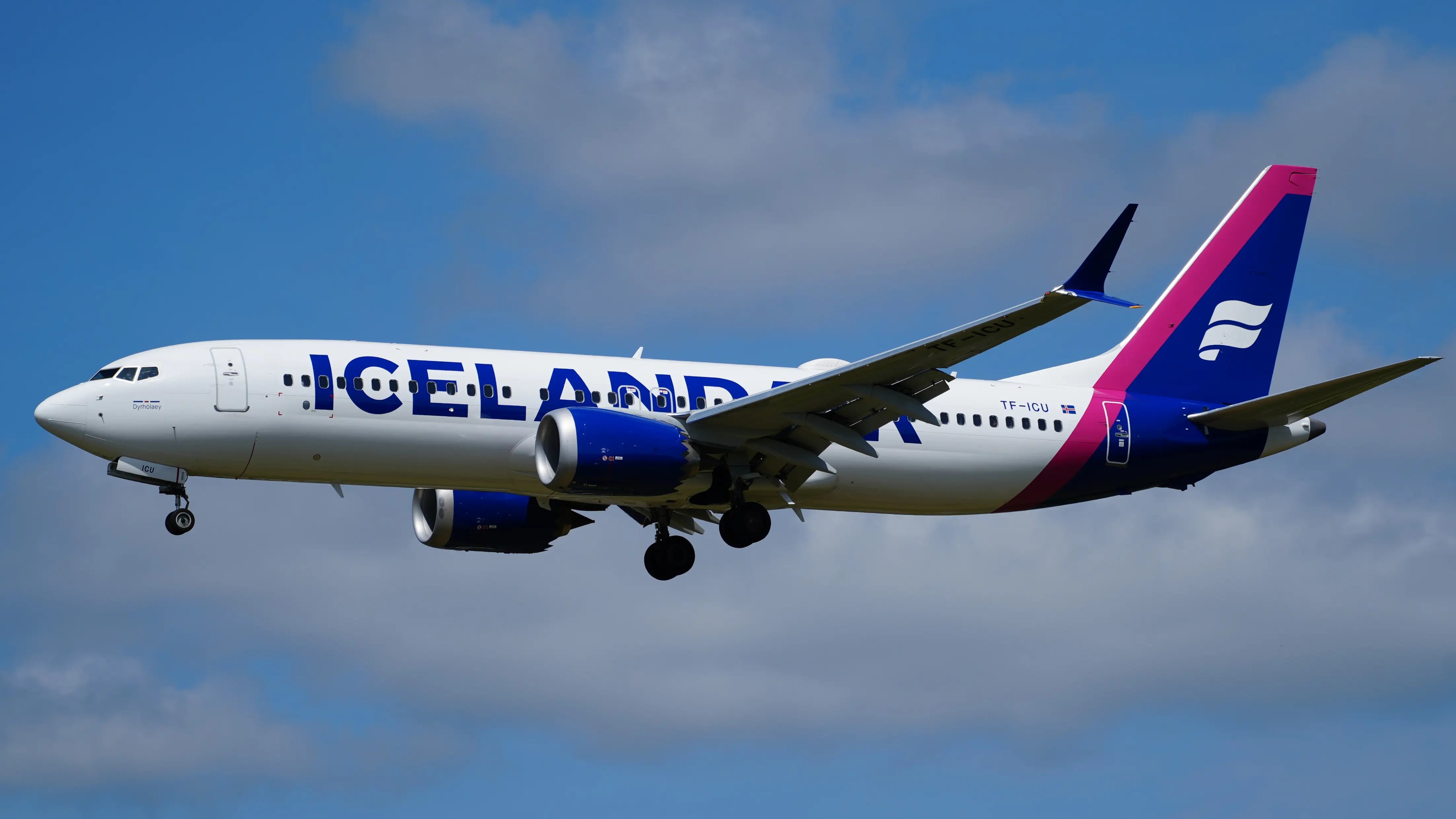
Icelandair operates one of the more eclectic fleets among European mid-size carriers, reflecting the demands of its hub-and-spoke transatlantic strategy. Historically the airline was known as a long-time Boeing 757 stronghold, with the type ideally suited to Keflavík's transatlantic route lengths. As the global 757 fleet ages out, Icelandair has launched a major fleet renewal program centred on two pillars: the Boeing 737 MAX family for short and medium-haul work, and the Airbus A321LR/XLR for the next generation of transatlantic flying. By 2030, the airline plans to operate an exclusively narrowbody fleet, retiring its remaining Boeing 767 widebodies by the end of 2029.
The 2025 fleet stands at approximately 47 aircraft, including freighters operated by Icelandair Cargo and Dash 8 turboprops on domestic Icelandic services. The first four Airbus A321LR aircraft were delivered in December 2024, marking Icelandair's transition to Airbus on the long-haul side. A further 13 A321XLRs are on order, with deliveries scheduled to begin in 2029. The XLR's range will enable Icelandair to maintain or expand its westernmost U.S. routes (Seattle, Denver, Vancouver, Portland) without depending on widebody capacity.
| Aircraft Type | Role | In Service | Routes / Notes |
|---|---|---|---|
| Boeing 737 MAX 8 | Narrowbody | ~17 | Primary European workhorse. Backbone of short/medium-haul fleet. |
| Boeing 737 MAX 9 | Narrowbody | ~4 | Added to fleet in 2025. Higher capacity for peak summer European routes. |
| Boeing 757-200 | Narrowbody / LR | ~10 | Long-time transatlantic workhorse. Being phased out as A321LR/XLR arrive. |
| Boeing 767-300ER | Widebody | ~5 | Long-haul / high-capacity. Full retirement by end of 2029. |
| Boeing 767-300ERF | Freighter | ~2 | Operated by Icelandair Cargo. Worldwide cargo network. |
| Airbus A321LR | Narrowbody / LR | 4 | Delivered December 2024. Long-range transatlantic narrowbody. |
| Airbus A321XLR | Narrowbody / XLR | 0 (13 ordered) | First deliveries from 2029. Replaces remaining 757/767 capacity. |
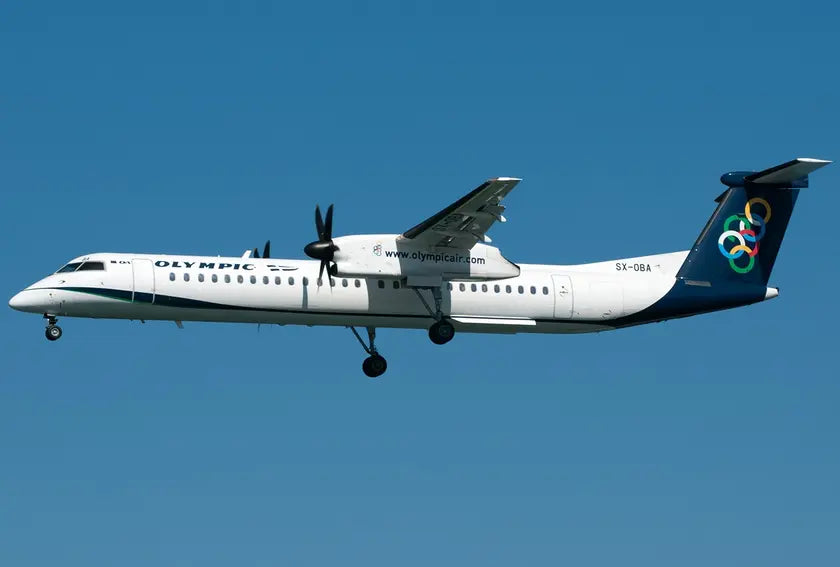
| De Havilland Dash 8 Q400 | Regional turboprop | ~3 | Domestic Icelandic routes (Akureyri, Egilsstaðir, Ísafjörður). |
| De Havilland Dash 8 Q200 | Regional turboprop | ~3 | Smaller regional airfields and feeder routes within Iceland. |
Fleet figures are approximate and reflect publicly available data through late 2025. Numbers shift continuously as deliveries arrive and older airframes are withdrawn.
Icelandair covers the full cost of type rating for pilots recruited through its official selection process. New First Officers are typically assigned to the Boeing 737 MAX, which is the airline's growing core fleet. Transition to the 757 has been wound down as those aircraft retire, and the new Airbus A321LR represents the modern long-haul progression path. Fleet movements are decided by seniority, internal bids, and operational need, not by candidate preference. Cargo positions on the 767-300ERF are filled separately within the Icelandair Cargo subsidiary.
For pilots, the most strategically valuable element of this fleet plan is the Airbus A320 family transition. With 17 A321XLRs (LR plus XLR) entering service over the next several years, Icelandair will need a meaningful share of its pilot population to be A320 family rated. Pilots starting in the late 2020s can reasonably expect their long-term career to include A320 family flying, with many also having held a Boeing 737 type rating earlier on. This dual-manufacturer experience is unusual at small European carriers and can be useful if a pilot later moves to a different operator.
Pilot Salary & Compensation Breakdown
Icelandair pilot compensation is regulated by the collective agreement (kjarasamningur) negotiated between the airline and the Félag íslenskra atvinnuflugmanna (FÍA), the Icelandic Airline Pilots' Association. FÍA represents virtually 100% of Icelandair's pilot workforce, which makes the collective agreement the single most important document governing pay. Unlike many European carriers, Icelandair does not publish its salary scales publicly, and FÍA tends to keep contractual figures confidential among members. The figures below are estimates compiled from public salary databases (Glassdoor, ERI, PilotJobsNetwork), pilot reports, and Icelandic labour market data.
Compensation at Icelandair has several layers: a monthly base salary in Icelandic krónur (ISK), per-flight-hour pay or block-hour supplements, per diems for layovers, allowances for night and weekend flying, and a profit-sharing component tied to Icelandair Group results. Iceland's high cost of living, combined with relatively high income tax rates (a stepped system reaching around 46% at the highest band), means that gross salary figures look generous on paper but take-home pay is more modest than the headline number suggests. For comparison context, see the WageIndicator international salary tool.
First Officer (FO) Estimated Pay Scale
| Seniority | Monthly Base (ISK) | Annual Gross (est.) | EUR Equivalent |
|---|---|---|---|
| Year 1 (entry) | ~700,000 - 800,000 | ~ISK 9-11M | ~€60,000 - €74,000 |
| Year 3 - 5 | ~870,000 - 950,000 | ~ISK 11-13M | ~€74,000 - €87,000 |
| Year 7 - 10 | ~1,000,000 - 1,100,000 | ~ISK 13-15M | ~€87,000 - €100,000 |
| Senior FO (15+ yrs) | ~1,150,000 - 1,250,000 | ~ISK 15-17M | ~€100,000 - €113,000 |
Annual gross estimates include base salary plus typical allowances and per diems. Actual figures vary year to year based on collective agreement adjustments and flight hours flown. Icelandic income tax and social charges reduce take-home pay significantly.
Captain (CDB) Estimated Pay Scale
| Seniority | Monthly Base (ISK) | Annual Gross (est.) | EUR Equivalent |
|---|---|---|---|
| Entry Captain (737 MAX) | ~1,200,000 - 1,300,000 | ~ISK 16-18M | ~€107,000 - €120,000 |
| Captain, 5 yrs (757/A321LR) | ~1,350,000 - 1,450,000 | ~ISK 18-20M | ~€120,000 - €135,000 |
| Senior Captain (767 / 20+ yrs) | ~1,470,000 - 1,600,000 | ~ISK 21-24M | ~€140,000 - €160,000 |
Senior 767 widebody Captains can reach roughly USD 190,000 per year (€175,000) according to public salary databases. These figures will be partly absorbed by upcoming 767 retirements as the fleet shifts toward narrowbody-only operations.
Icelandair does not publish pilot salary tables, and FÍA collective agreements are not in the public domain. The estimates above are compiled from publicly accessible sources including Glassdoor (anonymous Icelandair Captain submissions in the USD 190,000 range), PilotJobsNetwork (referenced ISK monthly figures by year of service), the ERI Economic Research Institute Iceland salary data, and Statistics Iceland labour market data for transport sector pay. Every figure should be treated as indicative. Actual compensation depends on the prevailing FÍA collective agreement, individual seniority step, fleet, monthly block hours, ISK exchange rates, and per-diem accruals. Always verify with FÍA directly during recruitment.
Beyond base pay, two factors substantially shape the real economic picture for an Icelandair pilot. First, the profit-sharing element tied to Icelandair Group results: the airline reported a record 2025 in passenger volumes and EBIT, which historically has translated into bonus payments to staff under collectively agreed mechanisms. Second, the per diem system for layovers, which provides tax-favoured allowances for time spent away from base. For pilots operating extended West Coast U.S. rotations with multiple overnight stays per month, per diem income can add a meaningful supplement to base pay.
Pilot salaries are paid in Icelandic krónur, and the krona has historically been a volatile currency. A pilot whose financial life is denominated in EUR or USD (for example, paying off training loans abroad or supporting family in another country) should factor in this exchange-rate risk. Salaries that look strong in EUR terms one year may look less competitive after a krona depreciation cycle. The Central Bank of Iceland (Seðlabanki Íslands) publishes daily reference rates.
Roster Pattern & Quality of Life
Pilot rostering at Icelandair operates under a combination of EASA Flight Time Limitations, the FÍA collective agreement, and Icelandic labour law, which provides a statutory minimum of 24 paid vacation days per year. In practice, Icelandair pilots typically receive significantly more time off than the legal minimum, with the collective agreement adding additional rest provisions and recovery time after long-haul rotations. Days off per month vary by fleet and roster type, but broadly fall in the range of 11 to 14 days off per month on average across a year, with widebody and long-range narrowbody pilots typically getting more clustered blocks of time off thanks to longer trips.
📅 Sample Month, 757/A321LR First Officer (KEF base)
Two structural features of Icelandair's network shape the roster experience differently from a typical European short-haul carrier. First, the transatlantic hub-and-spoke model means most rotations are 2 to 4 day pairings rather than single-day turnarounds. A West Coast U.S. trip such as Keflavík to Seattle or Denver almost always involves an overnight layover at the destination, sometimes 24 to 48 hours, before the eastbound return leg. Second, the strong seasonality of Icelandic aviation creates very different rosters between peak summer (June to August) and winter low season. Summer rosters are flight-intensive with high European frequencies; winter rosters tilt toward longer transatlantic patterns and fewer total duty days.
For long-haul flying on the 767 and increasingly the A321LR, augmented crews (three pilots) are used on the longest sectors such as Keflavík to Seattle, Vancouver, or Denver, which run between 7 and 8 hours. This allows in-flight rest and a single-day duty period rather than the heavier two-pilot fatigue pattern. As the 767 phases out, the A321LR and XLR take on these augmented operations, though some routes will require new commercial scheduling decisions to manage flight time limits.
All Icelandair pilots are based at Keflavík (KEF). There is no base-bidding system, and there are no secondary crew bases at any other airport. Most pilots live in the Reykjavík metropolitan area (Reykjavík, Garðabær, Hafnarfjörður, Mosfellsbær, Kópavogur) and commute to Keflavík by car, a 45 to 55 minute drive depending on weather. Some pilots live in the Reykjanes peninsula closer to KEF for shorter commutes. Iceland's high cost of living is real: Reykjavík consistently ranks among Europe's most expensive cities for housing and groceries. On the upside, the country offers excellent education, healthcare, low crime, and unmatched access to nature.
One quality-of-life factor distinct to Icelandair is the weather and operational disruption environment. North Atlantic operations from Keflavík mean dealing with strong crosswinds, volcanic ash events, severe winter weather, and significant ATC complexity over the North Atlantic Track structure. Pilots accumulate a great deal of operational experience quickly, but the workload during winter operations can be heavier than at airlines based in milder climates. Icelandair maintains a strong safety culture and has an excellent long-term safety record, supported by an active safety management system that has been a sector reference point.
Benefits, Travel Perks & Retirement
Icelandair's benefits package combines mandatory Icelandic social provisions, which are generous by global standards, with airline-specific perks negotiated through the FÍA collective agreement. Iceland's labour and social model resembles its Nordic neighbours: a comprehensive welfare state funded by relatively high taxes, providing universal healthcare, generous parental leave, and a robust public pension system. On top of that statutory baseline, Icelandair adds the standard airline benefits package of staff travel, layover allowances, loss-of-licence cover, and profit sharing.
Iceland's pension system rests on three pillars: a basic state pension funded through taxes, a mandatory occupational pension paid into a Lífeyrissjóður (pension fund), and voluntary additional savings. Icelandair pilots, like all Icelandic workers, contribute to a sector pension fund, with combined contributions of around 15.5% (4% employee, 11.5% employer) of gross salary as a baseline, plus a voluntary 4% / 2% supplementary tier where the employer matches half of the employee contribution. This system delivers a meaningful retirement income stream and is fully portable if a pilot later moves to another Icelandic employer. Detailed information is available through the Icelandic Pension Funds Association.
The oneworld alliance partnership meaningfully extends the staff travel value at Icelandair. Pilots can use ID90 / ID75 standby pricing on partner carriers including British Airways, Iberia, Finnair, Qatar Airways, American Airlines, Cathay Pacific, Qantas, and Japan Airlines. While availability and pricing vary by carrier, the global oneworld footprint provides meaningful travel reach, particularly to regions Icelandair does not serve directly such as Asia, the Middle East, and Africa. For a small carrier whose own network is concentrated on the North Atlantic axis, this is a tangible benefit.
Loss-of-licence insurance is a critical and underappreciated benefit at Icelandair, where the FÍA collective agreement provides for a substantial lump-sum payment if a pilot permanently loses their Class 1 medical certificate before reaching pension age. The exact amounts and qualifying conditions are confidential to FÍA members, but the cover is generally considered competitive within the European mid-size carrier benchmark. New recruits should ask FÍA for detail on this during onboarding, as the policy is one of the most material insurance pieces in any pilot's career. Useful additional context is available from the European Cockpit Association.
Career Progression & Seniority
Career progression at Icelandair is strictly seniority-based, as is standard in most unionised European airlines. There is a single seniority list covering all Icelandair pilots, ordered by date of hire. This list governs upgrade priority to Captain, fleet transition rights, base preference (where any limited choice exists), and roster bidding. Icelandair does not accept direct-entry Captains in normal hiring cycles. All Captains progress from within, through a command upgrade process that combines seniority eligibility with a command assessment.
One distinctive advantage at Icelandair, compared to larger carriers like Air France or Lufthansa, is the relatively fast upgrade path to Captain. Public reports and pilot community estimates indicate command upgrade in roughly 5 to 8 years from initial hire, though this varies significantly with retirement waves, fleet expansion, and economic cycles. The 2022 to 2025 period has been growth-oriented, with the airline recovering strongly from the COVID downturn, retiring older pilots, and expanding fleet capacity through the A321LR program. This combination has accelerated upgrade timelines for pilots in the middle of the seniority list.
| Career Milestone | Typical Timeline | Notes |
|---|---|---|
| Cadet training (when scheme is active) | ~18-24 months | Funded via partner academy. Frozen ATPL on completion. |
| Join as F/O (737 MAX entry) | Day 1 post-type rating | Most common entry fleet. Type rating funded by Icelandair. |
| Long-haul / A321LR transition | 3-6 years | Bid-based, seniority-driven. Transition to extended-range narrowbody. |
| Captain upgrade (737 MAX) | ~5-8 years | Command course + line check. Subject to fleet need and seniority. |
| Captain on widebody (767) | 10-15 years | Phasing out. Skill set transitioning to A321XLR by 2029. |
| Training Captain / TRE / TRI | Variable | Separate selection. Additional instructor pay supplement. |
Timelines are estimates based on pilot community reports and historical hiring waves. Actual progression is highly dependent on fleet renewal pace, retirement profile, and macroeconomic conditions.
Icelandair has reported a record 2025 in passenger volumes, with more than 5 million passengers carried for the first time in the airline's history, while EBIT improved year-on-year despite remaining short of company guidance. The pilot recruitment outlook is positive, driven by 737 MAX growth, A321LR introduction, and an aging pilot population. The phase-out of the 767 widebody fleet by 2029 will reshape the senior end of the seniority list. Pilots currently mid-career on the 767 will transition to the A321XLR or A321LR, while younger Captains may find faster upgrade timelines as a bulge of senior 767 commanders retires.
Career predictability at Icelandair is generally high but bounded. The airline is small enough that an individual pilot can have a meaningful relationship with management and the union, and the operation is unlikely to be transferred to another base or a low-cost subsidiary in the way that has happened at larger European groups. On the other hand, Icelandair has historically been more sensitive to economic cycles than carriers with a domestic mass market. The 2008 financial crisis and the 2019 to 2020 WOW Air collapse and pandemic both produced turbulent periods. Pilots considering a long-term career here should weight that cyclical sensitivity against the otherwise strong career fundamentals.
Recruitment Process & Requirements
Icelandair recruits pilots through two main pathways: a direct-entry First Officer pathway for pilots who already hold an EASA ATPL or frozen ATPL with relevant experience, and a periodically open cadet pilot programme for candidates with little or no commercial flight experience. Recruitment is announced on the airline's careers portal and through FÍA channels, typically in waves rather than continuous rolling intake. Both pathways lead to the same seniority list and equivalent career progression once a pilot is on line.
Direct-Entry First Officer, Core Requirements
Cadet Programme, Core Requirements
Selection Stages
Online Application & Documents
Applicants submit CV, licences, logbook summary, medical certificate, references, and language certificates via the Icelandair careers portal. The airline reviews documents to confirm baseline eligibility before inviting candidates further.
Psychometric & Aptitude Testing
Computer-based testing typically covering numerical and verbal reasoning, spatial awareness, multi-tasking, basic instrument scan, and English proficiency. Some intakes use third-party assessment providers like cut-e or DLR. Candidates can expect a half day to a full day of testing.
Personality Inventory & Interview
Held at Icelandair facilities or partner premises in the Reykjavík area. Includes a personality inventory and a structured competency-based interview focusing on CRM, decision-making, leadership, motivation for the airline, and cultural fit. The interview is conducted in English, with some Icelandic elements for cadet candidates.
Simulator Assessment
For experienced direct-entry candidates: a simulator session typically on a 737 NG/MAX or generic FFS, evaluating raw flying skills, instrument handling, scan technique, and crew interaction. Candidates without recent type experience are usually given familiarisation briefings before the session.
Medical, References & Contract
Successful candidates complete a Class 1 medical (if not already held), final reference checks, and contract signature. Type rating training begins shortly thereafter, funded by Icelandair, leading to line training at Keflavík.
Watch the Icelandair careers page closely as openings are announced in waves rather than continuously. The airline has historically run dedicated cadet campaigns in partnership with academies such as L3Harris (UK), but the specific structure varies between intakes. Keilir Aviation Academy and Flugskóli Íslands are well-known training routes inside Iceland that produce a steady stream of candidates with profiles attractive to Icelandair. Strong candidates typically combine technical excellence with demonstrable interest in Icelandic culture and language. Although Icelandic is not strictly required for direct-entry line operations, candidates who have invested in learning the language signal long-term commitment to the country.
Top 5 Layover Destinations
Layovers are one of the most distinctive professional perks of flying for a transatlantic carrier, and Icelandair's geography makes its layover map unusually varied for an airline of its size. The hub at Keflavík sits roughly equidistant from East Coast U.S. cities and Western European capitals, but a meaningful chunk of the network involves longer 7 to 8 hour westbound sectors to the U.S. West Coast and central states. Those sectors typically include 24 to 48 hour overnight layovers at the destination, while shorter European routes are usually flown as same-day turnarounds. Hotels are contracted by the airline, transport is provided, and per-diem allowances apply for the duration of the layover. The five destinations below are among the most consistently rotated long-haul layovers in the Icelandair pilot community.
Crew hotels are contracted by Icelandair, generally 4-star international standard, and pilots cannot select or book independently. Ground transport between hotel and airport is provided. Per-diem allowances are paid based on destination cost-of-living and time spent away from base. Under EASA Flight Time Limitations, pilots must have a minimum 10-hour rest opportunity before the next duty period, with 8 hours of uninterrupted sleep available. Long-haul sectors above 7 hours typically use augmented crews of 3 pilots, with controlled in-flight rest periods. Pilots bid for rotations through a seniority-influenced roster system, so the most desirable layovers (Vancouver, Seattle, JFK summer) tend to go to more senior bidders.
European layovers at Icelandair are less common, since most European sectors (Paris, Amsterdam, London, Copenhagen, Frankfurt) sit in the 3-hour range and are regularly flown as same-day turnarounds. Some longer European routes such as Madrid, Barcelona, or Helsinki may include overnight stays during certain seasons. Reykjavík is the only base, and most days off are spent in Iceland, which for many pilots is part of the appeal: the country offers extensive outdoor recreation, geothermal pools, hiking, fishing, glaciers, and arguably the most spectacular natural environment of any pilot base in Europe.
How Icelandair Compares: Airline Radar Chart
How does Icelandair stack up against its closest Nordic peers? The two most relevant comparisons are Finnair, a fellow oneworld carrier and Helsinki-based flag carrier with a similar small-country, hub-funnel positioning, and SAS Scandinavian Airlines, the multi-hub Star Alliance carrier serving Sweden, Norway, and Denmark. The radar below uses the same six metrics from the scorecard and reflects editorial estimates based on publicly available data and pilot community feedback.
Key Takeaways from the Comparison
Career progression is fastest at Icelandair. The combination of a small pilot population (around 400 to 500 cockpit crew), an aging senior cohort, and active fleet renewal produces upgrade timelines in the 5 to 8 year range, which is materially faster than most European peers. Finnair sits in a similar zone but with a larger pilot population and slower upgrade cadence (typically 8 to 12 years). SAS, after years of restructuring including its 2022 Chapter 11 filing, has more uncertain upgrade timelines and has historically reset seniority structures during reorganisation.
Salary positioning is mid-pack within the Nordic peer group. Icelandair pilot salaries, when expressed in EUR, are broadly comparable to Finnair and SAS for equivalent seniority, with Captain ranges roughly USD 175,000 to USD 200,000 at the senior end. Finnair's published Captain ranges reach similar levels. SAS Captain salaries can run up to DKK 165,000 per month at the very top end, comparable in EUR terms. The Icelandic income tax burden tends to be the heaviest factor reducing take-home pay versus the gross figure.
Work-life balance favours Icelandair. Iceland's labour law, generous parental leave, and the relatively small operation make for a manageable lifestyle. The single base requirement is a constraint, but Reykjavík offers strong family infrastructure, education, and healthcare. Finnair pilots also enjoy strong Nordic protections; SAS, with its more turbulent recent history, has seen more lifestyle pressure on pilots through restructuring waves.
Fleet diversity is highest at Finnair. Finnair operates roughly 55 aircraft across A350, A330, A320 family, and Embraer regional jets, with a broader Asian network providing more long-haul layover variety. Icelandair's fleet is narrower in type but covers turboprop, narrowbody, and (until 2029) widebody, while SAS has consolidated heavily on A320neo / A321LR for narrowbody and is rebuilding its long-haul presence.
Job security is uneven across the three. Icelandair has weathered the 2008 crisis, the 2019 to 2020 WOW Air collapse, and the COVID downturn, returning to growth. Finnair is a state-influenced, profitable carrier but exposed to its lost Russian overflight rights, which have weighed on its Asian network economics. SAS underwent Chapter 11 restructuring in 2022 and remains in a transition phase.
Scores are editorial estimates based on research into publicly available salary data, pilot testimonials, union publications, airline press releases, and industry benchmarks (PilotJobsNetwork, Glassdoor, the European Cockpit Association). They represent a general assessment for an experienced pilot considering a long-term career. Individual experience varies based on seniority, fleet, and personal priorities. Scores will be revised as dedicated guides for Finnair and SAS are updated.
Union & Industrial Relations
The single most important institution in any Icelandair pilot's career, after the airline itself, is the Félag íslenskra atvinnuflugmanna (FÍA), the Icelandic Airline Pilots' Association. Founded in 1947, FÍA is the only pilot union representing Icelandair pilots and represents virtually 100% of the airline's cockpit crew. It also represents pilots at other Icelandic operators including Air Atlanta Icelandic, Bluebird Cargo, Norlandair, and helicopter operators. FÍA is a member of the European Cockpit Association (ECA) and the International Federation of Air Line Pilots' Associations (IFALPA), giving Icelandic pilots a voice in EU and global aviation policy.
FÍA Structure & Governance
FÍA's structure is lean and direct, reflecting Iceland's small pilot population. Members elect the board annually, and major decisions including strike action are taken by ballot of the whole membership rather than delegated to representatives. Communication between members and the union is correspondingly tight, and the union has a reputation for being well organised, technically competent, and willing to take industrial action when necessary.
How Negotiations Work
The Icelandair pilot collective agreement (kjarasamningur) is the master document governing pay, working conditions, scheduling, training, leave, allowances, loss-of-licence cover, and disciplinary procedures. The agreement is renegotiated periodically, typically every 3 to 5 years, and is binding on both Icelandair and FÍA members. Beyond the kjarasamningur, FÍA negotiates supplementary agreements covering specific operational issues (new fleet introductions, cargo operations, training agreements). When disputes cannot be resolved through direct negotiation, Icelandic labour law provides for state mediation through the Office of the State Mediator (Ríkissáttasemjari), which has played a meaningful role in recent Icelandair disputes.
Recent Strike History & Key Disputes
Joining Icelandair effectively means joining FÍA. Although membership is technically optional under Icelandic law, the practical reality is that virtually all Icelandair pilots are FÍA members, the collective agreement governs nearly every aspect of working conditions, and union solidarity in disputes is high. New recruits should expect to engage with their FÍA shop steward early in their career, attend general assemblies, and stay informed on the negotiation cycle. The union's track record is broadly positive: it negotiates aggressively on pay, has a strong technical voice on safety and FTL, and has successfully restored pay after concession periods. The potential downside is that Icelandair pilot careers are more directly exposed to industrial action than at carriers with multiple unions splitting representation.
Verdict: Who Is Icelandair For?
🎯 Our Take
Icelandair is a distinctive pilot employer that punches above its weight thanks to a unique transatlantic geography, an unusually varied fleet for a carrier of its size, and the strong worker protections of the Icelandic labour model. The combination of fast upgrade timelines (5 to 8 years to Captain), exposure to both Boeing and Airbus narrowbody types over a career, varied transatlantic flying, oneworld alliance membership, and Iceland's outstanding quality-of-life environment make it a serious option for any EU/EEA pilot looking for stability with adventure rather than corporate scale.
The trade-offs are real and should be considered honestly. Salaries are competitive within the Nordic peer group but lower in absolute EUR terms than Gulf carriers, US majors, or even some Western European legacies, and Icelandic income tax rates significantly compress take-home pay. The single base at Keflavík makes commuting from outside Iceland practically very difficult, and Reykjavík's high cost of living absorbs much of the gross compensation advantage. The airline's fortunes are tied to North Atlantic transit demand, which is cyclical and exposed to economic shocks, and the FÍA collective agreement framework, while strong, means pilots are directly involved in periodic industrial action.
For pilots who already speak Icelandic, or who are willing to commit to learning it and to building a life in Iceland, the airline represents one of Europe's most distinctive long-term career destinations. For pilots who need to commute from abroad or who prioritise headline salary above all other factors, Icelandair will struggle to match larger competitors.
1 Do I need to speak Icelandic to fly for Icelandair?
For direct-entry First Officer positions, fluent Icelandic is not strictly required. Cockpit operations are conducted in English, in line with international aviation standards, and the airline's working environment is largely English-friendly. However, fluent Icelandic is mandatory for the cadet pilot programme and is a meaningful advantage even for direct-entry candidates: it signals long-term commitment to Iceland, helps in non-flying interactions with company staff and union representatives, and integrates pilots more fully into the local community. Candidates without Icelandic should expect to invest in learning the language over time.
2 Does Icelandair pay for the type rating?
Yes. For pilots recruited through Icelandair's official selection process, the airline funds the type rating training. New First Officers are typically assigned to the Boeing 737 MAX, with type rating delivered through Icelandair's training partners. Cadet programme candidates also receive funded ab-initio training and type rating to the assigned fleet. Specific terms (bond duration, repayment if a pilot leaves early) are part of the contract and vary between intakes.
3 How long does it take to upgrade to Captain at Icelandair?
Captain upgrade at Icelandair is currently estimated at roughly 5 to 8 years, depending on the pace of fleet expansion, retirement waves, and individual seniority. This is significantly faster than at most large European legacy carriers (15 to 20 years at Air France or Lufthansa). Upgrade is strictly seniority-based and subject to a command course and check. Icelandair does not accept direct-entry Captains, so all Captains progress from within. The current 2025 to 2030 fleet renewal cycle is expected to support continued reasonable upgrade timelines.
4 Can non-EU citizens apply?
In practice, Icelandair recruits pilots who hold the right to live and work in the EU/EEA. Iceland is part of the EEA, so EU/EEA and Swiss citizens have unrestricted work rights. Non-EU/EEA citizens face significant work permit barriers and are rarely hired into pilot positions. Holders of EASA licences from outside Iceland can convert their licences via the Icelandic Transport Authority (ICETRA / Samgöngustofa), but the work permit constraint remains the binding issue for non-EU candidates.
5 What is the difference between Icelandair and Air Atlanta Icelandic?
Icelandair is the flag carrier of Iceland, operating scheduled passenger and cargo services from Keflavík under the FI/ICE call sign. Air Atlanta Icelandic is a separate Icelandic operator that runs an ACMI (aircraft, crew, maintenance, insurance) wet-lease business serving other airlines globally with widebody aircraft (747, 767, 777). The two are unrelated companies with different business models. Air Atlanta Icelandic typically requires significantly more flight hours (1,500+ TT) and offers a different roster and lifestyle profile centred on long-haul wet-lease operations.
6 Is Icelandair a good first airline job?
For the right candidate, yes. The cadet programme (when active) is an excellent ab-initio entry path: training is funded, the airline is small enough to provide good operational variety (737 MAX short-haul plus exposure to longer-range narrowbody and historically widebody flying), and the upgrade path is relatively fast. The main caveats are that the cadet programme requires fluent Icelandic and is intermittently rather than continuously open. For direct-entry First Officers with EASA ATPL/frozen ATPL, Icelandair is a strong first major airline job, particularly if the candidate is willing to relocate to Iceland and commit to the country.
7 What happens to widebody pilots when the 767 retires?
Icelandair has announced that its Boeing 767 widebody fleet will be retired by the end of 2029, with the airline transitioning to a narrowbody-only operation built around the 737 MAX, A321LR, and A321XLR. Existing 767 pilots will transition to the A321LR or A321XLR through company-funded type rating, retaining their seniority. The arrival of 13 A321XLRs starting in 2029 is intended to absorb current 767 long-haul capacity. Pilots considering Icelandair should plan their career on the assumption that the long-term fleet will be all-narrowbody.
8 How does Icelandair pilot pay compare to other Nordic airlines?
Icelandair pilot salaries are broadly competitive with Finnair and SAS in EUR terms, particularly at senior Captain level (USD 175,000 to USD 200,000 estimated annually). Where Icelandair stands out is on career progression speed: faster Captain upgrades (5 to 8 years) than Finnair (8 to 12 years) or SAS. Where it falls behind is on fleet diversity for long-haul flying, since Finnair maintains a substantial widebody presence (A350, A330) while Icelandair is going narrowbody-only by 2030. The Icelandic income tax rate is heavier than Sweden or Finland for high earners, partially offsetting the gross salary parity.
Official Links & Resources
Before applying or making any career decisions, always verify information directly with official sources. These are the key websites and organisations relevant to an Icelandair pilot career:
Bookmark the Icelandair Group Investor Relations page and the FÍA news section. Together they are the fastest way to track the airline's recruitment outlook (fleet orders, capacity guidance, strategic announcements) and the negotiation cycle (collective agreement timing, news on disputes, technical positions). Many Icelandic pilot candidates also follow the Icelandair LinkedIn page, where pilot job postings sometimes appear before broader campaigns are launched.