
German Airways Overview & Company Profile
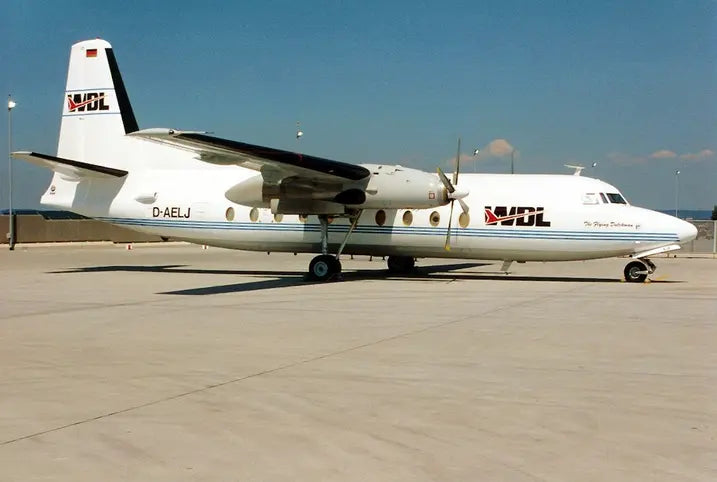
German Airways (IATA code ZQ, ICAO code GER) is a German regional and ACMI carrier based at Cologne/Bonn Airport. The airline is the rebranded successor to WDL Aviation, a long-established Cologne operator that became known for flying British Aerospace 146 and Avro RJ regional jets. WDL Aviation was taken over by the logistics group Zeitfracht, and on 17 December 2020 the airline formally adopted the German Airways name and the GER ICAO designator. For a pilot, the single most important thing to understand about this carrier is its business model: German Airways does not primarily sell its own tickets. It supplies aircraft and crews to other airlines under ACMI and wet-lease contracts, which shapes almost everything about how its pilots work, where they are based, and how secure their jobs feel.
ACMI stands for Aircraft, Crew, Maintenance and Insurance. In practice this means German Airways pilots fly aircraft painted (or partly branded) for a client carrier, operate under that client's flight numbers, and follow the client's commercial schedule, while German Airways holds the Air Operator Certificate and employs the crew. The airline has provided this capacity to partners including KLM Cityhopper, LOT Polish Airlines (operating an Embraer E190 out of Tallinn) and Italy's ITA Airways (a wet-lease from Milan Linate that began in March 2022 serving London City, Luxembourg and Geneva). Because these contracts are time-limited and seasonal, the mix of partners changes from year to year. The carrier is owned by the privately held Zeitfracht Group, which gives it financial backing but also folds it into a broader logistics business rather than a passenger-airline group. A useful starting point for prospective applicants is the company's own About German Airways page, which sets out its positioning as a flexible European capacity provider.
German Airways is a small, privately held ACMI operator, not a publicly listed flag carrier. It does not publish pilot pay scales, exact headcounts, or a collective agreement. Where this guide gives numbers, they are either taken directly from German Airways job advertisements and company announcements, or clearly labelled as industry benchmarks from comparable German carriers. Throughout the article, areas where reliable carrier-specific data simply does not exist are flagged explicitly rather than filled with guesswork.
Fleet Composition & Type Ratings
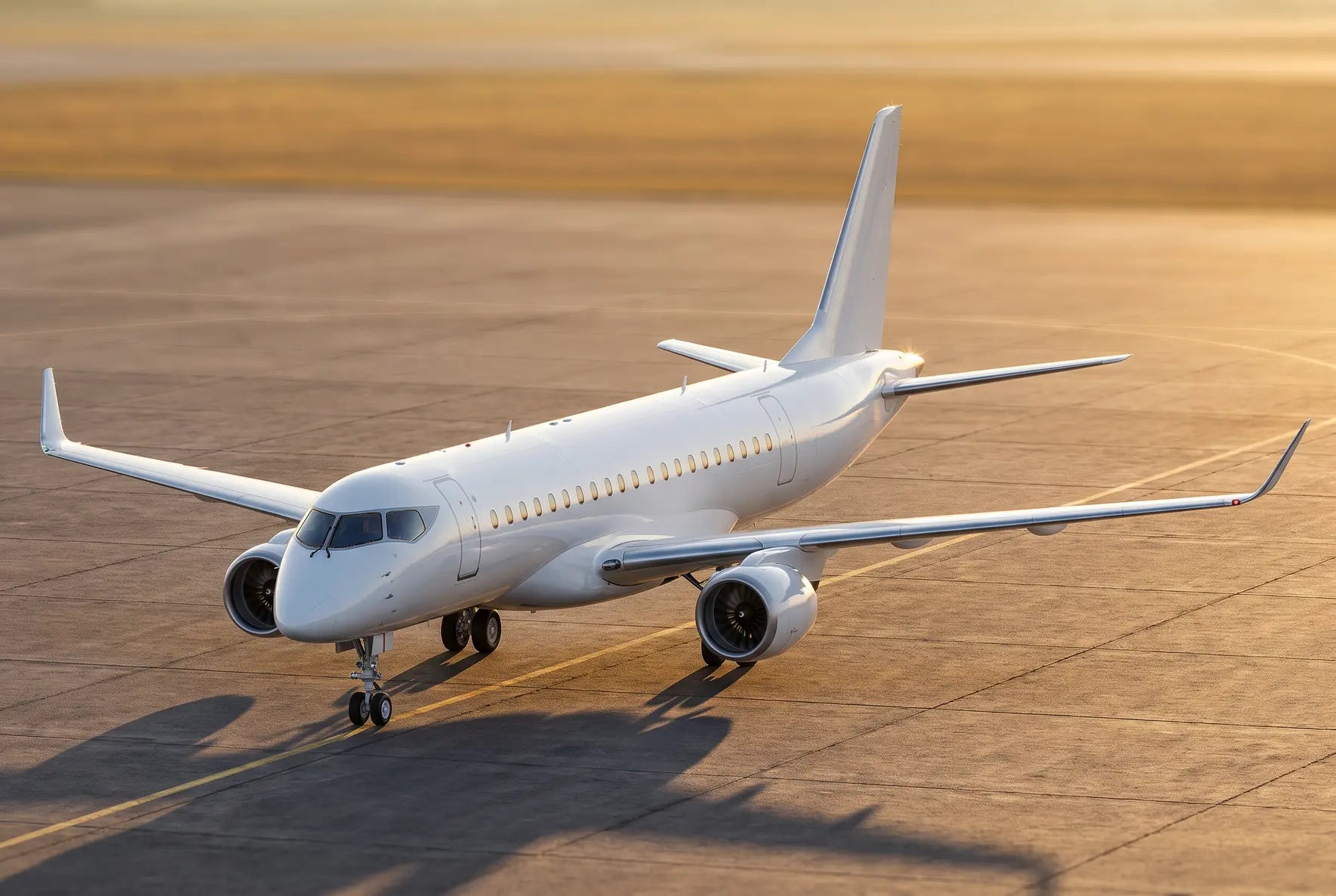
German Airways flies a single-type jet operation built around the Embraer E190, a roughly 100-seat regional jet that is one of the most widely operated aircraft of its size in Europe. The airline standardised on the E190 during its transition out of the older four-engine BAe 146 and Avro RJ85 fleet that defined the WDL Aviation era. Between January and April 2020 it added several Embraer E190LR (long-range) aircraft, and it has continued to grow the fleet since, including an additional E190 leased on a three-year term that entered service in early 2026. Public fleet trackers place the current jet fleet at roughly eight to nine E190s. There is no public evidence that German Airways operates the larger Embraer E195, nor any Boeing 737s of its own; where it flies alongside partner fleets that include other types, the German Airways aircraft themselves are E190s.
Alongside the jets, the Zeitfracht ownership brought a diversification into business aviation, with a Pilatus PC-12 single-engine turboprop introduced around 2021 for scheduled and charter work and a second-generation PC-12 NGX added shortly after. This remains a niche, business-aviation strand of the operation rather than the core of pilot recruitment, and current public fleet data centres almost entirely on the E190. For the overwhelming majority of pilots, German Airways is an Embraer E-Jet job.
| Aircraft Type | Role | Approx. In Service | Notes |
|---|---|---|---|
| Embraer E190 / E190LR | Regional jet | ~8–9 | Core ACMI/wet-lease fleet. ~100 seats. Flown for KLM Cityhopper, LOT, ITA and others. |
| Pilatus PC-12 / PC-12 NGX | Business turboprop | 1–2 | Niche scheduled/charter and corporate work. Separate type rating. Not the main pilot pathway. |
| BAe 146 / Avro RJ85 | Regional jet (historic) | 0 | Legacy WDL Aviation fleet, now retired and replaced by the Embraer E190. |
Fleet figures are approximate, compiled from fleet trackers and company announcements as of early 2026, and shift with ACMI demand, leases and returns. German Airways does not publish a live fleet count.
The relevant rating for almost all cockpit roles is the Embraer E170/E190 type rating. German Airways job advertisements state that the company will fund the type rating for experienced co-pilots and captains who join without it, describing this as an investment in the pilot's future. New cadets coming through the WingsUp programme earn their E190 type rating as part of training. A type rating that a company pays for is normally tied to an employment bond (a minimum service period or pro-rated repayment if you leave early); German Airways does not publish its bond terms, so this is a point to clarify in writing before signing.
Pilot Salary & Compensation
This is the section where honesty matters most. German Airways does not publish pilot pay scales, and no verified, carrier-specific salary table exists in the public domain. The community database PilotJobsNetwork explicitly notes that no detailed pay scale is available for the airline, and German Airways' own recruitment material describes only an "attractive remuneration package tailored to qualifications and experience" without numbers. Anyone quoting precise German Airways salary figures online is almost certainly extrapolating. This guide does the same, but says so openly.
What can be done responsibly is to benchmark. German Airways sits in the German regional and ACMI segment, a tier that pay analyses consistently place below the Lufthansa Group carriers such as Lufthansa CityLine and Eurowings, both of which have salaries set by collective agreements with the pilots' union Vereinigung Cockpit. The table below shows representative market ranges for a German regional Embraer E190 operation. Treat them as a sector benchmark, not as confirmed German Airways figures.
Estimated Market Benchmark — German Regional / ACMI E190 (not official German Airways figures)
| Rank & Stage | Annual Gross (est.) | Basis |
|---|---|---|
| First Officer, entry / low-time | ~€45,000 – €60,000 | German regional FO entry band |
| First Officer, experienced | ~€60,000 – €80,000 | Mid-career regional / ACMI E190 |
| Captain, entry | ~€90,000 – €115,000 | Regional narrowbody / E-Jet command |
| Captain, senior | ~€115,000 – €140,000 | High sector volume, smaller-operator ceiling |
Sector benchmarks derived from German and European regional pilot salary studies for 2025, plus published Vereinigung Cockpit scales at comparable carriers. German Airways is positioned below CityLine and Eurowings; treat these as the likely band, not a quoted scale.
For Context — Published Scales at the Group Comparators
| Carrier | FO Entry (approx.) | Captain Entry (approx.) | Pay set by |
|---|---|---|---|
| Lufthansa CityLine | ~€72,000 – €85,000 | ~€156,000 – €175,000 | VC collective agreement |
| Eurowings (German AOC) | ~€78,000 – €85,000 | ~€126,000 – €140,000 | VC collective agreement |
| German Airways | Not published | Not published | Internal company policy |
Group comparator figures are 2024–2025 estimates based on Vereinigung Cockpit agreements and salary guides. They are shown to frame where a German Airways offer is likely to land, not to imply parity.
No official German Airways pay scale is publicly available. The benchmark ranges above are extrapolated from German regional and ACMI salary studies and from published Vereinigung Cockpit scales at Lufthansa CityLine and Eurowings, combined with the consistent finding that German Airways pays below those group carriers. They are not confirmed German Airways numbers. German gross pay is also reduced significantly by income tax and statutory social contributions, so net take-home is well below the gross figures. Always confirm the exact base salary, allowances (Spesen / per diems), any 13th-month payment, and bond terms directly with German Airways during recruitment, in writing.
Roster Pattern & Quality of Life
Roster quality is where German Airways has clearer, more usable data, and where the picture is reasonably positive for a regional operator. Pilot-reported information compiled by PilotJobsNetwork indicates a minimum of seven days off per month, duty blocks typically arranged in a 5-on / 2-off pattern, shifting toward 6-on / 2-off during the busy summer season, and a generous 37 days of annual leave. That 37-day holiday figure is independently corroborated: German Airways' own captain and co-pilot job advertisements list 37 days of holiday as a benefit, which is one of the few hard, company-confirmed numbers available for this carrier.
The honest counterweight, also from pilot reports, is that the rosters can be tiring. This is characteristic of the ACMI model: utilisation is high because the whole point of a wet-lease provider is to keep aircraft and crews productive for the client, and summer intensification (the 6/2 pattern) lands exactly when leisure demand peaks. Early starts, multi-sector days and frequent night-stops can stack up. The legal guardrails are the EASA Flight Time Limitation (FTL) rules, administered in Germany through the Luftfahrt-Bundesamt, which cap annual flying at around 900 block hours and mandate minimum rest periods between duties.
📅 Sample Month — Embraer E190 First Officer (Representative 5/2–6/2 Pattern)
Illustrative only. Built to reflect the documented 5/2 and summer 6/2 block structure and the stated minimum of seven days off per month. Actual rosters depend on the ACMI contract being flown and your base.
German Airways' home base is Cologne/Bonn, with Berlin also referenced as a crew base in recruitment, and additional operational stations tied to specific ACMI contracts (for example Tallinn for LOT or Milan Linate for ITA). For a pilot, this multi-base, contract-driven structure cuts both ways: Cologne offers a comparatively uncongested airport and reasonable living costs by big-city German standards, but a base can follow the contract, so the station you are hired into may not be permanent. Clarify your assigned base, whether it can change with contracts, and whether positioning is paid, before accepting an offer. Because the operation is short-haul and European, there are no long-haul layovers, which is why this guide includes no layover-destinations section.
Benefits & Social Protection
As a German employer, German Airways operates inside one of Europe's strongest statutory social-protection frameworks, and that floor is a meaningful part of the overall package even though the airline is small. Every directly employed pilot is covered by German statutory health insurance (gesetzliche Krankenversicherung) or qualifying private cover, statutory pension insurance (gesetzliche Rentenversicherung), unemployment insurance, long-term care insurance, and accident cover, all funded jointly by employer and employee contributions. German law also provides robust parental-leave rights with job protection. These protections apply regardless of whether a collective agreement exists, which is significant here because German Airways pilots are not covered by a publicly documented union contract.
On top of the statutory floor, German Airways' own job advertisements and careers material set out several concrete, company-confirmed benefits, while leaving other common pilot benefits undocumented. The list below separates what the airline actually advertises from what remains unclear and should be checked individually.
The benefits German Airways advertises directly (37 days holiday, paid training from day one, company-funded type rating, training accommodation, discounted flights, a corporate benefits portal) are genuinely solid for a regional ACMI carrier. The gaps are equally important to nail down: there is no public detail on a loss-of-licence scheme, an occupational pension (betriebliche Altersvorsorge), per-diem rates, or the exact scope of staff travel. Because there is no collective agreement standardising these items, they are set by company policy and individual contract. Ask for the specifics in writing, and consider arranging independent loss-of-licence cover if the employer does not provide it.
Career Progression & Upgrade
Career progression at German Airways looks quite different from the rigid, decades-long seniority ladders of the big flag carriers. There is no publicly documented seniority list, bidding system or fixed upgrade timeline. In a small airline without a collective agreement, advancement is managed through internal promotion based on experience, performance and operational need, which gives management more discretion than a unionised seniority system would. For pilots, that can mean faster movement for strong performers, but also less transparency about exactly when an upgrade will come.
The headline progression feature is that German Airways explicitly markets an accelerated path to Embraer E190 command. Its recruitment material for experienced co-pilots dangles the prospect of accelerated captain training on the E190, and the airline also hires direct-entry captains externally rather than promoting only from within. The presence of direct-entry captains is a double-edged feature: it can fill command seats that an internal first officer might otherwise have moved into, but it also signals genuine demand for captains and a growing operation. Because the fleet has been expanding (including a leased E190 added in early 2026), the structural conditions for upgrades are reasonably favourable compared with a static carrier.
| Career Stage | Pathway | Notes |
|---|---|---|
| Ab-initio cadet | WingsUp programme | ~24 months to MPL + E190 type rating + line training. Entry with no prior flight experience. |
| First Officer (experienced entry) | Direct hire on E190 | EASA ATPL(A) holders. Type rating funded by the company if not already held. |
| Captain upgrade | Accelerated, performance-based | Marketed as an accelerated route for experienced co-pilots. No fixed published timeline. |
| Direct-entry Captain | External hire | 4,000 hrs total incl. 1,000 hrs PIC on 20t+ aircraft. E170/E190 rating preferred. |
| Business aviation (PC-12) | Niche / separate | Limited turboprop strand. Separate rating, not the main career line. |
The structural risk in a German Airways career is the same thing that creates its opportunities: the ACMI business model. Your flying, base and even job stability are linked not just to the airline's health but to the duration of its wet-lease contracts. If a client carrier downsizes or ends a contract, crews may be reassigned, rebased, or in a downturn reduced. The upside is broad exposure to multiple airlines' procedures and a realistic, fast route into modern jet command. For a career-minded pilot, German Airways often functions best either as an accessible first jet job and command-builder, or as a stable home for those who value the operation, rather than as a guaranteed 30-year seniority career.
Recruitment & Requirements
German Airways recruits along two clearly separated tracks: experienced pilots (direct-entry captains and experienced co-pilots) hired through its careers portal, and ab-initio cadets through the WingsUp programme covered in the next section. The requirements below are taken directly from German Airways' published captain and co-pilot job advertisements, so they are among the most reliable carrier-specific facts in this guide. Applications for cockpit roles are handled through the airline's official careers page, which routes to an external recruitment portal.
Experienced Co-Pilot (First Officer) — Requirements
Direct-Entry Captain — Requirements
How the Selection Works
Online Application
Apply via the German Airways careers page, which links to the company's external recruitment portal. CV, licences, medical, hours breakdown and proof of right to work in the EU are the core documents.
Document & Eligibility Screening
Verification of EASA ATPL(A), Class 1 medical, the 4,000-hour experience threshold (including heavy-aircraft and, for captains, PIC time), and language standards (ICAO English plus German or English at B2/native).
Interview & Assessment
Competency and personality-based interview assessing CRM, leadership and team fit, typically with a simulator or skills assessment for cockpit roles. German Airways emphasises team spirit, responsibility and flexibility.
Offer, Type Rating & Line Training
Successful candidates receive a contract with pay from the first day of training. Pilots without the E170/E190 rating are trained at company cost (normally bonded), with hotel and travel covered during training, followed by line training on revenue flights.
The current direct-entry adverts are aimed at experienced pilots: the 4,000-hour total and 1,000-hour heavy-aircraft threshold are not entry-level numbers, so low-time pilots should look to WingsUp rather than the direct-entry route. Note that earlier German Airways campaigns have at times advertised more relaxed requirements, so exact thresholds vary by hiring round. The language rule is also crucial and often overlooked: you need solid English plus German or English at B2 or native level, which makes German Airways accessible to non-German EU pilots provided they hold an unrestricted EU passport and strong English.
The WingsUp Cadet Programme
The most notable recent development for aspiring pilots is WingsUp, German Airways' ab-initio cadet programme launched in partnership with TFC Flight Training in Essen. It is genuinely significant because it gives candidates with no prior flying experience a structured, named route into the right-hand seat of an Embraer E190, something a small ACMI carrier rarely offers. The airline describes it as a direct path from the classroom to the cockpit, and the first course recruitment is run entirely online through the German Airways careers page, with full details on the dedicated WingsUp programme page.
The training runs for around 24 months, with most instruction delivered at TFC Flight Training in Essen and some modules potentially at other locations. Graduates complete a Multi-Crew Pilot Licence (MPL), an Embraer E190 type rating, and line training on scheduled German Airways flights, which is designed to leave them with an attractive profile for employment in the German Airways cockpit. The MPL structure, which trains pilots from the start for multi-crew jet operations, fits an airline that flies a single jet type and wants cadets shaped specifically for its operation.
WingsUp is self-financed. German Airways provides the training pathway and the airline destination, but cadets fund the course themselves through external training loans, with terms agreed individually with a financing bank. The airline has not published a fixed total price; for context, comparable integrated European ATPL/MPL cadet courses typically cost in the region of €80,000 to €130,000, but that is general market data, not a confirmed WingsUp figure. Crucially, the programme markets an "attractive profile" for a German Airways cockpit role, which is not the same as a guaranteed, contractually binding job offer with defined starting pay. Before committing, ask directly about employment conditions on completion, starting salary, any bond, and exactly what happens if the airline's hiring needs change. The official info day in Cologne and direct contact with German Airways and TFC are the right places to pin down the numbers.
How German Airways Compares: Airline Radar Chart
The most relevant comparators for German Airways are two German regional carriers that recruit from a similar pilot pool but sit inside the Lufthansa Group: Lufthansa CityLine and Eurowings. Both have pay and conditions set by collective agreements with Vereinigung Cockpit, which makes them a useful yardstick for what German Airways trades away (higher, contractually guaranteed pay and stronger structural job security) and what it can offer in return (an accessible entry point and a fast, marketed route to E190 command). The scores below are editorial estimates across the same six metrics as the scorecard, based on the research in this guide.
Key Takeaways from the Comparison
Pay clearly favours the group carriers. Both Lufthansa CityLine and Eurowings set salaries through Vereinigung Cockpit collective agreements, with first officers starting in the low-to-mid €70,000s–€80,000s and captains well into six figures. German Airways, with no published scale and a position consistently described as below the group carriers, is the weakest of the three on pay. This is the central trade-off a candidate weighs.
Job security tilts toward CityLine and Eurowings too. Being inside the Lufthansa Group, with collective agreements and mainline feed, gives those carriers a structural stability that a contract-dependent ACMI operator cannot match. German Airways' fortunes rise and fall with its wet-lease contracts, which is the main reason its job-security score sits lower.
Work-life balance is genuinely competitive. Here German Airways holds its own: 37 days of leave and a documented minimum of seven days off per month are respectable, though summer 6/2 blocks can be tiring. The group regionals are broadly comparable rather than dramatically better, so quality of life is not where German Airways loses ground.
Accessibility is German Airways' real edge. The radar cannot fully capture it, but the airline's strongest selling points are a company-funded E190 type rating, a marketed accelerated command path, direct-entry captain openings, and the new WingsUp cadet route. For a pilot who needs a way into modern jet flying or a faster path to a command, German Airways can be more open than the more selective, seniority-bound group carriers.
These scores are editorial estimates, not precise measurements. They draw on German and European regional pilot salary studies, published Vereinigung Cockpit scales at Lufthansa CityLine and Eurowings, German Airways' own job advertisements and announcements, and pilot-reported roster data. Because German Airways does not publish pay scales, a collective agreement, or detailed staffing figures, its scores carry more uncertainty than those of the two group carriers. Individual experience will vary with base, contract, seniority and personal priorities.
Union & Industrial Relations
The dominant pilots' union in Germany is Vereinigung Cockpit (VC), which represents roughly 9,000 cockpit crew and negotiates the collective agreements (Tarifverträge) that set pay and conditions at the major German carriers, including Lufthansa, Lufthansa CityLine and Eurowings. VC is also the union behind the high-profile German pilot strikes that periodically disrupt Lufthansa operations. Its website, vcockpit.de, is the authoritative source on German pilot labour matters.
For German Airways specifically, however, the picture is notably thin, and that itself is the key finding. There is no publicly documented collective bargaining agreement between German Airways and Vereinigung Cockpit or any other pilot union. The airline's job advertisements make no reference to a Tarifvertrag, and salary analyses that mention German Airways do so only in relative terms (placing it below CityLine and Eurowings) rather than by citing any negotiated scale. Likewise, the existence, structure and role of a works council (Betriebsrat) at German Airways is not confirmed in public sources. Individual pilots may of course be VC members, and German co-determination law gives employees rights to organise, but there is no evidence of a union-negotiated framework governing German Airways pilot conditions.
The absence of a collective agreement is genuinely double-edged. On one hand, German Airways pilots have not faced the disruptive strike cycles seen at larger carriers, and German statutory law still guarantees strong baseline protections. On the other hand, without a CBA there is no negotiated, transparent pay scale or seniority system, so pay progression, upgrade timing and many benefits depend on company decisions and what you individually negotiate. Practically: get every important term in writing, ask whether a works council exists and how pilots are represented, and weigh up VC membership for the individual support and loss-of-licence options it can provide, even where the union does not hold a company agreement.
Verdict: Who Is German Airways For?
🎯 Our Take
German Airways is a small, modern Embraer E190 ACMI operator that fills a specific and useful niche in a pilot's career. Its strengths are real and concrete: a company-funded type rating, paid training from day one, 37 days of annual leave, a documented minimum of seven days off per month, a marketed accelerated route to E190 command, openings for direct-entry captains, and the brand-new WingsUp cadet pathway for those starting from zero. For a pilot who needs an accessible way into modern jet flying, or a faster path to a left-seat command than the seniority-bound majors offer, it can be a smart move.
The trade-offs are equally real and should not be glossed over. Pay is not published and is consistently positioned below the Lufthansa Group regionals; there is no collective agreement, no transparent seniority system, and no documented loss-of-licence scheme; and the ACMI business model ties your base and job security to the lifecycle of wet-lease contracts rather than to a stable hub network. This is a carrier where you must read the contract carefully and negotiate the details yourself.
Treated for what it is, a stepping-stone and command-builder rather than a guaranteed lifetime seniority career, German Airways can be an excellent fit. Treated as a substitute for a major-carrier package, it will disappoint on pay and security. Going in with clear eyes is what separates a good decision from a regretted one.
1 How much do German Airways pilots earn?
German Airways does not publish pilot pay scales, and no verified carrier-specific figures exist publicly. Based on German regional and ACMI benchmarks, a first officer likely earns somewhere in the region of €45,000 to €80,000 gross per year depending on experience, and a captain roughly €90,000 to €140,000, with the airline positioned below Lufthansa CityLine and Eurowings. These are sector estimates, not confirmed German Airways numbers. Confirm the exact figures directly during recruitment.
2 Does German Airways pay for the type rating?
Yes, for experienced joiners. German Airways' captain and co-pilot job advertisements state that the company assumes the Embraer E170/E190 type rating cost for pilots who do not already hold it, and that pilots receive remuneration from the first day of training. This is typically tied to an employment bond, though the airline does not publish the bond terms, so confirm them in writing. WingsUp cadets earn the E190 rating as part of their self-funded training.
3 What aircraft does German Airways fly?
The core fleet is the Embraer E190 (including E190LR), with roughly eight to nine aircraft in service as of early 2026. There is also a small business-aviation strand using the Pilatus PC-12 turboprop. The historic BAe 146 and Avro RJ85 jets from the WDL Aviation era have been retired. For almost all pilots, German Airways is an Embraer E-Jet operation.
4 Who does German Airways fly for?
German Airways is primarily an ACMI and wet-lease provider, meaning it supplies aircraft and crews to other airlines under their branding and flight numbers. Documented partners have included KLM Cityhopper, LOT Polish Airlines (an E190 based in Tallinn) and ITA Airways (a wet-lease from Milan Linate). These contracts are time-limited and change over time, so the exact partner mix in any given season varies.
5 What are the requirements to join as a direct-entry pilot?
Per current job advertisements, both direct-entry captains and experienced co-pilots need an EASA ATPL(A), an EASA Class 1 medical, at least 4,000 hours total (including at least 1,000 hours on aircraft over 20 tonnes, and PIC time for captains), ICAO English Level 4 or higher, German or English at B2/native level, and an unrestricted EU passport. An Embraer E170/E190 type rating is preferred but can be funded by the company. These are not entry-level numbers, so low-time pilots should look at WingsUp instead.
6 What is the WingsUp programme and does it guarantee a job?
WingsUp is German Airways' ab-initio cadet programme run with TFC Flight Training in Essen. It takes around 24 months and leads to an MPL, an Embraer E190 type rating, and line training on German Airways flights, open to candidates aged 18+ with at least a vocational baccalaureate and no prior flight experience. It is self-funded via external training loans, and the airline markets it as creating an "attractive profile" for a German Airways cockpit role rather than an unconditional job guarantee. Clarify the post-training employment terms before committing.
7 How long does it take to upgrade to Captain?
German Airways does not publish a fixed upgrade timeline or a seniority list. It markets an accelerated captain-training path on the E190 for experienced co-pilots and also hires direct-entry captains externally. In practice, upgrades are managed internally based on experience, performance and operational need, which can be quicker than at a seniority-bound major for a strong performer, but is less predictable. Ask about realistic timelines and the upgrade process during recruitment.
8 Are German Airways pilots unionised, and is the job secure?
There is no publicly documented collective agreement between German Airways and Vereinigung Cockpit or any other pilot union, and no confirmed works council. German statutory labour law still provides a strong protective floor (social security, leave, parental rights, dismissal protection). Job security is tied to the airline's ACMI contracts, which is structurally less stable than a major carrier with mainline feed. There have been no reported pilot strikes at German Airways. Treat it as a flexible, contract-driven employer and get key terms in writing.
Official Links & Resources
Because so little German Airways data is published, verifying information at the source matters more than usual. The links below are the authoritative starting points for applications, requirements, union matters and regulation. Always confirm current details directly, as ACMI contracts, hiring rounds and programme timelines change frequently.
Because German Airways is a small carrier without a collective agreement or published pay scale, the highest-value verification you can do is to attend the WingsUp info day or contact the airline directly, and to get every key term (base, salary, allowances, type-rating bond, post-training employment) confirmed in writing before signing anything. Following German Airways on LinkedIn is also a practical way to catch new hiring rounds and ACMI announcements as they happen.