

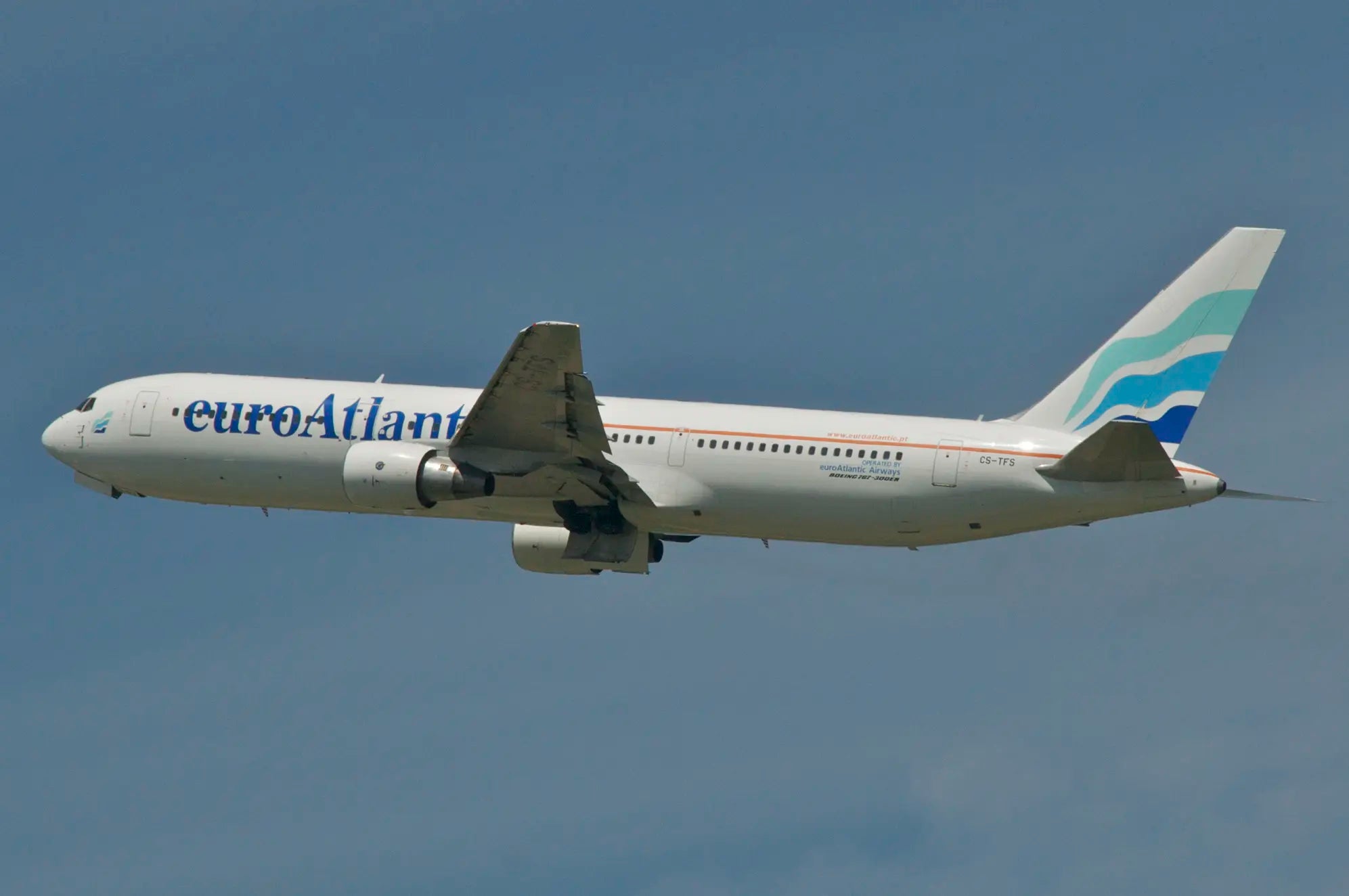
euroAtlantic Airways Overview & Company Profile
euroAtlantic Airways (legally euroAtlantic Airways, Transportes Aéreos S.A.) is a Portuguese non-scheduled international airline that specialises in ACMI, wet-lease, dry-lease and charter operations. Founded in 1993, it is registered in Carnaxide, a suburb west of central Lisbon, and uses Lisbon Airport (LPPT) as its operational base and principal crew domicile. The airline flies under IATA code YU and ICAO code MMZ. Unlike a scheduled flag carrier such as TAP Air Portugal, euroAtlantic does not sell tickets on a fixed route map. It supplies aircraft, crew, maintenance and insurance to other airlines, tour operators, governments and institutions on contracts that can last a single flight or several seasons.
This business model is the single most important thing a pilot needs to understand before applying. euroAtlantic describes its own remit as operating "the most diverse routes in the North Atlantic (USA and Canada), Caribbean, Central and South Americas, Africa, Middle East, Pacific, Australia and Oceania." Over roughly three decades it reports having served 719 airports across 176 countries, an extraordinary footprint for a fleet that currently numbers just six wide-body aircraft. For flight crew, that translates into a working life built around long overseas detachments, seasonal pilgrimage flying, ad-hoc charters and humanitarian missions rather than predictable out-and-back rotations. Full company background is published on the official euroAtlantic corporate site.
Ownership has shifted over the airline's history. It has been associated in the past with Portuguese industrial interests including the Pinto & Cruz group, and more recently with entrepreneur Mário Ferreira and his Pluris Investments group. In November 2019 a consortium that included the London-based investment firm Njord Partners acquired the airline alongside a capital injection and management changes, repositioning euroAtlantic to chase longer-term wide-body ACMI contracts. Workforce-intelligence datasets place total headcount somewhere in the range of roughly 520 to 650 employees across flight crew, cabin crew, maintenance, commercial and administrative functions, and third-party business databases estimate annual revenue near the order of 65 million US dollars. The proportion of that headcount made up of pilots is not publicly disclosed.
ACMI stands for Aircraft, Crew, Maintenance and Insurance. In an ACMI or wet-lease deal, euroAtlantic provides all four to a customer airline, which handles ticket sales, scheduling and commercial risk. The practical effect on crew is that you may fly the same aircraft type but under another carrier's flight numbers, in their cabin product, and from their bases. Contracts can start and end at short notice, which is why euroAtlantic rosters are far more variable than those of a scheduled airline. Pilots considering this carrier should evaluate it as a specialist wide-body operator, not as a conventional network airline.
Fleet Composition & Type Ratings
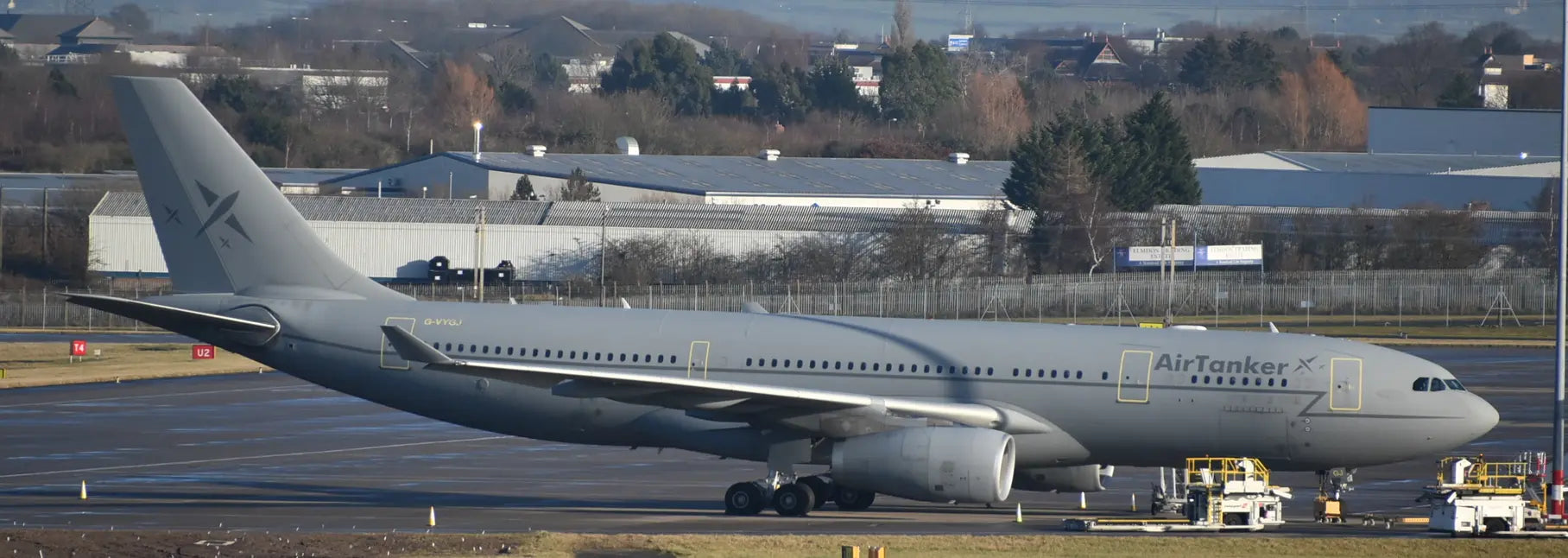
euroAtlantic operates an entirely wide-body fleet, a deliberate choice that defines both its market niche and the kind of flying its pilots do. As of late 2025 the fleet comprises six aircraft: three Boeing 767-300ERs, two Boeing 777-200ERs and one Airbus A330-200. The A330-200 (registration CS-TGD) is significant because it is the first Airbus the company has ever operated. It was inducted in 2025, dry-leased from Aircraft Engine Lease Finance (AELF), and was photographed arriving at Lisbon in October 2025. Reporting from ch-aviation indicates the carrier plans to add two more A330s to reach at least eight aircraft by mid-2026, with a ninth unit expected by 2027, gradually replacing the ageing 767s.
The Boeing 767-300ERs (CS-TST, CS-TSU, CS-TSV) have been the backbone of the operation for many years. Two are company-owned, one is leased, and at least one frame has been reported in storage, so the number flying on any given day can be lower than the fleet count suggests. The two Boeing 777-200ERs (CS-TSW, CS-TSX) are company-owned and carry the longest range and heaviest payload, which is why they tend to be used on the most demanding missions, including cargo and humanitarian flights. The 767 has also appeared in freighter configuration on cargo contracts. A Boeing 737-800 has surfaced in past aircraft-availability listings, but the active 2025 to 2026 fleet is all wide-body.
| Aircraft Type | Role | In Service | Notes |
|---|---|---|---|
| Airbus A330-200 | Widebody | 1 | First Airbus in the fleet (CS-TGD). Dry-leased from AELF, inducted 2025. Two more due by mid-2026. |
| Boeing 767-300ER | Widebody | 3 | Core ACMI workhorse (CS-TST/TSU/TSV). Two owned, one leased; one frame reported stored. To be phased out for A330. |
| Boeing 777-200ER | Widebody | 2 | Long-range, high-payload (CS-TSW/TSX). Company-owned. Passenger, cargo and humanitarian missions. |
Fleet data verified against ch-aviation and Wikipedia, late 2025. Planned growth to eight aircraft by mid-2026 and nine by 2027 per company statements. Average fleet age is not published; the 767s are mature airframes acquired on the secondary market, while the A330-200 is the newest addition.
euroAtlantic has publicly recruited both non-type-rated First Officers and pilots already rated on the 737, 767 or 777. New hires are therefore most likely to start on the Boeing 767 or 777, the two types that make up the bulk of the fleet, with the A330 creating a fresh Airbus type-rating opportunity as it grows. Whether the company fully funds the type rating, applies a training bond, or expects a financial contribution is not clearly documented in public sources (one ambiguous third-party entry references a figure near 20,000 euros). This is one of the most important points to clarify directly with the recruitment team before signing, because the answer materially changes the economics of the job.
Pilot Salary & Compensation Breakdown
Reliable, current salary data for euroAtlantic is genuinely scarce, and prospective pilots should be cautious of any precise figure presented as fact. The carrier does not publish pay scales, and there is no widely available collective agreement governing its pilots in the way the SNPL agreement governs Air France or that TAP's company agreement governs its mainline crews. The most detailed public datapoints come from pilot-forum reports and informal jobs databases, which are useful directionally but are dated and approximate. What follows is presented in that spirit.
Pilot accounts on the Professional Pilots Rumour Network describe a First Officer take-home salary of roughly 1,600 euros per month after tax, rising to around 1,800 to 2,000 euros after one or two years. The same sources note that Captain pay is handled case by case through individual agreements rather than a published scale, and that the company has historically paid an annual bonus to staff. These figures date from the early 2010s and should be treated as a historical floor rather than a current quote, but the consistent picture across multiple informal sources is of a low-pay operator by European standards. Employee reviews on Glassdoor rate compensation and benefits at about 2.3 out of 5, reinforcing that perception.
Indicative Pilot Pay (Approximate, Dated)
| Role / Stage | Indicative Take-Home | Annual (net, approx.) | Source Basis |
|---|---|---|---|
| First Officer, entry | ~€1,600 / month net | ~€19,000 net | PPRuNe pilot report (dated) |
| First Officer, after 1–2 yrs | €1,800 – €2,000 / month net | ~€22,000 – €24,000 net | PPRuNe pilot report (dated) |
| F/O during Hajj / heavy deployment | up to ~€3,500 / month net | Variable | Per diems (+€50/day) on top of base |
| Captain | Individual agreement | Not published | "Case by case" per pilot reports |
These are approximate, partly historical figures stated net of Portuguese tax and social charges. Actual current pay depends on contract, aircraft type, deployment intensity and individual negotiation. Verify directly with the company.
Market Context: Portugal and Peer ACMI Operators
| Benchmark | Annual Gross | Source |
|---|---|---|
| Portugal, average airline pilot | €60,054 | Euronews / ERI, 2025 |
| Portugal, experienced pilot | €70,000+ | Euronews / ERI, 2025 |
| Hi Fly Captain (premium ACMI reference) | ~€177,000 | PilotJobsNetwork (2023) |
| Hi Fly top First Officer | ~€90,000 gross | PilotJobsNetwork (2023) |
Context only. Hi Fly figures show what a higher-paying Portuguese ACMI operator offers; euroAtlantic's reported levels sit well below both the national average and its closest domestic peer. Portugal-wide averages are drawn from the Euronews 2025 pilot-salary analysis.
The defining feature of euroAtlantic pay is volatility. Per diems, reported at around 50 euros per day for First Officers, are a meaningful slice of total income and rise during intensive periods such as Hajj, when crews can be deployed abroad for a month or more. Pilot accounts suggest take-home can climb toward 3,500 euros in a heavy deployment month. The flip side is that a quiet month, with the pilot at home on standby and little flying, may deliver close to base salary and little else. As one pilot put it, the income is "a constant gamble." Anyone planning a household budget around this job should plan around the low months, not the busy ones.
The numbers in this section are compiled from informal pilot reports, jobs databases and national salary benchmarks, not from an official euroAtlantic pay scale, which the company does not publish. The most specific figures (First Officer net pay of 1,600 to 2,000 euros) originate from forum posts that are several years old and may understate current pay, particularly after recent inflation and a tightening European pilot market. Treat every figure here as an order-of-magnitude estimate. Confirm current base pay, per-diem rates, type-rating cost and bonus arrangements in writing with the recruitment team before making any decision.
Roster, Deployments & Quality of Life
If salary is the area where euroAtlantic data is thinnest, roster life is where pilot testimony is most consistent: this is a low-predictability environment. Jobs databases describe euroAtlantic rosters as offering less than eight days of visibility, with pilots "almost continuously on standby" and schedules destabilised by ad-hoc charter demand. The same sources credit pilots with 30 days of annual leave per year, which is reasonable by European standards, though how easily that leave can be taken around long-term ACMI commitments is not documented. The operation runs under EASA Flight Time Limitations and Portuguese labour law, but FTL compliance sets a legal ceiling on duty, it does not guarantee a comfortable lifestyle.
The rhythm of the job swings between two extremes. A pilot may spend a month at home with very little flying, then be deployed and based out of a foreign station for the next month. Hajj is the clearest example: euroAtlantic flies the pilgrimage season frequently, with aircraft and crews based in Saudi Arabia for extended periods, and per diems rise accordingly. Long-term ACMI contracts in Africa, the Caribbean or the Pacific produce similar detachment patterns. For some pilots the variety and overseas exposure are the appeal. For others, especially those with families or fixed commitments at home, the unpredictability is the single hardest part of the job.
📅 Illustrative Month — Wide-Body F/O on an ACMI Detachment
Illustrative only. euroAtlantic does not publish a fixed roster pattern. This sketch reflects the documented reality of a home standby block followed by a multi-week overseas detachment; other months can be far quieter, with the pilot at home on standby and little flying. Rosters typically arrive with under eight days' notice.
Long-haul wide-body flying on the 767, 777 and A330 means substantial block hours per trip and, on the longest sectors, augmented crews of three or four pilots so that in-flight rest can be taken. Under EASA rules (CS-FTL.1), an extended flight duty period with in-flight rest can reach up to 14, 15 or 16 hours depending on the class of rest facility and the number of additional crew, with a minimum in-flight rest of 90 minutes per crew member. The published rules and best-practice fatigue guidance are available from EASA. How proactively any operator manages fatigue beyond the legal minimum varies, and prolonged detachments with intensive flying make this a live issue at any ACMI carrier.
The home base is Lisbon Airport. Lisbon offers a relatively low cost of living for a European capital, good weather and strong connectivity, which softens the impact of modest pay. There is no published multi-base bidding system, so living in or commuting to the Lisbon area is the practical expectation between detachments. A critical question for any commuter is whether positioning flights to and from deployment stations are company-paid, as peer operator Hi Fly advertises. euroAtlantic's positioning policy is not clearly documented publicly, so confirm it before accepting an offer, because it directly affects both income and time at home.
Benefits, Per Diems & Social Protection
Benefits at euroAtlantic are best described as functional rather than generous. As a Portuguese employer, the airline enrols staff in the national social security system, which provides the baseline state pension, disability cover and other statutory protections. There is no public evidence of a dedicated supplementary pilot pension scheme of the kind found at some flag carriers. Company job advertisements indicate that private health insurance is provided after six months of contract, in addition to the public health entitlements Portuguese residents already hold. The overall package is modest, consistent with the airline's lower-cost positioning, and Glassdoor's 2.3 out of 5 compensation-and-benefits rating reflects how staff perceive it.
The most financially material benefit for pilots is the per diem. Reported at around 50 euros per day for First Officers, paid for layovers and deployments, per diems function as both expense cover and a genuine income supplement when crews spend long stretches abroad. During Hajj and other intensive contracts, accumulated per diems can lift monthly take-home substantially. The trade-off, again, is unpredictability: per-diem income tracks deployment intensity, so it cannot be counted on as stable.
Two items deserve specific attention. First, loss-of-licence insurance: at many European airlines this is a standard, often union-negotiated benefit, but there is no public evidence that euroAtlantic provides it, which would leave a pilot exposed to a serious financial risk if medically grounded. Ask whether it is included or whether you must buy your own policy. Second, staff travel: because euroAtlantic has no scheduled network, non-revenue travel is far less valuable here than at a network carrier, so do not weigh it heavily when comparing offers.
Career Progression & Seniority
euroAtlantic does not publish an upgrade timeline, and with such a small fleet the command picture is genuinely different from that of a large airline. A six-aircraft wide-body operation supports only a few dozen Captain seats in total, which caps the absolute number of internal upgrade opportunities. At the same time, ACMI carriers tend to see higher pilot turnover than stable flag carriers, because ambitious First Officers often move on once they have built wide-body hours. That churn can open command vacancies sooner than a rigid seniority list would, so a capable, well-positioned pilot may reach the left seat faster here than at a major, though nothing is guaranteed and the company is also free to recruit direct-entry Captains from the external market to staff new contracts.
Seniority and bidding at euroAtlantic appear to be informal and driven mainly by operational need rather than by a formal, transparent list. When a contract such as Hajj requires every available crew, operational demands tend to override individual preferences. This makes career trajectories less predictable than at a scheduled airline, where a published seniority number governs upgrades, fleet moves and roster bids. Pilots who value transparency and a clear path should weigh that carefully; pilots who prioritise early wide-body command exposure may see the trade as worthwhile.
| Career Stage | Typical Reality at euroAtlantic | Notes |
|---|---|---|
| Join as First Officer | 767 or 777 most likely | Non-type-rated and type-rated F/Os both recruited. A330 entry grows over time. |
| Build wide-body hours | Fast on long-haul trips | High block hours per trip; diverse global operations build a strong logbook. |
| Fleet transition (Boeing to A330) | Emerging opportunity | A330 induction creates a new Airbus type-rating path as the type expands. |
| Upgrade to Captain | No published timeline | Constrained by small fleet, but aided by turnover. Direct-entry Captains also hired. |
Across pilot commentary, euroAtlantic is most often framed as a stepping-stone employer: a place to gain early, intensive exposure to Boeing 767, 777 and now Airbus A330 wide-body flying across challenging global environments, build a competitive logbook, and then move on to a higher-paying, more stable carrier such as Hi Fly, Wamos Air, TAP or a foreign major. That is not a criticism so much as an honest description of how many pilots use the role. If your goal is rapid wide-body experience rather than a 30-year home, the fit can be strong. If you want long-term stability and top pay from day one, look elsewhere.
Recruitment Process & Requirements
euroAtlantic recruits pilots on a rolling, contract-driven basis rather than through a single annual campaign. It has publicly advertised for both non-type-rated First Officers and First Officers already type-rated on the 737, 767 or 777, often via its own channels and through Portuguese training partners such as Sevenair Academy. Applications are handled through the company's online portal at ema.euroatlantic.pt, where candidates can also submit spontaneous applications that are kept on file and revisited when a matching vacancy opens. Because hiring is tied to contract wins and fleet growth (the A330 expansion in particular), the volume and timing of openings fluctuate.
Core Requirements (First Officer)
Typical Selection Path
Application
Submit your CV, licences and documentation through the euroAtlantic jobs portal (ema.euroatlantic.pt) or via a partner academy posting. Spontaneous applications are retained for future vacancies, so applying even when no role is advertised can be worthwhile.
Screening & Interview
Shortlisted candidates are reviewed against the current contract need. Expect verification of licence, ATPL theory credit, medical status and English proficiency, followed by an interview assessing experience, multi-crew background and suitability for variable ACMI operations.
Simulator / Skills Assessment
As is standard for airline recruitment, expect a simulator assessment or skills check appropriate to the role and your experience level, particularly for type-rated candidates joining a specific fleet.
Type Rating & Line Training
Non-type-rated hires proceed to type-rating training on their assigned aircraft (most often 767 or 777), followed by line training. Clarify in advance who funds the type rating and whether a training bond applies.
Line Operations
Once released to the line, you enter the ACMI roster cycle of home standby and overseas detachments. Onboarding into the variable schedule is itself an adjustment that new joiners should prepare for.
Three things will help your application. First, be explicit about your wide-body or heavy-jet experience and total hours, since that is what the operation values most. Second, ask early and directly about type-rating funding, bonding, base, positioning and per-diem rates, the details that vary most at ACMI carriers and matter most to your finances. Third, signal genuine flexibility: this is a role built around short-notice deployments and long detachments, and recruiters are screening for pilots who can thrive in that environment rather than be worn down by it.
Where euroAtlantic Pilots Fly: Deployment Theatres
Because euroAtlantic is a non-scheduled ACMI carrier, it has no fixed route map, so the usual "top layover destinations" list does not apply in the conventional sense. What it has instead are recurring deployment theatres, broad regions where contracts repeatedly take its wide-bodies and crews. These shape the texture of the job far more than any single city. Layover quality varies widely across them, from comfortable hotels at major hubs to basic facilities at remote stations, and pilots should expect that range rather than a uniform standard.
Expect a deployment-based life rather than a hub-and-spoke one. During a detachment you are based at the contract station for the duration, flying that customer's pattern, with hotels and ground transport arranged around the contract. Layover quality is contract-dependent and can range from very good at major hubs to basic at remote fields, so personal resilience, health awareness and good rest discipline matter more here than at a network carrier. The upside is genuine: few jobs at this experience level expose a pilot to such a wide spread of geography, operations and aircraft utilisation.
How euroAtlantic Compares: Airline Radar Chart
The most useful comparisons for euroAtlantic are not flag carriers but its fellow wide-body ACMI specialists. Two stand out: Hi Fly, the other major Portuguese ACMI operator, and Wamos Air, the Madrid-based Spanish charter and ACMI carrier. Both fly wide-bodies on global leasing contracts, which makes them the carriers a euroAtlantic pilot is most likely to weigh against it. Scores below are editorial estimates across the same six metrics used in the scorecard, based on the public data gathered for this guide.
Key Takeaways from the Comparison
Hi Fly sets the premium benchmark. Its careers page advertises a structured 22-days-on, 10-days-off commuting roster with company-paid positioning flights, and informal pay data points to Captain figures around 177,000 euros and top First Officers near 90,000 euros gross. On pay, roster structure and predictability, Hi Fly is clearly ahead of euroAtlantic, which is why many euroAtlantic pilots view a move there as a natural step up.
Wamos Air sits in the middle. Operating an all-Airbus A330 fleet of around a dozen aircraft from a single Madrid-Barajas base, Wamos offers a modern, single-type environment and mid-tier compensation, though it has seen union disputes over pay and conditions. Its single fleet type simplifies training and bidding compared with euroAtlantic's mixed Boeing-and-Airbus line-up.
euroAtlantic's strengths are fleet exposure and entry access. Where it competes is in giving pilots early access to wide-body flying across three types (767, 777 and now A330) and an exceptionally varied global operation, including paths in for non-type-rated First Officers. It trails on salary, benefits and roster predictability, which is the honest trade for that access.
Job security is contract-driven everywhere in this segment. None of the three offers the structural stability of a flag carrier; all depend on winning and holding ACMI contracts. euroAtlantic's three-decade track record and current fleet growth toward eight or nine aircraft are reassuring signs, but ACMI by nature carries more demand risk than scheduled flying.
These scores are editorial estimates, not precise measurements. They are drawn from informal pilot reports, jobs databases, company and union materials and national salary benchmarks. Public, verified pay and roster data for ACMI operators (including Hi Fly and Wamos Air) are genuinely limited, and several figures used here are dated or inferred. Treat the chart as a directional comparison for an experienced pilot weighing a long-term move, and verify specifics with each airline and with current line pilots before deciding.
Union & Industrial Relations
The main union representing civil aviation pilots in Portugal is the SPAC, Sindicato dos Pilotos da Aviação Civil. It presents itself as the country's first independent pilots' union and defends pilot interests on pay, working conditions, training and safety across the sector, not at a single airline. Its public profile is most visible around TAP Air Portugal, where it negotiated through the airline's crisis-era restructuring, but it operates as a national voice for the profession. The extent to which euroAtlantic's pilots are organised under SPAC or work outside a formal collective agreement is not clearly documented publicly, which is itself a point worth probing during recruitment.
That said, euroAtlantic is not isolated from the national labour conversation. The airline's chief pilot, Mário Alvim de Faria, has been named in SPAC discussions about the pilot retirement age, showing that the company's senior flight management engages with sector-level debate. SPAC has also warned that company-level pilot agreements in Portugal are becoming "more precarious" under current legislation that allows conventions to lapse, a trend that matters most at smaller carriers where union leverage is thinner than at TAP.
The Wider Labour Backdrop
Disputes & Industrial Context
euroAtlantic has no recent record of pilot strikes of its own; the labour friction around it is more about the wider Portuguese framework and the cross-border sensitivities of wet-lease work. The practical takeaway is that union protection at this carrier is likely thinner than at a flag carrier, and collective-agreement coverage should not be assumed. Before signing, ask explicitly whether your terms sit under a collective agreement or a purely individual contract, and consider engaging with SPAC to understand your protections.
Verdict: Who Is euroAtlantic For?
🎯 Our Take
euroAtlantic Airways is a specialist, not an all-rounder. As a wide-body ACMI and charter operator, it offers something genuinely rare for pilots at an earlier career stage: hands-on Boeing 767, 777 and now Airbus A330 flying across one of the most varied global operations in the industry, with a documented willingness to take on non-type-rated First Officers. For building a heavy-jet logbook and seeing the world, few comparable employers open the door as wide.
The trade-offs are equally clear and should not be downplayed. Reported pay is low by Portuguese and European standards, benefits are modest, loss-of-licence cover is not documented, and rosters are volatile, with under eight days of visibility, heavy standby and long overseas detachments. Compensation swings with deployment intensity, so income planning must assume the quiet months. Career progression is real but unstructured, and union protection is likely thinner than at a flag carrier.
The honest framing that recurs throughout pilot commentary is that euroAtlantic works best as a stepping stone: a place to gain rapid wide-body experience and then move toward a higher-paying, more stable carrier such as Hi Fly, Wamos Air, TAP or a foreign major. Judged on those terms, it can be an excellent strategic move. Judged as a stable, high-pay, lifelong home, it is not designed for that.
1 How much do euroAtlantic pilots earn?
euroAtlantic does not publish a pay scale, so all figures are approximate and partly dated. Pilot-forum reports describe First Officer take-home pay of roughly 1,600 euros per month after tax, rising toward 1,800 to 2,000 euros after one or two years, with per diems of about 50 euros per day on deployment that can lift Hajj-season take-home toward 3,500 euros. Captain pay is reported to be negotiated individually rather than set by a published scale. These numbers are several years old and likely conservative today; confirm current pay directly with the company.
2 Does euroAtlantic pay for the type rating?
This is not clearly documented in public sources and is the single most important thing to clarify before signing. euroAtlantic recruits both type-rated and non-type-rated First Officers, which implies it can provide type-rating training, but whether that is fully funded, bonded, or partly paid by the pilot is unclear (one ambiguous third-party listing references a figure near 20,000 euros). Ask the recruitment team directly whether the type rating is company-funded and whether a training bond applies.
3 What aircraft would I fly?
The fleet is all wide-body: three Boeing 767-300ERs, two Boeing 777-200ERs and one Airbus A330-200 as of late 2025. New First Officers are most likely to start on the 767 or 777. The A330 is the newest type, inducted in 2025, and the company plans to grow it to roughly three aircraft by mid-2026 and replace the 767s over time, so Airbus opportunities should expand. There is no narrow-body line in the active fleet.
4 How stable are the rosters?
Not very, and this is the most consistent theme in pilot feedback. Reported roster visibility is under eight days, standby is frequent, and the work alternates between quiet months at home and long overseas detachments of several weeks to a month or more, especially during Hajj. Annual leave is around 30 days. Pilots who need predictable schedules for family or other commitments should weigh this carefully, as flexibility is essentially a job requirement here.
5 How long does it take to upgrade to Captain, and does euroAtlantic hire direct-entry Captains?
There is no published upgrade timeline. The small six-aircraft fleet limits the absolute number of command seats, but ACMI turnover can open vacancies faster than a rigid seniority list would, so a well-placed First Officer may upgrade sooner than at a major, though nothing is guaranteed. euroAtlantic can also recruit direct-entry Captains from the external market to staff new contracts, so both internal upgrade and external command entry are realistic paths.
6 Do I need to speak Portuguese?
Operationally, ICAO English Language Proficiency Level 4 or higher is the formal language requirement, and the airline's international ACMI work is conducted in English. Portuguese is not stated as a hard requirement, but it is an advantage given the Lisbon base, the local company environment and administrative life in Portugal. Unlike some flag carriers, there is no evidence of a strict native-language barrier to entry.
7 Can non-EU pilots apply?
The core requirement is an EASA licence and Class 1 medical, and EU right-to-work is typically expected for a Lisbon-based role. ACMI operators sometimes engage multinational crews on specific contracts, but work-permit rules can complicate hiring for non-EU nationals, and visa sponsorship is not advertised. Non-EU pilots should confirm eligibility and any sponsorship possibility directly before investing time in an application.
8 Is euroAtlantic a good airline for building wide-body hours?
Yes, that is arguably its strongest selling point. Few employers give pilots this level of early, intensive exposure to Boeing 767, 777 and Airbus A330 long-haul flying across such a wide global operation. Many pilots use it precisely to build a competitive heavy-jet logbook before moving to better-paying, more stable carriers such as Hi Fly, Wamos Air or a flag carrier. If hours and experience are your priority and you can accept lower pay and volatile rosters in exchange, the fit can be strong.
Official Links & Resources
Public data on euroAtlantic pilot conditions is limited and changes with each contract, so always verify directly with official sources before applying or making a career decision. These are the key websites and organisations relevant to a euroAtlantic pilot career:
Because euroAtlantic publishes so little on pay, rosters and benefits, your best information will come from current and former line pilots. Before accepting any offer, ask in writing about type-rating funding and bonding, base and positioning policy, per-diem rates, loss-of-licence cover, and whether your terms fall under a collective agreement. The answers vary far more at an ACMI carrier than at a scheduled airline, and they determine whether the role is a smart stepping stone or an expensive detour.