

CityJet Overview & Company Profile
CityJet is an Irish-registered regional airline founded in 1993 by entrepreneur Pat Byrne. Originally launched as a scheduled carrier connecting Dublin to London City Airport under a Virgin Atlantic franchise, the airline has evolved into one of Europe's leading ACMI (Aircraft, Crew, Maintenance, and Insurance) wet lease operators. CityJet does not sell tickets under its own brand. Instead, it provides aircraft and full crew to major European carriers, flying passengers who see the livery and branding of the contracting airline while the operation is entirely managed by CityJet.
The airline is headquartered at Dublin Airport, where its Operations Control Centre and Continuing Airworthiness Management Organisation are located. However, CityJet's primary operational hub is Copenhagen Kastrup Airport, which houses over 330 of the company's approximately 514 total employees, including pilots, cabin crew, and maintenance staff. A secondary crew base operates at Stockholm Arlanda, and the airline also flies from Frankfurt on behalf of Lufthansa. CityJet's current wet lease clients include Scandinavian Airlines (SAS), Lufthansa, and Brussels Airlines.
In October 2023, CityJet merged with Air Nostrum, Spain's largest regional airline, forming the Strategic Alliance of Regional Airlines (SARA), described as Europe's largest independent regional aviation platform. Under this structure, CityJet holds a 20% equity interest and Air Nostrum shareholders hold the remaining 80%. More recently, in October 2025, CityJet completed a financial restructuring after the Irish High Court confirmed a scheme of arrangement, its third examinership. The company emerged under new ownership through CityJet Holding ApS and continues to operate as a going concern.
Fleet Composition & Type Ratings
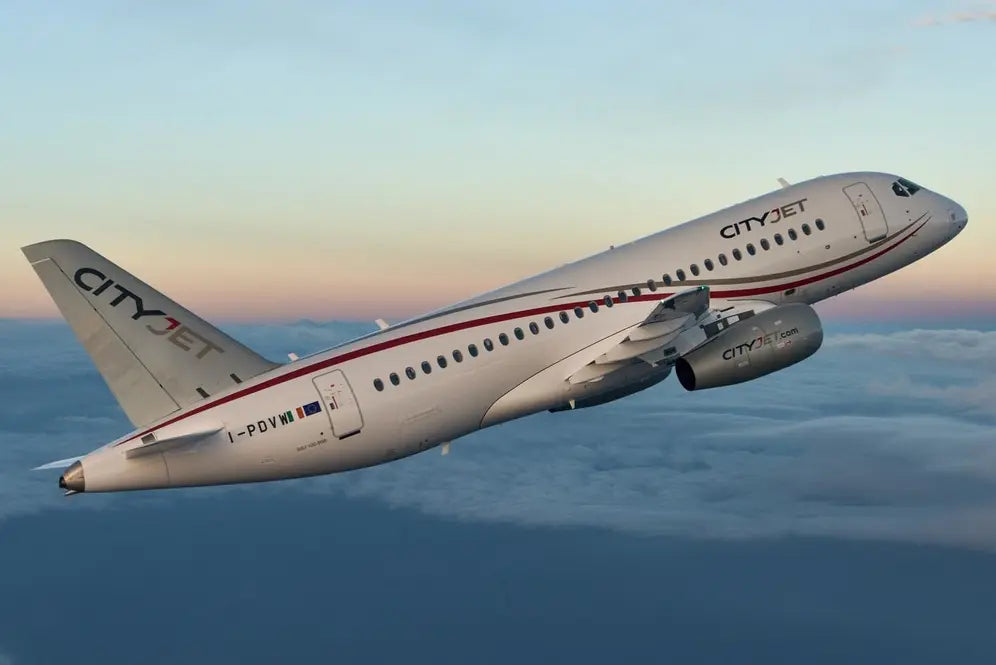
CityJet operates a standardized fleet exclusively composed of Bombardier CRJ series regional jets. This single-family fleet strategy simplifies crew training, maintenance logistics, and operational standardization across all bases. The airline transitioned to an all-CRJ configuration after withdrawing its Sukhoi Superjet 100 aircraft in 2019 due to reliability issues and phasing out its earlier Avro RJ85 and BAE 146 fleets. All current aircraft are powered by General Electric CF34 turbofan engines.
| Aircraft Type | Role | In Service | Routes / Notes |
|---|---|---|---|
| Bombardier CRJ900 | Regional Jet | ~17 | Primary fleet. 88-90 seats. Operated for SAS from Copenhagen and Stockholm. Range: 2,871 km. SAF-approved. |
| Bombardier CRJ1000 | Regional Jet | ~6 | Largest variant. 100 seats. Introduced 2023. Operated for Lufthansa from Frankfurt. Range: 3,056 km. |
Fleet data as of late 2025. Numbers are approximate and fluctuate with lease transitions and contract requirements.
The CRJ900 is the backbone of CityJet's operation, with maximum takeoff weight of approximately 38,000 kg, a wingspan of 24.9 metres, and a cruising speed of 447 knots. The slightly larger CRJ1000 offers a maximum takeoff weight of around 40,800 kg and extended range, making it suitable for longer European sectors out of Frankfurt. Both types are approved for Sustainable Aviation Fuel (SAF) operations.
CityJet covers the cost of type rating for pilots recruited through the official selection process. The airline offers bonded type rating sponsorship with no salary deductions, representing a significant financial benefit for pilots joining without a CRJ rating. Pilots already type-rated on the CRJ series can apply directly and bypass the type rating course. All CRJ simulator training and checks are performed at Amsterdam, while ground school and other training runs from the Copenhagen crew training centre.
Pilot Salary & Compensation Breakdown
CityJet pilot compensation is governed by collective bargaining agreements and local employment contracts reflecting Danish and Scandinavian labour standards. As an ACMI operator with its primary pilot base in Copenhagen, CityJet compensation must compete with both the Nordic cost of living and the broader European regional airline market. Salaries are paid in Danish Kroner (DKK) for Copenhagen-based pilots, with local currency arrangements for other bases.
Detailed pay scales are not publicly published by CityJet, but available data from industry sources and pilot job networks provides a general picture of compensation levels. It is important to note that CityJet's ACMI model means pilots do not benefit from the prestige pricing of a flag carrier, and compensation typically falls in the mid-range of European regional operators.
Estimated Compensation Overview
| Position | Monthly Gross (est.) | Annual Gross (est.) | Notes |
|---|---|---|---|
| First Officer (entry) | ~€4,500 - €5,500 | ~€54,000 - €66,000 | Starting F/O on CRJ900. Bonded type rating period may apply. |
| First Officer (3-5 yrs) | ~€6,000 - €7,500 | ~€72,000 - €90,000 | Experienced F/O with seniority steps. |
| Captain | ~€8,500 - €10,000 | ~€102,000 - €120,000 | Line Captain on CRJ900/CRJ1000. Senior Captains at the top end. |
Figures are estimates based on available industry data, pilot reports, and comparable European regional operator benchmarks. Actual pay depends on base location, collective agreement, seniority step, and operational allowances.
CityJet does not publicly disclose detailed pilot salary scales. The figures above are compiled from industry salary databases (including ERI and Pilot Jobs Network), pilot forum reports, and comparison with peer operators such as Lufthansa CityLine and SAS-affiliated regional carriers. Per diem allowances for layover duties are reported at approximately 540 DKK (~€72) per layover. Danish income tax rates range from approximately 37% to 52% depending on municipality and income level, which significantly affects take-home pay. Always verify compensation directly with CityJet during the recruitment process.
Roster Pattern & Quality of Life
CityJet operates under EASA Flight Time Limitation (FTL) rules combined with Danish and Swedish labour regulations, which together create a reasonable framework for work-life balance. As a Scandinavian-based operation, CityJet benefits from the region's generally pilot-friendly approach to duty scheduling and rest requirements. The airline's roster is managed centrally and crews may bid preferences for either layover-heavy or home-base-heavy patterns.
CityJet's wet lease model means that the actual routes flown depend on the customer airline's network. Pilots based in Copenhagen fly SAS-branded routes across Scandinavia and Europe, typically on sectors of 1 to 3 hours. Frankfurt-based pilots operate Lufthansa-branded routes of similar length. Many duties require overnight stays away from base, which can be attractive for some pilots and less so for others.
📅 Sample Month: CRJ900 First Officer (Copenhagen)
The sample roster above is illustrative. Actual patterns vary with seasonal schedules, customer airline demands, and individual seniority-based bid outcomes. Pilots on CRJ operations typically fly 2 to 4 sectors per duty day, with short turnarounds between flights. Many rotations include overnight stops at outstations within the SAS or Lufthansa network.
CityJet's primary pilot base is Copenhagen Kastrup Airport, with a secondary base at Stockholm Arlanda. Pilots are assigned to a specific base at hiring and base changes depend on operational requirements and seniority. Copenhagen offers excellent public transport, a high quality of life, and a vibrant expat community. Stockholm provides similar benefits with slightly lower living costs. Both cities are expensive by European standards, but Scandinavian social services, healthcare, and infrastructure are widely considered among the best in the world. Frankfurt-based positions are typically tied to specific Lufthansa contracts and may be temporary.
Benefits, Travel Perks & Retirement
CityJet's benefits package reflects its status as a Scandinavian-based employer operating under Danish and Swedish labour laws. While the airline cannot match the comprehensive perks of major flag carriers, the combination of statutory Nordic employee protections and airline-specific benefits creates a solid package for regional airline pilots.
Pilots employed in Denmark benefit from the Danish Salaried Employees Act (Funktionærloven) and the Danish Holiday Act, which guarantee minimum notice periods scaled to length of service, protection against unfair dismissal, and a statutory minimum of 5 weeks paid holiday per year. In Sweden, equivalent protections apply under the Employment Protection Act (LAS). These statutory frameworks sit on top of CityJet's collective bargaining agreements, providing a robust safety net that many non-Scandinavian regional carriers cannot match.
Career Progression & Seniority
Career progression at CityJet follows a seniority-based system consistent with European regional airline norms. Pilots enter as First Officers on the CRJ900 or CRJ1000 and advance toward a Captain position based on seniority number, operational vacancies, and successful completion of the command assessment. CityJet's concentrated fleet structure (only CRJ variants) means there are fewer fleet transition opportunities than at multi-fleet carriers, but it also means simpler recurrent training and stronger operational standardization.
The airline accepts direct-entry pilots at both the First Officer and Captain level, provided candidates meet the minimum experience requirements. Pilots who are already type-rated on the CRJ series can join without additional type rating training, while non-rated pilots receive company-funded type rating through the bonded sponsorship programme.
| Career Milestone | Typical Timeline | Notes |
|---|---|---|
| Join as First Officer (CRJ900) | Day 1 | Most common entry point. Type rating provided if needed. Base: CPH or ARN. |
| Experienced F/O | 2-4 years | Accumulate hours, build CRM skills. Possible assignment to CRJ1000 ops from Frankfurt. |
| Captain upgrade | ~4-7 years | Seniority-dependent. Requires min. 3,500 total hours + 500 PIC hours. Command assessment: interview + sim check. |
| Training Captain / TRE / TRI | Variable | Requires separate selection and instructor qualification. Teaching roles available at CPH training centre. |
| Transition to SARA / Air Nostrum | Potential | The SARA merger may open future inter-company transfer pathways to Air Nostrum's more diverse fleet. |
Pilots should understand that CityJet's ACMI model creates both opportunities and limitations for career development. On the positive side, upgrade timelines can be shorter than at major airlines (estimated 4-7 years versus 10-15+ at legacy carriers). The airline's growth and the broader European pilot shortage work in favour of faster progression. On the other hand, CityJet's career ceiling is limited to regional CRJ operations, and there is no internal pathway to widebody or long-haul flying. The SARA partnership with Air Nostrum may eventually open doors to a more diverse fleet including ATR 72s and potentially Embraer E-Jets, but formal inter-company transfer mechanisms are not yet publicly established.
Recruitment Process & Requirements
CityJet recruits pilots on a rolling basis through its official careers portal. The airline welcomes both CRJ type-rated pilots for direct entry and non-type-rated pilots who will undergo company-sponsored type rating training. CityJet also runs CRJ crew type rating courses from its Copenhagen training centre for suitable candidates.
First Officer: Minimum Requirements
Captain: Minimum Requirements
Selection Stages
Online Application & CV Screening
Submit application via the CityJet careers portal. Credentials are verified against minimum requirements including licence status, medical validity, and right to work in the EU. Confirmation is provided upon receipt of application.
Cut-e Aptitude Tests
Online psychometric assessment including mathematics, English grammar, logical reasoning, and personality profiling. This is a standard aviation-industry screening tool used to evaluate cognitive aptitude and behavioural fit.
Technical & HR Interview
Combined interview assessing technical aviation knowledge, operational decision-making, CRM competencies, and cultural fit. Conducted by senior CityJet captains and/or HR personnel. Expect questions on SOP adherence, threat and error management, and motivation for joining an ACMI operator.
Simulator Assessment
Evaluation of flying skills, instrument proficiency, and multi-crew coordination. The sim session tests basic handling, instrument approaches, and emergency procedure management. Type-rated candidates may be assessed on CRJ-specific procedures.
Offer, Medical & Base Assignment
Successful candidates receive a contract offer with base assignment (Copenhagen, Stockholm, or Frankfurt). A valid Class 1 Medical must be confirmed before start date. Non-type-rated pilots begin with the CRJ type rating course in Copenhagen/Amsterdam before entering line operations.
CityJet continuously recruits for First Officer positions and advertises openings on its careers page and aviation job boards such as Pilot Jobs Network. Nordic language skills (Danish, Swedish, Norwegian) are not required but can be advantageous for base life and integration. The airline's bonded type rating sponsorship makes CityJet an attractive option for pilots who hold a frozen ATPL but lack a type rating. Be prepared to discuss your understanding of the ACMI business model during the interview, as CityJet values candidates who appreciate the unique demands of wet lease operations.
How CityJet Compares: Airline Radar Chart
How does CityJet compare against two other major European regional operators: Lufthansa CityLine (Germany's largest regional carrier, also operating CRJ900s) and Air Nostrum (CityJet's SARA partner, Spain's largest regional airline)? Below is a comparative analysis across five key pilot career metrics.
Key Takeaways from the Comparison
Lufthansa CityLine leads on job security and benefits. As a wholly-owned subsidiary of Lufthansa Group, CityLine offers the strongest job stability, backed by one of Europe's largest airline groups. CityLine also provides a pathway to Lufthansa mainline positions and operates a more diverse fleet (CRJ900 + A319 + A320neo). First Officer compensation at CityLine ranges from approximately €5,555 to €15,700 monthly, with Captains reaching €9,400 to €16,000 monthly, exceeding CityJet estimates.
CityJet offers better work-life balance than Air Nostrum. CityJet's Scandinavian base locations, Danish labour protections, and approximately 42 days of annual leave provide a quality-of-life advantage. Air Nostrum, while offering a more diverse fleet (CRJ200, CRJ1000, ATR 72-600) and routes, operates under Spanish labour conditions that typically provide fewer days off and lower base salary.
Job security is CityJet's weakest area. Three examinerships in the company's history, combined with the inherent volatility of the ACMI business model (where contracts can be terminated by client airlines), make CityJet the least stable of the three from a long-term employment perspective. The October 2025 restructuring successfully kept the airline operational, but it underscores the risks.
The SARA partnership bridges the gap. CityJet's merger with Air Nostrum offers potential future career mobility and operational synergies. As SARA matures, inter-company transfers could give CityJet pilots access to ATR and CRJ operations across Spain, providing greater fleet diversity and career options.
Scores are editorial estimates based on publicly available salary data, pilot testimonials, union publications, airline press releases, and industry benchmarks from sources including FlightDeckFriend, ECA, and Pilot Jobs Network. They represent a general assessment for an experienced pilot considering a long-term career. Individual experiences will vary based on seniority, base, and personal priorities.
Union & Industrial Relations
Union representation for CityJet pilots is structured across multiple countries, reflecting the airline's geographically distributed workforce. CityJet states on its careers page that it respects workers' right to union representation and facilitates collective labour agreements in line with local legislation. The airline has a history of both collaborative and contentious labour relations, with significant developments in recent years.
Union Representation by Base
Recent Industrial History
Union membership is optional at CityJet but strongly recommended, particularly at the Copenhagen base where the CPU (CityJet Pilot Union Copenhagen) actively negotiates on behalf of pilots. The CPU is accessible at cpucph.dk and describes itself as integrity-driven and determined to put pilots first. For Stockholm-based pilots, Unionen membership provides collective bargaining coverage under the March 2024 agreement. Having formal union representation is particularly valuable in the context of CityJet's ACMI model, where contract changes with client airlines can directly impact working conditions and base assignments.
Verdict: Who Is CityJet For?
🎯 Our Take
CityJet occupies a specific niche in European aviation: it is a dedicated ACMI wet lease operator offering CRJ regional jet flying based primarily in Scandinavia. For pilots looking to build turbine hours on a modern regional jet, gain experience in the SAS and Lufthansa networks, and live in Copenhagen or Stockholm, CityJet offers a viable and attractive option.
The trade-offs are significant. Salary levels sit in the mid-range for European regional carriers and fall well below major airline standards. The ACMI business model introduces job security risks, as evidenced by the airline's three examinerships. Career progression is limited to CRJ operations with no internal path to widebody flying. And the airline's financial history means prospective pilots should approach CityJet with realistic expectations about long-term stability.
That said, several factors work in CityJet's favour: the bonded type rating sponsorship removes a major financial barrier to entry, Scandinavian employment protections and quality of life are genuinely excellent, the SARA merger with Air Nostrum opens potential future career pathways, and CityJet's upgrade timeline to Captain (estimated 4-7 years) is significantly faster than at legacy carriers. For EU passport holders with a frozen ATPL seeking their first airline job or a stepping stone to larger operators, CityJet deserves serious consideration.
1 Does CityJet pay for the type rating?
Yes. CityJet offers bonded type rating sponsorship for non-CRJ-rated pilots. The type rating course is funded by the airline with no salary deductions during training. The bond typically requires a minimum commitment period. Pilots who already hold a CRJ type rating can apply directly without going through the type rating process.
2 Do I need to speak Danish or Swedish?
No. English is the working language across all CityJet operations, and ICAO English Language Proficiency Level 4 or above is the formal requirement. Nordic language skills are not mandatory but can help with daily life at the Copenhagen or Stockholm bases and with integration into the local community.
3 Can non-EU citizens apply?
No. CityJet requires candidates to hold an EU passport with the legal right to live and work in the European Union. There is no work permit sponsorship pathway for non-EU citizens.
4 What is the difference between CityJet and the airline whose livery I see?
CityJet is an ACMI wet lease operator. This means it provides the aircraft, crew, maintenance, and insurance to other airlines. Passengers see the branding of the customer airline (SAS, Lufthansa, Brussels Airlines), but the aircraft, pilots, and cabin crew are all CityJet employees operating under CityJet's Air Operator Certificate issued by the Irish Aviation Authority.
5 How long does it take to upgrade to Captain?
Captain upgrade at CityJet is estimated at approximately 4 to 7 years, though this depends on seniority, operational vacancies, and fleet growth. Candidates need a minimum of 3,500 total hours and 500 PIC hours. The upgrade process includes a command assessment with an interview and simulator check. This timeline is generally faster than at major legacy carriers.
6 Is CityJet financially stable?
CityJet has undergone three examinerships (Irish insolvency proceedings) in its history, the most recent in October 2025. Each time, the airline emerged as a going concern and continued operations. The 2023 merger with Air Nostrum (forming SARA) and the October 2025 restructuring under new ownership through CityJet Holding ApS provide a more stable platform going forward. However, the ACMI business model inherently depends on maintaining contracts with client airlines, and loss of a major contract (as happened with Lufthansa) can create financial pressure.
7 Does CityJet still have a cadet programme?
CityJet launched a cadet pilot programme in 2017 in partnership with CAE Oxford Aviation Academy, called the "Climb High Mentored Cadet Programme." However, as of 2025, this programme appears to be inactive. CityJet currently recruits pilots with at least a frozen ATPL (CPL/IR with ATPL theory credit). Check the airline's careers page for the latest information on training pathways.
8 Where do CityJet pilots fly?
CityJet pilots fly routes determined by the customer airline's network. Copenhagen-based pilots operate SAS-branded routes across Scandinavia and Europe. Stockholm-based pilots also fly the SAS network. Frankfurt-based pilots operate Lufthansa-branded European routes. You will not fly under the CityJet brand. Destinations change with seasonal schedules and contract terms, but typical routes cover 1 to 3 hours of flight time across Northern and Central Europe.
Official Links & Resources
Before applying or making any career decisions, always verify information directly with official sources. These are the key websites and organisations relevant to CityJet pilot careers:
Bookmark the CPU website (cpucph.dk) before you join. It is the fastest way to understand the current collective bargaining situation and pilot-specific developments at CityJet Copenhagen. For Stockholm-based pilots, contact Unionen for details on the March 2024 collective agreement covering your employment terms.