Cargolux Overview & Company Profile
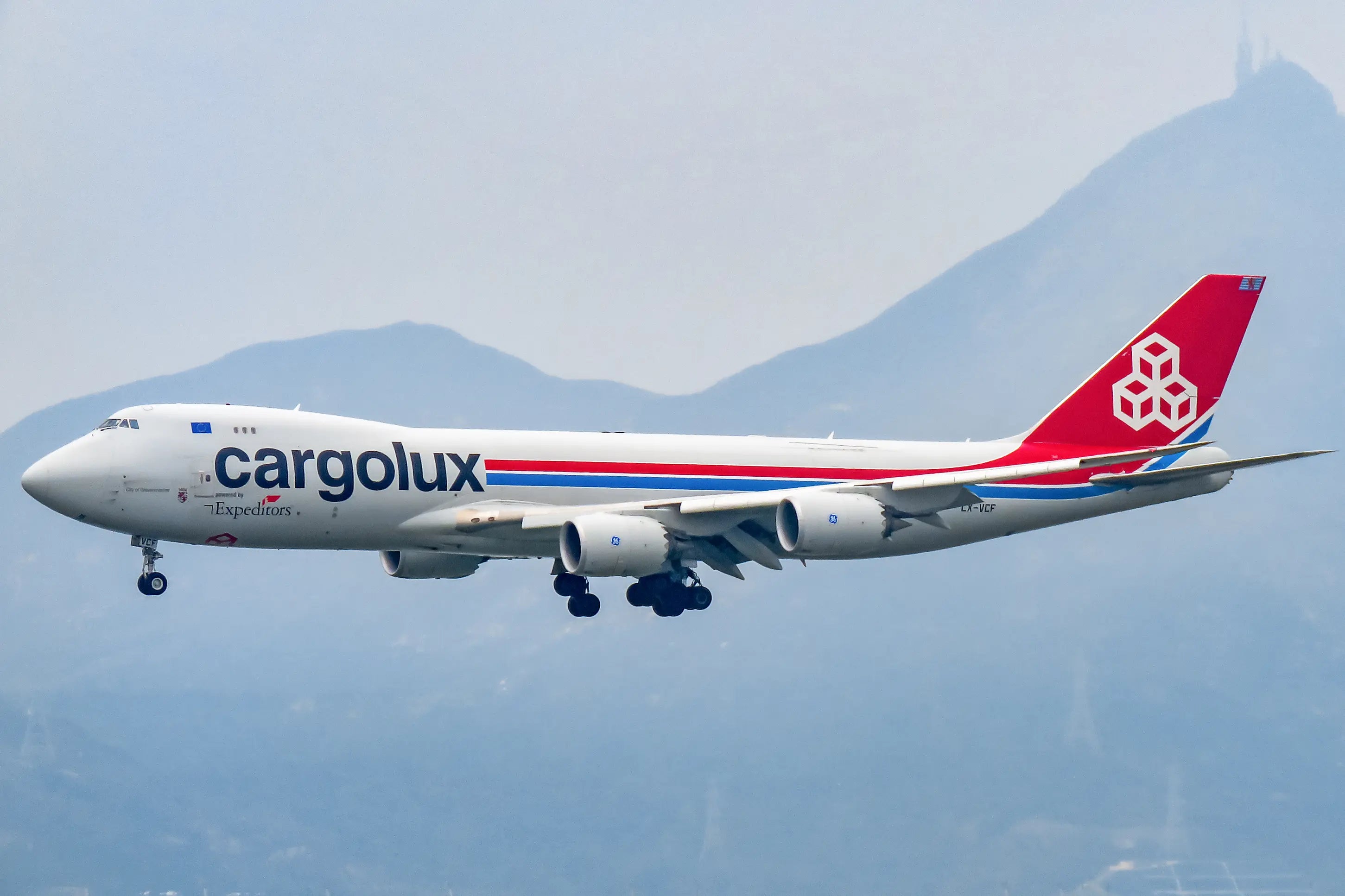
Cargolux Airlines International S.A. is Europe's largest all-cargo airline and one of the top freight carriers worldwide. Founded in 1970 in Luxembourg and headquartered in Sandweiler, near Luxembourg Airport (LUX), the airline has built a 55-year legacy of freighter excellence. It was the first airline in the world to operate the Boeing 747-400F and the launch customer for the Boeing 747-8F, two milestones that underscore its pioneering role in the air cargo industry.
Cargolux serves over 75 destinations across six continents, circumnavigating the globe five to six times each week via its extensive scheduled, charter, and ACMI operations. The airline maintains more than 85 offices in over 50 countries and operates an integrated trucking network extending to over 250 European destinations. In 2024, Cargolux reported revenues of US$3.324 billion and a profit after tax of US$448 million, confirming its position as one of the world's most profitable cargo carriers.
The airline's shareholder structure reflects a mix of Luxembourgish state interests and international investment: Luxair holds 35.10%, HNCA (Henan Civil Aviation Development and Investment Company, China) holds 35.00%, BCEE (Banque et Caisse d'Epargne de l'Etat) holds 10.90%, SNCI (Societe Nationale de Credit et d'Investissement) holds 10.67%, and the Luxembourg State directly holds 8.32%. The HNCA partnership, established in 2014, created a dual-hub strategy with Zhengzhou Xinzheng International Airport (CGO) in China as a secondary operational hub supporting the Air Silk Road initiative.
Fleet Composition & Future Orders
Cargolux operates an all-Boeing 747 freighter fleet, making it one of the few airlines worldwide to maintain a single-type operation on the iconic "Queen of the Skies." This homogeneous fleet strategy simplifies pilot training, maintenance logistics, and operational standardization. As of 2025, the fleet comprises 30 aircraft split between two 747 variants: the classic 747-400F and the newer, more efficient 747-8F.
The Boeing 747-8F, which Cargolux launched as a customer in 2011, offers improved fuel efficiency, greater range, and enhanced payload capacity compared to the 747-400F. Both variants feature main deck side cargo doors, nose cargo doors, and lower deck compartment access, enabling rapid loading and unloading of a wide range of cargo types, from standard pallets and containers to oversized and heavy shipments including aircraft engines, oil drilling equipment, and humanitarian relief supplies.
| Aircraft Type | Role | In Service | Notes |
|---|---|---|---|
| Boeing 747-8F | Long-haul freighter | 14 | Flagship type. Max payload ~134,000 kg. 30% more fuel efficient than 747-400F. Entered service 2011. |
| Boeing 747-400F | Long-haul freighter | 10 | Max payload ~124,000 kg. Workhorse since 1993. Gradual phase-out expected as 777-8F deliveries begin. |
| Boeing 747-400ERF | Extended range freighter | 6 | Extended range variant of the -400F. Additional fuel capacity for ultra-long sectors. |
| Boeing 777-8F | Next-gen freighter | On order (10 + 6 options) | Ordered October 2022. 30% better fuel efficiency vs 747-400F. Expected entry into service ~2029. |
Fleet data as of 2025. The 747-400F and 747-400ERF are counted separately above but share a common type rating. Numbers reflect the Cargolux mainline fleet based in Luxembourg.
Cargolux formalized an order for 10 Boeing 777-8 Freighters (with options for 6 more) in October 2022, according to a joint announcement by Cargolux and Boeing. The 777-8F will deliver 25% superior operating costs per tonne compared to the 747-400F, while carrying a comparable payload. Boeing expects the 777-8F to enter service around early 2029. This transition will eventually create a mixed-fleet operation for the first time in Cargolux history, meaning pilots may need to hold dual type ratings. The older 747-400F variants will be retired progressively as the new aircraft arrive.
Cargolux also operates a subsidiary, Cargolux Italia, based at Milan Malpensa (MXP), which uses aircraft from the parent fleet on wet-lease arrangements. Cargolux Italia provides additional operational flexibility and access to Italian cargo markets, though it has been a source of union tension regarding potential outsourcing concerns.
Pilot Salary & Compensation
Cargolux pilot salaries are governed by the Collective Working Agreement (CWA) negotiated between the airline and its unions, with terms last updated in September 2023. Compensation is structured around a monthly base salary indexed to Luxembourg's cost-of-living mechanism: whenever the consumer price index rises by 2.5% during the preceding semester, salaries are automatically adjusted by the same proportion. This indexation provides built-in inflation protection rare among European airlines.
Base salary is supplemented by a substantial package of additional pay components: a 13th-month bonus (25% in year one, full 100% from year two), per diem allowances during rotations, Sunday and night duty premiums, overtime compensation, seniority bonuses, and profit-sharing tied to company results. The most recent CWA (September 2023 to August 2027) included a salary increase envelope of 5.5%.
First Officer Pay Scale
| Rank | Monthly Gross (index 968.04) | Annual Gross (est. with 13th month) | Notes |
|---|---|---|---|
| Trainee (initial ~2 months) | €4,557 | N/A (training period) | During type rating and line training. |
| Junior First Officer | €6,368 | ~€82,000 - €90,000 | Entry level after training completion. |
| First Officer | €6,902 | ~€90,000 - €100,000 | Standard F/O after initial progression. |
| Senior First Officer | €7,503 | ~€97,000 - €115,000 | Experienced F/O. Higher per diems, seniority bonuses. |
Salary figures effective September 1, 2025 (index 968.04), per the official Cargolux working conditions page. Annual estimates include 13th-month bonus but exclude per diems, overtime, Sunday/night premiums, and profit sharing, which can add €10,000-€25,000+ annually.
Captain Pay Scale (Estimated)
| Rank | Monthly Gross (est.) | Annual Gross (est.) | Notes |
|---|---|---|---|
| Entry Captain | €10,000 - €12,000 | ~€140,000 - €170,000 | Newly upgraded. Includes base + 13th month. |
| Mid-Career Captain | €12,000 - €15,000 | ~€170,000 - €210,000 | 5-10 years in command. Higher seniority bonuses. |
| Senior Captain | €15,000 - €18,000 | ~€210,000 - €260,000 | 20+ years seniority. All supplements included. |
Captain salaries are not publicly disclosed by Cargolux. These ranges are estimates based on industry benchmarks, pilot forum data, and salary comparison platforms. Actual figures depend on the CWA, seniority step, and total duty components.
Captain salary figures above are editorial estimates compiled from multiple public sources including pilot forums, salary comparison websites, and industry benchmarks. Only First Officer salaries are officially published by Cargolux. Luxembourg's favorable tax regime (combined social security deductions of approximately 11%, among the lowest in the EU) means that net take-home pay is significantly higher than in countries like France (~22-25% deductions) or Germany (~25-30% deductions). This tax efficiency is a major advantage of Cargolux employment. Always verify current salary details with Cargolux directly or through the ALPL union.
Roster Pattern & Quality of Life
Cargolux operates a monthly roster system with average 7-day rotations, reflecting the long-haul nature of 747 freighter operations. Pilots receive a minimum of 12 days off per month, structured in two fixed blocks of consecutive days off. The roster includes one block of 7 consecutive days off and one block of 5 consecutive days off on six rosters per year. On the remaining six rosters, an additional block of 5 consecutive days off is scheduled but may be modified for operational reasons (with prior notification and compensation).
The nature of cargo flying differs fundamentally from passenger operations. Schedules respond to real-time market demand, charter requirements, and seasonal freight patterns rather than fixed timetables. This means no two months are identical, and operational variety is a core feature of the Cargolux flying experience. Pilots cover a global network on a mix of short-, medium-, and long-haul routes, often under challenging weather conditions and with varying aircraft weights.
📅 Sample Month: Cargolux First Officer (LUX Base)
A typical 7-day rotation might include a multi-sector trip such as Luxembourg to Zhengzhou with intermediate stops, followed by a return leg via the Middle East. Pilots average approximately 15 nights away from base per month, sleeping in contracted hotels at layover destinations worldwide. The variety of routings ensures exposure to diverse airports, airspaces, and operational environments.
All Cargolux pilots are primarily based at Luxembourg Airport (LUX). However, the airline supports network commuting: pilots can position to and from Luxembourg by securing a jump seat on Cargolux aircraft from the destination closest to their home. This means pilots do not necessarily need to live in Luxembourg, though many choose to for proximity and to take advantage of the country's favorable tax regime. Luxembourg is centrally located in Western Europe, with easy road and rail access to Belgium, France, and Germany, making cross-border commuting common. Housing in Luxembourg itself is expensive, but surrounding border regions in Belgium, France, and Germany offer significantly more affordable options.
Benefits, Pension & Social Security
Cargolux pilots benefit from one of the most comprehensive employment packages in European aviation, anchored by Luxembourg's advanced social security system. The combination of state-provided benefits, company-specific perks, and favorable tax treatment creates a total compensation package that often exceeds what gross salary figures alone suggest.
The Luxembourg national pension system (CNAP) is one of the most generous in Europe. From January 2026, total contributions reach 25.5% of gross salary (split equally between employer, employee, and state). The system recognizes contribution periods from all EU member states, enabling seamless pension accumulation for pilots who have worked across Europe. Early retirement is possible from age 60 with 480 months of contributions (increasing to 488 months by 2030). A new progressive pension option from January 2026 allows eligible early retirees to work reduced hours while drawing partial pensions, providing flexible transition into retirement. On top of the state pension, Cargolux provides a supplementary company pension scheme.
Career Progression & Seniority
Career progression at Cargolux follows a traditional seniority-based system. Pilots enter as Junior First Officers, progress through First Officer and Senior First Officer ranks, and eventually upgrade to Captain based on their position in the seniority list. The homogeneous 747 fleet means there is no fleet-to-fleet bidding or type transition within the current operation, though the upcoming 777-8F introduction will change this dynamic.
Upgrade timelines to Captain have historically ranged from 10 to 14 years, depending on fleet growth, retirement waves, and the overall size of the seniority list. The 2024 financial results and ongoing fleet modernization suggest potential acceleration of upgrade timelines as the airline expands.
| Career Milestone | Typical Timeline | Notes |
|---|---|---|
| Initial training (type rating) | ~2 months | Ground school + simulator on 747-400F & 747-8F full-flight simulators. Company-funded. |
| Junior First Officer | Day 1 post-training | Line operations begin. Entry salary level (€6,368/month). |
| First Officer | ~2-4 years | Standard F/O rank after initial progression. |
| Senior First Officer | ~5-10 years | Top F/O rank. €7,503/month base. Eligible for roster preference bids. |
| Captain upgrade | ~10-14 years | Seniority-based. Command assessment required. Not guaranteed. |
| Senior Captain | 15+ years in command | Top of seniority list. Maximum salary steps and bonuses. |
| Training Captain / TRE / TRI | Variable | Instructor and examiner roles. Separate selection and training required. |
Beyond traditional line flying, Cargolux offers several alternative career paths for experienced pilots. The airline's EASA-approved Flight Crew Training organization employs Training Captains and Type Rating Instructors/Examiners. Positions in the Aviation Safety department, Flight Operations Management, and the Integrated Airline Control Center (IACC) provide shore-based career options for pilots seeking roles beyond the cockpit.
The introduction of the Boeing 777-8F (expected ~2029) will represent the most significant career development opportunity at Cargolux in decades. For the first time, pilots will have the option to transition to a new aircraft type within the company. This will create training positions, instructor roles, and likely accelerate seniority progression as the fleet expands beyond 30 aircraft. Pilots already in the system when the 777-8F arrives will be well-positioned for early conversion courses and the career advantages that come with being among the first qualified on a new type.
Recruitment Process & Requirements
Cargolux recruits experienced pilots only. There is no ab-initio cadet program. Candidates must meet strict minimum requirements before applying, and the selection process is rigorous, designed to assess both technical ability and cultural fit within a multicultural, high-performance cargo operation.
Minimum Requirements
Selection Stages
Online Application
Submit CV, complete flight-hours record, pilot license, medical certificate, and academic qualifications via the Cargolux careers portal. All applications are reviewed for completeness and alignment with published requirements.
Psychometric Assessment
Aviation-specific psychometric testing designed by experienced aviation psychologists. Evaluates cognitive aptitude through validated tasks including logic, spatial reasoning, multitasking, and situational judgment. Personality assessments predict operational performance and safety consciousness.
Assessment Center
Group exercises and role-play scenarios at the Cargolux facilities in Luxembourg. Evaluates interpersonal skills, teamwork, communication effectiveness, and professional suitability. Assessment board members observe interactions and evaluate competencies beyond pure flying skill.
Simulator Screening
Realistic aircraft handling assessment in the Boeing 747-8F and 747-400F full-flight simulators at Cargolux's training center in Luxembourg. Includes procedural briefing, normal and abnormal scenario flying, emergency management, and CRM evaluation.
Final Interview & Decision
Meeting with a selection board comprising experienced flight crew, human factors specialists, and recruitment representatives. Evaluates professional background, career motivation, and cultural fit. Decisions are communicated immediately. Unsuccessful candidates receive comprehensive feedback across all assessment stages.
Cargolux values multicultural teamwork and adaptability, reflecting its diverse global operation. Demonstrating experience with international operations, challenging weather flying, and varied operational environments will strengthen your application. Previous freighter experience is valued but not required. The airline trains pilots on both the 747-400F and 747-8F during a company-funded ~2 month program, so type-rated candidates proceed through abbreviated training but non-type-rated applicants face identical assessment standards. Open positions are posted on the official Cargolux career portal.
Top 5 Layover Destinations
Cargo pilots often enjoy layovers in destinations that passenger airline crews rarely visit. Cargolux's global 747 freighter network spans six continents, with layover durations typically ranging from 12 to 48 hours depending on the routing and scheduling. Hotels are company-contracted and generally of good quality, reflecting the airline's commitment to crew rest standards under EASA FTL regulations.
All crew hotels are contracted by the airline. Transport between hotel and airport is provided. Under EASA Flight Time Limitations, pilots must receive adequate rest between duty periods, with minimum rest requirements scaled to the preceding duty period length. Long-haul sectors may require augmented crews. Layover destinations are determined by the monthly roster, and pilots can position three trip requests per roster period, allocated by seniority. Popular routings to Hong Kong, the Americas, and the Middle East tend to be bid by more senior crew.
How Cargolux Compares: Airline Radar Chart
How does Cargolux stack up against two of its main competitors in the dedicated freighter space: Lufthansa Cargo (Europe's other major cargo carrier, part of the Lufthansa Group) and Atlas Air (the largest US cargo operator, flying 747s for multiple clients including Amazon and DHL)? Below is a comparative analysis across five key metrics.
Key Takeaways from the Comparison
Cargolux wins on benefits and net compensation. Luxembourg's ~11% social security deduction rate is dramatically lower than Germany's ~25-30% or the combined US healthcare and retirement costs. When you factor in Luxembourg's generous family allowances (up to €768/month for 3 children), the CNAP pension system with 25.5% total contributions, and the 13th-month salary, Cargolux's effective total compensation often exceeds competitors with higher gross salaries.
Atlas Air leads on gross salary. US-based FedEx and Atlas Air captains can earn US$276,000-$326,000 annually, significantly exceeding European figures in absolute terms. However, US pilots must fund their own healthcare (often $15,000-$25,000/year for a family), manage defined-contribution retirement plans, and navigate a less protective labor law environment. Atlas Air's hourly-rate compensation structure also creates more variable income than Cargolux's fixed monthly salary approach.
Lufthansa Cargo offers a strong European alternative. First Officer base salaries at Lufthansa Cargo range from €6,350 to €12,700, positioning marginally above Cargolux in gross terms. Lufthansa offers 35 days off per quarter and 42 days annual leave, broadly comparable to Cargolux. The main advantage is access to the wider Lufthansa Group staff travel network. However, German taxation significantly erodes net pay, reducing the effective gap.
Job security is strong across all three. Cargolux's exceptional 2024 profitability (US$448 million profit), Luxembourg state backing, and strategic positioning in the booming e-commerce logistics market provide robust job security. Lufthansa Cargo benefits from the Lufthansa Group umbrella. Atlas Air has been acquired by a private equity consortium, introducing different ownership dynamics.
Scores are editorial estimates based on publicly available salary data, official airline publications, pilot forum discussions, union resources, and industry benchmarks. They represent a general assessment for an experienced pilot considering a long-term cargo career. Individual experiences will vary based on seniority, personal tax situation, family circumstances, and career priorities. Captain salary estimates for Cargolux are not officially published and should be verified independently.
Union & Industrial Relations
Cargolux pilots are represented by the ALPL (Association Luxembourgeoise des Pilotes de Ligne), Luxembourg's dedicated pilot union representing approximately 550 professional pilots. ALPL is a member of both the European Cockpit Association (ECA) and the International Federation of Airline Pilots' Associations (IFALPA), providing international representation at European and global levels.
Broader employee interests at Cargolux are also represented by two major Luxembourg trade unions: the LCGB (Letzeburger Chreschtleche Gewerkschafts-Bund) and the OGBL (Onofhangege Gewerkschaftsbond Letzebuerg). These unions collectively negotiate the Collective Working Agreement (CWA) covering all Cargolux employees, including terms for compensation, duty limitations, and dispute resolution.
Union Representation Structure
Recent Industrial History
The September 2023 CWA agreement provides salary stability through August 2027, with built-in indexation protecting against inflation. The strong pilot vote (85% rejection of the initial proposal) demonstrated ALPL's ability to mobilize effectively and secure improved terms. For prospective pilots, union membership is common and provides representation in salary negotiations, roster disputes, and career-affecting policy changes. The Cargolux Italia question remains a point of ongoing tension, but the Luxembourg-based operation continues to be the core of the airline's pilot workforce.
Verdict: Who Is Cargolux For?
🎯 Our Take
Cargolux is one of the premier cargo airlines to fly for in Europe and one of the best 747 freighter operations in the world. The combination of Luxembourg's exceptionally favorable tax environment, a comprehensive state pension and social security system, 42 days of annual leave, a 55-year operational track record, and the prestige of flying the iconic Boeing 747 across six continents makes it a compelling long-term career choice for experienced pilots.
The trade-offs are real: cargo flying demands frequent time zone changes and extended periods away from home, the seniority-based upgrade to Captain takes 10-14 years, housing in Luxembourg is expensive (though border commuting mitigates this), and the operational unpredictability inherent in cargo markets means schedules can shift with market demand. Gross salaries, while competitive within Europe, do not match the absolute figures offered by US majors like FedEx or UPS.
For pilots with at least 1,500 multi-crew hours seeking a stable European career with global reach, excellent net compensation (after Luxembourg's low tax treatment), and the unique experience of flying 747 freighters worldwide, Cargolux represents an outstanding opportunity. The upcoming Boeing 777-8F transition adds an exciting dimension for pilots entering the system now.
1 Do I need previous 747 experience to apply to Cargolux?
No. Cargolux does not require previous 747 type experience. The minimum requirement is 1,500 hours multi-pilot multi-engine time on jet or turboprop aircraft with MTOW above 10 tonnes or seating capacity above 19 seats. Pilots who already hold a 747 type rating proceed through abbreviated training, but non-type-rated candidates face the same assessment standards and receive the full company-funded type rating training (~2 months).
2 Does Cargolux pay for the type rating?
Yes. Cargolux fully funds the type rating training for all pilots recruited through the official selection process. This includes ground school, simulator training on both the 747-400F and 747-8F full-flight simulators, and supervised line training. During the approximately 2-month training period, trainees receive a monthly salary of €4,557 (index 968.04).
3 Do I need to live in Luxembourg?
Not necessarily. Cargolux supports network commuting, allowing pilots to position to and from Luxembourg by securing jump seats on Cargolux aircraft from a destination near their home. Many pilots live in Belgium, France, or Germany and commute across the border to Luxembourg. However, living in Luxembourg provides the full benefit of the country's tax regime and proximity to the airport for roster changes.
4 Can non-EU citizens apply?
Cargolux requires candidates to be authorized to live and work in the European Union and to have unrestricted international travel rights. While EU/EEA citizenship is the most straightforward path, non-EU nationals with unrestricted EU work permits may also be eligible. Pilots must additionally agree to transfer their existing license to a Luxembourg-issued EASA license through the DAC (Directorate of Civil Aviation).
5 What is the typical upgrade time from F/O to Captain?
Upgrade to Captain at Cargolux historically takes approximately 10-14 years, based on fleet size, seniority position, and retirement rates. This is strictly seniority-based. The fleet expansion through 777-8F orders may accelerate this timeline as the airline grows beyond 30 aircraft. Cargolux does not accept direct-entry Captains as a standard practice.
6 How does cargo flying differ from passenger operations?
Cargo operations differ in several key ways: schedules respond to market demand rather than fixed passenger timetables, so operational variety is high but predictability is lower. You fly at all hours (cargo operations are heavily weighted toward night flying). There are no passengers on board, which means a quieter cockpit environment but also no cabin crew interaction. Cargo flights often involve challenging approaches at airports with less sophisticated infrastructure. The variety of payload types (from live animals to hazardous goods to oversized machinery) creates unique operational considerations on every flight.
7 What happens when the Boeing 777-8F arrives?
The 777-8F is expected to enter service around 2029. This will be Cargolux's first fleet diversification in its history. Pilots will likely need to choose or be assigned to either the 747 or 777 fleet, with transition courses available based on seniority. The introduction of a second type will create training captain positions, instructor roles, and significant career development opportunities for pilots already in the system.
8 How does the Luxembourg tax system benefit Cargolux pilots?
Luxembourg's combined social security deductions are approximately 11%, among the lowest in the EU (compared to 22-25% in France and 25-30% in Germany). Income tax rates are progressive but generally competitive. Additionally, Luxembourg provides generous family allowances (up to €768/month for 3 children) independent of salary, effectively boosting household income by 5-12% for families. The CNAP pension system is also exceptionally generous, with 25.5% total contributions from employer, employee, and state combined. The net effect is that Cargolux pilots often take home more than colleagues at airlines with higher gross salaries in neighboring countries.
Official Links & Resources
Before applying or making career decisions, always verify information directly with official sources. These are the key websites and organisations relevant to Cargolux pilot careers:
For the latest open pilot positions, check both the official Cargolux careers page and the career.aero portal (Cargolux's external recruitment partner). Positions are posted on a rolling basis. Follow Cargolux on LinkedIn for informal updates on company developments, fleet news, and recruitment campaigns.