

Canaryfly Overview & Company Profile
Canaryfly is a Spanish regional airline founded in 2008 under the legal name Canarias Aeronautica (Canary Fly, S.L.) and headquartered at Gran Canaria Airport (LPA). The airline initially operated flights between the Canary Islands and destinations in North Africa, but pivoted in May 2012 to focus exclusively on inter-island routes within the Canary Islands archipelago. That strategic shift proved pivotal: Canaryfly quickly established itself as the first and only low-cost carrier offering inter-island flights in the Canary Islands, a niche it continues to occupy alongside the dominant incumbent, Binter Canarias.
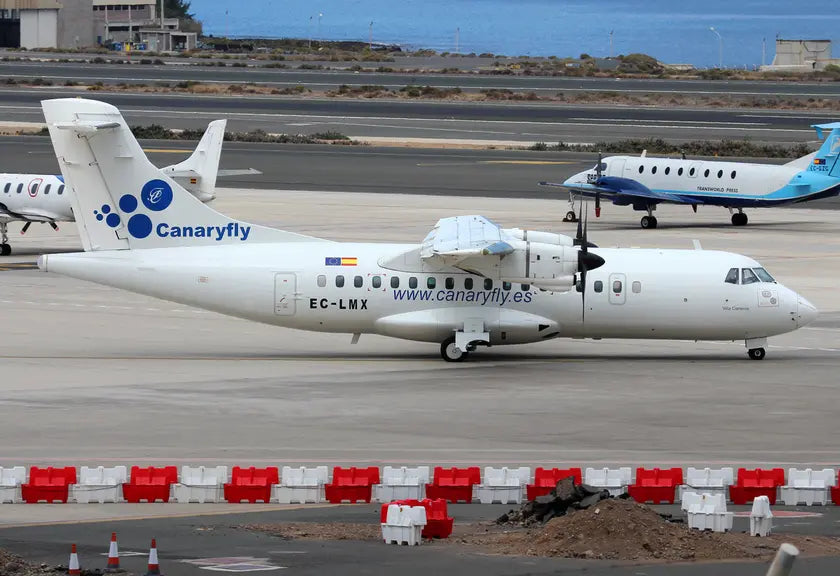
The airline operates a fleet of five ATR 72-500 turboprop aircraft and employs over 150 staff across approximately 20 departments, led by CEO Regulo Andrade. Canaryfly serves eight inter-island routes connecting all major islands in the archipelago, including Gran Canaria, Tenerife North, Lanzarote, Fuerteventura, La Palma, and El Hierro. The airline reached a milestone of four million cumulative passengers in 2018 and maintains a codeshare agreement with Air Europa, giving passengers connecting access to mainland Spain and international destinations. Canaryfly is not a member of any airline alliance.
Looking ahead, the airline has announced strategic plans to launch international routes by 2030, potentially connecting the Canary Islands with European mainland destinations in France and Italy. This expansion would require fleet growth beyond the current five-aircraft operation and would position Canaryfly more directly against Binter, which has already expanded significantly into mainland Spanish routes since 2023 using Embraer E195-E2 jets.
Despite its small size, Canaryfly has invested in international quality and safety standards. The airline holds ISO 9001 (Quality Management) and ISO 14001 (Environmental Management) certification since January 2017, ISO 45001 (Occupational Health & Safety) since 2018, and IATA Operational Safety Audit (IOSA) certification, most recently renewed in June 2024. IOSA certification places Canaryfly alongside major airlines in meeting internationally recognized safety management standards.
Fleet Composition & Aircraft
Canaryfly operates an entirely homogeneous fleet of five ATR 72-500 turboprop aircraft. The single-type strategy is deliberate: it simplifies maintenance, reduces training costs, and allows all pilots to operate any aircraft in the fleet without requiring multiple type ratings. Each aircraft seats 68 to 70 passengers in an all-economy configuration and is powered by two Pratt & Whitney Canada PW127F/M turboprop engines, each producing 2,475 shaft horsepower at takeoff.
The ATR 72-500 is well-suited to Canaryfly's inter-island mission. With a maximum cruise speed of around 510 km/h and a practical range of approximately 1,430 km with full passenger load, the aircraft comfortably covers the relatively short inter-island distances (the longest route, Gran Canaria to La Palma, is under 350 km). The ATR 72-500 also performs well on shorter runways, with a takeoff distance of roughly 1,224 metres at maximum weight, making it compatible with all Canary Islands airports, including the shorter strips at El Hierro (VDE).
| Aircraft Type | Role | In Service | Notes |
|---|---|---|---|
| ATR 72-500 | Regional turboprop | 5 | 68-70 pax. PW127F/M engines. All aircraft on lease. Average fleet age ~20 years. |
| ATR 42-320 | Regional turboprop | 0 (retired) | Operated 2011-2016. 48 pax. Replaced by ATR 72-500. |
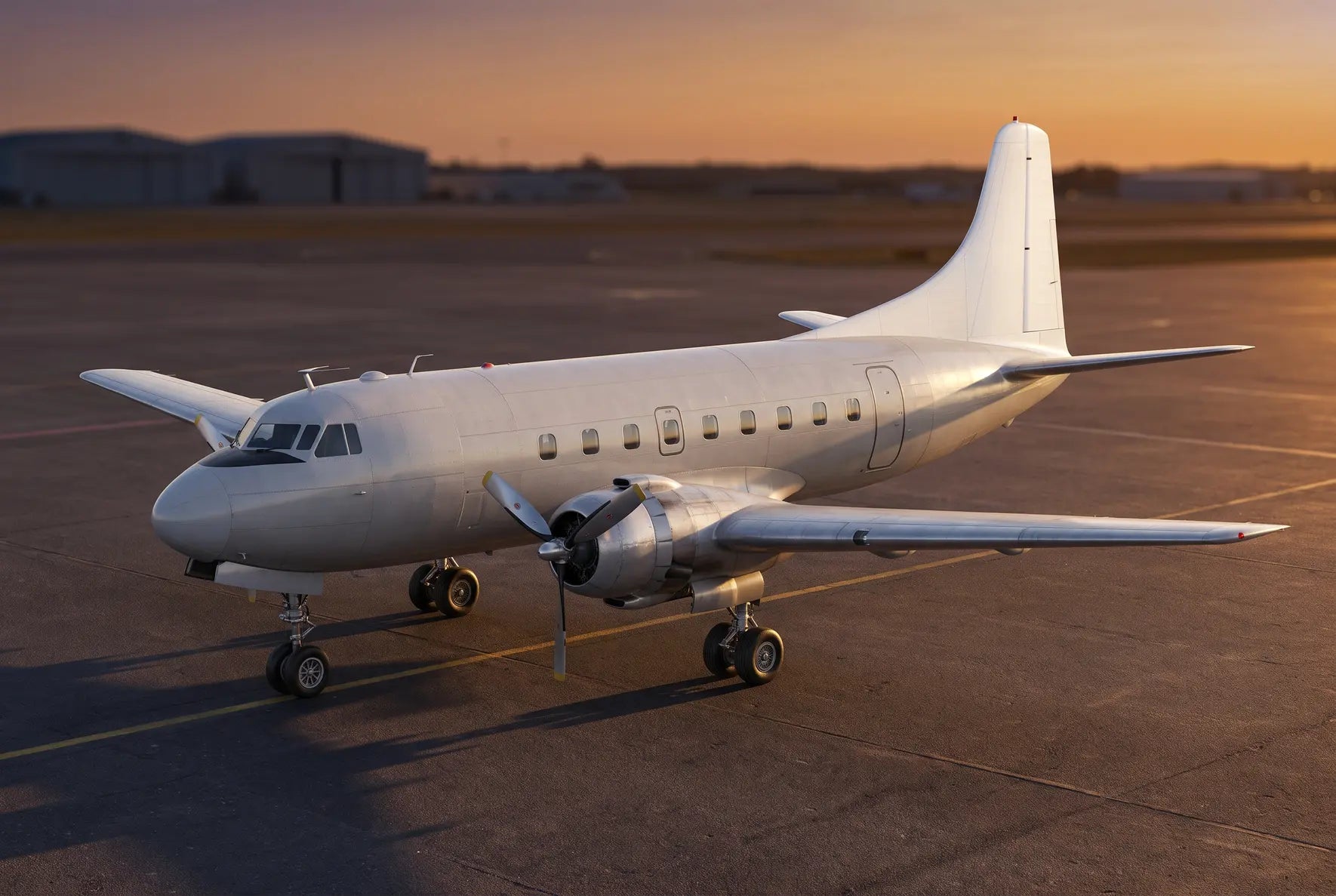
| Fairchild Metro III | Commuter | 0 (retired) | Original fleet (2008-2012). 19 pax. Used on Canary Islands-Africa routes. |
Fleet data as of early 2026. No new aircraft orders are currently documented.
Canaryfly operates the older ATR 72-500 variant, while competitor Binter Canarias flies the newer ATR 72-600, which features a glass cockpit, improved engines (PW127M), and lower operating costs. The 72-500 uses a more traditional analogue/EFIS hybrid cockpit. For pilots, the ATR 42/72 family shares a common type rating, meaning qualification on the 72-500 allows transition to the 72-600 (and vice versa) without a full new type rating, only differences training. This is relevant for pilots considering a future move to Binter or other ATR operators.
Canaryfly's ATR 72-500 fleet has an average age of approximately 20 years, which is on the older side for commercial turboprop operations. There are currently no publicly announced orders for newer aircraft. If the airline proceeds with international expansion by 2030 as announced, fleet renewal or augmentation (possibly with ATR 72-600s or a small jet type) would likely be necessary. Prospective pilots should factor the fleet's age and the absence of confirmed renewal plans into their evaluation.
Pilot Salary & Compensation
Canaryfly pilot compensation is one of the least transparent areas of this airline's profile. Unlike larger carriers that publish detailed pay scales or have data widely available through pilot union publications, Canaryfly's small size means compensation details are scarce in public sources. The most recent available data dates from 2019, sourced from pilot community forums (PPRuNe) and aviation job databases such as Pilot Jobs Network. These figures should be treated as approximate historical benchmarks, not current guaranteed rates.
Estimated Pay Scale (Historical, 2019 Data)
| Position | Monthly Gross (est.) | Annual Gross (est.) | Notes |
|---|---|---|---|
| First Officer (entry) | ~€1,500 | ~€18,000 - €20,000 | Entry-level F/O on ATR 72-500 |
| First Officer (experienced) | ~€2,500 | ~€28,000 - €32,000 | Several years of seniority |
| Captain | ~€2,200 - €3,500 | ~€26,000 - €42,000 | Limited data available. Range is estimated. |
Figures from 2019 pilot community reports. Actual current (2026) compensation may differ significantly. All amounts are gross (before Spanish income tax and social security contributions).
These salary figures are based on limited 2019-era community-reported data and should not be taken as current or guaranteed compensation. Canaryfly does not publicly disclose pilot pay scales, and no recent collective agreement data is available for this airline specifically. The European aviation industry has seen significant salary inflation since 2022 due to the post-COVID pilot shortage, so current figures may be meaningfully higher than shown above. Prospective candidates should request current compensation details directly from Canaryfly during the application process. Spanish income tax rates (19-47% depending on bracket) and social security contributions (~6.5% employee share) will further reduce take-home pay.
How This Compares to European Regional Averages
Even accounting for potential increases since 2019, Canaryfly's reported compensation sits well below the European regional airline average. According to 2025 industry benchmarks, European regional airline First Officers typically earn between €35,000 and €55,000 at entry level, rising to €55,000-€75,000 with experience. Regional Captains average €65,000-€95,000 depending on airline and aircraft type. At competitor Binter Canarias, First Officer pay reportedly ranges from approximately €600 to €2,300 per month after tax, while the airline's larger scale and ongoing fleet expansion create more competitive total compensation packages. At Air Nostrum (Iberia Regional), another comparable Spanish regional operator, compensation is also understood to be more competitive, supported by the Iberia Group's broader salary framework.
One factor that partially offsets the lower salary: the cost of living in the Canary Islands is significantly below mainland Spain and most of Western Europe. The Canary Islands also benefit from a special tax regime (REF, Regimen Economico y Fiscal de Canarias) with lower indirect taxes and a general sales tax (IGIC) of just 7% compared to mainland Spain's 21% VAT. Housing, groceries, and leisure are all notably cheaper than in Madrid, Barcelona, or Paris. For a pilot based in Gran Canaria or Tenerife, the real purchasing power of Canaryfly's salary stretches further than the raw numbers might suggest.
Roster Pattern & Quality of Life
Canaryfly's inter-island operation creates a distinctive flying pattern quite different from what pilots experience at medium- or long-haul carriers. Flight sectors are short, typically lasting just 20 to 50 minutes depending on the route. The busiest corridor, Gran Canaria to Tenerife North, covers only 120 km and involves a flight time of roughly 20 minutes, with a rapid climb to around 10,000 feet and descent beginning almost immediately. This means pilots can expect multiple sectors per duty day (typically 4-6 legs), with rapid turnarounds between flights.
All Canaryfly operations are governed by EASA Flight Time Limitations (FTL) as established in EU Regulation 965/2012, combined with Spanish labor law protections. Under EASA FTL, a pilot cannot be rostered for more than 100 block hours in any 28-day period, nor more than 900 hours in a calendar year. Maximum single duty periods are capped at 13 hours (with reductions for early starts and multiple sectors), and minimum rest periods between duties are 12 hours (or longer following extended duties).
📅 Sample Month: ATR 72-500 First Officer (LPA Base)
The sample roster above is an illustrative representation based on typical EASA-compliant short-haul regional patterns and general Canary Islands inter-island scheduling. It does not represent an actual Canaryfly published roster. Actual schedules depend on seasonal demand, fleet availability, and crew seniority.
A significant quality-of-life advantage of Canaryfly is the home-every-night nature of the operation. Since all routes are short inter-island hops, overnight layovers are rare to non-existent. Pilots are typically based at Gran Canaria or Tenerife North and complete their duty day returning to their home base. Combined with the Canary Islands' year-round mild climate, outdoor lifestyle, and lower cost of living, the lifestyle factor is one of Canaryfly's strongest selling points for pilots who prioritize personal time and family life over maximizing income.
Benefits, Travel Perks & Insurance
As a Spanish-registered employer, Canaryfly provides all employees with the statutory benefits mandated under Spanish labor law, supplemented by company-specific perks. While the benefits package is not as extensive as those offered by major legacy carriers, it covers the essential areas that pilots need.
While the financial benefits package at Canaryfly may not rival those of major carriers, the non-monetary benefits of island life should not be underestimated. The Canary Islands enjoy an average of 300+ days of sunshine per year, mild temperatures year-round (18-26°C), world-class beaches, hiking, and water sports. The special tax regime keeps living costs low. For pilots with families, the home-every-night operation combined with island lifestyle represents a quality-of-life proposition that many higher-paying airlines simply cannot match.
Career Progression & Seniority
Career progression at Canaryfly follows the standard European seniority-based model. Upon joining, each pilot receives a seniority number that determines schedule preferences, route bidding, and, eventually, eligibility for Captain upgrade. More senior pilots get first choice of monthly schedules and preferred flying patterns, while junior pilots take the remaining assignments.
However, career advancement at Canaryfly is significantly constrained by the airline's small size. With only five aircraft and a correspondingly small pilot workforce, Captain vacancies are rare. Unlike larger airlines where fleet growth, retirements, and expansion create a steady flow of upgrade opportunities, Canaryfly's static fleet size means Captain positions open primarily through attrition (retirement, resignation, or medical loss). This makes the upgrade timeline inherently unpredictable and potentially very long.
| Career Milestone | Estimated Timeline | Notes |
|---|---|---|
| Join as F/O (ATR 72-500) | Day 1 | Entry on ATR 72-500. Type rating may or may not be company-funded. |
| Gain line experience | 1-3 years | Build multi-sector, short-haul turboprop experience. High cycle count. |
| Captain upgrade (internal) | Unknown (potentially 5-10+ years) | Severely limited by fleet size. Few positions available. |
| Transition to larger carrier | 2-5 years at Canaryfly | Many pilots use Canaryfly as a stepping stone to Binter, Air Nostrum, or major airlines. |
For many pilots, Canaryfly is not a final career destination but rather a valuable entry point into commercial aviation. The airline offers legitimate airline experience on a certified EASA AOC, accumulation of turboprop multi-crew hours, and exposure to high-frequency, multi-sector operations. These credentials are attractive to larger regional carriers like Binter Canarias and Air Nostrum, as well as to major airlines that value disciplined short-haul experience. Pilots considering Canaryfly should realistically plan for a 2-5 year tenure before transitioning to a larger operator for better compensation and career advancement. The ATR 72 type rating is directly transferable to dozens of ATR operators across Europe, Africa, and Asia.
The airline does accept direct-entry pilots with the appropriate qualifications and type rating (or willingness to complete one). There is no documented cadet programme at Canaryfly. All recruits must hold at least a CPL/IR with ATPL theory frozen, and preferably an ATR type rating or willingness to self-fund one if not provided by the company.
Recruitment Process & Requirements
Canaryfly recruits pilots on an as-needed basis rather than through large-scale annual recruitment campaigns. The airline does not operate a cadet programme, and all positions require pilots to hold existing professional qualifications. Recruitment is typically advertised through aviation job platforms such as Pilot Career Center and Pilot Jobs Network, as well as through direct applications to the airline.
Minimum Requirements
Typical Selection Process
Online Application
Submit CV, cover letter, and copies of licenses, medical, and qualifications through the airline directly or via aviation job boards. Speculative applications are accepted.
Document Screening
Canaryfly verifies license validity, medical currency, type rating status, and EU work authorization. Candidates with current ATR type ratings may receive priority.
Interview & Assessment
Shortlisted candidates are typically invited for an interview at Gran Canaria. Assessment may include technical knowledge review, CRM scenario discussion, and a simulator session (if facilities are available) or technical oral examination.
Offer & Type Rating
Successful candidates receive a conditional offer. If the candidate does not hold a current ATR type rating, arrangements are made for type rating training (typically at an ATO in Malaga, Toulouse, or Paris). The ATR 72 type rating course takes approximately 5-6 weeks including ground school, simulator, and base training.
Line Training & Release
Newly type-rated pilots complete supervised line training on actual Canaryfly routes before being released for unsupervised line operations. The inter-island network provides intensive experience with frequent takeoffs and landings in varied wind conditions characteristic of the Canary Islands.
The ATR 42/72 type rating is one of the most accessible turboprop type ratings in European aviation. The course typically consists of 85 hours of ground school (covering systems, performance, and procedures), 32 hours of full-flight simulator training plus a 4-hour skill test, and 4-6 actual aircraft takeoffs and landings for base training. The ground school phase is commonly conducted in Malaga (Spain) or at ATR's training centre, while simulator sessions are available in Paris or Toulouse. Total cost, if self-funded, ranges from approximately €15,000 to €25,000 depending on the ATO. A key advantage of the ATR type rating: it covers both the ATR 42 and ATR 72 families, giving pilots access to over 200 operators worldwide flying these aircraft.
How Canaryfly Compares: Airline Radar Chart
How does Canaryfly measure up against its two most relevant competitors: Binter Canarias (the dominant Canary Islands operator) and Air Nostrum / Iberia Regional (Spain's leading regional airline group)? Below is our comparative analysis across five key pilot career metrics. Scores are editorial estimates based on publicly available data, industry benchmarks, and pilot community feedback.
Key Takeaways from the Comparison
Binter Canarias dominates on nearly every metric. With 42 aircraft (vs. Canaryfly's 5), a modern fleet including both ATR 72-600s and Embraer E195-E2 jets, over 2,100 employees, and an expanding international route network, Binter offers significantly better salary prospects, career advancement, and long-term job security. Binter has invested over €1.1 billion in fleet renewal since 2022, ordered four additional ATR 72-600s in February 2025, and offers pilots the prospect of transitioning to jet operations on the E195-E2. For pilots who want to stay in the Canary Islands long-term, Binter is the stronger career choice.
Air Nostrum provides a mainland gateway. As Iberia's regional partner, Air Nostrum offers a more diverse fleet (ATR 72-600, CRJ1000), a broader domestic and European route network, and the potential for career progression into the Iberia Group (Iberia, Iberia Express, Vueling). Salary and benefits are generally more competitive than at Canaryfly, though rosters may involve more time away from home with overnight stays on mainland routes. For pilots seeking a stepping stone toward a major Spanish carrier, Air Nostrum may offer a more efficient pathway than Canaryfly.
Canaryfly's unique advantage: simplicity and lifestyle. Where Canaryfly stands apart is in its straightforward, home-every-night island operation. No overnight stays, no long-haul fatigue, no complex bidding systems. For pilots who prioritize a relaxed Canary Islands lifestyle, minimal time away from home, and a small-company atmosphere, Canaryfly offers something that neither Binter nor Air Nostrum can fully replicate. The trade-off is lower pay, limited career advancement, and an aging fleet.
Radar chart scores are editorial estimates based on publicly available salary data, fleet information, company financials, pilot community reports, and industry benchmarks. They represent a general assessment for a pilot evaluating long-term career options. Individual experiences will vary based on seniority, timing, and personal priorities. These scores will be updated as new data becomes available.
Verdict: Who Is Canaryfly For?
🎯 Our Take
Canaryfly occupies a very specific niche in European aviation: a small, stable, IOSA-certified regional operator offering legitimate airline experience in one of Europe's most attractive living environments. It is not a career destination for pilots chasing high salaries or rapid progression to wide-body commands. Instead, it serves two distinct profiles exceptionally well.
First, it is an excellent entry point for low-hour pilots breaking into commercial aviation. Canaryfly provides real airline experience, multi-crew turboprop hours on a certified EASA AOC, and intensive short-haul operations that build skills quickly. The ATR type rating gained here opens doors to dozens of operators worldwide. Second, it suits lifestyle-oriented pilots who have made a deliberate choice to prioritize island living, family time, and a home-every-night schedule over maximizing income.
The trade-offs are clear: compensation is below European regional averages, the fleet is aging with no confirmed renewal plans, career advancement is severely limited by the five-aircraft operation, and there is no cadet programme or structured pathway to larger airlines. Pilots should approach Canaryfly with realistic expectations and, ideally, a plan for their next career step after building initial experience.
1 Do I need an ATR type rating to apply to Canaryfly?
An ATR 42/72 type rating is strongly preferred and may be required. Some positions may expect candidates to self-fund the type rating before joining. The ATR type rating course takes approximately 5-6 weeks and costs €15,000-€25,000 if self-funded. Check directly with Canaryfly whether they are currently sponsoring type ratings, as policies can change.
2 Do I need to speak Spanish to fly for Canaryfly?
While ICAO English Level 4+ is the formal requirement for pilot licensing, working knowledge of Spanish is strongly preferred at Canaryfly. Air traffic control in the Canary Islands may communicate in Spanish, and all internal company operations, briefings, and colleague interactions are conducted in Spanish. Non-Spanish speakers may find the environment challenging. EASA licensing does not require Spanish, but practical considerations make it near-essential.
3 How long does it take to upgrade to Captain at Canaryfly?
There is no publicly available data on Captain upgrade timelines at Canaryfly. Given the airline's small fleet of five aircraft, Captain positions are rare and open primarily through attrition. The upgrade timeline could extend well beyond the 4-7 year regional airline average. Many pilots use Canaryfly as a stepping stone and transition to larger carriers before reaching Captain upgrade internally.
4 Can non-EU citizens apply to Canaryfly?
Canaryfly requires all pilot candidates to have legal authorization to live and work within the EU/EEA. Non-EU citizens would need to hold a valid Spanish work permit and residency authorization. The airline does not appear to sponsor work visas for pilot positions, making EU/EEA citizenship or existing work authorization a practical requirement.
5 Is Canaryfly a good first airline job?
Canaryfly can be a solid first airline job for the right candidate. It offers legitimate EASA AOC experience, an IOSA-certified operation, intensive multi-sector turboprop flying, and a low-pressure lifestyle environment. The high sector count (4-6 legs per day) builds takeoff and landing experience rapidly, and the ATR type rating is transferable to over 200 operators worldwide. The main drawbacks are low compensation and limited career advancement. Approach it as a 2-5 year career-building step, not a final destination.
6 What is the difference between Canaryfly and Binter Canarias?
Binter Canarias is the dominant Canary Islands airline with 42 aircraft, over 2,100 employees, and a growing mainland and international route network. Canaryfly is much smaller with 5 aircraft and approximately 150 employees, operating exclusively inter-island routes. Binter offers better salaries, newer aircraft (ATR 72-600 and Embraer E195-E2 jets), and stronger career advancement prospects. Canaryfly positions itself as the low-cost alternative, with generally lower fares for passengers and a leaner operation.
7 Does Canaryfly have a pilot union?
Specific information about pilot union representation at Canaryfly is not publicly documented. Spain's main pilots' union is SEPLA (Sindicato Espanol de Pilotos de Linea Aerea), which primarily represents pilots at larger Spanish carriers like Iberia. Given Canaryfly's small size, pilot conditions may be governed by individual contracts and Spanish labor law rather than a formal collective agreement. Under Spanish law, all workers have the right to unionize and collectively bargain, regardless of employer size.
8 Will Canaryfly expand internationally?
Canaryfly has announced plans to launch international routes by 2030, potentially connecting the Canary Islands with destinations in mainland Europe (possibly France and Italy). This expansion would require fleet growth and possibly new aircraft types. However, as of early 2026, no specific orders have been placed and no detailed expansion timeline has been published. Prospective pilots should consider these plans as aspirational rather than confirmed.
Official Links & Resources
Before applying or making any career decisions, always verify information directly with official sources. These are the key websites and organisations relevant to Canaryfly pilot careers:
Canaryfly does not maintain a dedicated careers page on its website. To stay informed about pilot vacancies, set up alerts on Pilot Career Center and Pilot Jobs Network, which aggregate aviation job postings across European airlines. You can also send a speculative application directly to Canaryfly at their Gran Canaria headquarters (Hangar L, Gran Canaria Airport, C.P. 35230, Las Palmas de Gran Canaria) or via email to attpasajero@canaryfly.es for general inquiries.