

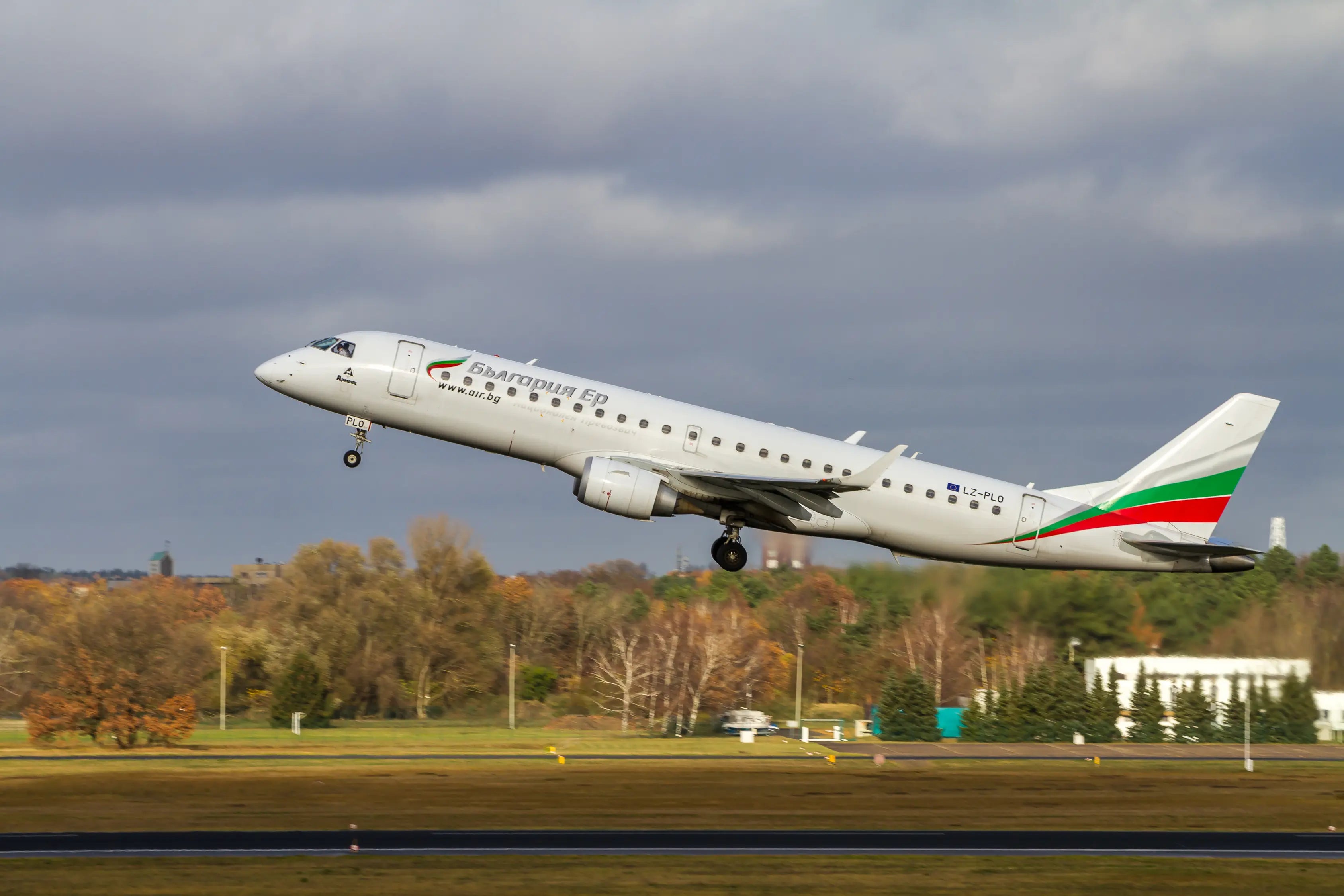
Bulgaria Air Overview & Company Profile
Bulgaria Air is the flag carrier of the Republic of Bulgaria, founded in November 2002 as the successor to the bankrupt Balkan Bulgarian Airlines. The airline was designated national flag carrier by the Bulgarian Ministry of Transport shortly after its creation. It is privately owned by Chimimport AD, a Sofia-based holding group with interests spanning finance, transport, and agriculture. The airline is headquartered at 1 Brussels Boulevard, Sofia 1540, on the grounds of Vasil Levski Sofia Airport.
Bulgaria Air operates a hub-and-spoke model centred on Sofia Airport (SOF), where roughly 95 percent of its scheduled capacity is generated. It also runs seasonal and secondary services from Varna (VAR) and Burgas (BOJ) on the Black Sea coast, with new routes such as Varna to Paris Charles de Gaulle and Varna to Frankfurt introduced for the 2025 to 2026 summer season. The carrier is not a member of any global airline alliance (neither SkyTeam, Star Alliance, nor Oneworld) and instead operates interline agreements with major European and Middle Eastern carriers.
In recent years Bulgaria Air has launched one of Central and Eastern Europe's more ambitious fleet renewal programmes: by March 2026 it had taken delivery of all seven ordered Airbus A220 family aircraft (five A220-300 and two A220-100), positioning itself as an early regional adopter of the type. Financially the airline reported 2026 annual revenue of roughly USD 29.6 million per corporate aggregators. Total workforce is approximately 627 staff across pilots, cabin crew, ground operations, and administration. The airline does not publicly disclose the exact number of pilots on its roster, though the operating fleet of 14 to 17 aircraft suggests a pilot community in the low hundreds.
Fleet Composition & Type Ratings
Bulgaria Air operates a modest narrowbody-only fleet that is currently in the middle of a generational shift. According to Aviation Week's reporting on the airline's twin-track small narrowbody strategy, Bulgaria Air is pairing its new Airbus A220 family with the existing A320 family to cover different market segments from 2024 onwards. The Embraer E190 continues to serve thinner regional routes, while the older A319s are being progressively phased out as A220 deliveries complete. The airline publicly took delivery of its first A220 in June 2023, reportedly becoming one of the first European carriers to upgrade its fleet with the type, and received its seventh and final A220 in March 2026.
| Aircraft Type | Role | In Service | Routes / Notes |
|---|---|---|---|
| Airbus A220-100 | Narrowbody | 2 | 118 seats (8 business + 110 economy). Regional and short European routes. |
| Airbus A220-300 | Narrowbody | 5 | 143 seats (8 business + 135 economy). Leased from Air Lease Corporation. Used on Varna to Paris CDG and other new routes. |
| Airbus A319-100 | Narrowbody | ~1-2 | Being phased out. Replaced by A220 family. |
| Airbus A320-200 | Narrowbody | ~3-5 | European and domestic operations. Workhorse of the mainline fleet. |
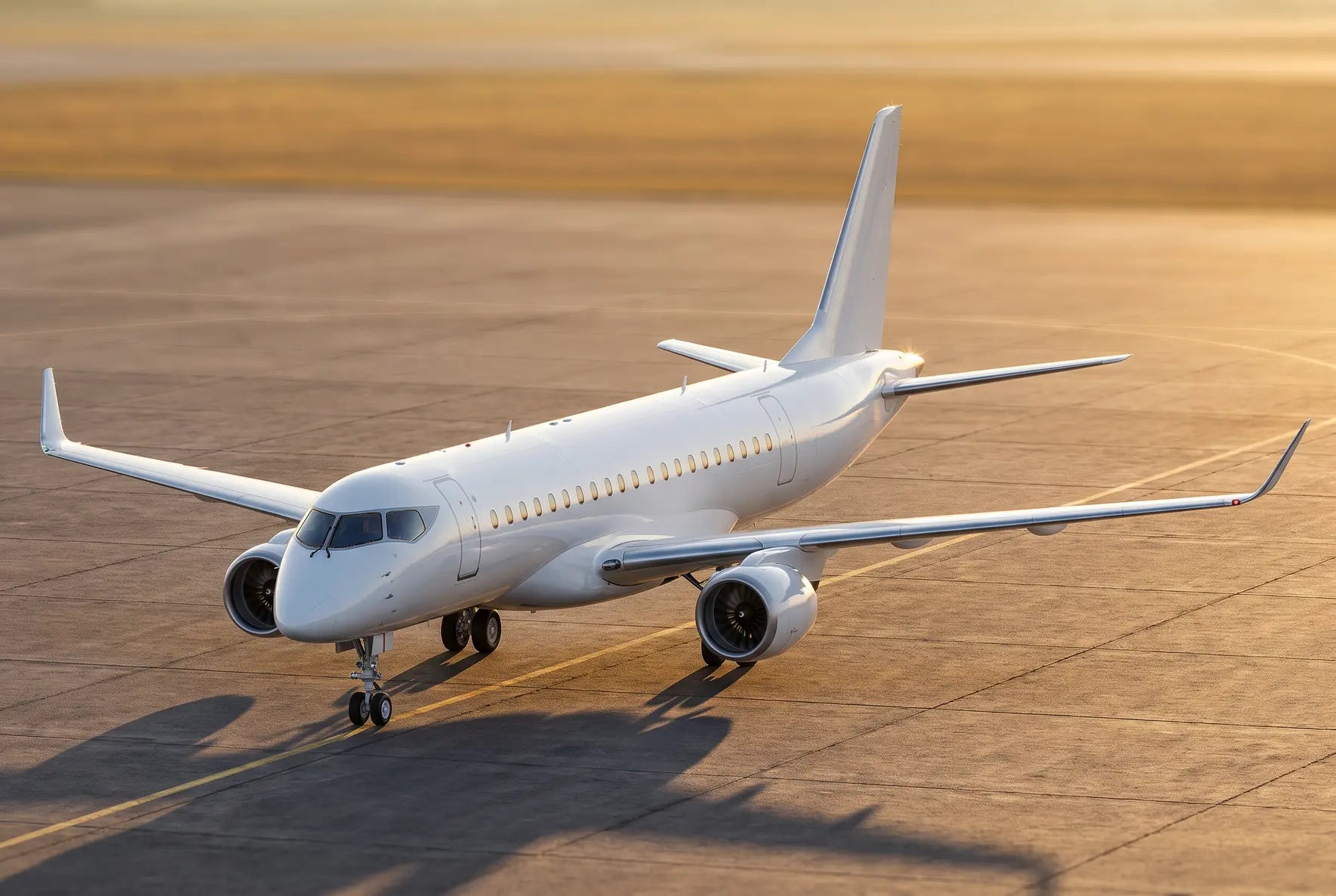
| Embraer E190-100 | Regional | 4 | Thinner regional routes from Sofia. Complements A320 family. |
| Boeing 737-300 | Charter / ACMI | 1 (wet-leased) | Wet-leased from subsidiary Bul Air for charter and ACMI work. |
Fleet figures as of 2025 to 2026. Numbers are approximate and change with ongoing A220 deliveries, A319 retirements, and seasonal wet-lease arrangements. Total operating fleet ranges between 14 and 17 aircraft depending on the source and date.
Bulgaria Air sponsors type rating for newly hired First Officers on the Airbus A220, including non-type-rated candidates, as part of its current summer-season recruitment drive. This is one of the more attractive features of the employment package in a market where many smaller European carriers require pilots to self-fund a €25,000 to €40,000 type rating. The A320 family and Embraer E190 positions are generally filled by existing type-rated pilots, but internal transitions between fleets occur through the airline's seniority bidding process. Note that Bulgaria Air's fleet is narrowbody only: there is no widebody pathway, and long-haul intercontinental flying is not part of the career trajectory at this carrier.
Pilot Salary & Compensation Breakdown
Bulgaria Air does not publish detailed collective pay scales, and the airline's salary structure is not subject to the same public collective agreement transparency seen at larger European flag carriers. The figures below are compiled from the Pilot Jobs Network Bulgaria Air profile and cross-referenced with other aggregator sources. All amounts are indicative and subject to change based on seniority, aircraft type, and individual contract.
First Officer (F/O) Pay Scale
| Seniority | Monthly Base (EUR) | Monthly Base (BGN) | Annual Gross (est.) |
|---|---|---|---|
| Year 1 (entry F/O) | €2,400 | ~4,700 BGN | ~€28,800 |
| Year 3 to 5 | €2,600 to €2,800 | ~5,100 to 5,500 BGN | ~€31,000 to €34,000 |
| Senior F/O (5+ years) | €3,000 | ~5,900 BGN | ~€36,000 |
Figures are monthly base compensation estimates. Total compensation may include small variable components such as night pay and per-flight-hour bonuses, but these are not publicly documented for Bulgaria Air.
Captain (CAP) Pay Scale
| Seniority | Monthly Base (EUR) | Monthly Base (BGN) | Annual Gross (est.) |
|---|---|---|---|
| Entry Captain | €4,500 | ~8,800 BGN | ~€54,000 |
| Mid-Career Captain | €5,000 to €5,500 | ~9,800 to 10,800 BGN | ~€60,000 to €66,000 |
| Senior Captain | €6,000 | ~11,700 BGN | ~€72,000 |
Captain base figures per Pilot Jobs Network. Top-end estimates assume long tenure on the A320 family or A220. Bulgaria Air does not disclose hourly rates or per diem structure publicly.
Gross salary numbers at Bulgaria Air look modest compared to Western European flag carriers, but net take-home is meaningfully closer than the headlines suggest. Bulgaria applies a flat 10 percent personal income tax, one of the lowest in the European Union, plus mandatory employee social-security contributions of roughly 13.8 percent of gross income. By contrast, a French or German pilot earning €70,000 gross would lose 35 to 45 percent to income tax and social charges combined. A Bulgarian Captain on €60,000 gross keeps close to €45,000 net, with an exceptionally low cost of living in Sofia compared to Paris, Munich, or Amsterdam.
Bulgaria Air does not publish official pilot pay scales, and there is no public collective agreement equivalent to those available at Air France or Lufthansa. The figures above are compiled from third-party pilot jobs databases and industry aggregators, and should be treated as indicative ranges rather than precise contract values. Actual compensation depends on aircraft type, seniority, bidding outcomes, and individual negotiation. Pilot forums have historically reported mixed reviews of pay at Bulgaria Air, with some noting the base is lower than regional competitors such as Air Serbia. Always verify current numbers with the airline directly during the recruitment process.
Roster Pattern & Quality of Life
Bulgaria Air operates under EASA Flight Time Limitations (Subpart FTL of Regulation EU 965/2012) combined with Bulgarian labour law and the airline's internal rostering practices. As a short-to-medium-haul operator based in a single primary city, the roster is defined by European regional rotations (typically 1 to 3 sectors per duty day) rather than long multi-night widebody trips. According to Pilot Jobs Network, the airline operates an approximate 22 days on, 8 days off monthly pattern, translating into roughly 8 to 10 days off per month on average, with 40 days of paid annual leave.
📅 Sample Month for an A220 / A320 First Officer (Sofia)
Duty days typically consist of either two-sector out-and-back turnarounds (Sofia to a European city and return the same day) or four-sector loops on shorter domestic and regional flights. Night stops occur on select longer routes to destinations such as Tel Aviv, Larnaca, Dubai, or seasonal winter charter destinations, but Bulgaria Air is fundamentally a hub-based carrier where most pilots sleep at home the vast majority of nights. This is a meaningful lifestyle advantage over long-haul carriers where crews spend 12 to 18 nights per month in hotels abroad.
All Bulgaria Air pilots are based in Sofia. There is no multi-base bidding system like at Lufthansa or British Airways, and seasonal operations out of Varna and Burgas are typically covered by positioning rather than permanent base changes. The upside is that all pilots have a stable single-base life, no commuting dilemmas, and low living costs: a modern two-bedroom apartment in a good Sofia district rents for €600 to €900 per month, groceries and restaurants are roughly 50 to 60 percent cheaper than in Paris or Munich, and the city sits at the foot of the Vitosha mountain with world-class skiing 30 minutes from the airport. The downside for non-Bulgarian applicants is that Sofia is, by definition, the only place you will live during your Bulgaria Air career.
Benefits, Travel Perks & Social Protection
As a Bulgarian employer under EU regulation, Bulgaria Air operates within a baseline framework of statutory protections defined by Bulgarian labour law and EU aviation regulations. Pilots benefit from the country's universal healthcare system, the national pension (NOI), and mandatory social security coverage. The airline-specific top-up benefits are more modest than those seen at the larger European flag carriers, reflecting the smaller scale of the operation and the absence of a comprehensive collective agreement on the level of the SNPL Air France or Vereinigung Cockpit Lufthansa accords.
Candidates should approach the benefits package at Bulgaria Air as a collection of statutory baselines plus a limited set of airline perks, rather than the rich layered package seen at Air France, KLM, or Lufthansa. The absence of alliance membership is the single biggest structural gap: without SkyTeam or Star Alliance access, staff travel is limited to the Bulgaria Air own network of about 25 destinations, which constrains leisure-travel flexibility compared to flag carriers with alliance staff-travel reciprocity. On the other hand, Bulgaria's low cost of living and the 410-day maternity leave are meaningful positives for pilots starting a family.
Bulgaria Air publishes far less information on its benefits package than larger European flag carriers. Loss-of-license insurance, private supplementary health coverage, and exact per-diem rates are not currently disclosed on the public recruitment portal. Any candidate progressing to final interview should request a full written summary of benefits before accepting an offer, and should verify claims made by third-party aggregator websites. This article presents the best-available public data as of April 2026.
Career Progression & Seniority
Career progression at Bulgaria Air is, in common with most European airlines, based primarily on seniority. New First Officers are placed at the bottom of the roster-bidding list and move up as colleagues upgrade to Captain or retire. Aircraft-type transitions (for example from the Embraer E190 to the Airbus A220, or from the A220 to the A320 family) are also seniority-driven when openings become available. Unlike at the large Western European flag carriers, the absence of a widebody fleet means there is no long-haul career pathway: the career ceiling at Bulgaria Air is narrowbody Captain.
The airline's public job postings and the Pilot Career Center Bulgaria Air profile do not specify an official typical upgrade time from First Officer to Captain. Industry benchmarks for a 14 to 17 aircraft fleet with moderate growth suggest that upgrade timelines of 6 to 10 years are realistic, though this will vary significantly based on retirement waves and fleet expansion. Direct-entry Captain hiring is occasionally advertised when the airline requires quick fills on the A320 or A220, but it is not the primary recruitment channel.
| Career Milestone | Typical Timeline (estimate) | Notes |
|---|---|---|
| Join as F/O (A220 or A320) | Day 1 post-type-rating | A220 type rating currently sponsored by the airline for qualifying candidates. |
| Fleet transition (E190 to A320 to A220) | 2 to 5 years (seniority-dependent) | Driven by internal bidding as positions open up. |
| Senior F/O | ~5 years | Top of the F/O pay scale; preferred bidding outcomes. |
| Captain upgrade | ~6 to 10 years (estimated) | Seniority-based. Command assessment includes simulator check and interview. Not officially published. |
| Training Captain / TRE / TRI | Variable | Requires separate selection and instructor qualification. |
Upgrade timelines are editorial estimates based on fleet size, typical European regional upgrade norms, and the absence of an officially published timeline from Bulgaria Air. Always confirm with HR during the recruitment process.
Bulgaria Air is in an expansion phase driven by A220 deliveries, new Varna-based routes, and a broader European regional pilot shortage. In 2025 and 2026 the airline publicly launched a summer-season campaign to recruit A220 First Officers, signalling the kind of growth environment that tends to accelerate upgrade timelines. However, the total fleet remains small compared to Tarom (14 aircraft) or Air Serbia (32 aircraft), which structurally caps the number of Captain positions available at any given time. Candidates seeking the fastest route to Captain in Eastern Europe may find quicker progression at larger expanding carriers such as Wizz Air, though these come with different trade-offs on lifestyle and base stability.
Recruitment Process & Requirements
Bulgaria Air recruits pilots on a rolling basis through its official careers portal. There is no formal dedicated cadet programme (unlike Air France or Lufthansa), meaning the standard entry point is with an already-qualified EASA CPL/ATPL. However, the airline does sponsor type rating for hired A220 First Officers, which closes the gap between a cadet and direct-entry pathway for candidates who finish a conventional flight school without employer sponsorship.
A220 First Officer: Current Requirements (2025 to 2026 Campaign)
Selection Stages
Online Application
Candidates apply through the Bulgaria Air careers portal at air.bg/en/careers. Required documents include CV, licences, medical certificate, logbook summary, and supporting ID. Campaigns are time-limited and usually aligned with the summer-season operational ramp.
Document Verification & Shortlisting
HR reviews flight time, licence validity, language qualifications, and right-to-work documentation. Shortlisted candidates are invited to the next stage. Applicants without the minimum 1,500 hours for A220 F/O positions are typically filtered out at this point.
Aptitude & Psychometric Testing
Bulgaria Air uses standard airline-industry cognitive and psychomotor assessments, typically covering spatial reasoning, short-term memory, multitasking, hand-eye coordination, and personality inventories. Pilot Jobs Network explicitly mentions aptitude and psychometric testing as part of the process.
Technical & HR Interview
Panel interview covering technical knowledge (aerodynamics, performance, EASA regulations, general aviation), CRM scenarios, motivation for joining Bulgaria Air, and English language proficiency verification. For bilingual candidates, a portion of the interview may be conducted in Bulgarian.
Simulator Assessment (for type-rated candidates)
Type-rated A320 or A220 candidates are typically invited to a simulator check, usually 2 hours in a fixed or full-flight simulator. Scenarios focus on standard operating procedures, raw data handling, and crew coordination. Non-type-rated candidates proceed directly to the training bond stage without sim assessment.
Final Medical, Contract & Training
Successful candidates complete a Class 1 medical at a Bulgarian-approved AeMC, sign an employment contract (often with a type-rating training bond for sponsored candidates), and commence ground school and simulator training followed by line training and line check.
Bulgarian language proficiency is a meaningful factor in the Bulgaria Air hiring process. While English is the operational cockpit language under ICAO and EASA rules, internal company communications, briefings, HR processes, and parts of the selection itself are typically conducted in Bulgarian. Non-Bulgarian applicants with EU right-to-work have been hired historically, but fluent Bulgarian speakers will always have an advantage. Candidates should also check the official campaign announcements page periodically, as Bulgaria Air typically runs rolling recruitment rather than one-shot annual windows.
How Bulgaria Air Compares: Airline Radar Chart
How does Bulgaria Air stack up against its closest regional peers? The most relevant benchmarks are two other Balkan and Eastern European flag carriers: Tarom (the Romanian flag carrier) and Air Serbia (based in Belgrade, with an Etihad partnership). All three operate narrowbody and regional fleets, cover similar markets, and compete for broadly the same pilot talent pool in Central and Eastern Europe.
Key Takeaways from the Comparison
Fleet modernity favours Bulgaria Air. With seven newly delivered Airbus A220 aircraft (through March 2026), Bulgaria Air now operates one of the youngest narrowbody fleets in Eastern Europe. Tarom, by contrast, operates older Boeing 737-700 aircraft alongside ATR 72-500/600 turboprops, with no imminent major renewal announced. Air Serbia's fleet is the largest (32 aircraft) and includes four long-haul A330-200s, giving pilots a widebody career option that Bulgaria Air cannot match.
Air Serbia edges ahead on scale and career breadth. With 32 aircraft, Belgrade base, long-haul A330 service to New York and Tianjin, and an Etihad strategic partnership, Air Serbia offers a broader career pathway than Bulgaria Air's narrowbody-only operation. The airline has grown capacity 87 percent versus its 2018 baseline and sits 40th among Europe's largest carriers for winter 2025 to 2026. For ambitious pilots wanting to eventually command a widebody, Air Serbia is the stronger regional choice.
Bulgaria Air wins on cost of living. Sofia is significantly cheaper than Belgrade or Bucharest in 2026, and Bulgaria's 10 percent flat income tax is among the lowest in the EU. A Bulgaria Air Captain earning €60,000 gross often ends up with better net purchasing power than a Tarom Captain on similar nominal pay (Romania uses a 10 percent flat tax too, but health contributions are higher) or an Air Serbia Captain on somewhat higher gross pay but with Serbian taxation outside the EU framework.
Tarom carries more operational uncertainty. Tarom has repeatedly faced financial restructuring and EU state-aid scrutiny over the past decade, and has been public about needing government recapitalisation. Bulgaria Air, though smaller, is privately owned by Chimimport and does not carry the same political-financial overhang. Air Serbia's growth trajectory is the most positive of the three.
Scores are editorial estimates based on publicly available fleet data, pilot jobs database entries, airline press releases, route data, and comparative EU industry benchmarks. They reflect an experienced pilot's likely perspective evaluating these airlines in 2025 to 2026, not an absolute or scientific ranking. Individual experience will vary based on seniority, aircraft type, and personal priorities. Scores for Tarom and Air Serbia will be updated as we publish dedicated guides for each carrier.
Union & Industrial Relations
The main pilots' union in Bulgaria is BUL-ALPA (Bulgarian Airline Pilots Association, in Bulgarian Съюз на летците от гражданската авиация). BUL-ALPA is a recognised European Cockpit Association (ECA) member representing Bulgarian airline pilots, and is the principal voice in dialogue with Bulgaria Air management on pilot working conditions. Its chairman has publicly commented on Bulgaria Air pilot issues through Bulgarian press (for example during the widely reported 2012 dispute over mass leave requests, later denied by the union).
BUL-ALPA Structure & Role
Compared to powerful peers such as the French SNPL or the German Vereinigung Cockpit, BUL-ALPA operates with smaller membership numbers and fewer public-facing communications. Its website (bulalpa.org) is the authoritative source for members. There is no widely publicised, regularly updated collective bargaining agreement comparable to those negotiated at Air France or Lufthansa, and pilot pay scales are not published as public sector-wide figures.
Strike History & Labor Disputes
Bulgaria Air has a relatively low public profile on labor disputes compared to Western European flag carriers. The most notable episode in recent institutional memory was the 2012 mass leave controversy, when press reports claimed a significant group of Bulgaria Air pilots had filed simultaneous leave requests in protest over working conditions. BUL-ALPA publicly refuted the claim through Novinite (Bulgarian English-language press), stating that no coordinated union action was under way. The episode nonetheless highlighted ongoing tensions around pay and roster fairness that periodically resurface on pilot forums. Since then, Bulgaria Air has not been the subject of a publicly reported pilot strike.
Bulgaria Air's labor environment is stable in the sense that there is no recent history of disruptive strike action, but it is also less formalised than at larger European flag carriers. Union membership through BUL-ALPA is optional and gives pilots access to ECA-backed legal support, FTL advocacy, and insurance products. Candidates should expect direct bilateral negotiation of contract terms rather than a pre-set collective agreement, and should pay close attention to contractual language on training bonds, probation periods, and termination clauses. Pilot forums have historically offered mixed reviews of Bulgaria Air's working conditions, so independent verification via BUL-ALPA or current employees is recommended before signing.
Verdict: Who Is Bulgaria Air For?
🎯 Our Take
Bulgaria Air is a solid mid-tier European flag carrier undergoing one of the more interesting fleet modernisations in Eastern Europe. The seven-strong Airbus A220 fleet (through March 2026) puts new pilots on genuinely modern equipment, type-rating sponsorship is offered for qualifying A220 candidates, and Sofia offers an exceptionally low cost of living and a 10 percent flat tax environment that significantly closes the take-home pay gap versus Western European flag carriers.
The trade-offs are real. There is no widebody pathway, career ceiling is narrowbody Captain, alliance staff travel is not available, and benefits transparency is thinner than at larger flag carriers. The airline is small (14 to 17 aircraft), which structurally limits upgrade opportunities compared to expanding peers like Wizz Air or Air Serbia. Bulgarian language proficiency is a real hiring advantage if not a strict requirement.
For pilots with EU right-to-work who want a stable Sofia-based career on modern Airbus equipment without chasing Gulf-carrier wages, Bulgaria Air is a credible and increasingly competitive option. For pilots seeking the fastest path to widebody command or top-tier European compensation, larger flag carriers remain the stronger pick.
1 Do I need to speak Bulgarian to fly for Bulgaria Air?
Bulgarian language proficiency is strongly preferred and in practice mandatory for most positions. While English is the operational cockpit language under ICAO and EASA rules, internal company communications, briefings, HR processes, and parts of the selection process are typically conducted in Bulgarian. Non-Bulgarian speakers with EU right-to-work have been hired historically, but fluency in Bulgarian is a meaningful advantage in the recruitment process.
2 Does Bulgaria Air sponsor the type rating?
Yes, for the current A220 First Officer recruitment campaign. Bulgaria Air accepts non-type-rated candidates for A220 positions and sponsors the type rating as part of employment, typically with a training bond. Candidates should read the bond terms carefully before signing, including duration, repayment schedule, and termination conditions. Type-rating sponsorship is less consistently offered on the A320 family and Embraer E190 fleets, where type-rated candidates are usually preferred.
3 How long does it take to upgrade to Captain at Bulgaria Air?
Bulgaria Air does not publish an official upgrade timeline. Based on fleet size, typical European regional upgrade norms, and current growth from the A220 fleet expansion, a realistic estimate is 6 to 10 years from joining as a First Officer to earning a Captain upgrade, assuming steady performance and no major operational downturns. The timeline is seniority-driven and will vary with retirement waves and fleet changes.
4 Can non-EU citizens apply?
Bulgaria Air requires applicants to hold an EU passport or equivalent legal right to live and work in the European Union. There is no published work-permit sponsorship pathway for non-EU citizens at this airline. Candidates from outside the EU should not expect employer-sponsored work authorisation.
5 What aircraft will I fly at Bulgaria Air?
The operating fleet in 2025 to 2026 includes the Airbus A220-100 (2 aircraft), Airbus A220-300 (5 aircraft), Airbus A319 and A320-200 (about 5 combined), and the Embraer E190-100 (4 aircraft), plus a wet-leased Boeing 737-300 for charter work. Initial assignment depends on company needs, your existing type rating, and seniority. The A220 is the most common entry fleet for new hires in 2025 to 2026. There is no widebody pathway: Bulgaria Air does not operate long-haul intercontinental flights.
6 How does Bulgaria Air pay compare to other European flag carriers?
Gross pay is lower than at Western European flag carriers like Air France, Lufthansa, or British Airways. A Bulgaria Air Captain earns roughly €54,000 to €72,000 gross annually, versus €150,000 to €260,000 at an Air France Captain. However, Bulgaria's 10 percent flat income tax and low cost of living close much of the gap in net purchasing power terms. Compared to regional peers, Bulgaria Air pay is broadly in line with Tarom and slightly below Air Serbia in gross terms.
7 Does Bulgaria Air belong to any airline alliance?
No. Bulgaria Air is not a member of SkyTeam, Star Alliance, or Oneworld. The airline operates interline and codeshare agreements with select European and Middle Eastern carriers, but there is no alliance-level reciprocal staff travel. Free and discounted tickets are available only on the Bulgaria Air own network of about 25 destinations, which is a notable disadvantage for leisure-travel flexibility compared to alliance-member carriers.
8 Is Bulgaria Air financially stable?
Bulgaria Air is privately owned by Chimimport AD, a large Bulgarian holding group, and is designated the flag carrier of the Republic of Bulgaria by the Ministry of Transport. It does not carry the same state-aid and restructuring overhang as some regional peers (notably Tarom in Romania). The fleet renewal programme, completed in March 2026 with the final A220 delivery, signals ongoing investment in the long-term operation. Financial figures are not extensively public, and 2026 revenue of roughly USD 29.6 million reported by aggregators should be interpreted as an indicative scale indicator rather than audited performance.
Official Links & Resources
Before applying or making any career decisions, always verify information directly with official sources. These are the key websites and organisations relevant to a Bulgaria Air pilot career:
Bookmark the Bulgaria Air careers page at air.bg/en/careers and set a quarterly reminder to check for new pilot campaigns. Because Bulgaria Air runs rolling recruitment rather than a single annual window, timing an application to the start of a new campaign (typically aligned with summer-season ramp) can maximise interview opportunity. BUL-ALPA membership is also worth exploring early, as it gives access to Europe-wide pilot policy information through ECA channels and can help verify contract terms before signing.