BRA Overview & Company Profile
Braathens Regional Aviation (marketed as BRA Braathens Regional Airlines, IATA code TF, ICAO code BRA) is a Swedish regional operator headquartered in Stockholm. For most of its life it was best known as a domestic passenger carrier flying turboprops out of Stockholm Bromma, the city-close airport. Since late 2024 and through 2025, the company has undergone one of the most significant transformations of any European regional airline: it has closed down its own scheduled network and reinvented itself as a dedicated wet-lease (ACMI) provider, flying almost exclusively for Scandinavian Airlines (SAS). Any pilot evaluating BRA today needs to understand this pivot, because it changes almost everything about the job, from route structure to job security.
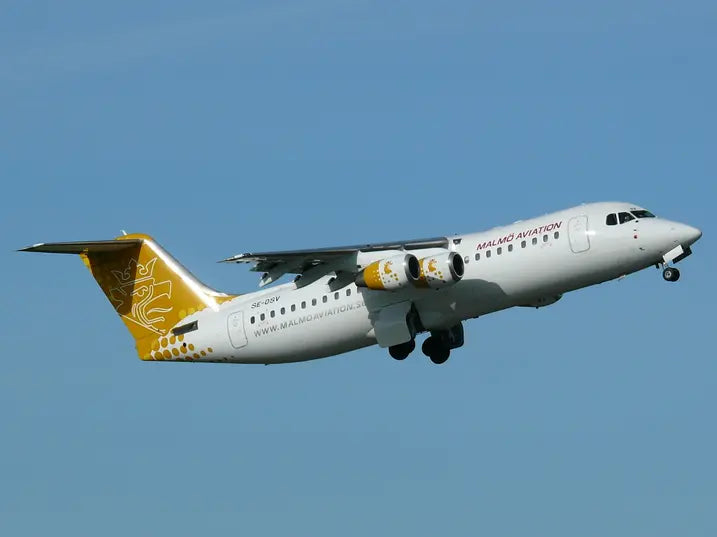
The operational roots of the airline trace back to Malmö Aviation, founded in 1981, which built Bromma into a specialist base for frequent, business-oriented domestic flights. In February 2016, Malmö Aviation and several smaller regional brands operating under the Sverigeflyg umbrella were consolidated under a single commercial identity: BRA, a name that conveniently means "good" in Swedish. At its peak, BRA carried roughly one third of Sweden's domestic passengers and operated around thirteen domestic routes, according to industry profiles of the carrier. The corporate structure separates the commercial "virtual airline" entity (BRA Sverige AB) from the operating company that holds the Air Operator Certificate and the aircraft (Braathens Regional Aviation AB, also referenced as Braathens Regional Airways). Pilots are employed within this operating group rather than the sales brand.
The airline sits inside the Braganza group, a privately held investment company associated with the Braathen family (Per G. Braathen), whose aviation heritage stretches back to the original Braathens carriers in Norway. Private ownership means BRA is not subject to stock-market disclosure, so precise revenue and pilot-headcount figures are not published. Workforce-data provider Revelio Labs lists roughly 660 employees at Braathens Regional Aviation AB for 2025, down from around 1,100 in the pre-pandemic era, a figure that includes pilots, cabin crew, engineering, and administration. As a comparison point on the airline's official identity and open positions, the Braathens careers page remains the authoritative source for current recruitment.
BRA is a moving target. Between September 2024 and December 2025 the airline exited its own scheduled network, signed a multi-year SAS wet-lease deal, filed for bankruptcy on its separate Airbus jet operations, entered a Swedish financial reorganisation, and lost a second wet-lease customer (Austrian Airlines). Every figure in this guide should be read against that backdrop. Verify current terms directly with BRA recruitment and the pilot union before making any career decision.
Business Model: The SAS Wet-Lease Pivot
The single most important thing to understand about BRA as an employer is that it is no longer a scheduled airline in the traditional sense. It is an ACMI operator, meaning it supplies Aircraft, Crew, Maintenance, and Insurance to another airline, which handles the flight numbers, ticket sales, network, and commercial risk. When you fly for BRA today, passengers board what they believe is an SAS flight. That distinction shapes pay, roster culture, uniform standards, and the stability of the whole operation.
The pivot happened quickly. In September 2024, SAS and Braathens announced a long-term wet-lease partnership, reported in secondary sources as a seven-year contract worth around SEK 6 billion, under which BRA would operate ATR 72-600s for SAS out of Stockholm Arlanda to strengthen SAS's Swedish domestic connectivity. To make room for that shift, BRA discontinued its own scheduled routes: reporting indicates it ceased selling its own scheduled passenger flights around the turn of the year, ending its independent network by December 2024 / 1 January 2025. The SAS partnership was confirmed on the SAS Group newsroom, and BRA grew its ATR fleet from 14 to 17 aircraft to serve it.
Two further developments reshaped the picture in 2025. First, BRA's separate jet arm (operating Airbus A319/A320 aircraft through the entities Braathens International Airways AB and Braathens Crew AB) filed for bankruptcy on 30 September 2025, and all Airbus flight operations were discontinued immediately. Second, the core ATR company entered a Swedish financial reorganisation (företagsrekonstruktion), approved by Solna District Court in early October 2025 and later extended toward April 2026, with the stated aim of managing the transition costs of becoming solely an ACMI supplier. Then, on 15 December 2025, Austrian Airlines terminated its ATR wet-lease with BRA with immediate effect, citing a failure to meet Lufthansa Group wet-lease standards. That left SAS as the dominant remaining customer.
Flying ACMI has real trade-offs for pilots. On the plus side, the flying is steady short-haul turboprop work with a large, established client (SAS) and a modern single-fleet operation. On the downside, your employer's revenue depends on one or two contracts rather than a diversified route network, so commercial shocks (a client walking away, as Austrian did) transmit directly to crew. It also means limited control over network strategy: BRA flies where and when its client wants. This is a normal model in European aviation, but it concentrates risk more than a legacy carrier with its own brand and bookings.
For a pilot, the practical reading is straightforward. The near-term flying is likely stable because SAS needs domestic Swedish capacity and BRA is contracted to provide it. The medium-term outlook carries more uncertainty than a large flag carrier would, because the business now rests heavily on a single relationship and is being run through a formal reorganisation process. Neither of those facts makes BRA a poor employer, but they do make it a different kind of bet than joining SAS, Widerøe, or a Gulf carrier.
Fleet Composition & Type Ratings
BRA now operates a single-type fleet: the ATR 72-600 turboprop. Fleet databases including ch-aviation and Wikipedia consistently report 17 ATR 72-600 in service by 2025 into 2026, with an average age of roughly eight years. There are no ATR 72-500s left in current fleet summaries, and, following the September 2025 Airbus bankruptcy, no Airbus A319 or A320 jets remain in the group. The airline's own fleet page still shows a slightly older count, but the current databases and the SAS ACMI expansion put the number at 17.
The ATR 72-600 is a modern twin-engine regional turboprop seating around 72 passengers, with a glass cockpit and strong short-field performance that suits airports like Bromma and short Nordic sectors. BRA markets itself as operating one of Europe's larger dedicated ATR fleets and leans heavily on the type's environmental credentials: ATR turboprops burn substantially less fuel per seat than comparable regional jets on short routes (the manufacturer commonly cites around 40% lower CO2 per seat versus a regional jet). BRA holds ISO 14001 environmental certification and has signed an ATR Global Maintenance Agreement (GMA), a fleet-wide support and spares programme that helps sustain dispatch reliability. You can review the type on the airline's own ATR 72-600 fleet page.
| Aircraft Type | Role | In Service | Notes |
|---|---|---|---|
| ATR 72-600 | Regional turboprop | 17 | Sole fleet type. Flown ACMI for SAS on Swedish domestic and connecting routes. Avg. age ~8 yrs. |
| ATR 72-500 | Regional turboprop | 0 | Retired. No longer appears in current fleet listings. |
| Airbus A319 / A320 | Narrowbody jet | 0 | Operated by separate Braathens jet entities until the September 2025 bankruptcy. Operations ceased. |
Fleet data as of late 2025 into early 2026, compiled from ch-aviation, Wikipedia, and company sources. Numbers are approximate and subject to ongoing restructuring.
Unlike a legacy carrier that funds type ratings for cadets, BRA's current recruitment (for 2026 courses) explicitly targets pilots who are already current ATR 72-600 type rated, as both Direct Entry Captains and First Officers. In practice this means BRA is hiring experienced turboprop crews rather than training ab-initio entrants. If you are not ATR rated, you would generally need to obtain the rating before you become a realistic candidate, or wait for a hiring campaign that includes company-funded type-rating places. Because BRA flies only the ATR, there is no in-house transition to jets or widebodies.
Looking further ahead, BRA has positioned itself at the front of Nordic sustainable-aviation discussions. It sits on the Industry Advisory Board of Heart Aerospace, the Swedish developer working on a regional electric aircraft with a reserve-hybrid configuration. This is a signal of intent rather than a fleet plan: any electric type is years from line service, and the ATR 72-600 will remain the aircraft you actually fly for the foreseeable future. Still, for pilots who care about the environmental direction of the industry, BRA's turboprop-and-electric positioning is a genuine part of its identity.
Pilot Salary & Compensation
BRA does not publish its pilot pay scales. Compensation is set by the collective agreement between the pilot union Svensk Pilotförening (SPF) and the employer association Svenska Flygbranschen (part of Transportföretagen), a pilot agreement that was renegotiated and signed in February 2026. Because the full text is not public, the figures below are the best available indicative data, drawn from the pilot-pay aggregator Pilot Jobs Network and from Swedish national salary statistics. Treat them as an order-of-magnitude guide, not a contract.
The clearest published dataset comes from Pilot Jobs Network, which lists an ATR pay scale for BRA by year of service. The figures are unlabelled by currency, but their magnitude and formatting are most consistent with annual gross salary in euros for a European regional turboprop operation. On that basis, a First Officer scale runs from roughly €25,000 in year one up toward €44,000 at the top of the scale, while a Captain scale runs from around €40,000 to €58,000. For Swedish context, Statistics Sweden data (reported by Euronews) put the average monthly pay for pilots in Sweden at about kr 71,200 in 2023, roughly kr 854,000 per year, which sits well above these regional-turboprop numbers, as you would expect for an average that includes jet and widebody captains.
ATR First Officer & Captain Pay Scale (indicative)
| Seniority | First Officer (annual gross, est.) | Captain (annual gross, est.) |
|---|---|---|
| Entry (Year 1) | ~€25,000 | ~€40,000 – €42,000 |
| Year 3–5 | ~€28,000 – €32,000 | ~€43,000 – €47,000 |
| Year 8–10 | ~€35,000 – €38,000 | ~€48,000 – €52,000 |
| Senior (Year 20) | ~€44,000 | ~€58,000 |
Figures reported by Pilot Jobs Network, best interpreted as annual gross euros. At roughly 11 SEK per euro, the Captain top of scale (~€58,000) is on the order of kr 640,000 per year. Actual BRA pay is governed by the SPF collective agreement and is not fully public.
Two points deserve emphasis for anyone weighing these numbers. First, regional turboprop pay across Europe genuinely sits below narrowbody and widebody jet pay, so relatively modest headline figures are normal for the segment rather than unique to BRA. Second, gross salary is only part of the Swedish picture: employer-paid occupational pension contributions, strong statutory leave, parental benefits, and social protections add meaningful value that a raw salary comparison misses (covered in the Benefits section). Even so, on cash compensation alone, BRA is not a high-paying employer by European standards, and pilots motivated primarily by earnings would likely look to larger jet operators.
The salary figures here are indicative estimates compiled from Pilot Jobs Network and Swedish national statistics, not from an official BRA pay scale. The Pilot Jobs Network table shows some internal inconsistencies (for example a Captain year-two figure lower than year one), which is a sign the underlying data is imperfect. Real pay depends on the current SPF / Svenska Flygbranschen collective agreement (renewed February 2026), base, roster type, seniority step, and allowances. Always confirm exact numbers with BRA recruitment and the union before relying on them.
Roster Pattern & Quality of Life
BRA flying is short-haul, turboprop, and predominantly domestic Swedish for the SAS operation, with additional bases at Copenhagen and (tied to the now-terminated Austrian contract) Vienna. This is fundamentally home-based flying: multiple short sectors in a duty day, with crews typically returning to base rather than sitting long-haul layovers in distant cities. For pilots who value sleeping in their own bed and avoiding chronic jet lag, that is a genuine quality-of-life advantage. The trade-off is a high number of take-offs and landings, early starts, and the operational intensity that comes with four or more legs a day in Nordic weather.
Rostering is governed by three overlapping frameworks: EASA Flight Time Limitations (FTL), Swedish labour law, and the SPF collective agreement. Under standard EASA FTL, pilots are capped at roughly 900 block hours per calendar year and 100 hours in any 28 consecutive days, with duty limits that tighten as the number of sectors rises and minimum rest requirements between duties. BRA's 2026 recruitment explicitly offers a choice between fixed roster patterns with commuting options and flexible roster solutions, with the exact structure depending on base and collective agreement. The commuting option is significant: it is designed to let pilots live away from base and travel in for blocks of duty, which broadens the geographic pool of candidates.
📅 Illustrative Short-Haul ATR Roster (representative pattern)
Representative short-haul ATR pattern for illustration only. BRA does not publish its exact roster patterns, and actual schedules vary by base, roster type (fixed or flexible), and collective agreement.
On days off and leave, Swedish statutory rules set a floor of 25 paid vacation days (five weeks) per year, and pilot collective agreements typically build on that. Monthly days off are not published by BRA and depend on the roster line, but short-haul European turboprop operations commonly deliver somewhere in the range of ten to fourteen days off per month within FTL and agreement limits. The recent union dispute (see the Industrial Relations section) centred precisely on roster protections: work on days off, changes to published duty programmes, and overtime. That tells you rostering discipline is a live issue at BRA and one worth asking pointed questions about at interview.
The 2026 pilot campaign advertised bases at Copenhagen (CPH), Vienna (VIE), and Stockholm Arlanda (ARN). Note that the Vienna base was linked to the Austrian Airlines wet-lease, which Austrian terminated in December 2025, so its status should be checked directly before you count on it. Stockholm Arlanda is the heart of the SAS domestic operation and the most durable base. The explicit commuting option means you may not need to relocate permanently, but commuting reliability, positioning, and the number of standby days are exactly the details that determine real-world quality of life, so pin them down in writing.
Benefits, Pension & Insurance
Where BRA's headline salary looks modest, the Swedish social and occupational framework does a lot of quiet work to close the gap. Pilots on Swedish contracts benefit from one of Europe's more comprehensive employee-protection systems, layered on top of whatever the SPF collective agreement adds. As with pay, BRA does not publish a detailed benefits brochure, so the picture below combines what is standard for Swedish collective-agreement employees with the airline-specific points that are documented.
The centrepiece is the Swedish occupational pension, tjänstepension, most commonly the ITP scheme administered through Collectum. For younger pilots this is typically ITP 1, a defined-contribution plan where the employer pays 4.5% of monthly salary up to a ceiling (around kr 52,125 per month) and a much higher 30% on salary above that ceiling. Older employees may fall under ITP 2, a defined-benefit plan calculated on final salary. Crucially, the employer funds the premiums, and the accrued pension is portable within the Swedish labour market. You can read the official mechanics on the Collectum ITP pension pages. This sits on top of the Swedish state pension (allmän pension).
Because BRA now flies wet-lease rather than its own branded network, one classic legacy-carrier perk, generous free travel across an owned global network, is weaker here than at a flag carrier. Staff-travel scope on the SAS network and partners is something to verify explicitly, not assume. Where BRA is genuinely strong is the Swedish statutory package: employer-funded ITP pension, real parental leave, and robust sick and rehabilitation rights. For pilots planning a stable family life in Scandinavia, that framework is a substantial and underrated part of total compensation.
Career Progression & Seniority
Career progression at BRA has to be understood through the lens of a single-type, wet-lease operation. There is one aircraft (the ATR 72-600) and one broad flying role, so the classic legacy-carrier ladder from narrowbody to widebody, or from short-haul to long-haul, simply does not exist here. Progression is essentially First Officer to Captain on the ATR, plus specialist tracks such as training or management for a minority of pilots.
Like most European airlines, BRA operates on a seniority basis for bidding and progression, and pay rises with years of service per the collective agreement. The important nuance for 2026 is that BRA is actively recruiting Direct Entry Captains from outside, alongside First Officers, and requires candidates to already hold a current ATR 72-600 type rating. Direct-entry command hiring is good news if you arrive as an experienced captain, but it can slow the internal upgrade path for existing First Officers, because command seats are partly filled from the external market rather than exclusively from within. BRA does not publish an average upgrade time, and in a small airline undergoing restructuring, that timeline is genuinely hard to predict.
| Career Step | Typical Route | Notes |
|---|---|---|
| Entry as First Officer | Direct hire, ATR-rated | Current ATR 72-600 type rating required in the 2026 campaign. No cadet stream advertised. |
| First Officer to Captain | Seniority + command assessment | Timeline not published. Competes with external direct-entry captain hiring. |
| Direct Entry Captain | External experienced hire | Actively recruited in 2026. Requires current ATR 72-600 rating and command experience. |
| Training Captain / TRI / TRE | Selection + instructor training | Limited specialist roles, usually with additional pay. |
| Management / Safety roles | Flight ops, safety, fleet | Small organisation, so opportunities exist but are few in number. |
Progression is single-type on the ATR 72-600. There is no in-house jet or widebody path following the closure of the Airbus operation.
BRA grew its ATR fleet to 17 aircraft for the SAS contract and, at the time of the transition, spoke of recruiting around 100 new pilots and cabin crew for the Arlanda operation. That growth creates command and line opportunities. Against it, the loss of the Austrian contract in December 2025 and the ongoing financial reorganisation temper the outlook. The honest summary: near-term hiring is real, but long-term progression depends on BRA retaining and expanding client contracts, which is less certain than progression at a large diversified carrier. ATR time built here is highly portable to other ATR operators across Europe and beyond, which is a useful hedge.
Recruitment Process & Requirements
BRA's current recruitment is aimed squarely at experienced, type-rated pilots, not ab-initio cadets. The 2026 campaign, published through the airline's official channels, states that BRA finalised training plans for spring 2026 and is recruiting Direct Entry Captains and First Officers on the ATR 72-600, with the next course scheduled to start in January and bases at Copenhagen, Vienna, and Stockholm Arlanda. The standout requirement is that applicants be current ATR 72-600 type rated. There is no advertised cadet or fully-sponsored ab-initio pathway in this campaign, which is a meaningful difference from a legacy carrier's cadet scheme.
BRA does not publish numeric flight-hour minimums in its public posts, so any specific hour thresholds should be treated as unconfirmed. What can be stated firmly is the regulatory floor for this kind of European multi-crew turboprop operation, plus the one explicit BRA requirement (a current ATR rating). The rest, exact total-time and PIC minimums, is best confirmed directly with BRA recruitment.
Requirements (confirmed and standard)
How The Process Typically Runs
Application via the careers portal
Applications go through the official BRA careers page and application system. Because campaigns are tied to specific course start dates, timing matters: apply early relative to the advertised intake (for example the January 2026 course).
Screening of licences and experience
Initial screening verifies the ATR 72-600 type rating, EASA licence, Class 1 medical, and experience. Given the type-rated focus, currency and recency on the ATR are central to passing this stage.
Interview and assessment
Standard practice for a European regional operator involves a competency-based interview and, commonly, a simulator or technical assessment focused on standard operating procedures and crew resource management in a multi-sector short-haul environment. BRA does not publish its exact stages.
Offer, base assignment, and line training
Successful candidates are assigned a base (CPH, ARN, or as available) and a roster type (fixed with commuting, or flexible), then complete operator conversion, line training, and line checks before flying the line for the SAS operation.
The explicit "current ATR 72-600 type rated" requirement is the crux. BRA in 2026 is not a realistic first-airline destination for a fresh CPL/frozen-ATPL holder with no type rating, unlike the cadet-friendly legacy carriers. It is a strong option for an already-ATR-rated First Officer or Captain who wants Scandinavian short-haul flying and Swedish social protections. Requirements and hour minimums can change between campaigns, so always read the live posting on the official careers page rather than relying on summaries.
How BRA Compares: Airline Radar Chart
To put BRA in context, it helps to compare it with two reference points a Scandinavian regional pilot would realistically weigh: Widerøe, Norway's established regional turboprop and regional-jet operator, and SAS, the pan-Nordic flag carrier that is also BRA's principal wet-lease client and the biggest competitor for pilot talent in the region. Scores below are editorial estimates across the same metrics used in the scorecard, based on publicly available data, union information, and industry benchmarks.
Key Takeaways from the Comparison
SAS leads on pay and fleet breadth. As a flag carrier with Airbus narrowbodies and A350 widebodies, SAS offers higher earning potential and a genuine jet and long-haul career, which neither regional turboprop operator can match. It emerged from a Chapter 11 restructuring in 2024 under new ownership, so its job-security score is solid but not bulletproof.
Widerøe is the benchmark for a stable regional career. With around 50 aircraft (De Havilland Dash 8 turboprops plus newer Embraer E190-E2 jets), roughly 400 pilots, and multiple Norwegian bases, Widerøe offers more fleet variety and a well-defined collective agreement (its 2023 to 2026 pilot deal includes annual increases and profit-sharing, per published summaries). Its position on essential-service routes gives it a resilience BRA currently lacks.
BRA's relative strengths are lifestyle and simplicity, its weakness is security. Home-based short-haul flying, a modern single-type ATR fleet, and Sweden's strong social framework are real positives. But on the two metrics that matter most to a cautious job-changer, salary and job security, BRA scores lowest of the three, reflecting regional-turboprop pay and the ongoing financial reorganisation plus single-client concentration risk.
These scores are editorial estimates based on our research into publicly available salary data, fleet databases (ch-aviation, Wikipedia), union and employer publications, and Scandinavian industry sources. They represent a general assessment for an experienced pilot weighing a long-term move, not a precise measurement. Individual experience will vary by seniority, base, and personal priorities, and BRA's scores in particular could shift quickly given its 2025 to 2026 restructuring.
Union & Industrial Relations
Swedish aviation is heavily unionised, and BRA is no exception. The pilots are represented by Svensk Pilotförening (SPF), the Swedish Pilot Association, internationally referred to as Swedish ALPA. SPF negotiates the pilot collective agreement (pilotavtal) with the employer association Svenska Flygbranschen, part of the Transportföretagen employer federation. SPF also represents SAS's Sweden-based pilots, so it is the single most important pilot body in the Swedish market. Its official presence is at swealpa.se, and it is affiliated internationally with the European Cockpit Association (ECA) and IFALPA.
How Pilot Bargaining Works At BRA
The framework governing pilot conditions is a layered one: Swedish labour law (which strongly protects employees), EASA Flight Time Limitations, and the SPF collective agreement. That combination gives pilots meaningful protection against unilateral changes to pay and rosters, but it also makes the corporate structure of a group like Braathens a recurring flashpoint, because which legal entity actually employs the pilots affects which agreement and which protections apply.
Recent Disputes & Restructuring Events
The good news is that strong union representation works in pilots' favour: the February 2026 dispute ended with a signed agreement and no lost flying, and SPF actively defends roster and overtime protections. The cautionary note is that the disputes and the bankruptcy and reorganisation events cluster tightly in 2025 and 2026, which reflects a company under real strain. If you join BRA, joining SPF and staying close to union communications is not optional in spirit: it is how Swedish pilots protect their conditions during exactly this kind of turbulence.
Verdict: Who Is BRA For?
🎯 Our Take
BRA Braathens Regional Aviation is a specialised, single-type ATR 72-600 operator that has reinvented itself as a wet-lease provider for SAS. For the right pilot, it offers a genuinely appealing package: modern turboprops, home-based short-haul flying with minimal jet lag, the option of fixed rosters with commuting, and the substantial Swedish social framework of employer-funded ITP pension, real parental leave, and strong labour protections.
The trade-offs are equally real and should not be glossed over. Cash pay is modest by European standards, as is typical for regional turboprop flying. There is no jet or widebody path within the company after the Airbus operation closed. And job security is the weakest link: the airline is in a financial reorganisation, has just lost its second wet-lease customer, and now depends heavily on a single SAS contract. This is a different risk profile from joining a large diversified flag carrier.
It is also, importantly, not an entry-level airline right now. The 2026 recruitment requires a current ATR 72-600 type rating and targets experienced Direct Entry Captains and First Officers, not cadets. BRA suits an already-rated regional pilot who wants Scandinavian lifestyle flying and social protections, and who is comfortable with the commercial uncertainty that comes with an ACMI operator in the middle of a turnaround.
1Is BRA still a scheduled airline or is it a wet-lease operator now?
BRA is now essentially a wet-lease (ACMI) operator. It discontinued its own scheduled passenger network around the turn of 2024 to 2025 and signed a long-term wet-lease partnership with SAS, operating ATR 72-600s for SAS out of Stockholm Arlanda. Passengers on your flights will see them as SAS services. The independent BRA-branded network that once carried a third of Sweden's domestic passengers no longer operates.
2Do I need an ATR type rating to get hired?
For the 2026 recruitment, yes. BRA's campaign explicitly seeks pilots who are already current ATR 72-600 type rated, as both Direct Entry Captains and First Officers. There is no advertised cadet or fully-sponsored ab-initio scheme in this campaign. If you are not ATR rated, you would generally need to obtain the rating first, or wait for a future campaign that includes company-funded type-rating places. Always check the live posting for current requirements.
3Do I need to speak Swedish to fly for BRA?
ICAO-standard English proficiency is mandatory, as it is for any EASA operation. Swedish is a genuine asset, particularly for the SAS domestic operation out of Stockholm Arlanda and for engaging with the Swedish collective agreement and union, but the multi-national base structure (including Copenhagen) means Swedish is not necessarily an absolute requirement for every position. Confirm the language expectation for your specific base with recruitment.
4How secure is a job at BRA given the financial reorganisation?
This is the honest weak point. BRA entered a Swedish financial reorganisation in October 2025 (extended toward April 2026), its separate Airbus jet operation went bankrupt in September 2025, and Austrian Airlines terminated its wet-lease in December 2025. The core ATR business continues because SAS needs the capacity, and hiring is active. But the operation now depends heavily on a single client, which concentrates risk more than a diversified carrier. Treat job security as a real consideration, not a formality.
5What aircraft will I fly, and is there a path to jets?
You will fly the ATR 72-600, and only the ATR 72-600. It is a single-type fleet of 17 modern turboprops averaging around eight years old. There is no in-house progression to jets or widebodies, because the group's Airbus jet operation closed in 2025. ATR experience is, however, very portable to other ATR operators internationally if you later want to move.
6How much do BRA pilots earn?
BRA does not publish pay scales. Indicative data from Pilot Jobs Network, best read as annual gross euros, suggests First Officers from roughly €25,000 up toward €44,000 across a full career, and Captains from around €40,000 to €58,000. That is modest, consistent with European regional turboprop flying, and below the Swedish national pilot average (around kr 71,200 per month in 2023). Actual pay is set by the SPF collective agreement renewed in February 2026 and should be confirmed directly.
7Where would I be based?
The 2026 campaign advertised bases at Stockholm Arlanda (ARN), Copenhagen (CPH), and Vienna (VIE). Arlanda is the anchor of the SAS domestic operation and the most durable base. The Vienna base was tied to the Austrian Airlines wet-lease, which Austrian terminated in December 2025, so its current status should be verified. BRA also advertises a commuting option with fixed rosters, so you may not need to relocate permanently, depending on base and roster type.
8Which union represents BRA pilots?
Svensk Pilotförening (SPF), the Swedish Pilot Association, sometimes called Swedish ALPA. SPF negotiates the pilot collective agreement with the employer association Svenska Flygbranschen (part of Transportföretagen) and is affiliated with the European Cockpit Association and IFALPA. SPF was the union behind the February 2026 conflict notice, which ended with a signed agreement. Union membership is the standard way Swedish pilots protect pay and roster conditions.
Official Links & Resources
Because BRA is changing rapidly, verifying information at the source is more important here than for a stable legacy carrier. These are the key official and authoritative resources for anyone considering a BRA pilot career:
Follow both the Braathens careers page and SPF (swealpa.se) together. The careers page tells you when type-rated ATR positions open and where, while the union channel is the fastest way to learn how pay, rosters, and the ongoing reorganisation are actually developing. For a company changing this quickly, cross-checking the employer and the union is the smartest way to get the real picture before you commit.
- 01Overview & Company Profile
- 02Business Model: SAS Wet-Lease
- 03Fleet & Type Ratings
- 04Salary & Compensation
- 05Roster & Quality of Life
- 06Benefits, Pension & Insurance
- 07Career Progression
- 08Recruitment & Requirements
- 09How BRA Compares
- 10Union & Industrial Relations
- 11Verdict & FAQ
- 12Links & Resources