

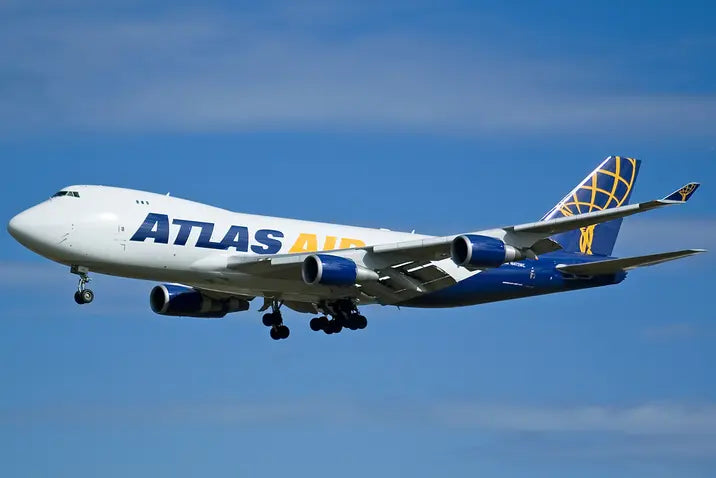
Atlas Air Overview & Company Profile
Atlas Air (IATA 5Y, ICAO GTI) is a United States cargo and charter airline and the world's largest operator of the Boeing 747 freighter. Founded in 1992 by entrepreneur Michael Chowdry, the company built its reputation not as a scheduled network carrier but as a specialist in ACMI flying, an industry term meaning the airline supplies the Aircraft, Crew, Maintenance and Insurance while a customer controls the route and sells the capacity. Atlas Air operates as the main flying subsidiary of Atlas Air Worldwide Holdings, which also owns Polar Air Cargo and absorbed Southern Air. Since March 2023 the group has been privately owned by an investor consortium led by Apollo Global Management, together with J.F. Lehman & Company and Hill City Capital, which took the formerly NYSE-listed company private in an all-cash transaction.
The business model is the single most important thing for any pilot to understand before applying. Atlas does not fly a branded passenger schedule the way Delta or United does. Instead it provides outsourced wide-body lift to a roster of large customers: express integrators and e-commerce platforms (historically Amazon Air, plus DHL, and increasingly Chinese e-commerce names such as Cainiao, Shein and Temu), ocean-shipping giant MSC Air Cargo, freight forwarders like DSV and Kuehne + Nagel, passenger airlines that wet-lease capacity (Qantas, British Airways, Emirates and Air New Zealand have appeared on the customer list), and the U.S. military through Air Mobility Command and the Civil Reserve Air Fleet. This contract-driven structure shapes everything that follows in this guide, from pay rigs to days away from home.
According to Atlas Air Worldwide's own May 2025 investor presentation, the group operates a total fleet of 113 aircraft and employs roughly 4,536 people, of whom pilot-community tracking site AirlinePilotCentral lists approximately 2,880 active pilots with no current furloughs. Corporate headquarters sit in Purchase, New York, with flight operations centred in Erlanger, Kentucky near the Cincinnati hub. Before privatization removed the company from public reporting, Atlas Air Worldwide posted revenue of about USD 4.5 billion in 2022, up from USD 4.0 billion in 2021, riding the pandemic-era cargo boom.
For a pilot, the appeal of Atlas is specific and real: extensive heavy wide-body flying, often very early in a career, on iconic aircraft that fewer and fewer airlines still operate. The trade-offs are equally specific: a global, contract-driven schedule rather than a fixed home base, a compensation package that the pilot group itself describes as a contract cycle behind the integrators FedEx and UPS, and a labor history that has been contentious for years. The sections below break each of these down using the most recent publicly available data.
Fleet Composition & Type Ratings
Atlas Air operates one of the most distinctive fleets in commercial aviation. It is anchored by the Boeing 747, which Atlas flies in greater numbers than any other operator on earth. Per the company's May 2025 investor materials, the group runs around 65 Boeing 747s in total, split into roughly 17 modern 747-8 freighters, 39 older 747-400 freighters, 5 passenger-configured 747-400s used for VIP and high-density charter, and 4 specialised 747-400 Large Cargo Freighters (the "Dreamlifter") flown on behalf of Boeing. Atlas underscored its commitment to the type in August 2024 by agreeing to add three more 747-8F frames, a notable move given that the 747-8 production line is now closed and new-build examples are no longer available.
The wide-body picture is rounded out by the twin-engine Boeing 777F and Boeing 767-300F, both of which are growing. The 777F fleet stood at about 13 aircraft in May 2025 and is on a path toward roughly 18 by early 2026, including frames dedicated to MSC Air Cargo and DHL. The 767-300F fleet sat near 20 aircraft in mid-2025 and is set to expand toward 25 as airframes previously held as Amazon spares are redeployed to other customers. A small number of passenger 767-300ERs support charter work. The 737-800 freighters that Atlas flew for Amazon on a crew-maintenance-insurance (CMI) basis are being withdrawn: Atlas and Amazon agreed to wind down that contract by mid-2025, and the company's own fleet count of 113 aircraft already excludes those frames.
| Aircraft Type | Role | In Service (2025) | Routes / Notes |
|---|---|---|---|
| Boeing 747-400F | Widebody freighter | ~39 | Long-haul cargo trunk routes. Nose-door outsize loading. Core ACMI workhorse. |
| Boeing 747-8F | Widebody freighter | ~17 | Most modern 747. Three more on order (2024). Flagship heavy lift. |
| Boeing 747-400 (pax) | Passenger charter | ~5 | VIP and high-density configurations. Military and sports/government charters. |
| Boeing 747-400LCF | Outsize freighter | 4 | Dreamlifter operated for Boeing, carrying 787 components. |
| Boeing 777F | Widebody freighter | ~13 (→18 by 2026) | Long-range dedicated cargo. Four frames for MSC Air Cargo; capacity for DHL. |
| Boeing 767-300F | Widebody freighter | ~20 (→25) | Regional and transatlantic cargo. DHL, e-commerce and integrator contracts. |
| Boeing 767-300ER (pax) | Passenger charter | ~5 | Charter and contract passenger flying. |
| Boeing 737-800BCF | Narrowbody freighter | Exiting (Amazon CMI) | Operated for Amazon; contract terminating by mid-2025. Excluded from core fleet count. |
Fleet figures drawn primarily from Atlas Air Worldwide's May 2025 investor presentation and corroborating fleet databases. Counts move with deliveries, lease-ins and customer contract changes.
Atlas Air hires almost exclusively into the First Officer seat and pays for the type rating on your assigned aircraft as part of new-hire training. Your fleet (747, 777 or 767) is determined by company need and your seniority at the time of award, not free choice. Each type sits on its own pay scale, though the spreads between them are narrow. Because the 777 serves a smaller, more stable set of trunk routes while the 747 famously "flies all over the world," fleet choice has a major impact on your day-to-day lifestyle, not just your paycheck. Atlas and Polar Air Cargo pilots are covered by a single joint seniority list and collective agreement.
Pilot Salary & Compensation Breakdown
Atlas Air pilots are paid an hourly flight rate that varies by seat (Captain or First Officer), aircraft fleet, and year of company longevity, under the joint collective bargaining agreement negotiated by Teamsters Local 2750. Like most cargo carriers, Atlas pays the greater of three measures each month: actual block time flown, a time-away-from-base (TAFB) rig (pilots describe a rig of roughly one credit hour for every 4.95 hours away, around 4.85 credited hours per 24 hours on the road), or a monthly minimum guarantee of about 64 hours. Because Atlas trips are long and international, the TAFB rig frequently drives pay above the bare block hours, which is why annual earnings can outrun the modest 64-hour guarantee.
The hourly rates below are taken from AirlinePilotCentral's current Atlas Air pay tables. One important caveat applies before reading them: as of 2025 Atlas pilots are working under their existing joint contract, which is amendable and in negotiation, and the group has not ratified the kind of large new agreement that FedEx, UPS and Kalitta secured in 2024 and 2025. In other words, these are real current numbers, but they are widely viewed as due for an upward revision (see the Union section).
First Officer (FO) Hourly Pay by Fleet
| Year of Service | 747 ($/hr) | 777 ($/hr) | 767 ($/hr) | Est. Annual Gross |
|---|---|---|---|---|
| Year 1 (new hire) | $92 | $92 | $92 | ~$70,000 – $90,000 |
| Year 2 | $141 | $149 | $135 | ~$120,000 – $150,000 |
| Year 5 | $173 | $176 | $164 | ~$160,000 – $190,000 |
| Year 10 | $215 | $209 | $204 | ~$200,000 – $230,000 |
| Year 12 (top) | $225 | $226 | $214 | ~$215,000 – $245,000 |
Year-1 FO pay is flat at roughly $92/hr across all fleets. Annual estimates assume around 75 to 85 credited hours per month and exclude per diem, premium pay and 401(k) value. Actual earnings vary with flying levels.
Captain (CA) Hourly Pay by Fleet
| Year of Service | 747 ($/hr) | 777 ($/hr) | 767 ($/hr) | Est. Annual Gross |
|---|---|---|---|---|
| Year 1 | $247 | $253 | $240 | ~$210,000 – $250,000 |
| Year 2 | $259 | $253 | $246 | ~$225,000 – $260,000 |
| Year 5 | $279 | $272 | $265 | ~$260,000 – $300,000 |
| Year 10 | $316 | $308 | $300 | ~$300,000 – $340,000 |
| Year 12 (top) | $332 | $324 | $315 | ~$320,000 – $365,000 |
Top-of-scale Captain pay tops out near $332/hr on the 747. With per diem, premium flying and high credit, senior wide-body Captains can clear $350,000 in a strong year. Long international trips and heavy schedules push earnings toward the top of these ranges.
A few practical points. First, the fleet spreads are deliberately narrow: a top 747 Captain at about $332/hr earns only modestly more than a 767 Captain at about $315/hr, which keeps internal bidding balanced across types. Second, the FO jump between Year 1 and Year 2 is dramatic (from roughly $92 to the $135 to $149 range), so getting past the first year materially changes your income. Third, on top of hourly pay, Atlas adds per diem and a 401(k) company contribution, both covered in the Benefits section, which lift total compensation meaningfully above the flight-pay figures above.
These figures are compiled from AirlinePilotCentral's published Atlas Air pay scales and corroborating pilot reports, and reflect the current (pre-new-contract) joint agreement. Some older summaries list slightly different first-year FO numbers (around $103/hr), reflecting prior contract iterations and grandfathered rates. Real take-home depends on credited hours, fleet, base, US federal and state taxes, and benefit elections. Because Atlas is privately held, the full collective agreement is not publicly posted. Always verify current rates with Teamsters Local 2750 or an Atlas recruiter before making a career decision.
Roster, Gateway Travel & Quality of Life
Quality of life at Atlas Air is genuinely different from a passenger major, and understanding it is essential before you apply. Scheduling is governed by US FAA flight, duty and rest regulations layered on top of the joint collective agreement. The defining feature is that Atlas is not a home-based airline with daily out-and-back trips. You are assigned to a crew base, but your work comes in long blocks: pilots commonly commit around 17 days per month to the company and spend the rest at home, with many lines delivering 13 to 18 days off, and some pilots reporting 15 to 19 days off in lighter months.
Lines are built over 30-day or 60-day bid periods and come in several flavours. Primary lines carry specific trips with a bid-line guarantee of hours. Secondary lines sell availability rather than fixed flying, with no guarantee but a rule that the company must assign trips at least two days in advance. Reserve lines break into home reserve (R1), hotel reserve (R2) and airport reserve (R3), each with its own rules about when the pay clock starts. There are also fixed-pattern lines that repeat the same block every month, and out-base lines with a higher (around 130-hour) guarantee for pilots effectively living away for the month. New hires typically begin on reserve and bid into lineholder status as seniority grows.
📅 Sample Month — 747 Freighter First Officer (International Block Line)
The grid above is illustrative, not a contractual line. The key idea is the "binge and purge" rhythm of ACMI flying: a long tour of roughly 12 to 14 days, much of it spent away from base on multi-day international rotations with layovers, bracketed by an extended stretch of days off at home. "Fly" days here include layover and rest days on the road, not just days with a takeoff. On long sectors (think a 14-hour Cincinnati to Incheon leg) the crew is augmented, with pilots rotating into a dedicated bunk crew-rest compartment, which on the 747-8F includes two bunks on the upper deck with climate control and storage.
You do not have to live in your base city. Atlas runs a Gateway Travel program: you designate a home gateway airport and the company buys you confirmed, positive-space (not standby) airline tickets to your base and back at the start and end of each block, including up to USD 1,250 each way for international gateways. The catch is that the pay clock generally starts when your trip begins at base, not when you leave home, and Atlas typically wants you in base 8 to 10 hours before report. Crew bases vary by fleet and change over time: a June 1, 2025 reshuffle opened 777 bases at Anchorage and Chicago and 767 bases at Miami and Seattle while closing some Cincinnati positions. Common bases include JFK, MIA, ANC, ORD, LAX/ONT, MEM, IAH and SEA.
The honest summary on quality of life: pilots who value large blocks of time at home, who do not mind living out of a suitcase during their on-block, and who find international wide-body flying genuinely interesting tend to thrive at Atlas. Pilots who want to sleep in their own bed most nights, want a predictable published schedule months ahead, or have family circumstances that make extended absences hard will find the ACMI model taxing. Fatigue management is a real part of the job, given overnight freight operations, frequent time-zone changes and the irregular nature of charter flying, and it has been a recurring theme in the pilot group's advocacy.
Benefits, Per Diem & Retirement
As a large unionized US airline, Atlas Air provides the standard pillars of a major-carrier benefits package: medical, dental and vision coverage with employer premium contributions, company-paid and voluntary life and accidental death insurance, a 401(k) retirement plan with company money, per diem for time away from base, and vacation and sick accrual that grows with seniority. Two elements stand out as distinctive for Atlas pilots: the per diem structure and the Gateway Travel program. Two others, retirement and personal travel, are areas where Atlas is generally regarded as trailing the integrator benchmarks.
Retirement is where Atlas most clearly lags the cargo benchmarks. FedEx pilots enjoy a roughly 18% retirement contribution plus a defined-benefit pension, UPS layers a pension, a 12% direct B-plan and profit sharing, and Kalitta's 2024 ALPA contract lifted its direct 401(k) to a flat 12% with no match required. Atlas, by pilot accounts, leans on a match-heavy structure that requires you to contribute (often around 10%) to capture the full company amount, with no pension. The exact percentages live inside the collective agreement and should be confirmed directly with the union or HR. If long-term retirement wealth is your single highest priority, this is the most important number to verify and the clearest gap versus FedEx and UPS.
The Gateway Travel program is a genuine standout. Because Atlas buys you a confirmed seat rather than leaving you to jumpseat, you avoid the crash-pad-and-standby commuting stress that defines life at many carriers, and you can realistically live almost anywhere in the country. Combined with per diem that accrues across long international duty periods, and the large blocks of days off, the package can suit a pilot who prioritises flexibility on where to live and big chunks of home time over maximising every retirement dollar.
Career Progression & Seniority
Like every major unionized US airline, Atlas Air runs a strict seniority system based on date of hire. Your seniority number governs your access to fleets, bases, schedules, vacation and, above all, the upgrade to Captain. Atlas and Polar Air Cargo pilots sit on a single combined list, an arrangement that emerged from the complex, arbitrated integration of Southern Air pilots into the Atlas bargaining unit. Almost everyone enters as a First Officer and advances by bidding as vacancies open through fleet growth, retirements and attrition.
Upgrade time to Captain is not a fixed number and swings with hiring waves, but current data points cluster into a clear picture. On the smaller 737 operation, upgrades have been possible in roughly three years. On the wide-body fleets (747, 767, 777), the realistic window is more commonly cited as five to seven years, and trending longer as the post-pandemic hiring surge cools. Atlas's own published "new Captain" feature profiled a 747 First Officer upgrading after about six years, which lines up with that range. The upside, relative to a passenger major, is that a new hire can be flying a wide-body internationally almost immediately, building heavy PIC time that holds real value across the rest of an aviation career.
| Career Milestone | Typical Timeline | Notes |
|---|---|---|
| Join as First Officer | Day 1 post-training | Hired into 747, 767 or 777 per company need and seniority. Type rating paid by Atlas. |
| Off reserve to lineholder | ~1–3 years | Seniority-dependent. Junior pilots start on reserve at their base/fleet. |
| Captain upgrade (737) | ~3 years | Smaller fleet, when active. Faster but fewer seats. |
| Captain upgrade (widebody) | ~5–7 years | 747/767/777 command. Trending longer as hiring slows. |
| Senior / preferred fleet & base | 7–15+ years | Top bids for desirable fleets, bases and schedules. |
| Check Airman / Instructor | Variable | Separate selection and training; override pay for instructional duties. |
Atlas's public hiring focuses on First Officer recruitment, and most Captains upgrade internally by seniority. The company has, at times, hired experienced pilots directly into the left seat for specific fleets when staffing demanded it, but a direct-entry Captain program is episodic rather than a standing, always-open track. A pilot chasing the fastest possible command should assume an FO hire and then study current upgrade bids by fleet and base. With Amazon flying winding down and new customer contracts (MSC, DHL, Chinese e-commerce) plus 747-8F and 777F growth coming online, the fleet mix is shifting, which will reshape where the next wave of upgrades appears.
Recruitment Process & Requirements
Atlas Air hires experienced pilots into the First Officer seat through the careers portal at atlasairworldwide.com/careers. The published minimums reflect the demands of large-aircraft international operations, and the company states a preference for higher-time candidates, typically 3,000 to 4,000 hours total time, well above the floor. Because every Atlas FO must hold an unrestricted ATP, the minimums sit at the FAA Part 121 baseline rather than offering a restricted-ATP pathway.
Minimum Requirements
Selection Stages
Online Application & Screening
Apply through the Atlas Air Worldwide careers portal with full records of certificates, ratings, flight time and employment history. Recruiters screen against the published minimums and, importantly, against recency of experience and any regulatory or disciplinary flags.
Interview (HR & Technical)
A combined human-resources and technical interview. The HR portion probes CRM, decision-making, motivation and cultural fit for a global cargo operation. The technical portion covers regulations, weather, systems and judgment, with extra weight on long-range navigation, fuel planning and oceanic/polar contingency procedures specific to Atlas's flying.
Simulator Evaluation
Candidates typically fly a standardized profile in a transport-category simulator, assessing instrument flying, procedural discipline and crew coordination. Expectations scale with the role and with prior wide-body experience.
Background, Medical & Conditional Offer
A 10-year security background check, employment and credential verification, DOT drug testing and a First Class medical. International and military charter flying can trigger additional security vetting.
Training, IOE & Probation
New hires complete indoctrination, aircraft ground school, simulator training and Initial Operating Experience (IOE) under a line check airman before release to the line. A probationary period of roughly 12 months applies, after which full contractual protections and seniority solidify.
Recency matters at Atlas: keep your flying current and your logbook clean. Heavy turbine PIC, wide-body, military or international experience moves you toward the preferred end of the pool. Be honest with yourself about the lifestyle before the interview, because recruiters will probe whether you understand the ACMI model and the long blocks away from home. Confirm current First Officer postings and any sign-on or fleet-specific incentives directly on the careers portal, since those move with the market and are not part of the core contract.
Top 5 Layover Cities & Crew Bases
Atlas Air does not publish a layover list, and because the network is contract-driven it shifts with customers and seasons. That said, the flying concentrates on a recognisable set of major global cargo hubs, especially across Asia, Europe and the trans-Pacific. Layovers here are not the leisure-focused affairs of a passenger flag carrier: they are rest stops built around overnight freight operations, with company-arranged transport to a business-class chain hotel near the airport or in a central district, and per diem to cover meals. On 24 to 48 hour layovers, crews often get real time to see the city; on quick turns, just enough to sleep and eat. The five cities below recur most often in Atlas pilots' accounts of their routings.
Your layover life depends heavily on your aircraft. The 747 is the globe-trotter: pilots say it "flies all over the world, and lots of China," with frequent schedule changes and the widest variety of layover cities, from HKG, ICN, NRT, Shanghai and Singapore to Frankfurt, Cologne, Dubai and Doha. The 777F serves a more stable set of around a dozen trunk destinations, so its layovers repeat in the same core hubs. The 767 does more domestic US and near-international (Canada, Mexico, Caribbean, plus the Miami to Santiago scheduled service) flying, with shorter, more frequent layovers at hubs like CVG, MIA, ONT, MEM and JFK. Across all fleets, long sectors rely on augmented crews and onboard bunk rest, so part of your "rest" happens at 35,000 feet before you ever reach the hotel.
How Atlas Air Compares: Airline Radar Chart
The most useful comparison for a US cargo pilot is Atlas against the two integrator benchmarks every freight pilot weighs: FedEx Express and UPS Airlines. These are the carriers many Atlas pilots ultimately aim for, so the contrast tells the real career-ladder story. The radar below scores all three across the same five metrics used in the scorecard. Scores are editorial estimates based on publicly available pay data, union and industry sources, and pilot feedback.
Key Takeaways from the Comparison
On pay, Atlas sits a clear tier below the integrators. UPS top Captain rates reached about $401/hr by September 2025, FedEx tops out near $360 to $370/hr after its new ALPA deal (with the highest earners projected past $450,000 a year by 2026), and even ACMI peer Kalitta Air jumped to a $416/hr cap under its 2024 contract. Atlas's top 747 Captain rate near $332/hr leaves it the lowest of that group, which is exactly why the pilot community describes Atlas as "a contract cycle behind the legacies." Atlas pay is still strong six figures, but it has not yet had its turn at the big post-pandemic raise.
On benefits, the gap is widest in retirement. FedEx offers roughly an 18% contribution plus a pension, UPS stacks a pension, a 12% B-plan and profit sharing, and Kalitta now gives a flat 12% direct 401(k). Atlas's match-heavy plan with no pension trails all of them, which materially affects lifetime wealth even when annual cash looks competitive.
On work-life and job security, the integrators win on predictability. FedEx and UPS fly from fixed domiciles (Memphis, Indianapolis, Louisville) with bid lines published well ahead, mature unions and deep work rules. Atlas's global ACMI rosters mean less schedule certainty, more time living out of a suitcase, and a business that depends on renewing customer contracts rather than a captive branded network. Atlas currently shows no furloughs and is central to global supply chains, but the structural security profile favours the integrators.
Where Atlas genuinely leads is fleet and flying experience. As the world's largest 747 operator, with 747-8Fs, a growing 777F fleet and global routings, Atlas hands a relatively junior pilot heavy wide-body international time that is increasingly rare elsewhere. For a pilot who wants to log 747 and 777 hours and fly the planet, Atlas can be the most interesting seat of the three, and a powerful stepping stone toward exactly the integrators it is compared against here.
Scores are editorial estimates synthesised from AirlinePilotCentral pay tables, union and ALPA/IPA contract material, Atlas Air Worldwide investor disclosures, and pilot-community discussion. They reflect a general assessment for an experienced pilot weighing a long-term career, not a guarantee for any individual. Cargo pay and benefits are moving quickly in this cycle, and an eventual new Atlas contract could shift several of these axes upward. Individual experience varies with seniority, fleet, base and personal priorities.
Union & Industrial Relations
Atlas Air pilots are represented by Teamsters Local 2750, part of the International Brotherhood of Teamsters Airline Division, with a member site at wp.iap2750.org. The local represents the professional pilots of Atlas Air and Polar Air Cargo under a single joint collective bargaining agreement, the product of integrating the former Southern Air pilot group into Atlas. Before consolidating under the Teamsters, Atlas pilots were at one point associated with the Airline Professionals Association (APA Local 1224). Understanding this labor landscape is not optional background for an applicant: it directly explains the current pay scales and the open question of when they will improve.
How Negotiations Work: the Railway Labor Act
US airline labor is governed by the Railway Labor Act (RLA), which works very differently from ordinary employment law. Contracts do not "expire"; they become amendable on a set date and remain in force while the parties bargain. If direct talks stall, either side can request mediation from the National Mediation Board (NMB). Only if the NMB releases the parties, after a 30-day cooling-off period, does self-help (a strike or lockout) become possible, which is rare. The practical effect at Atlas has been long negotiating timelines and a management position that existing terms stay in effect until a new deal is reached.
Recent History & Key Disputes
The headline for an applicant is simple: Atlas has strong, established Teamsters representation, but the current pay and benefits package reflects a contract that is overdue for the kind of step-change the rest of the cargo sector just received. That is a double-edged situation. The downside is that you join at rates below FedEx, UPS and Kalitta today. The potential upside is that an eventual new agreement could move pay and possibly retirement upward, and you would be on the seniority list when it does. Union membership and engagement are the norm in this group. Watch Teamsters Local 2750 communications closely for any tentative agreement, because that single event would reshape much of the analysis in this guide.
Verdict: Who Is Atlas Air For?
🎯 Our Take
Atlas Air is one of the most distinctive flying jobs in the United States. It hands pilots heavy wide-body international experience, often very early, on the largest 747 fleet in the world plus a growing 777F and 767F operation. The Gateway Travel program lets you live almost anywhere with a confirmed commuting seat, the schedule delivers large blocks of days off, and the global, contract-driven flying is genuinely varied and interesting in a way that a fixed hub-and-spoke network is not.
The trade-offs are real and should not be glossed over. Pay sits a clear tier below FedEx, UPS and even ACMI peer Kalitta after that group's 2024 raise, retirement is match-heavy with no pension, and the pilot contract is amendable and overdue for improvement. The ACMI lifestyle means long tours living out of a suitcase, less schedule predictability than the integrators, and fatigue management as a constant part of the job. Job security is solid today but ultimately tied to renewing customer contracts rather than a captive branded network.
For the right pilot, none of that is disqualifying. Atlas can be a superb place to build wide-body PIC time and fly the planet, and a logical stepping stone toward the very carriers it trails on pay. For a pilot whose top priority is maximum lifetime compensation, the richest retirement, and a predictable home-based schedule, FedEx or UPS remain the stronger long-term destinations.
1 Does Atlas Air pay for the type rating, and what is new-hire pay?
Yes. Atlas hires First Officers and pays for the type rating on your assigned aircraft as part of new-hire training. First-year FO pay is roughly $92 per flight hour across all fleets per AirlinePilotCentral's current tables, on a monthly guarantee of about 64 hours, plus per diem. The big jump comes in Year 2, where FO rates rise into the $135 to $149 per hour range depending on fleet.
2 What are the minimum requirements to get hired at Atlas Air?
You need an unrestricted FAA ATP with a multi-engine rating, a current First Class medical, an FCC Restricted Radiotelephone Permit, an unrestricted passport and US work authorization. Flight-time minimums are 1,500 hours total, 500 hours turbine, and either 1,000 hours fixed-wing or 500 hours with a Part 121 carrier. Minimum age is 23, and you must pass a 10-year background check and DOT drug test. Atlas states a preference for candidates with around 3,000 to 4,000 hours.
3 How does the Gateway Travel commuting system work?
You are assigned a crew base but can live almost anywhere. You designate a home gateway airport, and Atlas buys you confirmed, positive-space (not standby) airline tickets to your base and back at the start and end of each block, including up to USD 1,250 each way for international gateways. The pay clock generally starts when your trip begins at base, and Atlas typically wants you in base 8 to 10 hours before report, so the commute often uses what would otherwise be a day off. You can also choose to jumpseat instead.
4 How long does it take to upgrade to Captain at Atlas Air?
It varies with hiring waves, but current data points to roughly three years on the smaller 737 operation when active, and about five to seven years for a wide-body (747, 767 or 777) command, with the trend lengthening as post-pandemic hiring slows. Atlas's own published profile of a new Captain showed a 747 First Officer upgrading after about six years. Upgrade is strictly by seniority off the joint Atlas/Polar list.
5 Does Atlas Air hire direct-entry Captains?
Not as a standard, always-open pathway. Public hiring focuses on First Officers, and most Captains upgrade internally by seniority. Atlas has occasionally hired experienced pilots directly into the left seat for specific fleets when staffing demanded it, but this is episodic. If your goal is the fastest command, assume an FO hire and study current upgrade bids by fleet and base.
6 How does Atlas Air pay compare to FedEx, UPS and Kalitta?
Atlas currently sits below all three on top-of-scale Captain pay. UPS reached about $401 per hour by September 2025, FedEx tops near $360 to $370 per hour after its new contract, and Kalitta's 2024 ALPA deal set a $416 per hour cap. Atlas tops out near $332 per hour on the 747. The retirement gap is wider still, since FedEx and UPS offer pensions plus large contributions while Atlas runs a match-heavy 401(k) with no pension. Atlas's edge is fleet variety and early wide-body international experience, not headline pay.
7 Is the Atlas Air pilot contract amendable, and is a new one coming?
As of 2025, Atlas and Polar pilots are working under their existing joint collective agreement, which is amendable and in the Railway Labor Act bargaining cycle. There is no public record of a ratified large new contract in 2023 to 2025, unlike at FedEx, UPS and Kalitta. The most likely path forward is continued negotiation and, if needed, National Mediation Board mediation. Any eventual tentative agreement would be announced first through Teamsters Local 2750, so that is the channel to watch.
8 What is quality of life really like at Atlas Air?
It is a "binge and purge" rhythm. Pilots typically commit around 17 days a month, often in a long international block of roughly 12 to 14 days away with layovers, then get an extended stretch at home, with many lines delivering 13 to 18 days off. The plus side is large blocks of home time and the ability to live anywhere via Gateway Travel. The minus side is time zones, overnight freight, less schedule predictability than the integrators, and real fatigue management. It suits pilots who like variety and big chunks of time off, and challenges those who want to be home most nights on a fixed schedule.
Official Links & Resources
Before applying or making any career decision, verify the details directly with official sources. Cargo pay and contracts are moving quickly in this cycle, so treat third-party pay tables as a guide and confirm current terms with the airline and the union. These are the key resources relevant to an Atlas Air pilot career:
Bookmark Teamsters Local 2750 (wp.iap2750.org) and check it before you accept any offer. Because Atlas pilots are in the bargaining cycle, a new contract could meaningfully change pay, work rules and retirement, and that single development would reshape much of the analysis in this guide. The union site is where a tentative agreement, and the real numbers behind it, will surface first.