

AJet Overview & Company Profile
AJet (formerly AnadoluJet) is a Turkish low-cost carrier and a wholly owned subsidiary of Turkish Airlines, the flag carrier of Turkey. Originally founded in 2008 as a sub-brand to bring affordable air travel to Turkey's Anatolian heartland, AnadoluJet was restructured and relaunched as an independent airline called AJet on March 31, 2024. The rebranding was more than cosmetic: it marked a transformation from an internal brand using Turkish Airlines' flight numbers into a fully separate LCC with its own AOC, fleet management, and commercial strategy.
AJet operates from two main hubs: Istanbul Sabiha Gokcen Airport (SAW) and Ankara Esenboga Airport (ESB), with additional seasonal bases at Antalya (AYT) and Ercan (ECN) in Northern Cyprus. The airline's network covers 41 domestic and over 58 international destinations across 34 countries, spanning Western Europe, the Middle East, North Africa, the Caucasus, and Central Asia. In July 2025, AJet set a new monthly record by carrying over 2.5 million passengers, and on July 27, 2025, it operated 470 flights in a single day, its all-time operational high. The airline's target for 2025 is to carry more than 23 million passengers across all routes.
AJet's long-term ambitions are firmly anchored in the Turkish Airlines 10-year growth plan. By 2033, AJet is expected to operate a fleet of 200 aircraft, with domestic traffic nearly doubling and international traffic increasing by 440%. The ultimate goal is to become one of the leading LCCs across Europe, North Africa, the Middle East, and Asia, serving over 100 international destinations in 44 countries.
Fleet Composition & Type Ratings
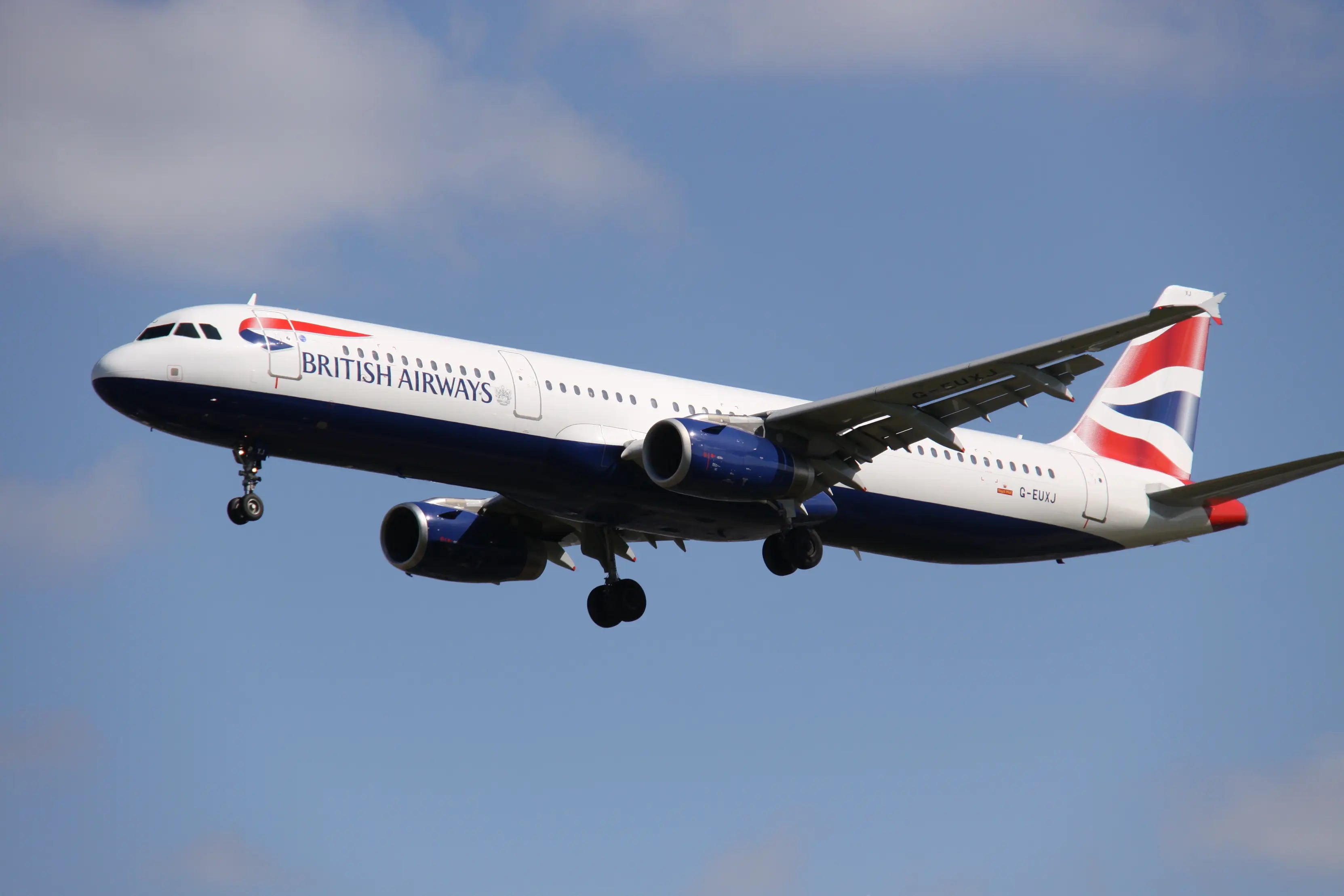
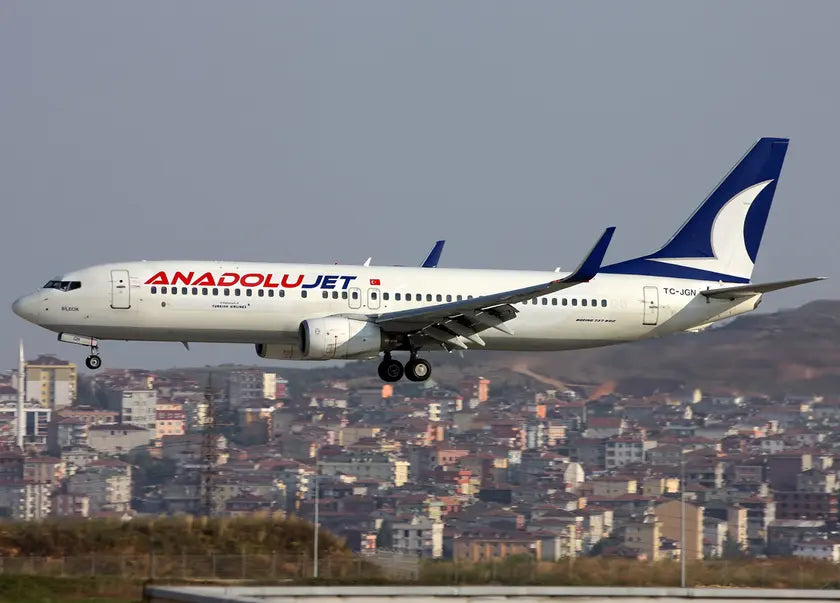
AJet operates a mixed fleet of Boeing 737 and Airbus A320 family aircraft, all configured for short- to medium-haul operations. The airline is in the midst of a significant fleet modernization, transitioning from older Boeing 737-800s to next-generation Boeing 737-8 MAX and Airbus A320neo/A321neo aircraft. According to AJet's own fleet data from late 2025, the airline operates approximately 85 aircraft, with a target of reaching 90% next-generation types within three years. Historically, a large portion of the fleet was wet-leased from parent Turkish Airlines, but AJet is actively reducing leased aircraft and taking greater direct control of fleet management.
| Aircraft Type | Role | In Service | Notes |
|---|---|---|---|
| Boeing 737-800 | Narrowbody | ~42 | Workhorse of the fleet. Being phased out as MAX deliveries ramp up. |
| Boeing 737-8 MAX | Narrowbody | ~12 | First deliveries in 2025. 45 planned by 2027 via CDB Aviation and DAE leases. |
| Airbus A321neo | Narrowbody | ~12 | Higher-capacity variant. Some configured with 8 business + 203 economy seats. |
| Airbus A320neo | Narrowbody | ~3 | 186-seat all-economy layout. 5 additional leased from SMBC Aviation Capital (July 2025). |
| Airbus A321ceo | Narrowbody | ~10 | Older-generation A321. To be replaced by A321neo over time. |
| Airbus A320ceo | Narrowbody | ~6 | Legacy A320 units. Gradual retirement expected. |
Fleet data compiled from AJet statements and industry sources as of late 2025. Numbers are approximate due to ongoing deliveries, wet-lease rotations, and seasonal adjustments.
The fleet pipeline is substantial. Between 2025 and 2027, AJet expects to receive 45 Boeing 737-8 MAX aircraft, each equipped with locally designed "Miligram" seats produced by Turkish engineers. AJet will also benefit from Airbus' massive order placed by Turkish Airlines in 2024 for 150 A321neos, with a portion allocated to the LCC subsidiary. The goal is to standardize on next-generation types (737 MAX and A320neo family) and eventually settle on a single aircraft family, following the typical LCC fleet strategy for operational efficiency.
AJet recruits pilots separately for the Boeing 737 fleet and the Airbus A320 family fleet. Pilots must hold a valid type rating on the aircraft they apply for. Unlike some carriers, AJet does not currently fund ab-initio type ratings for external recruits. The airline provides type rating conversion support where needed (e.g., DGCA license validation), and all training costs for the assessment process (travel, hotel, medical) are covered by AJet. Pilots cannot freely choose between the Boeing and Airbus fleets: assignment is based on operational needs and availability at the time of hiring.
Pilot Salary & Compensation
AJet pilot salaries are structured as net packages that include a monthly base salary, sector-based bonuses, overnight (layover) allowances, and additional premiums. Because AJet operates under Turkish employment law, salary quotes are typically expressed as net figures after income tax and social security deductions (approximately 15% of gross for Turkish-based employees). The airline offers competitive compensation by Turkish LCC standards, broadly comparable to rival Pegasus Airlines and in some cases approaching Turkish Airlines rates for equivalent roles.
First Officer (F/O) Estimated Pay
| Experience Level | Monthly Net (est.) | Annual Net (est.) | Notes |
|---|---|---|---|
| Entry F/O (500+ hrs on type) | $5,500 - $6,500 | ~$66,000 - $78,000 | Base + sector pay. Full-time roster. |
| Mid-level F/O (2-4 years) | $6,500 - $8,000 | ~$78,000 - $96,000 | Higher sector bonuses, peak-season uplift. |
| Senior F/O (5+ years) | $8,000 - $9,500 | ~$96,000 - $114,000 | Approaching upgrade consideration window. |
Captain (CDB) Estimated Pay
| Experience Level | Monthly Net (est.) | Annual Net (est.) | Notes |
|---|---|---|---|
| New Captain / Direct Entry | $11,000 - $13,000 | ~$132,000 - $156,000 | Base + sector pay. Full-time roster. |
| Experienced Captain (3+ yrs) | $13,000 - $16,000 | ~$156,000 - $192,000 | Peak season OTE can push higher. |
| Senior Captain / TRI / TRE | $16,000 - $19,000 | ~$192,000 - $228,000 | Instructor premiums. Peak season months higher. |
Figures are estimated net amounts in US dollars based on pilot forum reports, recruitment agency advertisements, and industry benchmarks. Actual compensation depends on roster type, seasonal demand, and individual contract terms.
AJet does not publicly disclose pilot pay scales. The figures above are compiled from recruitment agency listings, pilot forum discussions (particularly PPRuNe), and comparable data from Pegasus Airlines and SunExpress. Peak summer months (May through September) typically generate significantly higher OTE (on-target earnings) due to increased flying. Part-time roster arrangements (23 on / 7 off) may offer different compensation structures than full-time contracts. Istanbul's cost of living has risen sharply in recent years due to Turkish lira depreciation and inflation, which is an important factor when evaluating net salary purchasing power. Always verify current figures directly with AJet during the recruitment process.
Roster Pattern & Quality of Life
AJet offers two distinct roster arrangements for pilots, reflecting its dual approach of recruiting both locally based Turkish pilots and expat contract pilots. The roster structure is governed by Turkish DGCA (SHGM) flight time limitations, which are broadly aligned with EASA FTL standards and are expected to adopt full EASA FTL compliance in the near term. All pilots must be based at their assigned AJet hub and reside there.
📅 Sample Month: Full-Time Roster (6 on / 3 off)
The full-time roster follows a 6 days on / 3 days off rotation. This is the standard arrangement for locally based pilots (both Turkish nationals and expats on permanent contracts). In practice, pilots can expect around 10 days off per month, with higher flying intensity during the summer peak season (May to September). The part-time roster follows a 23 days on / 7 days off block pattern, designed primarily for expat contract pilots who commute to Turkey. While 23 duty days may sound intensive, not all are flying days, as standby, training, and ground duties are included in that block.
AJet's primary bases are Istanbul Sabiha Gokcen (SAW) and Ankara Esenboga (ESB). Pilots must accept their assigned base and reside there. Istanbul is by far the larger operation and the most common assignment. The city offers a vibrant lifestyle, excellent food, and a strategic location bridging Europe and Asia. However, Istanbul's cost of living has increased significantly in recent years. Ankara offers a quieter, more affordable lifestyle. For expat pilots on the part-time 23/7 roster, commuting from Europe is feasible via SAW's strong European route network, though this is not officially encouraged by AJet and pilots must self-manage their commute logistics.
Benefits, Travel Perks & Insurance
AJet offers a benefits package that, while not matching the depth of legacy European carriers, provides solid coverage for pilots based in Turkey. The package is particularly attractive when combined with the lower Turkish cost of living (outside central Istanbul) and the connection to the Turkish Airlines ecosystem.
One of AJet's most distinctive advantages is its formal bridge to Turkish Airlines. Following at least 3 years of service at AJet, the time spent at the LCC is credited in the calculation of priority and seniority when transferring to Turkish Airlines. This creates a genuine career pathway from AJet to one of the world's largest airlines, with its 350+ destination network, widebody fleet (including Boeing 787, A350, and 777), and significantly higher long-haul compensation. For pilots who view AJet as a stepping stone to Turkish Airlines, this seniority credit is a major draw.
Career Progression & Seniority
Career progression at AJet operates within the broader Turkish Airlines group ecosystem. The airline accepts both direct-entry Captains and First Officers, and has launched internal training programmes to upgrade experienced F/Os to command positions. This is a significant advantage over some legacy carriers where upgrade is strictly seniority-based and can take 15+ years. At AJet, with the fleet growing rapidly (from 85 to 200 aircraft by 2033), upgrade opportunities are expected to remain frequent throughout the next decade.
The most compelling long-term career feature is the transfer pathway to Turkish Airlines. After a minimum of 3 years at AJet, pilots become eligible to transfer to the parent carrier with their AJet service time credited toward THY seniority. This means that time at AJet is not "lost" from a career perspective but actively builds toward a position at one of the world's top 10 largest airlines by fleet and destinations.
| Career Milestone | Typical Timeline | Notes |
|---|---|---|
| Join as F/O (B737 or A320) | Day 1 | Must hold valid type rating. Minimum 500 hrs on type. |
| Internal upgrade to Captain | 3-6 years | Based on fleet growth, performance, and availability. AJet runs internal upgrade programmes. |
| Direct Entry Captain | Day 1 | Minimum 1,000+ hrs PIC on type. ATPL required. Separate selection process. |
| Eligible for THY transfer | After 3 years | AJet service time credited to THY seniority calculation. |
| TRI / TRE (Instructor) | Variable | Requires separate selection and instructor qualification training. |
| Fleet transition (B737 ↔ A320) | Subject to availability | AJet operates both types. Cross-fleet transitions possible but not guaranteed. |
AJet is in a hyper-growth phase. The airline went from approximately 50 aircraft in 2023 to over 85 in 2025, with a roadmap to 200 aircraft by 2033. This level of expansion creates enormous demand for both Captains and First Officers. Every new aircraft added requires approximately 10-12 pilots to crew it across the roster cycle. With 45 Boeing 737 MAX aircraft alone expected between 2025 and 2027, and ongoing Airbus A321neo deliveries, AJet will need to recruit and upgrade hundreds of pilots in the next few years. For career-minded pilots, this growth trajectory offers unusually fast progression opportunities.
Recruitment Process & Requirements
AJet actively recruits both Turkish national and expat pilots for its Boeing 737 and Airbus A320 fleets. The airline maintains separate hiring streams for First Officers and Captains, with clear minimum requirements for each. Applications are submitted through the AJet careers portal (jobs.ajet.com), and third-party recruitment agencies are also used for international sourcing.
First Officer Requirements
Captain Requirements
Selection Process
Phase 1: CRM Assessment
Held in Istanbul. A Crew Resource Management (CRM) evaluation day focused on human factors, communication skills, decision-making, and cultural fit. This is the first filter and assesses soft skills critical for a multicultural cockpit environment.
Phase 2: Simulator & Technical Interview
A simulator assessment session (preflight brief, flight assessment, post-flight debrief) followed by a Company Board Interview with HR specialists and senior Captain pilots. The interview covers background, experience, and technical knowledge, including emergency procedures (engine failure, windshear, emergency descent scenarios).
Phase 3: Medical Assessment
A thorough medical examination at a designated private hospital in Istanbul, fully expensed by AJet. While candidates must already hold a valid Class 1 medical, the final employment medical is conducted by AJet's workplace physicians and is the definitive assessment.
Contract & License Validation
Successful candidates receive a contract offer and proceed to Turkish DGCA license validation (if holding a non-Turkish license). Ground school, if required, is conducted in Istanbul. Base assignment is confirmed at this stage.
Candidates must not have previously left Turkish Airlines or its subsidiaries due to contract termination or indiscipline. Candidates who failed training or check flights at Turkish Airlines or other airlines may also be disqualified. AJet covers all travel and accommodation expenses for the assessment process. Nationality is open (Turkish citizens and foreign nationals both eligible), but Blue Card holders must demonstrate fluent Turkish. The airline is currently prioritizing A320-rated pilots, as the Boeing 737 fleet is well-staffed. Always check the AJet careers portal for the most current openings.
How AJet Compares: Airline Radar Chart
How does AJet stack up against Turkey's two other major low-cost and leisure carriers: Pegasus Airlines and SunExpress? Below is a comparative analysis across five key metrics. Pegasus is AJet's most direct competitor, dominating Istanbul Sabiha Gokcen, while SunExpress (a joint venture between Turkish Airlines and Lufthansa) operates primarily from Antalya with a focus on leisure routes.
Key Takeaways from the Comparison
AJet wins on job security and career progression. The Turkish Airlines parentage gives AJet an unmatched safety net: even in a downturn, the airline is backed by one of the world's largest and most profitable carriers. The 3-year transfer pathway to THY is unique in the Turkish market and provides long-term career visibility that neither Pegasus nor SunExpress can match.
Salaries are broadly comparable across all three. Captain packages at AJet, Pegasus, and SunExpress all fall in the $11,000-$16,000 net monthly range for experienced pilots. Pegasus Captains on A320 contracts have been advertised at up to EUR 15,000 net per month, while SunExpress offers similar ranges from its Antalya base. AJet's peak-season OTE (reportedly up to ~$18,800 per month for Captains in the busiest months) is competitive but not consistently maintained year-round.
Work-life balance is the main trade-off. The 6 on / 3 off full-time roster at AJet (and similar patterns at Pegasus) is more intensive than European standards. Turkish carriers generally offer fewer days off per month (~10) compared to EU legacy airlines (~15). Annual leave entitlements under Turkish labor law (14-20 days based on tenure) are also below the EU average. SunExpress, with its Antalya leisure-focused operation, may offer slightly more predictable seasonal patterns.
Fleet modernity is improving rapidly at AJet. The incoming wave of 737 MAX and A321neo aircraft will make AJet's fleet one of the youngest in the region within 2-3 years. Pegasus already operates one of Europe's youngest fleets (average age ~5.8 years) with its A320neo focus. SunExpress remains predominantly Boeing 737-800/MAX.
Scores are editorial estimates based on publicly available recruitment data, pilot forum reports, airline press releases, and industry benchmarks. They represent a general assessment for an experienced pilot evaluating long-term career prospects. Individual experiences vary based on contract type, base assignment, and personal priorities. Scores will be updated as additional data becomes available.
Union & Industrial Relations
The union landscape for pilots in Turkey is fundamentally different from Western Europe. Turkey does not have the same tradition of pilot-specific labor unions with collective bargaining power that exists in France, Germany, or the UK. Instead, the primary professional body representing Turkish airline pilots is TALPA (Turkiye Airline Pilots' Association), a civil society organization rather than a traditional trade union.
TALPA: Structure & Role
TALPA operates in accordance with ICAO standards and focuses on safety advocacy, professional development, and pilot welfare rather than traditional collective bargaining over wages and conditions. It does not negotiate salary scales directly with airlines. TALPA's most visible campaigns have been around flight safety, particularly the global opposition to single-pilot operations (reduced crew operations), where it has joined forces with IFALPA, ECA, and ALPA under the "Safety Starts With 2" initiative.
Industrial Climate at AJet
AJet, as a relatively new airline (independent since March 2024), has not experienced any strikes or significant industrial disputes. Turkish aviation law imposes strict restrictions on strike action in "essential services," which includes airlines. Pilot working conditions at AJet are governed by individual employment contracts rather than collective agreements, which is standard practice across Turkish carriers. The close relationship with Turkish Airlines provides a degree of stability, as working conditions are broadly benchmarked against the parent carrier's standards.
Do not expect the same level of union protection or collective bargaining power that exists at European legacy carriers. Pilot conditions at AJet are primarily determined by the airline's management and individual contract terms. TALPA membership is voluntary and recommended for its safety advocacy, legal support, peer support programme, and loss of license insurance. However, TALPA does not negotiate wages or roster rules on behalf of pilots at specific airlines. For expat pilots accustomed to strong union environments (e.g., SNPL in France, Vereinigung Cockpit in Germany, or BALPA in the UK), this is an important cultural and legal difference to understand before joining a Turkish carrier.
Verdict: Who Is AJet For?
🎯 Our Take
AJet represents one of the most interesting pilot opportunities in the Turkish and broader European LCC market in 2025. The combination of rapid fleet growth (85 to 200 aircraft by 2033), a genuine career pathway to Turkish Airlines after 3 years with seniority credit, competitive net pay packages, and a multicultural working environment in one of the world's most dynamic aviation hubs makes it a compelling option for both career builders and experienced pilots seeking a change.
The trade-offs are clear: the 6/3 roster pattern is more intensive than European norms, Turkish labor law provides less employee protection than EU frameworks, the lack of collective bargaining means conditions are set by management, and Istanbul's rising cost of living erodes the purchasing power of net salaries. The airline is also very young as an independent entity, having only separated from Turkish Airlines in March 2024, which means policies, culture, and processes are still evolving.
For pilots who want to build hours, gain experience on modern equipment, and position themselves for a future at Turkish Airlines (one of the world's largest airlines by destinations and fleet), AJet offers a structured and realistic path that few other carriers in the region can match.
1 Is AJet the same airline as AnadoluJet?
Yes. AnadoluJet was founded in 2008 as a sub-brand of Turkish Airlines. On March 31, 2024, it was restructured and relaunched as AJet, an independent airline with its own AOC, flight numbers (VF), and commercial identity. The transition involved changing the IATA code from TK (shared with Turkish Airlines) to VF, and the ICAO code to TKJ. All existing AnadoluJet operations, routes, and staff were transferred to the new AJet entity.
2 Can I transfer to Turkish Airlines from AJet?
Yes. After a minimum of 3 years of service at AJet, pilots become eligible to transfer to Turkish Airlines. Importantly, the time spent at AJet is credited in the calculation of priority and seniority when moving to THY. This is a formal policy stated in AJet recruitment materials and represents one of the airline's most significant career advantages.
3 Do I need to speak Turkish to fly for AJet?
Not necessarily for all positions. Expat pilots are recruited without a Turkish language requirement, though ICAO Level 4 English proficiency is mandatory. However, Blue Card holders (a Turkish residency/ancestry permit) must demonstrate fluent and understandable Turkish. For day-to-day operations, English is the standard cockpit language, but company communications and some ground interactions are in Turkish. Learning basic Turkish is recommended for quality of life in Istanbul.
4 Does AJet accept non-EASA license holders?
Yes. AJet accepts EASA, FAA, and ICAO license holders. Pilots with non-Turkish licenses will need to undergo license validation through the Turkish DGCA (SHGM). The process typically involves document submission, potential exams, and validation flights. AJet provides support for this process, and the timeline varies depending on the source license and current DGCA workload.
5 What is the cost of living like in Istanbul for pilots?
Istanbul's cost of living has increased significantly in recent years due to Turkish lira depreciation and high domestic inflation. However, it remains considerably more affordable than most Western European capitals. A comfortable one-bedroom apartment in a good neighborhood near Sabiha Gokcen (Asian side) can cost $600-$900 per month. Dining out, groceries, and transportation are generally 40-60% cheaper than London or Paris. Pilots earning net salaries in dollars or euros benefit from favorable exchange rates, though this can fluctuate. Many expat pilots choose to live on the Asian side of Istanbul for proximity to SAW and lower rents.
6 What aircraft types can I fly at AJet?
AJet operates two aircraft families: the Boeing 737 (737-800 and 737-8 MAX) and the Airbus A320 family (A320ceo, A320neo, A321ceo, A321neo). You must hold a valid type rating on the fleet you apply for. Cross-fleet transitions (e.g., B737 to A320) are possible within the company but subject to operational needs and availability. The fleet is rapidly modernizing toward the 737 MAX and A321neo as primary types.
7 How does the part-time (23/7) roster work for expats?
The part-time roster involves 23 consecutive duty days based in Turkey, followed by 7 consecutive days off (block off). During the 23 duty days, you will be rostered for a mix of flying, standby, and ground duties. This pattern is designed for expat pilots who wish to commute from their home country during the 7-day block off. While 23 days sounds intensive, the actual flying hours are still governed by Turkish DGCA FTL rules. Note that commuting logistics (flights to/from home) are the pilot's own responsibility. Some pilot forums have noted that airlines in Turkey sometimes schedule heavy flying within the 23-day block, so it is important to understand the expected block hours before signing.
8 Is AJet a good stepping stone for a wider career?
Absolutely. AJet offers competitive hours, modern equipment, a multicultural environment, and the unique pathway to Turkish Airlines. Pilots who spend 3+ years at AJet and then transfer to THY gain access to a widebody fleet (787, A350, 777), long-haul operations to 350+ destinations, and significantly higher compensation. Even without transferring to THY, the experience gained at AJet on B737/A320 types with high sector counts is highly valued by airlines worldwide. The rapid growth phase also means faster upgrade opportunities than at more established carriers.
Official Links & Resources
Before applying or making any career decisions, always verify information directly with official sources. These are the key websites and organisations relevant to AJet pilot careers:
Monitor the AJet careers portal (jobs.ajet.com) regularly, as new positions are posted on a rolling basis and hiring waves tend to correspond with fleet deliveries. For expat pilots, recruitment agencies such as Aviation Agent Asia and Flight Crew International (FCI) also advertise AJet positions with additional contract details not always visible on the direct portal. Joining TALPA (talpa.org) before arriving in Turkey gives you access to legal guidance, peer networking, and the TALPA-MDA mental health support programme from day one.