

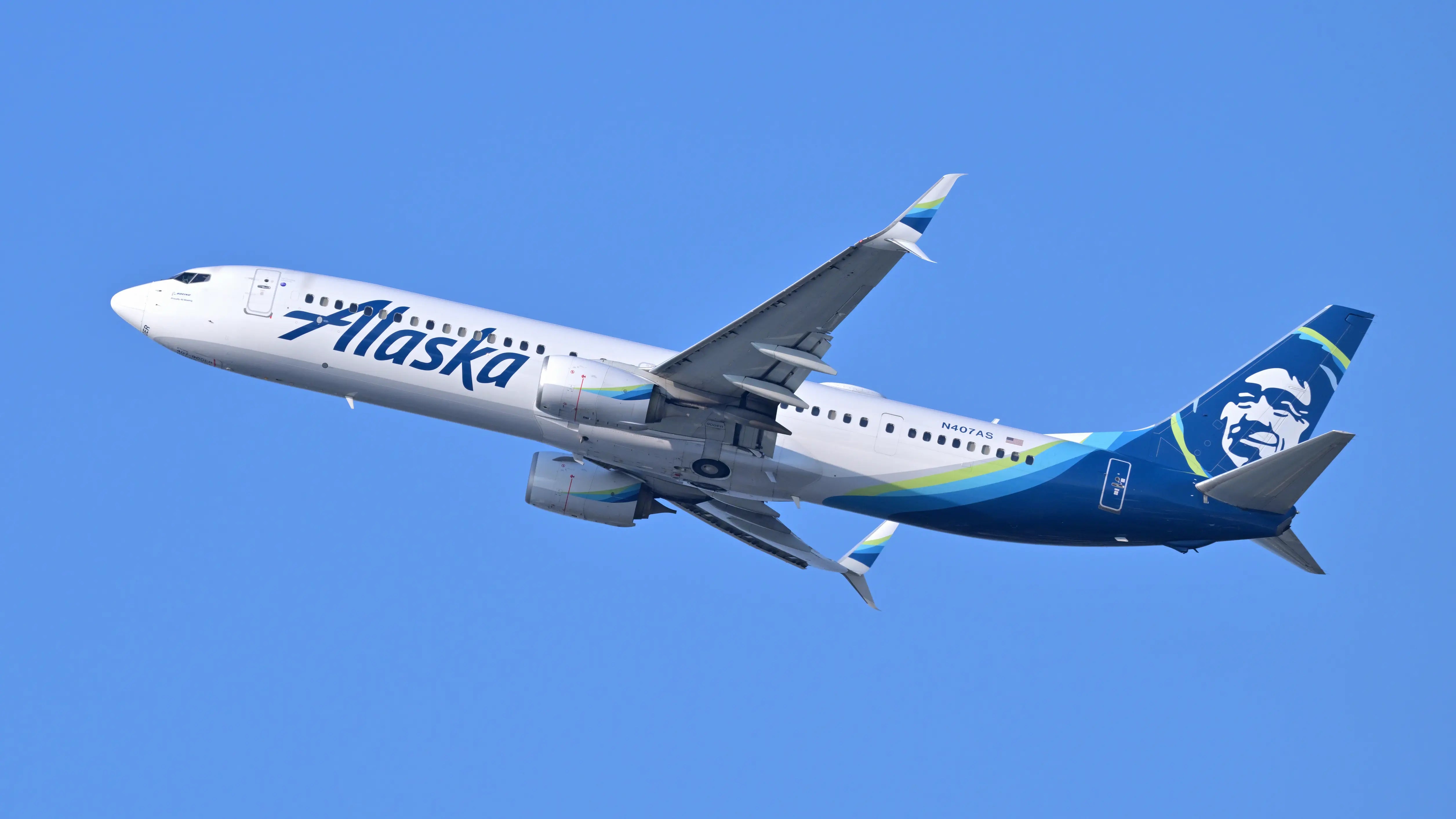
Alaska Airlines Overview & Company Profile
Alaska Airlines is a major United States carrier with deep West Coast roots and a growing transcontinental, Hawaii, and international footprint. Its lineage traces back to McGee Airways, which began flying in territorial Alaska in 1932, and the company is today headquartered at Seattle-Tacoma International Airport (SEA), its largest hub and primary operations center. Alaska is the principal subsidiary of Alaska Air Group, Inc., a publicly traded holding company that also owns the regional carrier Horizon Air and, since 2024, Hawaiian Airlines. The airline joined the Oneworld alliance in 2021, making it the leading Oneworld member along the U.S. West Coast and a close domestic partner of American Airlines.
For 2024, Alaska Air Group reported record operating revenue of $11.7 billion and GAAP net income of $395 million ($625 million adjusted), according to the company's investor relations releases. Following the Hawaiian acquisition, the combined organization employs more than 33,000 people and flies close to 1,500 daily flights to 141 destinations, of which 29 are international markets spanning the Americas, Asia, Australia, and the South Pacific. Alaska's mainline pilot group numbers roughly 3,500 pilots (an informed estimate; the company does not publish a live headcount), all of whom fly an all-narrowbody mainline fleet of Boeing 737s and Airbus A321neos.
Alaska Air Group closed its acquisition of Hawaiian Airlines on September 18, 2024, and the two carriers received a single operating certificate (SOC) from the FAA on October 29, 2025, becoming one airline in the eyes of the regulator while continuing to operate as two distinct brands. For pilots, the critical detail is labor integration: as of late 2025 the Alaska and Hawaiian pilot groups had not yet completed a joint collective bargaining agreement (JCBA) or a merged seniority list. A Seniority Merger Integration Committee (SMIC) issued provisional seniority verification letters in mid-2025, but the process remains ongoing. This means Alaska's narrowbody pilots and Hawaiian's widebody pilots are, for now, still separate career tracks with separate contracts.
Operationally, Alaska is built around a constellation of West Coast bases rather than a single dominant hub. Seattle anchors the network, complemented by Portland (PDX), Anchorage (ANC), San Francisco (SFO), Los Angeles (LAX), and a fast-growing San Diego (SAN) operation. The airline has publicly framed 2026 as the "year of San Diego and Portland," shifting capacity into those cities while trimming flying at LAX and SFO. For pilots, this dynamic network is more than a marketing story: base sizes, pairing construction, and reserve exposure all move with these strategic shifts, so staying current on vacancy bids and base announcements is part of managing a career at Alaska.
Fleet Composition & Type Ratings
Alaska Airlines operates an all-narrowbody mainline fleet, historically all-Boeing 737 and, since 2021, complemented by a small but growing fleet of Airbus A321neos inherited from the Virgin America merger. Regional feed is provided by the Embraer E175, flown on Alaska's behalf by Horizon Air and SkyWest under capacity-purchase agreements. The mainline fleet is relatively young, with the 737s averaging around 10 years, the A321neos about 7 years, and the E175s roughly 6.6 years, per Alaska's own current fleet page.
| Aircraft Type | Role | In Service | Notes |
|---|---|---|---|
| Boeing 737-700 | Narrowbody | ~11 | Oldest 737 variant. Being phased down as MAX deliveries arrive. |
| Boeing 737-800 | Narrowbody | ~59 | Core NG workhorse on West Coast and transcon routes. |
| Boeing 737-900ER | Narrowbody | ~79 | Largest 737 NG, high-density domestic and Hawaii flying. |
| Boeing 737 MAX 8 | Narrowbody | ~14 | New-generation type. Used on long thin routes (e.g. Seattle-Reykjavik). |
| Boeing 737 MAX 9 | Narrowbody | ~80 | Backbone of fleet renewal. Flies Alaska's longest 737 routes. |
| Airbus A321neo | Narrowbody | ~18 | Ex-Virgin America. Long-range leisure and transcon flying. |
| Embraer E175 (Horizon) | Regional | ~47 | Operated by Horizon Air. Feeder and smaller markets. |
| Embraer E175 (SkyWest) | Regional | ~42 | Operated by SkyWest under Alaska brand. |
Mainline fleet data as of late 2025 / early 2026. Counts are approximate and shift with ongoing deliveries and retirements. Hawaiian's widebodies are listed separately below.
In January 2025, Alaska announced the largest fleet order in its history, anchored by a firm commitment for 105 Boeing 737 MAX 10 aircraft (plus options), the type expected to progressively replace older 737-700s and -800s through the late 2020s and 2030s. This single-fleet narrowbody discipline keeps training, crewing, and maintenance comparatively simple, but it also means Alaska's mainline pilots do not have a widebody seat to bid into on Alaska metal. That picture is changing at the group level: through the Hawaiian integration, Alaska Air Group now controls a widebody fleet of Airbus A330s and Boeing 787-9 Dreamliners, plus Boeing 717s on Hawaiian's inter-island network. Those widebodies are currently flown by Hawaiian pilots on a separate seniority list, but they represent the long-term widebody opportunity that a future JCBA could unlock.
Alaska funds the type rating for pilots hired through its official selection process, including training pay, hotels, and per diem during the new-hire course. New First Officers are assigned to the Boeing 737 or, less commonly, the Airbus A321neo, with the assignment driven by staffing needs and seniority rather than personal choice. There is no pay premium between the 737 and the A321neo: Alaska's scale is set by seat (Captain or First Officer) and longevity year, not aircraft type. Movement to Hawaiian's A330 and 787 widebodies is not available to Alaska pilots until seniority-list integration and a joint contract are complete.
Pilot Salary & Compensation Breakdown
Alaska's pilot pay is governed by the collective bargaining agreement negotiated by the Air Line Pilots Association (ALPA) and ratified in 2022, with subsequent market-driven escalations. The deal lifted Alaska firmly into the top tier of U.S. narrowbody pilot compensation. Pay is structured as an hourly rate multiplied by monthly credited hours, layered with per diem, international overrides, holiday pay, a generous 401(k) direct contribution, and the company's Performance-Based Pay bonus. Alaska's careers page lists a first-year First Officer rate of $124.72 per flight hour with a 70-hour monthly guarantee, one of the stronger entry rates among the U.S. majors.
First Officer (737) Pay Scale
| Seniority | Hourly Rate (est.) | Annual Gross (est.) | Notes |
|---|---|---|---|
| Year 1 (entry) | $124.72/hr | ~$105,000 – $135,000 | Per Alaska careers page. 70-hr monthly guarantee. |
| Year 3 | ~$145 – $155/hr | ~$150,000 – $175,000 | Mid-scale step (interpolated estimate). |
| Year 5+ | ~$171/hr | ~$175,000 – $200,000 | Senior F/O top-of-scale per contract summaries. |
| Senior F/O (10+ yrs) | ~$171 – $180/hr | ~$185,000 – $215,000 | Plateau plus per diem, override & profit sharing. |
Annual estimates assume typical credit of roughly 80–95 hours per month plus per diem and bonuses. Figures are gross, before U.S. federal and state income tax.
Captain (737) Pay Scale
| Seniority | Hourly Rate (est.) | Annual Gross (est.) | Notes |
|---|---|---|---|
| Year 1 (new Captain) | ~$300 – $315/hr | ~$300,000 – $340,000 | Upgrade rates from contract-derived tables. |
| Year 5 | ~$320 – $330/hr | ~$330,000 – $365,000 | Mid-career Captain. |
| Year 10+ | ~$335 – $345/hr | ~$350,000 – $390,000 | Approaching top-of-scale. |
| Top of scale | ~$353 – $361/hr | ~$370,000 – $420,000+ | Post-escalation rate (see disclaimer). |
Top 737 Captain rates climbed from $306/hr at the 2022 ratification to roughly $340–361/hr after market-rate adjustments. Some summaries report senior Captains topping $400,000 per year at high credit.
The escalation path is worth understanding. As the Seattle Times reported, top-of-scale Captain pay was set at $306 per hour under the 2022 contract and, thanks to a market "no-one-left-behind" clause that ties Alaska's rates to the big legacy carriers, actually rose to $340.25 per hour, with the contract guaranteeing further increases beyond that. Third-party 2025 summaries place the current top 737 Captain rate near $361 per hour. Because the full year-by-year ALPA tables are not posted publicly, intermediate steps in the tables above are reasoned estimates anchored to the published first-year rate, the senior First Officer rate, and the documented top-of-scale Captain figures. Independent pay aggregators such as AirlinePilotCentral are useful cross-references but keep their detailed grids behind a login.
These figures are estimates compiled from Alaska's official careers page, news coverage of the ALPA contract escalations, and reputable third-party pay summaries. The complete, current year-by-year contract tables are not published in full public form, so intermediate steps are interpolated and labeled as estimates. Actual earnings depend on credited hours, seniority, reserve status, and the latest market-rate adjustments. U.S. federal income tax plus state tax (Washington, Oregon, and California bases differ significantly on state income tax) materially affect take-home pay. Always verify against the current ALPA Alaska MEC contract before making career decisions.
Roster Pattern & Quality of Life
Alaska pilots fly under U.S. FAA Part 117 flight, duty, and rest rules combined with the protections of the ALPA contract. Scheduling has historically used line bidding, where crew scheduling builds monthly lines of flying and pilots bid them in seniority order, with ongoing internal discussion about moving toward a Preferential Bidding System (PBS). Line values typically run from about 75 to 93 credit hours per month, and days off range from roughly 13 to 18 per month. A mid-seniority pilot can commonly hold a line with around 83 credit hours and about 15 days off, according to pilot reports on the line.
📅 Sample Month — Narrowbody First Officer (Seattle)
Trip lengths vary from one to four days. Efficient four-day pairings can pay upwards of 25 credit hours, while three-day trips designed to be commutable on both ends may credit closer to 11 hours. Pilots describe most lines as a "hodgepodge" of early and late check-ins, including redeyes and all-nighters, a direct consequence of Alaska's West Coast geography: many eastbound morning departures and late-night returns from Hawaii and transcontinental markets. Pure weekend-off lines exist but go very senior.
Reserve duty is the toughest phase of life on the line, as at any airline. Alaska's contract guarantees reserve pilots 12 days off per month with elevated pay guarantees, but pilots report that crew scheduling can push contract limits during peak summer and holiday periods, leading to the familiar "fly and grieve" dynamic. Some pilots also describe a restrictive trip-trading environment shaped by memoranda of understanding that give scheduling latitude to deny swaps. These are real friction points and a fair reason the work-life score sits in the upper-middle band rather than at the top.
Alaska's 2025 narrowbody domiciles are Seattle, Portland, Anchorage, Los Angeles, and San Francisco, with Honolulu now listed under the combined Alaska/Hawaiian pilot domiciles. A new San Diego 737 base opens June 1, 2026 as the airline's sixth base and third in California, with pilots able to transfer in from SEA, PDX, ANC, LAX, and SFO. Many Alaska pilots commute, and commuting realities matter: an efficient four-day trip that starts early and ends late can effectively become a six-day commitment once positioning days are added. Base state also affects your wallet, since Washington has no state income tax while California does.
Benefits, Retirement & Profit Sharing
Alaska's benefits package is one of the strongest reasons pilots choose, and stay at, the airline. The headline item is retirement: as of January 1, 2024, Alaska makes a 17% direct company contribution of eligible pay into pilots' 401(k) accounts, independent of any personal deferrals. That figure sits in the same tier as Delta and is among the most generous defined-contribution schemes in the U.S. industry, a deliberate trade made years ago when pilots moved away from a traditional defined-benefit pension. Over a full career, with retirements at Alaska extending into the 2060s, contributions at that rate compound into a very substantial nest egg.
Alaska's Performance-Based Pay (PBP) program goes beyond traditional profit sharing, tying payouts to safety, guest experience, sustainability, and profitability targets. The company says PBP has paid above target 16 times in its 21-year history and averages about 7.73% of annual pay over the last decade. For 2024 performance, Alaska paid a record $327 million to roughly 23,000 Alaska and Horizon employees (about six weeks of pay), plus $22.7 million in quarterly operational bonuses, for a total approaching $350 million. One line First Officer publicly reported a PBP check of roughly $10,000 before tax. PBP is not 401(k)-eligible and varies year to year, so treat it as meaningful upside rather than guaranteed salary, but at a consistently profitable carrier it has been a reliable annual boost.
A note on transparency: Alaska and ALPA do not publish the full pilot contract or its detailed vacation and sick-leave accrual tables in an openly accessible location. As with other major U.S. ALPA carriers, the agreement includes negotiated paid vacation (bid annually in seniority order) and monthly sick-leave accrual, and the company describes the package as industry-leading for quality of life. Exact figures, such as vacation weeks by longevity, require access to the current ALPA Alaska MEC contract. We have intentionally avoided quoting specific accrual numbers we could not verify.
Career Progression & Seniority
Like every major U.S. airline, Alaska runs a strict seniority system. Your seniority number is fixed by date of hire and governs everything: aircraft and seat, base, schedules, vacation, and upgrade. Performance does not move you up or down the list. Alaska does not hire direct-entry Captains; every pilot starts as a First Officer and upgrades from within as senior Captains retire. Historically, the most junior Captain on the list had a 2018 hire date as of the mid-2020s, implying an upgrade window on the order of six to eight years, though that number is highly sensitive to hiring pace, retirements, and fleet growth.
The defining structural feature is that Alaska mainline is narrowbody-only. There is no widebody Captain tier sitting ahead of narrowbody upgrades, which can mean reaching the left seat earlier and spending more of a career as a Captain than at a legacy with large widebody fleets. The trade-off is that pilots who specifically want long-haul widebody flying have no Alaska-metal path to it today. The Hawaiian integration is the wild card here: a future JCBA with a merged seniority list could eventually open cross-fleet bidding into the A330 and 787-9, but fence agreements and the outcome of seniority integration will determine how, and how quickly, that becomes real.
| Career Milestone | Typical Timeline | Notes |
|---|---|---|
| Join as First Officer (737 or A321neo) | Day 1 post-training | Company-funded type rating. Seat & base by seniority. |
| Off reserve to lineholder | ~1–3 years | Varies sharply by base and fleet demand. |
| Captain upgrade (737) | ~6–8 years | Seniority-driven; lengthens if hiring slows. No direct-entry Captains. |
| Senior / top-of-scale Captain | 12+ years | Top hourly rate and best schedule bids. |
| Widebody (A330 / 787) | Pending JCBA | Only via future Hawaiian seniority-list integration. |
| Check Airman / Instructor (TRI/TRE equivalent) | Variable | Separate selection and instructor qualification. |
Alaska hired aggressively through 2025, including 312 pilots in Q4 2025, reportedly its largest hiring quarter ever, and signaled targets above 800 pilots for 2026. However, by early 2026 the airline entered a temporary hiring pause, with interviews and classes slowed pending clarity on Boeing 737 MAX 10 certification and delivery timing, and an expected restart later in 2026. A long runway of mandatory retirements supports future movement: published schedules show roughly 70 retirements in 2026 climbing past 130 per year in the 2030s and 2040s, extending out to 2064. For a pilot planning a multi-decade career, that retirement wave is the engine of upgrade opportunity, even if any single year's hiring is choppy.
Recruitment, Pathways & Requirements
Alaska recruits experienced pilots directly to the mainline and also operates a full ab-initio-to-mainline pipeline for newcomers. Direct applicants apply through the Alaska and Hawaiian pilot careers portal, which now reflects the shared seniority-list framework. The published minimums are competitive but not extreme for a major carrier, and most successful applicants exceed them comfortably.
Mainline First Officer — Requirements
Selection Process
Application & Phone Screen
Apply through the Alaska careers portal. An initial phone screen confirms qualifications, availability, and background. Recent reports describe a fast pipeline, averaging around 21 days from application to a conditional job offer during peak hiring.
Interview Day (4–6 hours)
Typically includes a group exercise followed by small-panel interviews, usually pairing a line pilot with a talent-acquisition representative. Candidates are assessed on CRM, leadership, and communication.
Technical & Scenario Assessment
Expect instrument procedures, systems, and performance questions, with an Alaska flavor: icing, low-visibility approaches, mountain-wave turbulence, fuel planning to remote fields, and terrain-challenging approaches such as Juneau and Anchorage, plus extended overwater operations to Hawaii.
Behavioral & Culture Fit
Alaska weights customer-service philosophy and culture fit more heavily than some peers. Background checks (PRIA), logbook verification, and drug testing run in parallel. Reported pass rates for qualified candidates sit around 73%.
Conditional Offer & Class Date
Successful candidates receive a conditional job offer and a new-hire class assignment, with a current First Class medical required before training. Type rating, hotels, and per diem during training are company-funded.
Alaska runs a structured path from zero hours to the mainline. The Ascend Pilot Academy, delivered with Hillsboro Aero Academy in Redmond, Oregon, takes cadets with no prior flight experience through their ratings (a First Class medical and minimum age of 18 are required to apply), with a Horizon Air stipend reported up to about $27,000 and a three-year Horizon commitment. The Horizon Air Pilot Development Program (PDP) serves pilots who already hold at least a Private certificate, pairing them with a line-pilot mentor. Both routes feed Horizon Air, after which the Pilot Pathways Program flows qualified Horizon pilots to Alaska or Hawaiian mainline, with eligibility requiring 1,000 hours of PIC at Horizon. Full details live on the Alaska pilot training pages.
Pilot hiring at Alaska is cyclical and currently tied to Boeing 737 MAX 10 deliveries. After record classes in late 2025, the airline paused new interviews in early 2026 with a planned restart later in the year. Always confirm the live status of mainline, Horizon, and cadet postings directly on the Alaska careers site before planning around a specific timeline.
Top 5 Layover Destinations
Alaska's narrowbody network gives its pilots a layover profile heavy on leisure and beach destinations, anchored by Hawaii, Mexico, and Central America, with a handful of long transcontinental and newer international routes adding variety. Layover length depends on how pairings are built under FAA Part 117 rest rules, but multi-day trips to the islands and to Latin America commonly include roughly 24-hour overnight stops. Hotels are contracted by the company, and seniority drives which routes you can realistically bid. Below are five standout layovers that capture Alaska's character.
Crew hotels and ground transport are arranged by the airline; pilots do not book their own. Layover length is set by pairing construction and FAA Part 117 rest requirements, which mandate a minimum 10-hour rest opportunity with at least 8 hours of uninterrupted sleep before the next duty period. International and Hawaii flying pays the higher $3.00 per hour per diem plus the international override. Which destinations you actually see is a function of your base, fleet, and seniority. The newest Alaska Air Group long-haul international routes (Seattle to Tokyo, Seoul, and Rome) are flown on Hawaiian A330 widebodies, so they fall to Hawaiian pilots rather than Alaska narrowbody crews for now.
How Alaska Airlines Compares: Airline Radar Chart
How does Alaska stack up against two of its most direct U.S. competitors, the legacy giant Delta Air Lines and the low-cost narrowbody heavyweight Southwest Airlines? Both compete head-to-head with Alaska, Delta most fiercely at Seattle, Southwest across the West Coast. Below is a comparative view across the same six themes used in the scorecard. Scores are editorial estimates based on publicly available data, pilot feedback, and industry benchmarks.
Key Takeaways from the Comparison
Delta leads on top-end pay and fleet breadth. Delta's widebody Captains reach the highest published rates of the three, with senior A350 and 777 rates well above Alaska's top 737 Captain figure, and its fleet spans regional jets to widebodies. Alaska's top 737 Captain pay (roughly $353 to $361 per hour after market adjustments) is genuinely competitive for narrowbody flying, but the absence of a widebody ladder caps the ceiling on Alaska metal.
Retirement is a near-tie at the top. All three carriers offer outstanding defined-contribution plans. Alaska and Delta both sit at a 17% direct 401(k) contribution (Delta moving to 18% in 2026), while Southwest's contract pushes toward an effective ~18 to 20% of pay. This is one area where Alaska matches the very best in the industry.
Southwest and Alaska share the narrowbody trade-offs. Both are single-aisle operations, which can mean earlier upgrades but no widebody seat. Southwest's pure 737 model is simpler still; Alaska adds the A321neo and, at group level, Hawaiian's widebodies, giving Alaska a unique (if not-yet-accessible) long-term widebody optionality that Southwest lacks.
Quality of life is close, with different textures. Alaska's West Coast geography brings redeyes and early eastbound banks; Southwest's high-frequency point-to-point flying and Delta's hub structure produce their own patterns. Alaska's profit-sharing reliability and strong benefits help offset friction points like reserve and trip-trading rules.
Scores are editorial estimates derived from public salary data, pilot testimonials, union and company publications, and industry benchmarks. They represent a general assessment for an experienced pilot weighing a long-term career, not a precise measurement. Individual experience varies with base, fleet, seniority, and personal priorities. Delta and Southwest scores will be refined as we publish dedicated guides for each carrier.
Union & Industrial Relations
Alaska pilots are represented by the Air Line Pilots Association, International (ALPA), the largest pilot union in the world, organized locally under the Alaska Master Executive Council (MEC). The MEC negotiates and enforces the contract, handles grievances, and coordinates safety, training, and regulatory advocacy. ALPA's leverage, rooted in pilots' right to strike after exhausting Railway Labor Act procedures, underpinned the strong contract gains of recent years. You can follow the group's public updates on the ALPA Alaska Airlines pilot page.
How the Bargaining Framework Works
Contracts under the Railway Labor Act do not expire; they become "amendable" and remain in force until a new deal is reached. Alaska's prior contract became amendable in 2020, and negotiations dragged through the early 2020s before reaching a breakthrough. Working conditions are shaped by federal labor law, FAA Part 117 duty and rest rules, and the ALPA-negotiated agreement together.
Recent History & Key Disputes
Alaska's pilot labor relations have moved from a contentious pre-2022 phase to a more constructive footing, with strong pay, top-tier retirement, and a credible union behind the contract. The biggest open question is the Hawaiian seniority integration and JCBA, which will shape upgrade timing, widebody access, and base options for years. Expect periods of uncertainty while that process runs. Day-to-day frustrations over crew scheduling and trip trading persist, but ALPA's grievance machinery and the financial strength of the company give pilots real protections. Union membership is the norm: the overwhelming majority of Alaska pilots are ALPA members.
Verdict: Who Is Alaska Airlines For?
🎯 Our Take
Alaska Airlines is one of the most attractive narrowbody careers in the United States. The combination of top-tier pay (a $124.72 per hour first-year First Officer rate and top 737 Captain rates near $360 per hour), a 17% direct 401(k) contribution that matches the best in the industry, a reliable Performance-Based Pay bonus, Oneworld travel benefits, and a young, modernizing fleet built around the 737 MAX and A321neo makes it a serious long-term home. A West Coast lifestyle, leisure-heavy Hawaii and Mexico flying, and a strong ALPA contract round out the appeal.
The trade-offs are real and worth weighing. The mainline fleet is narrowbody-only, so there is no widebody seat on Alaska metal today; that may change through the Hawaiian integration, but only after a JCBA and merged seniority list, which remain unfinished. Upgrade timing (historically around six to eight years) and near-term hiring are both sensitive to Boeing 737 MAX 10 deliveries, and 2026 opened with a hiring pause. Reserve life and trip-trading rules draw legitimate complaints, and base options, while expanding to San Diego in 2026, keep pilots tied to the West Coast.
For a pilot who values strong narrowbody compensation, excellent retirement, a financially healthy and growing employer, and the possibility of future widebody flying down the road, Alaska offers a compelling and durable career. It rewards patience with seniority and a willingness to live, or commute, within a West Coast network.
1 Is Alaska Airlines hiring pilots in 2026?
Alaska hired aggressively through 2025, including a reported 312 pilots in the fourth quarter (its largest quarter ever), with 2026 targets above 800 pilots. However, the airline entered a temporary hiring pause in early 2026, with interviews and classes slowed pending Boeing 737 MAX 10 certification and delivery clarity, and an expected restart later in the year. Hiring is cyclical and tied to fleet deliveries, so always check the live status of postings on the Alaska careers site.
2 What are the minimum requirements to fly for Alaska Airlines?
For mainline First Officer, Alaska's published minimums are 1,500 hours total time, 500 hours of fixed-wing turbine time, a Commercial certificate with Instrument rating, a completed ATP written exam (ATP certificate preferred), a current FAA First Class medical, a minimum age of 23, and a high-school diploma (a four-year degree is preferred but not required). Multi-engine time of 500 hours is preferred. Competitive applicants often hold around 3,000 hours total time.
3 How much do Alaska Airlines pilots make?
First-year First Officers earn $124.72 per flight hour per Alaska's careers page, with senior First Officers reaching roughly $171 per hour. Captains start around $300 to $315 per hour and top out near $353 to $361 per hour after market adjustments, with some summaries reporting senior Captains exceeding $400,000 per year at high credit. On top of base pay, pilots receive a 17% direct 401(k) contribution, Performance-Based Pay bonuses, per diem, and international overrides. Exact year-by-year tables are not fully public, so figures here are anchored estimates.
4 How long does it take to upgrade to Captain at Alaska?
Upgrade is strictly seniority-based and historically has run on the order of six to eight years, with the most junior Captain reported to have a 2018 hire date as of the mid-2020s. Timing varies with hiring pace, retirements, and fleet growth, and can lengthen during hiring pauses. Alaska does not hire direct-entry Captains; every Captain upgrades from within. A long wave of mandatory retirements extending to 2064 supports continued movement over a career.
5 Will Alaska pilots get to fly widebodies after the Hawaiian merger?
Not yet. Alaska's mainline fleet is narrowbody-only (Boeing 737 and Airbus A321neo). Hawaiian's Airbus A330 and Boeing 787-9 widebodies are flown by Hawaiian pilots on a separate seniority list. The two pilot groups are working toward a joint collective bargaining agreement and a merged seniority list, which could eventually open cross-fleet bidding into the widebodies. As of late 2025 that process was still in progress, with provisional seniority verification letters issued but no final integrated list or joint contract in place.
6 What is Alaska's 401(k) and Performance-Based Pay?
Alaska contributes 17% of eligible pay directly into pilots' 401(k) accounts (effective January 1, 2024), independent of personal deferrals, putting it among the most generous retirement plans in the U.S. industry. Performance-Based Pay (PBP) is a company-wide bonus tied to safety, guest experience, sustainability, and profit. For 2024 performance, Alaska paid a record $327 million to about 23,000 Alaska and Horizon employees (roughly six weeks of pay), plus $22.7 million in operational bonuses. PBP averages about 7.73% of pay over the last decade but varies year to year.
7 Does Alaska have a cadet program for low-time pilots?
Yes. The Ascend Pilot Academy, run with Hillsboro Aero Academy in Redmond, Oregon, accepts cadets with no prior flight experience (a First Class medical and age 18 are required to apply), with a Horizon Air stipend reported up to about $27,000 and a three-year Horizon commitment. The Horizon Air Pilot Development Program serves pilots who already hold at least a Private certificate. Both feed Horizon Air, and the Pilot Pathways Program then flows qualified Horizon pilots (with 1,000 hours of PIC at Horizon) to Alaska or Hawaiian mainline.
8 Which bases can Alaska pilots be based at?
As of 2025, Alaska's narrowbody pilot domiciles are Seattle, Portland, Anchorage, Los Angeles, and San Francisco, with Honolulu listed under the combined Alaska/Hawaiian domiciles. A new San Diego 737 base opens June 1, 2026 as the sixth base and third in California, with transfers available from the existing West Coast bases. There is no base-bidding system that lets pilots live anywhere and pick a base freely; assignments follow seniority, and many pilots commute. Base state also matters for taxes, since Washington has no state income tax while California does.
Official Links & Resources
Before applying or making career decisions, always verify information directly with official sources. These are the key websites and organizations relevant to an Alaska Airlines pilot career:
Because Alaska's hiring is tied to Boeing 737 MAX 10 deliveries, the single most useful habit is to monitor the Alaska pilot job postings directly (careers.alaskaair.com/job-category/pilots/jobs) for open and closed status, and follow the ALPA Alaska MEC for the latest on the Hawaiian seniority integration. Those two sources will tell you more about your real near-term prospects than any salary aggregator.