Air Corsica Overview & Company Profile
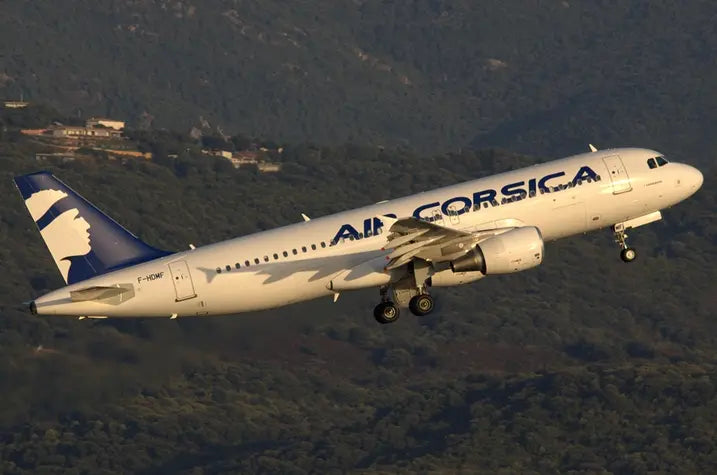
Air Corsica is the flag carrier of Corsica and the island's leading airline, founded on January 1, 1989, under the name Compagnie Corse Mediterranee (CCM). The airline was established at the initiative of the Corsican Assembly to ensure reliable air connectivity between the island and mainland France, while placing control of Corsican air transport firmly in regional hands. Originally operating as CCM Airlines, the carrier rebranded to Air Corsica in October 2010 to strengthen its market identity.
Headquartered at Ajaccio Napoleon Bonaparte Airport (AJA), Air Corsica is majority-owned by the Collectivite de Corse (Corsican territorial authority), giving it a semi-public status. The airline operates approximately 19,500 flights annually from Corsica's four airports (Ajaccio, Bastia, Figari, and Calvi) to 18+ destinations across France and Europe. It handles 44% of all annual air traffic to and from Corsica, a figure that rises to 82% during winter months when competition decreases. With a modern fleet of 13 aircraft, Air Corsica employs approximately 770 staff members and maintains codeshare partnerships with Air France and ITA Airways.
The airline plays a critical public service role through obligations de service public (OSP), ensuring year-round connectivity between Corsica and the French mainland regardless of commercial viability. This public service mission, mandated by the Corsican Assembly, provides Air Corsica with a degree of operational stability that purely commercial carriers do not enjoy. The most recent OSP renewal, confirmed in late 2024, secures the airline's core routes for the next four years. Air Corsica also holds IOSA (IATA Operational Safety Audit) certification and maintains its own EASA Part-145 maintenance facility and ATO (Approved Training Organisation) for pilot type-rating training in Bastia.
Fleet Composition & Type Ratings
Air Corsica operates a compact but modern two-type fleet consisting of ATR turboprops for regional routes and Airbus A320-family jets for mainline services. The fleet underwent a major renewal programme under the airline's "Ambizione 2025" CSR strategy, achieving an 85% fleet renewal rate by 2024, well ahead of its original 70% target. This modernisation reduced CO2 emissions by approximately 16% compared to 2019 levels while significantly improving passenger comfort and lowering operating costs.
| Aircraft Type | Role | In Service | Configuration / Notes |
|---|---|---|---|
| ATR 72-600 | Regional turboprop | 7 | 72 seats, single class. PW127XT engines (20% lower maintenance costs, 3% fuel saving vs PW127M). Air Corsica was the launch customer for this engine variant. |
| Airbus A320-200 | Narrowbody jet | 2 | 180 seats, single class. Mainline Paris and high-density routes. Older variant, likely to be replaced by additional A320neo units. |
| Airbus A320neo | Narrowbody jet | 4 | 186 seats, single class. Air Corsica was the first French airline to operate the A320neo (December 2019). Reduced fuel burn, lower noise footprint. |
Fleet data as of August 2025. The ATR 42-500 has been fully retired following delivery of the final two ATR 72-600s in the first half of 2024.
The ATR 72-600 fleet handles the airline's regional connectivity mission: inter-island flights between Corsica's four airports, short hops to Nice and Marseille, and thinner seasonal routes to Italian and Belgian destinations. These aircraft are equipped with USB charging at every seat (Air Corsica was the first ATR operator worldwide to introduce this feature) and offer efficient performance on Corsica's shorter runways, particularly at Calvi and Figari.
The Airbus A320 fleet (both ceo and neo variants) operates the higher-capacity mainline routes, especially the heavily-trafficked connections to Paris-Orly, Paris-CDG, Lyon, and Toulouse. The A320neo delivers approximately 15-20% fuel savings over the older A320ceo, and the airline's decision to adopt the neo early signals commitment to fleet efficiency. With two A320ceo aircraft still in service, further neo deliveries or second-hand acquisitions are expected as Air Corsica continues to standardise its jet fleet.
Air Corsica maintains an in-house Approved Training Organisation (ATO) in Bastia, certified for ATR type-rating courses and instructor qualification training. Pilots recruited to fly the ATR fleet can expect to complete their type rating through this facility. For the A320 fleet, type-rating training is arranged through external providers or partnership agreements. The airline operates two distinct pilot groups: ATR pilots and A320 pilots, with fleet transitions possible based on seniority and operational need.
Pilot Salary & Compensation
Air Corsica pilot compensation is governed by a collective agreement negotiated with the SNPL France ALPA. Detailed pay scales are not publicly disclosed by the airline, but available data from pilot salary databases and industry sources provides a general picture of compensation levels. As a French regional carrier, Air Corsica salaries fall below mainline Air France but remain competitive within the French regional segment.
Estimated Pay Ranges
| Rank / Fleet | Monthly Net (est.) | Annual Gross (est.) | Notes |
|---|---|---|---|
| First Officer (ATR, entry) | €3,500 - €4,500 | ~€55,000 - €70,000 | Entry-level F/O on turboprop operations |
| First Officer (ATR, experienced) | €4,500 - €6,000 | ~€70,000 - €90,000 | 3-5 years seniority on ATR fleet |
| First Officer (A320) | €5,000 - €7,000 | ~€80,000 - €105,000 | Jet fleet F/O, higher hourly rate |
| Captain (ATR) | €8,000 - €10,000 | ~€120,000 - €150,000 | Command on regional fleet |
| Captain (A320/A320neo) | €10,000 - €13,000 | ~€150,000 - €195,000 | Senior Captain on jet fleet, top of scale |
Estimates based on industry salary databases (Pilot Jobs Network) and French aviation salary benchmarks. Monthly figures are approximate net (after tax and social charges). Actual compensation depends on seniority step, fleet assignment, and collective agreement provisions.
The top Captain salary at Air Corsica reaches approximately €13,000 monthly net, according to community-contributed data from Pilot Jobs Network. This figure places senior Air Corsica Captains within a competitive range for French regional operations, though it falls short of mainline carriers like Air France where senior long-haul Captains can earn €18,000+ net monthly. First Officer entry salaries at Air Corsica are estimated between €3,500 and €4,500 net monthly, typical for a French regional carrier.
Compensation at Air Corsica includes a base monthly salary, flight-hour pay (variable component linked to block hours flown), per diem allowances for overnight positioning on the mainland, and statutory French profit-sharing provisions (interessement and participation). Night flying premiums and weekend supplements apply per the collective agreement. French social charges (approximately 22-25% of gross salary) and income tax (progressive rates up to 45%) substantially reduce the gap between gross and net compensation.
Air Corsica does not publicly disclose its pilot pay scales. The figures above are estimates compiled from community-contributed pilot salary databases, French aviation industry benchmarks, and general regional airline compensation data. Actual salaries may vary significantly depending on the latest collective agreement, individual seniority, fleet type, and hours flown. Prospective candidates should request detailed compensation information directly during the recruitment process or from the SNPL Air Corsica section. The reported €13,000 monthly net for senior Captains is a single data point from a community-sourced platform and may not reflect the full compensation picture.
Roster Pattern & Quality of Life
Air Corsica operates under EASA Flight Time Limitation (FTL) regulations combined with French labour law and the SNPL collective agreement. The airline's regional focus and relatively short sector lengths (typically 45 to 90 minutes) create a distinct operational rhythm: multi-sector days with frequent turnarounds from Corsican bases to mainland France, interspersed with overnight positioning at Paris-Orly or Marseille.
A typical flying day for an Air Corsica pilot involves an early morning departure from Ajaccio or Bastia to a mainland hub (Paris-Orly, Marseille, Nice), followed by one or two return sectors, finishing back at the Corsican base in the evening. Some rotations require overnight stays on the mainland, particularly for early morning departures from Paris-Orly. The maximum daily flight duty period under EASA FTL rules is 14 hours, though actual duty days at Air Corsica typically fall well within this limit due to the short sector lengths.
📅 Sample Month: ATR First Officer (Ajaccio Base)
The roster example above is illustrative. Air Corsica operates a variable roster pattern (not a fixed 5-on/4-off cycle). Schedules are constructed monthly based on operational requirements, seniority bidding, and FTL compliance. Summer months (June through September) are the peak operational period, with significantly higher flight frequencies to meet tourist demand, meaning more flying days and potentially fewer days off. Winter schedules are leaner, with reduced frequencies on seasonal routes and correspondingly more rest days.
Air Corsica pilots are based across the island's four airports: Ajaccio (AJA), Bastia (BIA), Figari (FSC), and Calvi (CLY). Ajaccio and Bastia are the primary bases with the largest operations. Base assignment depends on operational requirements and seniority preference. Living in Corsica offers a Mediterranean lifestyle with relatively lower housing costs compared to Paris or the Cote d'Azur, access to beaches and mountains, and a strong community atmosphere. The trade-off is limited access to large metropolitan amenities and the need for ferry or flight connections to reach mainland France. Some rotations require overnight stays in Paris or Marseille, which the airline covers through per diem allowances and contracted hotels.
Benefits, Travel Perks & Retirement
As a French employer, Air Corsica provides benefits governed by the Code du Travail (French labour code), supplemented by collective agreement provisions negotiated with the SNPL. While the airline's benefit package is less extensive than that of mainline carriers like Air France, it includes the core protections that make French aviation employment attractive by European standards.
The CRPN is France's dedicated supplementary pension fund for commercial aircrew, providing retirement benefits on top of the basic state pension. Most French-based airline pilots contribute to CRPN, but Air Corsica's specific participation status is not confirmed in publicly available documents. If Air Corsica pilots do participate (which is likely given the airline's status as a French air carrier), they would benefit from career-average earnings calculations, survivor's pension provisions, and loss-of-licence insurance. This is a critical question to clarify during the recruitment process, as CRPN participation significantly enhances the long-term financial security of a pilot career in France.
Career Progression & Seniority
Career progression at Air Corsica is seniority-based, following the standard model used across French airlines. Pilots advance through the ranks based on their position in the seniority list, with upgrade to Captain and fleet transitions depending on available vacancies created by retirements, expansion, or attrition. The airline's small fleet size (13 aircraft) and relatively stable workforce mean that progression can be slower than at larger carriers experiencing rapid growth.
| Career Milestone | Typical Timeline | Notes |
|---|---|---|
| Join as First Officer (ATR or A320) | Day 1 | Entry fleet depends on recruitment needs and candidate experience. ATR is the more common entry point. |
| Line check / full operational status | 3-6 months | Supervised line flying followed by line check to confirm operational autonomy. |
| Fleet transition (ATR to A320) | 3-8 years | Seniority-dependent. Requires A320 type rating (funded by airline). Not all pilots will transition. |
| Captain upgrade (ATR) | 5-10 years | Command assessment including interview and simulator check. Depends on vacancies in Captain group. |
| Captain upgrade (A320) | 8-15+ years | Requires jet Captain experience or ATR command plus transition. Longest wait time in the progression. |
| Training Captain / TRI / TRE | Variable | Separate selection for instructor roles. Conducted through the in-house ATO in Bastia for ATR fleet. |
Air Corsica operates two distinct pilot groups corresponding to its two fleet types: ATR pilots and A320 pilots. The most common career path begins on the ATR fleet as a First Officer, followed by upgrade to ATR Captain, then transition to the A320 as either a First Officer or (less commonly) directly as Captain depending on seniority and vacancies. Some pilots choose to remain on the ATR fleet for their entire career, particularly if they value the shorter sectors and Corsica-focused flying that turboprop operations provide.
The airline does not appear to operate a formal cadet programme. Recruitment targets experienced pilots with existing type ratings or sufficient flight hours for type-rating conversion. Direct-entry Captain positions may be available during periods of operational need, though standard practice favours internal upgrades from the First Officer group.
Air Corsica's fleet has remained stable at 13 aircraft following the completion of the Ambizione 2025 renewal programme. Without significant fleet expansion planned in the near term, Captain vacancies will be driven primarily by retirements and natural attrition rather than growth. This means upgrade timelines may be longer than at rapidly expanding carriers. However, the airline's stable operational profile and public service mission provide strong job security, and the Mediterranean base lifestyle is a significant attraction for pilots who prioritise quality of life over rapid career advancement.
Recruitment Process & Requirements
Air Corsica recruits pilots on a needs-driven basis, without a fixed annual recruitment campaign. The airline typically seeks experienced First Officers and, occasionally, direct-entry Captains for both its ATR and A320 fleets. Applications are submitted directly via email to the airline's recruitment department.
Minimum Requirements
Selection Stages
Application Submission
Send CV and motivation letter to recrutement@aircorsica.com. No online application portal. Include licence details, flight hours, type ratings, and language qualifications. Response typically within 2-4 weeks for qualifying candidates.
Technical Assessment
Written or computer-based evaluation of aeronautical knowledge, including aircraft systems, meteorology, navigation, and operational procedures. Conducted at the airline's training centre or at a partner facility such as ESMA (Ecole Superieure des Metiers de l'Aeronautique).
Simulator Assessment
Practical evaluation in a flight simulator assessing aircraft handling, emergency procedures, and CRM (Crew Resource Management) skills. Type-specific simulator sessions may be arranged for candidates being assessed for ATR or A320 positions.
Interview & CRM Evaluation
Face-to-face interview with management and operational staff. Focus on communication skills, decision-making, teamwork, and cultural fit with Air Corsica's operational philosophy. Conducted primarily in French.
Medical & Contract
Valid Class 1 medical required before starting line operations. Successful candidates receive a base assignment (Ajaccio or Bastia typically) and begin type-rating training (if not already type-rated) or proceed directly to line training.
French language fluency is absolutely essential at Air Corsica. All cockpit communications, company briefings, and interactions with Corsican colleagues are conducted in French. Candidates with Corsican heritage, prior residence on the island, or demonstrated knowledge of Corsican culture may have an advantage, given the airline's strong regional identity and its mission to employ local talent. The selection process is less formalised than at larger carriers: there is no online application portal, no standardised multi-stage psychometric testing, and no annual campaign cycle. Applications are reviewed as they arrive, and candidates meeting the requirements are invited to assessment when vacancies arise. Monitor Air Corsica's recruitment page and the SNPL network for current opportunities.
Route Network & Destinations
Air Corsica's network is built around a clear mission: connecting Corsica to mainland France year-round, while expanding seasonal European connectivity to support the island's tourism economy. The airline operates from all four Corsican airports to 18+ destinations across France, Italy, Belgium, Austria, and Germany.
Year-Round Routes
| From | To | Aircraft | Frequency (approx.) |
|---|---|---|---|
| Ajaccio (AJA) | Paris-Orly (ORY) | A320/A320neo | Multiple daily |
| Ajaccio (AJA) | Marseille (MRS) | ATR 72-600 | Daily |
| Ajaccio (AJA) | Nice (NCE) | ATR 72-600 | Daily |
| Ajaccio (AJA) | Lyon (LYS) | ATR 72-600 / A320 | Daily |
| Bastia (BIA) | Paris-Orly (ORY) | A320/A320neo | Multiple daily |
| Bastia (BIA) | Marseille (MRS) | ATR 72-600 | Daily |
| Bastia (BIA) | Nice (NCE) | ATR 72-600 | Daily |
| Figari (FSC) | Paris-Orly (ORY) | A320/A320neo | Daily |
| Figari (FSC) | Marseille (MRS) | ATR 72-600 | Daily |
| Calvi (CLY) | Paris-Orly (ORY) | A320 | Daily |
Seasonal & International Routes (Summer)
| From | To | Aircraft | Notes |
|---|---|---|---|
| Ajaccio / Bastia | Paris-CDG (CDG) | A320neo | Summer supplement to Orly services |
| Ajaccio / Bastia | Toulouse (TLS) | ATR 72-600 | Seasonal domestic route |
| Bastia | Brussels-Charleroi (CRL) | A320 | Belgium leisure market |
| Bastia / Figari | Rome Fiumicino (FCO) | ATR 72-600 | Italian connectivity |
| Bastia | Naples (NAP) | ATR 72-600 | Seasonal Italian route |
| Figari | Milan Malpensa (MXP) | ATR 72-600 | Northern Italy link |
| Bastia | Venice (VCE) | ATR 72-600 | Seasonal Italian route |
| Nice (NCE) | Florence (FLR) | ATR 72-600 | New in June 2025, twice weekly |
| Calvi / Bastia | Dole (DLE) | ATR 72-600 | Seasonal Jura connection |
Route information based on Air Corsica's published schedules for the 2025 summer season. Frequencies and destinations may vary between seasons.
The newest addition to the network is the Nice to Florence route, launched in June 2025 with twice-weekly ATR 72-600 service. This route demonstrates Air Corsica's strategy of leveraging its Nice presence to build Mediterranean connectivity beyond Corsica itself. Italy has become the airline's largest international market, with services to five Italian cities (Rome, Naples, Milan, Venice, Florence) complementing the Belgian and Austrian seasonal routes.
Air Corsica flying is overwhelmingly short-haul: the longest sector (Bastia to Brussels-Charleroi) is approximately 2 hours, while the core Corsica-mainland routes average 45-90 minutes. This means no long-haul layovers, no augmented crew operations, and no jet-lag management challenges. However, pilots can expect high-frequency multi-sector days, exposure to challenging mountain and coastal approaches at Corsican airports, and significant seasonal variation in workload. Summer operations are intense; winter is quieter. The variety of destinations, from the rugged Corsican airports to Paris-Orly and Italian coastal cities, keeps the flying operationally interesting.
How Air Corsica Compares: Airline Radar Chart
How does Air Corsica stack up against two comparable French regional carriers: HOP! (Air France's regional subsidiary) and Volotea (a low-cost regional operator with a strong Mediterranean presence)? Below is our comparative analysis across five key metrics relevant to pilot career decisions.
Key Takeaways from the Comparison
Air Corsica wins on quality of life. The Mediterranean island base, distributed hub structure (reducing commuting burden), and manageable roster patterns give Air Corsica a clear advantage in work-life balance over both HOP! (Paris-centric operations requiring metropolitan living) and Volotea (known for aggressive rostering and frequent base changes). Pilots who value geographic stability and lifestyle will find Air Corsica particularly attractive.
HOP! leads on benefits and salary. As an Air France subsidiary, HOP! pilots benefit from the Air France collective agreement framework, including access to the broader Air France-KLM staff travel network, structured seniority progression within a larger pilot group, and potentially faster upgrade timelines due to the larger fleet. HOP! first officer entry salaries are comparable to Air Corsica, but the career ceiling is higher given the possibility of transitioning to the Air France mainline.
Volotea trails significantly on working conditions. Pilot reviews consistently cite demanding rosters, limited crew provisions, frequent base relocations, and management prioritising cost-cutting over crew welfare at Volotea. While Volotea offers A319 jet flying and exposure to a wide Mediterranean network, the quality-of-life trade-offs are substantial. Captain salaries at Volotea reportedly fall below €10,000 monthly net, lower than both Air Corsica and HOP!.
Job security favours Air Corsica. The public service obligation (OSP) backing Air Corsica's core routes, combined with majority ownership by the Collectivite de Corse, provides a level of operational stability that neither HOP! (subject to Air France group restructuring decisions) nor Volotea (a purely commercial LCC vulnerable to market shifts) can match. The recent four-year OSP renewal underscores this advantage.
Scores are editorial estimates based on publicly available salary data, pilot community feedback, airline press releases, and industry benchmarks. They represent a general assessment for an experienced pilot considering a mid-career position. Individual experiences will vary based on seniority, fleet, and personal priorities. Air Corsica salary data is particularly limited in public sources, and the comparison reflects best available estimates rather than verified figures.
Union & Industrial Relations
Air Corsica pilots are represented by the SNPL France ALPA (Syndicat National des Pilotes de Ligne), France's dominant pilot union representing commercial airline pilots across all French carriers. The SNPL negotiates collective agreements covering compensation, working conditions, roster construction, and career progression for Air Corsica pilots, as it does for pilots at Air France, Transavia, HOP!, and other French operators.
Air Corsica has not been the subject of major pilot-specific industrial action in recent years. The airline's small size, strong regional identity, and public service mission create a cooperative dynamic between management and crew that differs from the more adversarial relationships sometimes seen at larger carriers. The broader French aviation labour climate does impact operations, however: air traffic controller strikes in France periodically disrupt Air Corsica schedules, and Corsican port and airport worker actions can affect ground handling and maintenance.
Recent Industrial Context
Air Corsica's relatively stable labour relations are a positive signal for prospective pilots. The airline's public service mandate and regional ownership structure create incentives for cooperative management-union relations. SNPL membership is optional but encouraged, as the union provides collective bargaining strength, legal support, and industry networking. The SNPL's broader campaigns on FTL protections, pension preservation, and two-pilot crew requirements benefit all French airline pilots, including those at Air Corsica. For the latest developments, the SNPL press releases page is the best public resource.
Verdict: Who Is Air Corsica For?
🎯 Our Take
Air Corsica is a distinctive option in the French regional aviation landscape. It offers something few European airlines can: a modern fleet (including the A320neo), stable employment backed by public service obligations, and a Mediterranean island lifestyle as your daily base. For pilots who value quality of life, geographic stability, and meaningful regional connectivity over maximum earnings or rapid career progression, Air Corsica delivers a compelling package.
The trade-offs are real. Salaries fall below mainline carriers like Air France. Career progression is limited by the small fleet size (13 aircraft), meaning Captain upgrade timelines can be longer than at expanding carriers. Public salary transparency is low, making it difficult for candidates to benchmark compensation before applying. The seasonal nature of operations means intense summer flying followed by quieter winter periods, and some overnight positioning on the mainland is required.
For French-speaking pilots with a connection to Corsica, a preference for short-haul flying, or a desire for a balanced career anchored in one of the Mediterranean's most beautiful islands, Air Corsica represents a genuine alternative to the larger, more anonymous carriers. The airline's 85% fleet renewal rate, IOSA certification, and in-house training capability demonstrate operational professionalism that belies its modest size.
1 Do I need to speak French to fly for Air Corsica?
Yes. French fluency is mandatory for all Air Corsica pilot positions. All cockpit communications, company briefings, crew resource management interactions, and internal documentation are conducted in French. Air traffic control in French airspace uses French as the primary language (alongside English). Non-native speakers with strong French proficiency may be considered, but fluency is a non-negotiable requirement.
2 Does Air Corsica provide type rating training?
Air Corsica maintains an in-house Approved Training Organisation (ATO) in Bastia certified for ATR type-rating training. Pilots recruited to the ATR fleet can expect company-funded type rating through this facility. For A320 type rating, training is arranged through external partners. Candidates with an existing ATR 42/72 or A320 type rating will have an advantage in the selection process.
3 How long does it take to become Captain at Air Corsica?
Captain upgrade at Air Corsica is seniority-based and depends on vacancies in the Captain group. Estimated timelines range from 5-10 years for ATR Captain and 8-15+ years for A320 Captain, though these figures are approximate. The small fleet size (13 aircraft) means fewer Captain positions become available compared to larger carriers, so upgrade timelines can be longer during periods of low attrition.
4 Can non-EU citizens apply to Air Corsica?
Air Corsica requires candidates to be EU/EEA citizens or to hold a valid right to work in France. Non-EU citizens without pre-existing French work authorisation are unlikely to be considered, as the airline does not appear to sponsor work permits for pilot positions.
5 Where are Air Corsica pilots based?
Air Corsica pilots are based across the island's four airports: Ajaccio (AJA), Bastia (BIA), Figari (FSC), and Calvi (CLY). Ajaccio and Bastia are the primary bases with the largest operations. Base assignment depends on operational requirements and seniority. Some rotations require overnight positioning at Paris-Orly, Marseille, or Nice, for which the airline provides per diem allowances and hotel accommodation.
6 What aircraft does Air Corsica operate?
As of 2025, Air Corsica operates 13 aircraft: 7 ATR 72-600 turboprops (72 seats), 2 Airbus A320-200 jets (180 seats), and 4 Airbus A320neo jets (186 seats). Air Corsica was the first French airline to operate the A320neo and the launch customer for the ATR 72-600 PW127XT engine variant. The fleet was 85% renewed by 2024 under the Ambizione 2025 programme.
7 How does Air Corsica salary compare to Air France?
Air Corsica salaries are lower than mainline Air France. Senior Air Corsica Captains can reach approximately €13,000 monthly net, while Air France senior long-haul Captains earn €18,000-€21,000+ net monthly. First Officer entry salaries at Air Corsica (estimated €3,500-€4,500 net) are also below Air France entry levels (estimated €5,000-€5,500 net). However, Air Corsica offers a Mediterranean lifestyle, lower living costs in Corsica compared to Paris, and the stability of public service obligation-backed routes.
8 Is Air Corsica a good airline for a first job?
Air Corsica can be a solid first airline for pilots who meet the requirements, particularly those with Corsican ties or a desire for Mediterranean-based flying. The modern fleet provides excellent training opportunities on both turboprop (ATR 72-600) and jet (A320neo) aircraft. The diverse route network offers exposure to challenging mountain and coastal approaches. However, the airline does not operate a formal cadet programme and typically prefers candidates with some regional airline experience (500+ flight hours). Low-hours candidates may find it easier to gain initial experience at a training-oriented carrier before applying to Air Corsica.
Official Links & Resources
Before applying or making any career decisions, always verify information directly with official sources. These are the key websites and organisations relevant to Air Corsica pilot careers:
Air Corsica does not maintain a formal online application portal for pilots. All recruitment inquiries should be directed to recrutement@aircorsica.com with a CV and motivation letter. Monitor the Air Corsica recruitment page for current openings, and follow the airline on LinkedIn for news and recruitment updates. The SNPL network is also a valuable source of information about upcoming selection campaigns at French regional carriers.