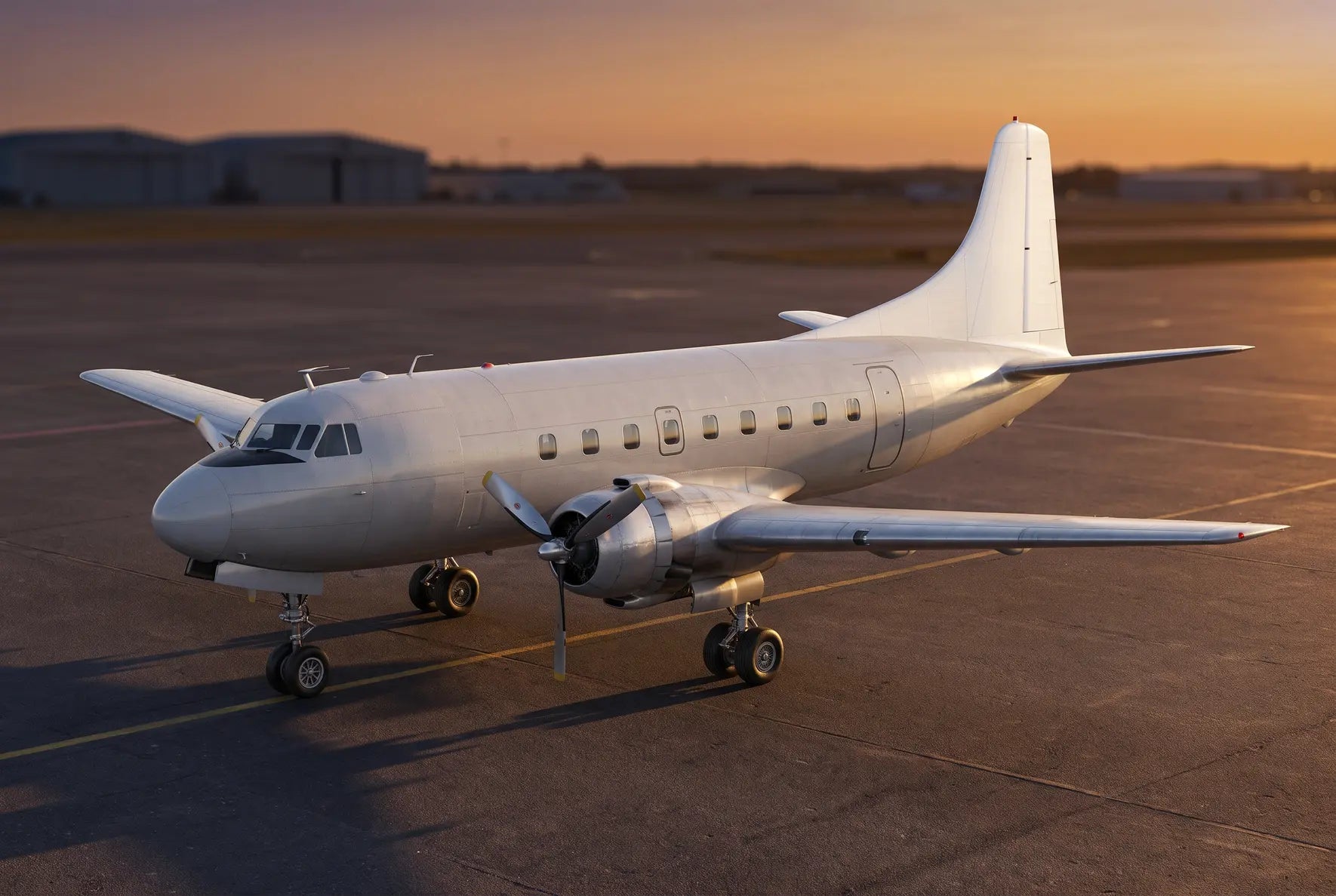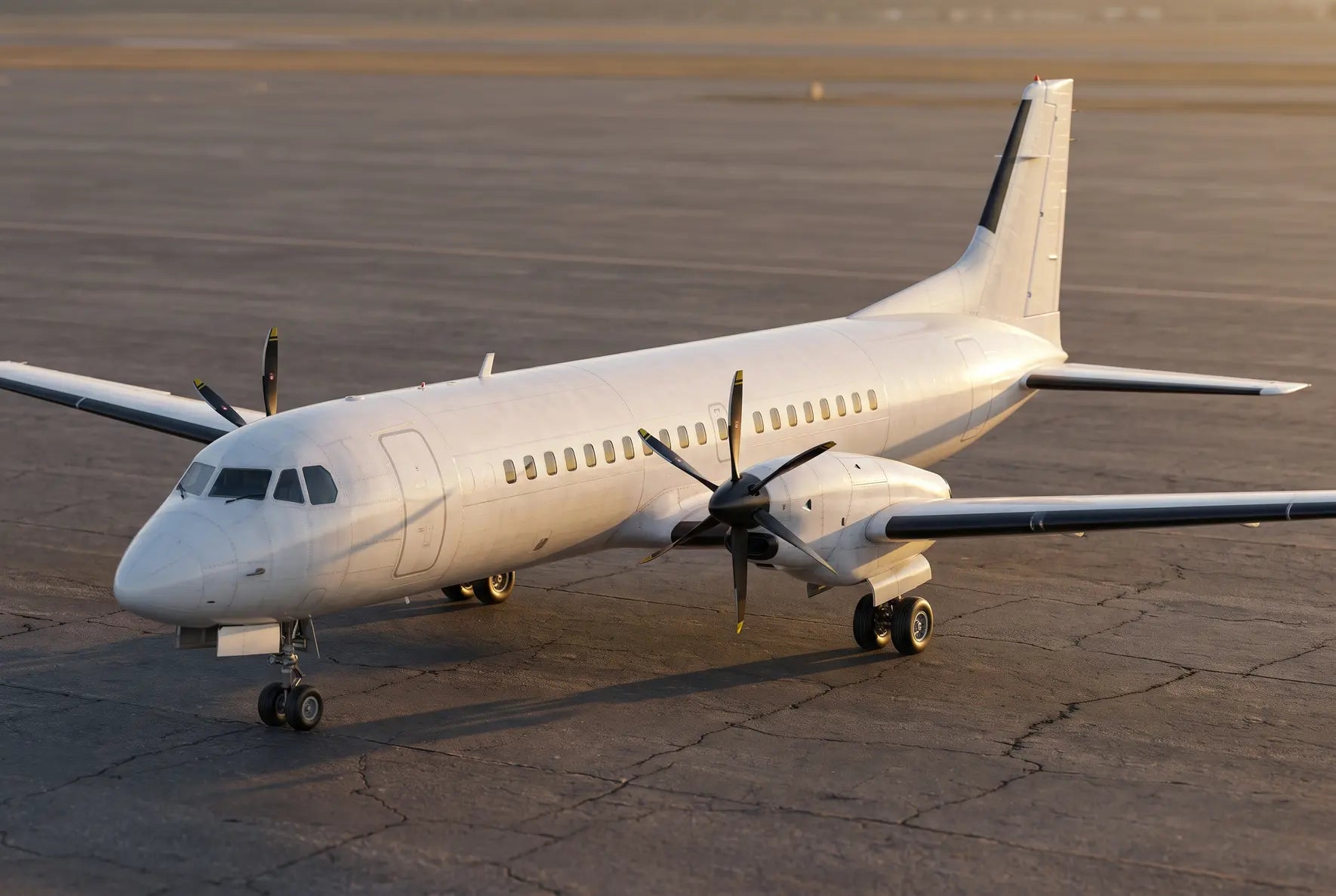


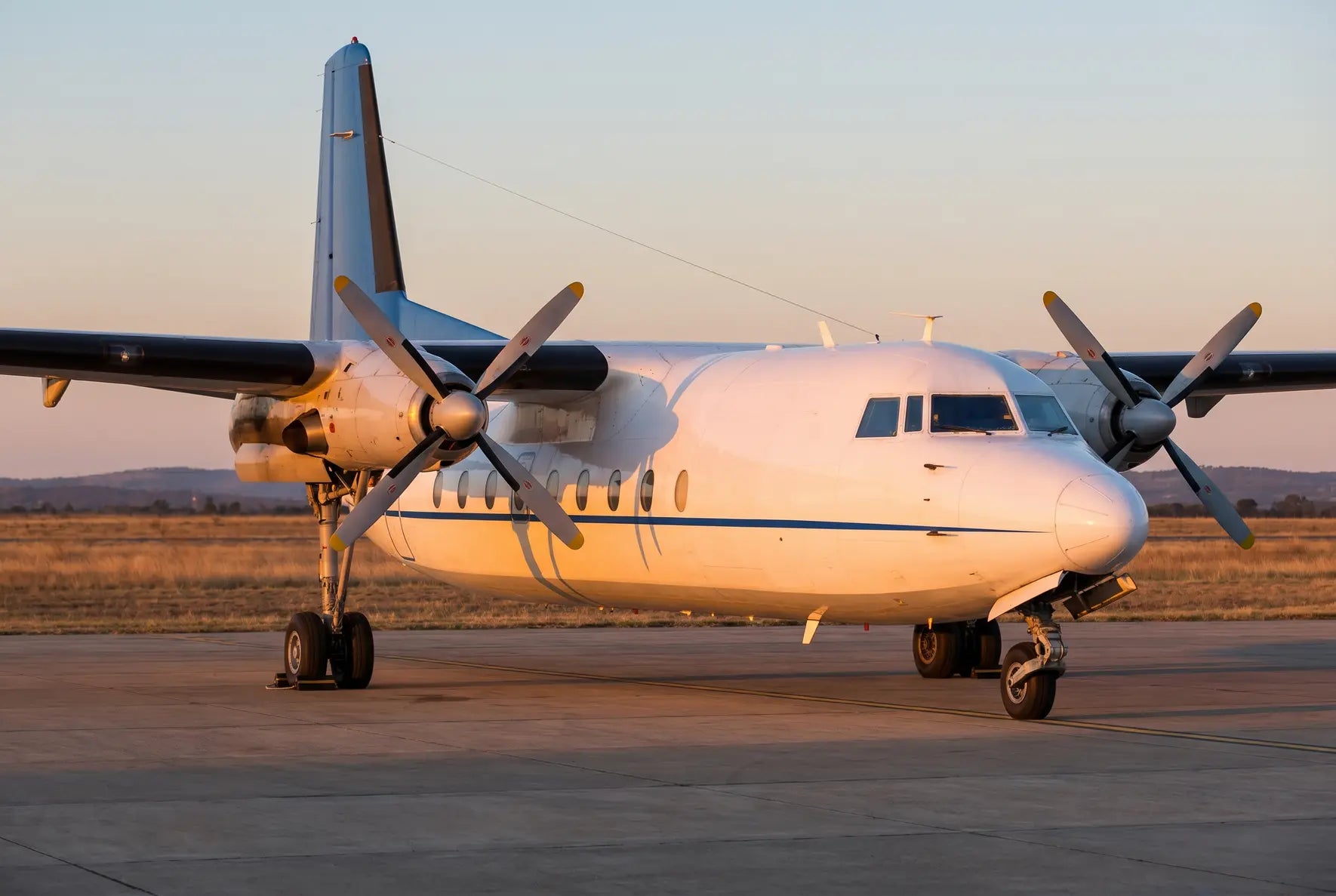
Fokker F27-200: History, Development and What Set This Variant Apart
The Fokker F27 Friendship family emerged in the early 1950s from a pressing need to replace ageing piston engine airliners, most notably the Douglas DC-3, with a modern turboprop alternative suited to short and medium haul regional routes. Fokker, the storied Dutch aerospace manufacturer founded in 1912, initiated the design programme under the internal designation P275 around 1950. Head Constructor Kees van Meerten led the engineering effort, which benefited from wind tunnel testing funded by the Netherlands Institute for Aircraft Development (NIV) beginning in 1951. By 1953 the final configuration was settled, and the aircraft received the name Friendship at the Paris Salon Aéronautique that same year.
The resulting design was a high wing, pressurised monoplane powered by two Rolls-Royce Dart turboprop engines, featuring innovative Redux glued sandwich construction in the fuselage and wings for reduced weight and improved fatigue resistance. Two flyable prototypes were funded by the NIV. The first prototype, registered PH-NIV, completed its maiden flight on 24 November 1955, a sortie lasting 34 minutes, powered by two Dart RDa6 Mk 507 engines producing 1,540 hp each.
The initial production variant, the F27-100 (Mark 100), first flew on 23 March 1958, fitted with Rolls-Royce Dart 6 Mk 514-7 engines rated at 1,670 hp. Aer Lingus became the first airline to operate the Friendship, placing it into revenue service on 19 November 1958. In the United States, Fairchild manufactured the type under licence as the Fairchild F-27, with West Coast Airlines introducing it to American passengers in July 1958.
Against this backdrop, Fokker developed the Fokker F27-200 as a direct evolution of the Mark 100 airframe. The variant was conceived to offer operators improved take off performance, better hot and high capability, and greater operational flexibility, all achieved primarily through a more powerful engine installation. The Fokker F27-200 made its first flight on 20 September 1959, powered by two Rolls-Royce Dart Mk 528-7 engines producing approximately 1,900 shp each, a meaningful step up from the 1,670 hp of the Mark 100. The airframe itself remained structurally identical to the F27-100, as confirmed by EASA Type Certificate Data Sheet A.036, which describes the Mark 200 as the same as the F27 Mark 100 except for engine installation. In total, approximately 115 examples of the Fokker F27-200 were produced at the Fokker factory near Schiphol airport in the Netherlands, making it one of the more prolific marks within the Friendship family.
Over the course of its production life, several sub types of the Dart engine were approved for the Mark 200, including the Dart 528-7E, 532-7, 532-7R, 535-7R, 551-7R and 552-7R. This engine flexibility allowed operators to upgrade powerplants during overhaul cycles, progressively improving performance and reliability. The Fokker F27-200 also introduced straight tipped propellers with a diameter of 3.65 metres, replacing the round tipped blades used on the Mark 100. The Fairchild F-27A, produced under licence in the United States, was the American equivalent of the Fokker F27-200. Airlines across the globe operated the variant, connecting regional communities that had limited access to mainline jet services. For context on how regional turboprop operators shaped aviation in the Pacific, see this overview of Air Tahiti Nui.
Total Fokker F27 production across all marks reached approximately 586 aircraft built in the Netherlands, with a further 206 assembled by Fairchild in the United States as F-27 and FH-227 variants. The production line remained active from 1955 until 1987. The F27 Friendship ultimately became Fokker's most commercially successful programme and laid the technological foundation for its turboprop successor, the Fokker 50, which entered service in 1987.
What Distinguishes the Fokker F27-200 from Other Marks
While the Fokker F27-200 shared its fuselage dimensions, wing design and cabin layout with the Mark 100, the engine upgrade was the defining change. The higher power output of the Dart Mk 528-7 (and later approved variants up to the Mk 552-7R) provided tangible improvements in climb rate, take off distance and payload range performance, particularly from short or challenging airfields. The Mark 200 retained the same 44 passenger capacity in a typical single class configuration as the baseline Friendship, but offered airlines greater scheduling flexibility. In contrast, the later F27-300 Combiplane introduced a large forward cargo door for mixed freight and passenger operations, while the F27-400M was adapted as a military troopship with paratroop doors. The F27-500, which first flew in November 1967, featured a 1.50 metre fuselage stretch for increased seating capacity. The Mark 200 therefore occupies a distinct position in the Friendship lineage: the same proven airframe as the original, but with meaningfully enhanced power.
The following summarises the key identifiers of the Fokker F27-200:
- Designation: F27 Mark 200 (also F27-200)
- Engines: Two Rolls-Royce Dart Mk 528-7 turboprops (~1,900 shp each); multiple later Dart sub types also certified (up to Mk 552-7R)
- Propellers: Straight tipped blades, 3.65 m diameter
- Airframe: Identical to Mark 100 (high wing, pressurised, Redux bonded construction)
- Seating: Up to 44 passengers in standard configuration
- Production: Approximately 115 built by Fokker at Schiphol, Netherlands
- First flight: 20 September 1959
- US equivalent: Fairchild F-27A (licence built)
- EASA Type Certificate: A.036

The image depicts a Fokker F27 Friendship aircraft in flight, used by the U.S. Army Parachute Team known as the Golden Knights. The plane features distinct branding and insignia.
Fokker F27-200 Technical Specifications, Systems and Engine Performance
The Fokker F27-200 was conceived as a direct performance upgrade over the baseline F27-100, retaining the same high-wing, pressurised airframe while fitting more powerful Rolls-Royce Dart Mk 532 series turboprops. This change gave operators meaningfully better takeoff performance in hot and high conditions, improved climb rates, and greater payload flexibility, all without altering the airframe's external dimensions or structural weight envelope. The aircraft was designed for regional routes where short, sometimes unpaved runways were common, and its combination of robust landing gear, generous wing area, and turboprop efficiency made it a favourite among operators in developing regions and on thin domestic routes across Europe, Africa, and Asia.
Like every member of the Friendship family, the F27-200 inherited a philosophy that prioritised simplicity, field maintainability, and passenger comfort through pressurisation and low vibration levels. The high-wing layout kept engines and propellers well clear of debris on unimproved strips, while the wide-track undercarriage offered stability in crosswinds and on soft surfaces.
- Wingspan: 29.00 m (95 ft 2 in)
- Overall length: approximately 23.56 m (77 ft 4 in)
- Height: 8.50 m (27 ft 11 in)
- Wing area: 70 m² (753 ft²)
- Typical seating: 44 to 52 passengers depending on cabin configuration
- Maximum takeoff weight (MTOW): approximately 20,410 kg (44,996 lb)
- Operating empty weight (OEW): approximately 12,150 kg (26,786 lb)
- Engines: 2 × Rolls-Royce Dart Mk 532-7R turboprops, each producing approximately 2,100 equivalent shaft horsepower (ehp)
- Maximum cruise speed: approximately 480 km/h (259 kt)
- Service ceiling: 8,990 m (29,500 ft)
- Range with maximum payload: approximately 1,900 km (1,026 nm)
- Undercarriage track: 7.20 m
- Wheelbase: 8.74 m
Systems, Flight Controls and Handling
The F27-200 used conventional, mechanically actuated flight controls. Ailerons, elevators, and rudder were cable and rod operated, with trim tabs on all primary surfaces. Flaps were single slotted, electrically actuated, and provided effective low speed handling for short field operations. The undercarriage was hydraulically retractable with a pneumatic backup, featuring a wide track that enhanced ground stability. Braking relied on a pneumatic system rather than a hydraulic one, a distinctive feature of the Friendship family that required pilots to manage air pressure reserves carefully, particularly during extended taxi operations.
De-icing on the wings and tail surfaces used pneumatic rubber boots, while engine intake and propeller de-icing were handled by electrical heating elements. The cabin was pressurised using engine bleed air, which allowed comfortable cruising at higher altitudes and improved block speed on regional sectors. Cockpit instrumentation on the F27-200 was analogue, with traditional round dial gauges for engine parameters, flight instruments, and navigation. Operators often customised avionics fits according to their route requirements and regulatory environments.
Published performance figures for the F27-200 can vary considerably depending on the specific operator configuration, cabin density, actual operating weight, atmospheric conditions, and runway state. Manufacturer quoted ranges and speeds typically assume standard atmospheric conditions (ISA), a specific passenger count, and full fuel. Real world performance on hot days, at high elevation airports, or with a heavy freight load will differ meaningfully from catalogue numbers. When comparing specifications across sources, it is important to note whether figures refer to maximum or typical cruise, to sea level or altitude conditions, and whether they account for reserves.
Rolls-Royce Dart: The Engine Behind the Friendship
The Fokker F27-200 was powered by two Rolls-Royce Dart Mk 532-7R turboprop engines, part of the long running RDa.7 family. The Dart programme began in the late 1940s with the RDa.1 prototype producing 1,250 shp. Through continuous development, the engine grew in power and reliability: the RDa.3 delivered 1,480 hp for early Vickers Viscounts, the RDa.6 reached 1,670 hp, and the RDa.7 series pushed output to 1,815 ehp and beyond. The Mk 532-7R fitted to the F27-200 produced approximately 2,100 ehp at 15,000 rpm, achieved through a two-stage centrifugal compressor, seven combustion chambers, and a three-stage axial turbine driving the propeller through a reduction gearbox with a 0.093:1 ratio.
The Dart was notable for its operational simplicity and durability. It achieved a specific fuel consumption of approximately 0.581 lb/(ehp·hr) and an overall pressure ratio of 5.62:1. Time between overhaul (TBO) reached up to 5,000 hours with compliance to Rolls-Royce service bulletins, a remarkable figure for its era. More than 7,100 Dart engines were manufactured before production ended in 1987, making it one of the most successful turboprop powerplants in aviation history.
Beyond the Fokker F27, the Dart family powered a wide range of aircraft. The Vickers Viscount was the first turboprop airliner to enter service and relied on various Dart marks throughout its production run. The Hawker Siddeley HS.748 and its military variant, the Andover, used Mk 529, 531, 540, and 552 variants. The Japanese NAMC YS-11 was equipped with Mk 540 and 543 engines rated up to 2,305 shp, while the Convair CV-600 and CV-640 conversions also adopted high-power Dart variants. In the military domain, the Breguet 1050 Alizé anti-submarine aircraft used the Mk 21 variant. This broad adoption across civil and military platforms underscored the Dart's versatility and the confidence manufacturers placed in its proven architecture.
Fokker F27-200 vs F27-500 vs ATR 42-300 vs SAAB 340B Specifications
Scroll horizontally to see more
| Parameter | Fokker F27-200 | Fokker F27-500 | ATR 42-300 | SAAB 340B |
|---|---|---|---|---|
| Entry into service | 1960 | 1967 | 1985 | 1985 |
| Engines | 2 × Rolls-Royce Dart RDa.6 Mk 532-7R | 2 × Rolls-Royce Dart RDa.6 Mk 536-7R | 2 × Pratt & Whitney PW120 | 2 × GE CT7-5A2 |
| Length | 23.6 m | 25.1 m | 22.7 m | 19.7 m |
| Wingspan | 29.0 m | 29.0 m | 24.6 m | 21.4 m |
| Height | 8.5 m | 8.8 m | 7.1 m | 7.5 m |
| Typical seating and layout | Single class: 44 passengers | Single class: 52 passengers | Single class: 42-48 passengers | Single class: 34 passengers |
| MTOW | 20.4 t | 20.8 t | 16.9 t | 13.0 t |
| Range | 1,160 nm | 710 nm | 1,500 nm | 1,000 nm |
| Cruise speed | 0.26 Mach | 0.26 Mach | 0.28 Mach | 0.28 Mach |
| Service ceiling | 27,800 ft | 27,800 ft | 25,000 ft | 31,000 ft |
| Program note | Standard short-haul regional turboprop with increased power over base model | Stretched version of F27 family with higher capacity | Modern successor in regional turboprop market, shorter fuselage | Smaller regional turboprop competitor with advanced features |
Scroll horizontally to see more
The table compares key specs of four regional turboprops, showing how capacity, size and performance differ by generation. The F27-500 is longer and seats more (52) than the F27-200 (44), but its range is shorter (710 nm vs 1,160 nm). The ATR 42-300 offers the longest range (1,500 nm) with moderate seating, while the smaller SAAB 340B seats 34 yet reaches the highest ceiling (31,000 ft).
Fokker F27-200 Operations: Airlines, Typical Routes and Missions Worldwide
The Fokker F27-200, powered by the uprated Rolls-Royce Dart Mk 532 engines, was purpose built for short to medium haul regional services. Typical sector lengths ranged from 500 to 1,000 km (270 to 540 nautical miles), with flight times usually between 45 minutes and two hours. With a maximum payload range of approximately 1,800 to 1,900 km and a ferry range of up to 2,800 km, the aircraft could handle a wide variety of regional missions. Operators commonly achieved high daily utilisation of six to ten block hours, flying multiple short sectors on scheduled services before returning to base.
The Fokker F27-200 excelled in both hub and spoke and point to point network configurations. Its robust high wing design, short field performance (requiring as little as 1,000 m of runway), and pressurised cabin made it ideally suited to secondary and regional airports with limited infrastructure. Many operators deployed it on domestic trunk routes connecting smaller cities to national hubs, while others used it on cross border services linking neighbouring countries. The type also found roles in cargo and combi operations, particularly on overnight freight schedules.
Operational challenges for the Fokker F27-200 included the maintenance demands of the Rolls-Royce Dart turboprop engines, which required careful monitoring of propeller control systems and pneumatic brake pressure. Hot and high airport environments reduced engine output and demanded longer takeoff distances, requiring operators to manage payloads carefully. Rudder vibration reports accumulated over two decades of service, and strict adherence to standard operating procedures was essential to mitigate risks associated with ageing airframes.
Where the Fokker F27-200 Operates: A Global Overview
The Fokker F27-200 achieved remarkable global reach during its decades of service, becoming one of the most widely operated turboprop airliners in aviation history. Across Europe, it served as a backbone for domestic and intra-European regional networks, linking secondary cities and islands to major hubs. In North and South America, the type (often built under licence by Fairchild in the United States) connected remote communities, mountain airstrips, and low density routes that jet aircraft could not serve economically. Across Asia, the Fokker F27-200 thrived in archipelago nations and developing domestic markets, while in Africa, its rugged construction and short field capability made it indispensable for operations into austere airfields with limited ground support.
A total of 787 F27 Friendship airframes were built (581 by Fokker in the Netherlands and 206 under licence by Fairchild in the United States), with the Mark 200 ranking among the most popular variants thanks to its improved hot weather and high altitude performance.
- Europe: The Fokker F27-200 was widely adopted by European regional carriers. Air UK operated around ten F27-100/200 aircraft on scheduled routes across the United Kingdom from the early 1980s. Aer Lingus was an early and prominent customer in Ireland, using the type on domestic and short haul services. In the Netherlands, NLM CityHopper flew the type on domestic routes, and WDL Aviation in Germany used it for charter and cargo operations. Aviaco and Iberia Airlines deployed the type on regional routes in Spain, while Luxair was an early customer in Luxembourg. Finnair used the type for regional services in Finland, and Air France along with Air Inter operated it on French domestic routes. In Turkey, Turkish Airlines (THY) operated Fokker F27s on domestic and regional routes connecting cities such as Diyarbakir and Athens from the early 1960s through the 1970s. For more on Turkish Airlines and its operations, see our dedicated guide.
- North and South America: In the United States, Fairchild built variants served carriers including Bonanza Air Lines, West Coast Airlines, Piedmont Airlines, and Ozark Air Lines on low density regional routes. Mesaba Airlines operated F27s as part of the Northwest Airlink network radiating from Minneapolis. Aloha Airlines used them for Hawaiian inter island services. In South America, Lloyd Aéreo Boliviano in Bolivia, Rio Sul and TAM in Brazil, and CATA Línea Aérea in Argentina operated the type on domestic and intra regional routes.
- Asia: The Fokker F27-200 found particular success across Southeast Asia and the Indian subcontinent. In Indonesia, Garuda Indonesia, Merpati Nusantara Airlines, and Sempati Air relied on it to connect the vast archipelago. Philippine Airlines and Air Manila used the type for domestic services in the Philippines. Pakistan International Airlines, Biman Bangladesh Airlines, and All Nippon Airways in Japan also operated the type on regional passenger routes.
- Africa: Across the African continent, the Fokker F27-200 proved invaluable on routes where runway conditions and ground infrastructure were limited. Royal Air Maroc in Morocco, Air Algérie in Algeria, Kenya Airways, and East African Airways used it for regional feeder services. DETA in Mozambique, Air Botswana, TAAG Angola Airlines, and Somali Airlines all operated the type on domestic and short haul routes linking remote communities to capital cities.
Typical Seating Configurations on the Fokker F27-200
The standard cabin of the Fokker F27-200 accommodated 44 passengers in a four abreast layout (two seats on each side of a central aisle), an increase over the 40 seat arrangement common on the earlier F27-100. The pressurised cabin measured approximately 2.10 m in width and 2.01 m in height, allowing most passengers to stand comfortably. Some operators installed high density layouts seating up to 48 passengers, while the EASA type certificate data sheet certified a maximum of 62 seats for certain interior arrangements meeting evacuation requirements.
Network carriers operating scheduled regional services generally favoured the standard 44 seat configuration with a single lavatory at the rear. Charter and leisure operators occasionally opted for reduced seating (as few as 28 seats) to offer greater legroom and a more comfortable experience on tourist routes. Combi variants, designated F27-300 and F27-400, replaced aft cabin rows with a forward cargo compartment accessible via a large cargo door, reducing passenger capacity to around 28 to 36 seats while enabling mixed passenger and freight loads on a single flight. Dedicated freighter conversions removed all passenger seating, utilising the full 62 m³ cargo volume. Regardless of layout, the four abreast arrangement remained universal across all Fokker F27-200 passenger configurations.
In this video, footage from Dio, come ti amo! 1966 shows a Fokker F27-200 Friendship I-ATIM at Naples-Capodichino Airport, highlighting classic aviation scenes from the film’s production context.
Fokker F27-200 Safety Record: Accident History and How Safe Is This Turboprop
The Fokker F27-200 belongs to the F27 Friendship family, one of the most widely produced turboprop airliners in aviation history. Fokker and its American licensee Fairchild built approximately 786 airframes across all variants between 1955 and 1987, with the F27-200 accounting for roughly 117 of those. Over nearly seven decades of operation, the entire F27 fleet accumulated millions of flight hours and cycles serving airlines, military operators and cargo carriers on every continent. The Aviation Safety Network records around 205 hull loss events for the Fokker F27 Friendship family across all variants and all operators, including both civilian and military airframes. While that figure may appear high at first glance, it must be weighed against the enormous global fleet size, the decades of active service, and the wide range of operational environments in which the F27 was used. Many of these losses involved operations in demanding conditions such as mountainous terrain, poor weather and rudimentary airfield infrastructure in developing regions during the 1960s through 1980s, a period when navigation aids, cockpit technology and crew resource management standards were far less advanced than they are today.
Notable Accidents Involving the Fokker F27-200
Several high profile accidents involved F27-200 airframes specifically, and each contributed in different ways to the broader evolution of flight safety practices.
- Indian Airlines, February 1966, near Banihal (India) – A Fokker F27-200 registered PH-SAB struck a hilltop in the Pir Panjal range while operating a service from Srinagar. All 37 occupants were killed. Investigators determined that a navigational error led the aircraft off its prescribed route over the Banihal Pass. The accident underscored the risks of operating in mountainous terrain without adequate ground based navigation aids and reinforced calls for improved instrument procedures on high altitude routes in the Indian subcontinent.
- Aero Trasporti Italiani (ATI) Flight 327, October 1972, Poggiorsini (Italy) – An F27-200 registered I-ATIR was destroyed during a night visual approach to Bari, killing all 27 people on board. The investigation classified the event as controlled flight into terrain (CFIT) caused by pilot error. The altimeter reading at impact matched the crash site elevation, and alternative theories such as VOR malfunction were disproved by subsequent testing. This accident contributed to a wider industry push for improved approach procedures, ground proximity warning systems and instrument landing systems at regional airports.
- ATI Flight 392, April 1972, near Frosinone (Italy) – Another ATI Fokker F27-200 (I-ATIP) experienced a loss of control while flying through a severe thunderstorm near Ardinello di Amaseno. All 18 occupants perished. The event highlighted the dangers of turboprop aircraft encountering extreme convective weather, and it reinforced the importance of weather avoidance training and the use of meteorological radar in regional airline operations.
- Burma Airways, March 1978, Mingaladon (Myanmar) – A Fokker F27-200 registered XY-ADK lost altitude shortly after takeoff and crashed into a paddy field near Mingaladon Airport. All 48 people on board were killed. While detailed causal findings remain limited in publicly available records, the accident was among the deadliest single events involving the F27 type and drew attention to engine out performance margins and crew training for critical phases of flight.
How Safe Is the Fokker F27-200 Today
When assessing the safety of the Fokker F27-200, it is important to recognise that the majority of hull losses occurred decades ago under operational, regulatory and technological conditions vastly different from those in force today. The F27 was designed with a robust high wing layout, twin Rolls Royce Dart turboprop engines and a fail safe structural philosophy that allowed many airframes to exceed 30,000 flight hours and tens of thousands of cycles. As lessons emerged from accidents, regulators issued airworthiness directives to address structural fatigue, propeller system integrity and operational procedures. The FAA Lessons Learned programme documents how later investigations into the F27 family, including research prompted by the Fokker 50 successor, led to improvements in areas such as antiskid system design and propeller beta mode safeguards.
Fewer than twenty Fokker F27 Friendships of all variants remain in active commercial or military service worldwide. Those still flying operate under the oversight of national aviation authorities and are subject to continuous airworthiness requirements, including mandatory inspections, service bulletins and crew recurrency training. Modern standard operating procedures, enhanced weather radar, GPWS/TAWS systems and improved crew resource management training have collectively reduced the risk profile of turboprop operations far below the levels of past decades. According to data from the International Civil Aviation Organization (ICAO), the global accident rate for commercial aviation has declined steadily, making scheduled air travel one of the safest forms of transport available. For anyone seeking practical advice on staying comfortable and informed during a flight, these tips for enhancing your flight experience can help make every journey more enjoyable regardless of the aircraft type.
01 What is the typical range and mission profile of the Fokker F27-200?
The Fokker F27-200 has a maximum range of about 2,500 kilometers with full payload, making it ideal for short to medium regional routes. It excels in missions connecting smaller airports to hubs, often operating on routes under 1,000 km with quick turnaround times. Operators value its ability to handle shorter runways, enabling service to remote areas.
02 How is the cabin laid out on the Fokker F27-200, and what is the passenger experience like?
The Fokker F27-200 typically seats 48 to 60 passengers in a single-class layout with two seats on each side of a narrow aisle. Passengers note a relatively quiet cabin for a turboprop due to its rear-mounted engines, though propeller noise is audible during cruise. Comfort is basic with standard seating, but larger windows provide good views, appealing to aviation spotters.
03 Which airlines operated the Fokker F27-200 and on what routes?
Airlines like Air New Zealand, Garuda Indonesia, and Indian Airlines commonly flew the Fokker F27-200 on regional routes. These included domestic hops in Indonesia, New Zealand's inter-island services, and India's shorter feeder lines to secondary cities. Many were used for low-frequency routes to underserved airports.
04 How does the Fokker F27-200 perform compared to similar aircraft?
Powered by two Rolls-Royce Dart turboprops, the F27-200 cruises at 460 km/h with good short-field performance, outperforming contemporaries like the Fairchild Swearingen Metroliner on capacity and range. It offers better fuel efficiency than pure jets on short routes due to lower consumption at low altitudes. Compared to the ATR 42, it has a simpler design but similar reliability for regional ops.
05 What is the safety record of the Fokker F27-200?
The Fokker F27-200 has a solid safety record with few hull-loss accidents relative to its production run of over 500 units. Key design features include robust construction and a high-mounted wing for obstacle clearance, contributing to its durability. Most incidents involved operator error or weather, not inherent flaws.
06 What should passengers know about flying on the Fokker F27-200, like seat choice or turbulence?
Rows near the wings offer the smoothest ride during turbulence on the Fokker F27-200, as it has a stable high-wing design. Window seats provide excellent propeller and ground views, though seats are narrower than on jets. Expect a short taxi and pronounced engine spool-up noise, but the ride is smooth at cruise.