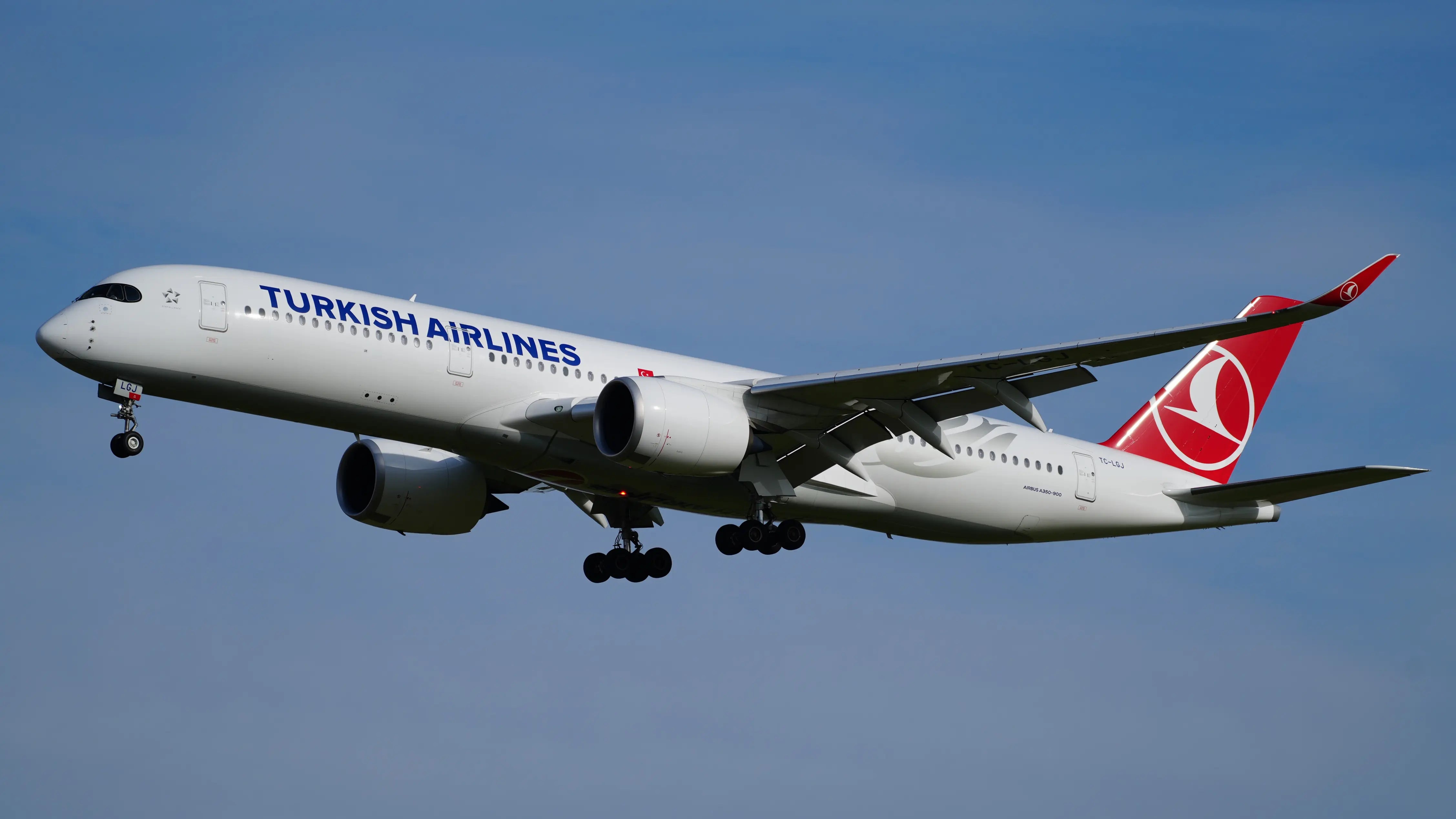
Turkish Airlines Overview & Company Profile
Turkish Airlines (Türk Hava Yolları) is the national flag carrier of Türkiye, founded on 20 May 1933 and headquartered at Istanbul Airport (IST), one of the world's largest and newest aviation hubs. The airline holds a unique distinction: it flies to more countries than any other carrier on Earth, currently serving over 340 destinations across 130+ countries from its mega-hub straddling Europe and Asia. Turkish Airlines is a proud member of the Star Alliance, the world's largest airline alliance.
With approximately 5,700 pilots on its roster and an ambitious target to recruit over 1,100 new pilots per year, Turkish Airlines is one of the fastest-growing employers of flight crew globally. The airline operates from its primary hub at Istanbul Airport, with secondary operations at Ankara Esenboga (ESB) and Antalya (AYT). In 2024, the carrier reported revenues of $22.7 billion and a net profit of $3.4 billion, making it Europe's most profitable single legacy airline. Total employees exceed 100,000, and the fleet currently stands at over 500 aircraft with plans to reach 800+ by 2033 under the airline's strategic vision.
The airline's parent company, THY A.O., is listed on the Istanbul Stock Exchange (BIST: THYAO) with the Turkish government retaining a 49.12% stake through the Turkey Wealth Fund. Turkish Airlines also operates cargo services through Turkish Cargo, a growing freight division with 20 dedicated freighter aircraft, and owns subsidiaries including AJet (low-cost brand), SunExpress (joint venture with Lufthansa), Turkish Technic (MRO), and the Turkish Airlines Flight Academy (TAFA) in Aydin.
Fleet Composition & Type Ratings
Turkish Airlines operates one of the most diverse and modern fleets in the world, featuring both Airbus and Boeing narrowbody and widebody aircraft in roughly equal proportion. The airline maintains a deliberate 50/50 balance between the two manufacturers. A massive fleet renewal is underway: in December 2023, Turkish Airlines placed a landmark order for 355 Airbus aircraft (including 150 A321neos, 50 A350-900s, and 15 A350-1000s), and in September 2025, it ordered up to 225 Boeing aircraft (75 Boeing 787 Dreamliners and 150 Boeing 737 MAX jets). Combined, these orders will transform the fleet into one of the youngest and most fuel-efficient in the industry.
| Aircraft Type | Role | In Service | On Order | Routes / Notes |
|---|---|---|---|---|
| Airbus A319-100 | Narrowbody | 6 | 0 | Being phased out. Oldest narrowbody type in fleet. |
| Airbus A320-200 | Narrowbody | 17 | 0 | European/domestic short-haul. Being retired. |
| Airbus A321-200 | Narrowbody | 68 | 0 | Workhorse for European and regional routes. 178 seats (2-class). |
| Airbus A320neo | Narrowbody | 10 | ~140 | New-generation replacement for older A320 family. |
| Airbus A321neo | Narrowbody | 69 | 150+ | Primary narrowbody of the future. High-density European routes. |
| Boeing 737-800 | Narrowbody | 69 | 0 | Legacy narrowbody workhorse. Being replaced by 737 MAX. |
| Boeing 737 MAX 8 | Narrowbody | 27 | 100+ | New-gen replacement. 151 seats (2-class). |
| Boeing 737-900ER | Narrowbody | 15 | 0 | Higher-capacity narrowbody. 169 seats. |
| Boeing 737 MAX 9 | Narrowbody | 5 | 50+ | Larger MAX variant. 169 seats (2-class). |
| Airbus A330-200 | Widebody | 12 | 0 | Medium/long-haul. Being replaced by A350 and 787. |
| Airbus A330-300 | Widebody | 37 | 0 | Medium/long-haul workhorse. 289 seats (2-class). |
| Airbus A350-900 | Widebody | 30 | 50 | New flagship long-haul. 329 seats. Growing rapidly. |
| Airbus A350-1000 | Widebody | 0 | 15 | Ultra-long-haul: planned for Australia, New Zealand, South America. |
| Boeing 777-300ER | Widebody | 46 | 0 | Long-haul heavyweight. Up to 400 seats. To be replaced long-term. |
| Boeing 787-9 | Widebody | 26 | 35 | Efficient long-haul. 300 seats (2-class). 75 total on order. |
| Boeing 787-10 | Widebody | 0 | 15 | Larger Dreamliner variant. Deliveries from 2029. |
| Airbus A330-200F | Freighter | 10 | 0 | Turkish Cargo. Largest operator of this type worldwide. |
| Boeing 777F | Freighter | 10 | 0 | Turkish Cargo long-haul freight operations. |
Fleet data as of late 2025 based on industry sources. Numbers are approximate and change with ongoing deliveries, retirements, and lease returns.
New cadets from the Take-Off program typically enter on the Boeing 737-800 or Airbus A320 family. Experienced pilots are recruited onto specific types based on their existing ratings. Type rating for cadets is included in the training program but costs are recouped through salary deductions over approximately 10 years. Transition to widebody fleets (A330, A350, 777, 787) is based on seniority and company need. The rapid influx of A350s and 787s is expected to create significant widebody transition opportunities in the coming years.
Pilot Salary & Compensation Breakdown
Turkish Airlines pilot salaries are structured around a monthly base salary calculated on 70 block hours, with overtime pay for hours above this threshold. Compensation is paid in Turkish Lira (TRY), which is subject to significant currency fluctuation. Dollar-equivalent figures below reflect approximate 2025 exchange rates. Total packages include quarterly bonuses, per diem allowances that vary by destination, and various operational premiums. Importantly, Turkish tax rates for pilots are relatively low compared to Western Europe, with employee taxes around 5% plus social security contributions, meaning take-home pay as a percentage of gross salary is considerably higher than in countries like France, Germany, or the UK.
First Officer (F/O) Pay Scale
| Seniority / Type | Monthly Gross (TRY) | Monthly Gross (USD est.) | Annual Gross (USD est.) |
|---|---|---|---|
| Entry F/O (Narrowbody) | ₺280,000 - ₺320,000 | $7,000 - $8,000 | ~$84,000 - $96,000 |
| F/O 3-5 years (Narrowbody) | ₺340,000 - ₺400,000 | $8,500 - $10,000 | ~$102,000 - $120,000 |
| Senior F/O (Widebody) | ₺400,000 - ₺440,000 | $10,000 - $11,000 | ~$120,000 - $132,000 |
Based on 70 flight hours/month. Overtime hours above 70h are compensated at an additional rate. Quarterly bonuses add approximately $5,000 per quarter.
Captain Pay Scale
| Seniority / Type | Monthly Gross (TRY) | Monthly Gross (USD est.) | Annual Gross (USD est.) |
|---|---|---|---|
| Captain (Narrowbody) | ₺580,000 - ₺620,000 | $14,500 - $15,500 | ~$174,000 - $186,000 |
| Captain (Widebody) | ₺620,000 - ₺660,000 | $15,500 - $16,500 | ~$186,000 - $198,000 |
| Training Captain / TRE | ₺660,000+ | $16,500+ | ~$198,000+ |
Captain pay includes base salary calculated at 70 hours/month plus quarterly bonuses. Widebody Captains on high-value long-haul routes earn at the top end of the range. Per diems are additional and vary by destination.
Turkish Airlines salaries are paid in Turkish Lira. The TRY has experienced significant depreciation over recent years, which directly impacts the USD/EUR equivalent purchasing power for expat pilots. In late 2025, the rate fluctuates around ₺35-40 per USD. While low Turkish tax rates (around 5% employee tax plus social security) provide a favorable net-to-gross ratio, currency volatility is a genuine risk factor that prospective pilots should weigh carefully. Domestic living costs in Istanbul are substantially lower than in Western European capitals, which partially offsets the headline salary gap. All figures above are estimates compiled from multiple industry sources and pilot reports; always verify with the latest official Turkish Airlines compensation data.
Roster Pattern & Quality of Life
Roster patterns at Turkish Airlines are among the more demanding in the legacy carrier world. The airline operates under Turkish DGCA (Directorate General of Civil Aviation) regulations aligned with ICAO standards. Given the sheer scale of the network (340+ destinations) and Istanbul's role as a 24-hour connecting hub, pilots can expect intensive scheduling. For locally-based pilots, the pattern typically yields around 8 days off per month, structured as three blocks of 2 consecutive days off plus two single days off. Duty schedules are published on the 24th of each month (or 23rd for 30-day months).
For expat and commuting pilots, Turkish Airlines offers a 3 weeks on / 1 week off commuting roster. This is a significant perk for pilots who do not wish to relocate permanently to Istanbul. Confirmed tickets to and from the pilot's home base are provided to Captains for their block-off periods.
📅 Sample Month - Narrowbody First Officer (IST, Local Roster)
Long-haul crews on widebody aircraft operate different patterns, with layovers of 24 to 48 hours at destination. Ultra-long-haul routes (such as those to the Americas and East Asia) use augmented crews of 3 or 4 pilots for in-flight rest. These rotations provide longer recovery periods between duties but may involve more time away from home.
All Turkish Airlines pilots are based at Istanbul Airport (IST). There is no base-bidding system. Expat pilots are not required to live in Istanbul if they opt for the commuting roster. However, for those who do relocate, the airline historically provided housing support for expat pilots, including furnished accommodation near the airport. Istanbul offers a significantly lower cost of living than London, Paris, or Dubai, with excellent food, culture, and healthcare. Traffic congestion is a well-known challenge, and living close to the airport (Arnavutkoy, Basaksehir, or Halkali areas) is strongly recommended. The airline provides shuttle services between designated areas and the airport.
Benefits, Travel Perks & Retirement
Turkish Airlines offers a competitive benefits package that, while not matching the tax-free perks of Gulf carriers, provides solid value especially when combined with Istanbul's lower cost of living. The airline won the "Excellent Employee Experience Award" from Happy Place to Work Turkiye in 2025, reflecting ongoing investment in staff welfare and experience.
One of the key financial benefits of flying for Turkish Airlines is the low effective tax rate. Employee taxes are assessed at approximately 5% plus social security contributions, which is dramatically lower than the 30-45% effective rates pilots face in France, Germany, or the UK. This means that while headline gross salaries are lower than at some Western European carriers, the net take-home pay gap is much narrower than it appears. Combined with Istanbul's cost of living (roughly 50-60% of London or Paris for comparable lifestyles), the financial picture for Turkish Airlines pilots is more competitive than raw salary figures suggest.
Career Progression & Seniority
Career progression at Turkish Airlines offers one of the most dynamic trajectories available at any legacy carrier. Unlike many European airlines where upgrade to Captain can take 12-15+ years, Turkish Airlines' rapid growth (targeting 800+ aircraft by 2033, nearly double the current fleet) creates significantly faster progression opportunities. The airline also accepts direct-entry Captains for experienced pilots meeting specific requirements, which is a major differentiator from carriers like Air France or Lufthansa.
The seniority system governs fleet transitions and base preferences, but the sheer pace of fleet expansion means that widebody positions are opening at an unusually fast rate. The airline is recruiting approximately 1,000+ pilots per year, with the Take-Off Cadet Program onboarding 500-800 cadets annually. This growth creates a virtuous cycle: more aircraft require more Captains, which accelerates upgrade timelines for First Officers.
| Career Milestone | Typical Timeline | Notes |
|---|---|---|
| Cadet training (Take-Off Program) | 15-18 months | Theoretical + practical training. Primarily at TAFA (Aydin) or partner schools. |
| Type rating (post-cadet) | 3-6 months | B737 or A320 family. Cost recouped over ~10 years via salary deductions. |
| Join as F/O (Narrowbody) | ~2 years post-entry | B737-800, 737 MAX, A320/A321. Most common entry fleet. |
| Widebody F/O transition | 4-8 years | A330, A350, 777, or 787. Based on seniority and fleet needs. |
| Captain upgrade (Narrowbody) | 8-12 years | Faster than most European peers due to fleet growth. |
| Captain (Widebody) | 12-18 years | 777, A350, or 787 command. High demand expected as fleet doubles. |
| Training Captain / TRE / TRI | Variable | Requires separate selection. SFI positions also available. |
Turkish Airlines' strategic plan calls for expanding the fleet from ~500 to 800+ aircraft by 2033, serving over 400 destinations. This expansion, combined with natural attrition and retirements, will require thousands of new pilots and hundreds of new Captains over the next decade. For pilots joining now, this represents an exceptional window of opportunity for rapid career advancement, particularly into widebody commands on the A350-900, A350-1000, and Boeing 787 fleets. The airline's recent acquisition of a minority stake in Spain's Air Europa also signals further international expansion ambitions.
Recruitment Process & Requirements
Turkish Airlines recruits pilots through two main pathways: the Take-Off Cadet Program for aspiring pilots (primarily Turkish citizens) and the Experienced Pilot stream for type-rated or experienced pilots from around the world. The cadet program was honored with the Gold Award at the Brandon Hall Group Excellence Awards 2025 for talent acquisition. The airline aims to recruit over 1,000 pilots annually to support its aggressive fleet growth plan.
Take-Off Cadet Program - Requirements
Experienced Pilot - Requirements (Summary)
Selection Stages
Online Application & Screening
Applications submitted via the Turkish Airlines careers portal. Documentation review including licenses, logbooks, language certificates, and medical records. Candidates are filtered based on minimum requirements.
Psychometric & Aptitude Testing (Cadets: PACE Test)
For cadets, this includes logic, psycho-technical, spatial reasoning, multitasking, and coordination assessments. For experienced pilots, aptitude evaluation is part of the 3-day screening in Istanbul. This stage eliminates the majority of applicants.
CRM Assessment & Group Exercise
Evaluation of non-technical competencies: communication, leadership, teamwork, situational awareness, and stress management. Conducted in Istanbul. For experienced pilots, this includes a simulator assessment session on Day 2 of the 3-day screening.
Board Interview & Document Verification
Panel interview covering motivation, career history, technical knowledge, and cultural fit. Height and weight measurements are also taken at this stage for cadet candidates. All travel and accommodation for the screening process is covered by Turkish Airlines.
Medical Assessment & Contract
Applicants must obtain a fit-to-fly report from medical centers authorized by the Turkish DGCA (SHGM). Successful candidates receive a contract offer. For cadets, training begins at TAFA or a partner academy. Work permits for foreign pilots take approximately 4 weeks to process.
The Take-Off Cadet Program is restricted to Turkish citizens and Blue Card holders. However, the experienced pilot stream is open to all nationalities, making Turkish Airlines one of the most accessible legacy carriers for international pilots. The 3-day screening process in Istanbul is fully funded by the airline. Candidates are typically contacted within 1-3 weeks after completing the assessment. The minimum contract period is one year; leaving earlier requires reimbursement of training costs. Second language skills (Arabic, Chinese, Spanish) are valued but not required.
Top 5 Layover Destinations
With the world's most extensive international route network, Turkish Airlines pilots enjoy layovers in some of the most fascinating cities on the planet. The airline operates long-haul services to every inhabited continent from Istanbul, with daily flights to major cities across the Americas, East Asia, Africa, and beyond. Layovers typically last 24-48 hours, with ultra-long-haul routes sometimes offering longer rest periods due to augmented crew requirements. Hotels are contracted by the airline, with standards varying by destination.
Crew hotels are contracted by the airline. Pilots do not select or book their own accommodation. Transport between hotel and airport is arranged by the company. Layover destinations are determined by your roster and, for more senior pilots, bid preferences. Turkish Airlines' unique position as the airline flying to more countries than any other means the variety of layover destinations is unmatched in the industry. From Mogadishu to Montreal, Bali to Buenos Aires, the breadth of the network provides extraordinary travel experiences.
How Turkish Airlines Compares: Airline Radar Chart
How does Turkish Airlines stack up against two key reference points for pilots considering their options: Pegasus Airlines (Turkiye's largest low-cost carrier and direct domestic competitor) and Emirates (the Gulf mega-carrier that competes for the same global long-haul traffic)? Below is our comparative assessment across five key metrics.
Key Takeaways from the Comparison
Emirates leads on salary and benefits. Tax-free salaries in Dubai, free housing, education allowances, and annual travel tickets give Emirates a clear edge in total compensation. A senior Emirates Captain on widebody can earn $16,000-$18,000/month tax-free, compared to Turkish Airlines' $14,500-$16,500 in Turkish Lira (with low but non-zero taxes). However, Emirates requires living in Dubai, while Turkish Airlines offers a commuting roster option.
Turkish Airlines dominates on fleet diversity and job security. With 500+ aircraft, 340+ destinations, and a clear path to 800+ aircraft by 2033, Turkish Airlines offers unparalleled fleet variety and long-term growth prospects. The airline's position as Europe's most profitable legacy carrier and its strategic importance to the Turkish state provide strong job security. Pegasus, while growing, operates a single-type fleet (737/A320neo family) with a more limited network.
Work-life balance is Turkish Airlines' weakest area. With only 8 days off per month on local rosters, no annual leave in the first year, and just 14 days from year two, Turkish Airlines trails both Emirates (typically 8-10 days off/month plus 30 days annual leave) and even Pegasus. The commuting roster (3 on/1 off) helps expats but local-roster pilots face a demanding schedule.
Career progression is fastest at Turkish Airlines. The massive fleet expansion creates upgrade opportunities that neither Emirates nor Pegasus can match in speed. Captain upgrade at Turkish Airlines is achievable in 8-12 years, compared to variable timelines at Emirates and limited widebody options at Pegasus.
Scores are editorial estimates based on publicly available salary data, pilot testimonials, airline publications, and industry benchmarks. They represent a general assessment for an experienced pilot evaluating long-term career options. Individual experiences will vary based on seniority, fleet, contract type, and personal priorities. Emirates and Pegasus comparisons reflect typical packages for pilots joining in 2025.
Union & Industrial Relations
The pilot union landscape in Turkiye operates differently from Western European countries. The primary pilot association is TALPA (Turkiye Havayolu Pilotlari Dernegi / Turkey Airline Pilots' Association), which functions as a professional association and advocacy body rather than a traditional trade union with collective bargaining power in the Western European sense. TALPA is a member of both the European Cockpit Association (ECA) and IFALPA (International Federation of Air Line Pilots' Associations), connecting Turkish pilots to the global pilot community.
TALPA Structure & Role
Turkish labor law provides a different framework for industrial relations than what pilots might be accustomed to in France, Germany, or the UK. While pilots have the right to organize, the collective bargaining landscape is less formalized than in countries with strong aviation-specific union traditions. Working conditions are primarily determined by individual contracts, Turkish labor code provisions, and company policies rather than union-negotiated collective agreements.
Industrial action among Turkish Airlines pilots is extremely rare. The airline's semi-state ownership structure and the strategic importance of aviation to Turkiye's economy and geopolitical positioning create a generally stable labor environment, albeit one with less formal union leverage than at European peers. Pilots who have concerns about working conditions can raise them through internal channels, the Expat Relations Department (for foreign pilots), or through TALPA's advocacy role.
Prospective pilots should understand that the industrial relations environment at Turkish Airlines is fundamentally different from that at Air France, Lufthansa, or British Airways. There is no equivalent of the SNPL, Vereinigung Cockpit, or BALPA negotiating mandatory collective agreements. This means pilots have less formal collective leverage on salary negotiations and roster rules, but it also means the airline operates without the periodic disruption of pilot strikes. For expat pilots, the Expat Relations Department serves as an important resource for resolving issues. TALPA membership is voluntary and provides professional networking, safety advocacy, and international representation rather than direct contract negotiation.
Verdict: Who Is Turkish Airlines For?
🎯 Our Take
Turkish Airlines is one of the most dynamic and opportunity-rich airlines to fly for in 2025. The combination of the world's most extensive international network (340+ destinations in 130+ countries), a diverse and rapidly growing fleet of 500+ aircraft heading to 800+, a mega-hub at Istanbul straddling two continents, and the financial strength of Europe's most profitable legacy carrier creates an environment of exceptional career velocity.
The trade-offs are real: roster patterns are more demanding than at Western European carriers, annual leave is limited (especially in the early years), the Turkish Lira's volatility creates currency risk for expat pilots, and the industrial relations framework offers less formal union protection than in countries like France or Germany. Salaries, while competitive in purchasing power terms, lag behind Gulf carriers and US majors in headline USD figures.
For pilots seeking rapid career progression, unmatched route diversity, and a front-row seat to one of aviation's most ambitious growth stories, Turkish Airlines offers something few other airlines can match. The commuting roster option, open-nationality experienced pilot recruitment, and direct-entry Captain pathway make it particularly attractive for international pilots looking for a dynamic alternative to the Gulf carriers.
1 Can non-Turkish citizens apply to fly for Turkish Airlines?
Yes. The experienced pilot stream is open to all nationalities. However, the Take-Off Cadet Program is restricted to Turkish citizens and Blue Card holders. Foreign pilots must hold a valid ATPL (ICAO/EASA/JAA) and meet the minimum hour requirements for their desired category. Work permits for foreign pilots take approximately 4 weeks to process, and the airline provides an Expat Relations Department for support.
2 What is the commuting roster at Turkish Airlines?
Turkish Airlines offers a 3 weeks on / 1 week off commuting roster for both First Officers and Captains. This allows pilots to live outside Turkiye and commute to Istanbul for their duty blocks. Captains receive confirmed tickets to and from their home base for block-off days. This is a significant advantage for pilots who do not wish to relocate permanently to Istanbul.
3 How long does it take to become a Captain at Turkish Airlines?
Captain upgrade on narrowbody types is typically achievable in 8-12 years, significantly faster than at most Western European legacy carriers. Widebody command follows in the 12-18 year range. The airline's aggressive fleet expansion plan (doubling to 800+ aircraft by 2033) is expected to create exceptional upgrade opportunities. Turkish Airlines also accepts direct-entry Captains for experienced pilots with the required hours and qualifications.
4 Does Turkish Airlines pay for type rating?
For cadet program entrants, the total cost of training and type rating (approximately €120,000-€170,000 depending on contract type) is advanced by the airline and recouped through salary deductions over approximately 10 years, with monthly deductions capped at 25% of salary. Trainees are paid during the 18-24 month training period and receive food and shuttle services. For experienced pilots, certain positions (particularly NTR categories) may require self-funded type rating.
5 Is the salary paid in Turkish Lira or US Dollars?
Salaries are paid in Turkish Lira (TRY). This is an important consideration for expat pilots, as the TRY has experienced significant depreciation against major currencies in recent years. While the low tax environment (around 5% employee tax) and low cost of living in Istanbul partially compensate, currency risk is a genuine factor. Some pilots manage this by maintaining expenditures in Turkey and converting savings strategically.
6 How does Turkish Airlines compare to Emirates for pilots?
Emirates offers higher tax-free salaries, free housing, and a more generous leave package. Turkish Airlines counters with a more diverse fleet (Airbus and Boeing vs. Emirates' all-Airbus/Boeing widebody fleet), faster career progression, the world's most extensive route network, a commuting roster option (Emirates requires Dubai residency), and lower living costs in Istanbul. The choice often depends on personal priorities: maximum earning potential (Emirates) vs. career velocity and network variety (Turkish Airlines).
7 What is the annual leave policy?
Turkish Airlines' leave policy starts conservatively: no annual leave in the first year. From year 2 to year 5, pilots receive 14 days (split 7 summer / 7 winter). After 5 years, this increases to 26 days. Note that the airline defines "summer" broadly (April through October), which limits flexibility for vacation timing. This is one of the less generous leave policies among legacy carriers and is a common point of discussion among pilots.
8 What are the bases for Turkish Airlines pilots?
All Turkish Airlines pilots are based at Istanbul Airport (IST). There is no base-bidding system with multiple options. Pilots may be required to deadhead to other domestic or international airports for operational needs, but all rosters originate from Istanbul. The commuting roster (3 on / 1 off) allows pilots to live elsewhere and commute in, which is a popular option for European-based expat pilots.
Official Links & Resources
Before applying or making any career decisions, always verify information directly with official sources. These are the key websites and organisations relevant to Turkish Airlines pilot careers:
Monitor the Turkish Airlines careers portal regularly, as experienced pilot positions are advertised on a rolling basis and requirements can change depending on fleet needs. For cadet program updates, follow Turkish Airlines' official social media channels and check the careers page during typical campaign periods (mid-year). The airline's Expat Relations Department is available for questions from international candidates considering relocation to Istanbul.