

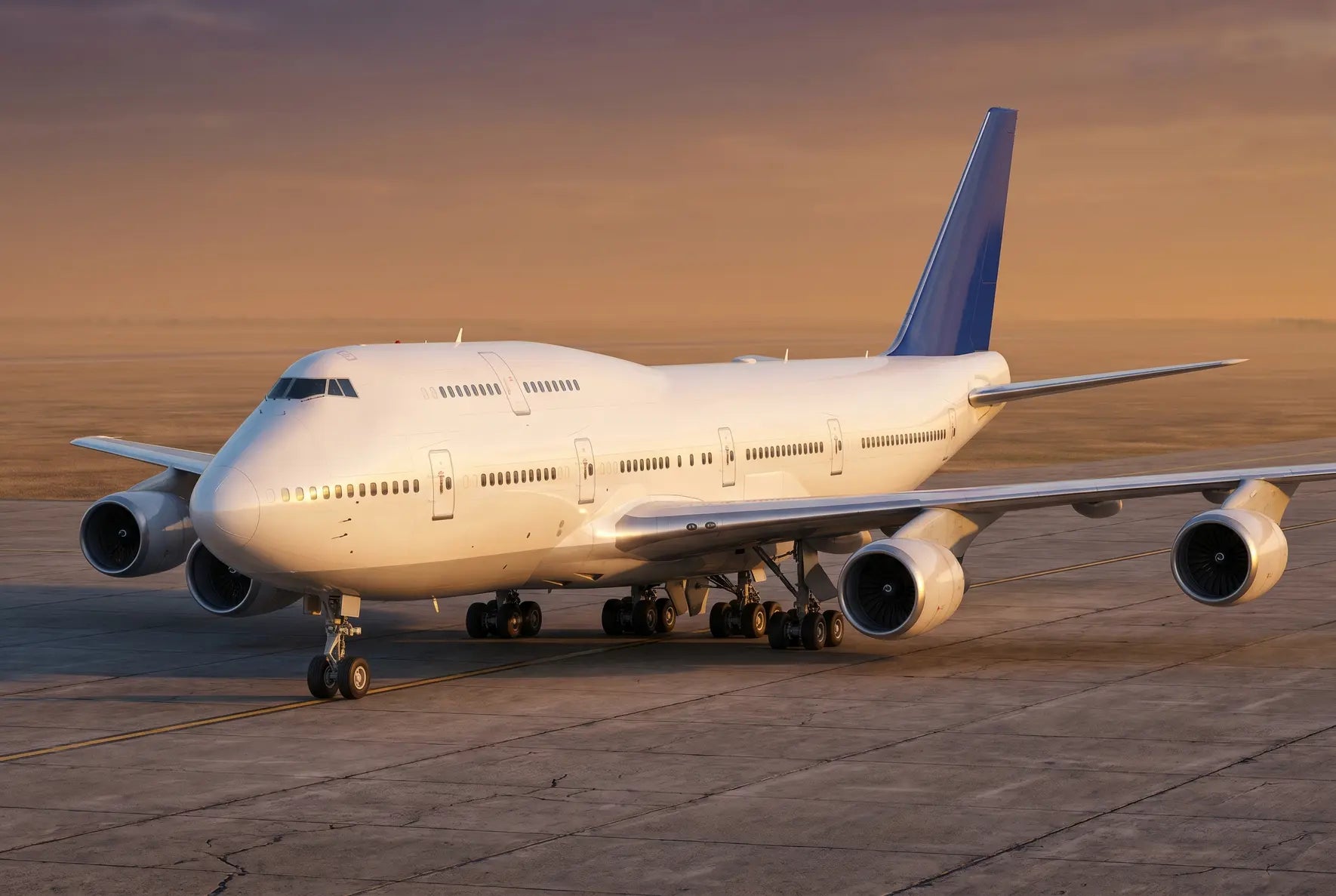
Boeing 747-400D: History, Development, and What Sets This Domestic Jumbo Apart
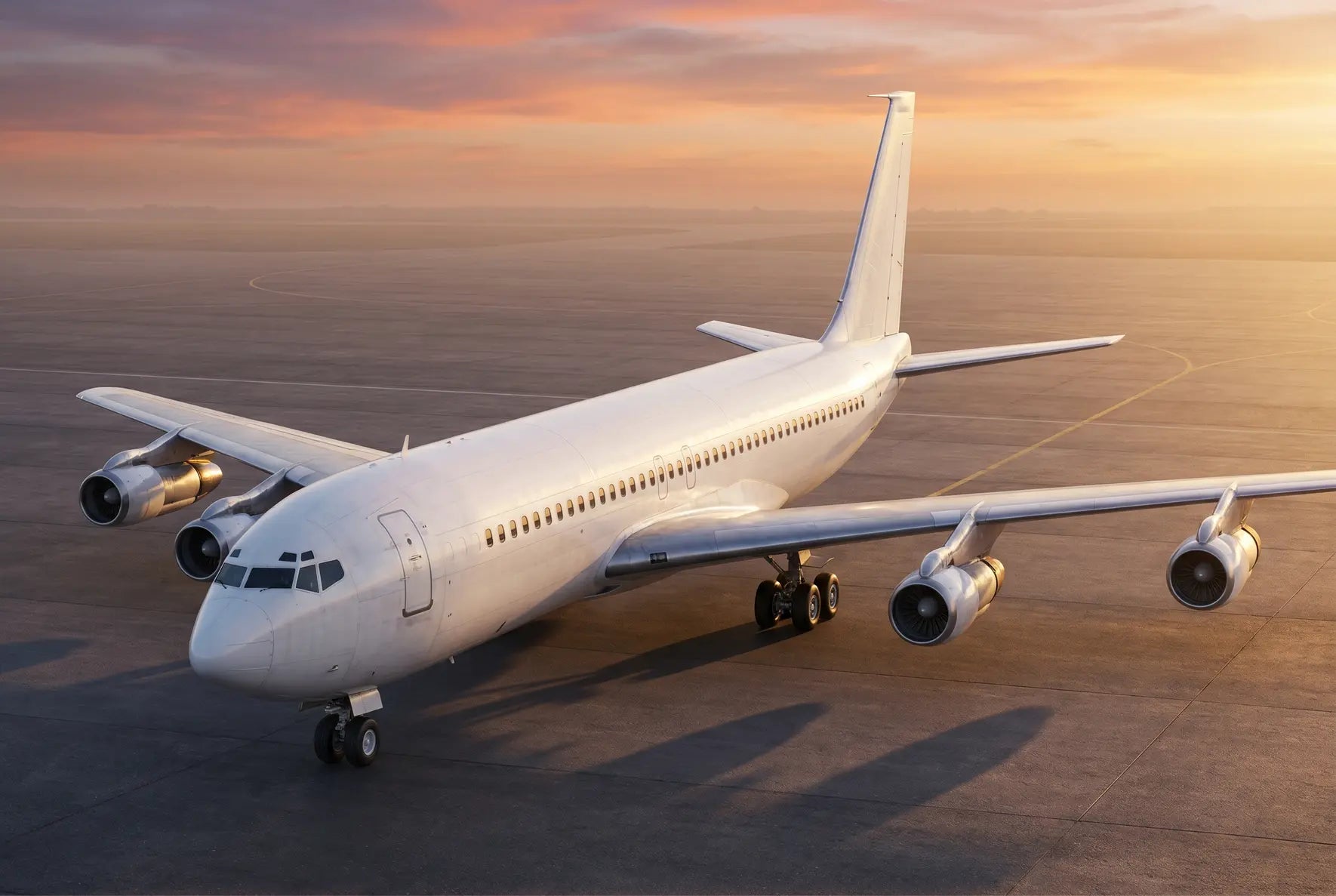
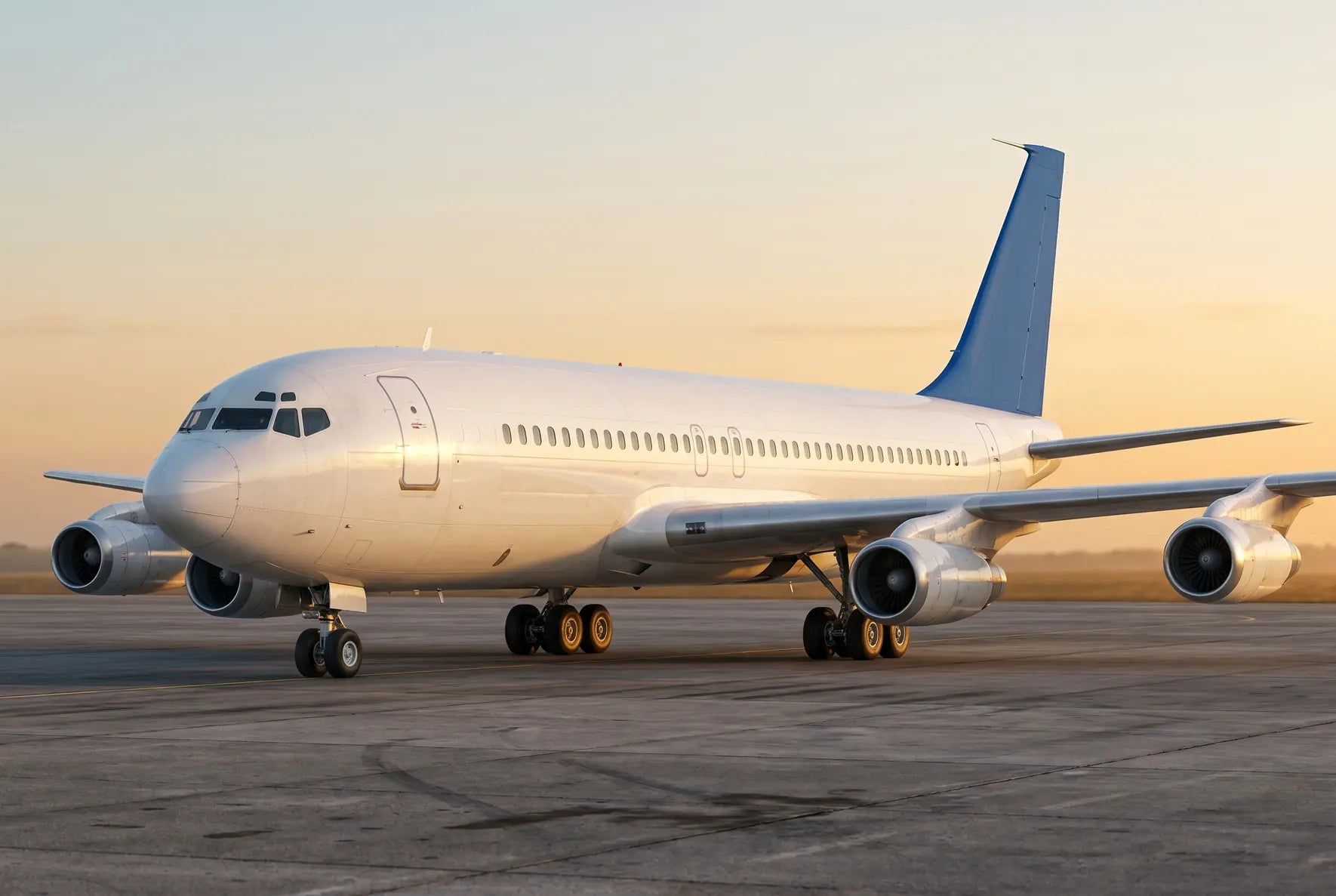
The Boeing 747-400D (where "D" stands for "Domestic") was a purpose-built, high-capacity derivative of the standard 747-400, developed exclusively for the demanding Japanese domestic air travel market. Its story is rooted in a lineage of short-range 747 variants that Boeing created to serve one of the world's most congested and high-volume aviation networks.
Origins: From the 747SR to a Modern Domestic Jumbo
Japan's busiest air corridors, including Tokyo Haneda to Sapporo, Fukuoka, and Osaka, consistently ranked among the highest-traffic routes in the world. In the 1970s, Boeing had already responded to this demand by developing the 747SR (Short Range) and later the 747-100B/SR SUD, both structurally reinforced for high-cycle operations and configured with dense seating layouts of up to 563 passengers. Japan Airlines (JAL) and All Nippon Airways (ANA) operated these variants heavily on domestic trunk routes where airport slot constraints made maximising passengers per departure essential.
By the late 1980s, as the 747SR fleet aged, both carriers needed a modern replacement that retained the high-capacity, short-range mission profile while benefiting from the technological advances of the new 747-400 platform: a two-crew glass cockpit, improved engines, and updated systems. Boeing responded by developing the 747-400D within the broader 747-400 program, which had launched in 1985.
Program Milestones and Entry into Service
The baseline 747-400 made its first flight on 29 April 1988 and entered commercial service in February 1989 with Northwest Airlines. The 747-400D, sharing the same type certificate as a configuration variant rather than a wholly separate programme, followed shortly after. The first 747-400D flew on 18 March 1990, and deliveries began later that year. ANA received its first aircraft, registration JA8961, in November 1990. JAL commenced 747-400D operations around the same period. Production of the variant continued until approximately 1995, with a total of 19 aircraft built, all destined for Japan's domestic market.
Three Japanese operators flew the type: ANA, JAL, and Japan Air System (JAS), the latter's aircraft being absorbed into JAL following the JAL-JAS merger in the early 2000s. JAL retired its last 747-400D in 2011, while ANA operated the type until 31 March 2014, when JA8961 completed its final flight after 24 years and over 33,000 cycles. The retirement of the 747-400D marked the end of an era for four-engined domestic jumbo jets in Japan, as both carriers transitioned to more fuel-efficient twin-engine widebodies such as the Boeing 777-300 and later the Boeing 787 Dreamliner.
What Differentiates the Boeing 747-400D from the Standard 747-400
While sharing the same fundamental airframe, cockpit, and engine families as the international 747-400, the 747-400D was tailored in several important ways for short-range, high-frequency domestic operations. The most visually striking difference was the absence of winglets. The standard 747-400 featured 1.8-metre (6-foot) blended winglets that improved cruise efficiency on long-haul sectors. Boeing omitted these on the 747-400D because the fuel savings on flights typically under 1,000 nautical miles did not justify the added weight and structural complexity. As noted in Boeing's 747-400 Airport Planning document, the 747-400D shared the same wingspan planform as the earlier 747-300, measuring approximately 59.6 metres (195 ft 8 in) without winglets.
Structurally, the aircraft was reinforced for the rigours of high-cycle operations, similar in philosophy to the earlier 747SR. The airframe was designed to withstand a much higher number of pressurisation and landing gear cycles per unit of calendar time. The operational maximum takeoff weight (MTOW) was significantly reduced to approximately 272,000-277,000 kg (600,000-609,700 lb), compared to around 395,000 kg (875,000 lb) for the long-range 747-400, though a structural provision for up to 394,600 kg (870,000 lb) was built in. The horizontal tail fuel tank was not activated, reducing usable fuel capacity to approximately 53,765 US gallons and limiting the practical design range to about 2,500-3,000 nautical miles.
Inside, the 747-400D was configured for maximum passenger throughput. JAL operated layouts seating up to 568 passengers, while ANA used configurations of approximately 565 seats, according to SKYbrary's technical profile. Galleys and service areas were reduced compared to international 747-400s, as short domestic flights required minimal catering. The type used the same engine families available to the broader 747-400 line, including the General Electric CF6-80C2, Pratt & Whitney PW4000 series, and Rolls-Royce RB211-524, though thrust settings were de-rated to match the lower operating weights. For aviation enthusiasts interested in how different aircraft types are adapted for specific regional roles, a comparable example is the Bombardier Dash 8 Q300, a turboprop designed to serve high-frequency, shorter routes efficiently.
The following list summarises the key variant identifiers of the Boeing 747-400D:
- Winglets: None (same wing planform as the 747-300)
- Wingspan: approximately 59.6 m (195 ft 8 in)
- MTOW (operational): 272,000-277,000 kg (600,000-609,700 lb)
- Design range: 2,500-3,000 nautical miles
- Typical seating: 565-568 passengers in high-density domestic layouts
- Engine options: GE CF6-80C2B5F, PW4062, or RR RB211-524H (de-rated)
- Horizontal tail fuel tank: not activated
- ICAO type designator: B74D
- Total built: 19 aircraft (all for Japanese domestic operators)

A Lufthansa Boeing 747-430 aircraft is captured in flight against a clear blue sky. The iconic logo and branding are visible on the plane's fuselage and tail.
Boeing 747-400D Technical Specifications, Systems, and Engine Options
The Boeing 747-400D was purpose-built for a single mission: carrying the maximum number of passengers on high-frequency domestic routes within Japan. Every major design decision reflects a trade-off between payload capacity and short-sector efficiency rather than intercontinental range. Boeing removed the winglets found on the standard 747-400 and reverted to the 747-300-style wing planform, saving weight and reducing maintenance complexity. On flights lasting barely an hour, the aerodynamic benefit of winglets is negligible, making the trade-off logical. The horizontal stabiliser fuel tank was deactivated, further reducing empty weight while limiting usable range to approximately 2,500-3,000 nautical miles.
Structurally, the 747-400D inherited the two-crew glass cockpit, EFIS displays, EICAS, and digital autoflight system of its long-range sibling. However, the airframe was reinforced for high-cycle operations, following the same fatigue-resistant philosophy Boeing applied to earlier domestic 747 variants such as the 747-100SR. Fuselage frames, wing-to-body fairings, and landing gear support structures were optimised to handle the frequent pressurisation and depressurisation cycles typical of short domestic sectors. The cabin was configured for very high density, seating up to 568 passengers in a two-class layout or as many as 660 in an all-economy arrangement.
- Overall length: 70.6 m (231 ft 10 in)
- Wingspan (no winglets): 59.6 m (195 ft 8 in), same planform as the 747-300
- Height: 19.4 m (63 ft 8 in)
- Typical seating: 568 (two-class) to 660 (single-class, maximum certified)
- MTOW: approximately 272,000-276,500 kg (600,000-609,700 lb), with structural provision for higher weights
- Usable fuel capacity: approximately 53,765 US gal (203,600 litres), reduced versus long-range 747-400 due to deactivated tail tank
- Design range: approximately 2,500-3,000 nmi (domestic mission profile)
- Cruise speed: Mach 0.85 (approximately 490 kt TAS at typical cruise altitude)
- Service ceiling: FL450 (45,000 ft)
- Engines: four high-bypass turbofans; GE CF6-80C2B1F (56,700 lbf), PW4056 (56,000 lbf), or RB211-524G/H offered as options
- Cockpit: two-crew glass cockpit with six-screen EFIS/EICAS suite, FMS with LNAV/VNAV capability
- ICAO type designator: B74D
Systems, Flight Controls, and Handling Technology
The 747-400D retains the conventional hydraulic flight control architecture shared across the entire 747-400 family. Primary flight controls are mechanically linked and hydraulically actuated through four independent hydraulic systems, providing robust redundancy without the complexity of fly-by-wire. Leading-edge slats and triple-slotted trailing-edge flaps deliver the high-lift performance necessary for operations at slot-constrained airports such as Tokyo Haneda. Anti-skid braking and autobrake modes support short turnarounds on relatively short domestic runways. Engine management relies on full-authority digital engine control (FADEC), which schedules fuel flow and variable stator vanes automatically, reducing crew workload on the rapid cycles typical of domestic flying. From a maintenance standpoint, the EICAS system provides real-time health monitoring and fault recording, which proved valuable for airlines operating high-utilisation fleets, allowing trend monitoring between short-interval flights.
Published performance figures for the 747-400D can vary significantly depending on operator-selected options, cabin density, actual operating weight, atmospheric conditions, and runway state. Boeing's Airport Characteristics for Airport Planning document, for example, provides baseline data under standard-day assumptions (sea level, ISA or ISA+15 degrees Celsius), which rarely match real-world conditions at airports like Sapporo in winter or Okinawa in summer. Payload-range curves shift with passenger load and cargo, and derated engine thrust settings further alter takeoff distances. Any single number should therefore be treated as a reference point rather than an absolute.
Engine Options: CF6-80C2, PW4000, and RB211-524
Boeing offered the 747-400D with the same three engine families available on the standard 747-400. In practice, both All Nippon Airways (ANA) and Japan Airlines (JAL), the only two operators of the type, selected General Electric CF6-80C2B1F turbofans for their domestic fleets.
The CF6-80C2 is a two-spool, high-bypass turbofan that entered airline service in 1985. It evolved from the original CF6-6 that powered the DC-10 in 1971, incorporating technology from GE's Energy Efficient Engine programme to improve turbine cooling, blade aerodynamics, and active clearance control. The CF6-80C2B1F variant produces approximately 56,700 lbf (252 kN) of takeoff thrust, features a 93-inch (2.36 m) fan, a bypass ratio of roughly 5:1, and an overall pressure ratio in the 30-32 range. Beyond the 747-400, CF6-80C2 variants power the Boeing 767, Airbus A300-600, Airbus A310, and McDonnell Douglas MD-11. A military derivative, the F138-GE-100, powers the Lockheed C-5M Super Galaxy. The CF6 programme remains one of the longest-running commercial jet engine families in aviation history, with over 8,500 engines delivered across all variants.
The Pratt & Whitney PW4056, part of the 94-inch fan PW4000 family, was the second engine option. Rated at 56,000 lbf (249 kN), it offered comparable performance and introduced FADEC to the 747-400 programme. The broader PW4000 family spans three fan diameters (94, 100, and 112 inches) and powers aircraft ranging from the Boeing 767 and Airbus A300-600 to the Airbus A330 and Boeing 777. The third available powerplant was the Rolls-Royce RB211-524G/H, a three-spool turbofan producing between 58,000 and 60,600 lbf. The RB211 lineage traces back to the late 1960s Lockheed L-1011 TriStar programme, and the three-spool architecture remains a defining Rolls-Royce design feature. Although all three engines were certified for the 747-400D, the type's operational history is exclusively linked to the CF6-80C2, reflecting the engine standardisation strategies of its Japanese operators.
Boeing 747-400D vs 747-400 vs 777-300 vs A340-300 Specifications Comparison
Scroll horizontally to see more →
| Parameter | Boeing 747-400D | Boeing 747-400 | Boeing 777-300 | Airbus A340-300 |
|---|---|---|---|---|
| Entry into service | 1991 | 1989 | 1998 | 1993 |
| Engines | 4 × Pratt & Whitney PW4062 / GE CF6-80C2B5F / Rolls-Royce RB211-524H | 4 × Pratt & Whitney PW4056 / GE CF6-80C2B1F / Rolls-Royce RB211-524G/H | 2 × GE90-94B / GE90-92B | 4 × CFM International CFM56-5C |
| Length | 70.6 m | 70.6 m | 73.9 m | 63.7 m |
| Wingspan | 59.6 m | 64.4 m | 60.9 m | 60.3 m |
| Height | 19.4 m | 19.4 m | 18.5 m | 16.9 m |
| Typical seating and layout (short description + approximate passengers) | High-density domestic: 566–568 passengers | 3-class: 400–416 passengers | 3-class: 368–394 passengers | 3-class: 295–335 passengers |
| MTOW | 276 t | 396 t | 299 t | 275 t |
| Range | 2,500–3,000 nm | 7,260–7,285 nm | 5,975 nm | 7,300 nm |
| Cruise speed | 0.85 Mach | 0.85 Mach | 0.84 Mach | 0.82 Mach |
| Service ceiling | 45,000 ft | 45,000 ft | 43,100 ft | 41,000 ft |
| Program note | High-cycle, short- to medium-haul domestic derivative of the 747-400, optimized for maximum seat count and reduced range without winglets. | Baseline intercontinental 747-400 passenger variant, combining increased range, winglets and two-crew glass cockpit for long-haul routes. | Long-range twin-engine wide-body developed to complement and partly replace 747s on high-capacity routes with lower fuel burn. | Four-engine long-range wide-body positioned as Airbus’s early-1990s intercontinental workhorse before the advent of later twinjets. |
Scroll horizontally to see more →
The table compares key specifications of the Boeing 747-400D, 747-400, 777-300 and A340-300. The 747-400D trades range (2,500–3,000 nm) and winglets for very high domestic capacity (566–568), while the 747-400 is a long-haul flagship with much higher MTOW (396 t) and ~7,270 nm range. The 777-300 achieves similar capacity with two engines and mid-range reach, and the A340-300 offers 7,300 nm range but lower typical seating.
Boeing 747-400D Operations: Routes, Airlines, and Missions on Japanese Domestic Trunk Lines
The Boeing 747-400D was conceived for a single, very specific mission: moving large numbers of passengers on short, high-demand domestic routes within Japan. Unlike the standard 747-400, which was designed for intercontinental range, the 747-400D traded long-range fuel capacity and winglets for a lighter airframe optimised for frequent, short-haul cycles. The typical sectors flown by this variant lasted between 1 hour 25 minutes and 2 hours 45 minutes, depending on the city pair. The aircraft operated almost exclusively out of Tokyo Haneda Airport (HND), Japan's busiest domestic hub, connecting it to major cities across the country in a classic hub-and-spoke pattern.
Daily utilisation was remarkably high for a widebody aircraft. Data from All Nippon Airways (ANA) shows that one airframe (JA8961) accumulated 33,751 cycles over 24 years of service, averaging approximately 3.9 flights per day across its entire operational life. During peak service years in the late 1990s and 2000s, daily utilisation likely reached 4 to 6 sectors per day, translating to roughly 6 to 10 block hours daily. This intensive cycling placed considerable structural demands on the airframe, which Boeing addressed with a reinforced fuselage and landing gear designed to withstand the stresses of frequent takeoffs and landings.
The primary routes served by the Boeing 747-400D included Tokyo Haneda to Sapporo New Chitose (approximately 1 hour 30 minutes), Tokyo Haneda to Fukuoka (approximately 1 hour 35 minutes), and Tokyo Haneda to Okinawa Naha (approximately 2 hours 30 to 2 hours 45 minutes). The Haneda to Sapporo corridor has historically ranked among the busiest air routes in the world, and during peak periods, combined JAL and ANA schedules offered 15 to 25 daily flights per direction, with several operated by 747-400D aircraft. Operators faced a key challenge: as fuel prices rose and twin-engine widebodies such as the Boeing 777-300 became available with comparable seat counts and better fuel economy, the economics of the four-engine 747-400D became increasingly difficult to justify.
Where the Boeing 747-400D Operated Around the World
The Boeing 747-400D is unique among 747 variants in that it was never operated outside a single country. Only 19 airframes were built, all delivered exclusively to two Japanese carriers: Japan Airlines (JAL) received 11 aircraft and All Nippon Airways (ANA) received 8. The variant had no presence in Europe, North or South America, or Africa. Its entire commercial history was confined to Asia, specifically to the Japanese domestic network. This makes the 747-400D one of the most geographically limited variants in the entire Boeing 747 family. For context on how airlines around the world operate different fleet strategies, including in the Middle East, see this overview of Royal Jordanian's operations.
- Europe: The Boeing 747-400D was never operated by any European airline. The variant's short-range, high-density design had no application on European networks, where domestic routes are typically served by narrowbody aircraft or high-speed rail.
- North & South America: No carrier in the Americas operated the Boeing 747-400D. While US airlines such as United Airlines and Delta Air Lines flew standard 747-400s on long-haul routes, the domestic-only 747-400D variant was not relevant to their operations.
- Asia: This was the sole operating region for the Boeing 747-400D. Japan Airlines (JAL) operated 11 airframes on trunk domestic routes from Tokyo Haneda, primarily to Sapporo, Fukuoka, and Okinawa, retiring the fleet by 2011 during its post-bankruptcy restructuring. All Nippon Airways (ANA) operated 8 airframes on similar routes, retiring its last 747-400D on 31 March 2014, which marked the global end of the variant's service.
- Africa: The Boeing 747-400D was never deployed on any African route or by any African carrier. The variant's limited range and Japan-specific design made it entirely unsuitable for operations on the continent.
Typical Seating Configurations on the Boeing 747-400D
The cabin layout of the Boeing 747-400D reflected its high-density domestic mission. Boeing certified the aircraft for a maximum of 660 passengers in a single-class configuration, an extraordinary figure that nearly doubled the typical 416-seat three-class layout of a standard long-haul 747-400. To achieve this density, Boeing removed the upper-deck galley, freeing space for additional rows of economy seats on the iconic hump. Only two new windows were added at the rear of the upper deck, meaning some passengers sat without a window view.
In practice, neither JAL nor ANA operated the 747-400D in an all-economy layout. JAL typically configured its aircraft with approximately 568 seats in a two-class arrangement, featuring a domestic first-class cabin alongside a large economy section. ANA used a slightly different layout, seating around 565 passengers in a comparable two-class domestic configuration with a premium class cabin and economy. Both airlines prioritised volume over comfort, with seat pitch and width closer to short-haul narrowbody standards than to what international passengers would expect on a 747. The replacement aircraft, primarily the Boeing 777-300 in a high-density domestic configuration seating around 514 passengers, offered similar capacity with the operating-cost advantages of two engines instead of four.
In this video, join an airline pilot flying the Boeing 747-400 BDSF special freighter, with insights into cockpit procedures, aircraft handling, and daily pilot life while operating this unique jumbo cargo variant.
Boeing 747-400D Safety Record: Incident History and How Safe Is This Aircraft?
The Boeing 747-400D compiled a remarkably clean safety record during more than two decades of intensive domestic service in Japan. Only 19 airframes were built, all operated by Japan Airlines (JAL) and All Nippon Airways (ANA) on high-density trunk routes such as Tokyo-Sapporo and Tokyo-Fukuoka. Despite accumulating exceptionally high cycle counts, with individual aircraft logging well over 20,000 takeoff-and-landing cycles before retirement, the 747-400D variant was never involved in a fatal accident or a hull-loss event. That is a notable achievement for a sub-fleet that routinely flew multiple short sectors per day, often carrying more than 500 passengers per departure.
Within the broader Boeing 747-400 family, approximately 694 aircraft were produced across all sub-variants. According to the Aviation Safety Network database, around 12 hull losses have been recorded for the entire 747-400 family since entry into service in 1989. Crucially, no large-scale passenger-fatality disaster has ever occurred on any 747-400 variant, a significant distinction when compared with earlier 747 models such as the -100 or -200.
Notable Accidents and Incidents Involving the 747-400 Family
Although the 747-400D itself has no fatal accidents on record, several incidents and accidents involving closely related 747-400 variants prompted important safety improvements across the entire fleet.
- China Airlines Flight 605 (1993) - A 747-409 overran the runway at Hong Kong Kai Tak Airport during a typhoon-strength crosswind landing and came to rest in Victoria Harbour. All 396 occupants survived with only minor injuries. The investigation found that the crew did not initiate a go-around despite an unstable approach. The event led to strengthened stabilised-approach criteria industry-wide and revised crosswind landing training for heavy widebody operators.
- Northwest Airlines Flight 85 (2002) - A 747-451 experienced a lower rudder hard-over due to a power control unit (PCU) failure while cruising over the Bering Sea. The crew used differential thrust and unconventional control inputs to divert safely to Anchorage with no injuries. Boeing subsequently issued service bulletins mandating enhanced inspection and modification of 747-400 rudder PCUs, and airlines worldwide added rudder malfunction scenarios to their simulator training programmes.
- National Airlines Flight 102 (2013) - A 747-400BCF freighter crashed at Bagram, Afghanistan, after improperly restrained armoured vehicles shifted aft during the takeoff climb, causing a catastrophic centre-of-gravity shift. All seven crew members were killed. The NTSB investigation cited inadequate cargo-restraint procedures and insufficient FAA oversight. The accident drove stricter regulations on heavy-load restraint, updated loadmaster training standards and new safety alerts for cargo operators.
- UPS Airlines Flight 6 (2010) - A 747-44AF freighter departing Dubai suffered an uncontrollable main-deck cargo fire, likely involving lithium batteries. Both pilots were killed when the aircraft crashed during an attempted return. The accident was a catalyst for significantly tighter international rules on the air transport of lithium batteries, improved main-deck fire-suppression requirements and better cockpit smoke-protection equipment.
Each of these events, while not involving the Domestic variant, resulted in design modifications, regulatory updates or procedural changes that benefited the entire 747-400 fleet, including the -400D aircraft still flying at the time. Airlines serving high-frequency routes across the globe adopted the lessons learned, reinforcing how shared safety culture strengthens every operator.
How Safe Is the Boeing 747-400D?
Evaluating overall safety requires context. The 747-400 family as a whole has an estimated fatal hull-loss rate of approximately 0.1 to 0.2 per million departures, placing it well within the range of other second-generation long-haul widebodies such as the Airbus A330 and early Boeing 777. The 747-400D, with zero fatal accidents and zero hull losses across its operational life, sits at the best end of that spectrum. Its design philosophy, shared with the standard 747-400, includes quadruple-redundant hydraulic systems, a modern glass cockpit with EFIS displays and robust structural margins engineered for the high-cycle environment of Japanese domestic flying.
Regulatory oversight from Japan's Civil Aviation Bureau and the Japan Transport Safety Board (JTSB) ensured that operators maintained rigorous maintenance intervals and crew training standards. Boeing's own Statistical Summary of Commercial Jet Airplane Accidents consistently shows that modern jet transport remains one of the safest forms of travel, with fatal accident rates declining decade after decade. The 747-400D's unblemished passenger safety record is a testament to the combined effect of sound engineering, strict regulation and professional flight operations.
01 What is the Boeing 747-400D and how is it different from a standard 747-400?
The Boeing 747-400D is a high‑density domestic version of the 747-400 developed primarily for short‑haul, high‑traffic routes in Japan. It was built without the winglets and most long‑range systems to save weight, and it typically features an all‑economy or very high‑seat‑count layout. Its maximum range is much shorter than the standard 747-400 because it was designed to fly relatively short sectors with many passengers rather than long intercontinental flights.
02 Which airlines have operated the Boeing 747-400D and on what kind of routes?
The Boeing 747-400D was operated almost exclusively by All Nippon Airways (ANA) and Japan Airlines (JAL). These aircraft were used on very busy domestic trunk routes such as Tokyo Haneda–Sapporo, Tokyo–Fukuoka, and Tokyo–Osaka. The configuration was optimized for short, frequent flights within Japan rather than international services. As newer twin‑engine widebodies arrived, both airlines retired their 747-400D fleets from regular passenger service.
03 What is the typical seating capacity and cabin layout of a Boeing 747-400D?
The Boeing 747-400D was certified for up to about 660 passengers in a high-density all‑economy layout, though actual airline configurations were typically slightly lower. Japan Airlines and All Nippon Airways often used two‑class layouts with a relatively small premium cabin and a very large economy section spread over the main and upper deck. The focus was on accommodating large numbers of domestic passengers rather than providing long‑haul amenities, so seat pitch was generally tighter than on international 747-400s.
04 How does the range and performance of the Boeing 747-400D compare with other 747-400 variants?
The Boeing 747-400D has significantly reduced range compared with standard 747-400 versions because it was designed with lower fuel capacity and without some long‑range equipment. In practice, it was intended for flights of a few hundred to around 2,000 kilometers, ideal for Japanese domestic sectors. Performance in terms of takeoff, climb, and landing is comparable to other 747-400s, but the aircraft trades long‑range capability for lower weight and higher payload in short‑haul operations.
05 What is the passenger experience like on a Boeing 747-400D in terms of comfort and noise?
Inside, the Boeing 747-400D feels similar to a standard 747-400, with the same wide cabin and iconic upper deck, but with more seats and a higher passenger density. Because it was used on short hops, cabins were typically configured with narrower seat pitch, making legroom more limited than on long‑haul 747-400s. Engine and airflow noise levels are typical for a classic four‑engine jumbo, and many enthusiasts enjoyed the spacious feel of the wide fuselage even on brief domestic flights.
06 Is the Boeing 747-400D considered a safe aircraft and are any still flying today?
The Boeing 747-400D belongs to the 747-400 family, which has a solid safety record when operated in accordance with modern maintenance and regulatory standards. The -400D shares the same fundamental airframe and systems philosophy as other 747-400s, with multiple redundant systems and well‑proven engines and avionics. Passenger 747-400Ds have been retired from regular domestic service in Japan, but a small number of airframes may exist in storage, converted roles, or special uses; routine scheduled passenger flights on this specific sub‑type are now rare or absent.