

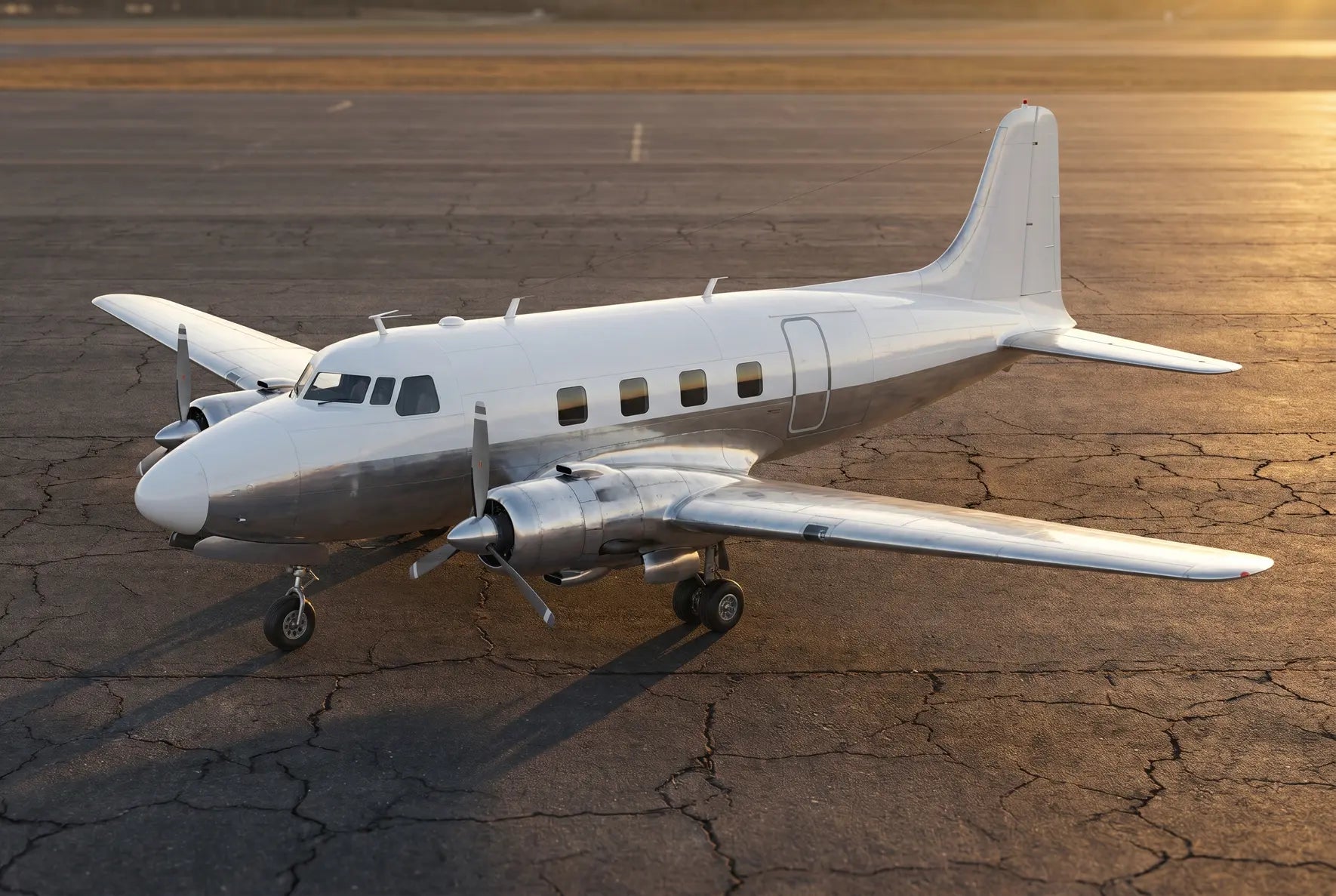
Saab 90 Scandia: History and Development of Sweden's First Airliner
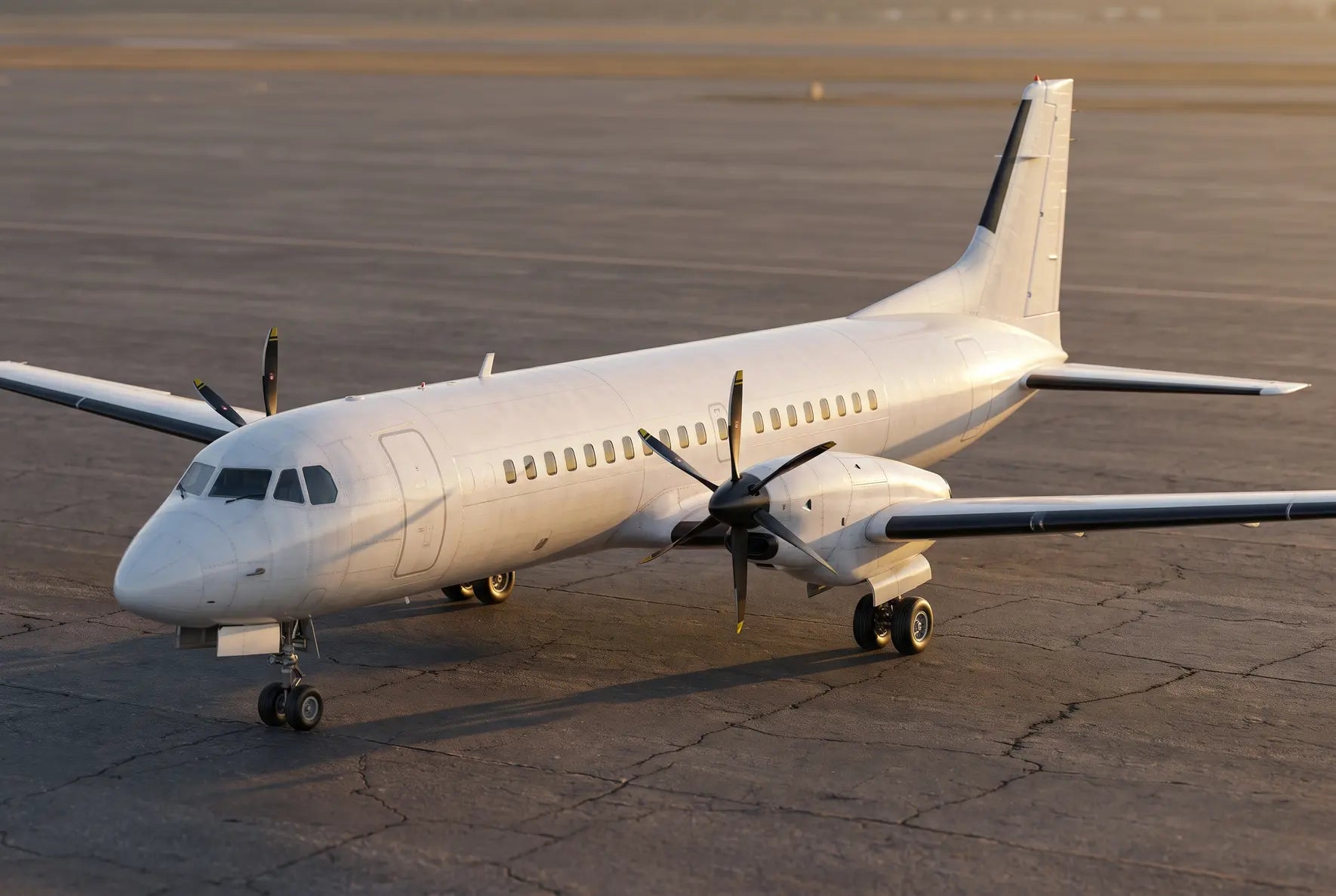
The Saab 90 Scandia holds a distinct place in aviation history as the first airliner built by Svenska Aeroplan Aktiebolaget (Saab), the Swedish manufacturer better known at the time for its military aircraft. The program existed for a clear strategic reason: as the Second World War drew to a close, Saab faced a sharp decline in military demand and needed a civilian product to keep its industrial base viable. The company answered with a twin-engine, short to medium-range transport intended to compete with, and ultimately replace, the ubiquitous Douglas DC-3 on regional routes.
Development of the Scandia began in February 1944, while wartime production was still under way. Saab aimed to deliver an aircraft that prioritised safety, operating economy and a long service life. The prototype made its first flight on 16 November 1946, a milestone documented by Vintage Aviation News. Extended flight testing followed, and the aircraft required a substantial post-test redesign before it was ready for series production. The first production examples were delivered to Scandinavian Airlines System (SAS) in 1950, marking the type's entry into commercial service.
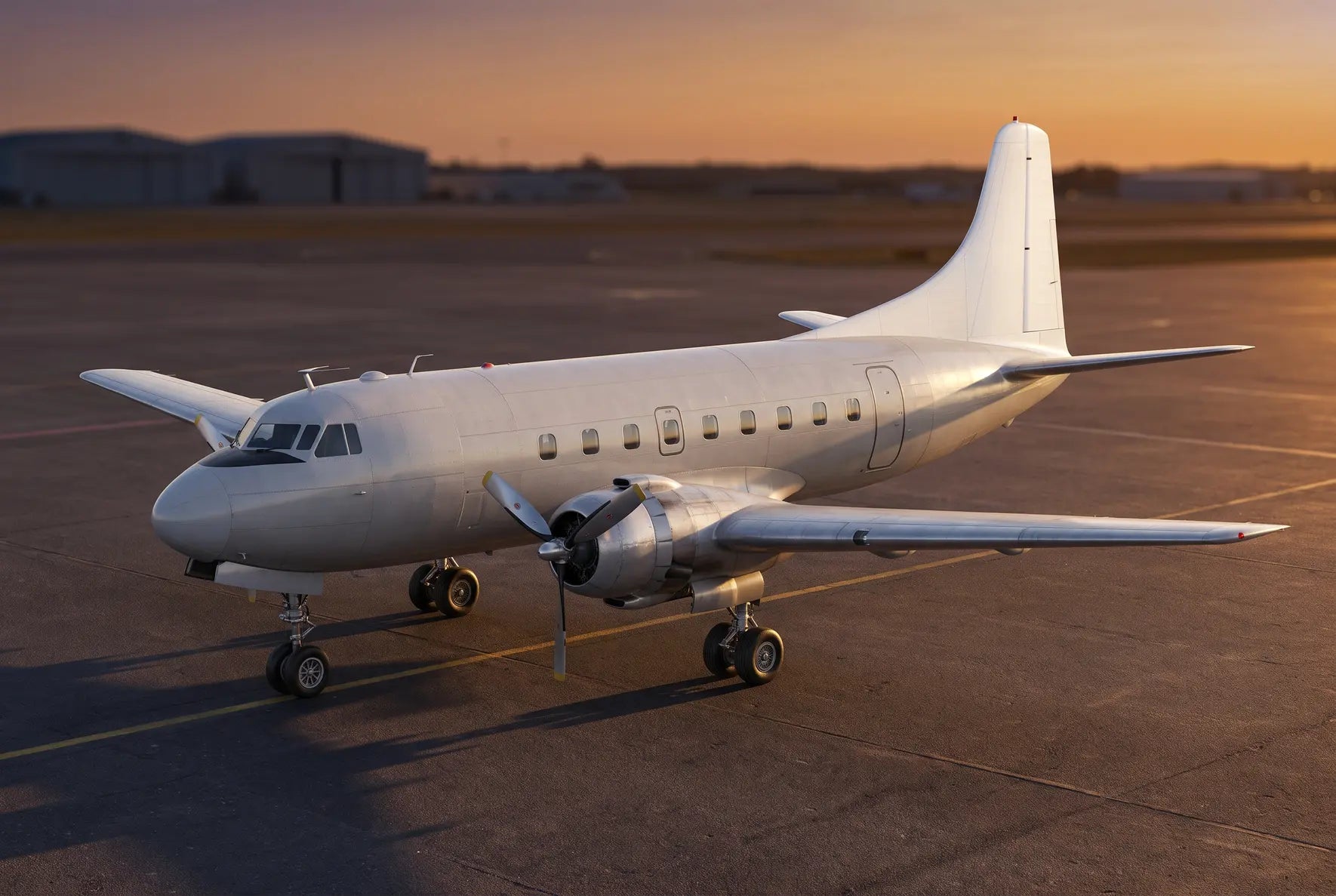
Saab refined the design considerably between the prototype stage and full production. As detailed by Simple Flying, the engineers raised the engines to improve propeller clearance, fitted four-blade Hamilton Standard propellers, and added spring tabs to reduce control forces. These improvements, while technically sound, delayed the program and added cost. Power came from two Pratt & Whitney R-2180-E Twin Wasp E radial engines. The cabin was configured for 24 to 32 passengers depending on layout, with a typical crew of three plus a cabin attendant.
What sets the Saab 90 Scandia apart
Although the Scandia was conceived as a DC-3 replacement and shared a broadly similar role, its design embodied a more modern postwar philosophy. The most visible distinction was its tricycle landing gear, which replaced the tailwheel arrangement of the DC-3 and eased ground handling, loading and pilot visibility. The vertical stabiliser and general airframe layout also differed from the aircraft it sought to displace. The following points summarise the variant identifiers that characterise the type:
- Engines: two Pratt & Whitney R-2180-E Twin Wasp E radials
- Propellers: four-blade Hamilton Standard units (production configuration)
- Undercarriage: tricycle landing gear, unlike the DC-3's tailwheel
- Capacity: 24 to 32 passengers
- Control refinements: spring tabs to reduce control forces; raised engine mountings for propeller clearance
- Production run: 18 aircraft completed between 1946 and 1954
The program's commercial story was less successful than its engineering. Only 18 aircraft were completed between 1946 and 1954. The Scandia entered a market saturated with inexpensive war-surplus DC-3s, which undercut sales of a new and more costly design. At the same time, rising Cold War demand pulled Saab's industrial priorities back toward military aircraft, and that pressure helped bring the Scandia program to an end after a modest production total.
Operators were similarly limited. SAS flew the type from 1950, and in South America it served with Brazilian carriers including VASP (Viacao Aerea Sao Paulo). The aircraft's operational footprint reflected the broader postwar landscape of national flag carriers and regional operators building out their networks; readers interested in how such carriers shaped this era may find context in this overview of national airlines. Despite its limited numbers, the Scandia remains a technically credible example of early postwar airliner design and an important chapter in Saab's transition from a wartime military producer toward civil aviation.

A black and white photo of a SAS Scandinavian Airlines Saab Scandia aircraft on the tarmac at Heathrow Airport in 1953. The plane is stationary with visible engines and propellers.
Saab 90 Scandia: Technical Specifications, Systems and Engines
The Saab 90 Scandia was conceived as a twin-engined, short- to medium-range airliner intended to replace the ubiquitous Douglas DC-3 on European and Scandinavian routes. As an all-metal, low-wing monoplane with a retractable tricycle undercarriage, its design prioritised passenger comfort, easier ground handling and improved low-speed behaviour over outright range. The central trade-off was clear: rather than chase long-range performance, Saab built a clean, aerodynamically efficient wing and a wider cabin tuned to regional sectors flown from modest airfields, accepting a relatively limited still-air range in exchange for payload and field flexibility. Operators such as ABA and later SAS, alongside Brazilian carriers VASP and Aerovias do Brasil, flew it in everyday line service, much as later regional fleets supported by operators profiled in our coverage of Envoy Air.
The prototype (registration SE-BCA) first flew on 16 November 1946, the type certificate followed in June 1950, and just 18 aircraft were built before production ended in the mid-1950s. Detailed airframe and performance figures are documented on the Saab 90 Scandia reference page and an independent technical database at flugzeuginfo.net.
- Wingspan: 28.0 m (91 ft 10 in)
- Length: 21.3 m (69 ft 11 in)
- Height: 7.4 m (24 ft 3 in); some sources list 7.1 m (23 ft 4 in)
- Wing area: 85.7 m² (922 ft²), aspect ratio about 9.15:1
- Empty weight: 9,960 kg (21,958 lb)
- MTOW: 15,900–16,000 kg (35,053–35,274 lb), varying by source
- Fuel capacity: approximately 2,000 L (around 530 US gal)
- Passengers: typically 24 or 32, up to about 36 in higher-density layouts, plus roughly 10.7 m² of under-floor cargo volume
- Cruise speed: around 340 km/h (180 kt) normal cruise
- Maximum speed: about 450 km/h (240 kt) at 2,600 m
- Service ceiling: 7,500 m (24,600 ft)
- Rate of climb: about 7.5 m/s (1,480 ft/min)
- Engines: two Pratt & Whitney R-2180-E / R-2180-E1 Twin Wasp E radials, roughly 1,800–1,825 hp each
Systems and handling-relevant technology
For its era the Scandia was a conventional but well-resolved piston-twin. The fully retractable tricycle gear simplified taxi, takeoff rotation and braking compared with the tailwheel DC-3, giving better forward visibility and more predictable ground handling on contemporary runways. Engine output was managed through traditional throttle, mixture and propeller controls, with the powerplants driving four-bladed, constant-speed, feathering propellers so that a failed engine could be feathered to reduce drag on the remaining unit. Water injection was available to boost takeoff power, a common technique on high-output radials of the period. As an unpressurised airframe, the cabin operating altitude was naturally limited, which is consistent with the documented service ceiling.
Published performance numbers for the Scandia vary noticeably between sources, and the differences are best read as context rather than contradiction. Range, for example, is quoted from roughly 1,480 km up to about 2,650 km: the higher figure reflects a long-range, low-payload condition, while the lower value better represents normal airline loading. Cruise and maximum speeds depend on altitude, weight and power setting, and field performance depends on density altitude, runway surface and condition. For that reason, the figures above should be treated as representative rather than absolute certified values.
The Pratt & Whitney R-2180-E Twin Wasp E engine
Production Scandias were powered by two Pratt & Whitney R-2180-E / R-2180-E1 Twin Wasp E engines, 14-cylinder, two-row, air-cooled radials built by the American manufacturer Pratt & Whitney. The R-2180 designation reflects a displacement of about 2,180 cubic inches, marking it as a larger-displacement development within the broader Twin Wasp family that also included the very widely produced R-1830. Each engine produced approximately 1,800 to 1,825 hp (about 1,342–1,361 kW), with the higher rating associated with water injection. The original Scandia design had specified the lower-rated Pratt & Whitney R-2000 Twin Wasp of around 1,450 hp, but the specification was changed to the more powerful R-2180-E before series production. Unlike its hugely successful relatives, the R-2180 saw only limited application, with the Saab 90 Scandia standing as one of its principal civil uses before higher-output radials and early turboprops superseded the type.
Saab 90 Scandia vs Douglas DC-3, DC-4 and Convair CV-240: Key Specifications Comparison
Scroll horizontally to see more →
| Parameter | Saab 90 Scandia | Douglas DC-3 | Douglas DC-4 | Convair CV-240 |
|---|---|---|---|---|
| Entry into service | 1950 | 1936 | 1942 | 1948 |
| Engines | 2 × Pratt & Whitney R-2180-E1 radial engines | 2 × Pratt & Whitney R-1830 Twin Wasp radial engines | 4 × Pratt & Whitney R-2000 Twin Wasp radial engines | 2 × Pratt & Whitney R-2800 Double Wasp radial engines |
| Length | 20.34 m | 19.66 m | 28.60 m | 22.66 m |
| Wingspan | 28.00 m | 29.00 m | 35.81 m | 28.60 m |
| Height | 7.16 m | 5.16 m | 8.38 m | 7.10 m |
| Typical seating and layout (short description + approximate passengers) | Single-class: 24–36 passengers | Single-class: 21–32 passengers | Single-class: 44–80 passengers | Single-class: 40–48 passengers |
| MTOW | 17.50 t | 11.43 t | 33.10 t | 18.88 t |
| Range | 1,020 nm | 1,500 nm | 2,400 nm | 1,250 nm |
| Cruise speed | 0.33 Mach | 0.24 Mach | 0.27 Mach | 0.35 Mach |
| Service ceiling | 24,600 ft | 24,000 ft | 22,300 ft | 25,000 ft |
| Program note | Swedish post-war short-haul airliner designed to replace older DC-3-type aircraft on regional routes. | Iconic pre-war and wartime transport that set the benchmark for early short-haul airliners. | Larger four‑engined post-war airliner positioned for medium‑haul routes and higher passenger capacity. | Pressurized post-war short/medium‑haul twin designed as a modern successor to DC-3‑class aircraft. |
Scroll horizontally to see more →
The table compares four classic piston airliners, highlighting how the Saab 90 Scandia (1950) sits between the older DC-3 and larger DC-4. Scandia offers similar seating to DC-3 but with higher MTOW and faster cruise, while trailing the DC-4 in capacity and range. Against the CV-240, Scandia is slightly smaller and slower, with lower MTOW but comparable regional mission profiles.
Saab 90 Scandia Operations and Airlines: Routes, Missions and Carriers
The Saab 90 Scandia was conceived as a short to medium-haul airliner and a direct successor to the ubiquitous Douglas DC-3, so its operational profile centred on regional sectors rather than long trunk routes. With a cruise speed of about 210 mph (around 338 km/h) and a range cited up to roughly 1,430 nautical miles in the most detailed type profiles, most commercial flights lasted between one and three hours, rarely exceeding four to five hours even on the longest legs. Typical stage lengths fell in the 300 to 800 km band, matching the DC-3-style domestic and intra-regional networks the type was designed to inherit.
Operationally, the Scandia suited classic point-to-point regional flying linking national capitals, secondary cities and coastal hubs, with modest daily utilisation patterns common to piston-twin airliners of the era. The aircraft's fuselage was sized to allow four-abreast seating, giving operators flexibility between higher-density and higher-comfort cabins. The main commercial challenge was external: an abundance of cheap war-surplus DC-3s flooded the post-war market, making a new-build aircraft hard to sell, and Saab's shift back toward military jet work during the Cold War kept the production run to just 18 airframes built between 1946 and 1954. For more on the realities of regional piston-era operations, see this overview of small-carrier flying conditions.
Where the Saab 90 Scandia operates
The type's airline career was concentrated in two parts of the world. In Europe, it flew domestic and intra-Scandinavian services from Sweden, with some short-haul international sectors reaching destinations such as Germany. In North & South America, the only commercial operator was in Brazil, where the Scandia handled domestic regional routes. No credible historical record places the type in scheduled service in Asia or Africa, so any presence on those continents would have been incidental rather than as a frontline airline aircraft.
Documented airline use is therefore limited to three carriers, all flying the aircraft in the regional role it was designed for, as confirmed by Vintage Aviation News and Simple Flying.
- Europe: ABA (Aktiebolaget Aerotransport) of Sweden was the launch customer, ordering the type for domestic and regional services. SAS (Scandinavian Airlines System), the joint Swedish, Norwegian and Danish carrier, became the main European operator after taking first production deliveries around 1950, flying intra-Scandinavian links and short-haul European sectors.
- North & South America: VASP (Viacao Aerea Sao Paulo) of Brazil was the only non-European airline operator, using the Scandia on domestic Brazilian routes radiating from Sao Paulo to other regional and coastal cities.
- Asia: No documented scheduled airline operations of the type.
- Africa: No documented scheduled airline operations of the type.
Typical seating and cabin layouts
Cabin configurations reflected the aircraft's regional mission. The maximum layout seated 32 passengers four-abreast in a 2+2 arrangement, while a lower-density 24-seat version used three seats per row to increase comfort and space. The cabin was served by a single attendant, with a flight crew of three. Network operators such as SAS and ABA tended to match seating to route demand across short domestic and intra-Scandinavian sectors, while VASP applied similar 24 to 32 seat layouts on its Brazilian network. Fleet and type details are documented by enthusiast and archive references such as AirHistory and European Airlines. Only one airframe survives today, 90A registration PP-SQR, preserved in Bebedouro, Brazil.
In this video, watch an FSX flight simulation featuring the SAAB 90 Scandia landing at Marília Airport in Brazil, highlighting approach handling, touchdown technique, and realistic airport scenery from a pilot’s view.
Saab 90 Scandia Safety Record: How Safe Was This Airliner?
The Saab 90 Scandia was a short, low-volume programme, and its safety record must be read against that scale. Only 18 airframes were built between 1948 and 1954, and the type flew commercially from roughly 1950 until its last recorded flight on 22 July 1969. Most operations took place in Brazil with Viao Area So Paulo (VASP), the principal user, after the initial Swedish Airlines (SAS predecessor) order was diverted there. Because the fleet was small and concentrated with one carrier, there is no manufacturer-style statistical accident rate (hull losses per million departures) for the Scandia. The historical picture is instead event-by-event: secondary type histories indicate three fatal hull losses and two non-fatal write-offs, all with VASP. Against a production run of just 18 aircraft, that proportion is high, but the absolute number of serious accidents over nearly two decades of service remained low. Readers should note that older Brazilian accident files from the 1950s and 1960s are incompletely catalogued in public databases, so the surviving record is partial rather than exhaustive.
Notable accidents and what changed afterwards
The following events are those documented in recognised safety databases such as the Aviation Safety Network and the Bureau of Aircraft Accidents Archives.
- 23 September 1959, VASP, PP-SQV, So Paulo (Congonhas), Brazil. On a scheduled So PauloRio de Janeiro service, the aircraft failed to gain height after a night takeoff, struck power cables, stalled and crashed, with 20 fatalities and no survivors. The official investigation listed the cause as undetermined. Events of this kind reinforced the wider industry move toward stricter takeoff performance planning, obstacle-clearance requirements near airports and standardised night-departure procedures.
- 8 March 1964, VASP, PP-SQY, Londrina (LDB), Brazil. This non-passenger flight ended in a crash at the airport; the aircraft was destroyed but all four occupants survived. It is recorded as one of the two non-fatal write-offs. Outcomes like this fed into the broader emphasis on crew training discipline and operational limits for non-revenue flights.
- Further fatal VASP losses. Type histories note that three VASP Scandias were lost in fatal accidents, but complete primary reports for the remaining two were not available with verifiable causes. They are recorded here only as part of the overall fleet history, without attributing specific factors that cannot be confirmed.
Across the type's life, the practical safety lessons mirrored aviation as a whole at the time: better takeoff and obstacle-clearance planning, clearer standard operating procedures and stronger regulatory oversight by national authorities.
How safe is the Saab 90 Scandia?
Judged by the standards of late-1940s piston-twin airliners, the Scandia was a conventional, robustly engineered design, but it predates many of the safety systems now taken for granted, such as ground-proximity warning, modern crew resource management and contemporary certification testing. Comparing accidents to traffic volume is difficult here because flight and cycle data for such a tiny fleet were never published in aggregate, so any rate would be unreliable. What can be said is that the type's documented losses arose mainly from takeoff and approach phases, which remain statistically the most demanding parts of any flight, and that the operational culture, SOPs and regulatory framework of that era were far less mature than today's. Modern carriers operate within tightly defined procedures and oversight, a discipline visible across the industry from legacy flag carriers to newer operators such as Lauda Europe. For current context on long-term safety trends, the International Civil Aviation Organization publishes global safety data showing how accident rates have fallen sharply over the decades. While the Scandia itself reflects a much earlier generation of aircraft, the broader conclusion holds: aviation remains one of the safest modes of transport available today.
01 What kind of routes and missions did the Saab 90 Scandia typically fly?
The Saab 90 Scandia was designed primarily for short- to medium-haul regional routes, typically around 500–1,000 km sectors between major cities and secondary airports. It was used on domestic trunk routes and short international services in countries such as Brazil and Sweden, often linking business and industrial centers. Airlines deployed it on high-frequency schedules where reliable turboprop-like operations were needed before the jet age. Its performance and range made it well suited to routes that were too long for small local aircraft but did not justify larger long-haul airliners.
02 How many passengers could the Saab 90 Scandia carry and what was the cabin like?
The Saab 90 Scandia typically seated about 32 to 36 passengers in a single-aisle configuration, depending on the airline’s layout. The cabin was comparable in size to other post‑war twin‑engine airliners, with relatively narrow seats and a 2‑2 seating arrangement common for the era. Noise levels were higher than on modern regional jets because the piston engines and propellers were located close to the fuselage, but passengers benefited from good forward visibility from the large side windows. Cabin comfort depended largely on the operator’s interior finish and maintenance, with basic but functional seating and limited onboard services by today’s standards.
03 Which airlines operated the Saab 90 Scandia and where did they use it?
The main operators of the Saab 90 Scandia included Brazilian carrier VASP and Swedish airline SAS, among a few others that used it in smaller numbers. VASP employed the type extensively on domestic Brazilian routes linking cities such as São Paulo, Rio de Janeiro, and other regional centers. In Scandinavia, the aircraft served as a regional and short‑haul workhorse, connecting key hubs with smaller airports before being replaced by newer turboprops and early jets. Its relatively small production run meant it never became as widespread as contemporaries like the Convair 240 or Douglas DC‑3.
04 How does the Saab 90 Scandia compare with similar aircraft like the DC‑3?
The Saab 90 Scandia was conceived as a modern successor to aircraft such as the Douglas DC‑3, offering a tricycle landing gear, a cleaner wing, and more contemporary aerodynamics. Its performance in terms of speed and climb was generally improved over the DC‑3, and the tricycle gear allowed more level cabin floors on the ground and easier boarding. However, production numbers were far lower than the DC‑3, and it did not achieve the same global penetration or aftermarket support, which limited its long‑term commercial success. In service, airlines valued its modern handling and ground characteristics, but many ultimately standardized on other types that were easier to acquire and maintain in large fleets.
05 What is known about the safety record and design features of the Saab 90 Scandia?
The Saab 90 Scandia incorporated several safety-oriented design features for its time, including tricycle landing gear for more stable ground handling and improved pilot visibility during takeoff and landing. Its all‑metal, low‑wing design with twin radial engines followed proven post‑war airliner practice, and Saab applied experience from military aircraft to structural strength and redundancy. The global accident record is limited by the small fleet size, but the type did experience a few notable incidents, as was common among piston airliners of the era. Overall, the design was regarded as solid and conventional, without major inherent flaws, though safety outcomes also depended on operator procedures, weather conditions, and maintenance standards.
06 What would the passenger experience on a Saab 90 Scandia be like, including noise and turbulence?
Passengers on the Saab 90 Scandia would have experienced a relatively intimate, small-airliner feel with quick boarding and deplaning due to the modest seat count. The piston engines and propellers produced noticeable vibration and noise, particularly for seats near the wings and engines, so quieter seats would typically be found farther forward in the cabin. The aircraft’s sturdy low‑wing configuration generally provided stable flight characteristics, but as with other small airliners, turbulence would be felt more than on large widebody jets. Views outside were good thanks to relatively large round or oval windows, which many enthusiasts appreciate when flying or imagining travel on classic propliners.