

History and Development of the Douglas DC-5: A Pioneering Short-Haul Airliner
The Douglas DC-5 was a twin-engine, short-haul airliner developed by the Douglas Aircraft Company in the late 1930s. Conceived as a smaller complement to the hugely successful DC-3 and the forthcoming DC-4, the DC-5 targeted a niche that neither of its siblings addressed: regional feeder routes operating from short, sometimes unpaved airstrips. With seating for 16 to 22 passengers, it was designed for airlines that needed a modern, economical aircraft for low-density sectors rather than the trunk routes served by larger Douglas types.
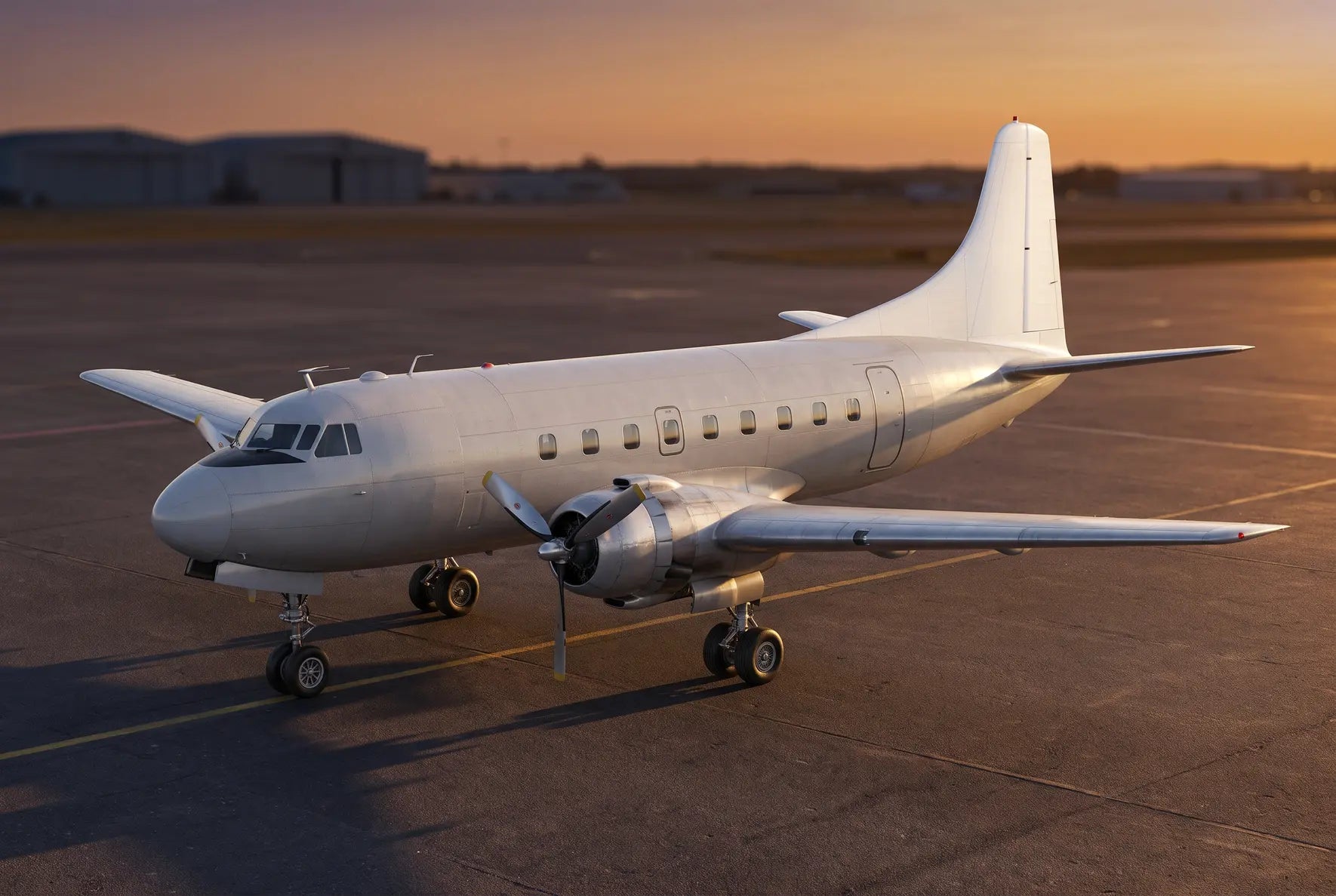
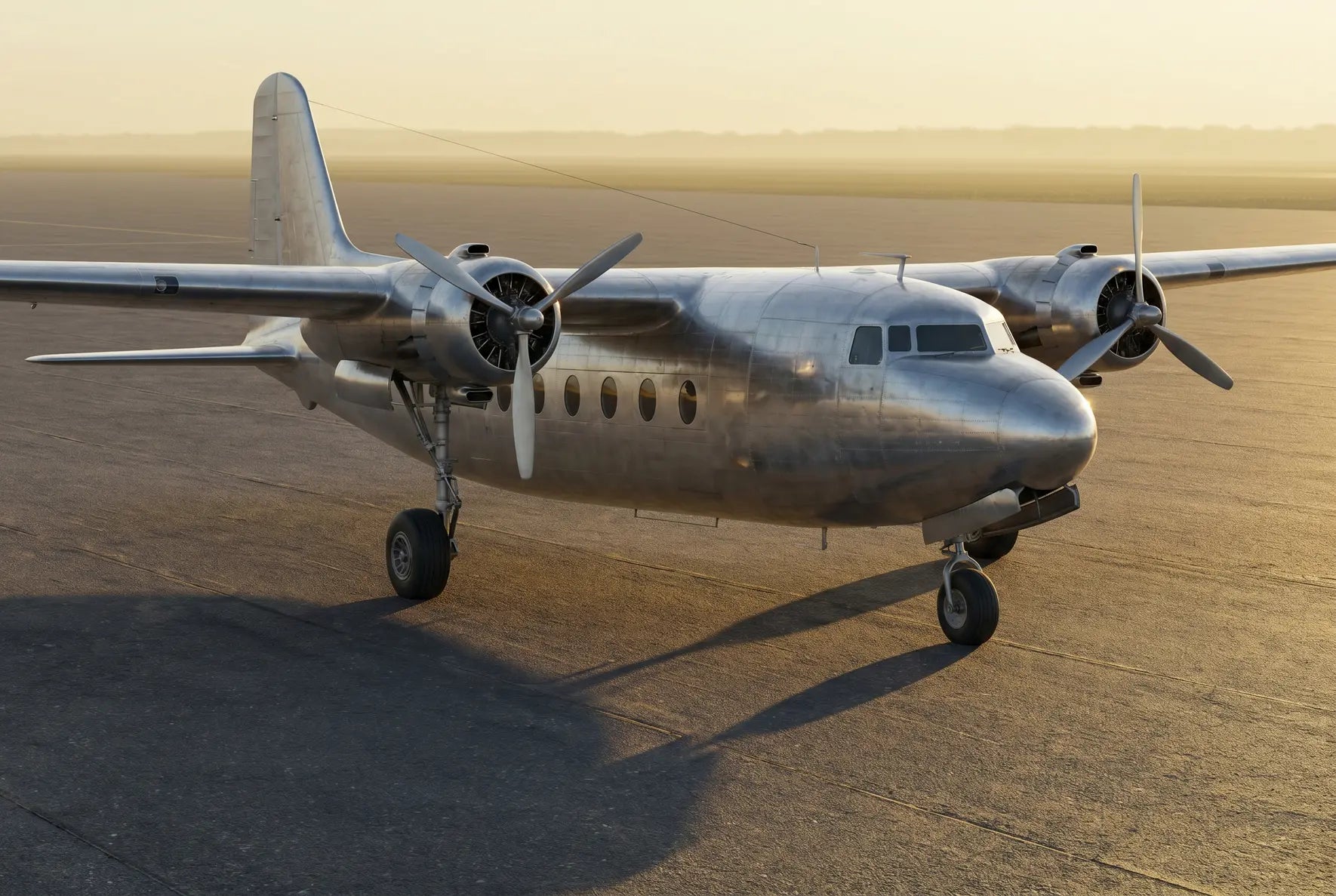
Design work began in 1938 under the supervision of Edward H. Heinemann, one of Douglas's most accomplished engineers, who was simultaneously leading development of the SBD Dauntless dive bomber and the DB-7 (A-20 Havoc) light bomber. Heinemann's military projects heavily influenced the DC-5's configuration. Unlike all previous Douglas airliners, the DC-5 featured a shoulder-mounted wing and tricycle landing gear with a retractable nosewheel, making it one of the first airliners in the world to combine these two features. The high wing kept engines and propellers well clear of the ground, while the nosewheel gear allowed the fuselage to sit level at roughly two feet above the surface, greatly simplifying passenger boarding and cargo handling without stairs or ramps.
The prototype, construction number 411 and registered NX21701, was built at the Douglas facility in El Segundo, California. Powered by two Wright R-1820-44 Cyclone radial engines rated at approximately 1,000 hp each, it completed its maiden flight on 20 February 1939 with Douglas chief test pilot Carl A. Cover at the controls. Initial flight tests were conducted with only eight seats installed. The aircraft received its U.S. type certificate on 4 May 1940, opening the door for commercial deliveries.
KLM Royal Dutch Airlines became the principal airline customer, ordering four DC-5s for its Caribbean subsidiary, KNILM, which operated routes such as Curacao to Paramaribo in Suriname. The prototype itself was sold to William E. Boeing as a personal executive transport; he took delivery on 19 April 1940 and named the aircraft Rover. Meanwhile, the United States Navy and Marine Corps ordered seven aircraft under the military designation R3D: three R3D-1 personnel transports for the Navy and four R3D-2 paratrooper and cargo transports for the Marines, with the latter fitted with the more powerful 1,015 hp R-1820-44 engines and reconfigured interiors for 22 troops.
However, the DC-5 program was cut short almost as soon as it began. By late 1941, following the United States' entry into World War II, Douglas redirected its entire production capacity toward high-priority military aircraft, including the C-47 Skytrain (military DC-3) and other combat types. Only 12 DC-5 airframes were ever completed. After the war, Douglas chose not to restart production. A massive surplus of cheap, proven C-47s flooded the market, and the short-haul feeder airline segment the DC-5 was designed for had not yet matured. As a result, the DC-5 became the least-produced member of the famous DC airliner family. Despite its commercial obscurity, the DC-5's combination of shoulder wing and tricycle gear anticipated the configuration later adopted by successful turboprop transports such as the Fokker F-27 Friendship and the Ilyushin Il-14, which shared a similar philosophy of rugged, short-field-capable regional transport.
What Set the Douglas DC-5 Apart from Other Douglas Airliners
The DC-5 occupied a unique position in the Douglas product line. The DC-3 was a low-wing taildragger designed for medium-range trunk routes with 21 to 32 seats, while the DC-4 was a much larger, four-engine, long-range transport with capacity for 40 passengers or more. The DC-5 was neither a scaled-down DC-3 nor a stepping stone to the DC-4. Instead, it was purpose-built for a different operating environment: short runways, smaller airports, and lower passenger volumes. Its shoulder wing and tricycle gear gave pilots superior forward visibility during taxi and landing compared with the DC-3's nose-high attitude, and the level cabin floor at near-ground height made the aircraft far easier to service at remote airfields lacking proper ground equipment.
Short-field performance was a defining strength. Douglas marketing materials stated the DC-5 could take off in under 1,000 feet with 16 passengers and a crew of four, or clear a 50-foot obstacle within approximately 1,500 feet. The aircraft also employed a flap system shared with the DC-4, which maintained effective tail surface control at low speeds, further enhancing short-field safety. Large oval windows, a hallmark of the high-wing layout, gave passengers unobstructed views, and the engines, mounted farther from the fuselage than on the low-wing DC-3, produced noticeably less cabin noise and vibration.
Key variant identifiers for the Douglas DC-5 include:
- Powerplant: Two Wright R-1820 Cyclone 9-cylinder radials, rated between 900 and 1,015 hp depending on variant (R3D-2 used the higher-rated engine).
- Wing configuration: Shoulder-mounted monoplane wing with a span of 78 ft (23.8 m).
- Landing gear: Fully retractable tricycle gear with nosewheel retracting into the fuselage.
- Passenger capacity: 16 to 22 seats in modular cabin layouts (up to 24 in some references).
- Maximum takeoff weight: Approximately 20,000 lb (9,070 kg).
- Maximum speed: Approximately 230 mph (370 km/h) at altitude.
- Range: Approximately 1,600 miles (2,575 km).
- Military designation: R3D-1 (Navy, 16-seat transport) and R3D-2 (Marine Corps, 22-seat paratrooper transport).
- Total production: 12 airframes (5 civil, 7 military).
More detailed technical data can be found in the original Douglas DC-5 sales brochure preserved by the American Aviation Historical Society, and in the comprehensive Douglas DC-5 overview on Wikipedia.

A Douglas R3D-2 aircraft flies over a forested landscape with a paratrooper descending from it. The aircraft is captured in mid-flight, showcasing its military design and parachuting capacity.
Douglas DC-5 Technical Specifications, Systems, and Engine Options
The Douglas DC-5 was conceived as a purpose-built short-haul transport, designed under the leadership of Ed Heinemann at the Douglas El Segundo division in 1938. Its primary design trade-off favoured short-field performance and operational simplicity over range or passenger capacity. The shoulder-wing configuration combined with retractable tricycle landing gear kept the fuselage low to the ground for easy passenger boarding and cargo handling, while positioning the engines and propellers away from the cabin to reduce noise and vibration. Douglas marketed it as a complement to the DC-3 for operators serving shorter routes and smaller airfields.
With only 12 airframes ever built, the DC-5 remained a rare type. Its aerodynamic layout anticipated features that later became standard in turboprop regional transports. Unlike its predecessors, the DC-3 and DC-2, the DC-5 traded payload volume for exceptional field performance: it could take off in under 1,000 feet with 16 passengers and a crew of four, and clear a 50-foot obstacle within approximately 1,500 feet. That capability made it well suited to the short, unprepared strips common in the Dutch East Indies and other colonial routes where KLM subsidiary KNILM operated the type.
- Length: 62 ft 2 in (18.95 m)
- Wingspan: 78 ft (23.77 m)
- Height: 19 ft 10 in (6.05 m)
- Wing area: 824-825 sq ft (76.5 sq m)
- Crew: 3 (two pilots and a radio operator or flight attendant)
- Passenger capacity: 16-22 in single-class cabin layouts
- Empty weight: 11,500 lb (5,216 kg)
- Maximum gross weight (MTOW): 18,250 lb (8,276 kg)
- Engines: 2 x Wright R-1820 Cyclone 9 (GR-1820-G102A), approximately 900 hp each for takeoff; Pratt & Whitney R-1690 Hornet also offered as an alternative
- Maximum speed: approximately 230 mph (370 km/h) near 7,700 ft
- Cruise speed: 176-193 mph (283-310 km/h) at 10,000 ft, depending on power setting (60-65% rated power)
- Normal service ceiling: 21,700 ft
- Single-engine service ceiling: 9,250 ft
- Maximum rate of climb: 1,440 ft/min at critical altitude
- Range: approximately 1,600 statute miles (2,600 km) under manufacturer assumptions
- Fuel capacity: approximately 2,100 litres (555 US gallons)
- Landing speed: 64 mph
- Landing gear: retractable tricycle (nosewheel retracting into the fuselage)
Systems, Flight Controls, and Handling
The DC-5 used conventional mechanical flight controls typical of late-1930s Douglas transports. Ailerons, elevators, and twin rudders were actuated via cables, pulleys, and bellcranks, with trim tabs on the elevator and rudder surfaces for cruise trimming. There was no hydraulic or electric power-boost for control surfaces; pilots managed aerodynamic loads directly through the yoke and pedals. The wing featured large Fowler-type trailing-edge flaps, hydraulically actuated, which generated significant lift increments for short-field approaches. Lowering the flaps produced a noticeable pitch change requiring retrimming, as was common on Douglas transports of this era. Comparing this mechanical simplicity to the fly-by-wire philosophy found in modern aircraft families like the Airbus A320 highlights just how far flight control technology has evolved.
The retractable tricycle landing gear was a notable innovation for a transport aircraft of this period. Hydraulic wheel brakes on the main gear provided stopping force and enabled differential braking for ground manoeuvring. The nosewheel offered improved forward visibility during taxi compared to tailwheel contemporaries. Engine controls followed the standard layout for twin-engine radial transports: individual throttle, propeller (constant-speed governor), and mixture levers for each engine, along with carburetor heat controls. Fuel was carried in wing tanks with crossfeed capability, fed by engine-driven and auxiliary electric pumps.
Published performance figures for the DC-5 should be interpreted with caution. Values such as range, takeoff distance, and cruise speed depended heavily on configuration choices including passenger count, fuel load, and cabin layout. Atmospheric conditions such as temperature, altitude, and humidity also affected field performance. The figures cited in the original Douglas sales brochure preserved by the American Aviation Historical Society represent manufacturer-stated performance under idealised conditions and specific gross weight assumptions (typically 18,250 lb). Real-world operator results varied depending on airfield elevation, weather, and loading.
Engines: Wright R-1820 Cyclone and Pratt & Whitney R-1690 Hornet
The standard powerplant for production DC-5 aircraft was the Wright R-1820 Cyclone 9, specifically the geared and supercharged GR-1820-G102A variant. This nine-cylinder, single-row, air-cooled radial engine displaced 1,823 cubic inches (29.9 litres) and delivered approximately 900 horsepower at takeoff rpm, with a rated power of 760 hp at 5,800 feet in cruise configuration. The R-1820 was developed by Wright Aeronautical Corporation (later Curtiss-Wright) beginning in the late 1920s and entered production in 1931. Over two decades of refinement, the Cyclone family evolved from early models rated around 575 hp to highly supercharged variants exceeding 1,500 hp for military applications. In its various forms, the R-1820 powered a remarkable range of aircraft including the Boeing B-17 Flying Fortress, Douglas SBD Dauntless, Grumman Wildcat (FM-2 variant), Douglas DC-2, North American T-28B trainer, and the Grumman HU-16 Albatross.
Douglas also offered the Pratt & Whitney R-1690 Hornet as an alternative engine for the DC-5. The Hornet was another nine-cylinder, single-row, air-cooled radial of 1,690 cubic inches displacement, developed by Pratt & Whitney starting in 1926. It was the company's second major engine after the R-1340 Wasp. Early versions produced around 525 hp, while later supercharged and geared variants reached approximately 750-790 hp for takeoff. A total of roughly 2,944 R-1690 engines were produced between 1926 and 1942. The Hornet powered types including the Boeing 80 airliner, Sikorsky S-42 flying boat, Lockheed Model 14 Super Electra, and several military aircraft. Although simpler and lighter than competing twin-row radials, the Hornet's larger frontal area and lower specific power output gradually made it less competitive against engines like the Pratt & Whitney R-1830 Twin Wasp and the Wright R-1820 Cyclone, which ultimately became the DC-5's standard fitment.
Douglas DC-5 vs DC-3 vs DC-6 vs DC-8-61: Specifications and Performance Comparison
Scroll horizontally to see more →
| Parameter | Douglas DC-5 | Douglas DC-3 | Douglas DC-6 | Douglas DC-8-61 |
|---|---|---|---|---|
| Entry into service | 1940 | 1936 | 1947 | 1967 |
| Engines | 2 × Wright R-1820 Cyclone 9 radial piston engines | 2 × Pratt & Whitney R-1830 Twin Wasp radial piston engines | 4 × Pratt & Whitney R-2800 Double Wasp radial piston engines | 4 × Pratt & Whitney JT3D-3B low-bypass turbofan engines |
| Length | 18.95 m | 19.66 m | 30.18 m | 57.12 m |
| Wingspan | 23.77 m | 28.96 m | 35.81 m | 45.16 m |
| Height | 6.05 m | 5.16 m | 8.38 m | 12.88 m |
| Typical seating and layout (short description + approximate passengers) | single-class regional airliner: 16–22 passengers | 2-class: 21–32 passengers | 2-class long-range piston airliner: 52–68 passengers | 2-class long-range jet: 150–189 passengers |
| MTOW | 9 t | 11 t | 37 t | 147 t |
| Range | 2,575 km (1,560 nm) | 2,575 km (1,560 nm) | 4,800 km (2,590 nm) | 8,300 nm |
| Cruise speed | 0.26 Mach | 0.27 Mach | 0.34 Mach | 0.82 Mach |
| Service ceiling | 23,700 ft | 24,400 ft | 25,000 ft | 42,000 ft |
| Program note | Short-range, tricycle-gear Douglas airliner designed as a compact sibling to the DC-3, but produced in very small numbers. | Successful prewar baseline twin-engine Douglas airliner and the closest practical size reference for the DC-5. | Postwar piston long-range Douglas transport showing the brand's move to larger, intercontinental cabin-capacity aircraft. | Much larger first-generation jet airliner, included as a modernization benchmark far beyond the DC-5's size and era. |
Scroll horizontally to see more →
The table compares key specifications across Douglas airliners from the DC-5 through the DC-8-61, highlighting rapid growth in size, capacity, and performance. The DC-5 and DC-3 are similar in range and cruise speed, but the DC-3 has a wider wingspan and higher MTOW. The DC-6 steps up with four engines, much greater MTOW, and more seats for longer routes. The DC-8-61 dwarfs the piston types, moving to turbofans, far higher ceiling, and jet cruise speed.
Douglas DC-5 Operations, Airlines and Typical Missions Around the World
The Douglas DC-5 was designed as a short-haul regional airliner for routes linking secondary airports and low-traffic colonial territories. With a published range of approximately 1,600 miles (2,575 km) and seating for 16 to 22 passengers, typical mission profiles involved sectors of a few hundred miles lasting one to three hours. The aircraft's tricycle landing gear and impressive short-field capability, with takeoff runs under 1,000 feet with 16 passengers and crew, made it especially suited to rough or compact airstrips common in colonial and island networks. However, only 12 airframes were ever built: one prototype, four civil production aircraft for KLM, and seven military R3D variants for the United States Navy and Marine Corps. This extremely limited production severely restricted the type's airline footprint.
The Douglas DC-5 operated primarily within point-to-point and colonial hub-and-spoke networks rather than major international trunk routes. Its main civilian operator, KLM and its subsidiary KNILM (Koninklijke Nederlandsch-Indische Luchtvaart Maatschappij), used it to connect Dutch colonial territories in the Caribbean and the Netherlands East Indies. On the military side, the R3D variants served as personnel and paratroop transports between naval and marine bases, typically on short domestic legs. Daily utilisation patterns were modest by modern standards, reflecting the small fleet size and the regional nature of all missions flown.
A major challenge for operators was the onset of World War II. The DC-5 first flew in February 1939 and entered service in 1940, just as global conflict intensified. Douglas shifted production to military types such as the SBD Dauntless dive bomber, halting DC-5 manufacturing entirely. Several airlines that had placed orders, including British Airways Ltd (nine aircraft for short-haul European routes), Pennsylvania Central Airlines (six aircraft for U.S. domestic services), and SCADTA of Colombia (two aircraft), never received their DC-5s. After the war, a massive surplus of Douglas DC-3/C-47 transports flooded the market, making any restart of DC-5 production economically unviable.
Where the Douglas DC-5 Operated
The Douglas DC-5 saw active civilian and military service across several broad regions, though always in very small numbers. In the Americas, KLM West-Indisch Bedrijf flew the first two production DC-5s on the Paramaribo (Suriname) to Curaçao route, connecting Dutch colonial outposts in the Caribbean. These were classic short-haul regional sectors well within the aircraft's range. In Asia and the Pacific, KNILM operated all four Dutch DC-5s from Batavia (now Jakarta) on inter-island services across the Netherlands East Indies. When Japanese forces invaded in early 1942, three DC-5s were used for emergency evacuation flights from Java to Australia, pushing the airframe closer to its maximum range. In Australia, the surviving aircraft were impressed by the USAAF and operated under the Allied Directorate of Air Transport (ADAT), flying domestic and forward-area military transport missions, including routes to Port Moresby in New Guinea. One DC-5 was later passed to Australian National Airways (ANA) for courier and regional services. No DC-5 entered regular airline service in Europe or Africa, though the British order would have placed the type on European feeder routes had war not intervened. In the Middle East, a single surviving DC-5 was secretly transferred to Israel in 1948 and used as a military transport during the Arab-Israeli War.
- North & South America: KLM West-Indisch Bedrijf operated the Paramaribo-Curaçao route in the Caribbean, connecting Dutch colonial territories on short-haul regional sectors. Pennsylvania Central Airlines and SCADTA (Colombia) ordered DC-5s for domestic and regional services but never received them due to wartime cancellations.
- Asia: KNILM operated all four Dutch DC-5s on inter-island routes across the Netherlands East Indies from its base at Batavia. During the Japanese invasion in 1942, the aircraft were used for evacuation flights to Australia. One DC-5 captured by Japanese forces at Batavia was repaired and used by the Imperial Japanese Army Air Force as a transport and evaluation aircraft in Japan.
- Europe: No DC-5 entered European airline service. British Airways Ltd (the pre-war British airline, not the modern carrier) ordered nine DC-5s for short-haul feeder routes, but the order was cancelled at the outbreak of World War II.
- Africa: No documented DC-5 operations took place in Africa. The closest connection was the single aircraft transferred to Israel in 1948, used as a military transport during the Arab-Israeli War.
Typical Seating and Cabin Configurations
The Douglas DC-5 cabin was divided into three compartments, offering a modular layout that could be adapted to different operator requirements. In standard airline configuration, the aircraft seated between 16 and 22 passengers, depending on pitch and density. The prototype, used by aviation pioneer William Boeing as a personal transport, was fitted with just eight seats in a spacious VIP arrangement. For military use, the U.S. Navy's R3D-1 variant retained a 16-seat personnel transport layout, while the Marine Corps R3D-2 was configured with 22 seats for paratroopers and included a large cargo hold. The high-wing design gave the cabin a flat floor at a low boarding height, a notable advantage for ground handling and passenger comfort compared to taildragger contemporaries like the DC-3. Given the extremely limited production run, no standardised seat-map variations by leisure versus network carriers existed. Detailed specifications can be found in the original Douglas DC-5 manufacturer brochure preserved by the American Aviation Historical Society. For a look at how modern twin-aisle aircraft compare in terms of cabin flexibility and operator configurations, see the Boeing 777-8 overview.
In this video, discover why the Douglas DC-5 failed, exploring its design choices, market timing, and operational challenges. Learn the key factors that limited its success and shaped its brief aviation career.
Douglas DC-5 Safety Record: Incidents, Accidents and Overall Assessment
Assessing the safety record of the Douglas DC-5 requires context. Only 12 airframes were ever built between 1939 and 1941, split between five civilian aircraft (including the prototype) and seven military R3D variants for the United States Navy and Marine Corps. The type served from 1940 until roughly the late 1940s, with the last known flying example ending its career in Israel around 1948. Because the fleet was so small and its operational life was dominated by the upheaval of the Second World War, cumulative flight hours and cycle counts were never formally aggregated by any authority. The Aviation Safety Network lists five hull-loss events for the DC-5/R3D family, of which at least two were directly caused by enemy action rather than mechanical or operational failure. Interpreting these figures alongside normal accident-rate statistics is therefore impractical; the sample size is simply too small to draw meaningful per-departure or per-hour conclusions.
Notable Accidents and Incidents Involving the Douglas DC-5
The most significant non-combat loss occurred on 1 June 1940, when a U.S. Navy R3D-1 (BuNo 1901) crashed at Mines Field, California, shortly after take-off during a pre-delivery test flight. According to the Bureau of Aircraft Accidents Archives, all four crew members on board were killed. The Aviation Safety Network attributes the cause to crossed control cables, a manufacturing or maintenance error that would have rendered the flight controls reversed. This accident highlighted the critical importance of rigorous control-system checks before first flight, a procedure that became ever more formalised in subsequent decades of aviation manufacturing.
During the Second World War, several DC-5 airframes were lost in the Southwest Pacific theatre. On 31 January 1942, an R3D-2 (BuNo 1904) operated by the U.S. Marine Corps was destroyed on the ground at Port Moresby, Papua, during a Japanese air raid. Later that year, on 17 August 1942, a civilian-registered DC-5-511 (VH-CXA) made a forced landing at Lurnea Siding in New Guinea. After touching down at approximately 70 mph, the aircraft struck a large termite mound, driving an undercarriage leg through the wing. There were no fatalities, but the airframe was damaged beyond economical repair. A further DC-5-511 was recorded as a hull loss on 6 November 1942, although public databases do not provide detailed circumstances for this event.
The final known loss of a Douglas DC-5 took place in October 1948, when the last surviving airframe, then operated by the Israeli Air Force, suffered a hard landing at Ramat David Air Base. No crew members were reported killed, but the aircraft sustained structural damage beyond repair, ending the operational history of the type entirely.
How Safe Was the Douglas DC-5?
Evaluating the DC-5 against modern safety benchmarks is not straightforward. With only 12 aircraft built and a combined service span of roughly eight to ten years, there is simply no statistically meaningful accident rate to calculate. What can be said is that the aircraft incorporated several design features considered progressive for the late 1930s. The DC-5 was the first Douglas airliner to combine a shoulder-mounted wing with tricycle landing gear, a layout that improved ground handling, reduced ground-loop risk compared with tailwheel contemporaries like the DC-3, and kept propeller arcs well clear of passengers and ground personnel. Its Hamilton Standard Hydromatic fully feathering propellers allowed a failed engine's propeller to be streamlined, reducing drag and improving single-engine controllability. Douglas published a single-engine absolute ceiling of approximately 11,400 feet, offering a useful safety margin for the short-haul routes the aircraft was designed to serve.
Short-field capability also contributed to operational safety. The DC-5 could become airborne in under 1,000 feet with a full passenger load, giving crews generous margins at the small, sometimes unimproved, aerodromes common in the Netherlands East Indies and the Pacific islands. In an era when many regional routes served by aircraft like the Vickers Viscount 700 and its predecessors demanded robust airfield performance, the DC-5 was considered well suited to challenging environments.
It is worth noting that the majority of DC-5 losses were attributable to wartime enemy action or to the harsh operating conditions of military service in tropical combat zones, rather than to inherent design deficiencies. The sole pre-war fatal accident was traced to a manufacturing error (crossed control cables), not to a structural or aerodynamic shortcoming. No airworthiness directives or fleet-wide design concerns are recorded in public databases. Aviation, even in its early commercial decades, was evolving rapidly toward the highly regulated, data-driven safety culture that today makes air transport one of the safest modes of travel worldwide. The DC-5's small production run prevented it from contributing meaningfully to that statistical picture, but nothing in the historical record suggests the aircraft was unsafe for its time.
01 What was the Douglas DC-5 designed for, and how did it fit into the DC series?
The Douglas DC-5 was designed in the late 1930s as a short-haul, 16–22 seat airliner to complement the larger DC-3 on regional routes. It featured a high wing and a relatively spacious cabin for its size, aimed at shorter stages where quick turnarounds and good field performance were important. Unlike the widely produced DC-3 and DC-4, only a very small number of DC-5s were built, making it a rare and lesser-known member of the Douglas airliner family.
02 What was the typical range and mission profile of the Douglas DC-5?
The Douglas DC-5 was intended for short to medium routes of roughly 600–1,000 km, depending on load and conditions. It was optimized for regional services such as trunk routes between major cities and shorter connections to secondary airports with modest infrastructure. Its high wing and good low-speed handling made it suitable for relatively short runways, supporting missions where access to smaller fields was valuable.
03 What was the cabin layout and passenger comfort like on the Douglas DC-5?
The Douglas DC-5 typically seated around 16 to just over 20 passengers in a single-aisle layout, with a relatively tall cabin for its class at the time. The high-wing design allowed a clear, unobstructed cabin roof and reasonably good outside visibility from the side windows. Noise levels would have been comparable to other piston airliners of the era, with propeller and engine sound clearly audible but moderated by the small cabin and relatively low cruise speeds.
04 Which airlines and operators used the Douglas DC-5?
Because only a small number of Douglas DC-5 aircraft were built, it saw service with a limited set of operators, including airlines in the Netherlands East Indies and some military and government users. The type flew regional and colonial routes, often in tropical environments, where its short-field capability and compact size were useful. Several airframes were also impressed into military or transport roles during the early years of World War II.
05 How did the Douglas DC-5 perform compared with similar aircraft of its time?
The Douglas DC-5 offered solid short-field performance and good climb characteristics thanks to its high wing and robust landing gear, making it competitive for regional operations. Its capacity and range positioned it between smaller feeder aircraft and larger airliners like the DC-3, targeting routes where full DC-3 loads were not always needed. However, the onset of World War II, changing airline requirements, and the strong success of the DC-3 limited demand, so the DC-5 never reached large-scale production or widespread commercial deployment.
06 Is the Douglas DC-5 still flying today, and what is its safety record?
No Douglas DC-5 is known to be in commercial passenger service today, and surviving airframes, if any, are likely to be museum exhibits or long retired from use. Only a handful were built, so its safety record is based on a very small fleet and limited operational history compared with mainstream types such as the DC-3. The design incorporated typical safety features of its era, including sturdy construction and forgiving low-speed handling, but it predates many modern standards such as pressurization, advanced avionics, and contemporary certification requirements.